Bi-fold doors fold back in panels, so a whole wall of a Perth home can open to the garden, or a laundry can open without a swing arc. What you pay comes down to the size, the material and the glass, and the material choice is the one worth settling first.
This page explains how bi-fold doors work, how the materials and glass compare, and where they are a poor fit.
How bi-fold doors work
A bi-fold door is a set of panels joined by hinges that fold back on themselves along a track. The panels fold to the side instead of swinging out, so they suit spaces where a normal door would hit furniture.
Small sets usually have a pull handle and a latch at the top or bottom. Large sets run along a track across the opening and fold back into a stack at one or both sides.

Aluminium, timber or composite?
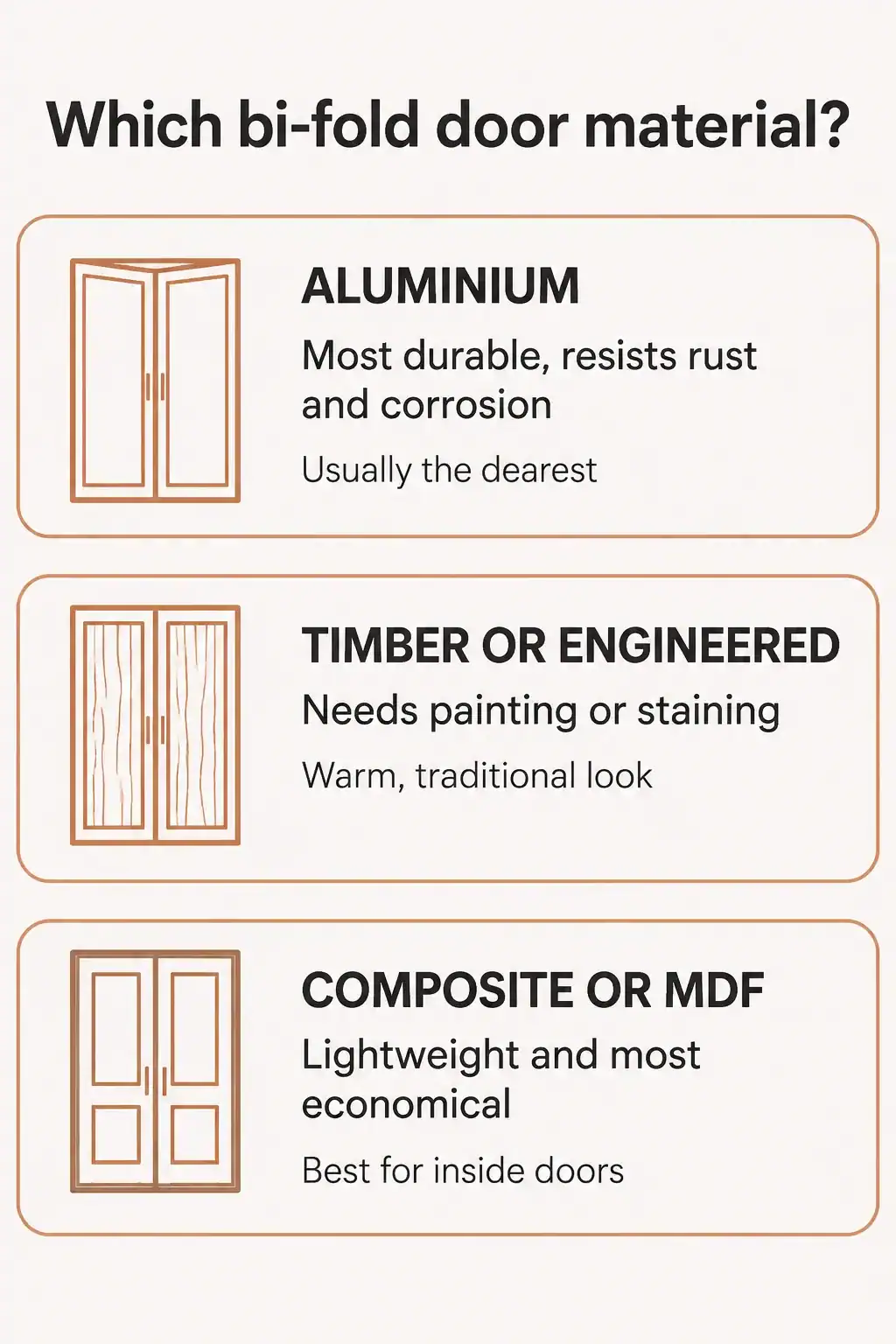
Aluminium is generally the most expensive material. It is durable, resists rust and corrosion, and is custom made to measure, which is why it is the usual choice for exterior doors in harsh or exposed locations. Timber and aluminium both suit glazed doors to a garden or patio.
Engineered timber and composite doors need painting or staining, and you should add that to the budget. Lightweight composite and hollow core doors are the most economical, and they work well for laundries, bathrooms and wardrobes (Doors Plus).

Glass, energy ratings and bushfire zones
Exterior bi-folds need hardier materials, toughened glass and weather seals. Double glazing costs more than single, and gives better sound and thermal insulation. Toughened glass is the choice for insulation and security on exterior doors (Doors Plus).
The Window Energy Rating Scheme, WERS, rates the annual energy impact of windows and doors on a ten-star scale. A low rating means poor performance and a high rating means outstanding thermal performance (Stegbar, a manufacturer). Ask for the rating of the exact door, because glass and frame both change it.
If your block is bushfire-prone, the construction rules follow your Bushfire Attack Level. The state’s retrofit advice for homes up to BAL 29 names side-hung and sliding external doors, and says glass should be toughened if metal screens or shutters are not fitted (WA Building and Energy). It does not name bi-fold doors, so ask your building surveyor or BAL assessor before you choose one.
What sets the price of bi-fold doors?
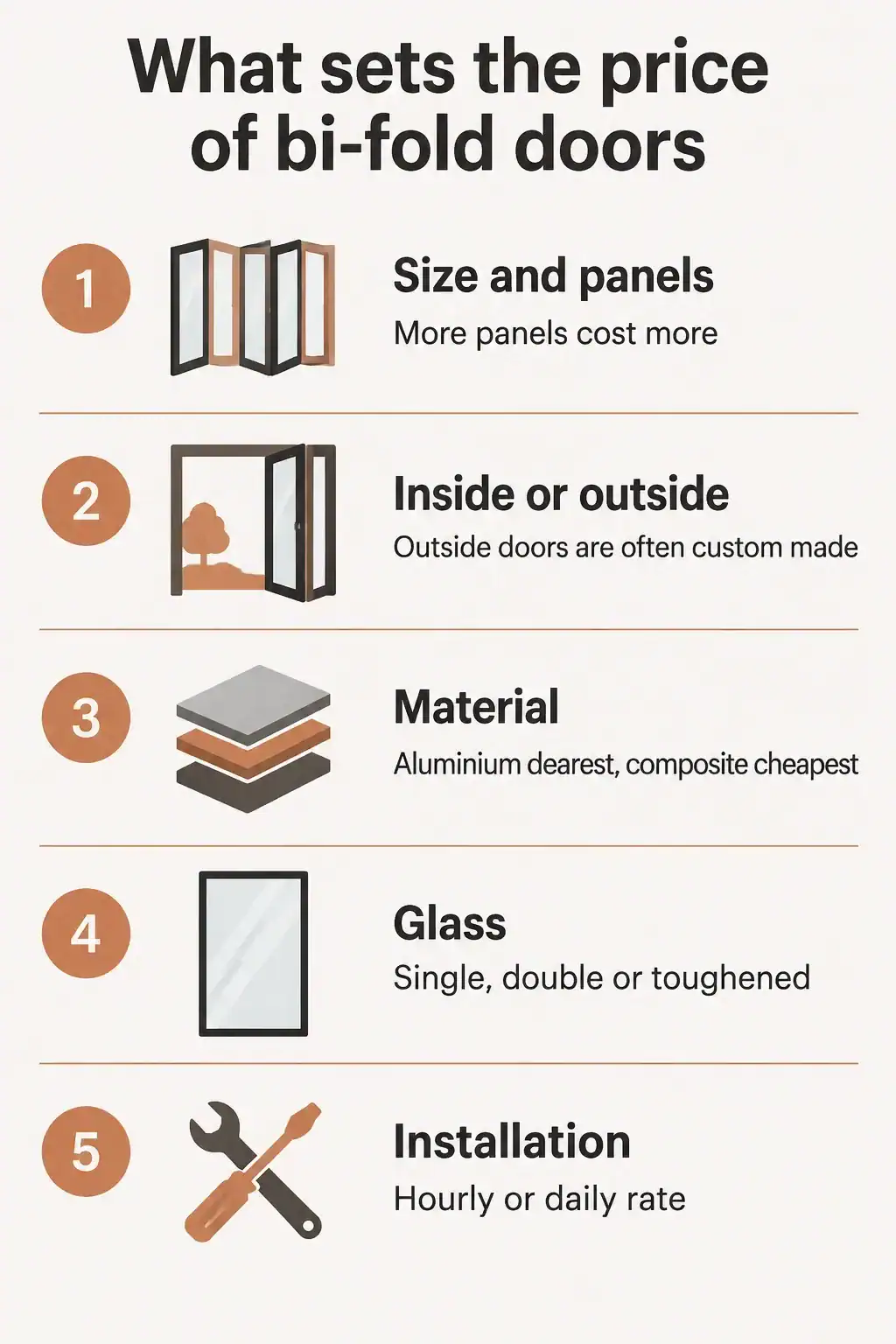
Larger doors and more panels cost more, and panoramic al fresco doors sit at the top of the range. Many standard interior doors can be fitted as bi-folds, whereas exterior sets are often custom made, which adds to the price. Installers usually charge an hourly or daily rate, so a two-panel laundry door goes in faster than a four-panel patio wall.
We have not put dollar figures on this page, because the Australian price guides we could open gave none. Get two or three itemised quotes that list the frame, glass type, hardware and installation.
Where bi-fold doors are a poor fit
Bi-folds get bulky and harder to operate when you add multiple sets, and every extra panel is more glass and track to clean (HardwareBox). The hinges and track are the parts that take the wear.
Our take · Octopus Doors
For a laundry, wardrobe or pantry, a bi-fold is a neat way to avoid a swing arc. For a big opening to the outdoors, compare it with a stacker or a wide slider before you commit, because fewer hinges means fewer parts to adjust.
Before you ask for a quote
- Measure the opening width, height and the space beside it where the stack will sit.
- Decide on inside or outside use, because outside doors need seals and toughened glass.
- Ask for the WERS rating of the exact door and glass.
- Check your block’s bushfire rating if it is in a bushfire-prone area.
- Ask what the quote includes: frame, hardware, delivery and installation.
If you are weighing options, read about stacker doors, sliding doors and the overview of door types in Perth.
Related posts
 Types of Doors in Perth
 French Doors Perth
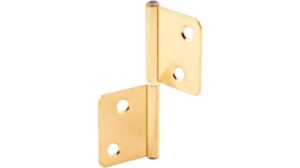 Prime-Line N 7025 Bi-Fold Door Hinges Review
 The Real Cost of Door Installation in Perth: Complete Pricing Guide for 2025
 Sliding Doors
 Doors Shorter Than 80 Inches: A Complete Guide
 Door Facts: A Historic and Cultural Journey Through the World of Doors
 ENERGY STAR Doors Explained: What the Labels Mean and What to Ignore