Leaded or stained glass?
In a leaded glass panel, pieces of glass are tied together with lead channels called cames. Colored glass set in cames is what most people call stained glass, so a door panel is often both. What matters at the door is the safety rule, the energy label and the lock.
Leaded and stained glass doors work best as a front door or the entry to a room, where the glass is the feature. This page covers how a panel is built, what the code requires, and how to keep one comfortable and secure.
How a leaded glass panel is built
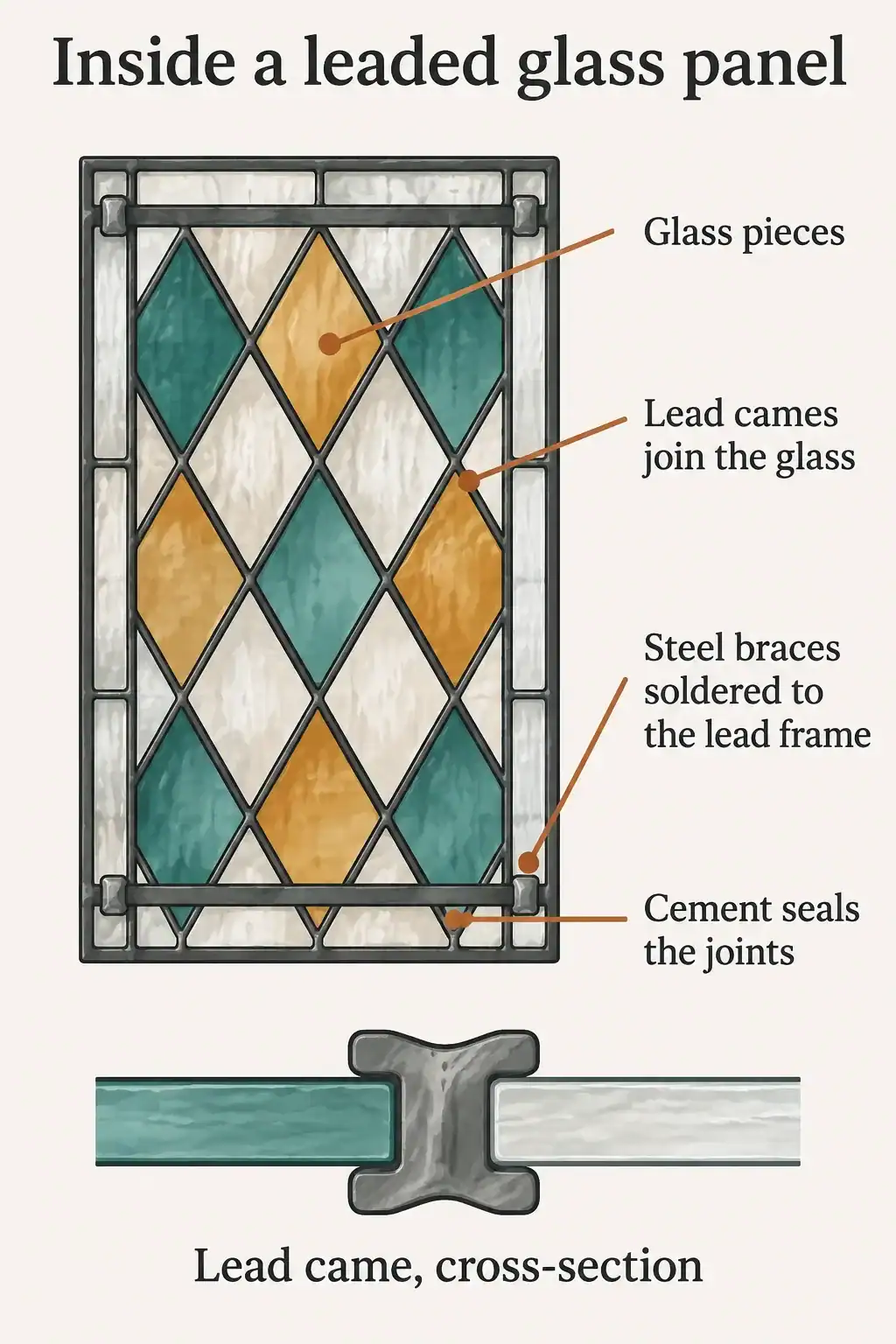
Craftsmen have joined glass with lead cames for centuries. The cames tie the pieces of glass into a panel, and in a sound window, steel reinforcement braces are soldered to the inside of the lead frame. Without braces the window would eventually sag and fall apart (Fine Homebuilding).
The finished panel is sealed with pigmented cement. A good design treats the lead lines as part of the pattern, and wider lead lines hide the braces. In strong outdoor light, the lead lines tend to fade and colors can look weaker than they did on the workbench.

What the building code says about glass in doors
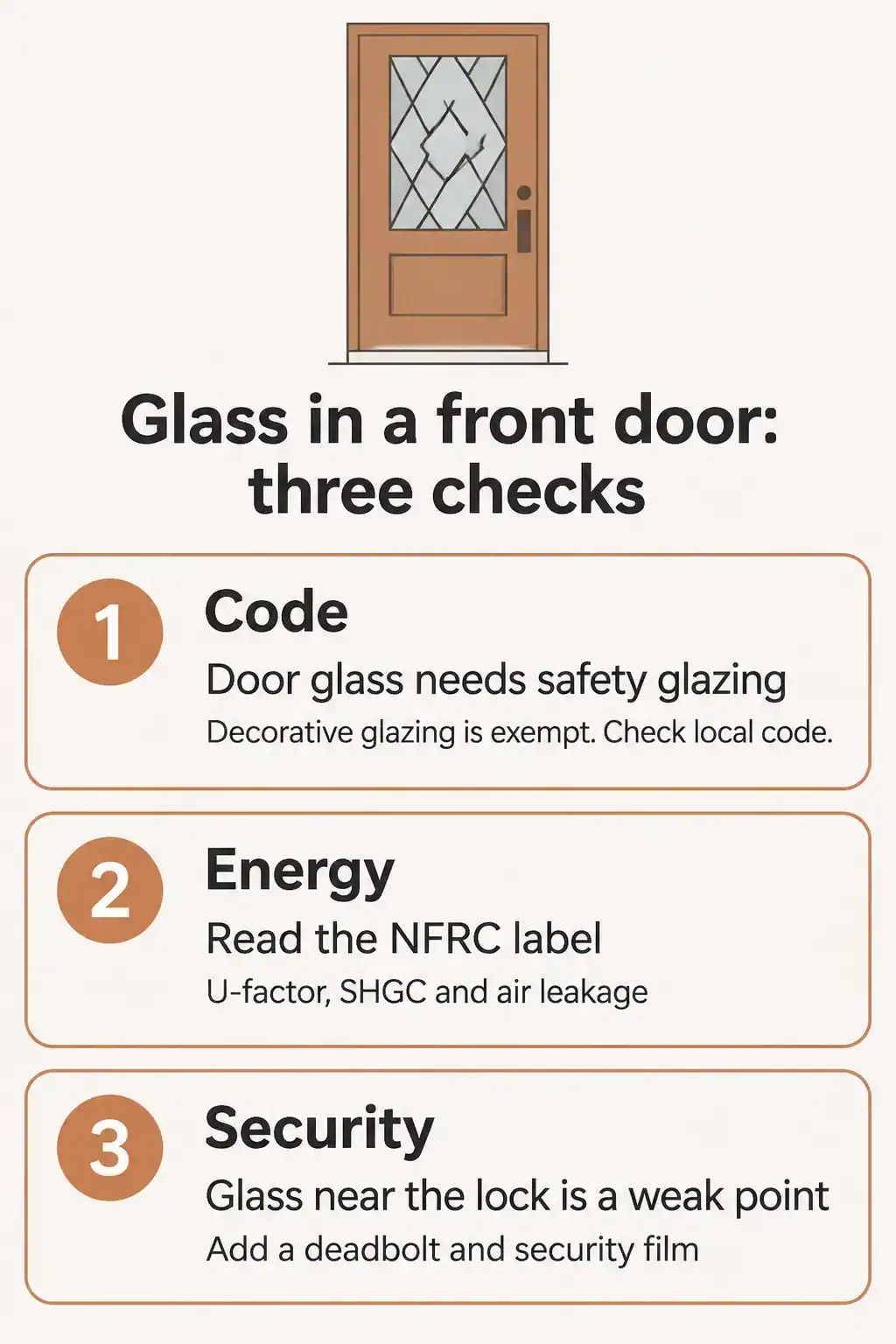
Under the International Residential Code, safety glazing is required in fixed and operable panels of swinging, sliding and bifold doors. The rule does not apply if the glazed openings do not let a 3-inch sphere pass, or if the glazing in the door is decorative. Each pane that needs safety glazing must carry a permanent label showing the glass type and standard (MyBuildingPermit safety glazing tip sheet).
The federal glazing standard has its own exemption for leaded glass in doors. It applies only if the coloring or texture cannot be removed without destroying the glass, the main purpose is decorative or artistic, the glass is conspicuously colored or textured, and it is divided into segments by conspicuous, plainly visible lines (16 CFR 1201.1). A panel that does not meet all four needs safety glazing.
Glass beside a door is covered too, when its lower edge is less than 60 inches above the floor and within 24 inches of the door. Whether a given art-glass panel counts as decorative is a local call, so ask your building department before you order.

Comfort and energy
Glass leaks heat, and leaded glass adds many joints. ENERGY STAR rates doors by how much glass they have and by their NFRC-certified ratings, so read the label for the actual unit (ENERGY STAR).
Ask whether the art glass sits inside a sealed insulated unit or stands alone. Either way, ask the maker for the whole unit’s U-factor, not just the glass.
Our take · Octopus Doors
If the door faces the weather, we would specify the art glass inside a sealed double-glazed unit rather than exposed. It protects the lead and the cement, and it makes the door more comfortable. Save the bare leaded panel for an inside door.
Security near the lock
Door glass can be smashed, and a panel next to the lock lets someone reach in and flip a deadbolt. The best fix is a solid door, and security film on the glass is a second choice, because it holds the broken pieces together (Bob Vila).
If you want the glass for the look, keep it away from the lock, and fit a deadbolt with a solid frame and a long strike plate screw.
Care and repair
Clean the glass gently with a soft cloth and keep water from sitting on the joints. If a panel bows, the cement is cracked or a piece rattles, take it to a stained glass studio rather than fixing it yourself, because the braces and lead need a craftsperson.
If cost or the code is the problem, stained glass window film is another way to get the look.
Before you order
- Ask whether the art glass sits in a sealed insulated unit or stands alone.
- Ask the building department whether the panel counts as decorative glazing.
- Keep glass away from the lock side, or add security film and a deadbolt.
- Ask for the whole door’s NFRC ratings.
- Choose a maker who can repair the panel later.
For the doors that carry glass, see our guides to front doors, French doors and security screen doors.
Related posts
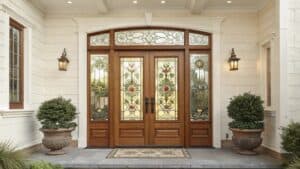 11 Stained Glass Door Interior Ideas
 15 Solid Wood Door Ideas Using Warm Stained Finishes
 How to Paint French Doors: Prep, Primer and Glass
 Sliding Glass Doors: The Hidden Shattering Dangers
 Are Glass Doors Required on Gas Fireplaces?
 12 Frosted Glass Interior Doors That Add Light Without Losing Privacy
 Wood or Glass Front Doors and What Each Gives Up
 Glass Shower Doors That Let the Tile Do the Talking