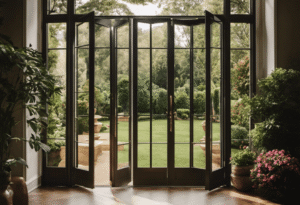
French doors swing open to 90 degrees, and with both leaves open an exterior pair gives you roughly 56 to 68 inches of clear width. Securing them comes down to bolting the passive leaf and strengthening the lock side.
The hinges and the center strip take a few inches off the opening. Know that number before you plan a furniture move or a rug.
How far French doors open
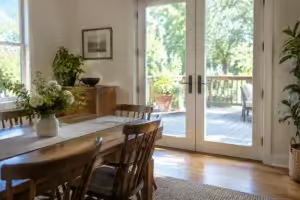
ItemFits says both leaves swing to 90 degrees. The active leaf has the handle and is used daily, and the inactive leaf is usually held by flush bolts at the top and bottom of its edge.
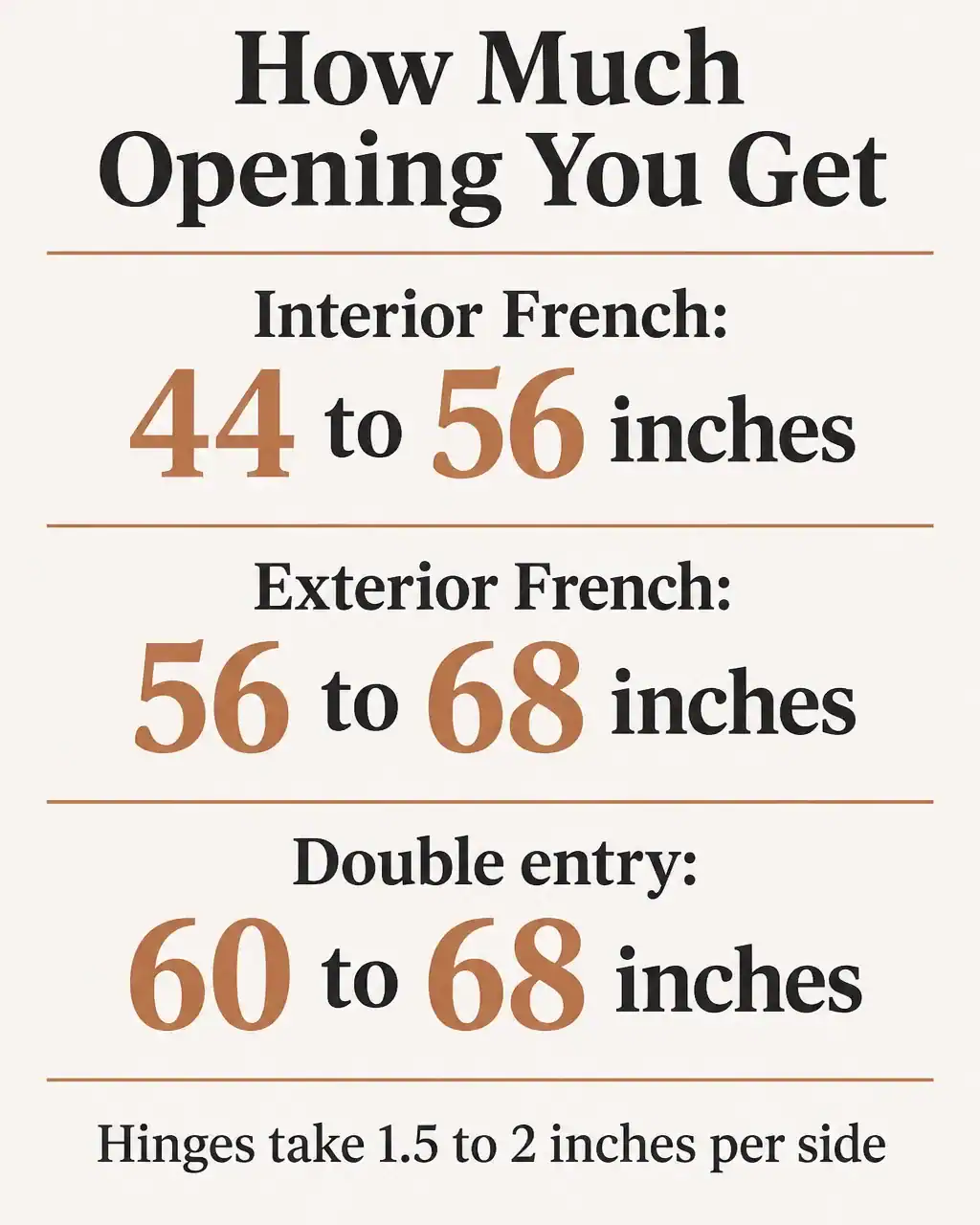
Its table lists a clear opening of 56 to 68 inches with both leaves open on an exterior pair, 44 to 56 inches on an interior pair and 60 to 68 inches on double entry doors. The page’s own summary quotes up to 72 inches, so measure your own opening.
What takes width away
Hinges intrude 1.5 to 2 inches per side, which comes off the clear width. The astragal, the vertical center strip, matters too.
An attached astragal is screwed or nailed to the inactive leaf, and removing it adds 1 to 2 inches. An integrated astragal, typically 1 to 1.5 inches wide, cannot come off without damaging the door.
For a big move, lifting a leaf off its hinges adds 1.5 to 2 inches.
Securing a French door pair
Anderson Lock and Safe starts with the passive leaf: flush or surface bolts at the top and bottom. ItemFits adds that leaving flush bolts disengaged is a security risk on exterior doors.
The active leaf takes a deadbolt or a multipoint lock, which secures the top, middle and bottom. Anderson says to choose Grade 1 or Grade 2 for entry doors.
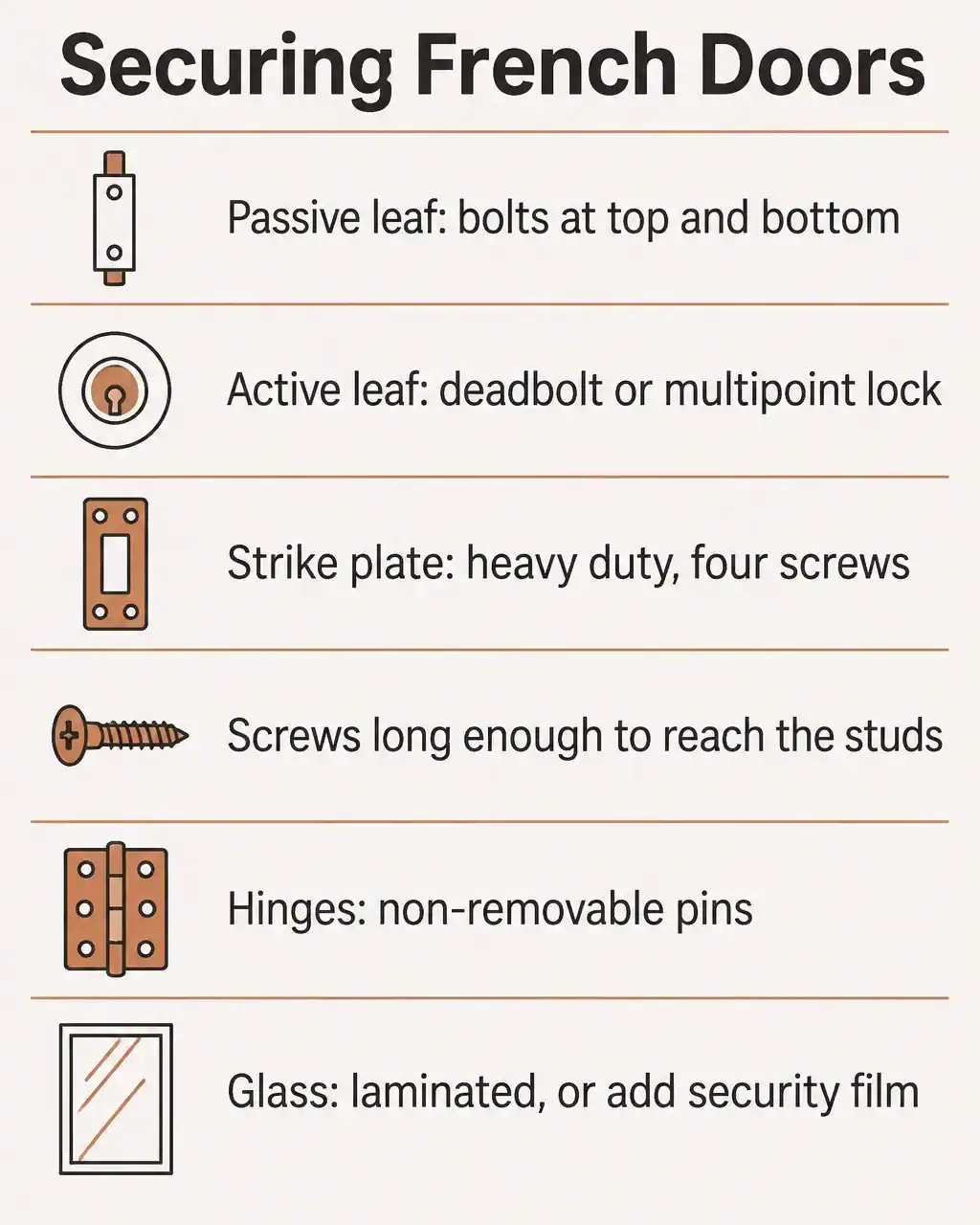
Use a heavy-duty strike plate with four screws and an extended length. Fit longer screws that reach the wall studs.
Swap exposed hinges for security hinges with non-removable pins or set screws. For the glass, laminated or tempered glass is best, and security film holds broken glass in place when replacement is not an option.
If you consider a double-cylinder deadbolt on a glass door, check egress and local code first, since it needs a key from inside.
Where the money goes · James Davis
I would spend on the lock side and the strike first. A multipoint lock, a heavy strike plate and long screws do more than any gadget, and bolting the passive leaf costs very little.
Before you plan
- Measure the clear opening with both leaves open, not the frame.
- Subtract 1.5 to 2 inches per side for hinges.
- Check whether the astragal is attached or integrated.
- Bolt the passive leaf at the top and bottom every time you lock up.
- Look up the lock grade, the strike plate and the screw length.
For the solid-door question, see whether French doors can be solid, and whether there are single French doors covers the one-leaf case. Why French doors have the knob in the middle explains the handle position.
Related posts
 How to Choose a Front Door Thats Secure Solid and Timeless
 How to Make a Front Door More Secure Without Making It Look Industrial
 Ideas for Keeping French Doors Open
 How Far Do French Doors Open
 Should French Doors Open Inwards or Outwards
 17 Interior French Door Ideas That Instantly Open Up Small Rooms
 12 Door Mat for Double Front Doors Wide Enough to Span Both
 4-Panel Sliding Patio Doors for Wide Openings That Actually Look Custom