A security screen door is a heavy outer door that sits in front of your main door and keeps people out while letting air in. It adds a layer, but it only helps if the door behind it, the frame and the lock are sound.
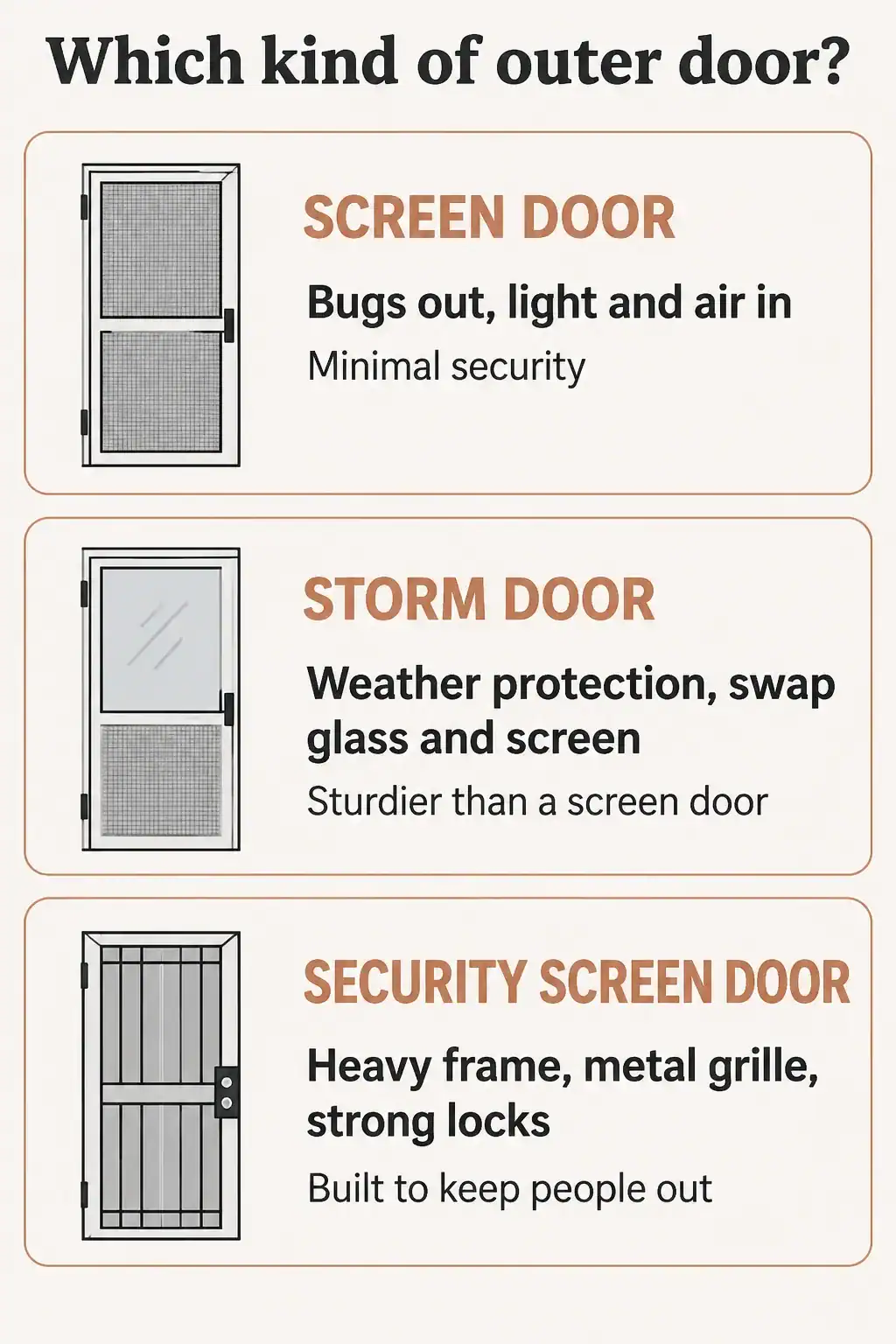
This page covers how a security screen door differs from the other two, what it does and does not protect, and which parts of the entry to fix first.
Security screen door, storm door and screen door compared
A storm door is built for weather. It has removable or adjustable glass and screen inserts that you switch with the seasons, and it is sturdier than a typical screen door. A plain screen door is lighter, and it keeps out bugs and debris, but it is not a reinforced door and offers minimal security (Family Handyman).
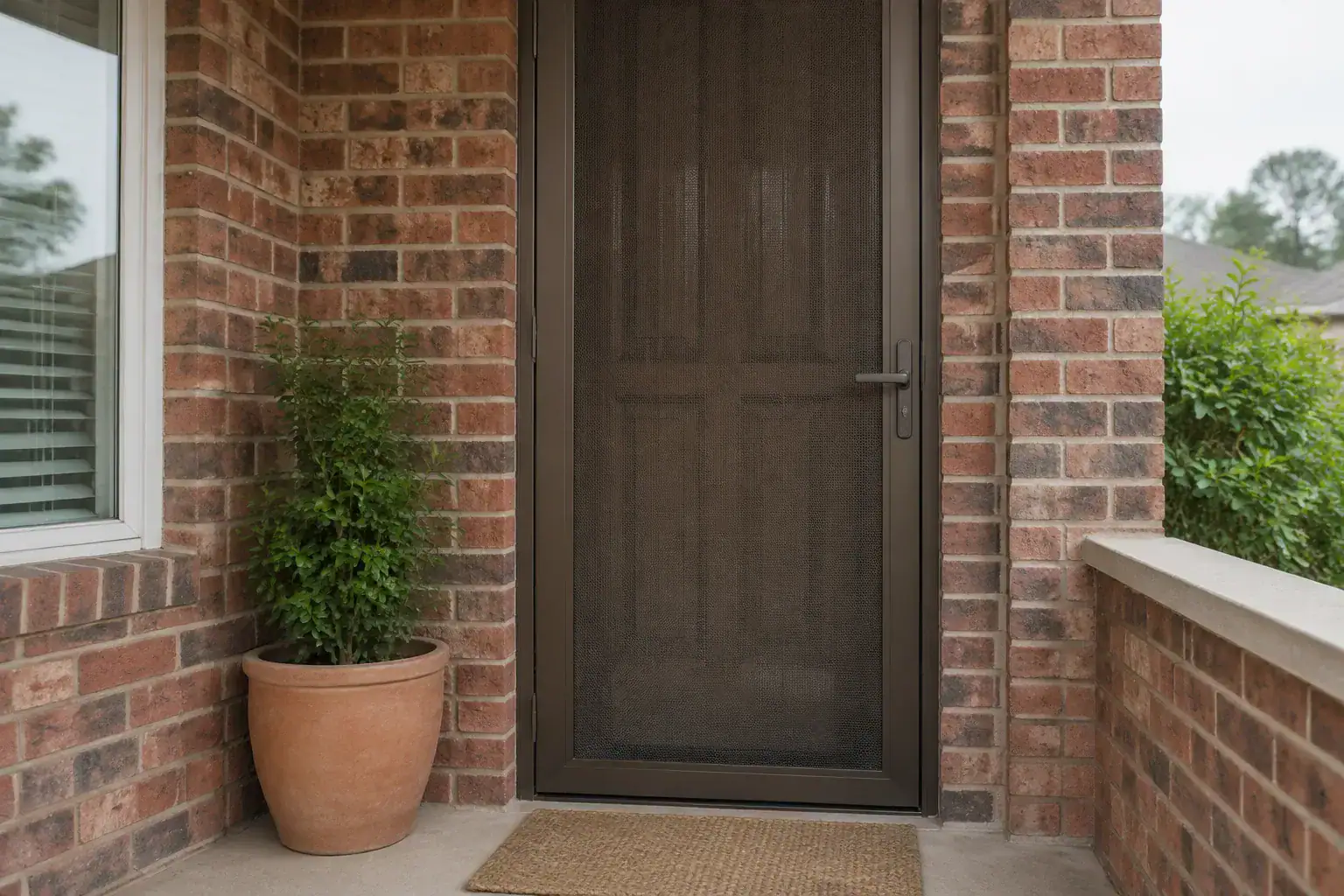
A security screen door is heavier than both. It has a strong metal frame, a metal grille or mesh panel, and usually a lock of its own. It mounts on the outside of your front or back door, so you can leave the inner door open for air and light and the metal panel still stops a person walking in.
Steel or aluminum?
Security screen doors are made from steel, aluminum or a mix. Steel is stronger and costs less if it is coated well, and a good coating keeps it rust-resistant for years. Aluminum is lighter, so the sections need to be thicker to match steel’s strength, and only the heavier models resist rust well.
Most security screen doors have no glass, because glass can be broken and someone can reach through the hole. That is also why the metal panel is the main feature.
What does a security screen door not fix?
A front door is only as secure as its frame, hinges and strike plate. Bob Vila’s guide suggests replacing a split or cracked frame, and swapping the short screws in a strike plate for screws at least 3 inches long (Bob Vila).
It also warns that hollow-core doors, older rotted wood doors and doors with large panes of glass are a liability in an exterior entry. A solid-core door in wood, steel or fiberglass with a wood core is the safer base.
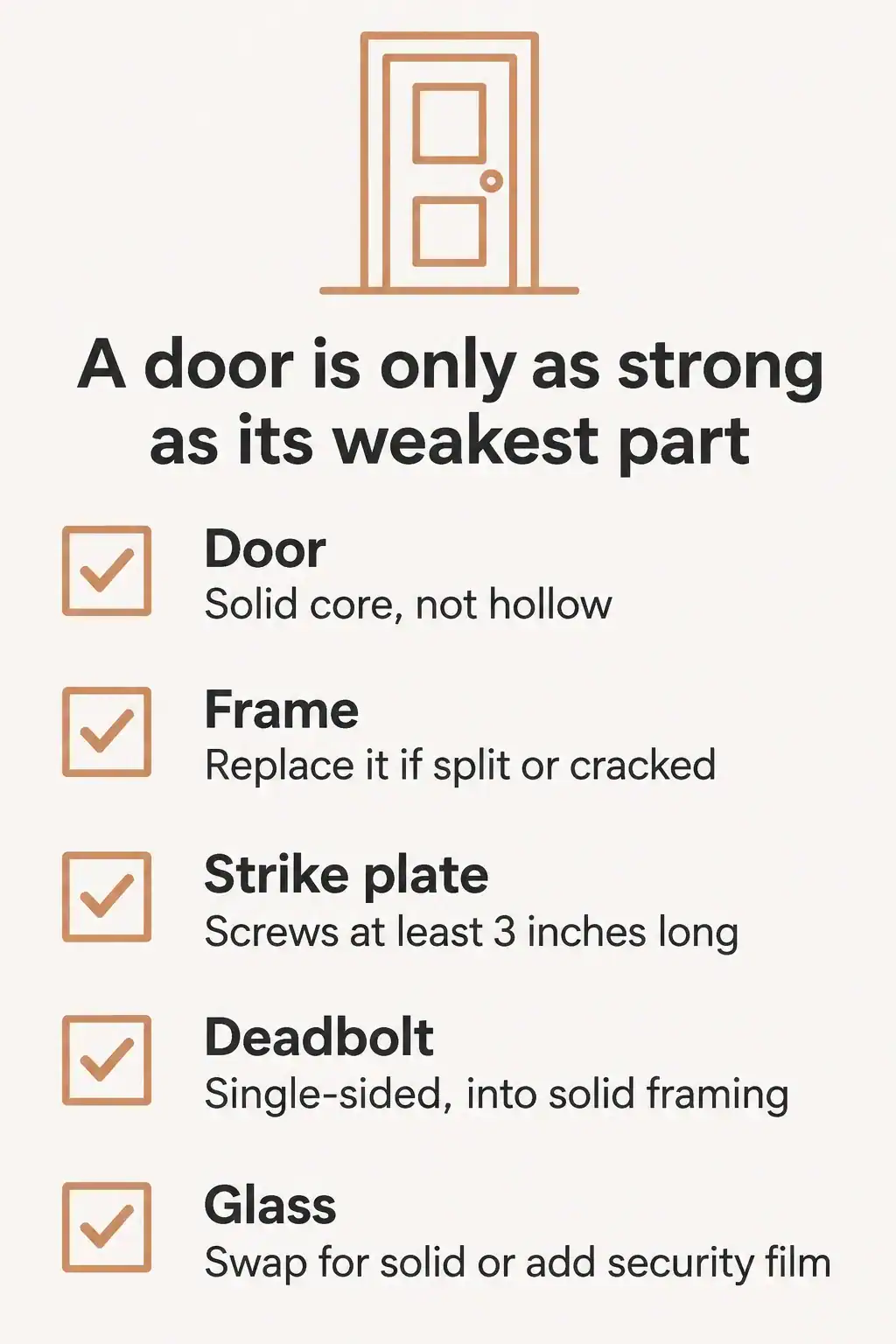
Twist-in or push-button handle locks are only a backup, because a kick can defeat them. The guide suggests adding a single-sided deadbolt. For glass in the door, the best fix is a solid door, and security film that bonds to the glass is a second choice.
Our take · Octopus Doors
A security screen door is worth buying for a back door or a front door that faces a lane or a dark side yard. Spend the money on the frame and strike plate first, and add the screen door after. A heavy outer door on a weak frame protects nothing.
Keep an exit you can open from inside
The International Residential Code says the required exit door must open from inside without a key or special knowledge (AIBD summary of IRC R311.2). That rule applies to your main exit door.
Our advice is to choose a security screen door whose latch you can open from inside in the same way, with no key. Check this with the maker and your local building department before you buy.
Before you order
- Check the frame, hinges and strike plate on the door behind it first.
- Choose a steel or heavy-gauge aluminum model with a coated finish.
- Look for a model with a lock that opens from inside without a key.
- Measure the door opening with and without the trim.
- Ask whether professional installation includes the warranty.
For the door behind it, compare steel doors and solid core wood doors, or read about front door materials.
Related posts
 Purr-fect Screen Doors: Keeping Cats Safe and Happy
 Upgrade Your Home Security With Ring Compatible Door Locks
 Revolutionizing Security: The Rise of Smart Locks for Gates
 12 Door Security Upgrades for Weak Frames
 Storm and Screen Doors: How to Choose and What They Cost
 10 Screen Door Ideas for French Doors
 Screen Door Won’t Unlock: A Troubleshooting Guide
 What To Do When Your Screen Door Gets Stuck Closed