As an Amazon Associate we earn from qualifying purchases.
Aluminum doors have slim frames, take a lot of glass and need almost no upkeep, which is why they are the usual choice for patio doors, storefront entries and garage doors. The catch is heat: aluminum conducts it fast, so the frame design matters more than the metal.
This page explains what you get from an aluminum door, the one feature to insist on in a cold climate, and what to ask before you order.
Why people choose aluminum
Aluminum frames are light, strong and durable, and they extrude into the thin, complex shapes that glass doors need. Finishes such as anodizing and factory-baked enamel are extremely durable and low-maintenance (Efficient Windows Collaborative).
ENERGY STAR describes aluminum frames as durable, low maintenance and recyclable, and typically at least 15% recycled content (ENERGY STAR). Aluminum will not rot or warp, and termites do not eat it.

The heat problem and the thermal break
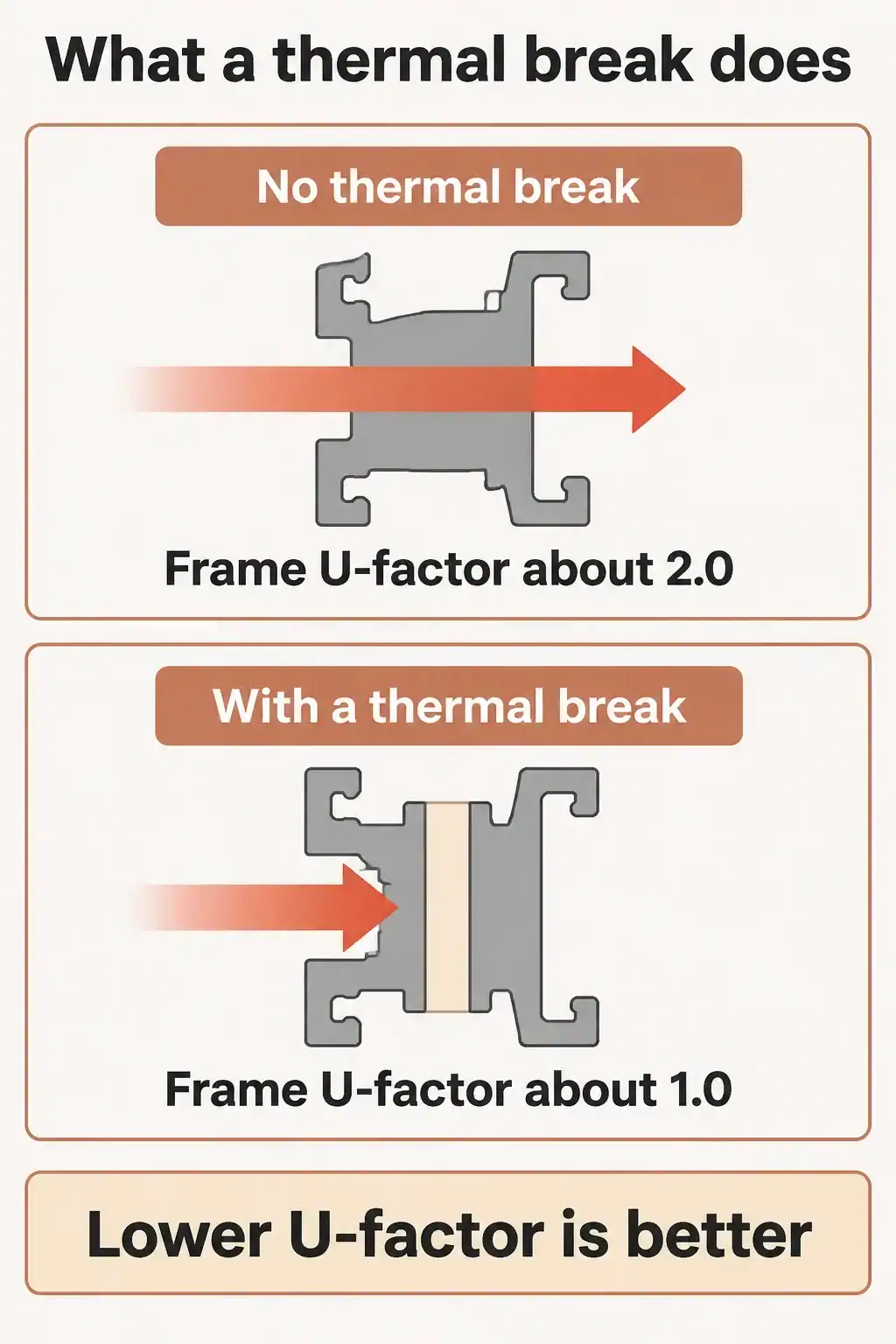
Aluminum’s biggest drawback as a frame material is its high thermal conductance. It conducts heat readily, which raises the U-factor of the whole unit. In cold climates a simple aluminum frame can get cold enough to collect condensation or frost on its inside surfaces.
The usual fix is a thermal break: the frame is split into interior and exterior pieces joined by a less conductive material. With standard thermal breaks, aluminum frame U-factors have dropped from roughly 2.0 to about 1.0 Btu/hr-sq. ft-°F, and lower is better.
In hot climates, where solar gain matters more than conducted heat, the glass can be more important than the frame. The same source says the insulating value of the frame matters less there than choosing high-performance glazing.
Our take · Octopus Doors
If you live where winters are cold, treat the thermal break as a must-have and do not accept “aluminum” on its own as a spec. In a hot, sunny climate, put the budget into the glass and its SHGC rating first.
Where aluminum doors work
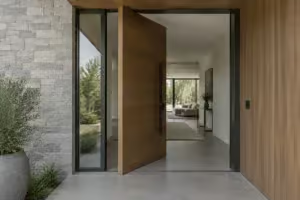
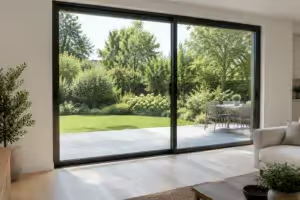
Aluminum suits tall or wide openings, sliding and stacking doors, patio doors and commercial entries. It also suits garage and shutter doors, which are often made from light aluminum sheet.

You can pair glass panels with aluminum frames for visibility, and many makers offer custom sizes and a range of colors. For other options in the same opening, compare fiberglass door benefits and steel door pros and cons.
Custom sizes and finishes
Aluminum doors are often made to measure rather than bought off the shelf. That is useful for an odd opening, and it means the maker will ask for exact dimensions. Measure the opening at several points, and send the maker the smallest width.

Shop this idea
Exact numbers start with a real tape
- TAPE MEASUREStanley FatMax Tape Measure, 25 ft, 2 PackShop on Amazon
Questions to ask before you order
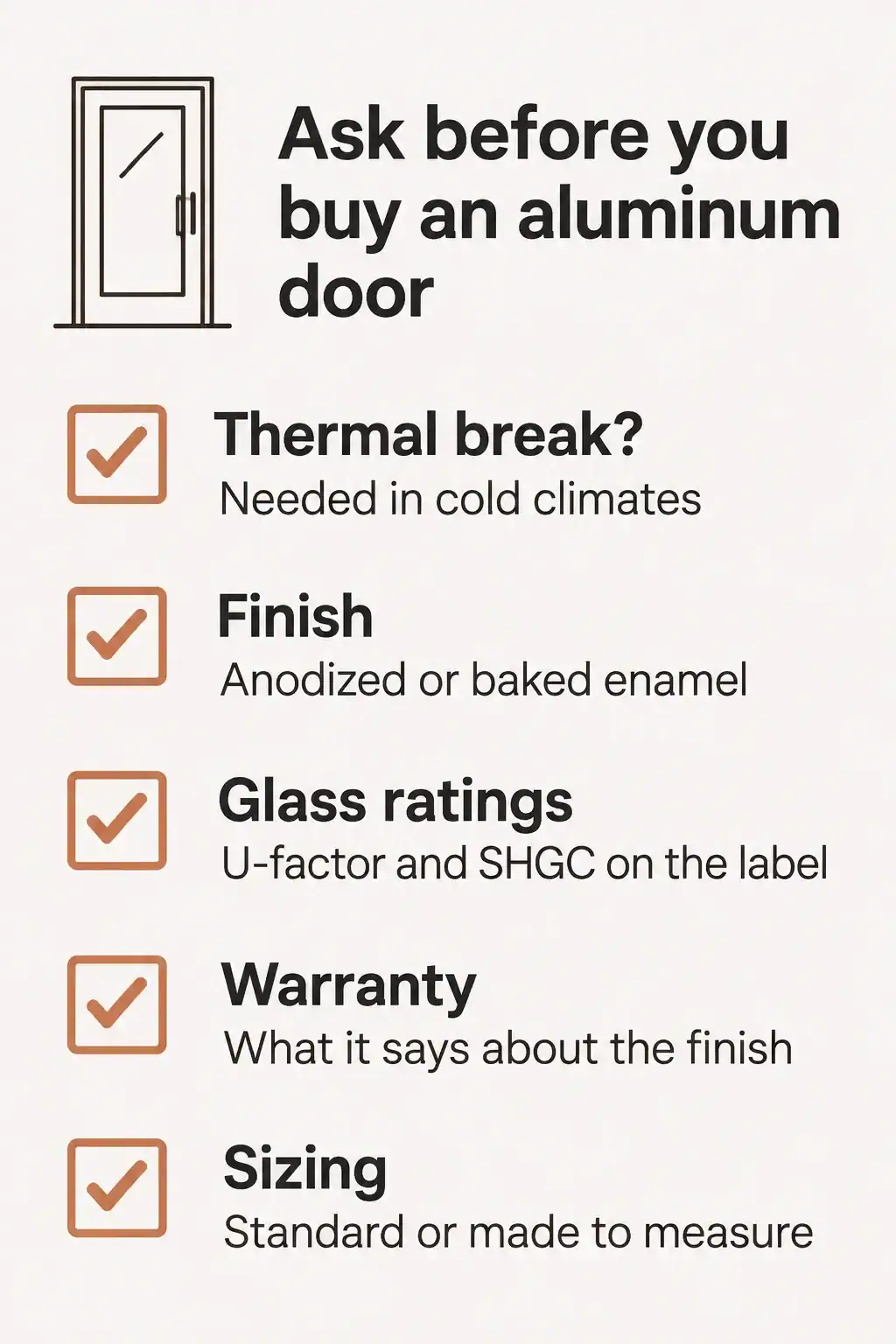
- Does the frame have a thermal break, and what is its U-factor?
- Is the finish anodized or baked enamel, and what does the warranty say about it?
- What are the glass U-factor and SHGC on the NFRC label?
- Is the door a standard size or made to measure?
- Who installs it, and does the warranty cover the installation?