Vinyl is the cheapest frame material for patio and entry doors, and it needs almost no upkeep. The trade-off is a looser seal than premium frames, so the questions to ask are about the frame construction and the label, not the price.
Vinyl doors, called uPVC in some countries, are made from a rigid plastic frame, often with glass. This page covers what you get for the low price, what to check, and how to look after one.
What vinyl costs next to other frames
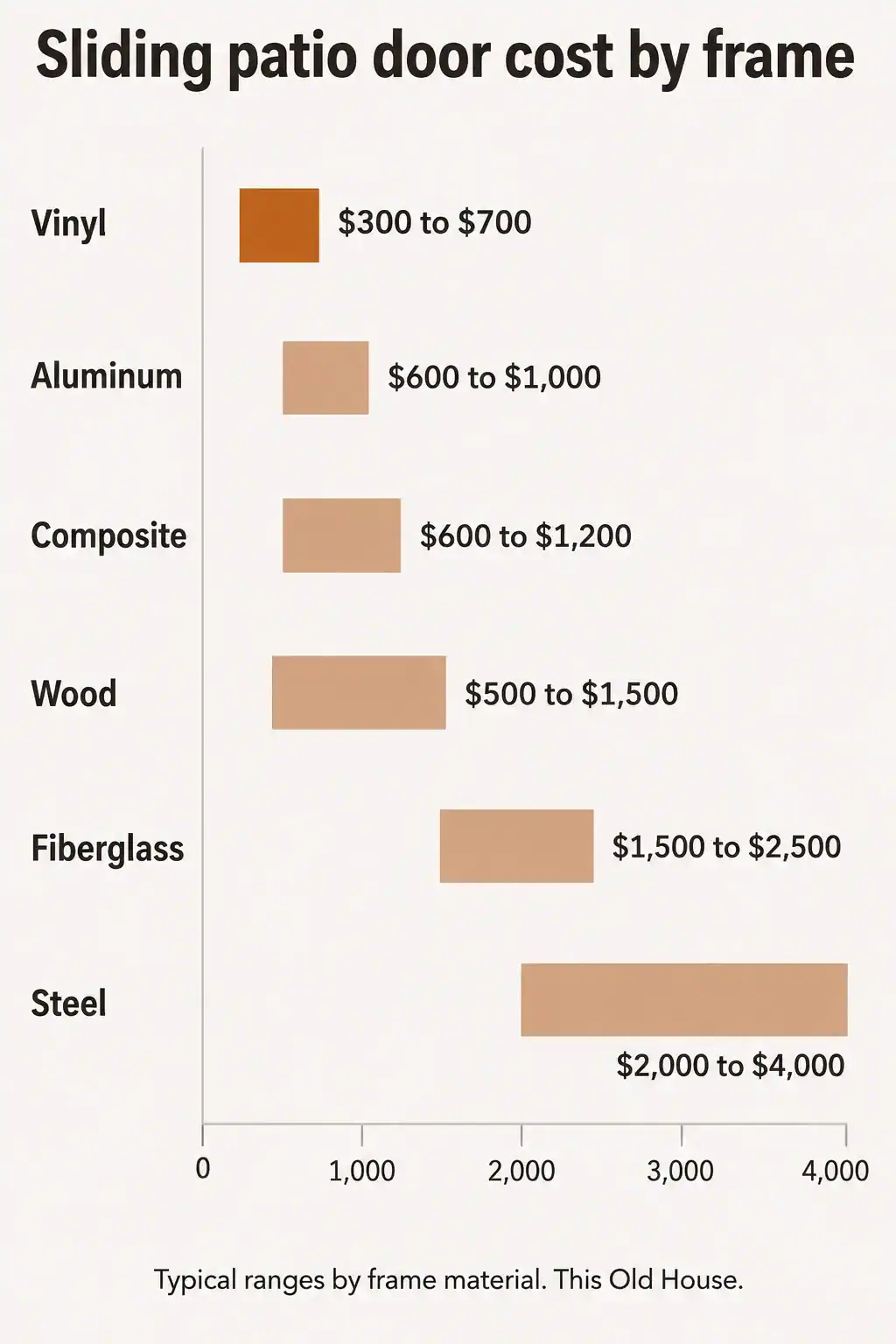
This Old House gives typical sliding patio door ranges by frame: vinyl $300 to $700, aluminum $600 to $1,000, composite $600 to $1,200, wood $500 to $1,500, fiberglass $1,500 to $2,500 and steel $2,000 to $4,000. Its summary is that vinyl is popular for its affordability and low maintenance, but does not seal as tightly as more energy-efficient options.
These are ranges from the publisher’s cost research, not quotes, and the total for a job depends on size, glass, brand and labor. Installation of a sliding patio door can run from $600 to $10,000 overall.

How a vinyl frame is built
ENERGY STAR describes vinyl frames as low maintenance with good thermal insulation. Sections may be hollow or filled with foam insulation, and wide vinyl sills may be reinforced with metal or wood (ENERGY STAR).
That makes the frame construction the thing to ask about. Two vinyl doors that look the same can differ in whether the sections are foam-filled and whether the sill is reinforced.
Care and cleaning
Vinyl needs little refinishing, which is why it suits owners who want an easy-care door. Pella’s guide says fiberglass and vinyl patio doors both require minimal refinishing, while wood needs more exterior maintenance (Pella).
A wipe with a damp cloth is the usual cleaning, and you do not stain or varnish it. Termites and insects do not eat vinyl.

Our take · Octopus Doors
Vinyl is a sensible pick for a rental, a shaded patio or a budget renovation. If the door takes strong sun all afternoon or sees big temperature swings, price fiberglass beside it before deciding. The seal and energy numbers on the label can differ more than the look does.
What to ask before you buy
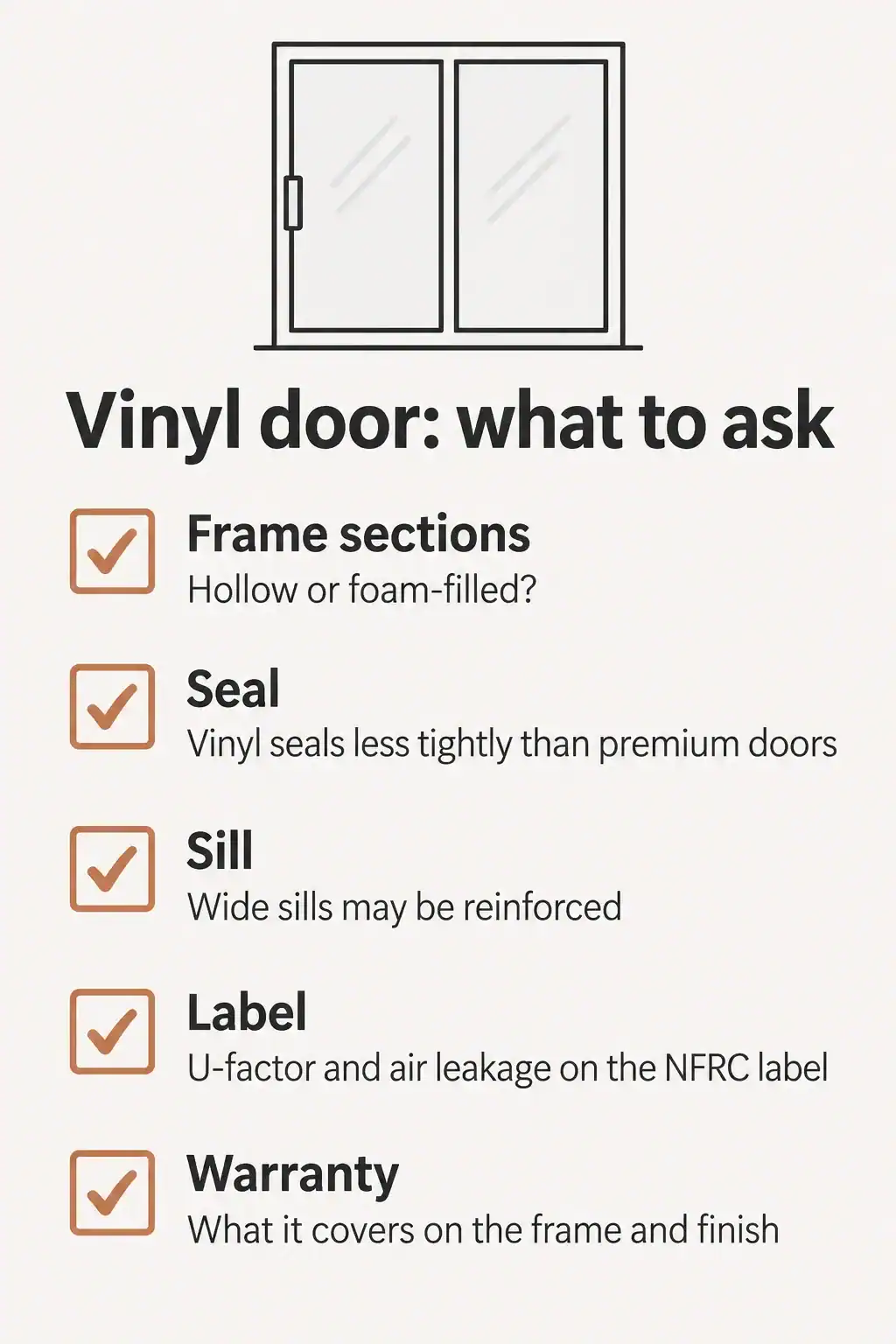
Ask for the NFRC label, which shows U-factor, solar heat gain and air leakage for the exact unit. ENERGY STAR sets limits for doors by glazing level, so a certified vinyl door will meet them, and an uncertified one may not.
Also ask what the warranty says about the frame and the finish, who installs the door, and whether the installer’s work is covered. A sliding patio door can weigh 100 pounds or more, so hire a professional if you lack the equipment.
Before you order
- Compare vinyl with aluminum, composite and fiberglass for your climate and budget.
- Ask whether the frame sections are foam-filled and whether the sill is reinforced.
- Check the NFRC label for U-factor and air leakage.
- Read the warranty for frame and finish terms.
- Plan for professional installation.
To compare materials, read about fiberglass doors, aluminum doors and sliding doors.