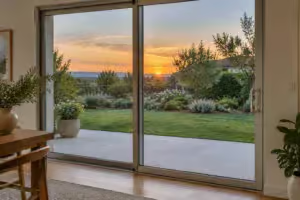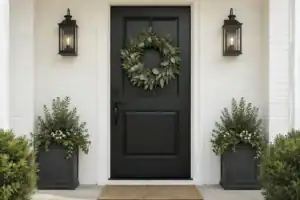
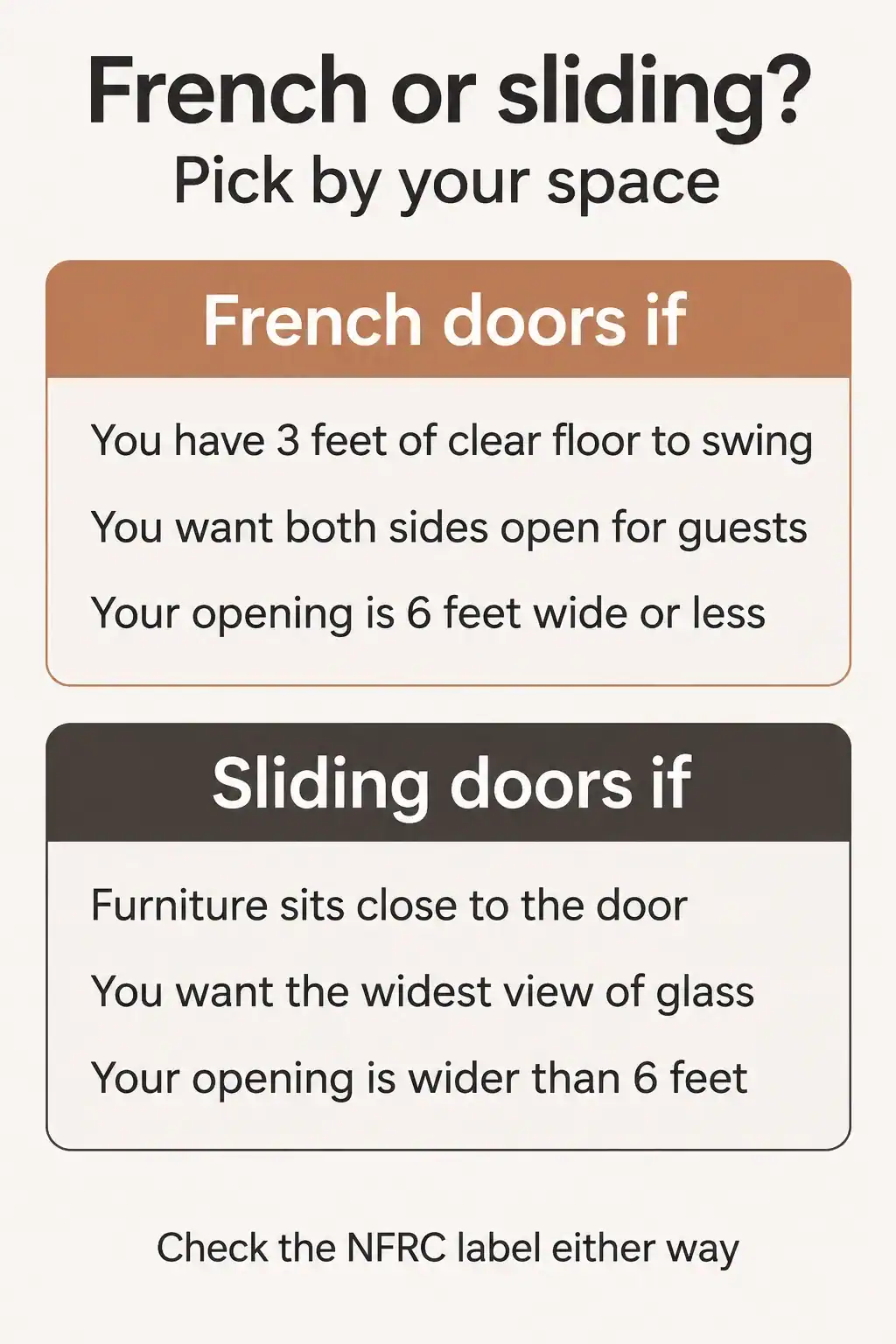
French doors vs sliding patio doors comes down to floor space, width and how tight a seal you can keep for years. Pick French doors for a pair up to about 6 feet wide, a room you want to open fully for guests, and a patio with space to swing.
Pick sliding doors when furniture sits close to the glass, the opening is wider than 6 feet, or you want the biggest view you can get. The chart sorts it by your space, and the sections below show the numbers behind it.
How much floor space does each one need?
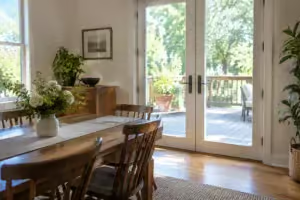
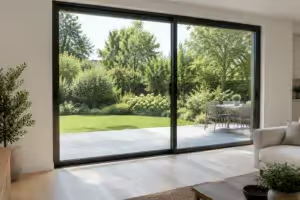
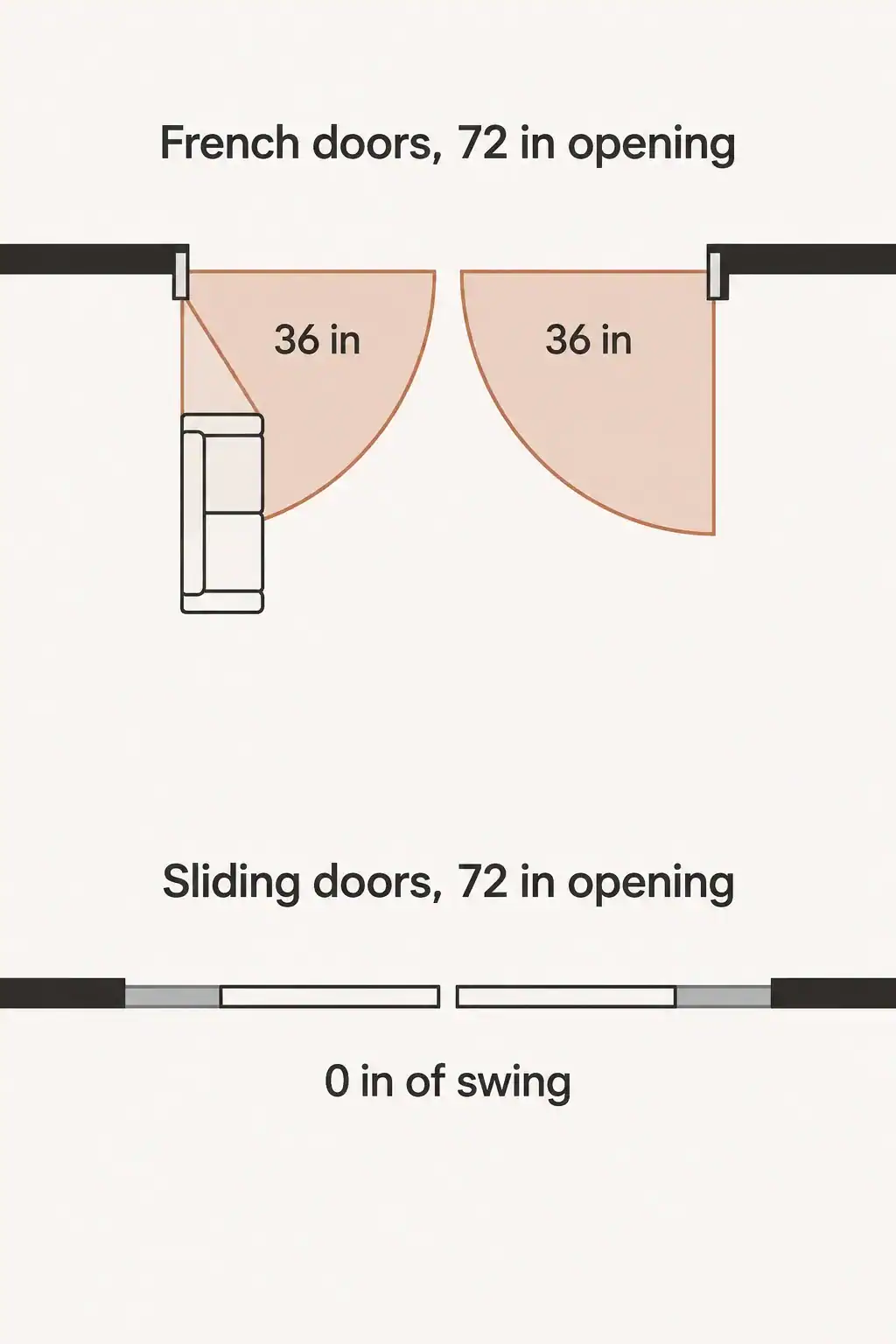
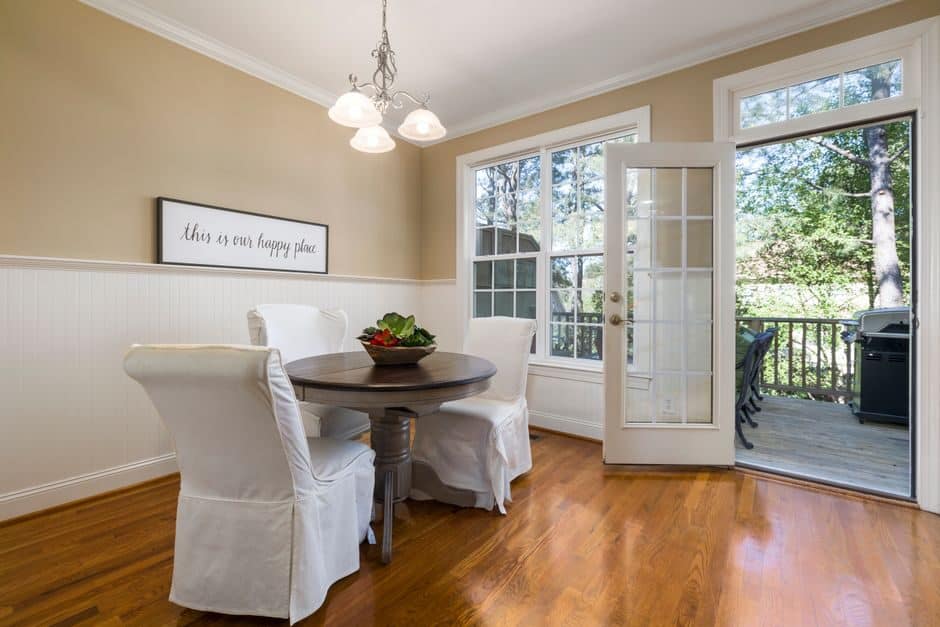
French doors swing, so you give up floor. An inswing pair sweeps into the room, and an outswing pair sweeps over the patio or deck. Sliding doors have no swing path, though the panels stack to one side and each panel still needs wall space when open.
The math is simple. A standard French pair in a 72-inch opening is two leaves of about 36 inches each, and each leaf needs about 36 inches of clear floor to swing.
A sofa arm, a plant stand or a dining chair inside that arc will stop it. That is my own calculation from standard widths, not a manufacturer rule, so measure your own room before you fall for a photo.
Check the other side as well. An outswing pair needs room on the patio, and a grill or a bistro table parked next to the door will block it.
Width decides more than style does
Standard swinging doors run 48 to 72 inches wide and sliding doors run 60 to 96 inches, both usually 80 inches tall, according to Angi’s size guide. Custom sizes go wider for both.
Multi-panel sliders reach further. Some systems with three or four panels span up to 16 feet. A French pair does not get there in standard sizes, so a wide opening points to a slider, or to a sliding French door where both panels glide and nothing swings.
Sliding French door styles shows how that looks on a real patio. Measure the rough opening first, and let it narrow your list. How to measure for a sliding patio door walks through that step for a replacement.
Sealing: the sources disagree
The Department of Energy’s consumer brief on exterior doors says swinging doors seal much tighter than sliding types. It adds that sliding glass doors lose heat much faster than other doors, because the weatherstripping wears as the door ages and a door that has to move cannot be sealed completely.
Dealer and manufacturer guides say close to the opposite. Their case is that sliders have fewer seal points and that the center joint of a two-leaf French pair is where air gets in.
Both can be true. A new, well-built door of either kind can seal well, and an old one of either kind will leak.
So compare the product, not the type. Every NFRC label lists U-factor and solar heat gain for that exact door, and ENERGY STAR’s door criteria are based on NFRC-certified ratings, the amount of glass and your climate zone.
Our take · James Davis
For a wide deck door I would go slider, and for a narrow formal dining room I would go French. In both cases I would put the money into the seals and the lock rather than into decorative grilles. The full numbers are in the French vs sliding energy efficiency comparison.
French and sliding doors side by side
Here is everything above in one table, with what each type asks of you after the install.
| French doors | Sliding patio doors | |
|---|---|---|
| Standard width | 48 to 72 in | 60 to 96 in, up to 16 ft with more panels |
| Floor space | Swing arc as wide as each leaf | None; panels stack at the side |
| Airflow | Both leaves open fully | One panel moves on a standard slider |
| Glass and view | Wider frames, smaller panes | Larger panes, wider view |
| Seal | Compression seals; center joint can leak | Fewer seal points; seals wear as it ages |
| Upkeep | Hinges and seals | Track and rollers |
| Installed cost | $1,000 to $5,000 | $800 to $4,300 |
The cost row is the one people argue about, so it gets its own section.
What each one costs installed
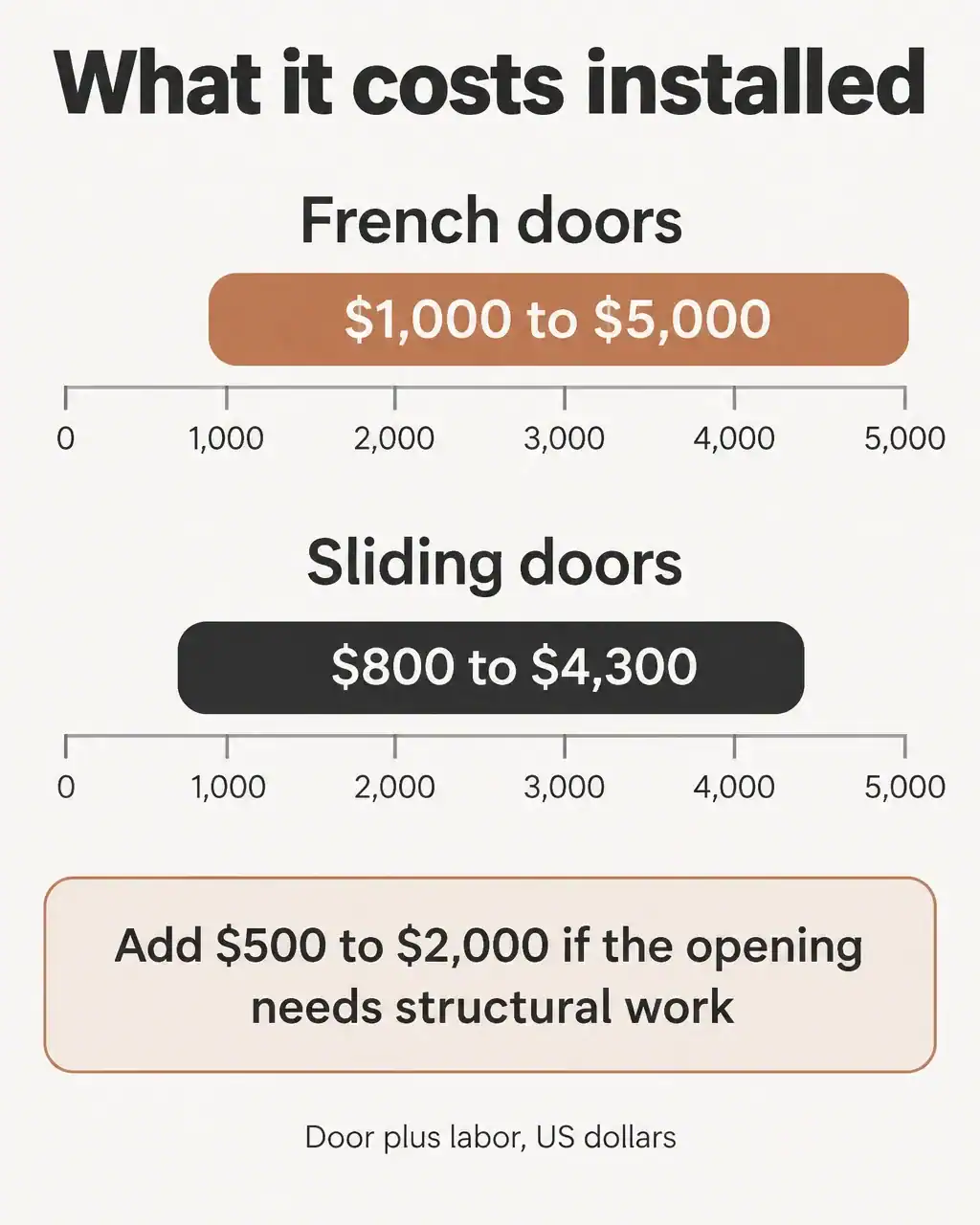
Flooring Clarity’s 2025 comparison puts French door units at $500 to $4,000 plus $500 to $1,000 for labor. Sliding units run $400 to $3,500 plus $400 to $800. Adding those gives about $1,000 to $5,000 for French and $800 to $4,300 for sliding.
LawnStarter’s 2026 patio door guide lands in the same area. It reports an average of $2,275 installed and a typical range of $1,265 to $3,165, with material moving the price: installed vinyl runs $720 to $1,900 and fiberglass $1,450 to $3,165.
Watch the extras. A slider screen adds $125 to $285 and a lock $35 to $265.
Widening an opening or reinforcing a header can add $500 to $2,000, and a swap from slider to French can trigger it, since the opening may need new framing. What French patio doors cost to install breaks the bill down further.
Lock either one properly
A slider’s weak spot is its latch. The King County Sheriff’s office says sliding glass doors use latches that can be forced open from the outside, and that older doors can be lifted off their track.
A French pair has a different weak spot, which is the center where the two leaves meet. Without bolts and a good deadbolt, that joint is the soft point.
- Slider: a snug track blocker or a wooden dowel cut to fit the track.
- Slider: an anti-lift pin through both the sliding and the fixed panel, plus rollers kept adjusted.
- French pair: steel flush bolts at the top and bottom of the inactive leaf, with at least a 1-inch throw.
- French pair: a single-cylinder deadbolt with a 1-inch throw and a four-screw strike plate with screws at least 3 inches long.
For the longer security rundown, see which is safer, sliding glass or French doors and how to make a sliding patio door more secure.
Upkeep, screens and the view you get
Sliders collect dirt in the track, and after years the rollers can make the door hard to move. A hinged door has no track, but its hinges and seals need a look now and then. If you have a low threshold in mind, ask about a low sill option, since a slider’s threshold can affect the flooring.
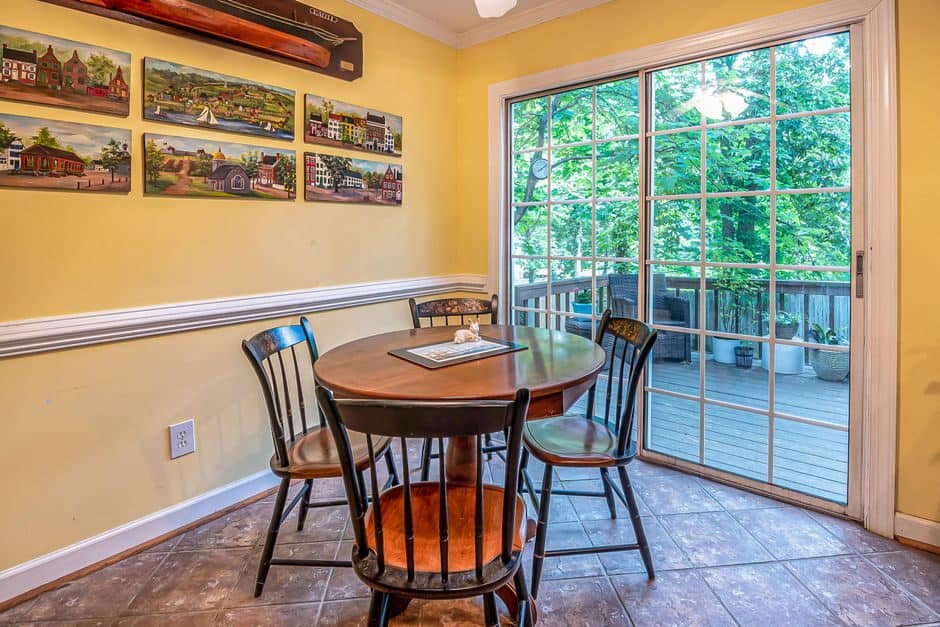
French doors usually have more frames and smaller panes, so you see less glass. For airflow they win on a warm evening, because both leaves swing open. Ask the dealer how the screen works on a French pair before you order, since the screen has to clear the leaf.
Where I land
From the yard, a pair of French doors reads as part of the house, and a slider reads as a big window. If looks and swing room both work, I would pick French. If either one is a problem, slide.
Four checks before you order
- Measure the clear floor inside and outside the door and compare it with half the opening width.
- Measure the rough opening and match it to the standard widths above.
- Read the NFRC label on your two top picks and compare U-factor and solar heat gain.
- Price the lock, screen and any framing work, then add them to the quote.
If two doors tie, choose the one with the better seals and the simpler hardware. That is the one that still works well in ten years.
Can I replace a sliding door with French doors?
Yes, but a slider opening is often wider than a standard French pair, and the change may need new framing and added cost. Ask the installer to check the header before you order.
Is a sliding French door the same as a sliding patio door?
Not quite. On most sliding patio doors one panel is fixed and one slides, while on a sliding French door both panels typically slide. Both avoid a swing path.
Which one is easier to install?
Sliders are generally described as simpler to hang, and French doors cost more to install because the leaves have to be hung and aligned. Neither is a casual weekend job, since the opening has to be level, plumb and flashed.
Related posts
 11 Sliding French Doors Patio Ideas
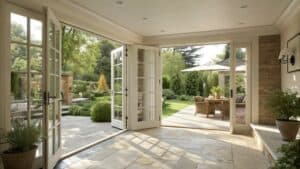 17 Gorgeous Light-Filled Patio French Door Ideas
 15 Inspiring Indoor-Outdoor Patio French Door Ideas
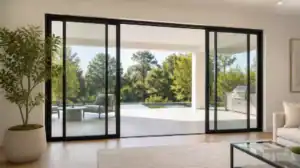 4-Panel Sliding Patio Doors for Wide Openings That Actually Look Custom
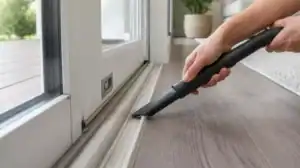 Why Sliding Patio Doors Get Harder to Open Over Time
 Are Sliding Doors or French Doors More Energy Efficient?
 10 Curtains for Sliding Patio Door Ideas That Frame the View Not Fight It
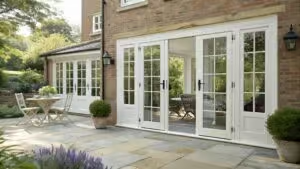 9 Patio French Door Ideas