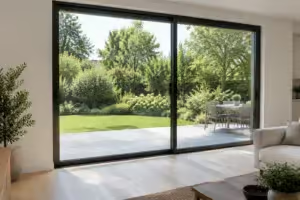
A sliding door gives you a wide opening and a view without losing any floor to a swinging leaf. The trade-offs are safety glass, the energy label and a track that needs cleaning, and each is easy to plan for if you know what to ask.

This page covers how sliding doors work, what the rules say about the glass, how to read the energy numbers, and how to fix one that sticks.
How a sliding door works
A sliding door panel hangs on rollers and runs along a track, usually with a guide at the top that keeps it aligned. Weatherstripping seals it when shut (This Old House).
Because the panel moves sideways, it needs no swing room. That makes sliders a good fit for narrow halls, small rooms and patios.

A heavy glass panel is harder to move and wears its rollers faster, so check the weight and the quality of the track when you compare doors. A wide opening may suit a stacker or a bifold better than a single slider.
What the code says about the glass
Under the International Residential Code, safety glazing is required in fixed and operable panels of swinging, sliding and bifold doors. Tempered and laminated glass both count. Each pane must carry a permanent manufacturer’s label showing the glass type and safety standard, and the rule does not apply to decorative glazing or openings that do not let a 3-inch sphere pass (MyBuildingPermit safety glazing tip sheet).
Glass beside a door is covered too when its lower edge is less than 60 inches above the floor and within 24 inches of the door. Your jurisdiction may use a different code edition, so ask your building department which one applies.
Large clear panels are easy to walk into. Decals or markers at eye height help, especially with children or guests.
Reading the energy numbers on a glass slider
Doors with lots of glass, such as a sliding patio door, are rated by their glazing level and by NFRC-certified ratings. Doors can insulate better than windows because they have less glass relative to the frame (ENERGY STAR).
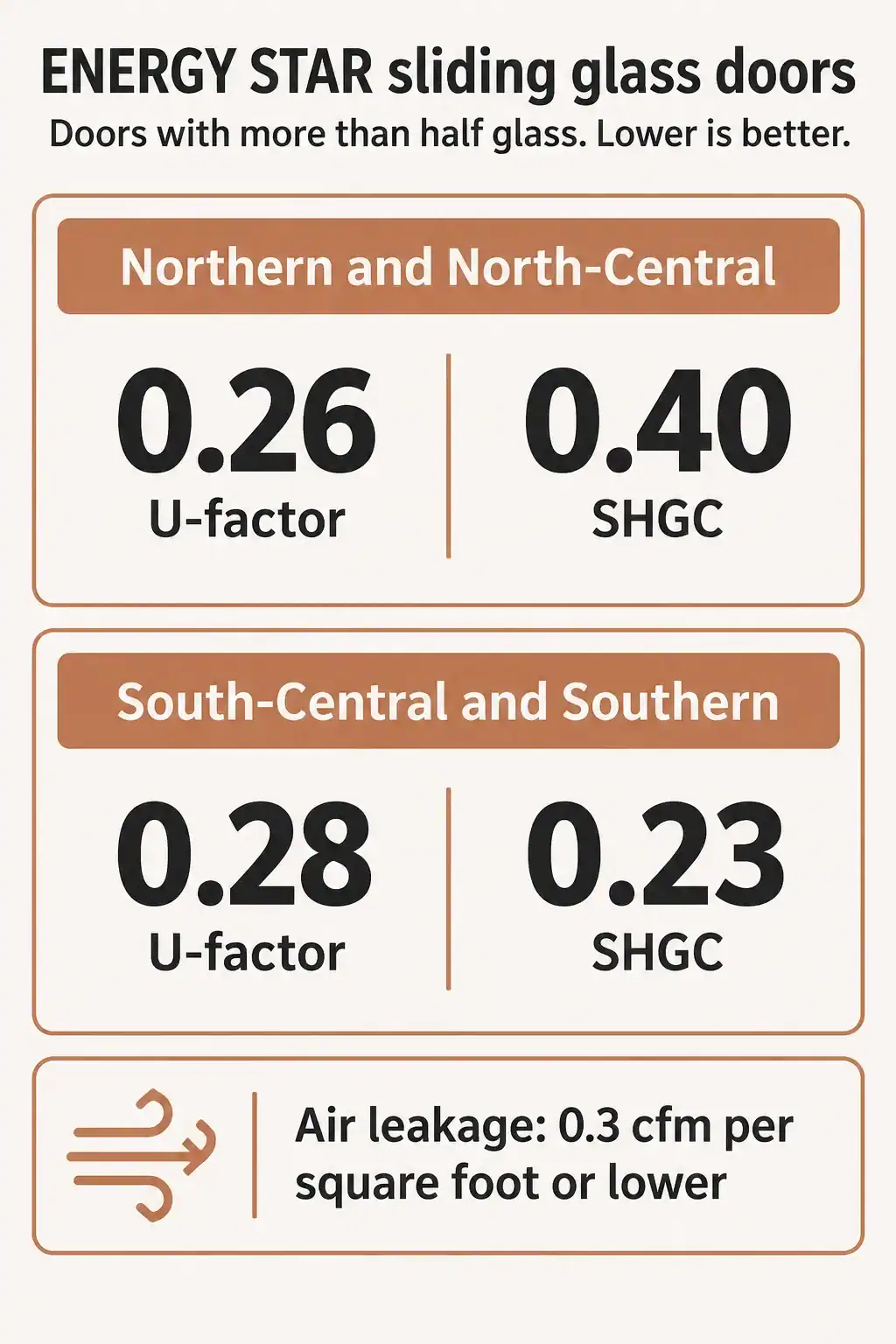
For doors with more than half glass, the criteria summary sets a U-factor of 0.26 or lower with a solar heat gain coefficient (SHGC) of 0.40 or lower in the Northern and North-Central zones. In the South-Central and Southern zones the limits are 0.28 and 0.23.
Sliding doors also need an air leakage rating of 0.3 cfm per square foot or lower. The same spec’s text groups sliding doors with windows by climate zone in places, so compare the NFRC label on the exact door you are buying.
Our take · Octopus Doors
Pick the glass for the way the door faces. In a hot climate with strong sun on the glass, the SHGC number matters most. In a cold one, look at the U-factor first.
How to fix a sliding door that sticks
Dirt in the track and misaligned or worn rollers cause most sticking. Work through the fixes in this order, from cheapest to most work.
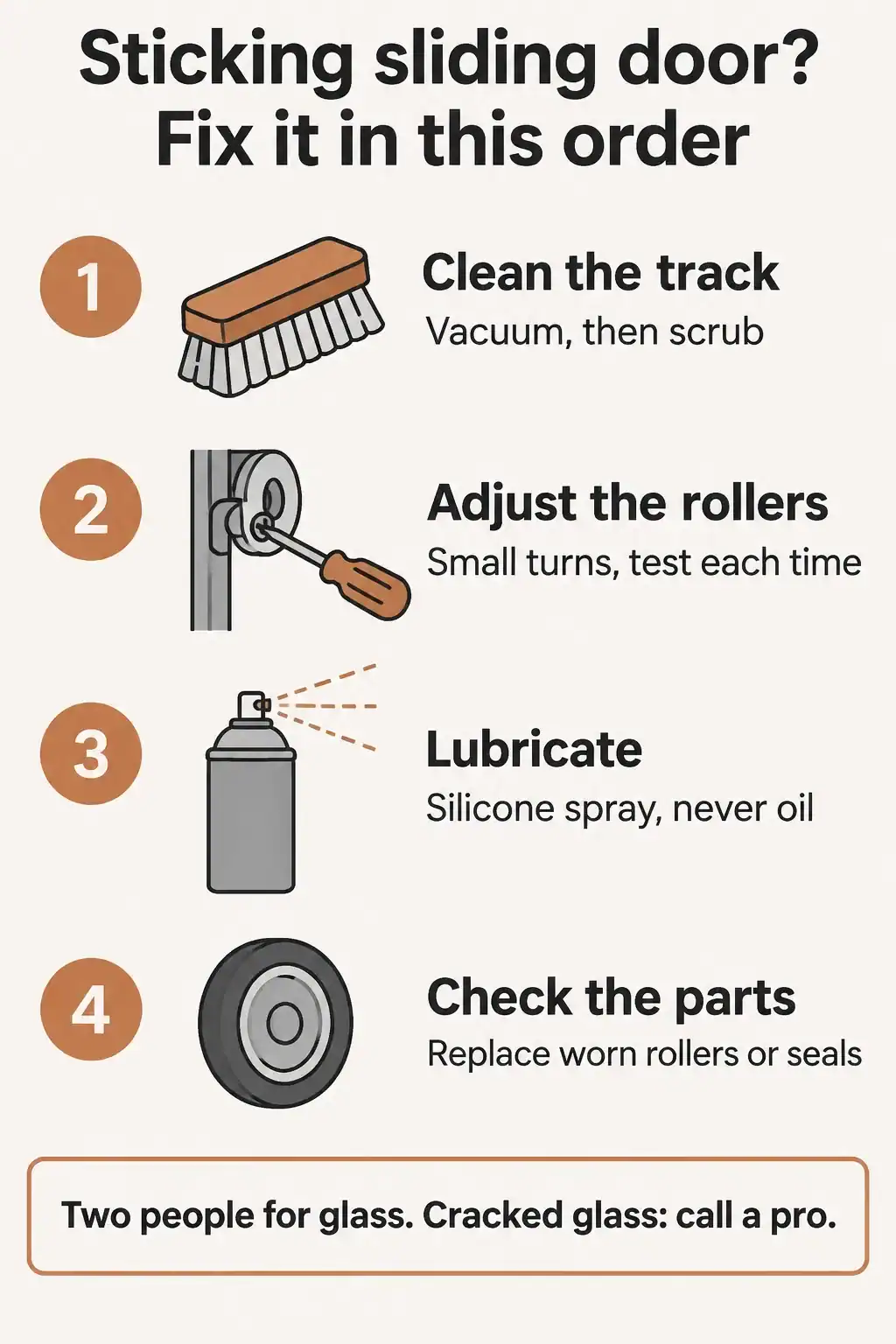
- Vacuum the loose debris from the track, then scrub it with a stiff brush. An old toothbrush or a narrow grout brush reaches the corners.
- Adjust the rollers. Look for the adjustment screws at the bottom of the door, often under plastic plugs. Make very small turns and test after each one.
- Lubricate sparingly with a silicone spray on the rollers and metal-on-metal parts, or rub clear paraffin wax along the track. Skip oil-based products, which attract dust, and keep lubricant out of the lock.
- If it still sticks, check the rollers for damage, look for bends in the track, and replace worn weatherstripping.
Sliding glass doors are heavy and breakable. Taking one out of the track is a two-person job, and a cracked or shattered panel is a call to a professional. With proper care a sliding door can last 20 years or more.
Where to go next
If you have a wide opening, compare stacker doors and bifold doors. For a wall of glass, read about the swing alternative in our French doors guide, and for the overall picture see types of doors.
Related posts
 Sliding French Doors: How They Work and What to Know
 Are French Doors Better Than Sliding Patio Doors?
 Are Sliding Doors or French Doors More Energy Efficient?
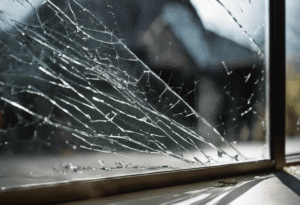 Sliding Glass Doors: The Hidden Shattering Dangers
 Unveiling the Troublemakers: Sliding Glass Door Leaks
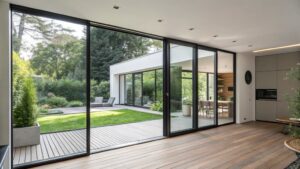 12 Sliding Door Ideas
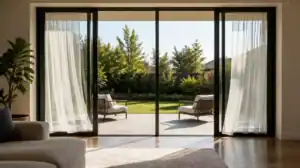 Why Sliding Doors That Open in the Middle Beat a Standard Slider
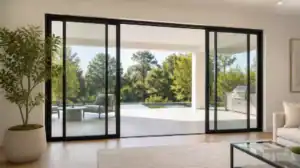 4-Panel Sliding Patio Doors for Wide Openings That Actually Look Custom