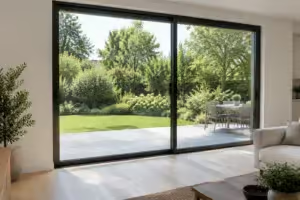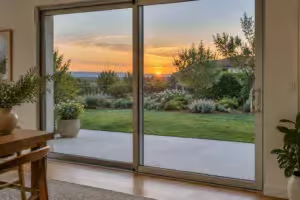
Stacking patio doors, also sold as stacker doors, multi-slide doors or pocket glass doors, give you a wall of glass that opens by sliding. The choice that matters is where the panels go when the door is open: stacked at one end, hidden in the wall, or folded.
Below is how these doors work, how they compare with a bifold, what to do about rain, and what to plan before you order.
How a stacking door works
A multi-slide door has several large glass panels, and each panel runs on its own track. When you open it, the panels slide to the side and either stack at one end or tuck into a pocket in the wall. Pella’s guide says three or more panels can stack on one side or both sides of the opening.
Unlike hinged French doors, multi-slide doors need no clearance inside or out to operate (Pella). That is why they suit a wall between a kitchen or living room and a patio, and they can work as an interior wall too.

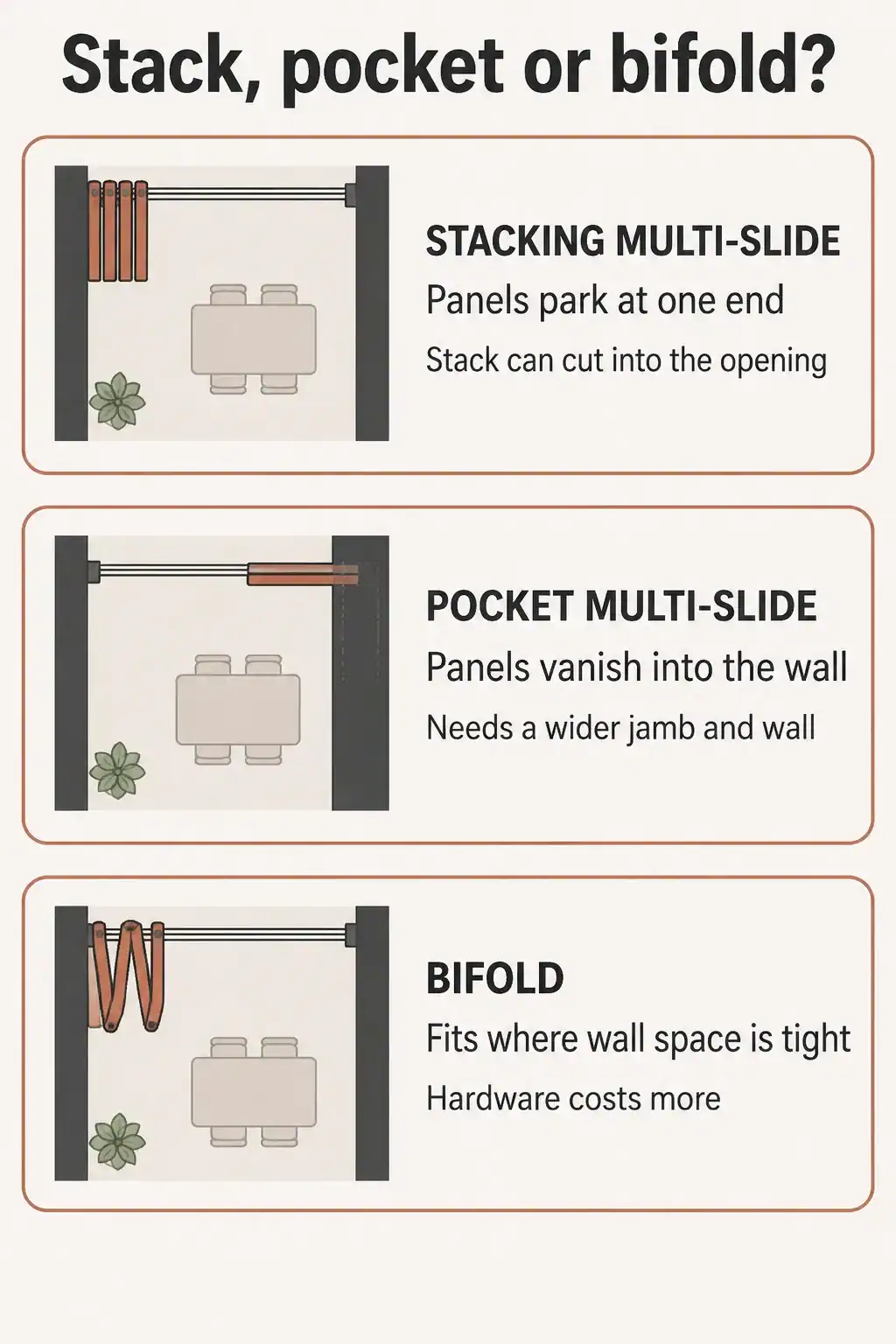
Stack, pocket or bifold?
A pocket system hides the panels in the wall for a completely open space. The price is a wider jamb and higher sill than a bifold, and an extra-wide wall if several panels are involved.
A bifold fits where wall space is limited, and the folded panels can cut into the size of the opening. Bifolds also project when open, so they need clearance, and most are top-hung, which means the header must carry the load. The comparison in Window + Door adds that bifolds tend to perform slightly better on air and sound, with more costly hardware.
For energy efficiency or better water performance, the manufacturer quoted there points to bifolds. For motorization or larger panels, he points to multi-slides.
Our take · Octopus Doors
If you have the wall depth for a pocket and the budget, it gives the cleanest opening. If you do not, a stacking door with a return wall for the stack is the simpler way to a big opening. Pick a bifold only if you cannot spare the wall at all.
Rain, overhangs and the sill
Water performance is the limit of these systems. Manufacturers recommend large overhangs to protect the door from driving rain, so an uncovered wall is a risk. The multi-slide sill is also fully exposed on its top surface, though performance sill options exist.
Ask for the door’s tested water and air ratings, and ask about a performance sill before you commit.
Installation and cost
Window + Door calls multi-slides easy to install and maintain, and a cost-effective way to make a huge opening. Pella says they are large, with many parts, and recommends professional installation for alignment and weatherproofing. For a door this size, get a professional to fit it.
Vinyl is generally the more cost-effective material and wood is higher-end. Pella calls multi-slide doors a significant investment, so get itemized quotes.
Locks, screens and glass
Each sliding panel can have its own lock. Ask about fly screens and a security screen for the opening, and about single or double glazing for the glass. Grilles in the glass give a traditional look, and plain panes read as modern.
Before you order
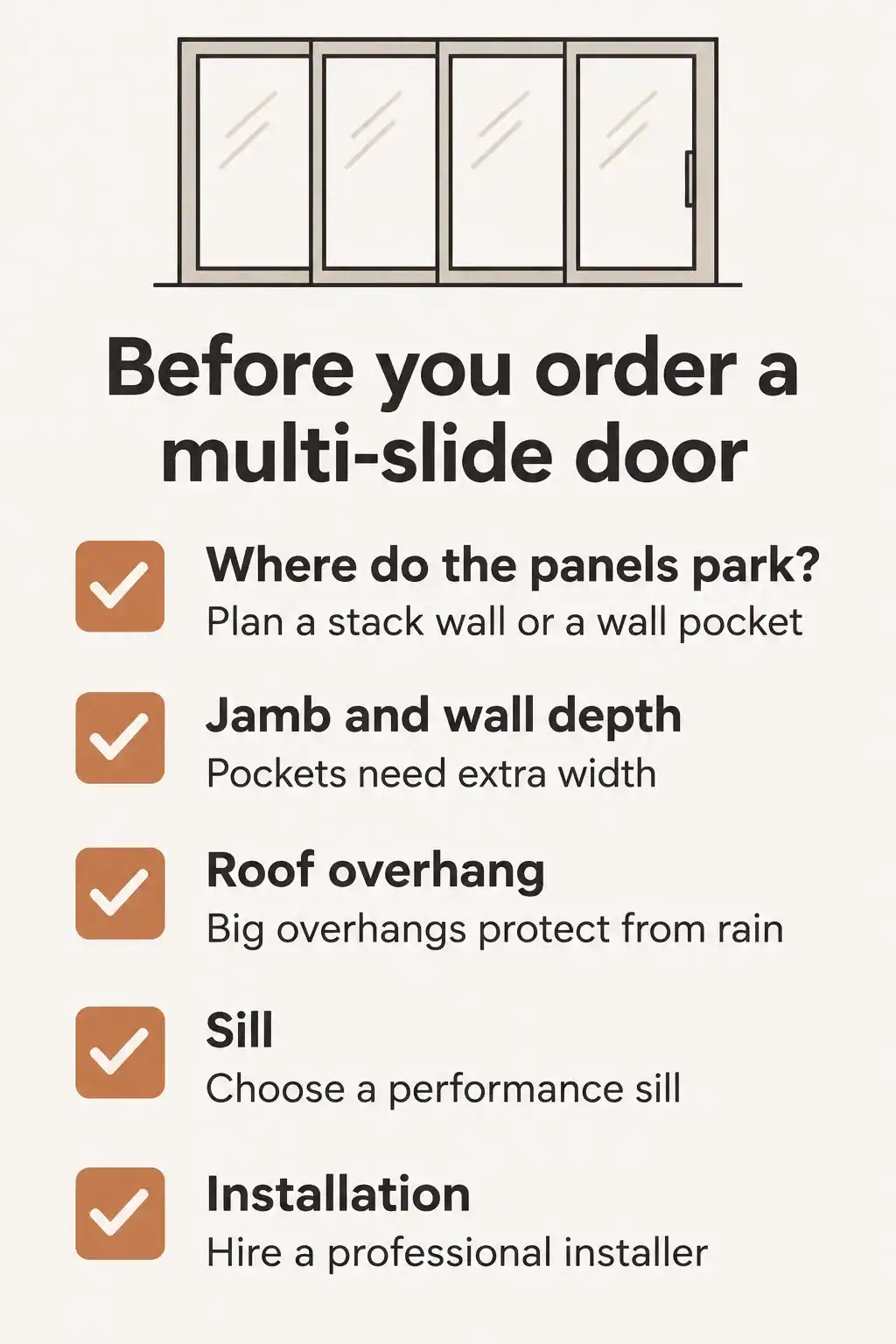
- Decide where the panels will park: a stack at one end or a wall pocket.
- Check the wall and jamb depth, because pockets need extra width.
- Confirm the roof overhang above the opening.
- Ask for a performance sill and the tested water and air ratings.
- Book a professional installer, and read what the warranty covers.
For other ways to open a wall, compare sliding doors, bi-fold doors and French doors.
Related posts
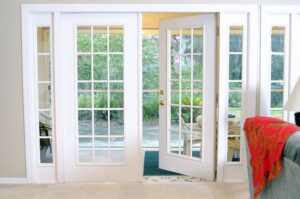 Are French Doors Better Than Sliding Patio Doors?
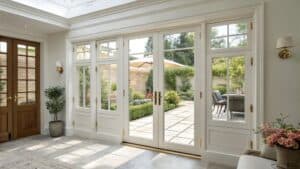 11 Sliding French Doors Patio Ideas
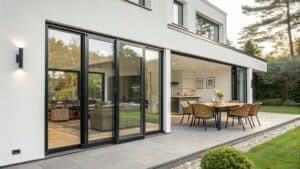 12 Patio Doors That Make Al Fresco Dining Effortless
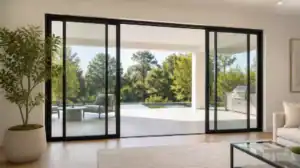 4-Panel Sliding Patio Doors for Wide Openings That Actually Look Custom
 Why Sliding Patio Doors Get Harder to Open Over Time
 12 Patio French Door Upgrades to Boost Curb Appeal Fast
 19 Charming Small Space Patio French Door Ideas
 9 Patio French Door Ideas