French doors seal slightly tighter than sliding doors, but the gap is small. The glass package and the frame material matter more than which way the door opens.
A good slider with dual-pane Low-E glass and an insulated frame performs about as well as a hinged pair. Read the label before you pick a style.
Which one seals tighter
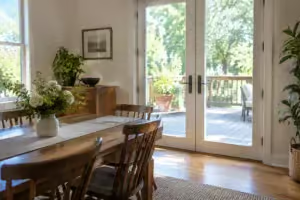
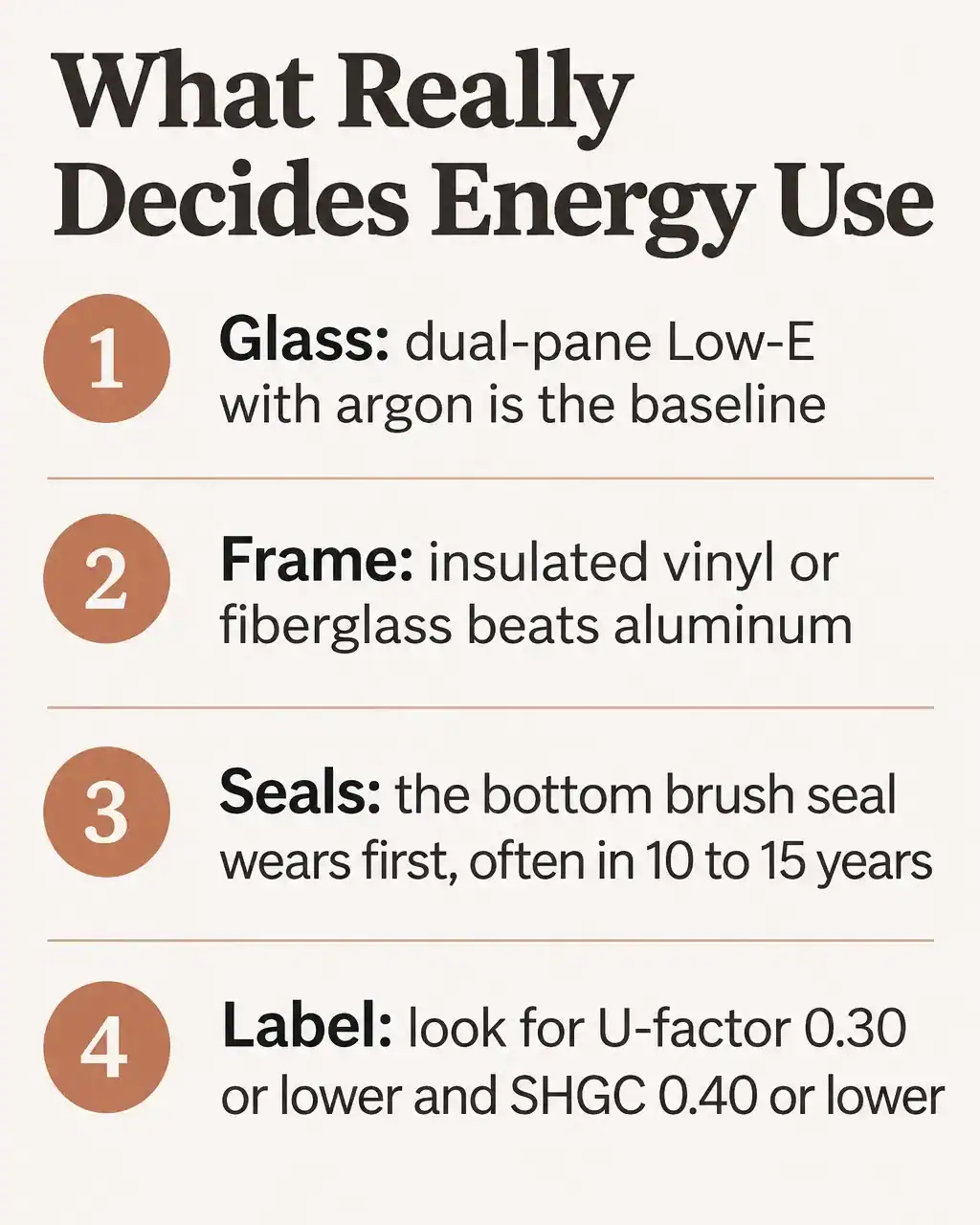
The hinged pair, by a little. Smarttech Windows and Doors says a French door closes against a firm seal on every edge, and a multipoint lock pulls the panels tight to the frame.
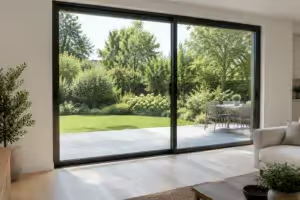
A slider glides along a track, so it cannot press shut all the way. It seals with a fuzzy strip along the track, and the strip loosens as it wears.
Window Depot says the same thing from the other side: a hinged door is slightly easier to make airtight because its compression seal has fewer moving parts. Both are sellers of patio doors, and neither gives leakage measurements, so treat “tighter” as trade opinion and not as a test result.
What wears out first
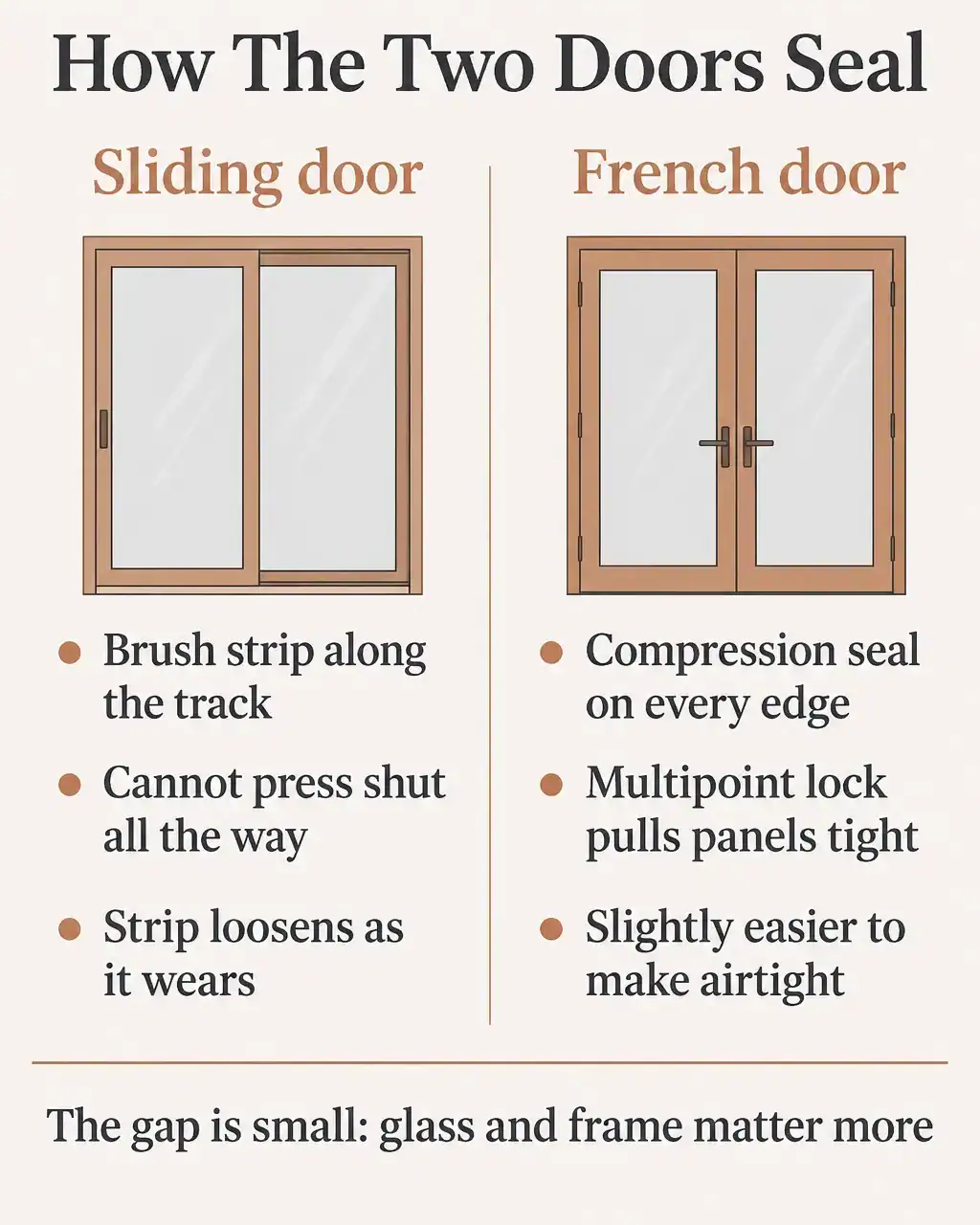
On a slider, the bottom brush seal usually goes first, often within 10 to 15 years, leaving a continuous gap along the sill. Older aluminum tracks also act as a thermal bridge and pull cold into the room.
Feel for a draft at the bottom corners before you blame the glass.
What matters more than the style
Start with the glass. Dual-pane Low-E glass with argon fill is the modern baseline, and triple-pane is the step up for cold climates, according to Window Depot.
Then the frame. Insulated vinyl or fiberglass beats aluminum, which Window Depot calls the worst thermal performer.
Last, the label. The NFRC rating is printed on the certification label of every new door.
For ENERGY STAR in the Northern zone, look for a U-factor of 0.30 or lower, and premium doors reach 0.20 to 0.25. A solar heat gain coefficient of 0.40 or lower suits mixed climates, and west-facing doors benefit most.
Window Depot is a window retailer, so check the numbers on the label of the door you are quoted. A premium French door usually edges out a premium slider on U-factor by a small margin.
How I would choose · James Davis
I would pick the door by the room first and the label second. If a slider fits the wall and the furniture plan, a good one with a low U-factor gives up very little to a French pair.
Before you buy
- Ask for the NFRC label numbers for the exact door, not the product line.
- Pick dual-pane Low-E with argon, and triple-pane only if winters are cold.
- Choose an insulated vinyl or fiberglass frame over aluminum.
- Ask how the bottom seal is replaced and what it costs.
- Note which way the door faces, since west sun raises the solar heat gain you care about.
For the wider comparison, see are French doors better than sliding patio doors. What the ENERGY STAR door labels mean explains the ratings above in more detail.
Related posts
 ENERGY STAR Doors Explained: What the Labels Mean and What to Ignore
 Sliding French Doors: How They Work and What to Know
 Are French Doors Better Than Sliding Patio Doors?
 What Is Safer Sliding Glass Door or French Doors
 11 Sliding French Doors Patio Ideas
 How Long Does It Take To Install Exterior French Doors?
 Can You Get Screens for French Doors?
 French Doors with Built-in Blinds: Types, Materials, Cost, and Common Issues