As an Amazon Associate we earn from qualifying purchases.
The types of doors you can fit in a Perth home come down to how the door moves: it swings, it slides or it folds. To budget for the install, see our door installation cost in Perth. Pick the movement first, because it decides how much floor space you lose and how well the opening seals.
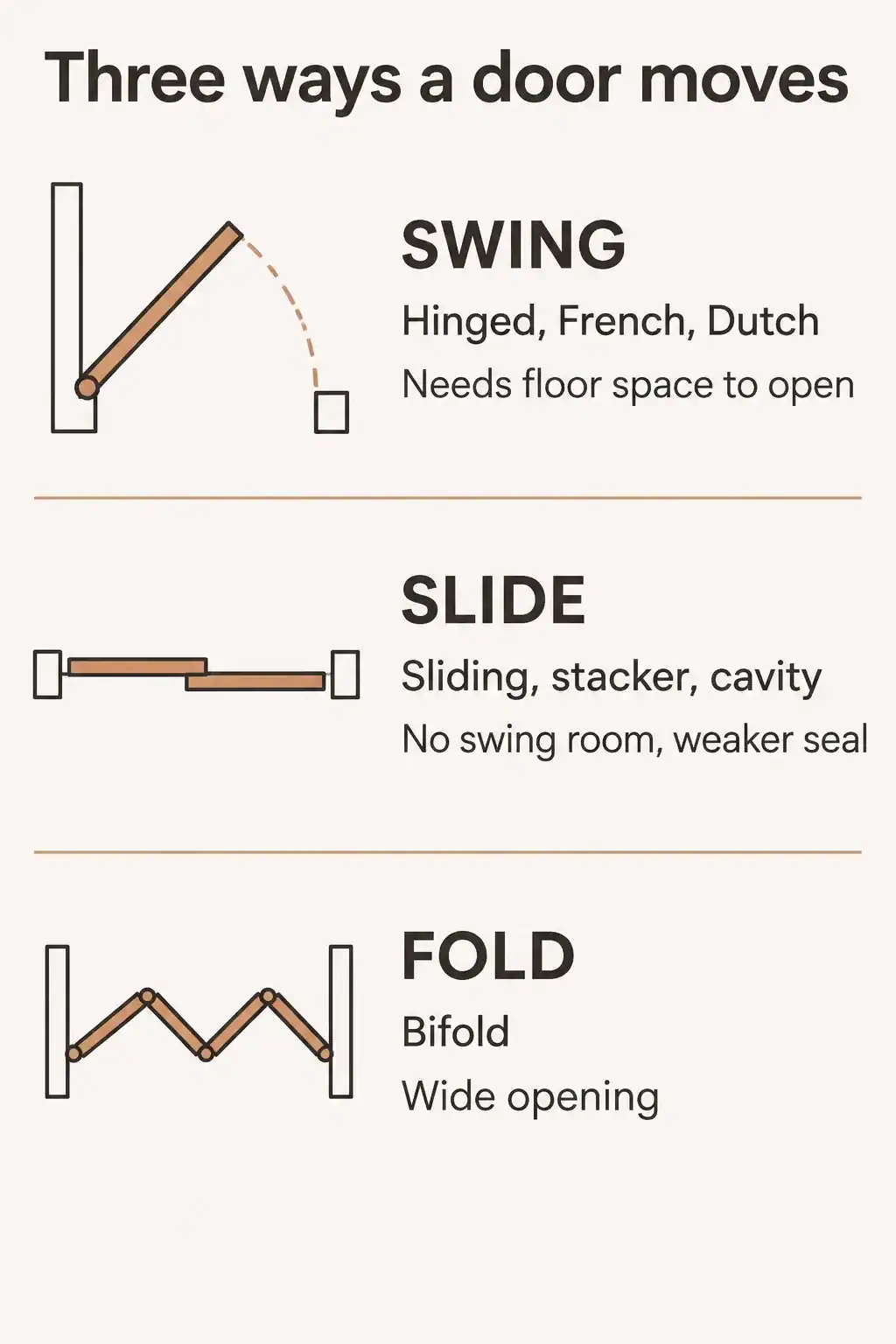
The rest of this page walks through each type, where it works and what catches people out. There is a side-by-side table in the middle and a bushfire checklist near the end.
Start with the room you can spare
A swing door needs a clear arc in front of it. If a wardrobe, a bed or a bench sits in that arc, the door will not open fully, and no hinge fix changes that.
Sliding and cavity doors need no swing room at all, which is why they suit laundries, ensuites and cupboards. The cost is the seal. A retailer guide notes that sliders do not close off a room as well, so you get less privacy, less noise reduction and less insulation in cold weather (HardwareBox).
Swing doors: hinged, French and Dutch
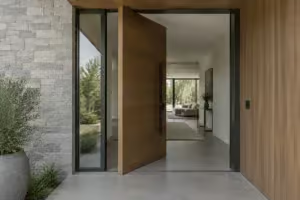
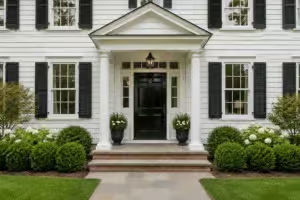
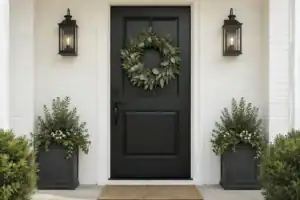
The hinged door is the basic one, and the category is wider than it looks. French doors, Dutch doors and most front doors are all hinged. You can see the finishes and styles on our page about hinged doors.
Inside the house, two types do most of the work. Flush doors have a smooth, flat face and are usually an MDF skin over a honeycomb cardboard core, which keeps them light and cheap. Panel doors have raised, recessed or glass panels and work both inside and out.

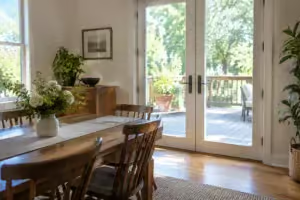
French doors are a pair of doors, usually with large glass panels, that open inward or outward. They are the standard link between a living room and a patio.
The trade-off is privacy: all that glass means they are less private than other types. Our French doors page covers sizes and fitting.
A Dutch door is split across the middle, so the top half can stay open while the bottom stays shut. That suits a kitchen or a laundry where you want air and light but need to keep children or pets in. We cover them in Dutch or stable doors.
Sliding doors: cavity, stacker and barn
Sliding doors run along a track, and the same guide splits them into three. For more on this, see our choosing the right sliding door size.
Cavity (pocket) doors slide into the wall and are common in newer Australian homes; they can be retrofitted if the wall allows. Stacker doors use several panels that stack in front of each other when open. Barn doors hang from an exposed top track and can replace a cavity door where you cannot open up the wall.

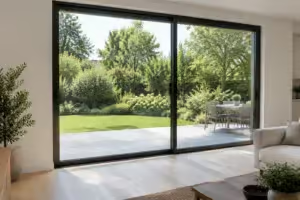
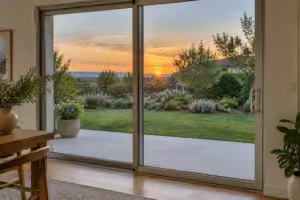
For the patio, a stacker or a standard slider keeps the swing space clear and lets in the view. Read more in stacker doors and the general sliding doors page. Glass sliders need extra protection in a bushfire-prone area, which is covered below.
Our take · Octopus Doors
For a back wall you open every weekend, we would look at stackers or a wide slider before bifolds. Fewer moving parts means fewer things to adjust later. For an entry or a bedroom, a single hinged door is still hard to beat.
Bifold doors fold the opening away
Bifold doors are panels hinged together that fold against each other, so a whole wall can open. They come in timber, aluminium or PVC, usually with glass, and they work for entertaining areas as well as small spaces such as an ensuite or a pantry.
The drawbacks are practical. With several sets they become bulky and harder to operate, and every extra panel is more glass and track to clean. Our bifold doors page shows the layouts.

Garage and shed doors: tilt and roller
These two are about size and security more than style. A tilt door swings up and out on arms or a track, so it needs clear space in front of the opening.
A roller door winds up into a box above the opening and needs almost no room, and many can be motorised. It has more moving parts than a tilt door, so expect a little more upkeep. The details sit on the tilt doors and roller doors pages.
| Door | Where it is used | Watch out for |
|---|---|---|
| Flush | Bedrooms, bathrooms, wardrobes | Plain look, no light passes through |
| Panel | Inside and out: living rooms, kitchens, entries | Choose the panel style and any glass insert to suit the room |
| Sliding | Patios, laundries, ensuites, cupboards | Weaker seal: less privacy, sound and warmth |
| French | Living room to patio or garden | Less private than a solid door |
| Bifold | Entertaining walls, ensuites, pantries | Bulky with several sets, more to clean |
Whatever you choose, ask the installer how the door is sealed at the threshold and the head. Gaps there matter more than the style of the leaf.
Security screen doors and rental rules
A security screen door adds a locked layer outside your main door.
If you rent out a Western Australian property, the state’s business licensing portal says you must comply with AS 5039, which sets minimum performance for key-lockable security screen doors used to meet rental security standards (ABLIS). That page also says the 2008 edition has been superseded by AS 5039.1:2023, so ask the supplier which edition the screen is tested to. Our security screen doors page covers the types.
Which doors suit a bushfire-prone block?
If your block is in a designated bushfire-prone area, external doors have rules. Western Australia’s Building and Energy site says the construction requirements depend on your Bushfire Attack Level, or BAL, which an assessor works out from slope, vegetation and how close other buildings are (WA Building and Energy).
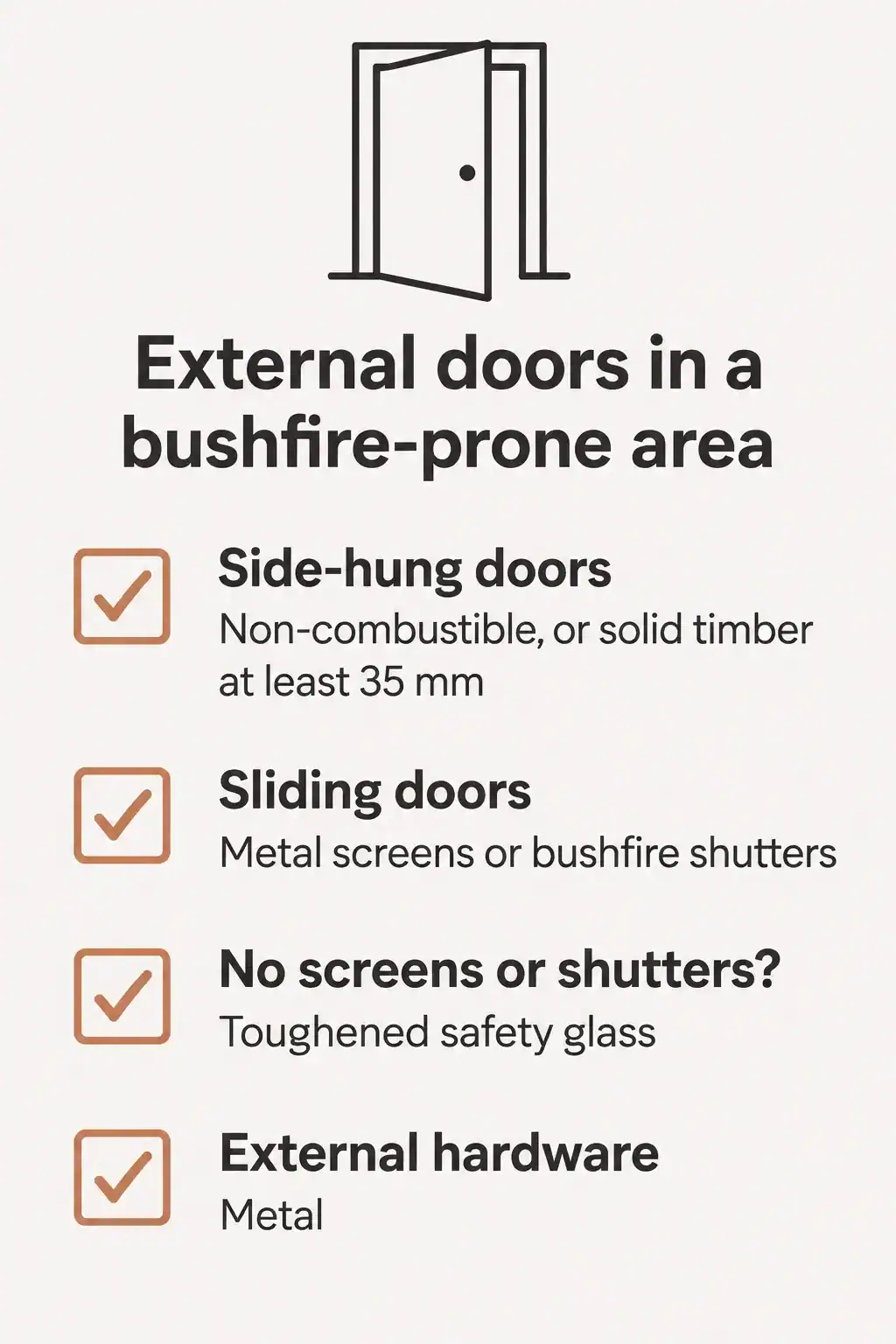
Even outside a designated area, the same page says a BAL assessment is a good idea.
Above BAL 29
The state’s examples stop at BAL 29. For a higher rating, get advice from a building surveyor or another qualified practitioner before you choose or change any external door.
Before you ask for a quote
- Measure the opening, and mark the arc a swing door would sweep.
- Decide whether the room needs privacy or sound control; if it does, avoid sliders and glass-heavy doors.
- Check whether the block is in a bushfire-prone area and find its BAL.
- For a rental, ask which edition of AS 5039 the screen door meets.
- Ask what the door and frame are made of, and who seals the threshold.
If you are still choosing a material, compare steel doors, fibreglass doors and aluminium doors next.
Related posts
 Bi-fold Doors Perth
 French Doors Perth
 French Doors with Built-in Blinds: Types, Materials, Cost, and Common Issues
 Different Types of French Door Locks
 Standard Setters: Exploring the Most Common Door Hinge Types
 10 Closet Door Types for Beds Close to the Opening
 The Real Cost of Door Installation in Perth: Complete Pricing Guide for 2025
 Doors Shorter Than 80 Inches: A Complete Guide