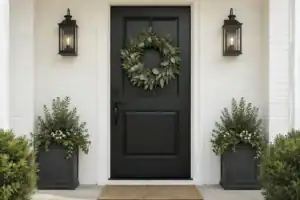
French doors with built-in blinds have the blinds sealed between two panes of glass, worked by a handle on the door. They never need dusting, but when something inside fails, you usually replace the whole glass unit.
That one fact drives the decision. A built-in blind is a clean, low-fuss choice for a door you want covered most days, and an expensive repair if the mechanism breaks.
How built-in blinds work
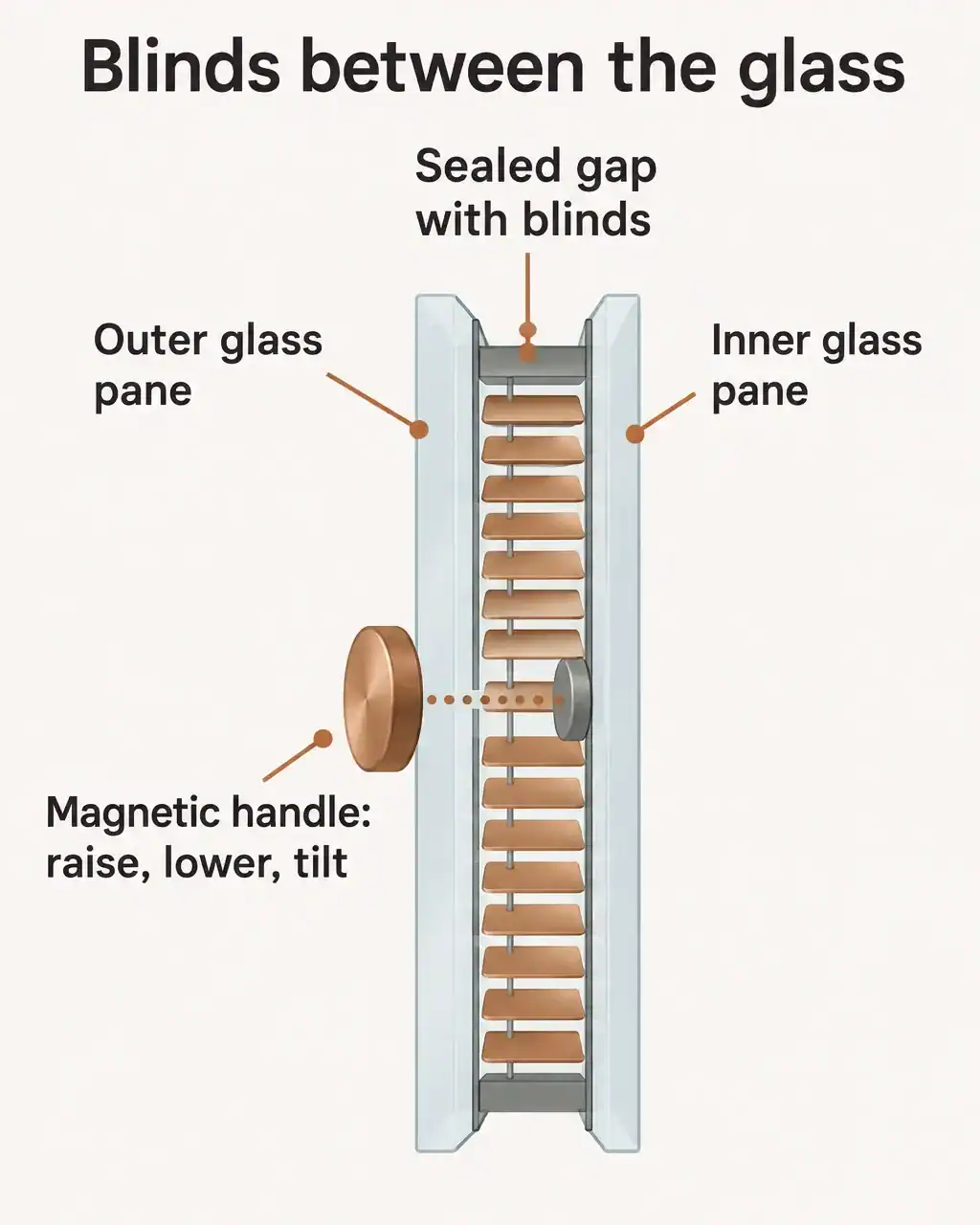
The blinds sit in a sealed space between two glass panes, with the controls on the door. Todd Fratzel, a builder and licensed engineer, describes one control that raises and lowers the blinds and another that tilts the blades.
Many models use magnets to link the handle to the mechanism inside, which keeps the glass sealed. Motorized versions exist too, run by a remote or an app, according to Argo Glass & Windows.
This Old House’s exterior French door guide shows one example: a pair of sliding patio doors with motorized shades between the panes, priced from $4,425 for the prehung pair.
What you get
- Privacy and shade in a door that otherwise has neither.
- No cleaning inside the glass, since the blinds are enclosed.
- A clean look when the blinds are fully open, nearly unnoticeable.
- No cords, so nothing for small hands or pets to pull.
Fratzel notes that these doors are generally sold as exterior doors, because dual-pane glass is too heavy for standard interior doors and frames.
What you give up
Argo lists limited styles, mostly neutral colors and basic slats. Fratzel found one maker offering white only, and swapping colors later generally means replacing the glass unit.
There is a small energy cost too. Argo puts a standard double-pane unit at about a 0.27 U-value, and the same unit with built-in blinds at about 0.29, because the mechanism takes up space that would hold insulating gas. A lower U-value means better insulation.
Many brands also want the blinds fully open before you raise or lower them, per Fratzel, so they are not for quick tilting while half closed.
The part to read before you buy: repairs
You cannot replace the blinds alone. Argo says the whole glass and blinds unit comes out, and that magnets can weaken over time.
Fratzel adds that handles can disengage when the blinds are closed and under tension, and that internal cables can break. Some readers described tangled or stuck blinds and hard-to-find parts.
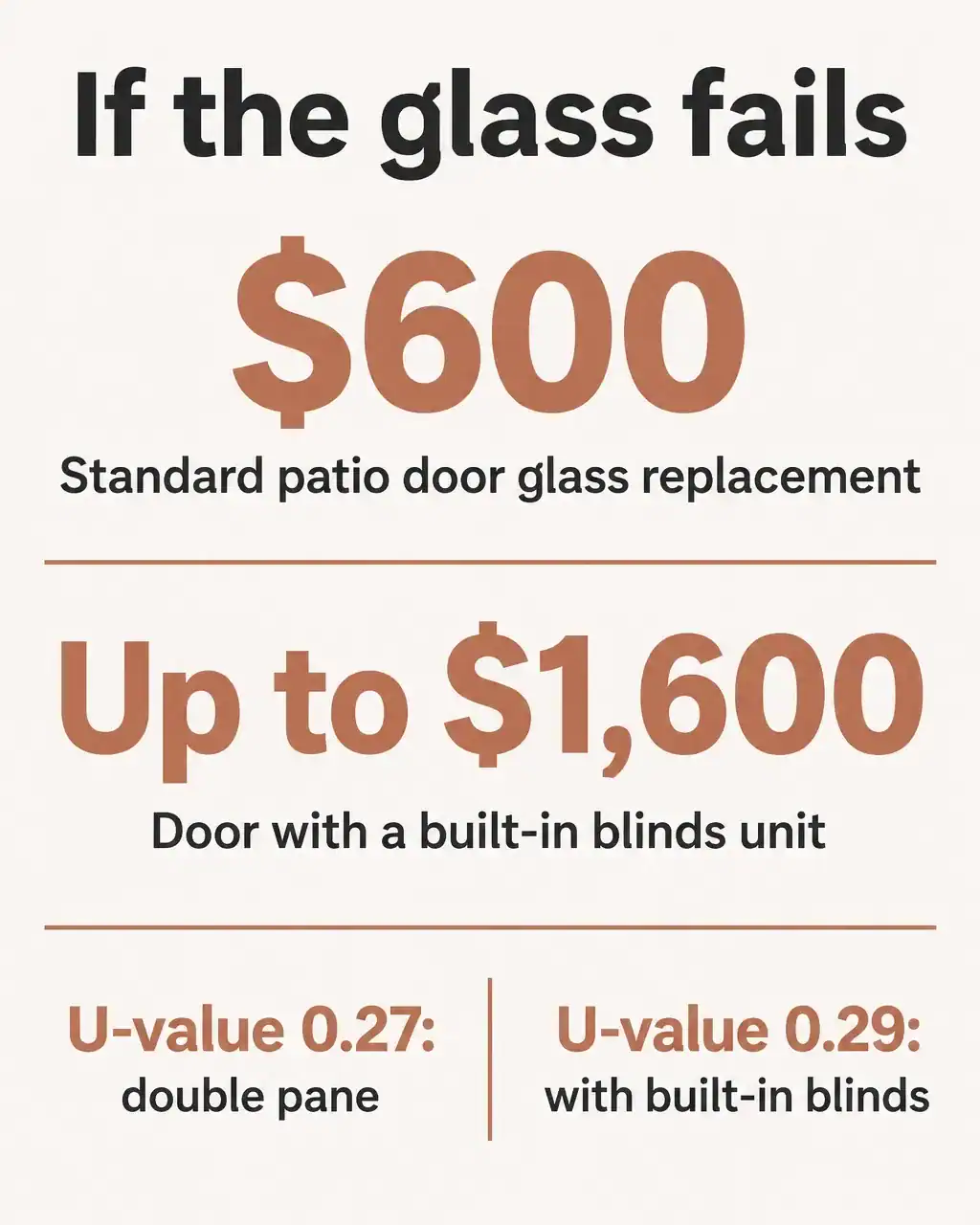
Argo’s figures are about $600 for standard patio door glass replacement and up to $1,600 for a door with a built-in blinds unit. It also says warranties may not cover that replacement.
Argo is a window repair company, so treat its prices as a ballpark and get a local quote. Ask the dealer for the warranty on the blind mechanism itself, in writing.
When I would skip them · James Davis
If a door faces a street and you want the blinds closed most of the day, built-in blinds earn their keep. If you like to change your window look every few years, I would not buy them, since you cannot change the blinds without changing the glass.
Cheaper ways to get privacy
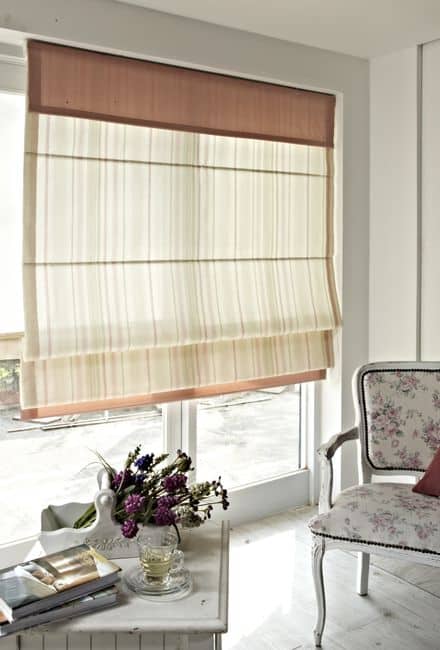
The same This Old House guide lists textured or frosted panes as a privacy option, and the glass does the work with nothing to break. A surface blind or shade on the door costs less to replace.
For shades that fit a glass door, see the best blinds for French doors, and whether roller blinds work on French doors.
Questions to ask before you order
- Is the blind between the glass, and which control moves it: a magnetic handle or a motor?
- What colors and slat styles come with this door, and can they change later?
- What does it cost to replace the glass unit, and does the warranty cover the blind mechanism?
- Must the blinds be fully open before they move?
- What is the U-value with the blinds in place?
This Old House also points out that doubled or tripled panes can use air or krypton gas, and low-e coatings help with heat transfer, so compare glass specs before you compare blind features.
Related posts
 Door Materials Compared: Wood, Steel, Fiberglass and More
 Standard Setters: Exploring the Most Common Door Hinge Types
 Different Types of French Door Locks
 Best Blinds for French Doors: How to Choose and Mount Them
 What Are the Best Blinds for French Doors
 Do Roller Blinds Work On French Doors
 The Go-To Choice: Unveiling the Most Common Door Hinge
 French Door Privacy: Shades, Blinds and Glass Options