When a sliding patio door won’t lock, the handle may turn freely, the hook may miss its slot, or the panel may slide back open after you latch it. Almost every time, the latch hook and the strike plate on the jamb no longer meet, because the panel is riding a little higher, lower or crooked in its frame. The fix is usually a clean track, an adjusted roller or a moved strike plate, not a new lock. This guide goes from the cheapest check to the rarest cause and says when to stop and call a pro.
| What you see | Likely cause | Fix | Go to |
|---|---|---|---|
| The door grinds or drags, and the lock catches only if you push | Dirt or debris in the track | Clean the track and wheels | Cause 1 |
| The gap between the panel and the jamb is uneven from top to bottom | Rollers set unevenly, panel not square | Adjust the rollers | Cause 2 |
| The gap is even, but the hook lands above or below the slot | Strike plate out of position | Move the strike plate | Cause 3 |
| The handle turns loosely or the hook barely moves | Worn or broken handle set or latch | Replace the hardware, matching brand and series | Cause 4 |
| Everything above is fine and it still will not latch | Frame out of square, or a damaged panel or frame | Call a pro | Cause 5 |
Start here
What can you check in 30 seconds?
These checks tell you which cause you are dealing with, so you do not adjust the wrong thing.
- Close the door to the latch and look at the gap between the panel and the jamb. It should be the same width from top to bottom.
- Slide the panel slowly. Grinding, or rubbing on the top or bottom track, points to the rollers.
- Open the door a few inches, turn the handle and watch the hook. It should extend fully and move back when you turn the handle the other way.
- Close the door and look at where the hook meets the strike plate. Is it above the slot, below it or in line?
- Mark the hook’s height on the jamb with a pencil, so you can tell whether a later change helped.
Our take · James Davis
Before you touch a screw, look at where the hook lands. If the gap is uneven, start with the rollers. If the gap is even and the hook still misses, move the strike plate and leave the rollers alone. Changing both at once is how people end up chasing the lock around the frame.
Cause 1 / Dirt in the track
Is dirt in the track keeping the lock from catching?
Grit and debris can lift or tilt the panel just enough to shift the hook off the slot. The signs: the door does not move smoothly, it sticks, or the rollers are not sitting flush and square in the frame. A door in that state will jam your lock.
- Loosen the dirt with a wire brush, and clear any hair wrapped around the wheels.
- Vacuum the track, then wipe off stuck-on grime with a wet rag.
- Lubricate lightly with a silicone-based spray, then wipe away the excess with a paper towel.
- Test the lock. If it catches now, you are done.
If the door has also become hard to slide, our article on why sliding patio doors get harder to open over time covers the wider picture. If the bottom track is the problem, see these sliding door threshold fixes for high tracks.
Cause 2 / Rollers
Do the rollers need adjusting?
The rollers set the height of the panel, and the hook rides with the panel. Open the panel slightly and check the gap between the panel and the side jamb from top to bottom. If it is not equal, the panel needs adjusting. On many doors, Andersen’s among them, a flat-blade screwdriver goes into an adjustment socket near the bottom corner of the door. Stiff movement can also mean the panel is out of alignment and dragging.
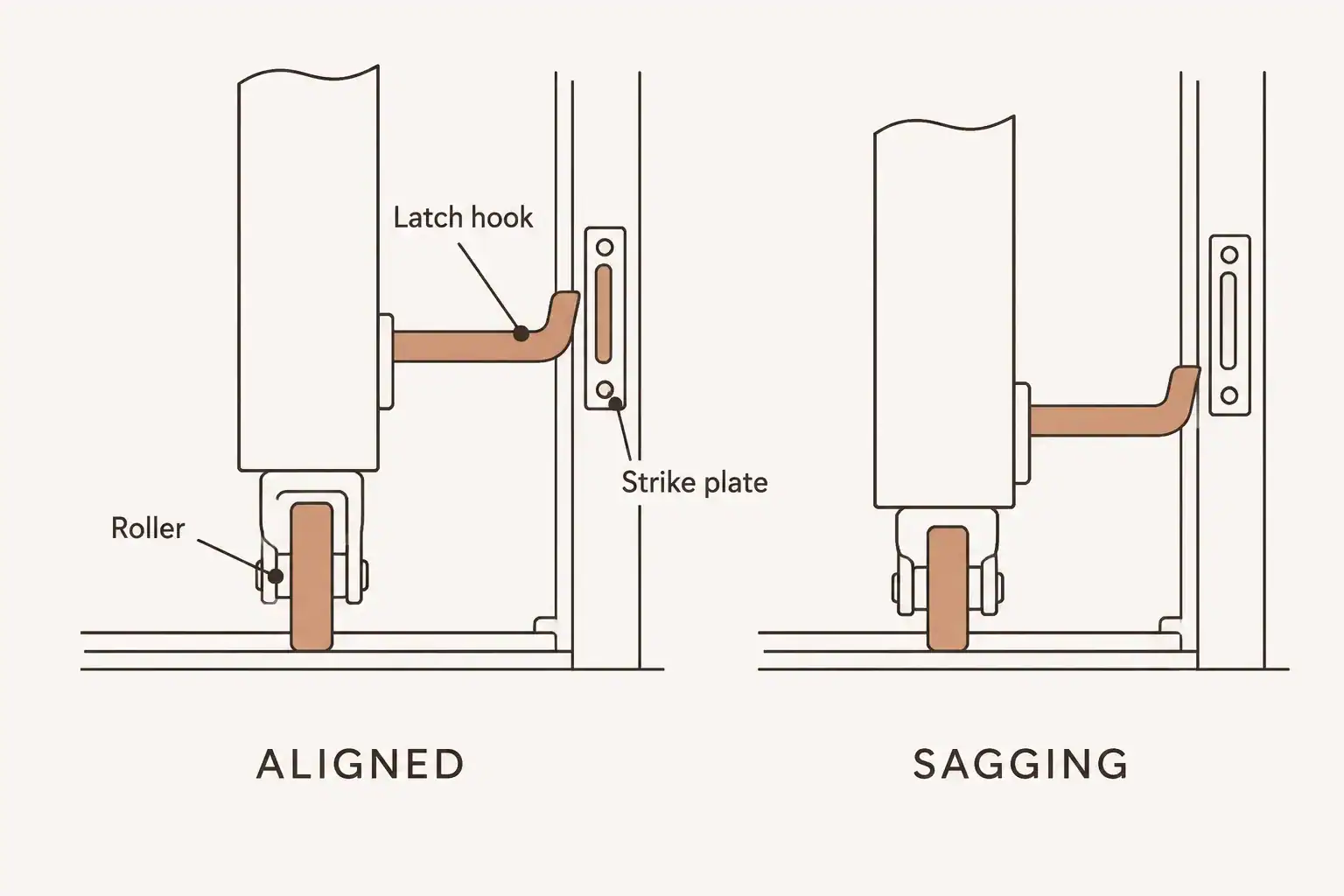
- Open the door about halfway and find the small plastic caps near the bottom edge of the panel. On Pella doors, pry each cap off with a putty knife to reach the adjustment screw.
- Turn the screw a little. On many doors, clockwise raises the panel and counterclockwise lowers it. Check your own door’s instructions, because brands differ.
- Adjust the other side the same way. Both rollers must end up at the same height, and the range of adjustment is often only about a quarter inch. Our guide to adjusting sliding door rollers covers the full job.
- Test the door, sliding it and then latching it. Repeat in small steps until the gap is even and the lock catches.
- Press the caps back in.
Be careful with the glass
Adjusting the screws with the panel in place is a small job. Lifting a panel out of its track to clean or replace rollers is not: glass panels are heavy. Get a second person, wear gloves and eye protection, and keep children and pets clear. Milgard’s lock adjustment instructions list safety glasses and gloves for the same reason.
Our take · James Davis
Turn the screws a little, test the lock, and stop the moment it catches. A perfect gap on paper matters less than a door that slides freely and latches every time.
Cause 3 / Strike plate
Is the strike plate out of line with the hook?
If the rollers are right and the gap is even but the hook still lands above or below the slot, the strike plate (the latch receiver on the jamb) is the culprit. Settling and age can move a door relative to its plate. Andersen adds that the reach-out lock pulls the panel into the weatherstripping for a tight seal, so after adjusting rollers you may need to adjust the receiver too.
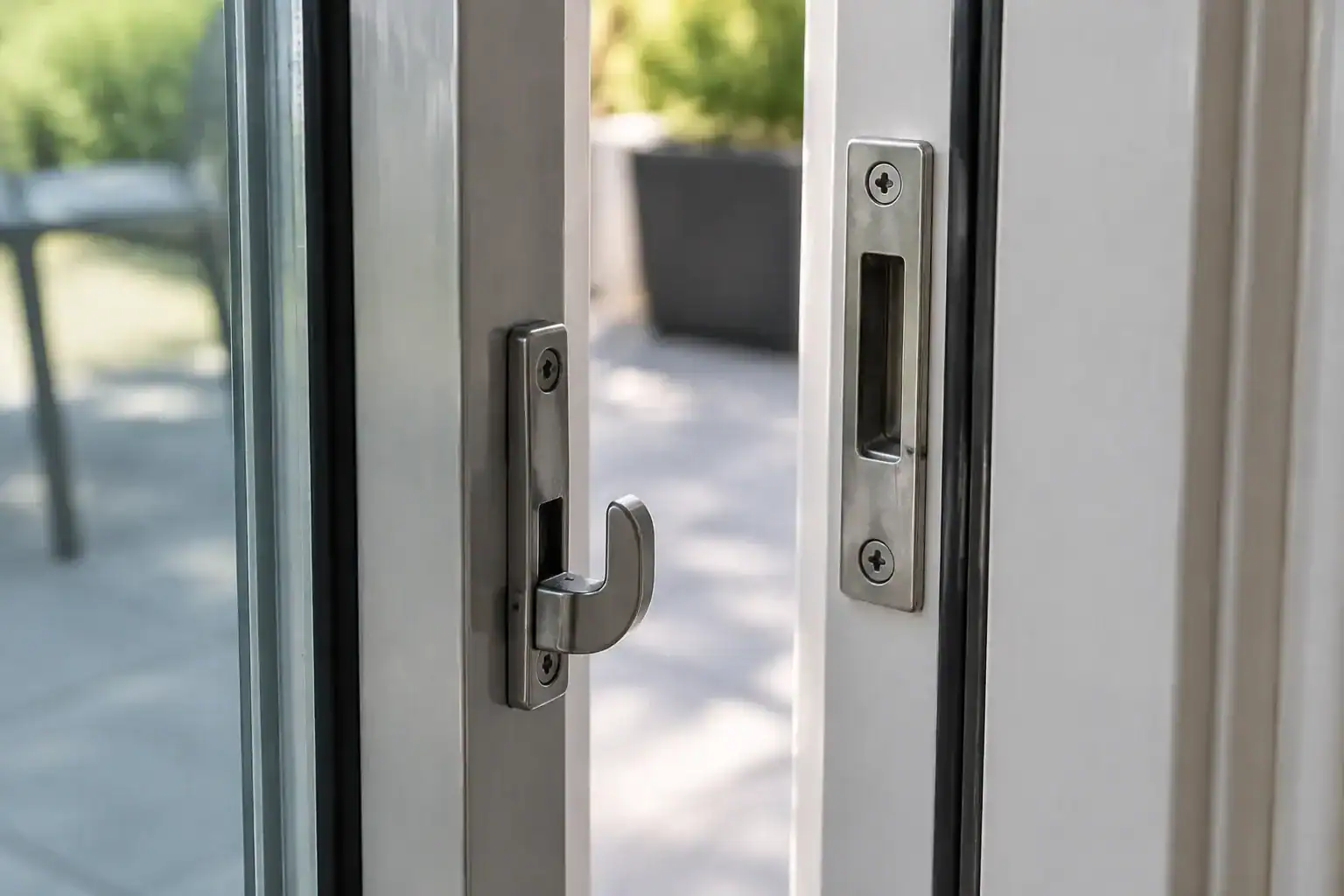
Designs differ, so follow your maker’s instructions when you have them. On a Milgard door, for example, the strike plate adjusts like this:
- Pop off the strike plate cap with a putty knife to expose the adjustment screw.
- Back out that screw and the two others above and below it with a Phillips screwdriver.
- Slide the plate up or down until the hook lines up with the slot. On Milgard’s plate the tongue has to go into the logo, and the lock will not engage if it sits above or below it.
- Put the screws and cap back, then test the lock.
Some latches have a second adjustment: a screw above the latch lengthens or shortens the hook. If the latch itself is fine but the door will not lock, the strike is the likely problem.
Cause 4 / Handle set and latch
Is the handle set or latch worn out?
If the handle turns but the hook does not move fully, or the handle feels loose, the problem is inside the hardware. Andersen says that when locking hardware is damaged, hard to operate or does not engage properly, the door may be slightly out of alignment or the handle set may need replacing. So rule out alignment first, then replace the hardware.
- Find the brand and series of your door, often on a label on the frame or the glass spacer, or in your purchase paperwork.
- Order the handle set or latch for that brand and series. Parts are not interchangeable across makers, and some kits are sold separately from the handle.
- Take a photo of the old hardware and note the screw spacing and faceplate size before you order.
Cause 5 / The frame
What if your sliding patio door won’t lock after all this?
If the track is clean, the rollers are set and the strike plate is aligned and the door still will not latch, the frame itself may have moved. The signs: the gap differs from top to bottom, the door sticks or makes odd sounds, or it comes off the track. Shifting foundations can push doors and windows out of square.
When it is not a DIY fix
Call a door professional if the frame looks bent or racked, the panel keeps jumping its track, the rollers are badly worn or the lock cylinder is damaged. Also call one if the panel needs lifting out and you do not have help. A door that cannot be locked is a security problem, so do not leave it for later.
Our take · James Davis
If a door keeps going out of line after you adjust it, I would stop adjusting and have someone look at the frame. Until it is fixed, a wooden dowel or bar cut to fit the track will stop the panel sliding open. That is a stopgap, not a lock.
For a door that locks fine but that you want to make harder to defeat, see how to make a sliding patio door more secure.
Keep it working
How do you stop it from happening again?
- Clean the track and wheels whenever you clean the windows, and wipe off any extra lubricant so it does not collect dirt.
- Look at the gap between the panel and the jamb now and then. Pella-door guides note that settling framing can raise or lower the tracks over time, so catch a drift early.
- Fix a heavy or dragging panel straight away. It strains the rollers and shifts the hook away from the slot.
- If a deadbolt on a hinged door is what is giving you trouble, our guide to a deadbolt that won’t lock walks through that instead.
What should I do tonight if the lock will not catch?
Put a wooden dowel or bar in the lower track so the panel cannot slide open. Close and lock any other door and window, and fix the lock as soon as you can. This is only a temporary measure.
Does the age of my door change how the latch is adjusted?
It can. Andersen’s help center says that on doors made from 1994 to 2005 you remove the screws holding the receiver to the side jamb, slide the pin and tighten the screws again. On doors made before 1994 you turn a screw on the deadlock or reach-out lock, where counterclockwise tightens and clockwise loosens. Newer models follow their own installation guides.
Do I need to replace the whole door if the lock is broken?
Usually not. Handle sets and latches are sold as parts, so match the brand and series and replace only the hardware. Replace the door only if the frame or glass is damaged.
Still stuck?
Work in this order: clean the track, set the rollers so the gap is even, move the strike plate to meet the hook, then replace a worn handle set. If the door still will not latch with a clean track and even gaps, the frame or the latch mechanism needs a pro. Have the brand and series ready, because they decide which guide and which parts apply.
Related posts
 Why Are My French Doors Leaking? Causes and Fixes
 Barn Door Hardware That Wont Rattle Loose in a Year
 Quick Fixes for Stuck Patio Door Hinges
 10 Sliding Door Threshold Fixes for High Tracks
 Mysterious Attic Door Opens Unpredictably: Unveiling Causes and Solutions
 What Causes Holes in Skirting Boards?
 10 Curtains for Sliding Patio Door Ideas That Frame the View Not Fight It
 4-Panel Sliding Patio Doors for Wide Openings That Actually Look Custom