A mirrored door does two jobs: it closes off a closet or room, and it doubles as a full-length mirror. In a small bedroom it also bounces light around, which makes the room feel larger. The part to get right is how it hangs and whether the glass is safety-backed.
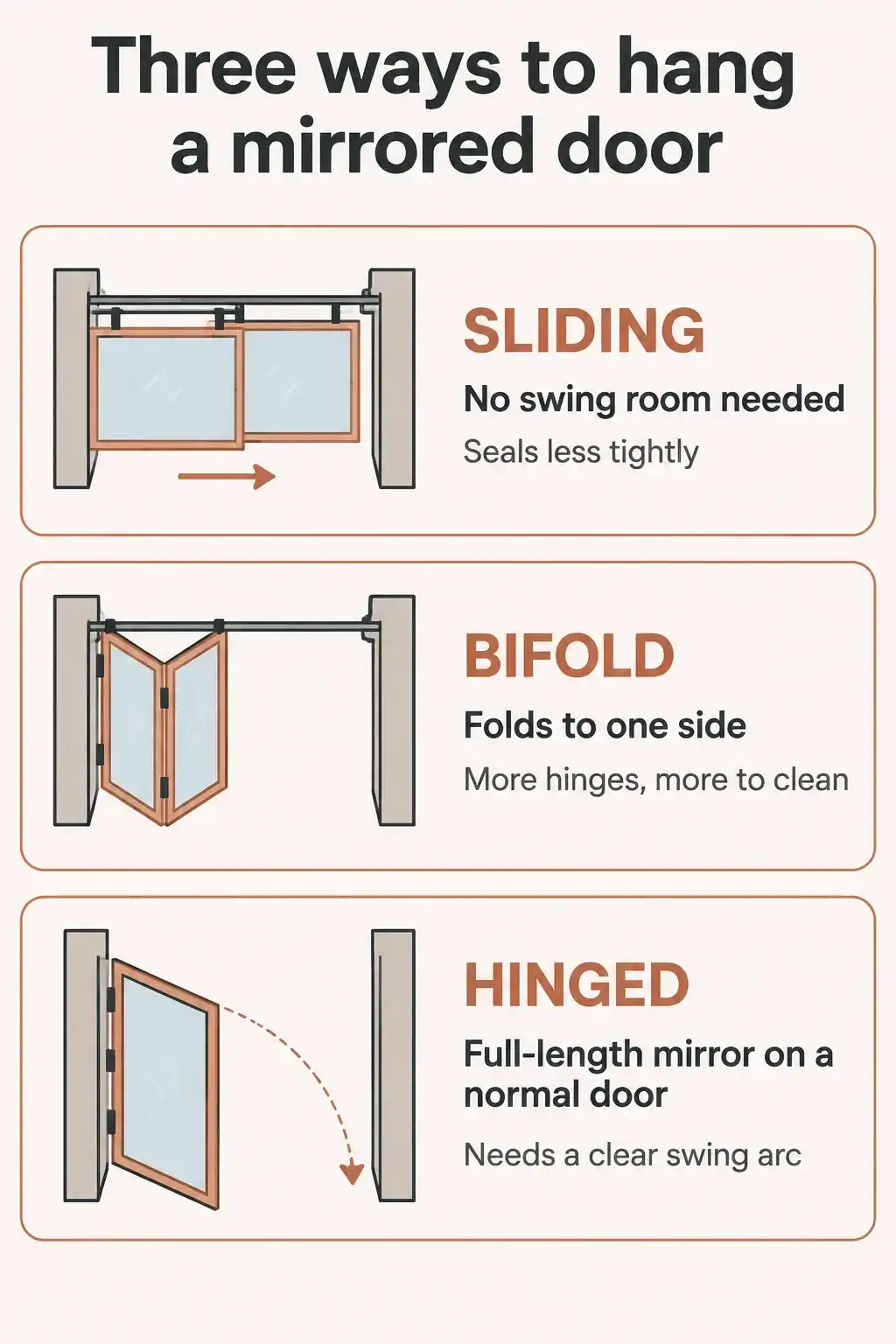
This guide covers the three common ways to hang a mirrored door, the safety rules that apply to glass in doors, and what to ask before you buy.
Sliding, bifold or hinged?
Sliding doors need no swing room, which makes them the usual choice for closets with a bed or dresser in front. The trade-off is the seal. Sliders do not close a space off as well, so you get less privacy and less noise reduction (HardwareBox).
Bifold doors fold to one side and suit small closets and pantries. With several sets they become bulky and harder to operate, and they take more time to clean. A hinged mirrored door is simple, and it needs a clear arc to swing, so check the floor plan before you buy.

Light, space and style
A mirror reflects light, so a mirrored door can brighten a room and make a small space feel bigger. That is why they work in bedrooms, dressing areas, small entries and exercise corners.
Frames change the look. You can choose a plain mirror with a minimal frame, a decorative border, or wooden edges for a more solid effect, and some mirrors come in tinted finishes.

The safety rules for glass in a door
A door with glass in it is regulated. The federal safety standard for architectural glazing, 16 CFR Part 1201, covers glazing materials in doors, storm doors, shower doors and patio-type sliding glass doors (16 CFR 1201.1). Its exemptions include openings a 3-inch sphere cannot pass through.
Building codes name mirrors directly. The 2006 International Building Code requires individual glazed areas, “including glass mirrors”, in hazardous locations to comply with the safety glazing test, and it exempts mirrors mounted on a surface with continuous backing support (text quoted by a door-hardware code consultant). A mirror that is part of a moving door is not on a continuous backing, so look for a safety-backed mirror.
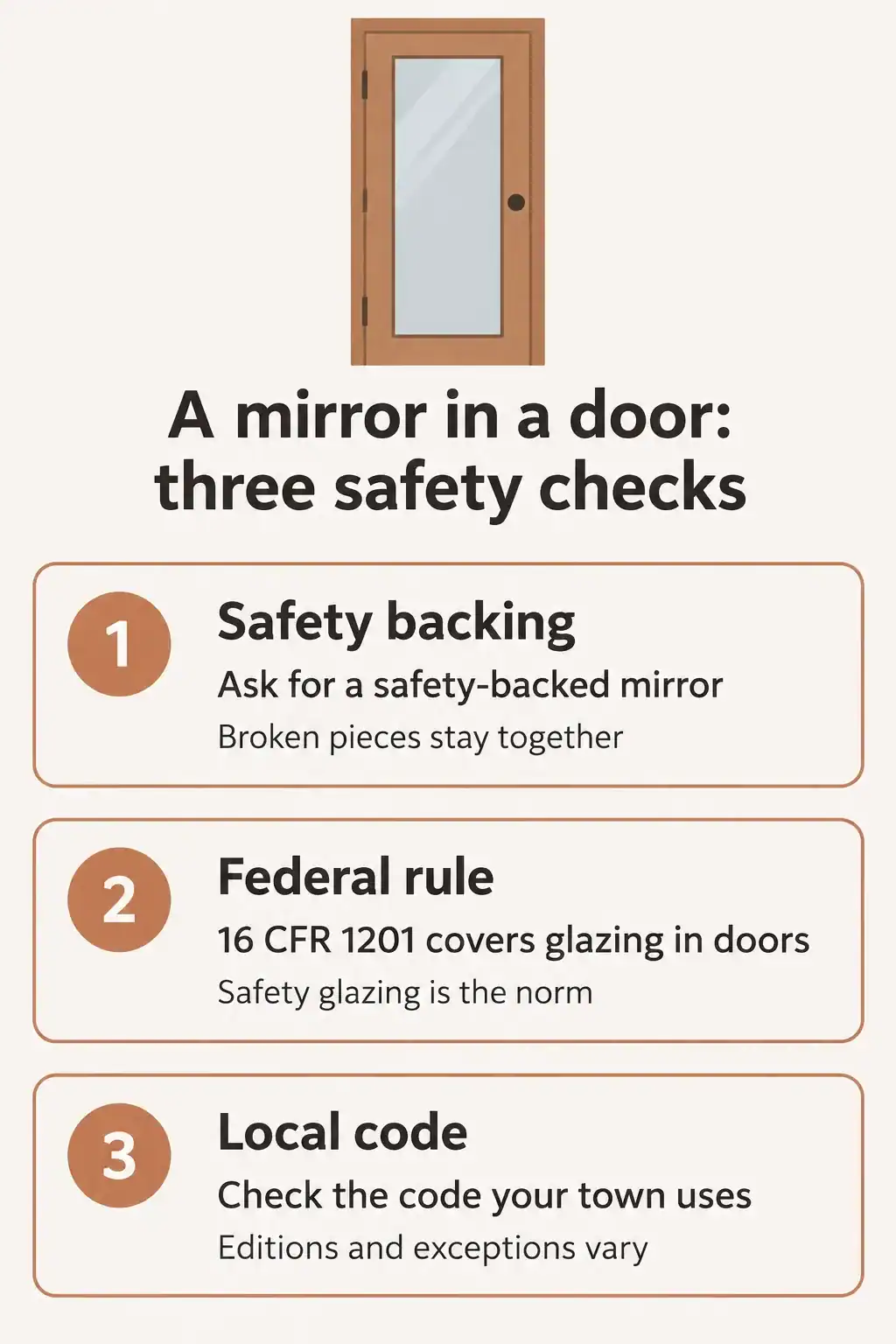
Codes change by edition and by town. Ask the supplier to confirm in writing that the mirror is a safety-backed product, and ask your building department which code edition applies.
Our take · Octopus Doors
For a closet, we would pick a sliding or bifold set with a safety-backed mirror and a solid track over a bargain kit with thin hardware. The track is the part you touch every day, and the mirror is the part you do not want to break.
Before you buy
- Choose sliding, bifold or hinged to match the floor space around the opening.
- Ask whether the mirror is safety-backed and how it is labeled.
- Check the track and rollers, because they carry the weight.
- Measure the opening, and measure it in three places.
- Decide on the frame: plain, bordered or wood-edged.
For other ways to close an opening, compare sliding doors, bi-fold doors and hollow core doors.
Related posts
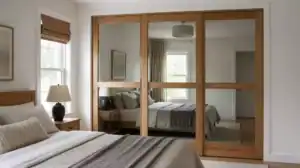 Mirrored Closet Doors Wrapped in Oak to Look Like Real Wood Panels
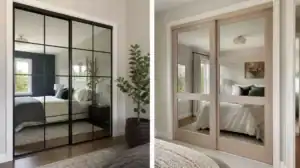 12 Mirrored Wardrobe Door Makeovers for Dated Bedrooms
 Steel Doors
 Aluminum Doors
 Fiberglass Doors
 Hollow Core Doors
 Unlock the Secrets to Perfectly Cutting Hollow Core Doors
 Fiberglass vs. Steel Front Doors: Which One Is the Better Investment?