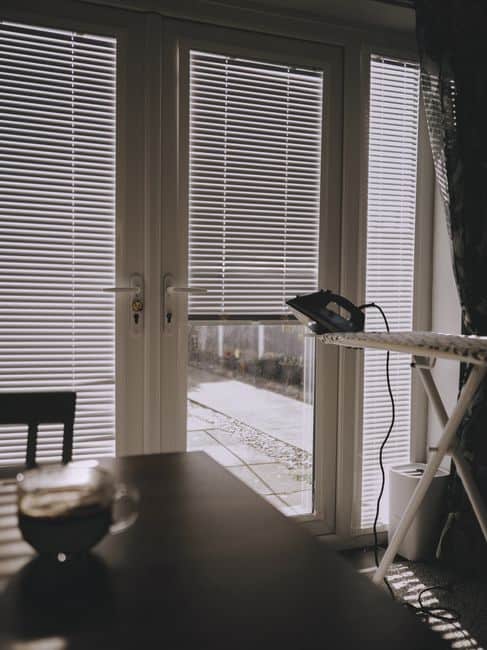
The blinds that work best on French doors are slim ones that sit close to the glass: cellular shades, roller shades, narrow faux wood blinds or aluminum mini blinds. Get the mounting right and the choice matters less.
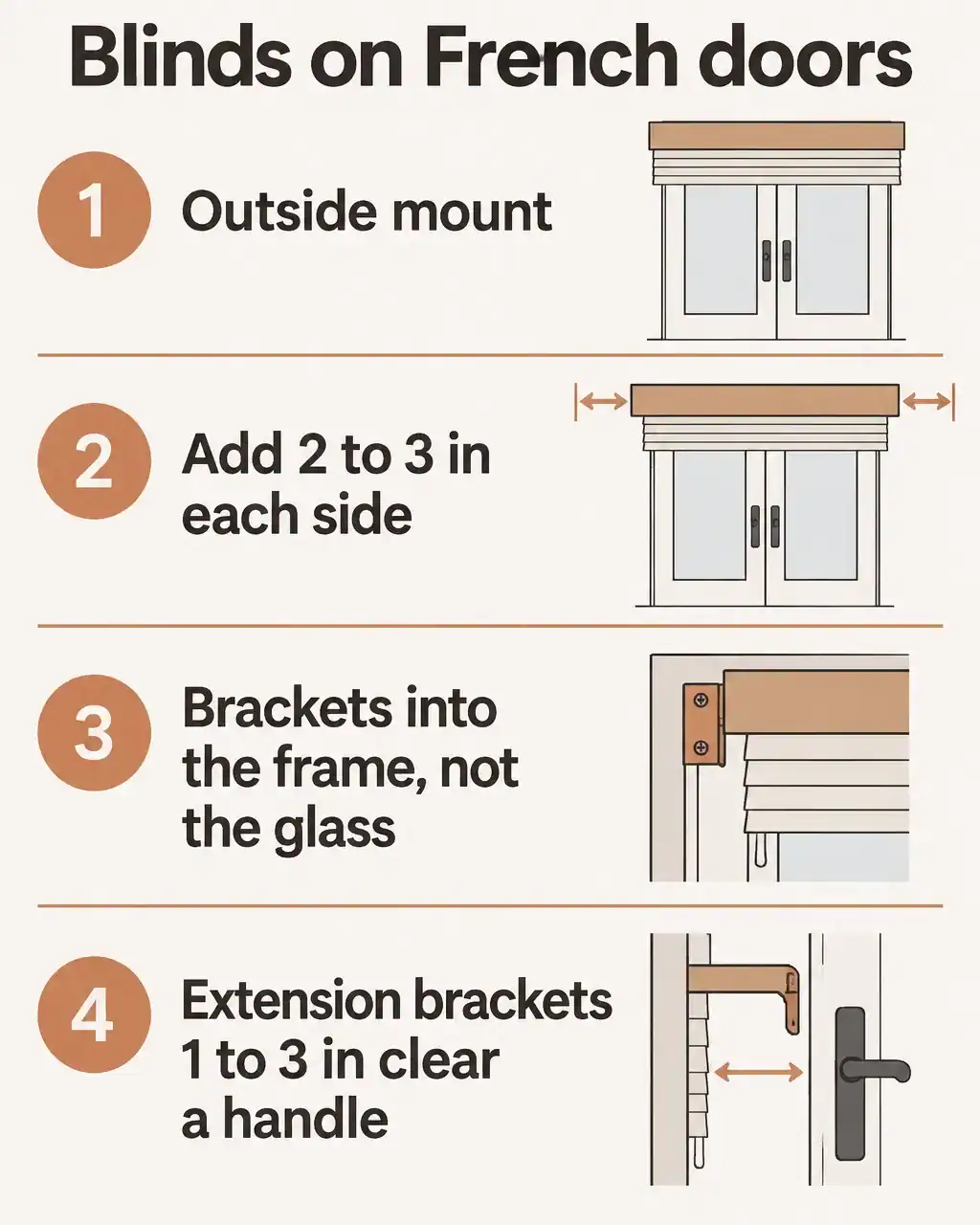
Mount them on the outside of the frame, add a couple of inches on each side and plan for the handle. Those three decisions cause most of the trouble.
Which blinds work
3 Day Blinds lists 1 inch aluminum mini blinds, 2 inch wood or faux wood blinds, cellular shades, roller shades, Roman shades and interior shutters as the usual choices. Slim profiles that stay close to the glass are recommended.
It is a blind retailer, so treat the list as one view.
Use an outside mount
Inside mounts are generally not practical, because the glass sits nearly flush with the frame and leaves little depth. 3 Day Blinds recommends an outside mount.
Add 2 to 3 inches to each side of the width to cut light gaps. Side channel or wraparound brackets help if you want a dark room.
Fix the brackets to the door frame, not the glass or glazing, because drilling too close to the glass risks cracking it.
Clear the handle
When a handle or lock would hit the headrail, use extension brackets, which typically project 1 to 3 inches. Choose slim headrails and skip bulky valances.
Avoid wood or faux wood slats wider than 2 inches, which add bulk and strain the hardware. Check the swing direction too, since inswing doors need room for the blind to move without hitting furniture or a wall.
Add hold-down brackets
Hold-down brackets anchor the bottom rail to the door, so the blind moves with the door instead of swinging into the glass. 3 Day Blinds recommends them for most installs.
The exceptions: lightweight roller shades, rarely opened doors, and cases where drilling would compromise weatherstripping.
Pick the fabric by room
The right light level depends on the room, so choose by what the door faces.
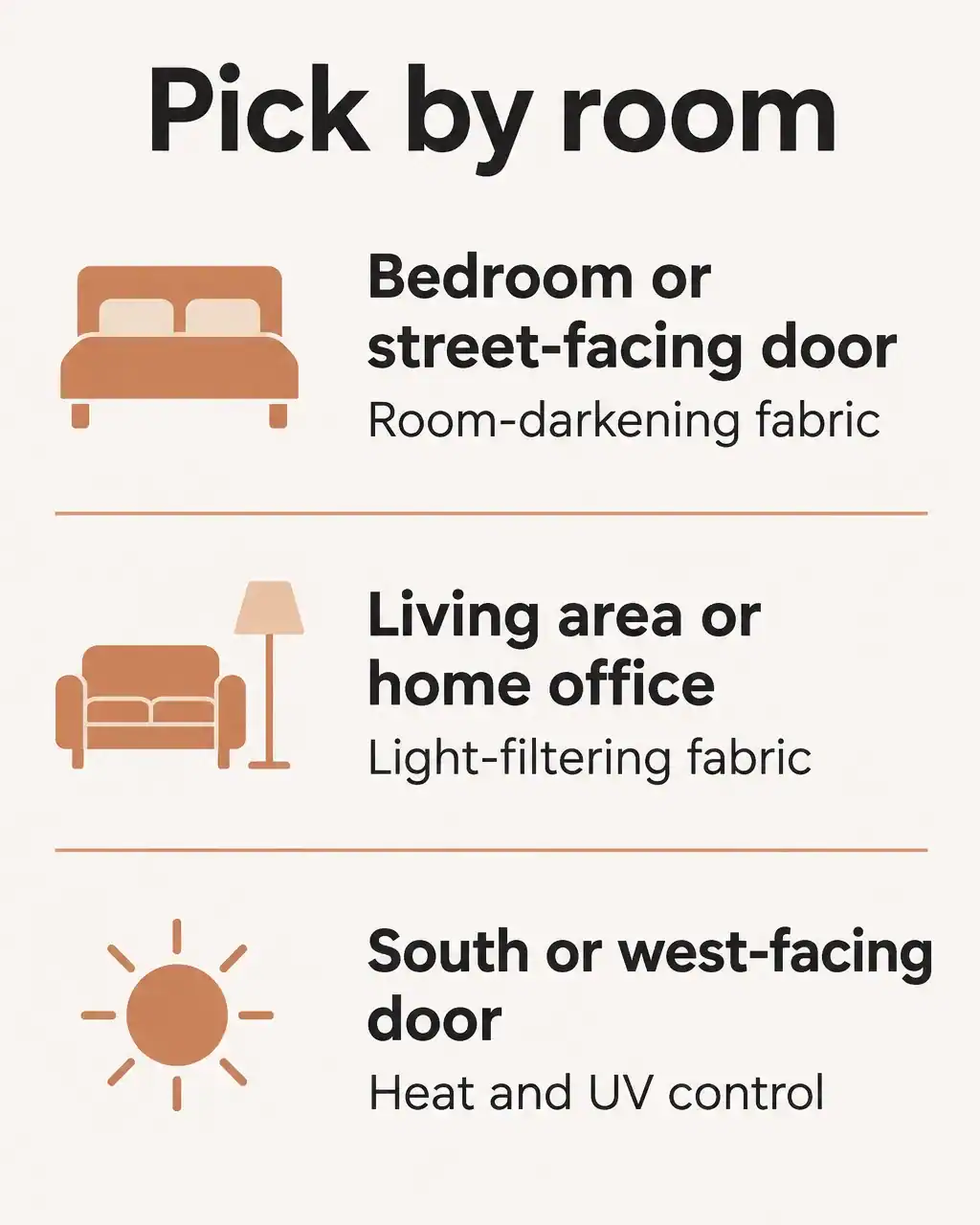
3 Day Blinds suggests room-darkening fabrics for bedrooms and street-facing doors, and light-filtering ones for living areas and home offices. For south and west-facing doors, think about heat and UV control.
Cellular shades can help with insulation, which matters because French doors have a lot of glass.
Choose cordless
Cordless lift systems on aluminum blinds remove dangling cords, and motorized shades take cords and wands away from the handle. 3 Day Blinds points to WCMA child and pet safety standards.
What I would skip · James Davis
I would skip inside mounts and loose curtains. Curtains with no hold-down swing and catch on the handle, and an inside-mounted blind can crack the glass if you drill too close.
Before you order
- Measure the frame width and height, then add 2 to 3 inches each side for an outside mount.
- Measure the stiles, which are typically 4 to 6 inches wide, to place brackets.
- Note which way the doors swing and where the handle sits.
- Order hold-down brackets with the blinds if they are not included.
- Choose cordless or motorized if kids or pets live there.
If you would rather have no blind on the door at all, French doors with blinds built into the glass covers that route. For a wider list of shades, see the best blinds for French doors and whether roller blinds work on French doors.
Related posts
 Why Choose French Doors
 French Doors with Built-in Blinds: Types, Materials, Cost, and Common Issues
 How to Choose a Front Door Thats Secure Solid and Timeless
 What Are the Best Blinds for French Doors
 Do Roller Blinds Work On French Doors
 French Door Privacy: Shades, Blinds and Glass Options
 Are French Doors Better Than Sliding Patio Doors?
 How Long Does It Take To Install Exterior French Doors?