You picked the door color, chose the hardware, maybe added planters. Then you screw in two little lanterns from the hardware store and the whole entry suddenly looks unfinished. Front door lights are the detail most people get wrong, and almost always in the same way: too small, mounted too high, and too bright for how close they sit to your eyes. The good news is that the right size, height and brightness come down to a few simple numbers.
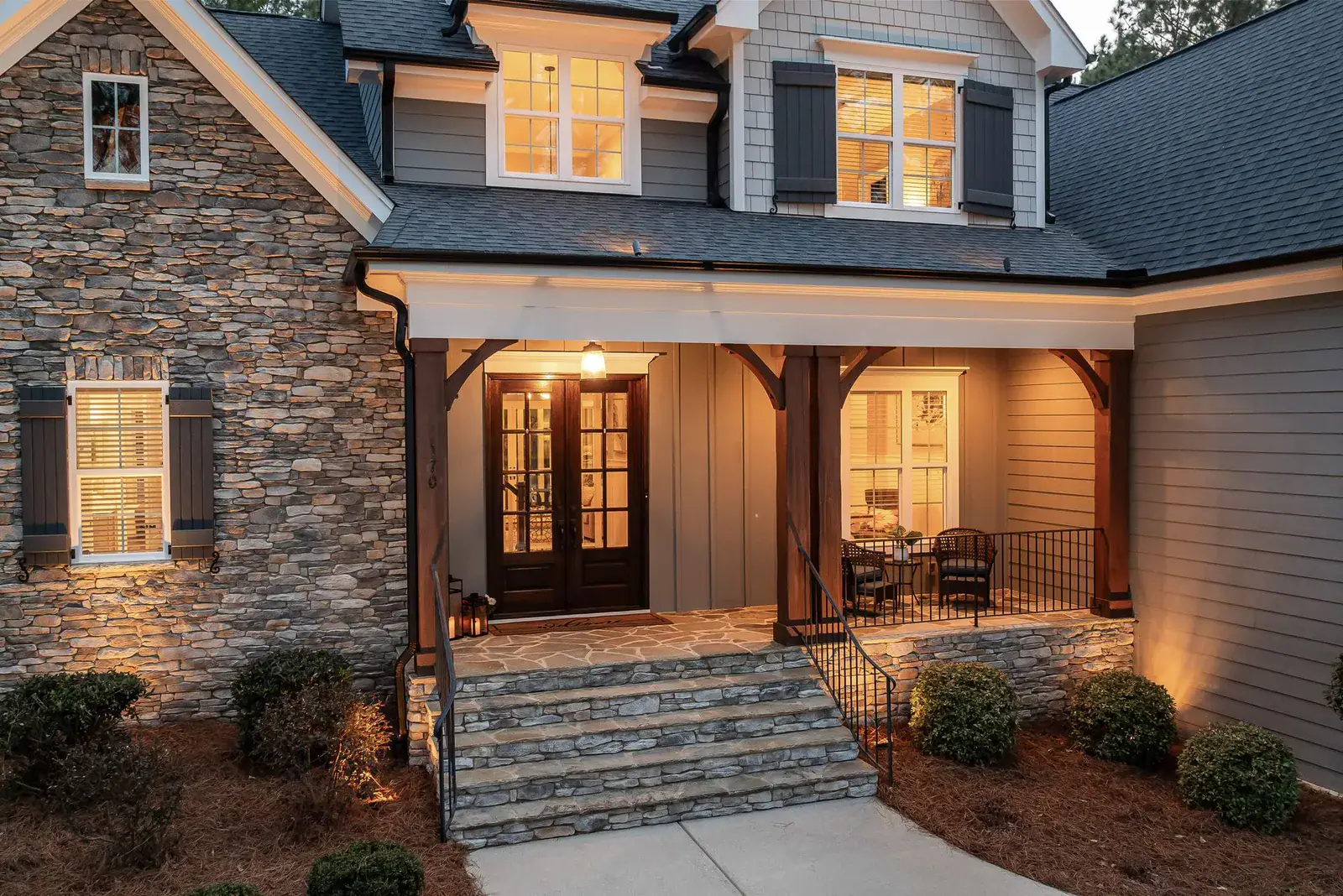
The short answer
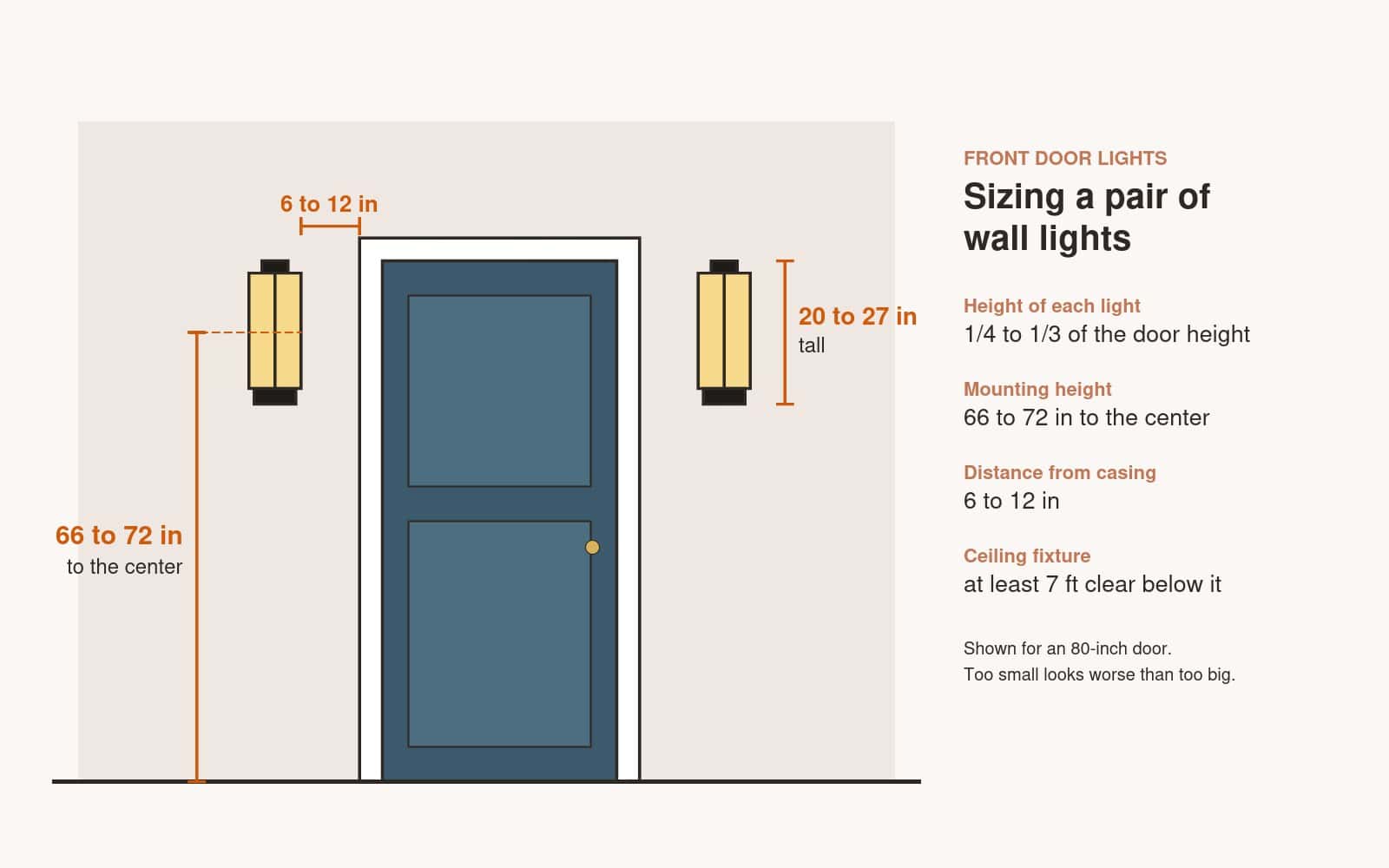
Choose wall lights that are about a quarter to a third of your door’s height, roughly 20 to 27 inches for a standard 80-inch door. Mount them so their centers sit 66 to 72 inches above the threshold and 6 to 12 inches out from the door casing. Use warm bulbs of 3000K or lower, a fixture rated for damp or wet locations, and a timer or motion sensor instead of leaving the lights on all night.
1/4 to 1/3
of the door’s height for each wall light
66 to 72 in
from the threshold to the center of the light
3000K
or warmer is DarkSky’s color temperature limit for home lighting
Sources: The Home Depot’s outdoor wall light sizing guide, This Old House, and DarkSky International.
01 / Size
How big should front door lights be?
Front door lights should be about one quarter to one third of the door’s height. That ratio, standard in lighting showroom advice, works for a pair of lights on each side of the door. If you only have room for one light, lean toward the larger end of the range.
The numbers for common door heights work out like this. These are our calculations from the quarter-to-a-third rule, measured on the fixture itself, not the bulb.
| Door height | Each wall light (1/4 to 1/3) | One light only |
|---|---|---|
| 80 in (6 ft 8 in), the US standard | 20 to 27 in | About 27 in |
| 84 in (7 ft) | 21 to 28 in | About 28 in |
| 96 in (8 ft) | 24 to 32 in | About 32 in |
Measure the fixture from the top of its cap to the bottom of its base. Product listings usually give this as “height.” If the door has sidelights or a transom, size the lights to the whole door unit, not just the door slab. That is what your eye reads from the street.
Our take · James Davis
Before you order anything, cut a piece of cardboard to the size of the light you are considering and tape it to the wall. Walk to the street and look back. Almost everyone is surprised how small a “large” lantern looks from 30 feet away. If you are torn between two sizes, buy the bigger one.
02 / Placement
Where should front door lights be mounted?
Mount wall lights so the center of the fixture sits 66 to 72 inches above the porch floor, roughly at eye level. Some installers allow a slightly wider 65 to 75 inches. Mounting much higher pushes the light above your face and leaves the lock and steps in shadow.
For spacing, set each light 6 to 12 inches out from the door casing. That keeps the fixture clear of the trim and the swing of a storm door while still lighting the person at the door.
- Two wall lights Best for a symmetrical entry with room on both sides of the door. This is the classic look on colonial and traditional houses.
- One wall light Fine when space is tight. Put it on the latch side, where the knob and lock are, so you can see the keyhole.
- Ceiling light or pendant Works on a covered porch or under a portico. Leave at least 7 feet of clearance below the bottom of the fixture.
- Light above the door A single fixture centered over the door suits a narrow entry with no room at the sides, as long as it doesn’t hit the top of a storm door.
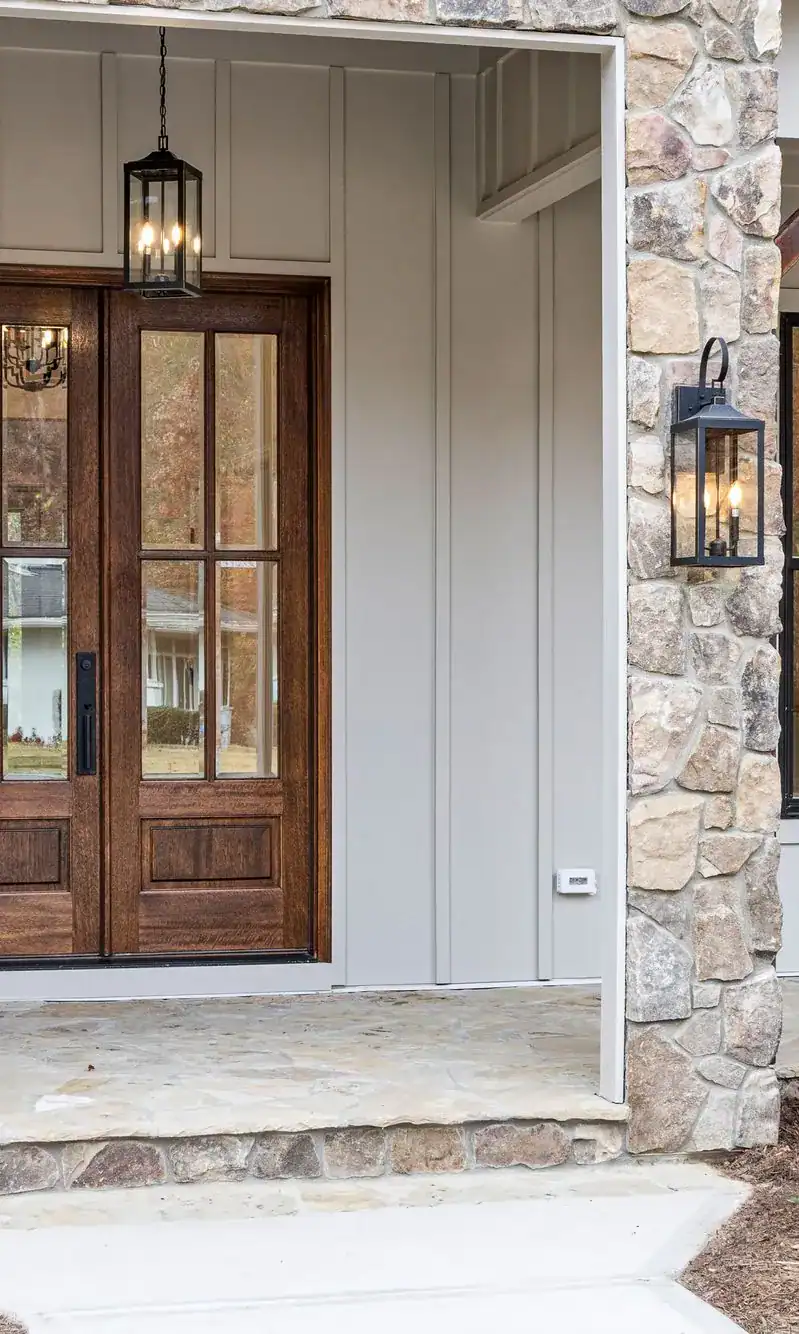
If your house is a classic symmetrical design, the pair-of-lanterns look is hard to beat. You can see it in many of our colonial house front door ideas, where the lights frame the door and its trim as one unit.
03 / Brightness
How bright should front door lights be?
A typical front entry needs about 600 to 1,600 lumens in total. Lumens measure how much light a bulb gives off; watts only measure how much power it uses, so ignore the watt number on LED packaging.
To translate that into bulbs, ENERGY STAR’s lumen equivalents help: a bulb that replaces an old 40-watt incandescent gives at least 450 lumens, and a 60-watt replacement gives at least 800. Our calculation: a pair of 450-lumen bulbs gives about 900 lumens, which sits comfortably in that range for most entries. A pair of 800-lumen bulbs (1,600 in total) is the top of it.
Brighter is not better here. The lights are close to eye level and close to the person standing at the door, so a very bright bulb dazzles whoever is standing there. DarkSky International’s advice is to use the lowest number of lumens that does the job.
Our take · James Davis
My rule of thumb is a 40-watt-equivalent LED in each wall light and something a bit brighter overhead if there are steps. If you can read your house key and see the edge of every step, it is bright enough. Anything more is mostly glare.
04 / Color and glare
What color temperature and glass should you choose?
Choose bulbs of 3000K or lower. Color temperature is measured in kelvins (K): lower numbers look warm and yellowish, higher numbers look cool and bluish. For home outdoor lighting, 3000K is the upper limit DarkSky International recommends, and 2700K or less is better still (DarkSky guidance). Warm light also flatters brick, wood and painted doors.
Glass matters as much as the bulb. A clear glass lantern with a bare, bright bulb puts the hot spot of the bulb right in your line of sight. Seeded, frosted or ribbed glass spreads that light out, and a fixture that is closed on top and points light downward keeps it off the sky and your neighbor’s windows.
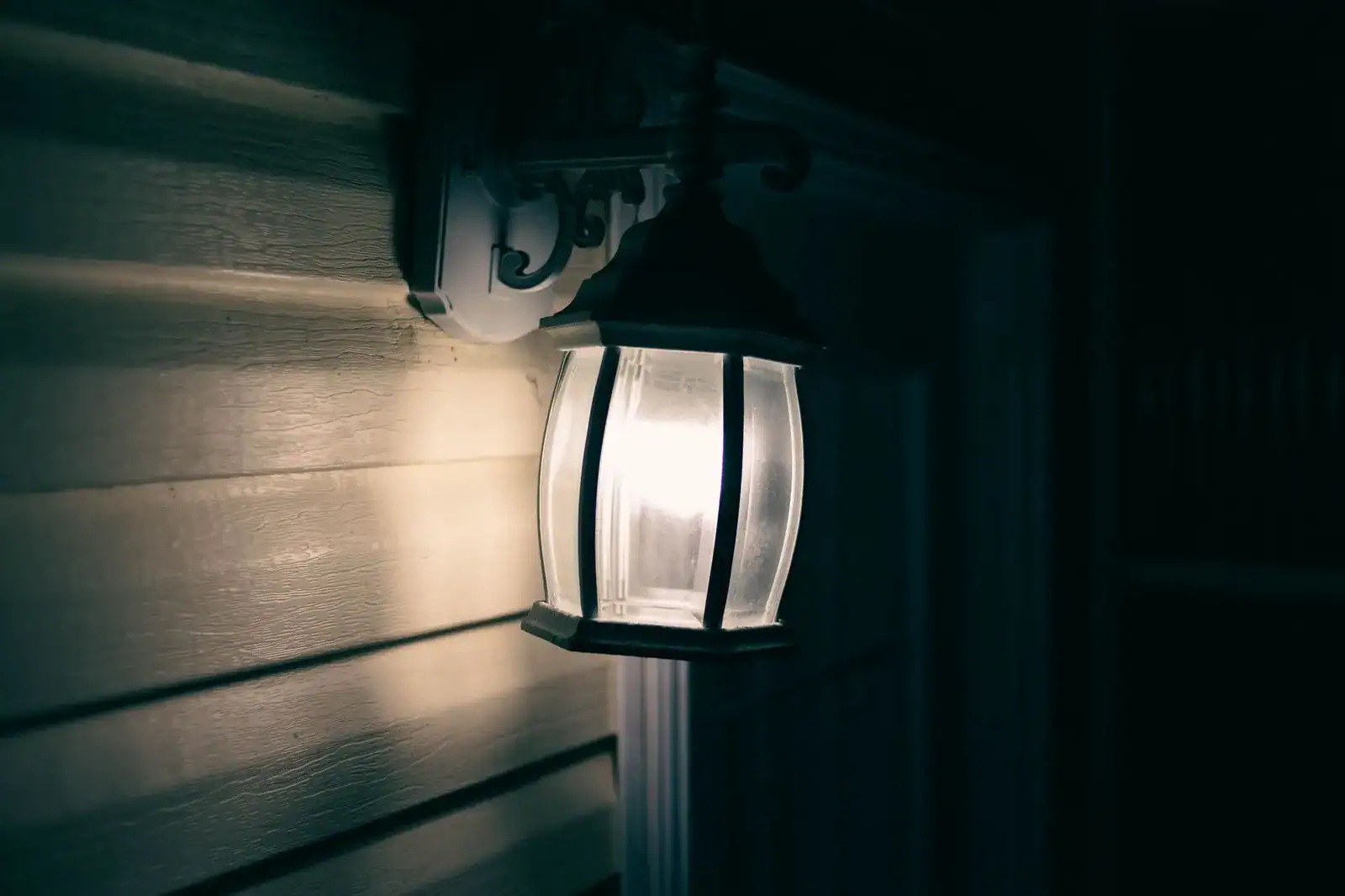
- Bulb labeled 2700K or 3000K (“warm white” or “soft white”)
- Frosted, seeded or ribbed glass if the bulb is visible
- A top that is closed, so light goes down and out, not up
- An Edison-style “filament” bulb only if the glass is frosted or the bulb is dim
05 / Weather rating
Do front door lights need a damp or wet rating?
Yes. Every outdoor light needs a weather rating, and which one depends on whether rain can reach it. A light on a wall under a roofed porch is in a damp location and needs a fixture marked for damp locations. A light on an exposed wall that rain hits directly needs one marked “suitable for wet locations.” A wet-rated fixture also works in a damp location, so it is the safe choice if you are unsure.
Look for the rating on the box or the label inside the fixture, usually as part of a UL or ETL listing. A light sold for indoor use is not rated for either, even if it looks like an outdoor lantern.
Finish and material matter too. Check what the fixture is made of and how long the maker warrants the finish outdoors. Near the ocean, salt air is harder on everything, which is why we cover coastal doors and hardware separately in keeping a front door looking good in salt air.
06 / Controls
Should front door lights run on a timer, motion sensor or dusk-to-dawn sensor?
A timer or a motion sensor is usually the better choice. DarkSky’s home lighting checklist recommends connecting outdoor lights to timers or motion sensors so they are on only when needed. It specifically suggests avoiding dusk-to-dawn photocells, which keep lights on all night whether anyone is there or not.
A practical setup for most homes: lights on at dusk through a smart switch or timer, off at bedtime, with a motion sensor on a step or path light for late arrivals. Many fixtures and smart bulbs can do this without new wiring.
Keep the wall switch
The electrical code expects a switch-controlled light at the front door. NEC section 210.70(A)(2)(b) requires at least one wall switch-controlled lighting outlet at outdoor entrances with grade-level access. If you add sensors or smart bulbs, keep the switch working. Turn off the breaker before changing a fixture, and hire a licensed electrician for any new wiring or a new box.
07 / Style
How do you match the lights to the door and the house?
Start with the architecture, then the finish. Lantern sconces with hinged glass doors suit Federal-style houses, and copper onion lanterns suit colonials. Beyond those two, the same logic holds: simple cylinders and boxes are the usual choice on modern houses, and gooseneck barn lights on farmhouses.
For the finish, the lights don’t have to match the door hardware exactly, but they should look like they belong together. We go through the options in whether door hardware should match light fixtures. In our view, black is the safest all-round finish, while aged brass and copper add warmth to wood doors and red brick.
Our take · James Davis
If you can’t decide on a style, pick the plainest lantern in the right size and a dark finish. A well-sized simple light makes a front door look expensive. A small fancy one makes it look like an afterthought. For a polished look, see how lights work with the doors in our classy front door ideas.
On a farmhouse, scale matters even more because porches are deep and doors are often wide. The farmhouse front door ideas we have collected show how bigger, simpler fixtures carry across a wide porch.
Front door lights FAQ
Should front door lights match each other on both sides?
Yes. When you use two wall lights, use the same fixture at the same height on both sides. Mismatched lights make a symmetrical entry look off balance.
Can front door lights be too big?
Rarely. Lights that are too small are far more common. Stay within about a quarter to a third of the door height and a larger light will look intentional from the street.
What height should a light above the front door be?
Center it above the door and keep it clear of the trim and any storm door. On a covered porch, leave at least 7 feet between the bottom of a ceiling light or pendant and the floor.
Are warm or cool bulbs better for a front porch?
Warm bulbs, labeled 3000K or lower, are better for most homes. DarkSky International recommends 3000K or lower for home outdoor lighting and suggests 2700K or less where possible.
Do I need an electrician to replace a porch light?
Swapping one fixture for another on the same box is a common DIY job with the breaker off. Running new wiring, adding a second light or installing a new box is work for a licensed electrician.
The takeaway
Size front door lights to about a quarter to a third of the door height. Mount them 66 to 72 inches to the center and 6 to 12 inches from the casing, and choose warm 2700K to 3000K bulbs behind frosted or seeded glass. Get a damp or wet rating that matches where the light sits, put it on a timer or motion sensor, and keep the wall switch working.
Related posts
 How to Choose a Front Door Thats Secure Solid and Timeless
 Storm and Screen Doors: How to Choose and What They Cost
 Best Blinds for French Doors: How to Choose and Mount Them
 Why Choose French Doors
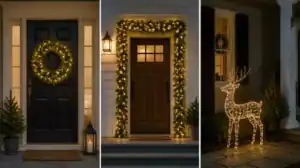 10 Christmas Door Decor Ideas with Lights
 15 Inspiring Indoor-Outdoor Patio French Door Ideas
 14 Best Front Door Planter Combos That Look Good Year-Round
 12 Best Front Door Colors for a Blue House