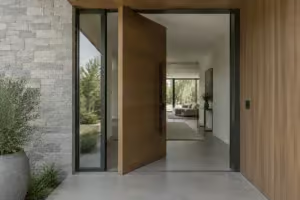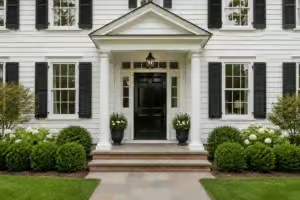
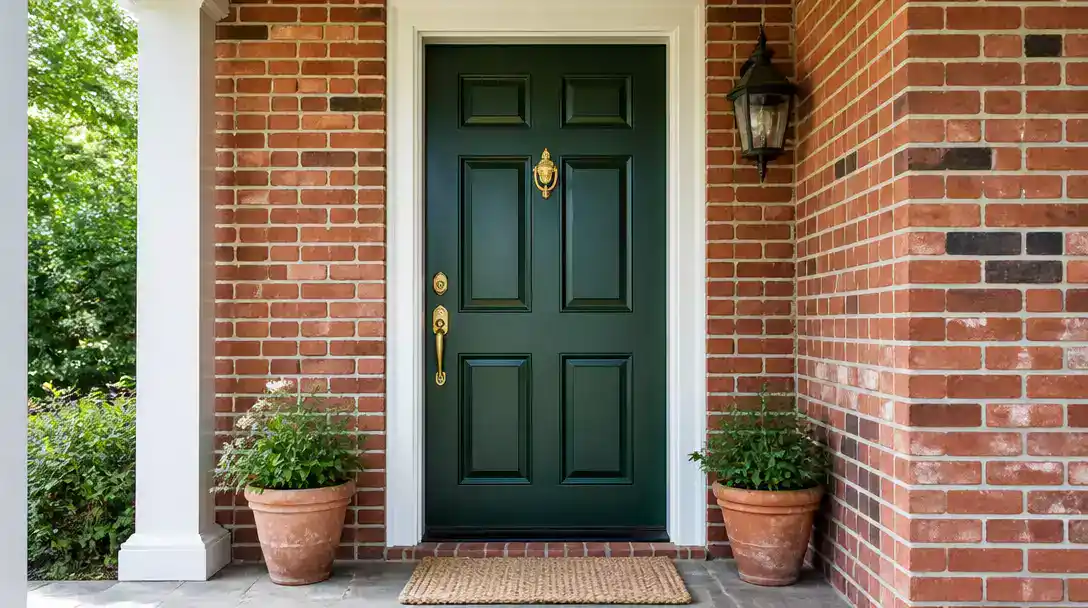
Red brick exteriors have a heavy visual weight that makes choosing the right entrance finish a challenge. This guide rounds up 10 door ideas worth saving to help you balance those warm tones and find the specific look that fits your home. Let’s get started.
Deep Green Repaint
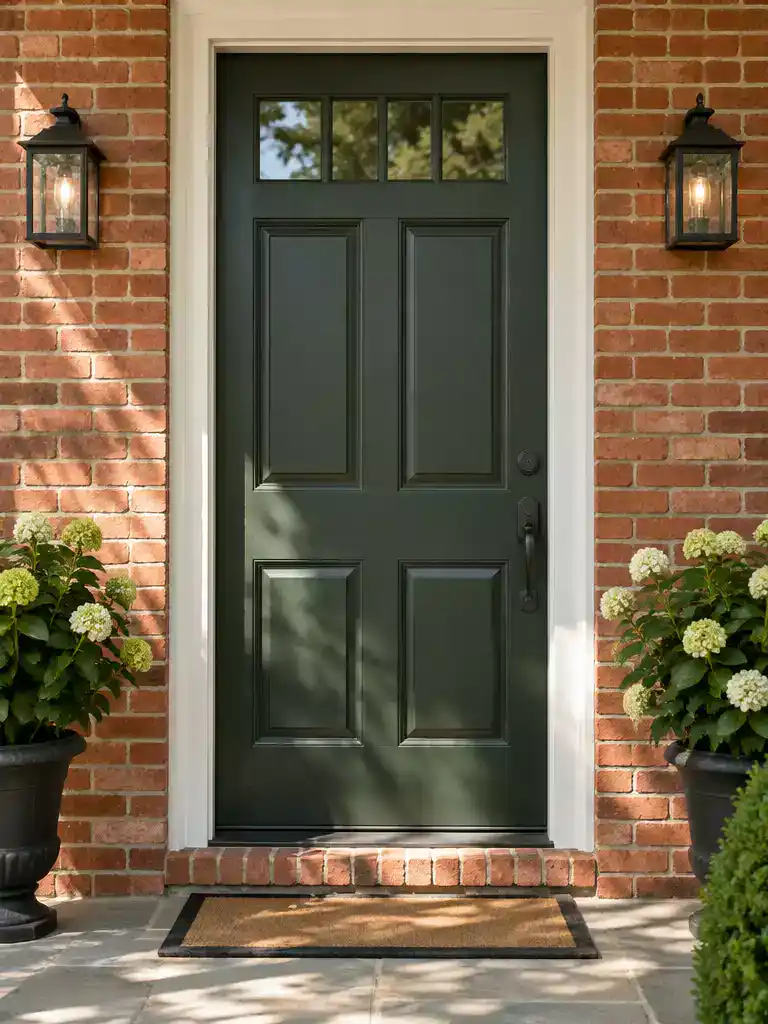
Refresh your exterior with a cooling deep green that calms warm, red-orange brick tones.
As an Amazon Associate I earn from qualifying purchases. Affiliate links may earn me a commission at no extra cost to you.
Deep green serves as the premier choice for cooling down a red-orange brick facade because it sits directly opposite those warm shades on the color wheel. This creates a natural, balanced visual contrast that feels intentional rather than accidental.
Steer clear of olive or bright, grassy greens. These lighter, yellow-based tones often look jarring and cheap against the natural clay and iron-rich colors found in traditional brick.
For the best results, use an exterior-grade acrylic-alkyd paint. This specific formula provides the durability of an oil-based coating while maintaining the flexibility and color retention of acrylics.
Dark shades are unforgiving when it comes to application technique. Always use a high-quality shed-resistant roller or professional brush to avoid visible streaks that can ruin the finish in direct sunlight.
⭐ Top Green Mats for Entryways
✨ Editor’s Pick
Heavy Duty Indoor Outdoor Welcome Mat
Waterproof Non-Slip Front Door Mat
Woven Checkered Front Door Rug
💡 Why This Color Choice Works:
Deep green acts as a visual “reset” for red brick. Because it occupies the opposite side of the color wheel, it neutralizes the intense warmth of the clay, creating a sophisticated, grounded entry that feels less like a clashing experiment and more like a deliberate, professional design choice.
Design Takeaway: Use a matte or satin finish to prevent the door from reflecting too much distracting, harsh light.
Warm Black Repaint
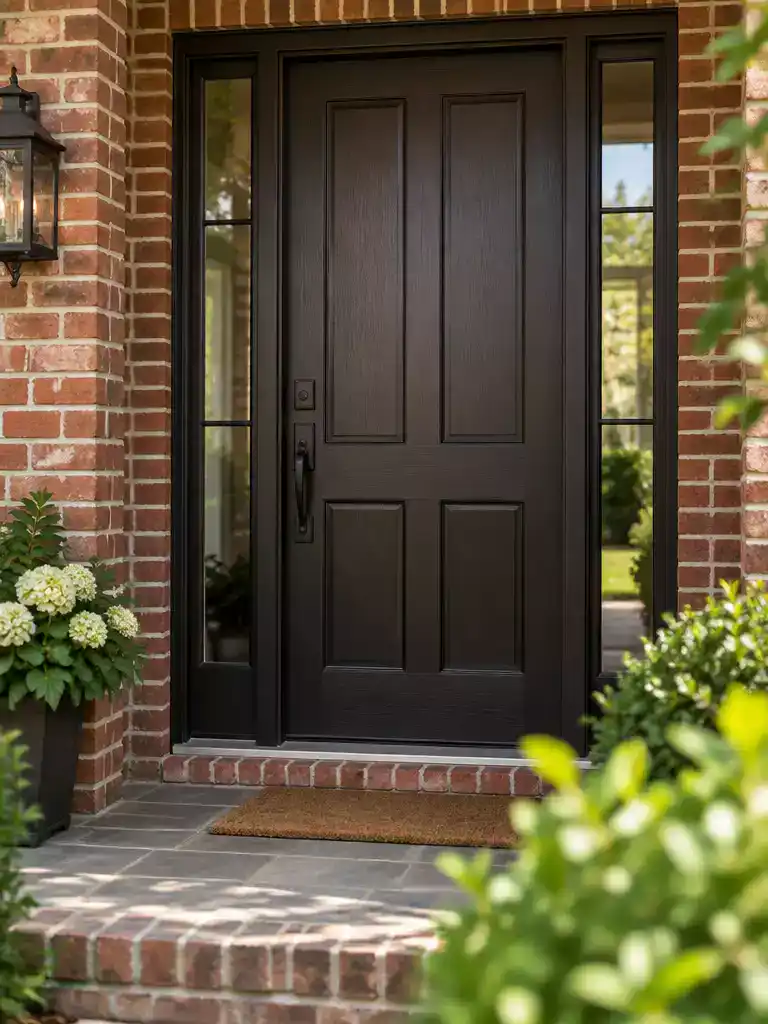
Boost your home’s market appeal with a sophisticated, high-contrast entry that anchors the brick facade.
Choosing a warm black paint for your entry is one of the most effective ways to modernize a red brick exterior. Buyer studies suggest this high-contrast upgrade can add up to $6,449 in perceived market value, making it a high-reward renovation project.
The “Warm” Rule: Avoid blue-black or “electric” black paints at all costs. These cool tones will clash with the earthy reds of your brick, making the door look detached and artificial.
Because black paint is notoriously unforgiving, prep work is non-negotiable. You must sand any existing gloss or semi-gloss finish down to a dull, scuffed surface to ensure the new enamel adheres properly.
Once applied, remember that dark finishes show dust, fingerprints, and pollen more readily than lighter colors. Invest in a high-quality, wipeable exterior enamel to ensure your door stays looking fresh throughout the changing seasons.
⭐ Best Black Mats for Modern Entryways
Jumbo Size Waterproof Entryway Mat
✨ Editor’s Pick
Durable Heavy Duty Outside Welcome Mat
Funny Farmhouse Rubber Welcome Mat
📈 The Long-Term Payoff:
Investing in a high-quality warm black finish goes beyond immediate curb appeal; it creates a timeless, grounding effect that anchors your home’s facade. While dark colors require more frequent cleaning, their ability to elevate the perceived value of a red brick home makes this a strategic, high-ROI update that buyers consistently notice and appreciate.
Resale Advantage: A well-executed black door functions as a sophisticated focal point, often signaling a meticulously maintained property.
Brick houses are notoriously sensitive to color, and getting the undertone harmony right is the single most effective way to ensure a door feels integrated rather than an afterthought. Exploring proven color pairings helps you bypass the guesswork and narrow your options to the few that actually anchor the architectural weight of your facade.
When you align your paint temperature with your home’s natural clay tones, you create a permanent, high-impact finish that makes the entire entryway feel intentional.
Muted Navy Repaint
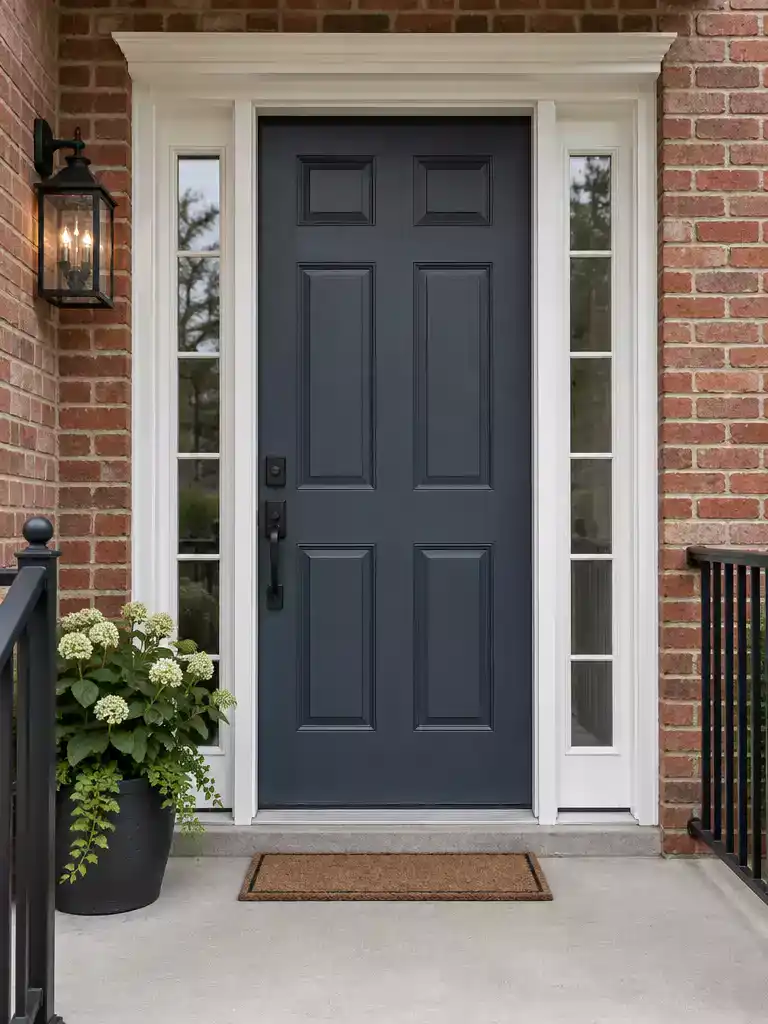
Refresh your entry with a crisp, formal navy that anchors your brick exterior perfectly.
Muted navy provides a formal, nautical-inspired definition that feels substantial without the harshness of pure black. It is an excellent choice if you want to cool down the fiery tones of your red brick while maintaining a classic look that fits colonial or traditional home styles.
When selecting your shade, be incredibly selective about the secondary undertones. You should look for a color that leans gray or slate; steer clear of any navy that reveals purple or bright, synthetic blue undertones in direct sunlight.
Watch for Coverage Issues
Navy paint can be notorious for showing “holidays” – those thin, uneven spots where the primer shows through. Always use a high-hiding, tinted primer to ensure a uniform, saturated finish that doesn’t look streaky. Primer is bought by the quart too, so check how much paint the door takes before you shop.
Before you commit to a gallon, hold your paint sample against all existing fixed elements near the door, such as porch railings, shutters, or window frames. You want the navy to act as a partner to these features, not a competitor that fights for visual attention.
⭐ Muted Navy Mats We Love
Striped Cotton Outdoor Welcome Rug
Washable Non-Slip Indoor Outdoor Mat
✨ Editor’s Pick
Large Striped Farmhouse Porch Rug
The Detail That Pulls It Together
Navy paint interacts differently with light depending on the time of day. Because brick absorbs so much warmth, a navy with a subtle gray base creates a sophisticated, grounded look. Avoid high-gloss finishes, which can create glare that fights the rustic, porous texture of your brick; a classic satin or eggshell finish offers a much more intentional, high-end appearance.
Cream Door Refresh
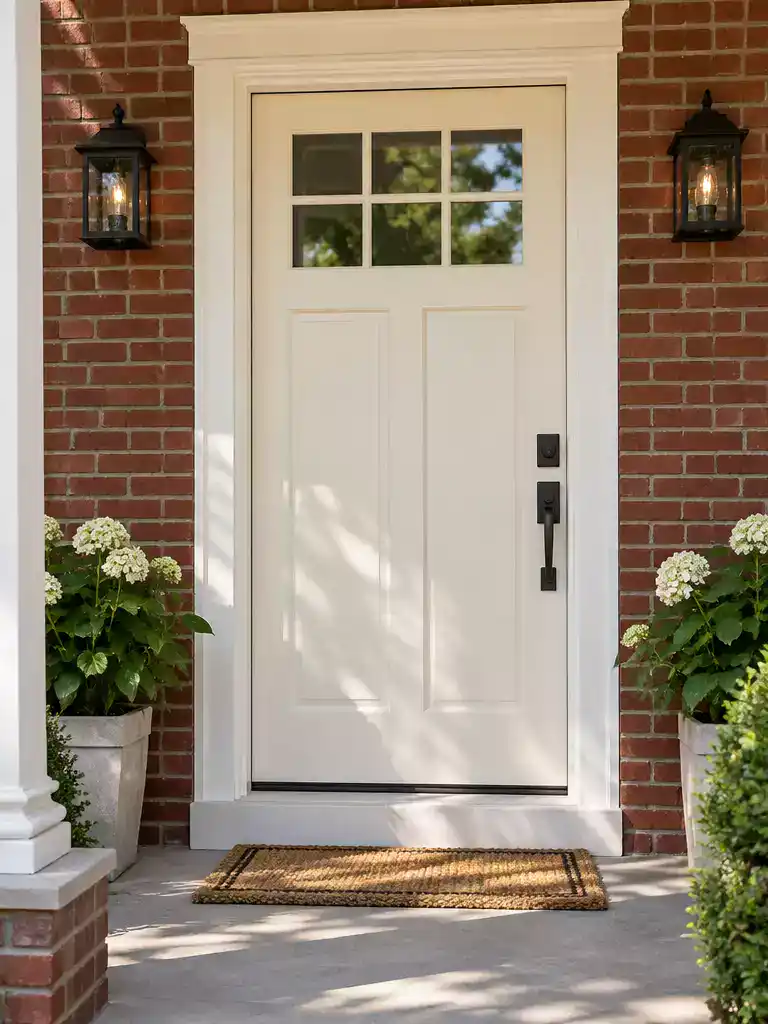
Brighten a heavy brick entryway with a soft, neutral cream that highlights architectural detail.
A cream door refresh is the ideal move for homes where the red or rose-brown brick makes the entryway feel like a dark, recessed cave. By choosing a creamy off-white, you provide a crisp contrast that lifts the visual weight of the heavy masonry without the stark, clinical feel of a pure bright white.
The “Yellow” Trap: Low-quality cream paints often shift to an unsightly butter-yellow as they age in the sun. Avoid “cool” white-leaning tones as well, which can look jarring and chalky against the natural warmth of clay-fired brick.
Because cream shades are significantly lighter than the surrounding brick, they are much less forgiving of surface imperfections. Any wood patches, sap stains, or old paint textures will telegraph straight through a finish coat if you don’t prep properly.
Use this quick checklist to ensure your cream finish stays crisp and clean:
- High-Hiding Primer: Always use a high-hiding, tinted exterior primer to create a perfectly uniform base for your light paint.
- Dirt Maintenance: Cream surfaces show dirt and urban grime faster than dark colors, so choose a scrubbable exterior enamel.
- Lighting Check: Test your sample against the brick under your porch light at night; some creams can shift to a muddy green or gray under artificial bulbs.
This refresh is best for homeowners looking to modernize their curb appeal while maintaining a traditional, welcoming atmosphere. If your brick has strong orange or rust undertones, skip the cream and opt for a deeper, earthier neutral instead.
⭐ Cream Door Mats to Consider
✨ Editor’s Pick
Sturdy Natural Rubber Entrance Mat
Beige Dirt Trapper Entryway Mat
Buffalo Plaid Cotton Decorative Mat
💡 Why This Works for Red Brick:
- Visual Ventilation: Cream tones act as a visual “breather,” effectively breaking up the dense, monochromatic weight of red-clay brick facades.
- Undertone Harmony: Selecting a warm, neutral cream prevents the clinical, stark contrast that often makes traditional home exteriors feel disconnected and uninviting.
- Softening Hard Edges: The muted quality of cream softens the sharp, industrial feel of mortar lines, lending your entryway a more approachable and historic character.
Natural Wood Refinish
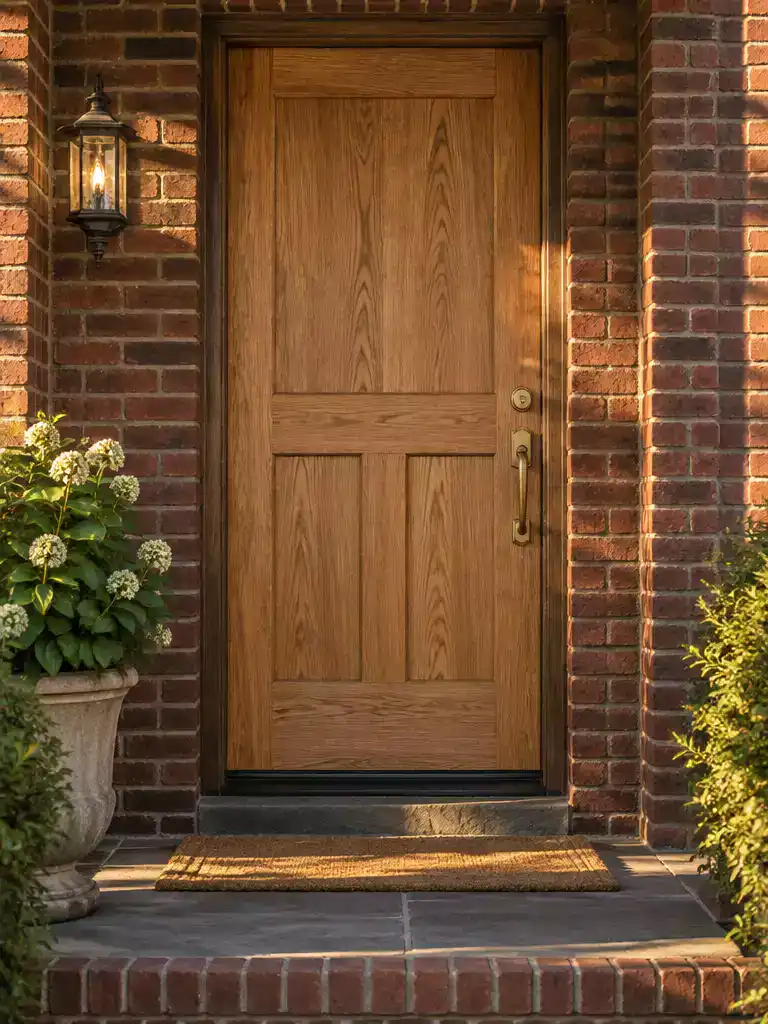
Restore your home’s historic character by highlighting the organic, warmth-filled texture of natural wood.
A natural wood finish taps into the organic texture and historic roots of a red brick facade, grounding the entry in a way paint simply cannot. This approach is best for homeowners with solid wood doors who want to emphasize the architectural integrity of their home.
The Reality Check: You cannot stain over existing paint or factory coatings. Achieving this look requires stripping the door to bare wood, which is a labor-intensive process not suited for thin veneers or doors with visible rot.
Because wood is constantly exposed to the elements, it demands a higher commitment to upkeep than painted surfaces. You must apply a UV-resistant sealer to prevent the finish from becoming blotchy or graying under direct sunlight.
If your door faces the harsh afternoon sun, plan to inspect the finish every six to twelve months. Keeping the sealer intact is the only way to avoid the uneven, weathered look that plagues neglected exterior wood.
⭐ Natural Wood Refinish Ideas
Absorbent Brown Indoor Entrance Mat
✨ Editor’s Pick
Hand Painted Coconut Fiber Mat
Sturdy Beige Mud Resist Door Mat
💰 What This Really Costs
- The real range: Expect to spend between $80 and $500 for a professional wood-refinishing service depending on door condition.
- Hidden cost: Don’t overlook the price of high-quality chemical strippers, multiple grit sandpapers, and professional UV-resistant exterior sealers.
- Worth it: Investing in a professional finish is well-spent if your door has intricate details or premium wood grain.
Warm Taupe Repaint
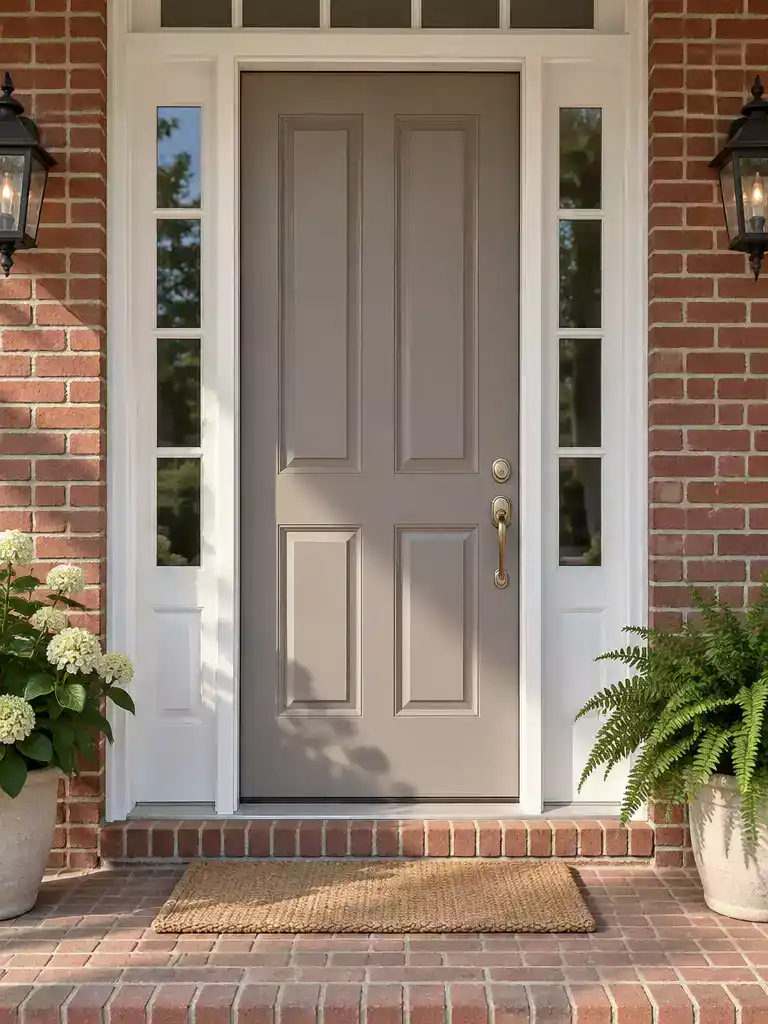
Create a cohesive, understated entryway that harmonizes perfectly with your home’s natural brick tones.
A warm taupe repaint serves as the ultimate neutral bridge for red brick homes. It successfully ties together the high-contrast red of the masonry with existing trim colors or stonework, creating a unified exterior palette.
The Saturation Check
If your porch is deeply shaded, avoid thinner, lighter greys that can read as “muddy” or flat. Choose a taupe with enough pigment saturation to hold its own against the heavy visual weight of the brick.
This color choice is ideal if you prefer a subtle, sophisticated look rather than the high-contrast drama of black or deep green. However, it requires careful testing to ensure the gray-to-tan ratio matches your specific brick undertones.
Always verify your sample in both early morning and late afternoon light against the actual brick. This “bridge effect” only works when the neutral balance stays consistent throughout the day.
⭐ Warm Taupe Mats We Love
Washable Buffalo Check Outdoor Rug
Coffee White Plaid Porch Decor Mat
✨ Editor’s Pick
Black White Buffalo Plaid Decorative Mat
💡 Why This Works:
Taupe succeeds because it lowers the visual temperature of your entryway without creating the harsh “cut-out” effect that extreme high-contrast colors can cause. By pulling neutral gray and warm tan tones from your brick’s natural grout and clay, it allows the door to feel like a seamless extension of the architecture rather than a separate, competing element.
Visual Harmony: This choice creates a sophisticated, monochromatic look that makes smaller porches feel larger and more welcoming.
New Glass Insert
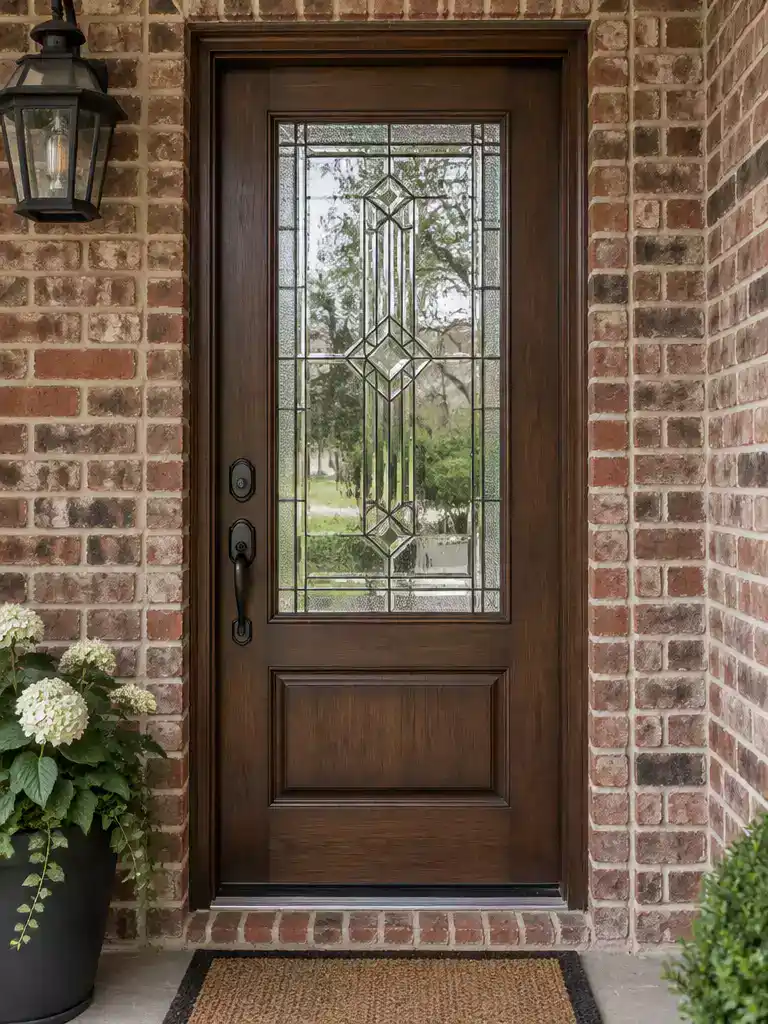
Break up the heavy visual mass of red brick by adding natural light to your foyer.
Red brick facades often feel dark or closed off, especially at the entry. Installing a glass insert is the most effective way to introduce natural light into your foyer without replacing the entire door unit.
The Design Rule: Match your glass style to the era of your home to keep the look intentional.
Avoid modern geometric or abstract glass patterns on a colonial-style red brick home, as these will clash with the traditional architecture.
When selecting your insert, consider both privacy and thermal performance. Ensure that the unit is professionally sealed to prevent moisture intrusion, which can lead to wood rot over time.
Warning: Improper installation is a common failure point for DIY glass inserts.
If you aren’t comfortable cutting into your existing door and ensuring a weather-tight, thermally efficient seal, hire a professional to avoid long-term structural damage.
⭐ New Glass Inserts to Consider
✨ Editor’s Pick
Venting Entry Door Glass Replacement Kit
Entry Door Frame Replacement Kit
Front Door Window Glass Replacement
📋 Quick Reality Check Before You Order:
- Check door thickness: Ensure your existing door slab is thick enough to support the weight of a glass insert frame.
- Measure the glass frame: Verify that the insert dimensions won’t interfere with your current lockset, deadbolt, or handle hardware placement.
- Verify local climate: Choose double- or triple-paned glass options if your local winters are harsh to avoid interior condensation issues.
Antique Brass Hardware
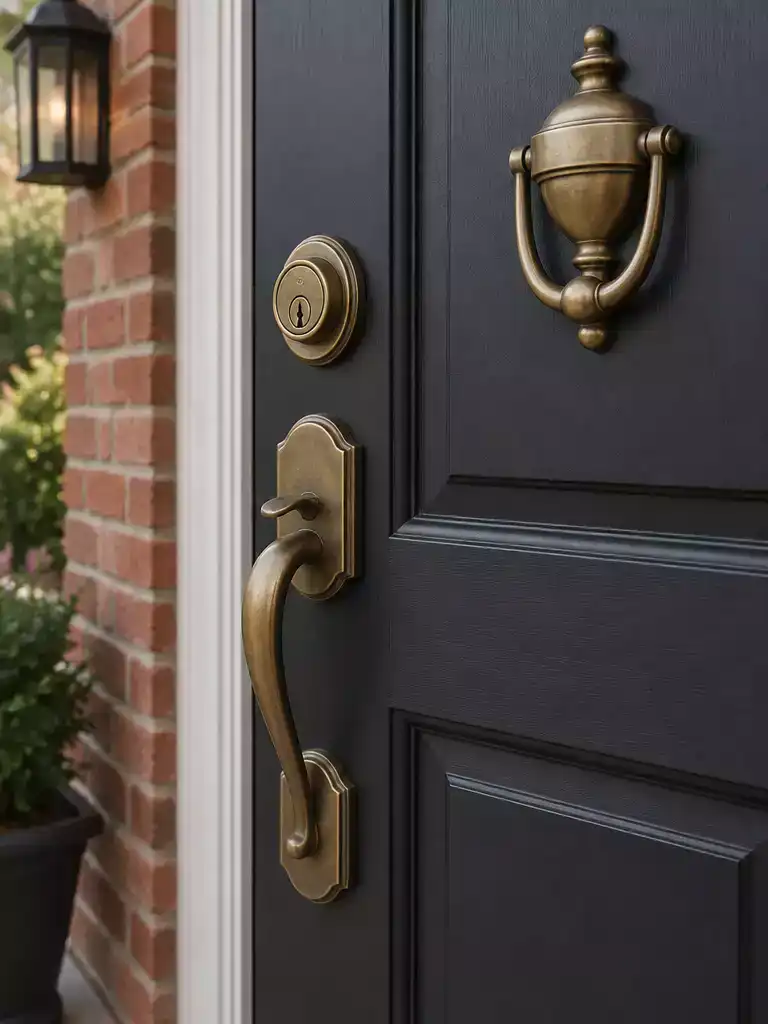
Bring a sense of history and warmth to your entry with muted, aged metal finishes.
Antique brass is the premier choice for red brick homes because it provides a muted, aged warmth that avoids the harsh glare of polished brass. While high-shine metals often clash with the rustic texture of brick, this finish integrates seamlessly for a grounded look.
Consistency is key when upgrading your entry hardware. To maintain a professional aesthetic, ensure your lockset, deadbolt, and door knocker all feature the exact same antique brass finish.
Before you purchase new hardware, you must verify the compatibility of your existing door. Older doors often have non-standard bore holes or specific latch geometries that make retrofitting a complex task.
This upgrade is ideal for homeowners seeking a traditional, lived-in feel for their entryway. If your personal style leans toward ultra-modern or minimalist architecture, steer clear of antique brass, as it may feel out of place against contemporary lines.
⭐ Antique Brass Hardware Picks
Heavy Duty Square Door Lever Lockset
✨ Editor’s Pick
Matte Black Privacy Bedroom Door Lock
Antique Brass Front Door Handleset
✨ Small Details That Matter
Selecting the right hardware is only half the battle; how you style those pieces determines whether your entry feels curated or merely accessorized.
- Visual Weight: Ensure the scale of your hardware, especially the knocker, is substantial enough to hold its own against the deep, heavy texture of your brickwork.
- Clearance Check: If you use a storm door, test the swing radius before installation to prevent the handle or knocker from striking the glass.
Applied Panel Molding
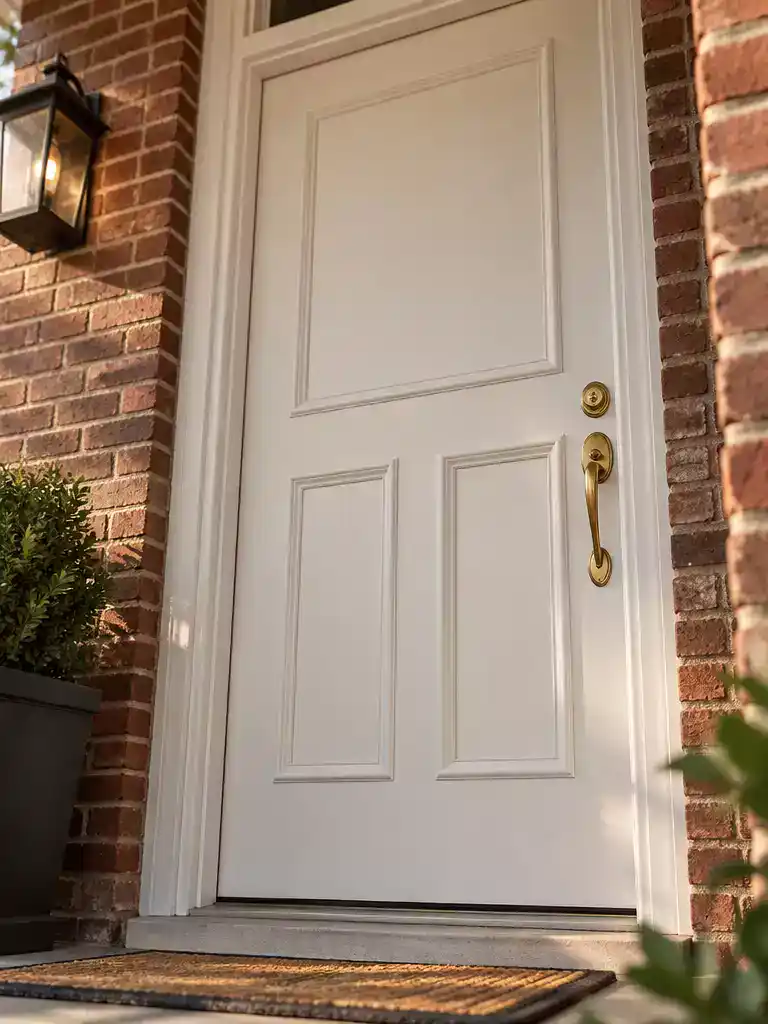
Add architectural dimension to a flat door for a fraction of the cost of replacement.
If your front door is a flat, uninspired slab, applied panel molding is the most effective way to introduce depth and rhythm to your entry. By attaching thin, mitered wood strips directly to the door face, you create the illusion of a traditional multi-panel door that fits your home’s character.
Pro Tip: Moisture Protection
Always seal the cut edges of your molding before attaching them to the door. Failing to do this allows moisture to seep into the wood, which causes the molding to swell or the paint to peel prematurely.
This project is ideal for DIYers with a basic miter saw and a steady hand, but it requires a disciplined design approach. Stick to one or two simple rectangular frames to maintain a clean look.
Avoid the “busy” trap: Adding too many boxes or complex cross-patterns creates visual clutter. Against the already-heavy texture of red brick, a minimalist approach to your paneling frames is almost always more successful.
- ✔ Check your clearance: Ensure the added thickness of the molding does not interfere with your storm door or existing weatherstripping.
- ✔ Surface prep: Sand the door surface thoroughly before applying construction adhesive to ensure the trim stays locked in place through temperature swings.
- ✔ Caulk and paint: Use a high-quality exterior painters caulk to fill gaps where the molding meets the door, then prime and paint the entire assembly for a seamless, factory-finish look.
⭐ Applied Panel Molding Kits
BiJun Door Trim Moulding Peel and Stick, 1 Set 2.36 Inch Pre-Cut Door Frame Trim Kit Self-Adhesive Interior Doors Makeover Kits, Easy Install for Doors Frame Decor, White (36″ × 80″)
3 Set Peel and Stick Wall Molding Kit,Premade Self Adhesive Wainscoting Panels,Ready to Assemble Accent Molding Trim for Interior Wall Moulding Decor (24x60in) | Self Adhesive,Paintable,PVC,Pre-Cut
✨ Editor’s Pick
Flexible Curved Arch Door Trim Kit
🧰 Questions for Your Installer:
- Adhesive compatibility: Ask which construction adhesive works best for your specific door material to prevent future delamination.
- Expansion gaps: Inquire if they account for seasonal wood movement to prevent molding joints from cracking or splitting.
- Finish prep: Confirm if they will prime the molding before installation to ensure uniform coverage in tight corners.
Traditional Door Knocker
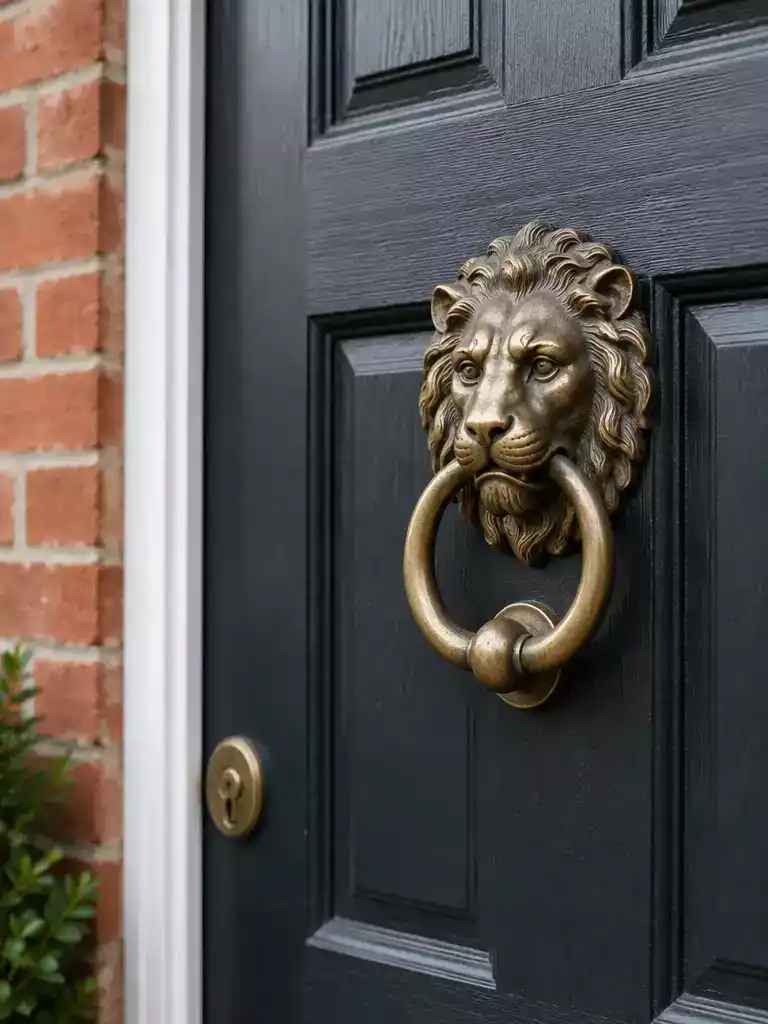
Add a sense of completion and history to your entryway with the right scale hardware.
A traditional door knocker acts as the jewelry of the home, signaling that a renovation project is truly finished. It provides an immediate point of interest that breaks up the expanse of a slab door, drawing the eye away from the heavy surrounding masonry.
Placement Pro-Tip: Always mount your knocker at standard eye level, typically 54 to 60 inches from the threshold. If you place it too low, it will look like an afterthought rather than an intentional architectural detail.
Size matters significantly when working with the visual weight of brick. A knocker that is too small or delicate will simply disappear against the texture of the brick facade.
Before you commit to a purchase, use this quick checklist to ensure your hardware choice is functional:
- Clearance check: If you use a storm door, measure the distance between your main door and the storm glass to prevent the knocker from striking or cracking the glass.
- Hardware unity: Ensure the knocker finish matches your deadbolt and handle set exactly to avoid a cluttered, mismatched appearance.
- Scale verification: Hold a piece of paper cut to the size of the knocker against your door to see if the dimensions hold their own from the street view.
Warning: Avoid lightweight, hollow-back knockers that feel flimsy when gripped. A solid, weighted piece of hardware provides a tactile, high-quality “thud” that confirms the value of your entry.
⭐ Traditional Door Knockers We Love
✨ Editor’s Pick
Medieval Iron Black Door Knocker
Adjustable Heavy Duty Wreath Hanger
Clear Acrylic Wreath Hanger Hook
💡 Why This Works:
A door knocker introduces a sense of human-centered scale that static, flat brick walls often lack. By adding a tactile, vertical element at eye level, you create an immediate focal point that shifts the visitor’s attention from the overwhelming mass of the masonry to the thoughtful details of your entryway.
Visual Benefit: It provides a polished, classic silhouette that grounds the door and anchors the overall facade.
You now have ten distinct ways to refine your entry, but you do not need to implement every suggestion to achieve a professional result. Selecting the one or two updates that align with your brick home’s character is all it takes to elevate the facade. The most effective transformations often come from a few intentional choices rather than an exhaustive list of upgrades.
Decide on the door treatment that best balances your specific brick tones, and the rest of your home’s curb appeal will naturally fall into place. For further guidance on identifying the right aesthetic, you can explore front door colors for a red brick house or check out other color ideas that suit red brick to finalize your plan with confidence.
Related posts
 Front Door Colors for Red Brick Houses Beyond Black
 11 Best Front Door Colors for a Red Brick House
 Front Door Color Ideas That Suit Red Brick Not Fight It
 What Changing Only the Front Door Did to These Houses
 15 Front Door Colors for Gray Houses That Need More Warmth
 11 Front Door Colors for Houses With a Dark Roof
 Front Door Makeovers That Transformed the Entire Entrance
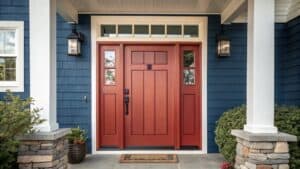 14 Front Door Colors Designers Love for Dark Blue Houses