A small space does not need a smaller door so much as a door that does not swing. Six ideas follow, from a barn door that slides on a rail to a pocket door that vanishes into the wall, each with what to check before you commit.
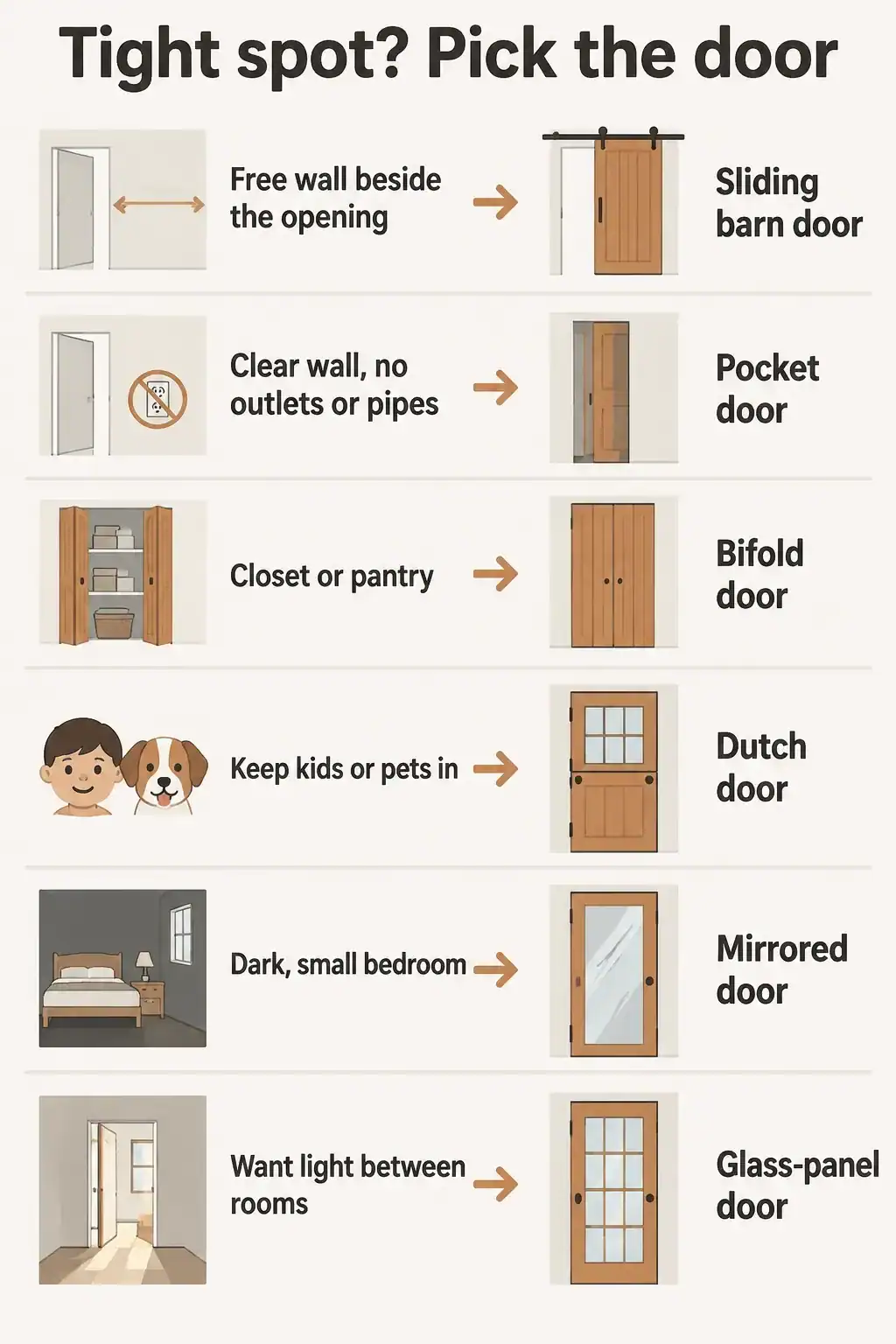
Not sure which to pick? The chart below matches each spot to a door, and the sections after it explain the catch with each one.
Sliding barn door
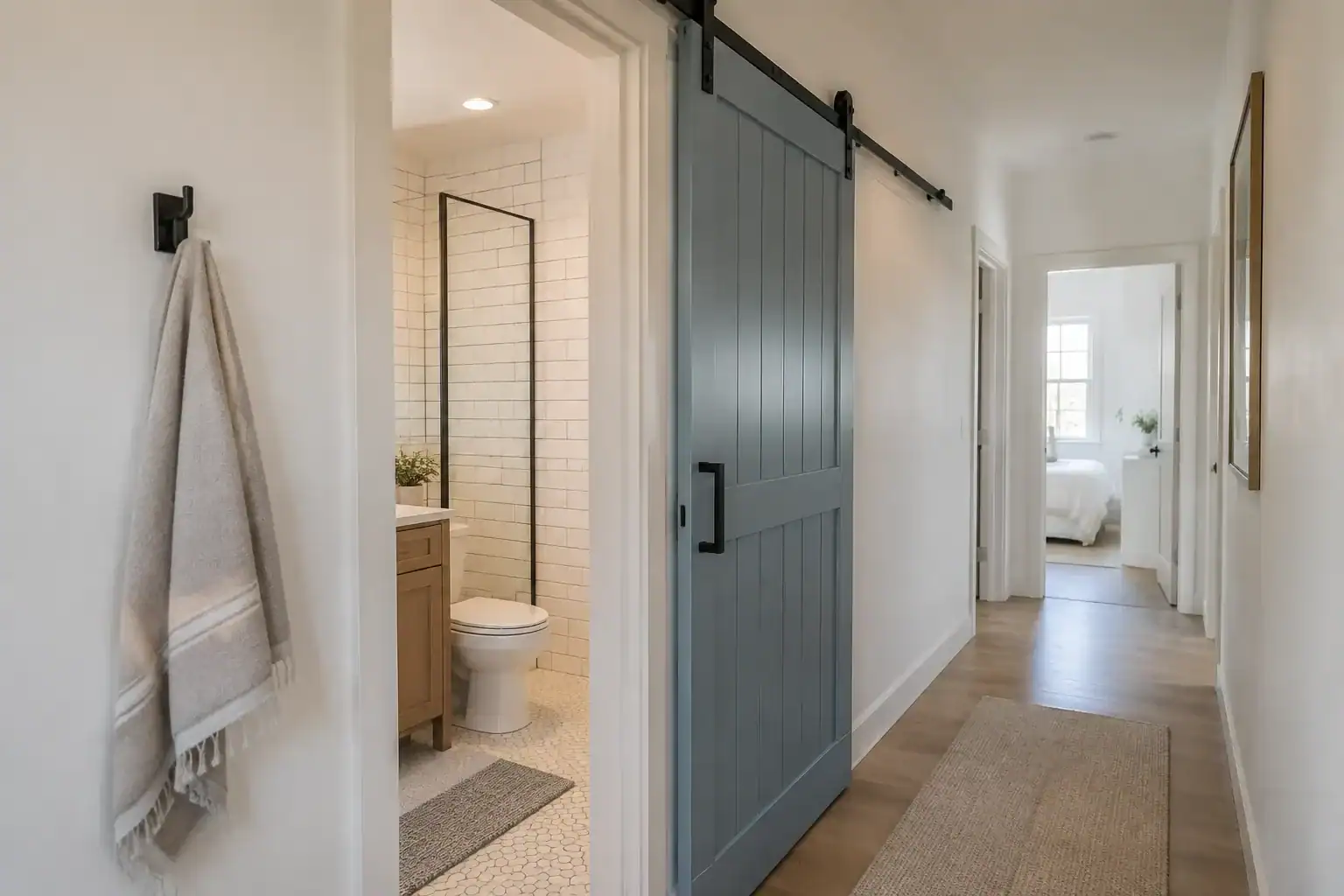
A barn door hangs from an exposed track above the opening, and it can stand in for a pocket door where you cannot open up the wall. It needs a clear stretch of wall beside the opening as wide as the door.
The trade-off is the seal. Sliding doors do not close a room off as well, so you get less privacy and less noise reduction, which shows most in a bathroom (HardwareBox).
Pocket door
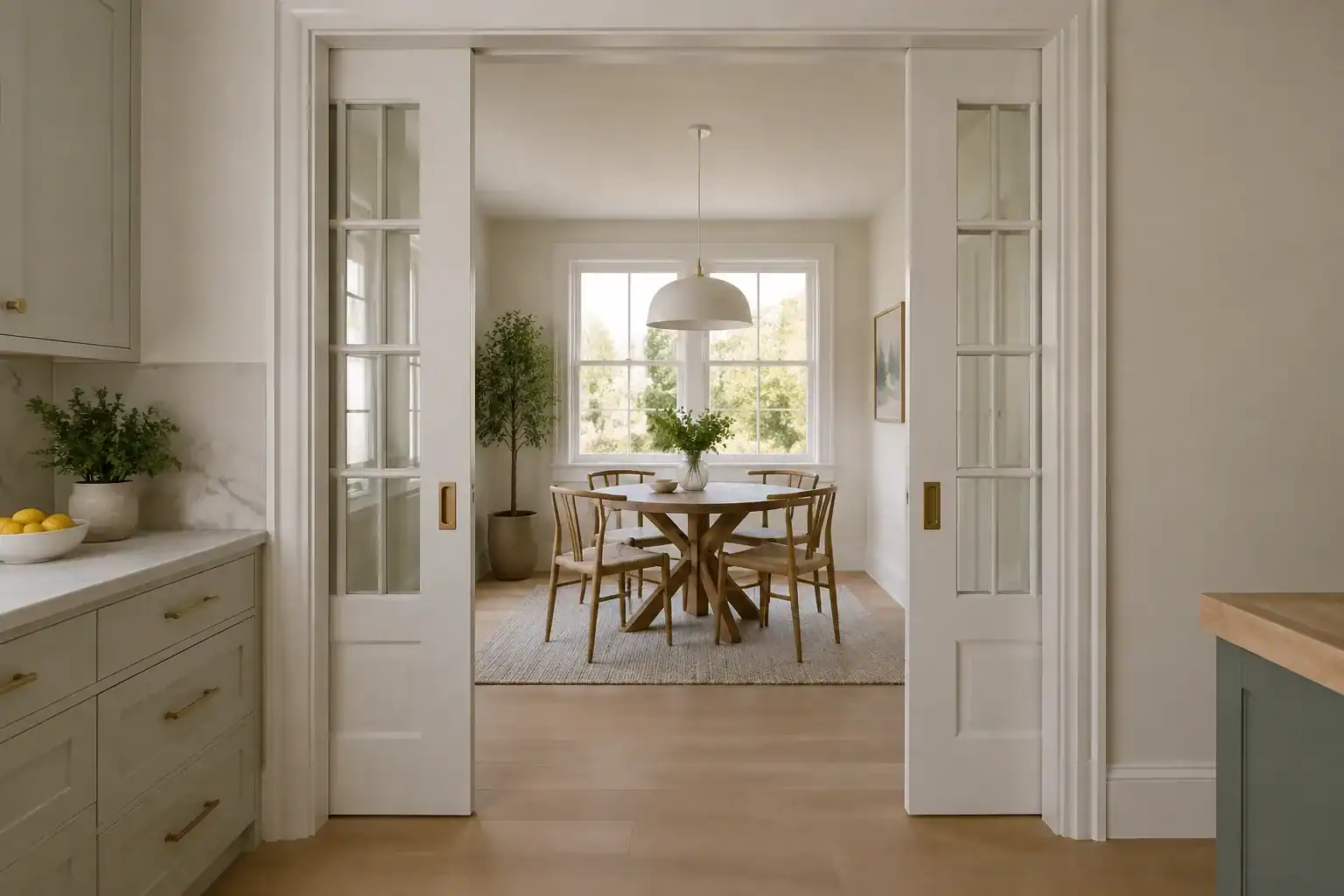
A pocket door slides on an overhead track into a pocket in the wall, and when it is open it disappears. It needs no swing clearance and no floor track. The wall must have clearance for the door, and no light switches, outlets or plumbing in that stretch (Bob Vila).
Hardware is small, the finger-pull latch can be hard for some people, and hidden tracks are difficult to reach for repair. Installing one means opening the wall, cutting studs and adding a header. A French pocket door fits a standard 36-inch doorway and needs a little more than 18 inches of wall on each side.
Bifold door
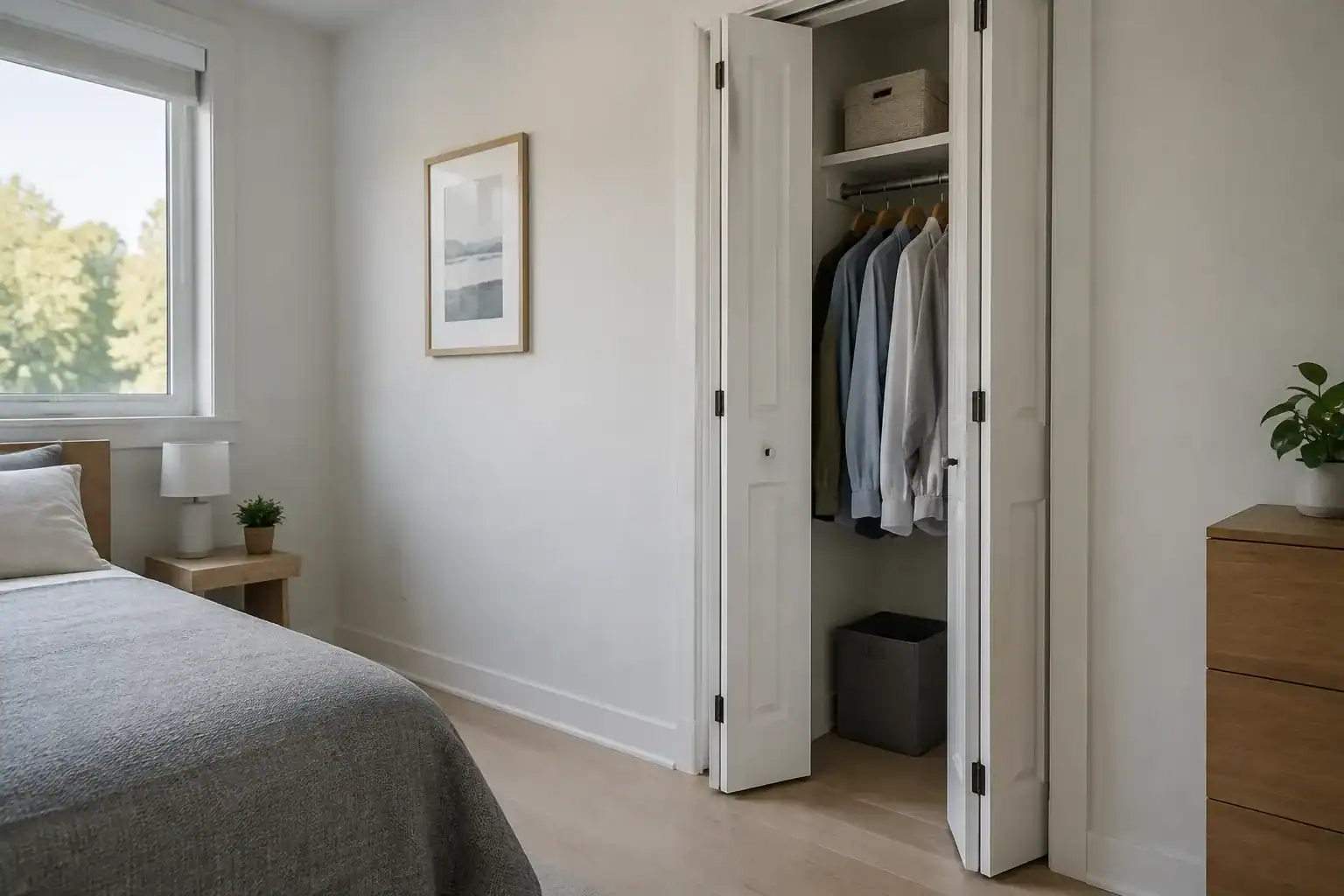
Bifold doors are panels hinged together that fold against each other, and they work for small spaces such as closets, ensuites and pantries. With several sets they become bulky and harder to operate, and they take more time to clean. Our bi-fold doors guide covers the materials.
Dutch door
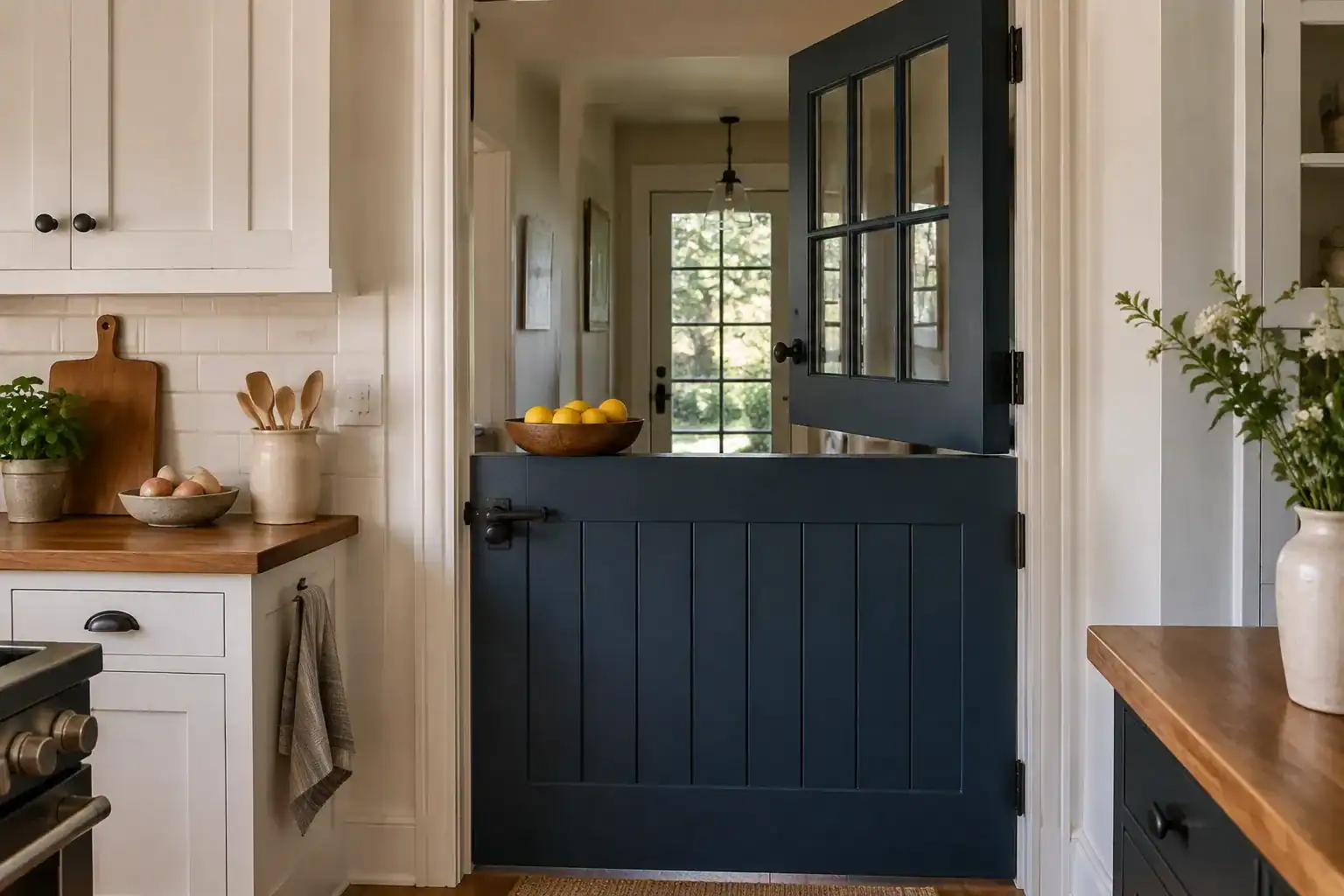
An interior Dutch door can double as a baby gate, and the closed lower half keeps toddlers and pets in a room while you see and talk to them. Interior versions have long been used between kitchens and dining rooms (Bob Vila).
The halves need a latch to join them, and small fingers can get pinched, so teach children to move them slowly. More in our Dutch doors guide.
Mirrored door
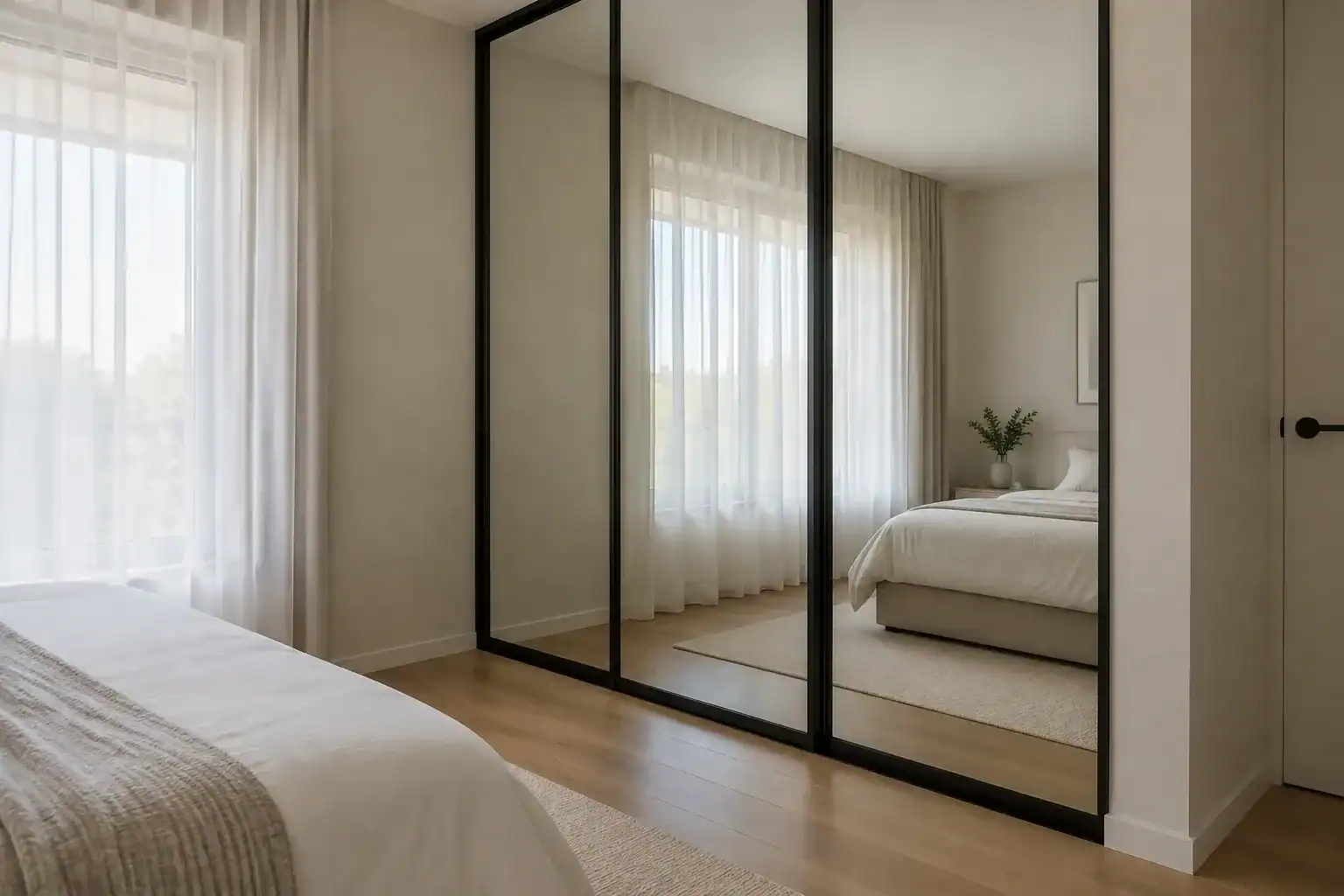
A mirrored door doubles as a full-length mirror and bounces light around a dark bedroom. Glass in a door is covered by safety rules, so choose a safety-backed mirror.
The federal standard, 16 CFR Part 1201, covers glazing in doors (16 CFR 1201.1). Read more in our mirrored doors guide.
Glass-panel door
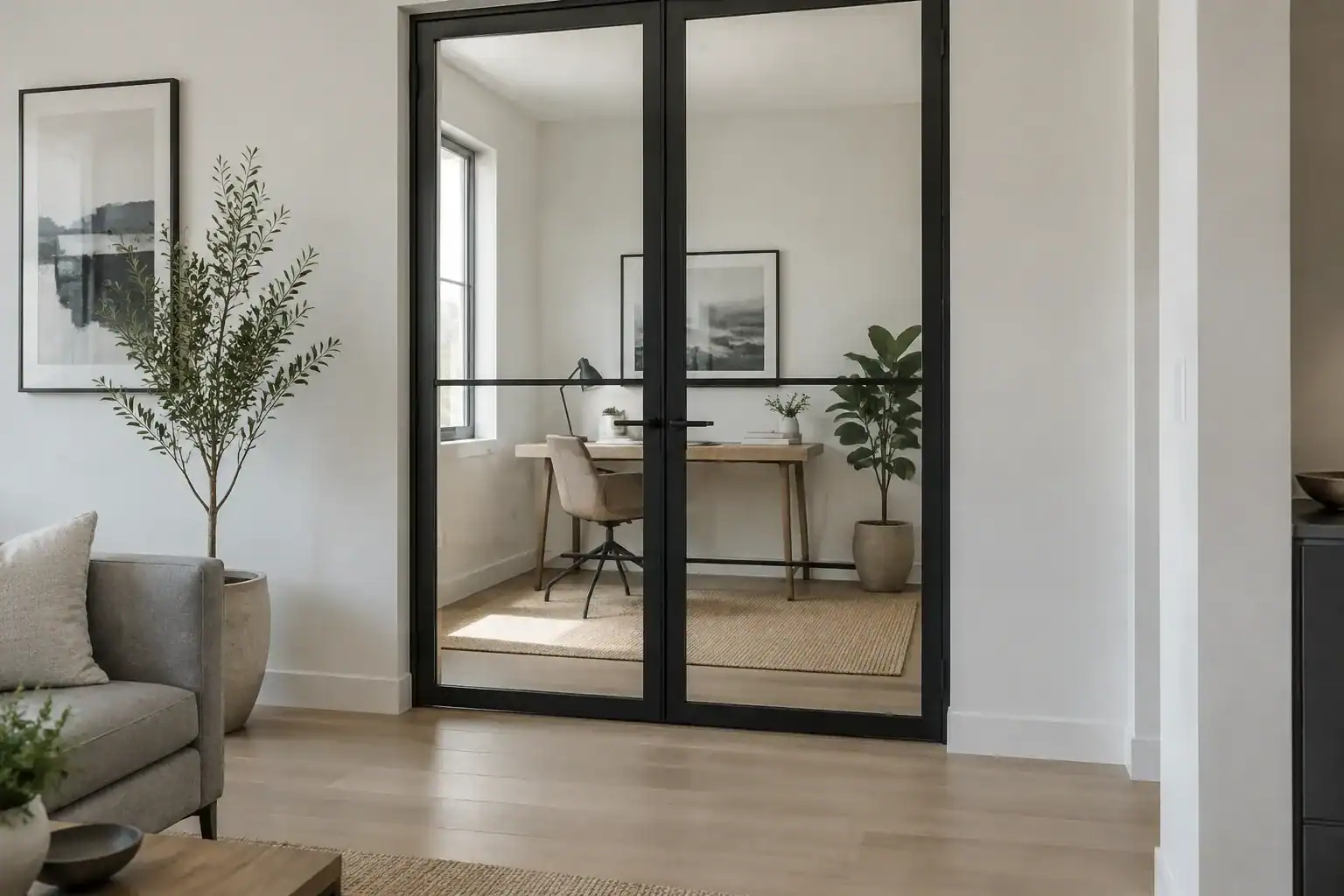
A glass-panel door lets light travel from one room to the next, which helps where a solid door would make a small space dark. The code requires safety glazing in fixed and operable door panels, with exceptions for openings a 3-inch sphere cannot pass through and for decorative glazing (MyBuildingPermit). If privacy matters, ask for frosted or textured glass.
Our take · James Davis
For a bathroom or bedroom that needs real privacy, I would take a hinged door if the swing arc allows it, because sliding doors seal less well. If the arc is the problem, a pocket door is the next choice. For a closet or a pantry, a bifold is hard to beat.
Before you commit
- Measure the wall beside the opening for a barn or pocket door.
- Check the wall for outlets, switches and pipes before you plan a pocket door.
- Ask for safety-backed or safety-rated glass in any mirror or glass door.
- Pick the seal for the room: privacy rooms need a tighter fit.
- Confirm the hardware is easy to reach for repair.
For other ways to close an opening, read about sliding doors, hollow core doors and hinged doors.
Related posts
 14 Closet Door Ideas for Tight and Awkward Spaces
 Exploring Unconventional Spaces: Can You Have a Basement Without a Door?
 17 Pooja Unit Door Designs For Compact Spaces
 Better Room Doors for Spaces That Need More Sound Separation
 17 Interior French Door Ideas That Instantly Open Up Small Rooms
 11 Stained Glass Door Interior Ideas
 12 Cozy Interior Door Ideas for Small Homes
 10 Inspiring Interior Door Styles Ideas