
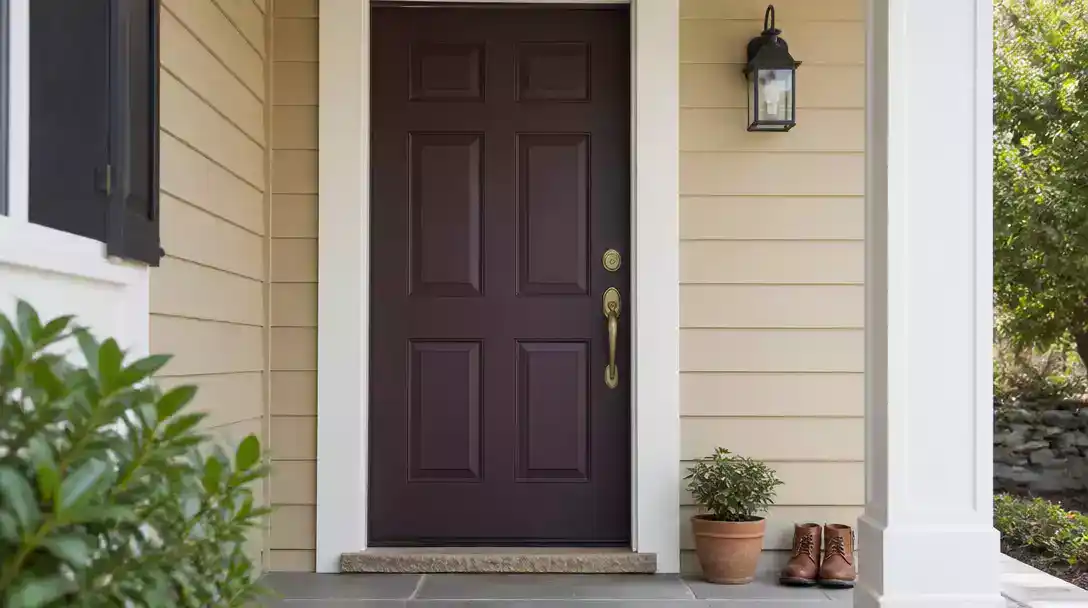
Selecting a front door color for tan siding is a high-stakes decision where the wrong undertone makes your home look disjointed. This guide narrows the field to 9 color directions that provide high-value contrast and ensure you get the look right the first time. Let’s start with the first choice.
Espresso
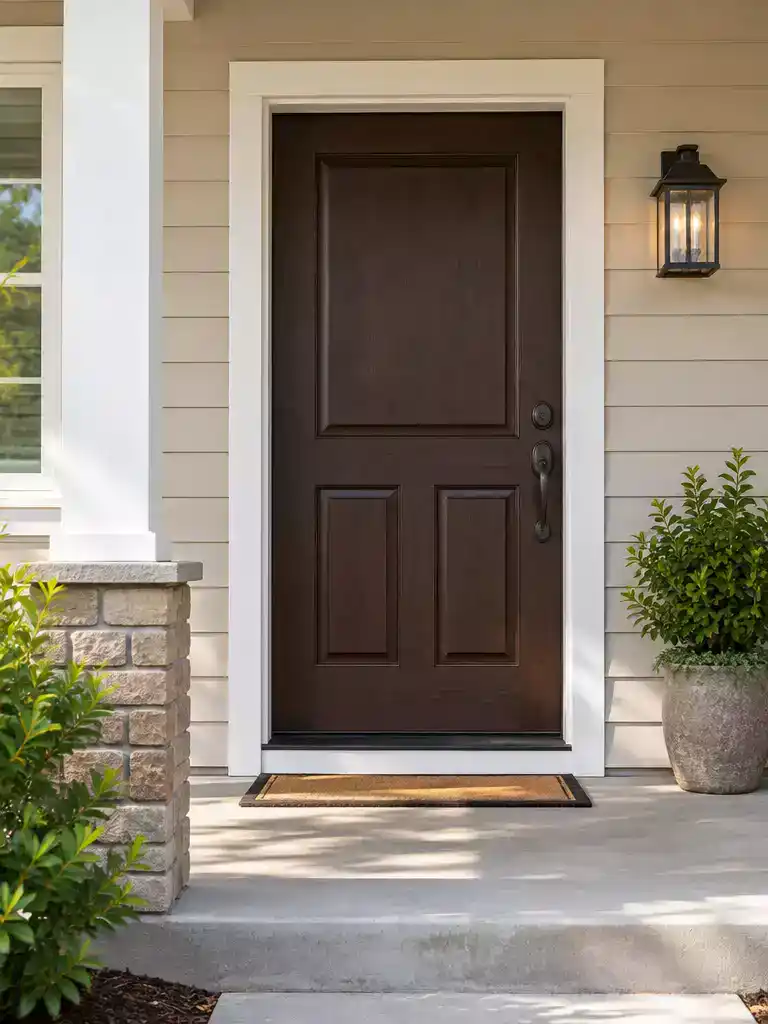
A deep espresso finish provides a sharp, grounding anchor for light tan siding.
As an Amazon Associate I earn from qualifying purchases. Affiliate links may earn me a commission at no extra cost to you.
Choosing an espresso finish is a strategic move to sharpen your facade and create a sophisticated, grounding effect. This dark, rich brown works best when your tan siding features warm, golden undertones, as the espresso bridges the gap between the siding and the deeper accents of your home’s hardware.
Before you commit to this shade, perform a quick visual check of your home’s exterior palette. If your tan siding is already quite dark or muddy, an espresso door may struggle to stand out, effectively disappearing into the wall rather than acting as a focal point.
Maintenance and Durability Expectations
- Visual Tradeoff: Because of the deep pigment, espresso finishes show dust, pollen, and debris more readily than lighter colors.
- Standard Lifespan: You can expect a 5–7 year lifespan for most standard applications.
- Steel Advantage: On steel doors, a high-quality application with proper maintenance can push that performance to 8–10 years.
If you choose this direction, be prepared for more frequent light cleaning to keep the finish looking crisp. While the dark brown is undeniably elegant, it is a high-visibility choice that requires consistent upkeep to avoid looking lackluster under bright, direct sunlight.
⭐ Top Espresso Mats for Your Entryway
✨ Editor’s Pick
Brown Indoor Entrance Door Mat
Buffalo Plaid Checkered Entryway Rug
Heavy Duty Outdoor Welcome Mat
🔢 The Right Sequence
To avoid premature finish failure, follow this specific order when applying dark espresso paint to your door.
- Deep Clean: Wash away all surface dirt and pollen before sanding to ensure proper paint adhesion.
- Surface Prep: Lightly sand the entire door and apply a high-quality, rust-inhibiting or stain-blocking exterior primer.
- Final Application: Paint during moderate temperatures, avoiding direct midday sun to prevent the finish from drying too quickly.
2. Brick red
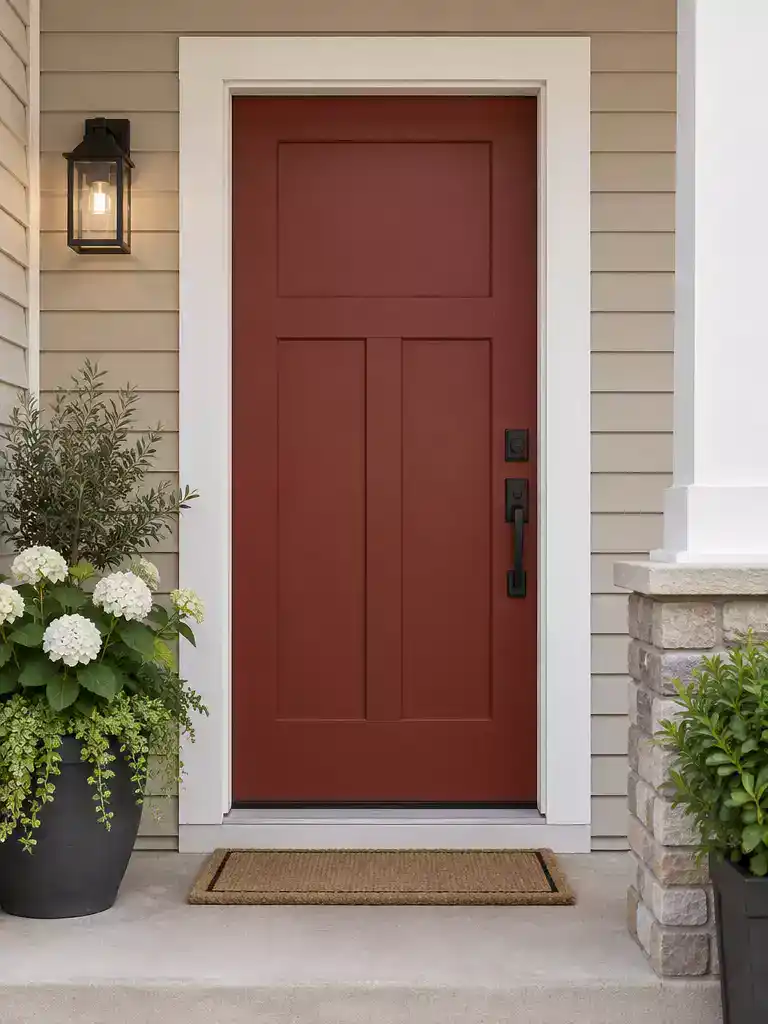
A grounded, earthy red provides a timeless look that feels intentional against tan siding.
Choosing a red for your front door when you have tan siding is about finding the right balance between warmth and intensity. The goal is a warm-on-warm relationship that anchors the entrance without looking like a jarring, artificial pop of color.
The most common mistake here is reaching for a bright, fire-engine red. That high-saturation choice often clashes with the subtle, muted tones found in tan siding, making the door look pasted on rather than part of the home’s architecture.
Selection Strategy: Focus on deep, earthy brick tones. These colors contain brown or ochre undertones that bridge the gap between the red and the tan, creating a cohesive, traditional feel.
Before you commit to a specific shade, look at your roof and trim. If your home features cool grey shingles or blue-toned trim, those color temperatures will actively fight with a brick red door. This combination works best when your exterior palette stays strictly within the warm family.
Durability Warning: Exterior red pigments are notoriously sensitive to UV exposure. While a standard application can last 5–7 years, homes with high-sun exposure – particularly west-facing entries – should anticipate a finish life of just 3–6 years before the color begins to fade or chalk.
If your front door is wood, keep in mind that the darker, more saturated pigments in brick red can make the surface run hotter in direct sunlight. This can accelerate the drying process during application, which often leads to poor adhesion if you aren’t careful about your timing. Always aim to paint during cooler hours of the day to ensure the finish cures properly.
⭐ Best Brick Red Mats to Buy
Classic Striped Outdoor Welcome Mat
✨ Editor’s Pick
Waterproof Non-Slip Outdoor Entrance Mat
Heavy Duty Rubber Scraper Door Mat
💰 What This Really Costs
- Professional Service: Expect to pay between $100 and $500 for a quality paint application on your existing door.
- Unexpected Replacement: If the door substrate is too damaged for paint, full replacement costs often exceed $2,500.
- Maintenance Investment: High-sun exposure can cut your finish life to just 3–6 years, making proper surface prep essential.
3. Deep teal green
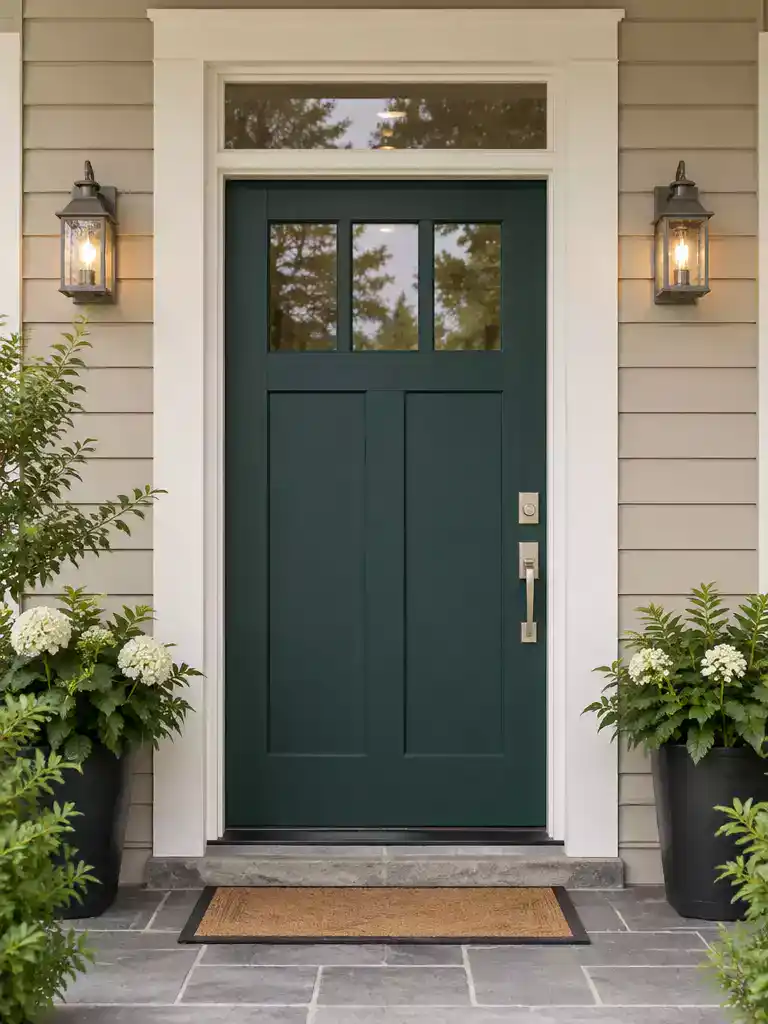
Cool, deep tones provide a sophisticated balance to warm tan siding exteriors.
When your siding leans into warm, golden, or sandy tan tones, it can often feel like the entire exterior is lacking a visual anchor. Using a deep teal green for your front door introduces a cool, balancing counterpoint that prevents the facade from feeling washed out or overly monochromatic.
This color choice is particularly effective because it bridges the gap between traditional and modern aesthetics. It provides enough depth to stand out against light tan siding without the harshness that can sometimes come with pure black or dark navy.
Pro-Tip: Prioritize Finish Flexibility
For a door color this saturated, you must use a 100% acrylic exterior paint. This formulation provides the necessary flexibility to expand and contract with temperature shifts, which is essential for preventing the cracking and peeling that often plagues dark-painted exterior doors.
The long-term success of this color depends heavily on your commitment to the initial application. While a standard job might last 3–5 years in harsh regional climates, a high-end, multi-coat professional system can push that lifespan to 7–10 years.
Avoid This Common Mistake
The most frequent cause of premature failure for colored doors is neglecting the bottom edge. Moisture wicks into the end grain or bottom seam of the door, causing the paint to bubble and the material to rot from the inside out; always ensure the bottom edge is fully sealed and painted before installation.
Before you commit to a specific shade, remember that deep teal is a color that shifts significantly based on the time of day. What looks like a rich, emerald-leaning teal at noon may appear much darker and more muted as the sun sets, so testing a sample directly on your door is the only way to be certain.
⭐ Deep Teal Green Mats We Love
Scalloped Natural Coir Welcome Mat
Beige Dirt Trapper Entrance Mat
✨ Editor’s Pick
Modern Abstract Art Entryway Mat
🧰 Questions to Ask Your Pro:
- Paint System: Will you be using a multi-coat, professional-grade 100% acrylic system to ensure the 7–10 year lifespan?
- Surface Prep: Does your quote include a full sanding and cleaning process to ensure the finish adheres properly?
- Edge Sealing: How will you ensure the bottom edge is fully sealed to prevent moisture-related rot and peeling?
A home’s exterior presentation acts as a long-term signal of quality, but the psychological weight of this choice often exceeds the actual structural impact. You can avoid the stress of a mismatched facade by focusing your energy on the few technical details that truly dictate the final curb appeal of your front entrance.
True visual cohesion stems from a deliberate color choice rather than the exhaustive execution of every single aesthetic detail on your property.
Warm ivory
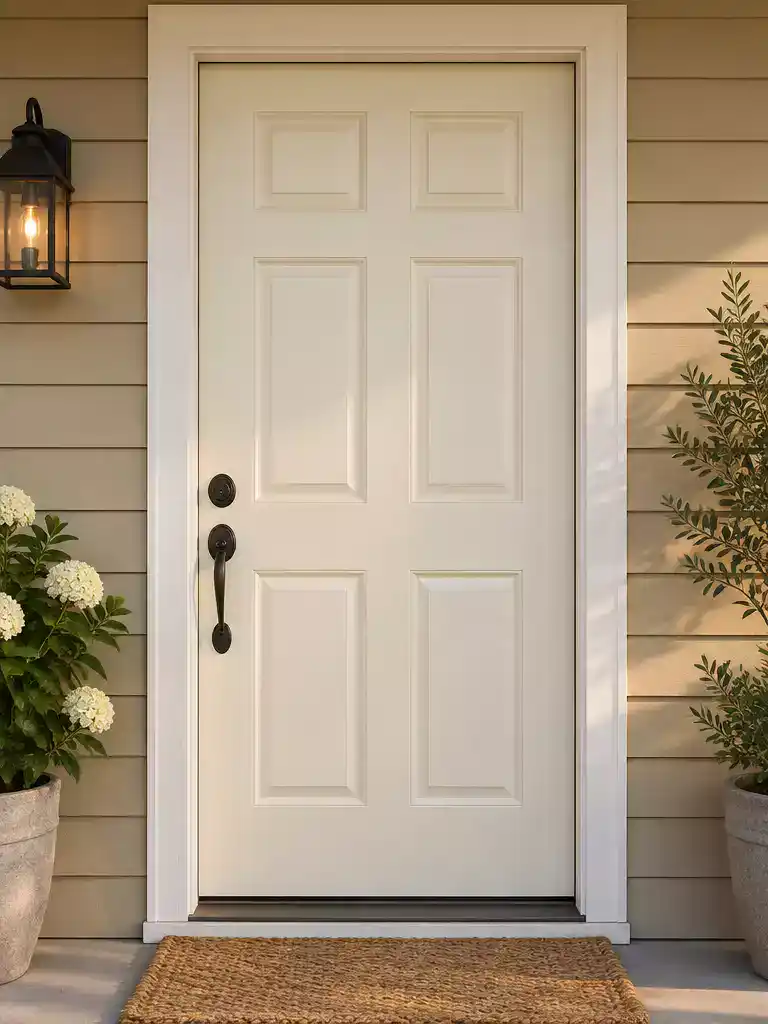
Achieve a sophisticated, low-contrast look that brightens your entry without feeling disconnected or clinical.
Choosing a warm ivory for your front door is the most effective way to create a low-contrast, cohesive facade. When done correctly, this approach feels intentional and high-end, rather than like a default color choice. The secret lies in the undertone: your ivory must be distinctly creamy or yellow-based to harmonize with the warmth of tan siding.
Avoid stark, blue-white whites at all costs. A cool-toned white will look clinical and disconnected against the earthy tones of tan, making your door appear as if it is floating or “pasted on” rather than integrated into the home’s architecture.
Key Insight: The Undertone Test
Before you commit to a paint shade, tape a sample to your door. If the ivory looks grey or chalky against your tan siding in direct noon light, it is too cool. You are looking for a shade that feels like a soft, sun-warmed linen.
The longevity of this finish depends heavily on your door material and the quality of your surface preparation. While ivory is a classic choice, it is less forgiving than darker colors when it comes to showing dirt and dust accumulation from the elements.
If you are painting a wood door, recognize that the natural movement of the wood may lead to a shorter finish life of 3–5 years. For metal doors, proper cleaning and the use of a high-quality bonding primer can extend the life of your finish up to 10 years. Regardless of material, prioritize a regular cleaning schedule to keep the ivory looking crisp and prevent the buildup of debris that can eventually degrade the paint surface.
⭐ Warm Ivory Mats for Your Home
✨ Editor’s Pick
Funny Farmhouse Indoor Welcome Mat
Seasonal Pumpkin Coir Welcome Mat
Jumbo Size Waterproof Entrance Mat
⚖️ Quick Decision Guide: Choosing Ivory
- Choose this if: Your home features traditional architecture and you want to soften the exterior’s overall visual weight.
- Skip this if: Your entry is in a high-traffic area prone to heavy mud or persistent dust accumulation.
- Pair it with: Brushed brass or oil-rubbed bronze hardware to emphasize the warm, creamy undertones of the paint.
Dark bronze
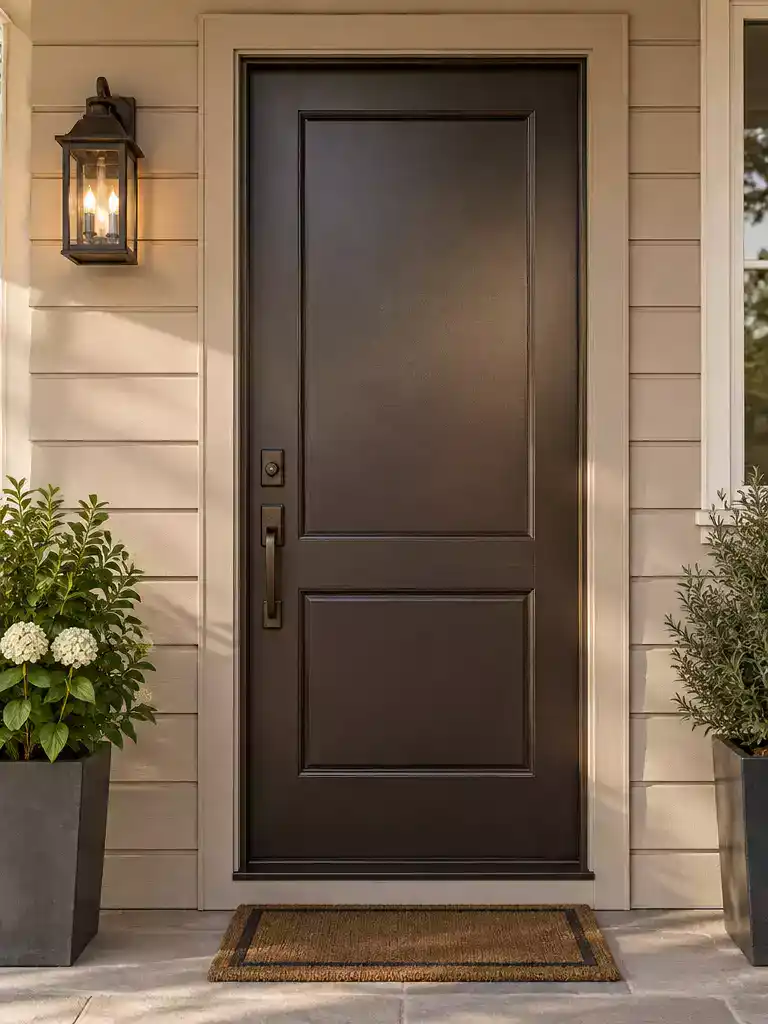
A sophisticated, grounding choice for a modern home that values metallic depth and cohesion.
Choosing a dark bronze finish for your front door offers an effective way to introduce a grounding, metallic-inspired accent that feels intentional rather than trendy. Unlike flat black, which can sometimes appear harsh against softer tan tones, dark bronze adds a layer of depth and visual warmth that integrates naturally with the earthier undertones of tan siding.
This is the most logical choice if your exterior already features bronze or oil-rubbed bronze porch lights, house numbers, or mailbox hardware. By carrying that metallic tone onto the front door, you create a cohesive, professional look that ties disparate elements of your entryway together.
Pro Planning Tip: Be careful not to clutter your entry with too many competing brown tones. Keep the door as your primary dark anchor, and ensure that your trim or other permanent fixtures don’t fight for attention with clashing wood-stain or brown-paint colors.
When you are ready to commit, remember that the longevity of this look is entirely dependent on the quality of your coating system. Because bronze finishes often rely on specific pigments to achieve that metallic luster, the lifespan can vary significantly depending on whether you use a high-end powder coating or a professional-grade liquid paint.
If you are applying this yourself, prioritize a high-quality, exterior-rated coating that is specifically designed for metal or fiberglass substrates. Always verify that your chosen product is rated for the level of UV exposure your entryway receives, as metallic pigments can sometimes fade unevenly if the protective topcoat is compromised.
Common Mistake: Over-Saturating the Palette
A common error is mixing a dark bronze door with “warm” brown trim that has a different undertone (like a reddish-brown). This creates a disjointed appearance. Aim for a neutral, cool-leaning bronze to ensure the door complements the tan siding rather than competing with it.
⭐ Dark Bronze Mats to Consider
Halloween Boo Pumpkin Welcome Mat
✨ Editor’s Pick
Durable All-Season Outdoor Entrance Mat
🏡 Real-Home Application:
- Hardware coordination: Check if your existing porch lights or house numbers are already oil-rubbed bronze before committing.
- Daily maintenance: Wipe away seasonal pollen and dust monthly to keep the metallic finish looking crisp.
- Natural finish: Use a satin sheen to mimic authentic weathered metal, avoiding high-gloss finishes that look artificial.
6. Muted teal
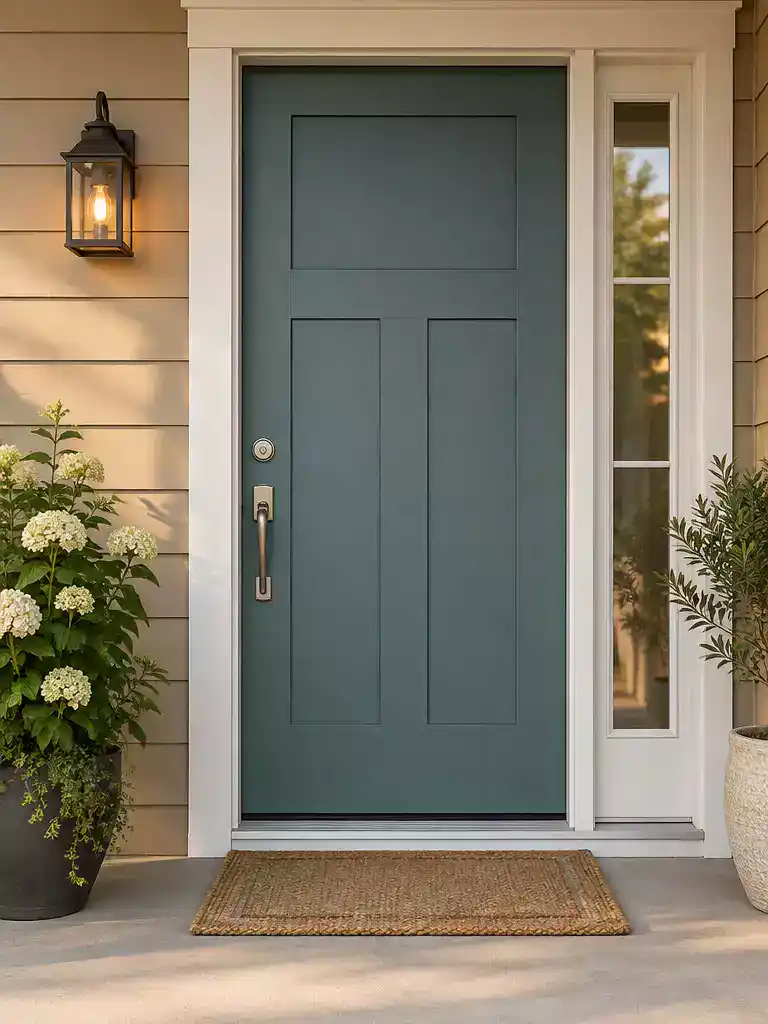
A balanced, classic choice that elevates tan siding with a touch of organic color.
If you want a hint of personality without the intensity of a deep, saturated green, muted teal is your best path forward. This color occupies the space between blue and green, offering a cool, restrained contrast that feels intentional rather than loud.
This shade performs best on homes with tan siding that leans into golden or peachy undertones. Because tan is a warm, earthy neutral, the cool molecules in a muted teal act as a visual anchor, preventing the entire facade from feeling too monochromatic or washed out.
Strategic Tip: Always test this color against your specific siding texture. A muted teal that looks perfect on a color chip can shift significantly when placed against the warm, reflective surface of vinyl or cedar siding at high noon.
Durability for this color is highly dependent on your door material and sun exposure. On wood doors facing direct, harsh sunlight, you should anticipate a finish lifespan of 1–3 years before needing a refresh. However, if you are applying this color to a steel door that is well-maintained and protected by a porch overhang, you can expect the finish to last 8–10 years.
Quick Longevity Check
- Steel Doors: 8–10 years (with proper maintenance).
- Wood Doors (Direct Sun): 1–3 years.
- Key Factor: The quality of your base coat and the consistency of your annual cleaning schedule.
Avoid the temptation to go too bright with this choice. A truly muted teal should have a greyed-out or “dusty” quality; if the color looks like a crayon on your swatch, it will likely feel disconnected from the natural warmth of your tan siding once painted.
⭐ Muted Teal Mats We Love
✨ Editor’s Pick
Striped Cotton Woven Farmhouse Rug
Checkered Fall Decor Outdoor Rug
🛠️ Practical Tips for Muted Teal:
- Surface Prep: Always wash and sand your door thoroughly before painting to ensure the teal finish adheres properly.
- Primer Choice: Use a high-quality, stain-blocking primer for wood doors or a rust-inhibiting primer if you have steel.
- Application Timing: Avoid painting in direct sunlight or on hot days, as the paint will dry prematurely and peel.
7. Burnt clay
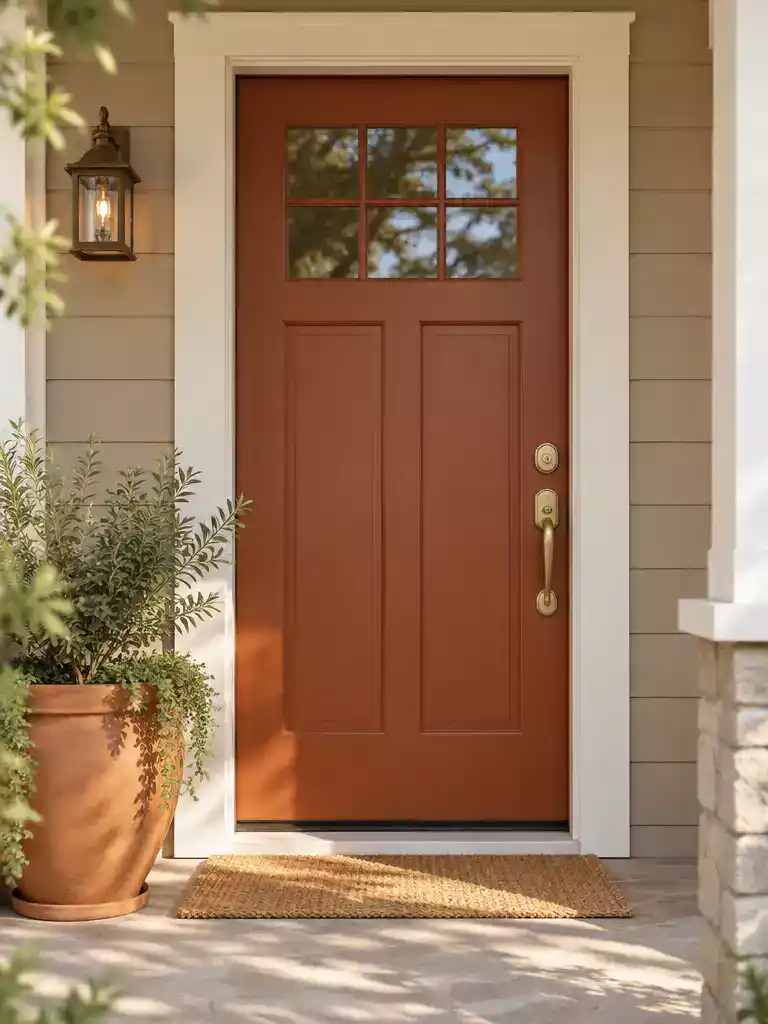
Bring out the natural warmth of your home with an earthy, grounded entryway finish.
If your goal is to make your home feel like a cohesive, natural extension of its environment, burnt clay is a standout choice. This color works by reinforcing the inherent warmth already present in tan siding, creating a palette that feels intentional and grounded rather than high-contrast or jarring.
When selecting your paint, the sheen is just as critical as the pigment. You should aim for a satin or semi-gloss finish to ensure the color holds its own against the elements.
Why Sheen Matters
Avoid matte finishes for your front door at all costs. Matte paint tends to trap dirt and show scuffs significantly faster than higher-sheen alternatives, which will make your entry look aged and unkempt long before it actually needs a new coat.
Because this color relies on a warm, earthy profile, it performs differently depending on your local climate and sun exposure. In protected or shaded entries, you can expect a solid 5–7 years of performance from a quality application. However, if your front door faces direct, harsh afternoon sun, that lifespan typically drops to 2–3 years as the pigments break down under UV intensity.
To keep the finish looking sharp for as long as possible, keep these maintenance realities in mind:
- Preparation is non-negotiable: Even the best paint won’t survive on a dusty or chalky surface. Ensure you wash, scrape, and sand the door thoroughly before applying your primer.
- Substrate matters: If you are painting over wood, ensure you use a stain-blocking primer to prevent tannins from bleeding through the clay pigment.
- Monitor the edges: The bottom edge of the door is the most common point of failure for moisture-related rot. Make sure this area is properly sealed during your initial paint job.
Burnt clay is an excellent way to add character to a home without resorting to trendy or overly loud colors. By leaning into the warm tones of your siding, you create an entry that feels welcoming and polished year-round.
⭐ Burnt Clay Mats Worth Buying
✨ Editor’s Pick
Handmade Terracotta Pumpkin Decor Set
Boho Terracotta Sunburst Tile Stickers
✨ Finishing Touches
Selecting the right hardware and surrounding accents ensures your burnt clay door feels like a deliberate design choice rather than an afterthought.
- Hardware coordination: Pair with matte black or oil-rubbed bronze fixtures to anchor the clay’s earthiness without competing for visual attention.
- Porch accents: Introduce natural wood planters or woven textures nearby to bridge the gap between the door and the tan siding.
8. Deep aubergine
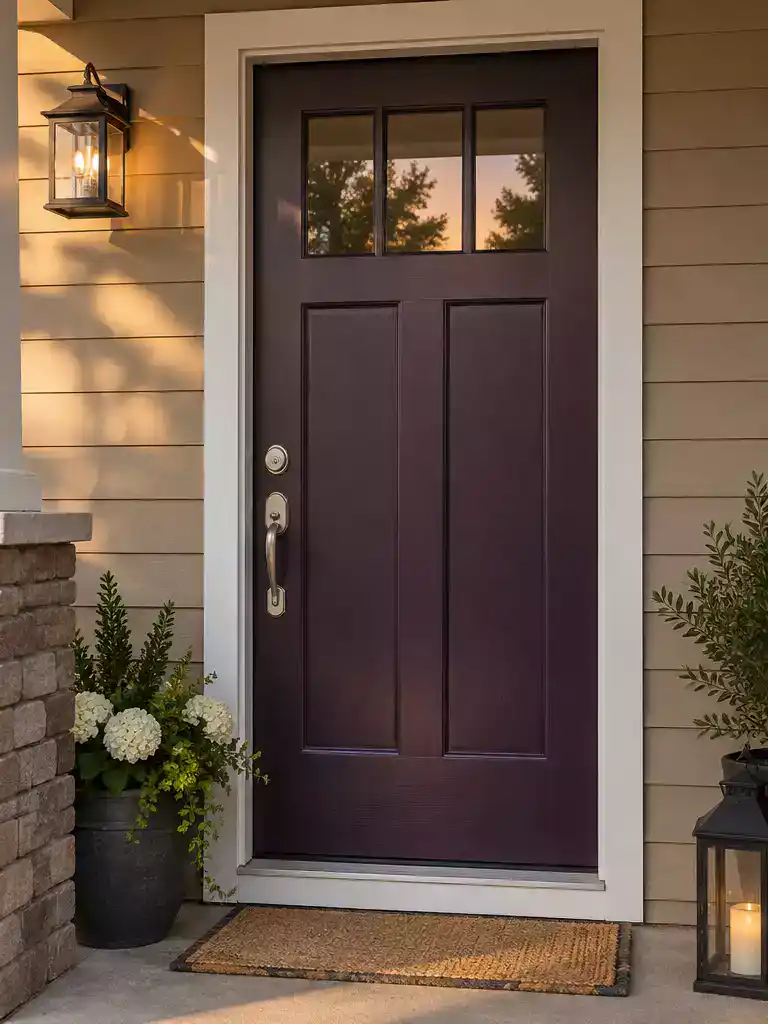
Create a sophisticated, chameleon-like focal point that evolves with the changing daily light.
If you want a door that feels intentional and high-contrast without resorting to standard black or charcoal, deep aubergine is a powerful contender. This color acts as a true chameleon, shifting its personality throughout the day; it presents as a rich, warm violet in the morning sun and settles into a nearly black, sophisticated anchor as the evening light fades.
The Daylight Shift: Because this color changes so drastically based on the sun’s position, never rely on a small paint chip. Tape a 12×12 sample to your door and observe it at noon and again at sunset to ensure the violet undertones don’t clash with the specific tan of your siding.
Because of its depth, this color demands a high-quality finish to maintain its crispness. Standard exterior paint may look flat or chalky, which defeats the purpose of choosing such a bold, regal shade.
- ✔
Standard lifespan: 5–7 years with proper preparation. - ✔
Premium longevity: 7–10+ years when using high-end, UV-resistant exterior coatings.
This color is particularly effective for homes that need a bit more “punch” to stand out from the street. By choosing a deep aubergine, you are moving away from safe, neutral choices and opting for a look that suggests a refined, artistic eye.
⭐ Deep Aubergine Mats for Entryways
Washable Polypropylene Fleece Entry Mat
✨ Editor’s Pick
Artificial Coir Scalloped Welcome Mat
⚖️ Quick Decision Guide: Deep Aubergine
- Choose this if: You want a sophisticated, high-contrast anchor that effectively hides dirt and everyday wear compared to lighter shades.
- Skip this if: Your entry is permanently shaded, as the color may appear perpetually black and lose its complex violet undertones.
- Pair it with: Brushed gold or antique brass hardware to pull out the hidden warmth in the aubergine and add a touch of luxury.
Weathered Blue
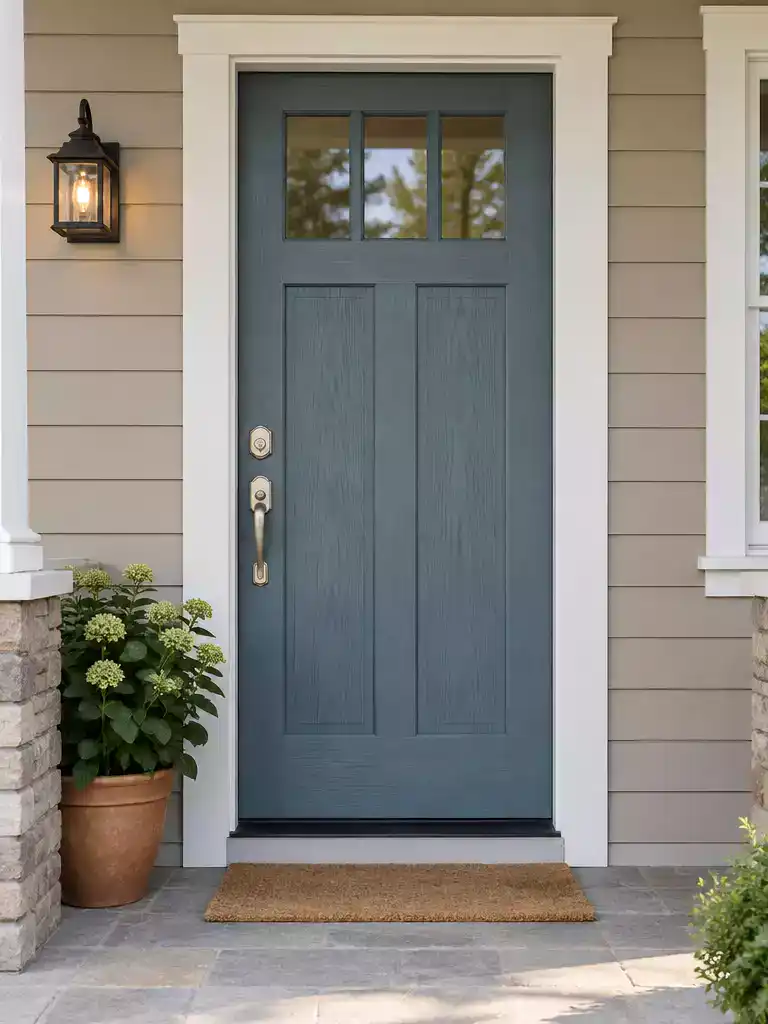
A cool, organic contrast that brings a refreshing depth to neutral tan exteriors.
Weathered blue works as an organic counterpoint to tan siding, providing a cool, muted contrast that avoids the artificial look of brighter primary blues. Because tan siding often carries yellow or orange undertones, the slight greyscale in a weathered blue keeps the transition feeling intentional rather than jarring.
Finish Selection Note: When choosing your paint, prioritize an eggshell or satin finish. High-gloss finishes often cause blue paint to look overly synthetic against natural tan siding, which can diminish the sophisticated, grounded aesthetic you are aiming for.
Lifespan for this color typically ranges from 3 to 7 years depending on your local climate and sun exposure. If you are painting a wood door, ensure you have a high-quality sealant in place; if the wood is not properly protected with a durable exterior polyurethane, you should expect to revisit the finish every 3 to 5 years.
Avoid Common Prep Failures
- Moisture Traps: Always paint the bottom edge of the door, as this is the most common point for moisture-related rot and finish failure.
- The Primer Shortcut: Do not rely on 2-in-1 paint and primer products; use a dedicated, high-quality exterior primer to ensure the blue adheres correctly to the door’s specific material.
- Sun Exposure: Never apply your finish in direct sunlight, as the accelerated drying time prevents proper adhesion and leads to premature peeling.
⭐ Weathered Blue Mats to Consider
✨ Editor’s Pick
Hand Painted Coconut Fiber Doormat
Hand Woven Buffalo Plaid Rug
💡 Why This Works:
Weathered blue creates a natural bridge between your home’s tan siding and the surrounding landscape. By opting for a muted, desaturated tone, you avoid the “toy-like” appearance of primary colors, ensuring the entrance feels sophisticated, grounded, and integrated into the home’s architecture rather than sitting on top of it.
Visual benefit: The subtle grey undertones effectively neutralize the warmth of tan siding, preventing the facade from appearing overly yellow or monotonous.
With all nine color directions now on the table, the path to a high-value facade becomes significantly clearer. Focusing on the one or two hues that align best with your specific siding undertone is far more effective than trying to cycle through every option.
A front door that feels intentional and polished is built on a few deliberate decisions, not a complete overhaul. Once you settle on a shade that respects your home’s palette, the longevity of that investment relies on proper prep work and selecting the right professional paint system. Before you commit, test a sample on your door in changing daylight to ensure the color holds its own against the tan siding. By prioritizing this curb appeal update, you secure a finish that adds genuine value to your home.
Related posts:
 What Color Door Works With a Black Stair Railing?
 10 Best Front Door Colors for a Tan House
 What to Do When a Door Latch Works Only if You Lift the Handle
 What Hardware Works Best When Only One French Door Leaf Is Active?
 12 Wood Front Door Color Ideas for Timeless American Homes
 12 Autumn Wreaths for Front Door With Texture Color and Depth
 I Painted the Inside of Our Front Door a Different Color Than the Outside
 When New Window Frames Change What Color Your Front Door Should Be