
What hardware works best when only one French door leaf is active? The decision depends on treating the pair as one coordinated system, not two separate doors. This guide narrows the choice to six practical ideas that help you spend well and avoid fit problems – starting with identifying which leaf opens first.
How Active and Inactive Leaves Work

Identify each leaf first, and the rest of your hardware decisions become much clearer.
As an Amazon Associate I earn from qualifying purchases. Affiliate links may earn me a commission at no extra cost to you.
Start with the opening sequence: which panel opens first during normal entry and exit? That is the active leaf; the other is the inactive leaf, even when both doors look identical or carry similar-looking trim.
The active leaf handles everyday traffic, so it normally carries the working handleset, latch, and primary lock. The inactive leaf usually stays closed until you need the full opening width, then releases through top-and-bottom flush bolts or another secondary retention system.
Use this order every time: release the inactive leaf only when both panels need to open, and close the inactive leaf first when you are shutting the pair. The active leaf closes last, latching against the secured inactive leaf.
Label before you shop
ACTIVE
Opens first; carries the everyday handle, latch, and primary lock.
INACTIVE
Stays closed; relies on retention hardware and helps form a stable latching surface.
Once the inactive leaf is secured, it works like a temporary fixed jamb at the center meeting edge. That support lets the active latch engage consistently instead of meeting a panel that drifts, rattles, or sits out of alignment.
Confirm handing and opening direction before selecting parts. Which panel opens first and how it swings determines whether the system needs left- or right-hand components, unless the manufacturer specifically identifies the hardware as universal or non-handed.
Avoid the two-active-leaf mistake. Treating both panels like separate single doors can put the working handleset on the wrong leaf, create incorrect handing, weaken latch engagement, and lead to replacement or carpentry.
Before ordering, inspect the hinge arrangement, door thickness, existing bore and latch preparation, and whether the pair is square enough for the meeting edges to close evenly. Older pairs may use a deadbolt on the active leaf with surface bolts on the inactive leaf, while newer doors can hide multipoint hardware; the active/inactive relationship stays the same.
- Active leaf: confirm which panel opens first.
- Inactive leaf: confirm which panel stays secured during daily use.
- Opening direction: record the swing from the appropriate side.
- Handing: verify left, right, or universal status in the manufacturer instructions.
- Existing preparation: record thickness, bore, latch, hinges, and meeting-edge condition.
Place removable labels reading ACTIVE and INACTIVE on the interior faces, then test the sequence before removing anything. If the pair belongs to a branded door system, check that manufacturer’s handing instructions; heavier doors may also need additional hinge support.
After the operating leaf is identified, the next decision is how to keep the inactive leaf rigid, quiet, and fully seated while the active leaf moves.
⭐ Top Hardware for Active Leaves
✨ Editor’s Pick
Matte Black Dummy Handles for French Doors
Adjustable Keyed Lock for Double Doors
Surface Mount Dummy Handles for Double Doors
💡 Why This Arrangement Works:
A single active leaf keeps everyday entry predictable: one handle operates the passage, while the second leaf remains undisturbed until you need the wider opening. That division also gives installers a clear reference for handing, latch alignment, and hardware placement across the pair.
Useful rule: Treat the pair as one everyday door with a controlled full-width opening, not two independent doors.
2. SECURING THE INACTIVE LEAF

Keep the inactive leaf seated, quiet, and ready to support reliable everyday latching.
The failure is easy to recognize: the active leaf closes, but the inactive panel rattles, drifts out of alignment, or will not stay tightly seated. A decorative center handle cannot hold that panel in place; it needs positive retention at both the top and bottom.
Flush bolts are the usual starting point. These vertical sliding bolts sit recessed into the inactive leaf’s edge, with the upper bolt entering a strike in the head jamb and the lower bolt entering a strike in the threshold or floor.
Engage both bolts to keep the inactive leaf rigid as the active leaf opens, closes, and latches against it. Retract both when the full opening is needed; the exact operating sequence depends on the hardware, so follow the product guide rather than assuming an automatic mechanism.
Close, seat, then mark: locate the upper and lower strikes with the inactive leaf fully closed under its normal weight. If the bolts work only when the door is lifted or pulled, check for sag, loose hinges, misplaced strikes, or weak mounting before blaming the bolts.
Heavy-duty surface bolts, barrel bolts, and drop bolts can fill in where the door was never prepared for recessed hardware. They are often easier to retrofit, but their visible bodies may interfere with the meeting edge or look out of place, so mark their position with both leaves closed.
For heavy-duty flush bolts, one guide recommends at least 3/4 inch of engagement into metal strike plates in the header and floor. Treat that as guidance from one source, not a universal code requirement, and avoid relying on shallow holes or weak mounting into wood alone.
Inactive-leaf check
- Confirm the leaf closes plumb and flush without lifting.
- Mark and test the head-jamb strike.
- Mark and test the threshold or floor strike.
- Verify both bolts engage smoothly and fully.
- Check for rattle, sag, binding, or a shifting meeting edge.
- Finalize drilling or mortising only after the checks pass.
One source estimates flush-bolt installation at $25–$60 in parts plus 1–2 hours of labor. That is a rough installation-oriented estimate, not a universal retail or labor range, and no universal bolt lengths or mortise dimensions apply across French-door systems.
The bolts hold the inactive leaf in position; the astragal and its dedicated strike control how the two meeting edges close together.
⭐ Inactive Door Bolts Worth Buying
Brass Surface Bolts for French Doors
✨ Editor’s Pick
Six-Inch Flush Bolts for Inactive Doors
Black Sliding Bolt for Door Security
🔢 The Right Operating Sequence:
Using the pair in a consistent order reduces unnecessary bolt handling and helps the active leaf meet a stable surface.
- Keep the inactive leaf bolted unless the full French-door opening is genuinely needed.
- When opening both panels, retract the inactive leaf’s bolts according to the hardware guide.
- When closing, seat and secure the inactive leaf first, then close the active leaf last.
The expensive mistake here is rarely the finish; it is drilling before the pair’s roles, alignment, and existing preparation are clear. A quick look at double-door gap ideas can offer visual context, but your decision rests on a few physical checks: active leaf, inactive retention, strike paths, and current bore locations.
Verify the opening sequence and drilling locations first; the remaining choices can follow once the door behaves correctly.
Astragal and Strike Setup

A measured astragal and strike keep the pair aligned, quiet, and easy to latch.
Start at the center meeting edge. If the astragal is too wide, too short, or paired with the wrong strike, the doors can close unevenly even when the inactive-leaf bolts and active latch work correctly.
The astragal is typically fitted to the inactive leaf, where it helps control closure, meeting-edge alignment, and the gap between the panels. The strike is normally mounted to that astragal, not added as a generic strike on the inactive-leaf edge, so its receiving geometry and mounting preparation must match the astragal system.
Handing comes from the active-door side: the swing direction of the leaf that opens first determines left- or right-handed selection. Confirm the door manufacturer instructions before ordering, especially when the pair belongs to a branded system or has a dedicated astragal profile.
Product-guide measurements, not universal French-door dimensions: one system requires 27/32 inch between the doors and identifies a 5/32-inch margin between the astragal face and active-door edge.
One guide calls for trimming astragal height to the center opening height minus 1/4 inch, while a separate guide references a 1/8-inch pilot bit and 1/4-inch header and threshold holes for bolt locations. Verify every figure against the applicable hardware guide before cutting or drilling.
Fit the astragal or trim it as directed, position it on the inactive leaf, predrill, and fasten it with the supplied screws. Close both doors before marking the strike, then install the strike and use a shim for fine adjustment only if the guide permits it.
Leave final tightening until the pair closes evenly and the latch meets the strike at its center. The astragal should sit flush at the top and bottom where specified, clear the sweep, and avoid blocking the active knob or handle.
Center-gap measurement worksheet
- Opening height: ____________________
- Door thickness: ____________________
- Handing from the active-door side: ____________________
- Center gap required by the product guide: ____________________
- Astragal margin required by the product guide: ____________________
- Astragal trim clearance: ____________________
- Top and bottom bolt-hole locations: ____________________
After installation, check the intended gap, smooth closure, centered latch engagement, flush astragal ends, tight fasteners, and clear movement around the active hardware. Older or out-of-square openings may need a qualified door installer because astragal and strike alignment can require repeated adjustment rather than one drilling pass.
⭐ Standout Astragal Strike Hardware
Commercial Brass-Plated Strike for Door Latches
Oversized Adjustable Strike Plate for Doors
✨ Editor’s Pick
Extended Black Strike Plates for Door Latches
4. HANDLE AND LATCH SETS

A coordinated handle pair keeps daily operation simple and the center meeting edge clear.
Buying two operating handlesets is one of the easiest ways to order the wrong hardware for a French-door pair. The leaf that opens first needs the active handleset; the leaf that stays closed normally needs matching dummy trim, not a second everyday latch.
The active set connects to the door preparation and contains the working latch mechanism used for entry and exit. Dummy trim supplies the visible grip or escutcheon without that operating mechanism, while half-dummy trim works where the inactive side calls for only a partial matching treatment.
Keep the inactive trim clear of the astragal, flush bolts, and the active leaf’s swing. A handle can look correctly positioned in a product photo yet interfere with the meeting edge once both doors are closed, so test the clearance with the pair fully seated.
Saveable compatibility record
- Door thickness
- Crossbore size
- Backset, where applicable
- Center-to-center layout
- Screw-hole spacing
- Left- or right-hand selection, or universal/non-handed status
- Exact door family or model compatibility
Use the existing active handle as your measuring reference before removing it. Documented listings include doors that are 1 3/4 inch or 2 1/4 inch thick, crossbores of 1 11/16 inches or 2 1/8 inches, older 6-inch center-to-center layouts, and 5 3/16-inch screw spacing; these are examples to compare with your door, not default French-door dimensions.
Handing still matters unless the set is explicitly universal or non-handed. Confirm which leaf opens first, where the hinges sit, and whether the active set’s latch and spindle align with the existing preparation before ordering.
Do not match by appearance alone. A decorative match is not enough if the bore, latch, door thickness, or screw layout does not line up. Branded systems such as Andersen Frenchwood may require exact model-family compatibility even when another handle looks nearly identical.
Compare the new active set and inactive trim as a pair, using photographs of the handle area, latch edge, astragal, and meeting stile. That small record can prevent buying two complete operating sets – or discovering after delivery that the attractive replacement needs new carpentry.
⭐ Handlesets That Complete French Doors
✨ Editor’s Pick
Black Passage Lever with Single Deadbolt
Matte Black Passage Handles for Interior Doors
Antique Brass Entry Handleset with Deadbolt
💡 The Detail That Pulls It Together:
In a lived-in room, match the dummy trim to the active set’s grip and plate proportions, not just its finish. A half-dummy treatment can look more intentional when the inactive stile has limited room, while a full dummy set better balances a substantial active handle – provided neither projects into the astragal or meeting edge.
5. LOCKING OPTIONS

Choose a lock that fits the active leaf cleanly and keeps the inactive leaf out of daily operation.
The lock needs to mount and operate on the active leaf without relying on the inactive leaf’s everyday release. Your choice depends on the existing door preparation, the available flat mounting area, the door height, and whether the active leaf was built for multiple locking points.
Start with the active door edge, not the product photo. Look for a cylinder cutout, existing screw locations, a multipoint case, and enough flat surface for the lock body; a lock that physically fits the door can still have the wrong geometry or require the inactive leaf to be engaged.
A keyed surface-mounted lock suits an active leaf with a suitable flat mounting area and a cylinder length matched to the door thickness. Documented cylinder examples include 30, 40, 45, 50, and 60 mm, but those are system-specific choices rather than a menu to select from by appearance.
A keyed handle lock keeps the locking function within the active handleset, provided the bore, latch, backset, screw locations, and handing match the existing preparation. This is usually the least disruptive route for a like-for-like replacement, but only after the old hardware has been measured and photographed.
Best starting point for a tall French-door opening: ABUS guidance identifies a bar lock for French doors and openings taller than 1 meter. Treat that as cited product guidance, not a universal rule; the active leaf’s preparation still decides whether the category fits.
Multipoint hardware can secure at two or three points, but inspect the active-leaf edge before shopping. If there is no existing multipoint case or matching channel preparation, this is a system-level replacement rather than a simple lock swap.
Compact door-window or add-on locks can suit some PVC, aluminum, or wood door-window applications. Do not choose a small window lock solely because it fits physically; one cited compact lock example is €57.40, and that price is a single example rather than a French-door hardware range.
Before ordering, verify:
- Active-leaf cylinder cutout and door thickness.
- Existing bore, latch, backset, screw locations, and flat mounting area.
- Multipoint case preparation if considering multipoint hardware.
- Lock geometry and whether the inactive leaf must be engaged for operation.
- Handing and the manufacturer’s instructions for the specific door family.
After the lock category and fit are settled, coordinate the visible components across both leaves without overlooking the astragal, strike, bolt faces, and other small center-edge parts.
⭐ Best Door Locks for Security
✨ Editor’s Pick
Keyed Entry Knobs with Matching Deadbolts
Matte Black Privacy Levers for Bedrooms
💸 Affordable Upgrade Path:
- Reuse preparation: A like-for-like keyed handle lock can avoid turning a simple replacement into broader carpentry.
- Upgrade selectively: Replace only the failed active-leaf component when the existing lock category still operates correctly.
- Spend wisely: Prioritize compatible geometry and independent active-leaf operation over extra locking points that require major retrofit work.
Finish and Style Match

A coordinated finish makes both French-door leaves read as one carefully specified system.
Start with the hardware people see from across the room: the active handleset and inactive trim should relate to the lock, astragal, strike, latch, and exposed bolt parts. One satin surface beside a polished plate, or two different black tones, can make a properly operating pair look assembled from unrelated parts.
Match the finish family and the sheen together. Brushed should meet brushed, polished should meet polished, and antique should meet antique wherever possible; the color name alone does not tell you how the hardware will look under your lighting.
Compare each candidate by more than its label:
- Finish name and undertone, including whether the metal reads warm, cool, gray, or yellow in the room.
- Sheen, base material, and visible texture across the handles, plates, astragal cover, and strike.
- Shape language, such as a substantial escutcheon paired with similarly proportioned rosettes rather than a delicate plate on one leaf and a minimal one on the other.
- Visible scale on both doors, including handle length and plate size.
Check the fixed metals already near the pair – hinges, lighting, taps, and cabinet hardware – but let the French-door hardware lead the decision. A darker finish against a light-painted door creates stronger contrast, so small mismatches at the center meeting edge may be easier to notice.
Brass, gold, and bronze labels can cover polished, brushed, antique, or oil-rubbed treatments. Order or borrow a physical sample and view it in the room’s actual light instead of trusting product photography, which can flatten differences between warm and cool tones.
Scale check: One design guide places matched French-door hardware in a rough 4–6-inch visual range. Treat that as a design guide, not a manufacturer-wide standard, and confirm the product sheet for your door size.
Tape the proposed handle and plate dimensions on both leaves before ordering. Check balance, the astragal, the meeting edge, and the active handle’s movement while both doors are closed.
Saveable visible-hardware audit
Photograph the pair straight on, circle every exposed metal component, and confirm each part is available in the selected finish family.
- Active handleset and inactive dummy trim
- Lock, latch, rosettes, and escutcheon
- Astragal cover and dedicated strike
- Top and bottom bolt faces and edge trim
- Hinges and other nearby fixed metals
Material and use affect how finishes change: thin plated or painted parts may wear differently from solid-metal components, and traffic plus cleaning habits can make those differences more visible. Follow the hardware maker’s cleaning instructions rather than assuming one cleaner suits every finish.
⭐ Finish Details to Consider
Antique Brass Crystal Privacy Knob
Satin Chrome Commercial Lever Lock
✨ Editor’s Pick
Satin Nickel Door Reinforcement Backplate
💡 Why the Center Edge Matters
The smallest visible parts often draw the eye because they sit where both leaves meet. Coordinating the strike, astragal cover, bolt faces, and edge trim keeps that busy area visually calm, while matching material quality helps prevent one thin plated piece from looking noticeably less substantial than the surrounding hardware.
Best final check: View the closed pair straight on, then inspect the center edge from normal walking distance.
With the full set of decisions in view, What Hardware Works Best When Only One French Door Leaf Is Active? becomes a question of coordination rather than guesswork. The leaf that opens first carries the working handle, latch, and compatible lock; the inactive leaf needs firm top-and-bottom retention, while the astragal and dedicated strike keep the meeting edge aligned. Finish coordination matters, but only after the functional preparation is confirmed.
You do not need to change every component to improve how the pair operates and presents. Start by identifying the active leaf and recording the existing thickness, handing, bore, screw layout, gap, and strike locations. That first check will tell you whether a like-for-like replacement is realistic or whether alignment and system compatibility deserve professional verification. Make those one or two calls correctly, and the remaining choices become refinement. This is how a French-door pair ends up looking intentional, operating cleanly, and making sense for the home.
Related posts
 What to Do When a Door Latch Works Only if You Lift the Handle
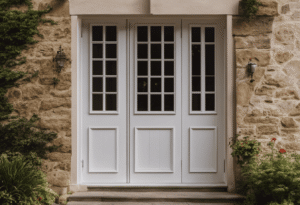 What Are Active or Stationary French Doors
 Three Leaf Non-Mortised Hinge Review
 What Hardware Do You Put on French Doors
 Can You Put a Dog Door in a French Door?
 Can You Turn a French Door Into a Barn Door?
 How to Paint French Doors: Prep, Primer and Glass
 Can a French Door Be Transported Standing up