
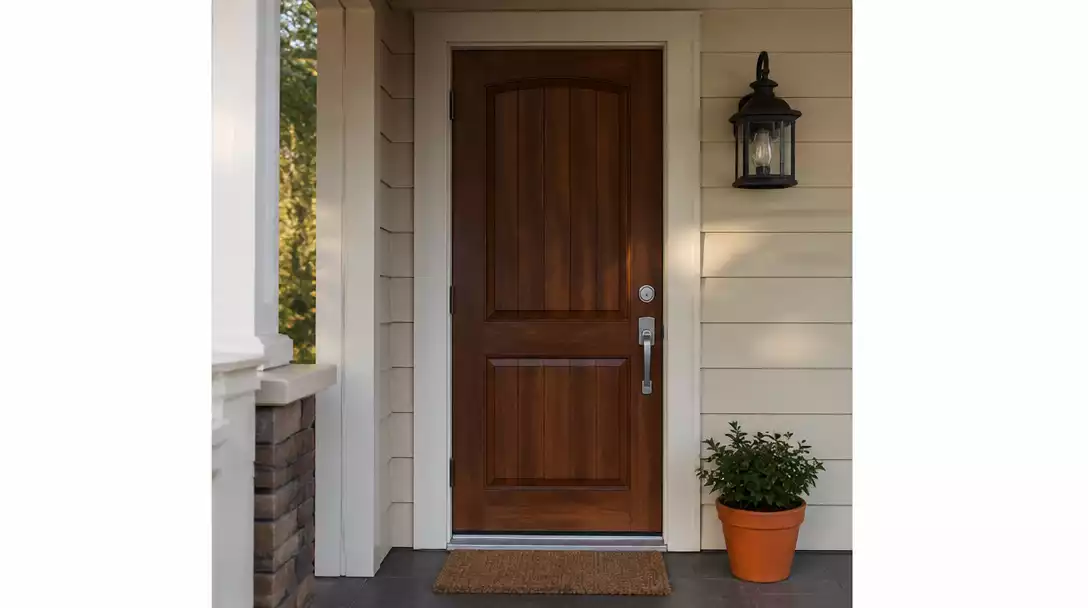
The front door is the most common point of entry for intruders, yet most homeowners rely on factory-standard hardware that offers little more than a visual deterrent. This guide narrows your focus to 8 practical upgrades that reinforce your home’s security while maintaining a clean, residential aesthetic.
Start by evaluating the current state of your entrance.
1. Inspect the door and frame
A thorough structural assessment reveals the hidden weaknesses that compromise your home’s main entrance.
As an Amazon Associate I earn from qualifying purchases. Affiliate links may earn me a commission at no extra cost to you.
Before you spend a dime on high-security hardware, you need to know if the foundation you are attaching it to can actually hold. If your door frame is rotting or misaligned, even the most expensive deadbolt will provide nothing more than a false sense of security.
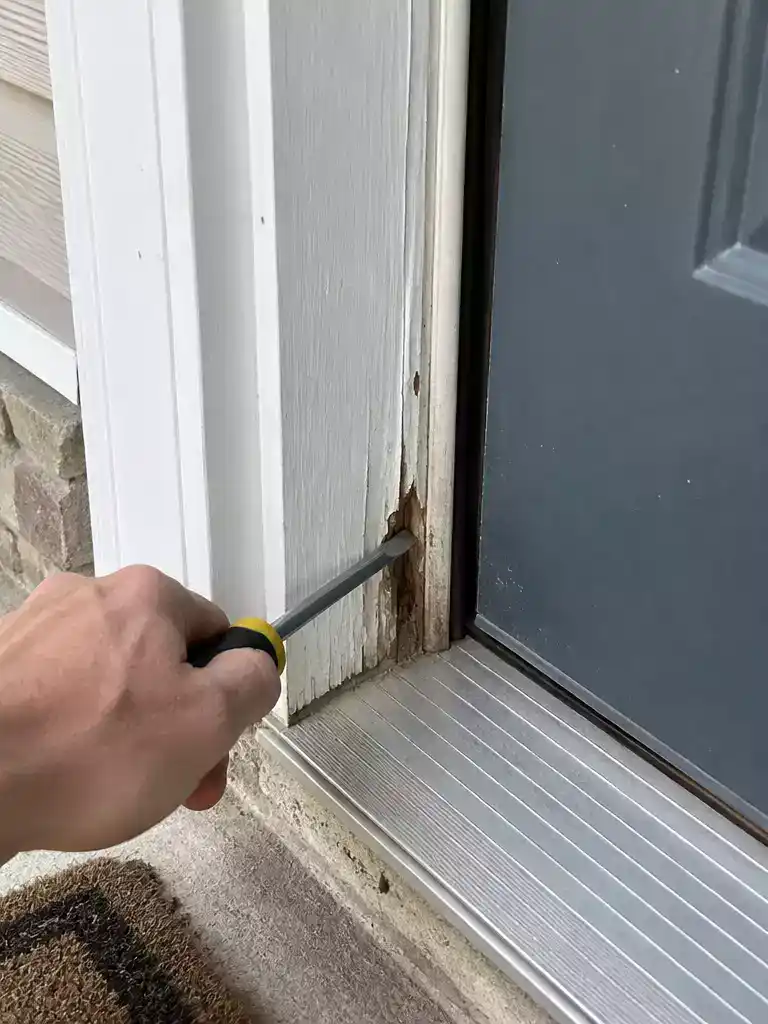
Start your assessment with the probe test. Take a standard screwdriver and firmly press the tip into the lower jambs, the bottom corners of the frame, and the threshold itself.
The Probe Test
- Soft or “spongy” wood: If the screwdriver sinks into the wood with little resistance, you have rot.
- Why it matters: Reinforcement hardware relies on the integrity of the wood fibers to anchor properly. If the wood is compromised, it will fail under pressure regardless of the hardware you choose.
Once you are confident the wood is solid, perform a visual audit of the door’s operation. When the door is closed, walk around the perimeter and look for daylight leaking through the gaps. Any visible light suggests that your door is not sealing correctly, which is often a sign that the frame has shifted or settled over time.
Finally, check how the door moves. If you notice any binding or dragging as you open and close the door, your frame is likely no longer plumb, level, and square. Security hardware is precision equipment; if the frame itself is flexing or pulling away from the wall stud, no amount of steel reinforcement will compensate for a structural misalignment.
Planning Prompt
Keep track of your findings as you move through your home. Download our Security Audit Checklist (PDF) to document the condition of your frame, record your door’s specific measurements, and track the hardware upgrades you need to prioritize.
⭐ Essential Tools for Inspecting Door Frames
✨ Editor’s Pick
Solid Wood Core Double Entry Door
Waterproof Flashing Tape for Door Frames
Triangle Metal Awning for Entry Doors
📋 What to Check First
- Gap consistency: Measure the space between the door and frame; uneven gaps suggest the frame has shifted or settled.
- Hardware alignment: Confirm that the existing strike plate and latch align perfectly without needing to force the door.
- Structural clearance: Ensure the frame remains plumb and square; if the frame flexes when pushed, reinforcement hardware will fail.
Upgrade the deadbolt
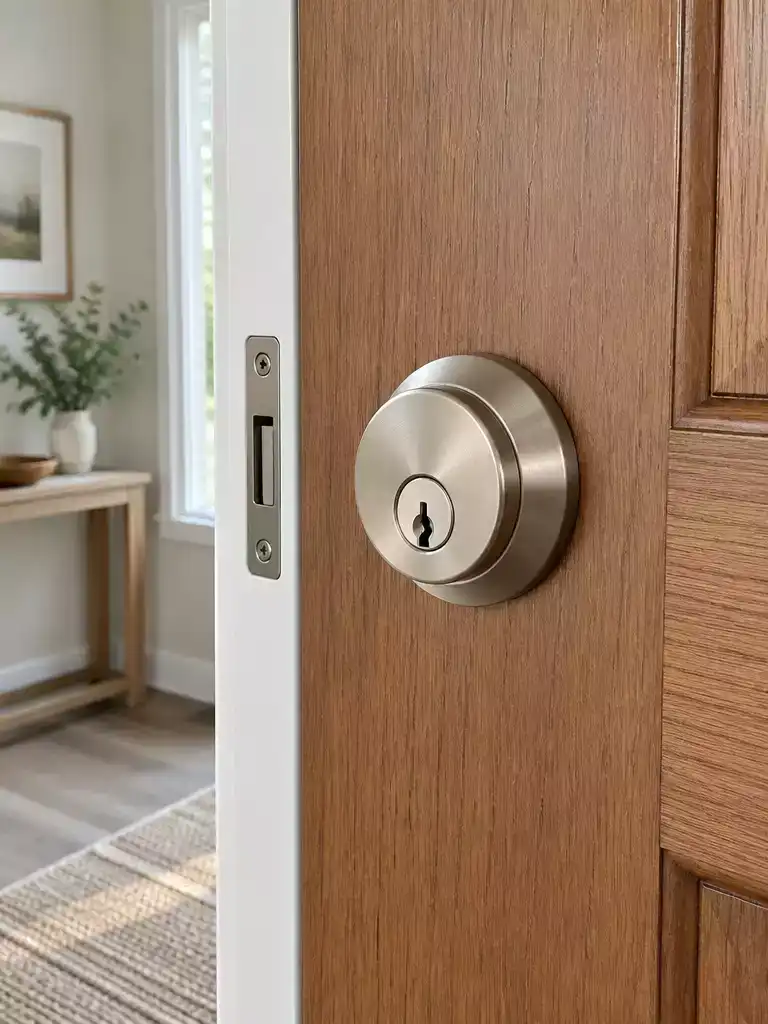
Strengthen your primary defense with high-grade hardware that blends seamlessly into your home’s aesthetic.
Your deadbolt is the single most important hardware component in your door assembly. While factory-standard locks often prioritize ease of installation over brute-force resistance, a purposeful upgrade focuses on the ANSI/BHMA grading system to ensure your home is actually protected.
Steer clear of Grade 3 hardware completely, as it is not intended for exterior doors and offers minimal resistance to forced entry. Instead, look for Grade 1, which represents the highest level of residential security and undergoes rigorous 250,000-cycle and impact testing, or Grade 2 for a heavy-duty residential alternative.
Pro-Tip: Low-Profile Performance
If you want to avoid a commercial aesthetic, the Kwikset 258 is a high-security, Grade AAA option that keeps a clean, low-profile look. It typically ranges from $39.49 to $44.49, providing a great balance between, strength, cost, and design.
Before you purchase, verify your door’s specific technical requirements to avoid a return trip to the hardware store. You must confirm the bore size, the backset (which is usually either 2-3/8″ or 2-3/4″), and the exact thickness of your door.
Remember that even the most expensive lock will fail if the surrounding door frame is not solid. Ensure you are not just swapping the deadbolt, but checking that your mounting points are ready for the increased structural integrity of a higher-grade locking mechanism.
⭐ Best Deadbolt Locks for Front Doors
Keyed Alike Entry Knob Deadbolt Combo
✨ Editor’s Pick
Matte Black Exterior Door Lock Set
Smart Fingerprint Deadbolt with Handle
Reinforce the strike plate
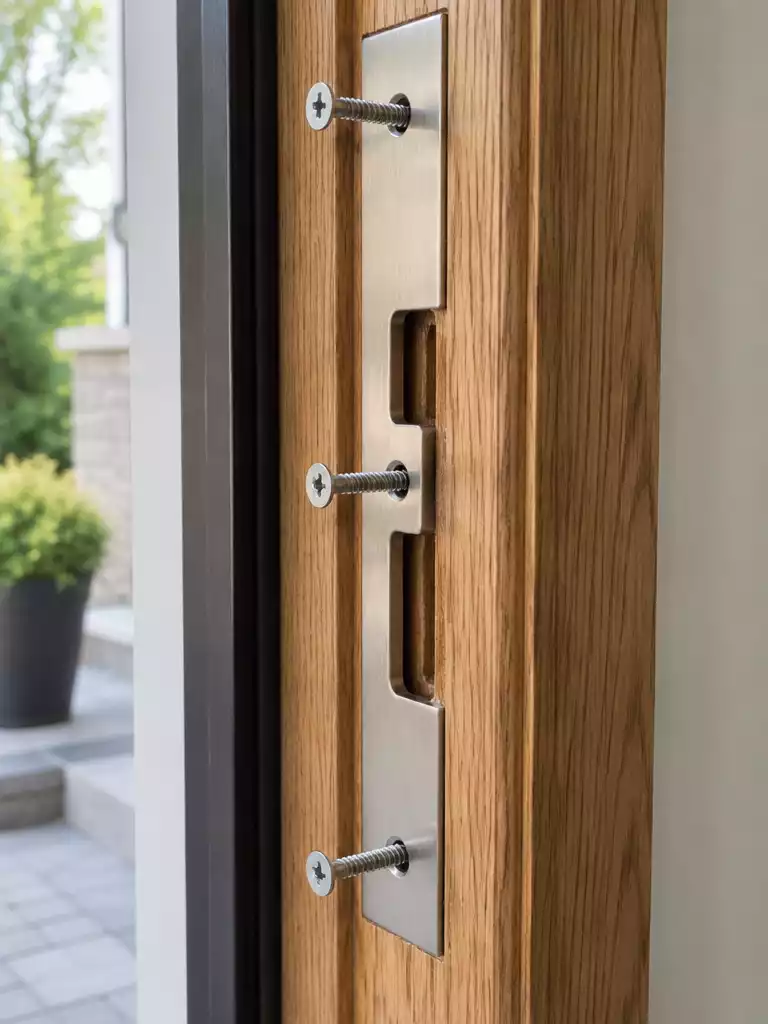
A simple switch to a longer, high-gauge steel plate provides serious resistance against forced entry.
The strike plate is often the weakest point of your entire door assembly. Factory-installed plates are typically secured with short screws that only anchor into the soft trim or the thin outer edge of the jamb, meaning they can be kicked in with minimal effort.
To upgrade your security without making your entryway look industrial, you need to move beyond the standard 2-3/4 inch plate. Swapping this out for a 7 to 8-inch long reinforcement plate allows you to distribute the force of an impact across a much larger surface area of the door frame.
The 3-Inch Rule: A heavy-duty plate is only as strong as the screws holding it. You must use 3-inch hardened steel screws that bite deep into the underlying wall stud, not just the door frame.
When selecting your new hardware, prioritize a minimum of 18-gauge steel. While you might be tempted to go with thicker commercial-grade steel, 18-gauge provides an excellent balance of high-impact resistance while remaining low-profile enough to sit flush with your existing door trim.
Strike Plate Shopping Checklist
- ✓ Verify your lock geometry (deadbolt vs. latch positions) to ensure the new plate aligns perfectly.
- ✓ Check for rot or soft wood first; hardware won’t hold if the jamb itself is compromised.
- ✓ Confirm the finish (brushed nickel, oil-rubbed bronze, or matte black) matches your existing door hardware.
Budget Note
You can expect to spend between $1 and $20 per plate depending on the finish and material quality. This is one of the most cost-effective defensive upgrades you can make.
A common mistake is tightening the screws until the wood splits or the frame pulls out of alignment. If you notice your door binding after installation, it usually means the strike plate is slightly misaligned with the lock bolt; take the time to center the plate properly before driving those final, deep-anchoring screws home.
⭐ Reinforce Your Strike Plate for Security
Universal Stainless Steel Door Strike Plate
Stainless Steel Door Latch Reinforcement Plate
✨ Editor’s Pick
Heavy Duty Deadbolt Strike Plate Kit
💡 Why This Works:
By spreading the force of a potential impact over seven or eight inches of the door jamb, you prevent the localized splintering that occurs with standard, short strike plates. This simple physical distribution turns a vulnerable entry point into a reinforced, structural anchor that resists forced entry significantly longer.
Structural Advantage: Longer plates leverage multiple wall studs, transforming your door frame into a cohesive, impact-resistant shield.
Concerns about the visual weight of security hardware often lead to overthinking, but the most effective upgrades remain almost invisible once installed. Focusing on structural integrity rather than heavy-duty aesthetics allows you to achieve a welcoming entryway without compromising on safety.
🎯 What Actually Matters Most:
- Match existing finishes to ensure your hardware feels like an intentional design detail.
- Prioritize quality over bulk when researching secure door options to maintain a residential feel.
- Reliable construction consistently outperforms heavy, industrial-looking add-ons in both function and curb appeal.
Replace short hinge screws
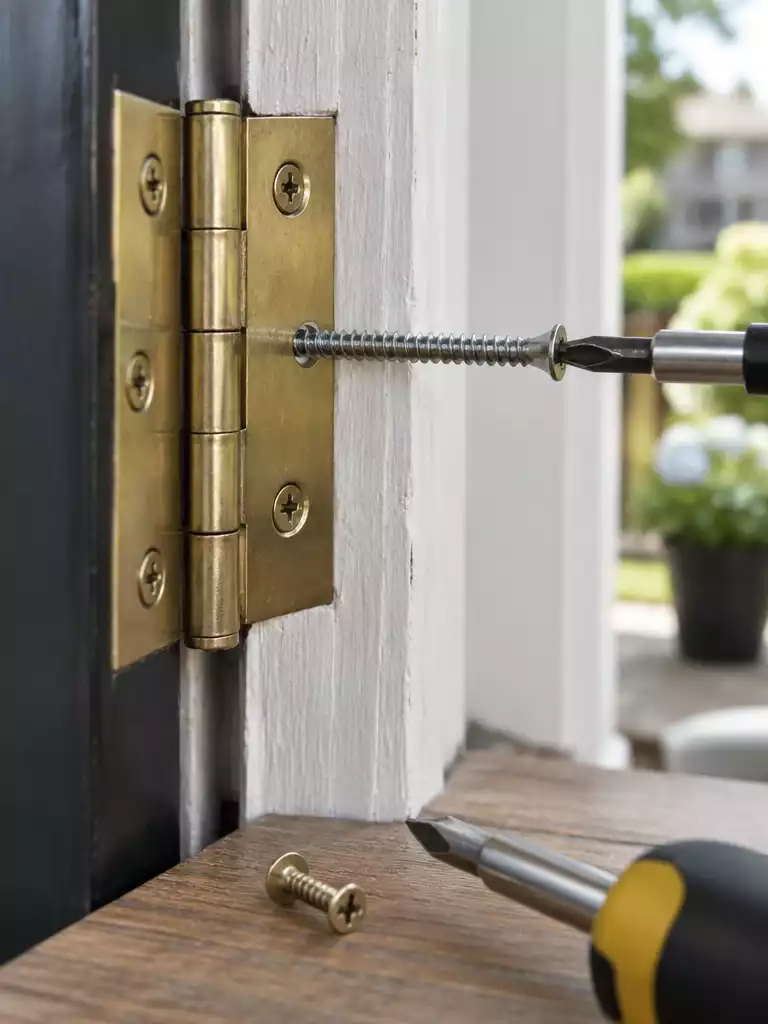
Strengthening your hinge connection is one of the most effective ways to prevent forced entry.
The hinges on your front door are often the most overlooked security weaknesses. Most factory-installed hinges are secured using short screws – typically #8 or #9 gauge measuring only 3/4-inch in length – which barely penetrate the door jamb and never reach the structural stud behind it.
Under significant force, these short screws can easily tear through the wood, allowing the door to be kicked in even if your deadbolt holds firm. Replacing these with 3-inch hardened steel screws creates a much deeper, more secure anchor that ties the hinge directly into the home’s framing.
Pro-Tip: The One-by-One Rule
Do not remove all the screws from a hinge at once, or your door will sag and misalign. Remove one factory screw, replace it with a 3-inch screw, and tighten it fully before moving to the next hole.
When selecting your replacement screws, opt for stainless steel to ensure long-term corrosion resistance, especially if you live in a humid or coastal climate. Using stainless steel prevents the hardware from rusting over time, which protects both the structural integrity of the connection and the look of your door’s finish.
Before you start driving these longer screws into your jamb, you must drill a pilot hole. This simple step prevents the wood from splitting, which is a common risk when working with longer, thicker fasteners near the edge of the frame.
Checklist for Hinge Upgrades
- Use #8 to #10 gauge screws for a secure fit.
- Ensure screws are at least 3 inches long to reach the stud.
- Select stainless steel for maximum durability and rust resistance.
- Always drill a pilot hole to protect the wood jamb from splitting.
⭐ Hinge Upgrades for Stronger Door Support
✨ Editor’s Pick
Heavy Duty Hidden Door Pivot Hinge
Stainless Steel Pivot Hinge for Doors
Precision Door Hinge Router Template Kit
🔢 The Right Sequence for Hinge Upgrades
Swapping out hardware requires a careful approach to ensure your door remains perfectly aligned and functional throughout the entire reinforcement process.
- Check alignment: Verify the door swings freely and sits flush in the frame before starting.
- Replace individually: Remove only one screw at a time to keep the hinge plate securely positioned.
- Pilot and drive: Drill your pilot hole, then insert the new 3-inch screw until snug but not over-tightened.
Strengthen the door jamb
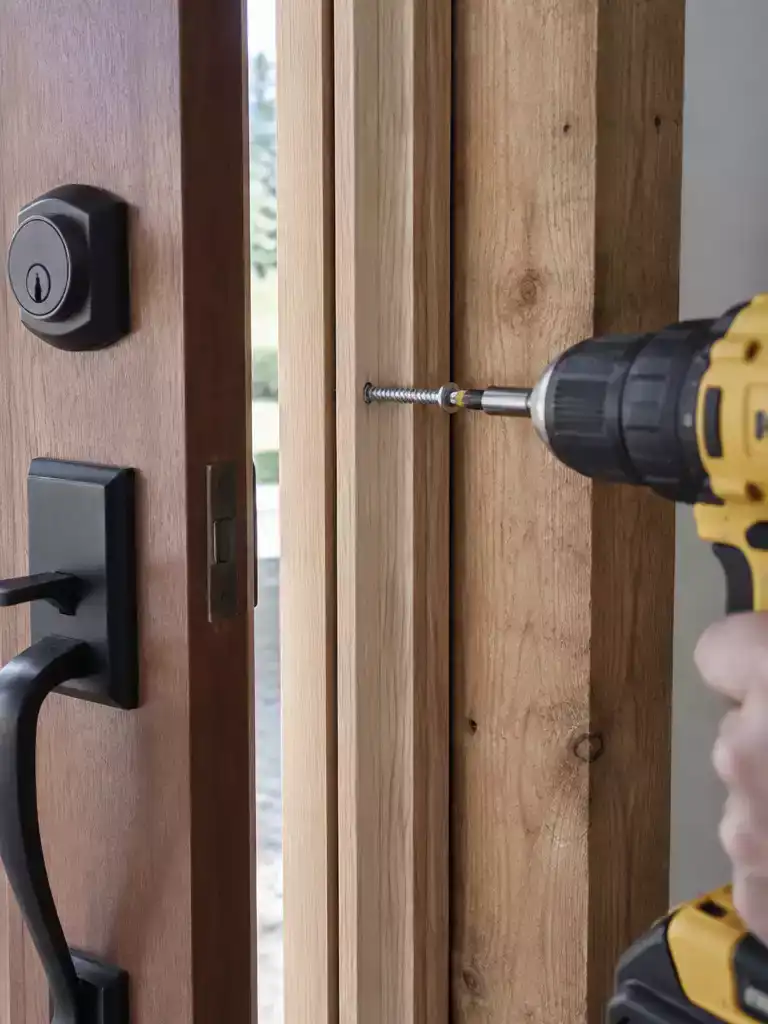
Anchoring your door frame directly to the wall stud provides essential structural resistance against forced entry.
The space between your door frame and the wall stud is often a hidden weak point. Even the most robust deadbolt cannot hold if the entire jamb is only loosely attached to the wall, as intruders often target this gap to pry the frame away from the stud.
To secure this area, you need to bridge the gap between the door frame and the structural wall stud using 3-inch to 3.5-inch hardened steel screws. These longer screws bypass the decorative trim and the shim space, anchoring the door assembly directly into the solid framing of your home.
Warning: The Rot Check
Steel reinforcement kits and long screws are only effective if the underlying wood is sound. If your jamb is soft, spongy, or shows signs of rot, do not attempt to reinforce it. You must replace the compromised wood section entirely before adding any security hardware, as screws will simply pull through decayed material during an impact.
If you choose to install steel reinforcement kits, remember that these are most effective when the wood they are covering is solid and load-bearing. While these kits provide an extra layer of protection, they do not replace the necessity of a solid, well-anchored jamb.
Planning Prompt
Before you begin, use your screwdriver to probe the jamb area behind the strike plate and near the hinges. If the wood gives way or feels soft, prioritize a wood repair or replacement before installing your security hardware.
⭐ Strengthen Your Door Jambs Today
Galvanized Steel Door Jamb Repair Kit
✨ Editor’s Pick
Stainless Steel Mending Plates for Wood
Kick Proof Deadbolt Strike Plate Lock
💡 Why This Works:
Anchoring your jamb directly to the wall stud transforms the frame from a simple door-holding trim into a structural component of your home’s defense. By bypassing the soft shim gap, you ensure that any force applied to the door is transferred immediately into the solid framing, significantly increasing the energy required for a successful breach.
Structural Integrity: Using 3-inch screws effectively turns your door frame into a rigid, reinforced extension of the wall.
Protect nearby glass
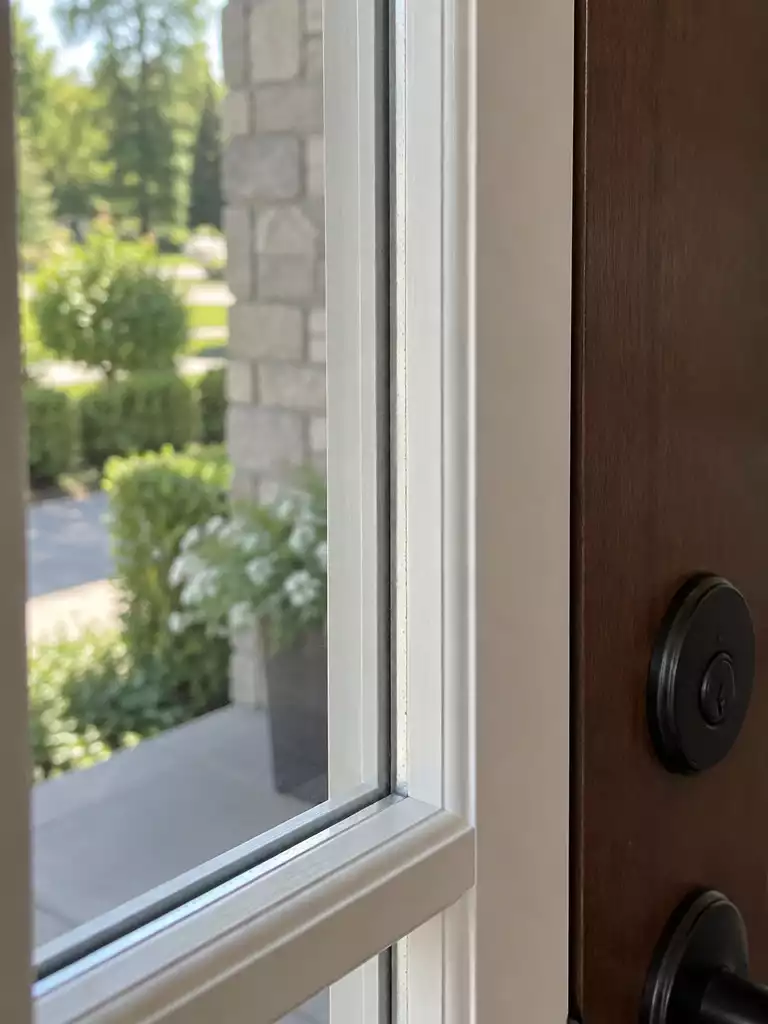
Reinforce vulnerable glass panels to stop intruders without compromising your home’s natural light.
Glass panes near a front door – whether in sidelights or the door itself – are often the weakest point in your home’s perimeter. An intruder doesn’t need to pick a lock if they can simply break the glass to reach inside and turn the deadbolt.
The most effective way to secure these areas without resorting to unsightly metal cages is by applying a high-grade security window film. When installed correctly, this film holds the glass shards together upon impact, making it significantly harder for someone to create an opening large enough to reach through.
Key Insight: For security film to be truly effective, it must be installed on the interior face of the glass and, crucially, it must be edge-anchored. Surface-applied film alone can often be pulled away from the frame; edge anchoring secures the film directly to the door or window frame, providing a much higher level of intrusion resistance.
When you are shopping for materials, look specifically for products that meet EN 356 test standards. This certification indicates that the film has been rigorously tested for resistance against manual attack.
If you prefer to hire a professional for this task, expect to pay between $500 and $700 for a typical front door glass installation. While it is a higher upfront cost than a DIY kit, the professional application ensures the film is bonded correctly to the edges, which is the most common point of failure for amateur installations.
Warning: Avoid applying film to the exterior face of the glass. Environmental exposure to UV rays and weather will degrade the film rapidly, and it provides no protection against someone simply peeling the material off from the outside.
⭐ Protect Nearby Glass With Privacy Film
3D Pebble Rainbow Privacy Window Film
One Way Mirror Heat Control Film
✨ Editor’s Pick
Vintage Floral Stained Glass Window Film
💰 What This Really Costs
- The price range: Expect to pay $7–$15 per square foot for standard film, or $13–$20+ for edge-anchored versions.
- Hidden installation labor: Professional application for a full front door setup typically ranges between $500 and $700 total.
- Long-term investment: Quality security film is a one-time upgrade with a 10–15 year lifespan, offering high value per year.
Add concealed reinforcement
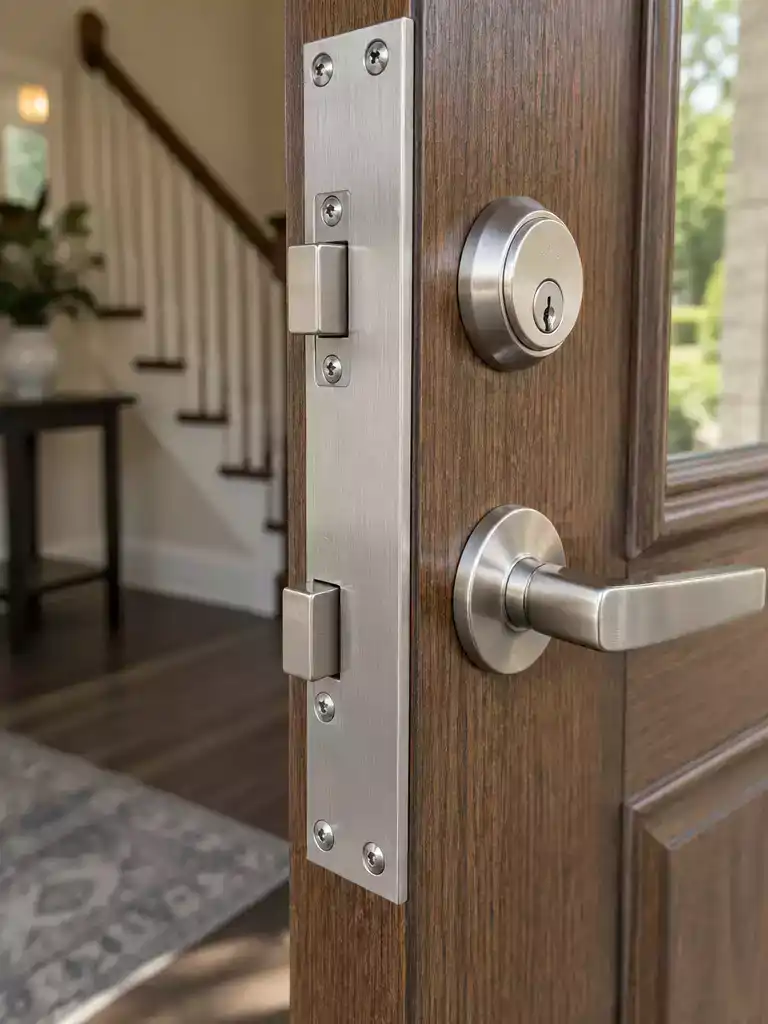
Strengthen your entry point with low-profile hardware that defends your home without sacrificing aesthetic charm.
When you want to bolster your front door’s defense without turning your entrance into a fortress, concealed reinforcement is your most effective strategy. Instead of relying on bulky, industrial-looking cages, you can use field-installable hardware that sits flush against the door and frame.
These components are designed to distribute force across a wider area of the door edge, making it significantly harder for an intruder to pry the door open. By using high-grade materials, you gain structural peace of mind while keeping your home’s curb appeal entirely intact.
Strategic Upgrade Tip: Focus on 14-gauge steel components. This thickness provides an ideal balance between brute-force resistance and a low-profile look that doesn’t scream “security hardware.”
For existing doors, wrap-around plates are the go-to solution. They effectively “sandwich” the door edge, reinforcing the area where the latch and deadbolt meet the strike plate.
While you might see “armored cores” mentioned in high-end door catalogs, those are typically factory-fabricated during the initial door construction. For a DIY upgrade on your current door, stick to these field-installable plates.
They provide the same functional benefit of preventing split wood and bypassed latches, but they do it in a way that blends into your existing hardware finishes. Just ensure you take precise measurements of your door thickness and backset before ordering, as these plates need to fit perfectly to maintain that clean, residential look.
⭐ Concealed Security Hardware for Your Home
✨ Editor’s Pick
Reinforcement Lock for Front Door Security
Adjustable Sliding Door Security Bar
Swing Bar Door Guard for Security
🏡 How This Works in a Real Home:
- Consistent Finish: Select wrap-around plates that match your existing hinges or handle sets to ensure the added steel looks like a deliberate design choice rather than an aftermarket fix.
- Door Clearance: Check your door’s swing gap before installation; thick plates can occasionally cause binding on tight-fitting doors, so verify you have enough room for the added metal thickness.
- Lived-in Aesthetic: For a less industrial look, opt for finishes like oil-rubbed bronze or aged nickel, which blend seamlessly with standard residential hardware and age gracefully over time.
8. Use low-profile security hardware
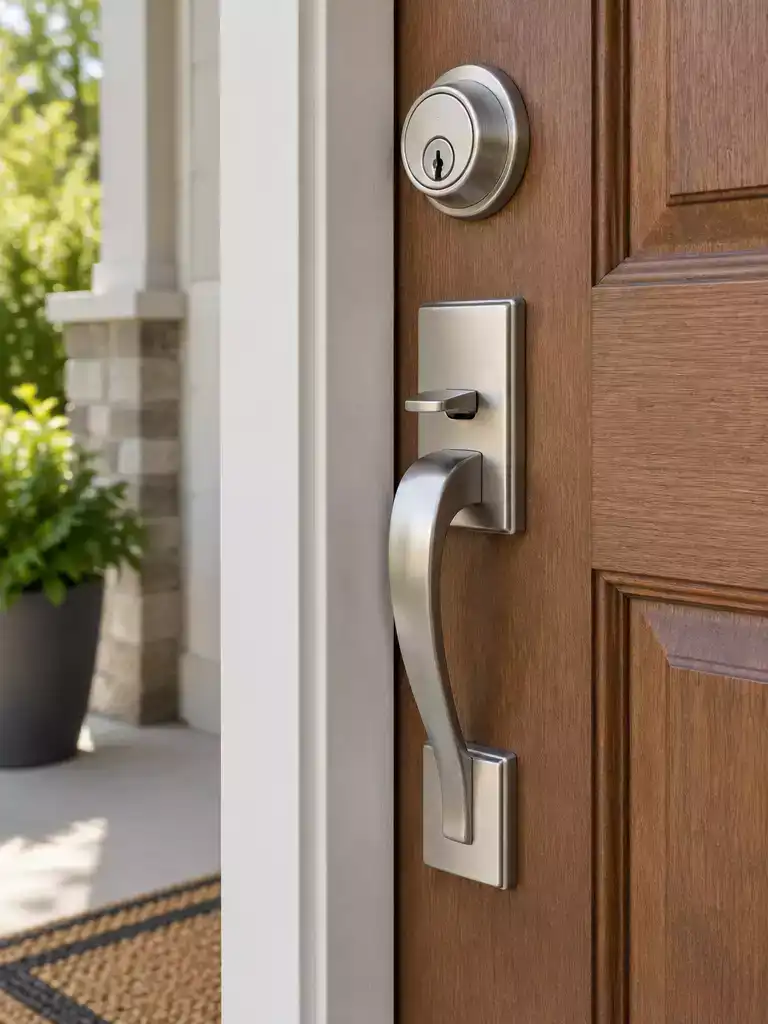
Secure your home with hardware that prioritizes lasting residential elegance and structural reliability.
When upgrading your door’s defense, the goal is to stop intruders without turning your home into a fortress that feels unwelcoming to guests. The secret lies in choosing low-profile security hardware that mimics the look of standard residential fixtures while meeting rigorous performance standards.
Avoid being swayed by marketing claims that prioritize aesthetics over performance. Instead, always verify the ANSI/BHMA grade printed on the packaging. For exterior doors, prioritize Grade 1 or Grade 2 hardware, which are engineered to withstand significant force and wear, unlike the flimsy Grade 3 options found on many factory-installed doors.
Material Matters: If you live in a coastal or humid region, prioritize stainless steel for all exterior-facing hardware. It resists the corrosion that quickly degrades standard finishes and compromises the structural integrity of your lock over time.
Maintaining a cohesive look across your entrance is vital for preserving your home’s value and curb appeal. When selecting your hardware, match the finish – whether it is brushed nickel, oil-rubbed bronze, or matte black – to your existing door furniture, such as the hinges and kickplate.
Investing in high-quality hardware is a long-term decision that balances immediate security needs with your home’s overall design. By replacing generic, light-duty components with robust, residential-grade versions, you create a system that is both fortified and visually harmonious.
⭐ Low Profile Hardware for Residential Doors
Modern Passage Door Knob Hardware Set
✨ Editor’s Pick
Matte Black Privacy Door Lever Lockset
Matte Black Privacy Locking Door Knobs
⚖️ Quick Decision Guide
- Choose Grade 1: Use this for primary entry doors where maximum impact resistance and daily heavy usage occur.
- Skip Grade 3: Avoid these flimsy options entirely; they provide little more than a visual deterrent for intruders.
- Pair with Finish: Match your deadbolt finish specifically to your hinges for a cohesive, intentional, and high-end look.
With all eight strategies now at your disposal, the path toward a more resilient entrance is significantly more manageable. Focusing on the one or two upgrades that address your home’s specific vulnerabilities is far more effective than attempting a total overhaul. The structural integrity of your door assembly is what actually counts, and reinforcing those key points provides lasting peace of mind without compromising your home’s aesthetic.
Start by evaluating your current setup with the proper security assessment this weekend. By prioritizing high-grade hardware and solid anchoring, you move beyond mere surface-level solutions. Taking this targeted approach ensures your home remains as welcoming as it is secure, leaving you with a result that holds up under scrutiny and adds genuine value to your property. If you find your current door is already showing signs of wear, it may be the right time to consider a full replacement rather than just reinforcement.
Related posts:
 How to Paint Interior Doors Black Without Making the Trim Feel Disconnected
 How to Choose a Front Door Thats Secure Solid and Timeless
 15 Shower Door Ideas From Clean and Simple to Statement-Making
 Front Doors for Homes Without a Covered Porch
 Unlocking the Secrets: What is the Size of an Industrial Door?
 17 Industrial Barn Door Ideas for Inside Your Home
 Walk In Shower No Door Ideas That Feel Open Without Feeling Exposed
 16 Cute Halloween Door Decorations Without the Scare