
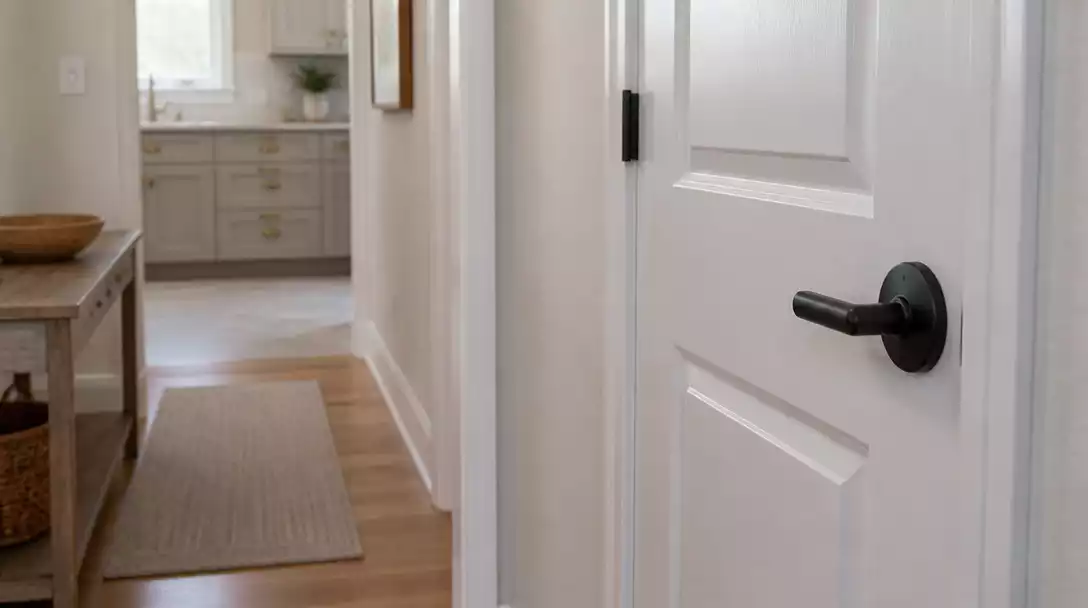
Deciding whether door handles must match cabinet hardware is a common point of friction for homeowners aiming for a cohesive look. This guide narrows the debate down to 9 practical considerations to ensure your choices feel intentional. Here is how to decide with total confidence.
1. The case for matching
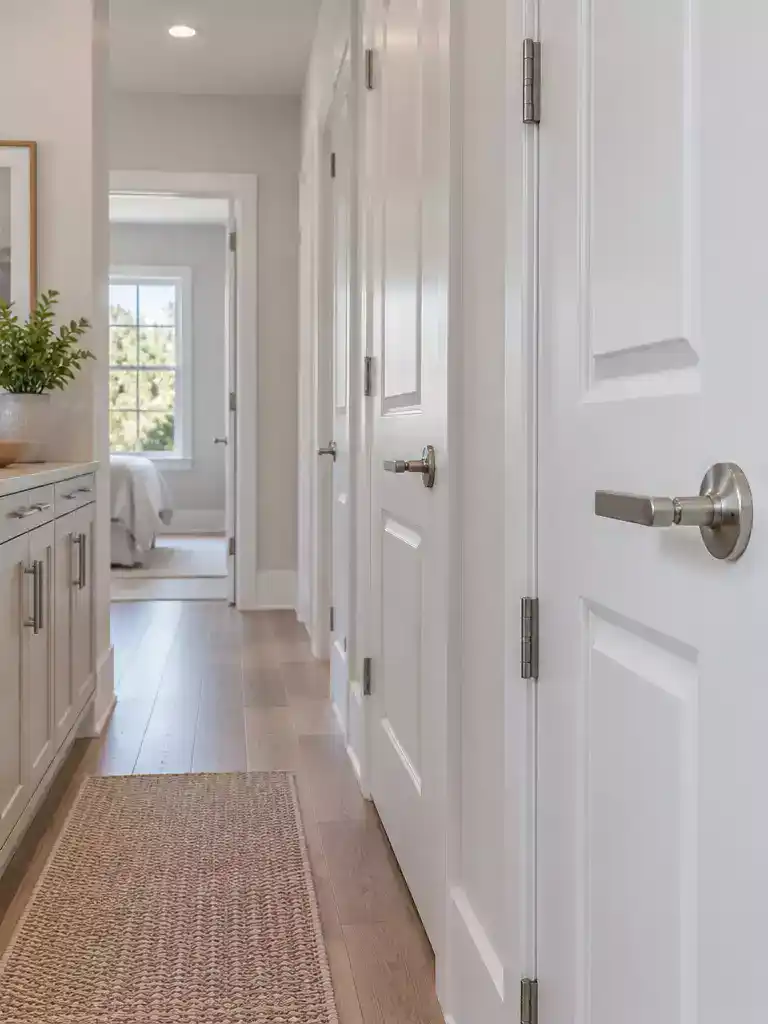
Create a serene, professional flow throughout your home by standardizing your hardware finishes.
As an Amazon Associate I earn from qualifying purchases. Affiliate links may earn me a commission at no extra cost to you.
Choosing to match your door handles with your cabinet hardware is the most reliable way to establish a quiet sense of cohesion within your home. When every piece of metal hardware shares the same finish, your eye naturally glides over the space without being interrupted by competing tones or materials.
This approach effectively turns your hardware into a consistent architectural language rather than treating every fixture as an isolated accessory. By sticking to one finish, you anchor the room, creating an immediate sense of order that makes even a busy kitchen or hallway feel intentional and polished.
Why matching is the safest route:
- It eliminates the risk of “unplanned” visual clutter, especially in smaller rooms where every detail is magnified.
- It simplifies the shopping process, allowing you to focus on form and function rather than agonizing over undertones.
- It provides a clean, timeless backdrop that allows other decor elements – like tile, paint, or furniture – to take center stage.
For those living in homes with simpler floor plans or smaller footprints, uniformity is often the smartest design choice. It prevents the space from feeling fragmented, ensuring that the transition from a door handle to a drawer pull feels like a continuation of the same design story.
⭐ Top Hardware for Matching Door Finishes
✨ Editor’s Pick
Oil Rubbed Bronze Privacy Door Lever
Matte Black Reversible Square Door Lever
Black Exterior Entry Door Handle Set
Designer Note: Achieving Visual Balance
When you opt for matching, the secret to avoiding a sterile look is playing with texture rather than tone. By keeping your finish consistent across door handles and cabinet pulls, you gain the freedom to mix matte, brushed, and polished versions of the same metal, creating a sophisticated, layered depth that feels intentionally curated rather than just uniform.
2. The case for mixing
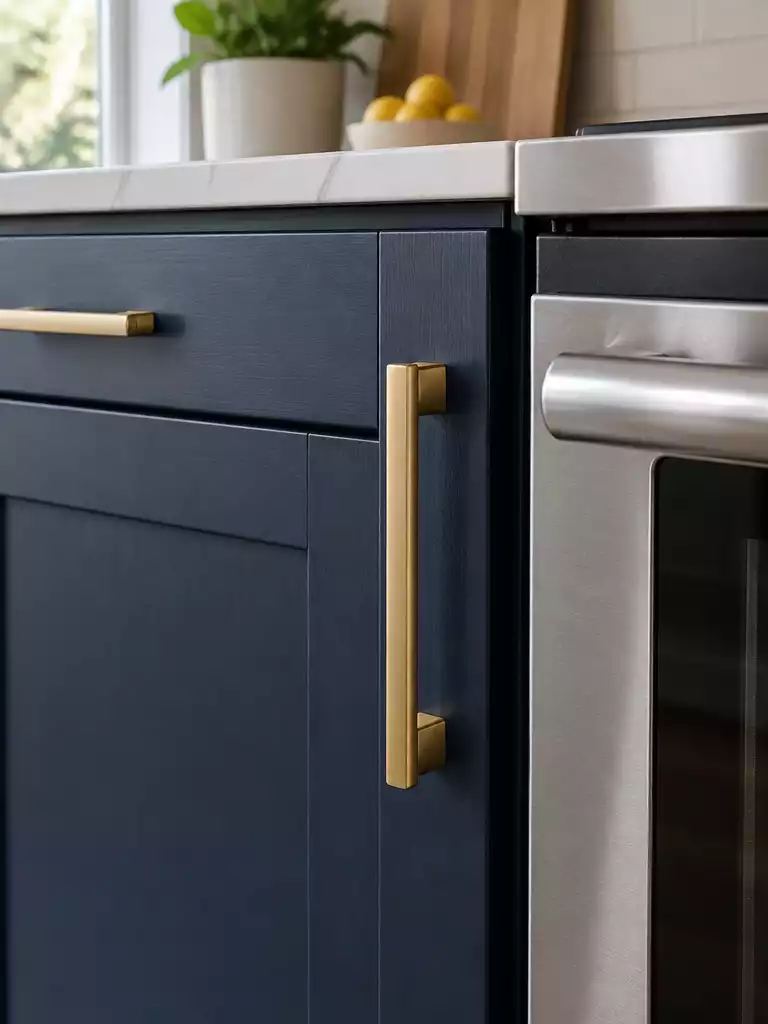
Mixing finishes creates intentional depth, turning standard hardware into a deliberate design statement.
When you move away from a uniform hardware scheme, your goal shifts from simple consistency to curated tension. Mixing finishes is a powerful way to add character to a space, but it requires a disciplined approach to ensure the room feels intentional rather than accidental.
The most important principle to follow is the “Rule of Two or Three.” To avoid visual chaos, never exceed three distinct finishes in a single room. By limiting your palette, you allow the different metals to play off one another without competing for attention.
Successful Finish Pairings
If you are unsure where to start, these combinations have proven to work well in modern homes:
- Brushed brass and matte black
- Brushed brass and polished nickel
- Matte black and brushed gold
- Oil-rubbed bronze on dark, moody cabinetry
The success of a mixed-metal look often hinges on your ability to create a clear hierarchy. You want one finish to act as the dominant anchor, while the others serve as accents that draw the eye toward specific design elements.
If you decide to mix, remember that undertone consistency is your best friend. Even when using different metals, keeping them within a similar temperature range – or intentionally contrasting them with a neutral like matte black – will prevent the space from feeling disjointed.
⭐ Mixing Hardware Finishes With Style
Square Matte Black Privacy Door Lever
✨ Editor’s Pick
Matte Black Privacy Door Lever Set
Heavy Duty Sliding Barn Door Hardware
💡 Practical Ways to Master the Mix:
- Group by Zone: Keep your mixed metals organized by function, such as using one finish for all cabinetry and another for all door handles.
- Matte Black Anchor: Use matte black as a neutral bridge, as it pairs effortlessly with almost any metallic finish without creating visual clutter.
- Limit Your Palette: Stick to a strict two-finish limit in smaller rooms to ensure your design choices feel intentional rather than accidental or messy.
3. Dominant finish
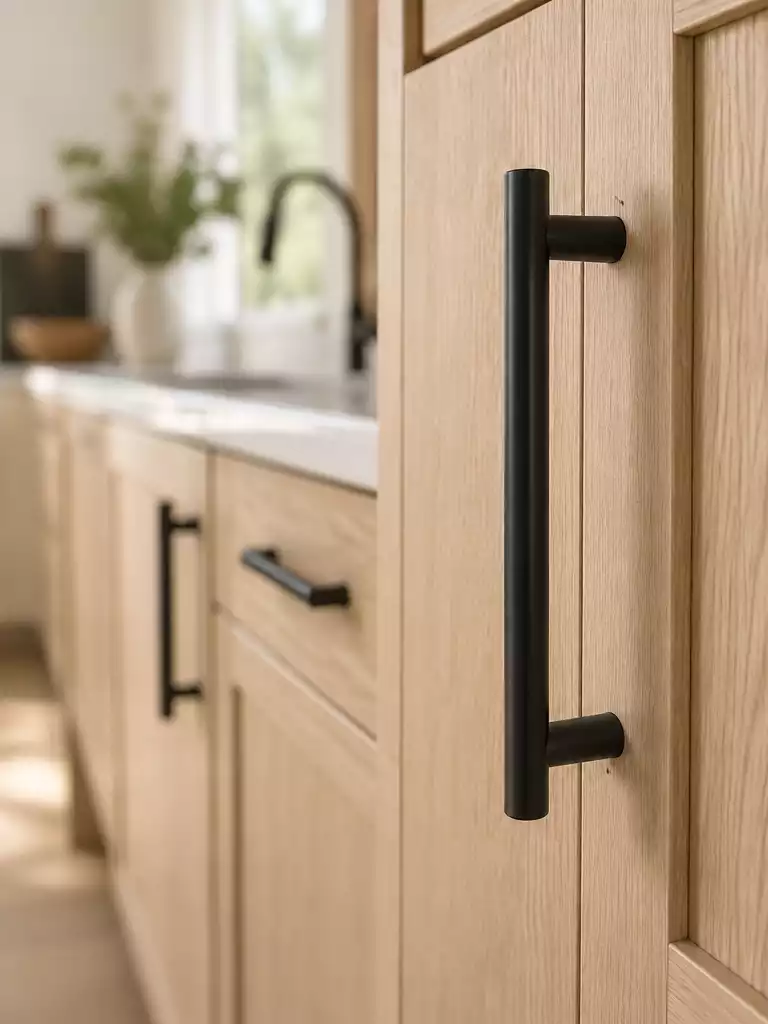
Establishing a clear hierarchy ensures your hardware mix feels intentional and polished.
When you decide to move beyond a single finish, the secret to avoiding a chaotic look is the 70/30 Rule. This simple guideline keeps your space grounded by ensuring one finish takes the lead while the other serves as a supporting player.
To put this into practice, 70% of your total hardware should be the primary finish, while the remaining 30% acts as the accent. If your home has a mix of finishes, the dominant one should anchor the most visible touchpoints, such as your main entry door handles, as these are the most prominent pieces of hardware in your home.
How to identify your dominant finish: Count the total surface area and frequency of your hardware pieces. The finish that appears most often across your doors, cabinetry, and main fixtures should be your primary choice.
Treating your hardware with this level of intentionality prevents the “accidental” look that often happens when finishes are chosen one by one without a master plan. By designating the door handles as your anchor, you create a consistent language that flows through the home, while allowing secondary accents – like cabinet knobs or unique pulls – to add character without overwhelming the room’s overall aesthetic.
If you find yourself struggling to identify which finish should lead, look at your largest fixed elements. If you have an oversized front door or a long run of hallway doors, those handles will naturally draw the eye and should dictate the dominant finish for the rest of your space.
⭐ Dominant Finish Choices for Your Home
Antique Bronze Drop Ring Cabinet Pulls
Polished Chrome Euro Bar Cabinet Handles
✨ Editor’s Pick
Brushed Satin Nickel Closet Door Knobs
⚖️ Quick Decision Guide:
- Choose this if: You want a professional, layered look that feels intentionally curated rather than randomly assembled.
- Skip this if: Your space is small or minimalist; in these cases, a single finish prevents unnecessary visual clutter.
- Pair it with: Matte black fixtures, which act as a neutral bridge between clashing warm and cool metal families.
Hardware choices often feel permanent because they are physical touchpoints we use daily, yet the impact of these decisions is usually confined to a few high-traffic zones. You do not need to overhaul every fixture in your home to achieve a curated, professional result, as seen in this guide on cohesive hardware styles.
Focusing on the primary touchpoints allows you to anchor your home’s aesthetic without needing to achieve perfect uniformity across every single detail.
4. Metal undertones
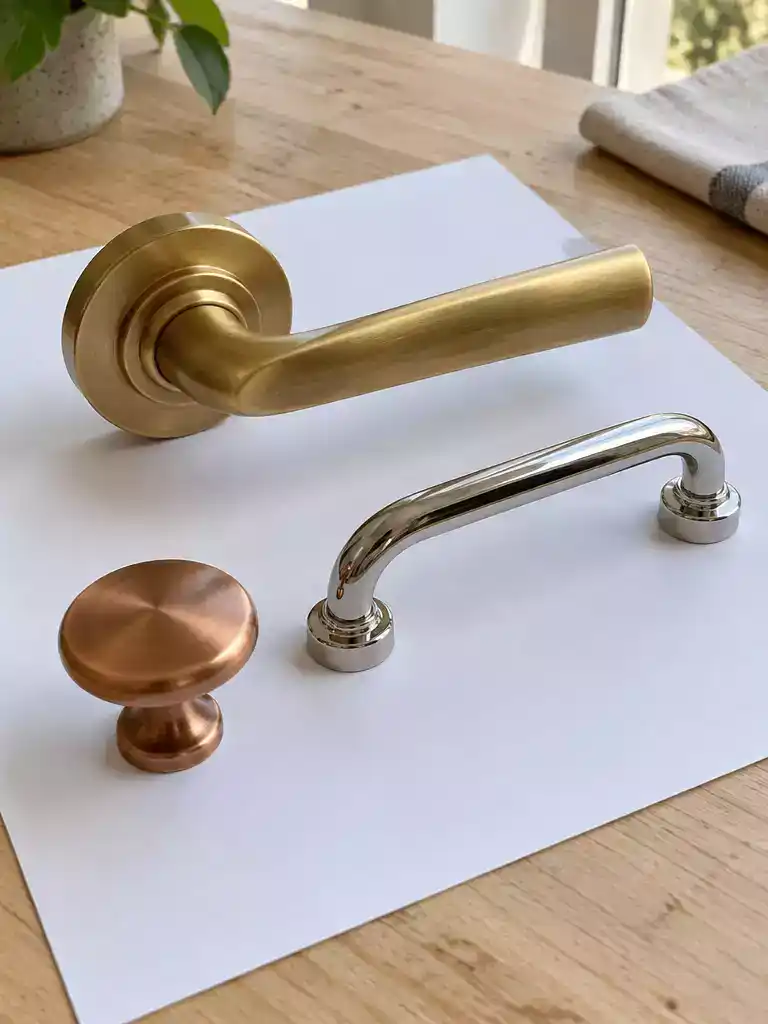
Mastering metal undertones ensures your hardware mix feels deliberate rather than accidental.
When you start mixing finishes, the most common reason a room feels “off” isn’t the style of the handle – it’s a clash in metal undertones. Every metal finish has a temperature, and pairing opposing temperatures without a clear plan is the fastest way to make your hardware look like a collection of leftover parts.
Think of finishes in two primary categories: warm and cool. Warm metals – such as brass, gold, copper, and bronze – carry yellow, red, or brown notes that add a sense of glow and richness to a space. Cool metals, including chrome, nickel, stainless steel, and silver, lean into blue, gray, or icy tones that provide a crisp, clean, and modern aesthetic.
The White Paper Test
If you are unsure where a piece of hardware falls, hold it against a sheet of crisp white paper. The paper acts as a neutral reference point, making the underlying color cast obvious. If the metal looks yellowish, reddish, or brownish against that bright white, it is warm. If it appears bluish, grayish, or icy, it is cool.
Clashing undertones are the primary culprit behind the “unplanned” appearance many homeowners fear. For example, placing a cool, blue-toned polished chrome handle directly next to a warm, red-toned antique brass pull can create visual friction that feels accidental.
If you want to mix metals, the goal is to create tension without losing cohesion. This usually works best when you anchor your space with one dominant temperature and use the secondary finish sparingly, or when you choose finishes from the same family that share similar reflective qualities. If you find yourself holding two pieces of hardware that look “almost” the same but have different undertones, skip the pairing entirely – that is the “close-but-not-quite” trap that makes high-quality hardware look like a mistake.
⭐ Metal Undertones That Define Your Space
✨ Editor’s Pick
Solid Brass Retro Door Knocker Pull
Chrome Patio Door Handle Wood Grip
Brushed Brass Gold Cabinet Drawer Pulls
💡 The Detail That Pulls It Together:
Beyond color temperature, consider the finish texture – polished versus brushed – as a secondary layer of coordination. Even if undertones match, a high-gloss chrome handle paired with a matte-brushed nickel pull can feel disjointed. Aim for a consistent level of reflectivity across your hardware to ensure a curated look that feels intentional and visually balanced.
Finish families
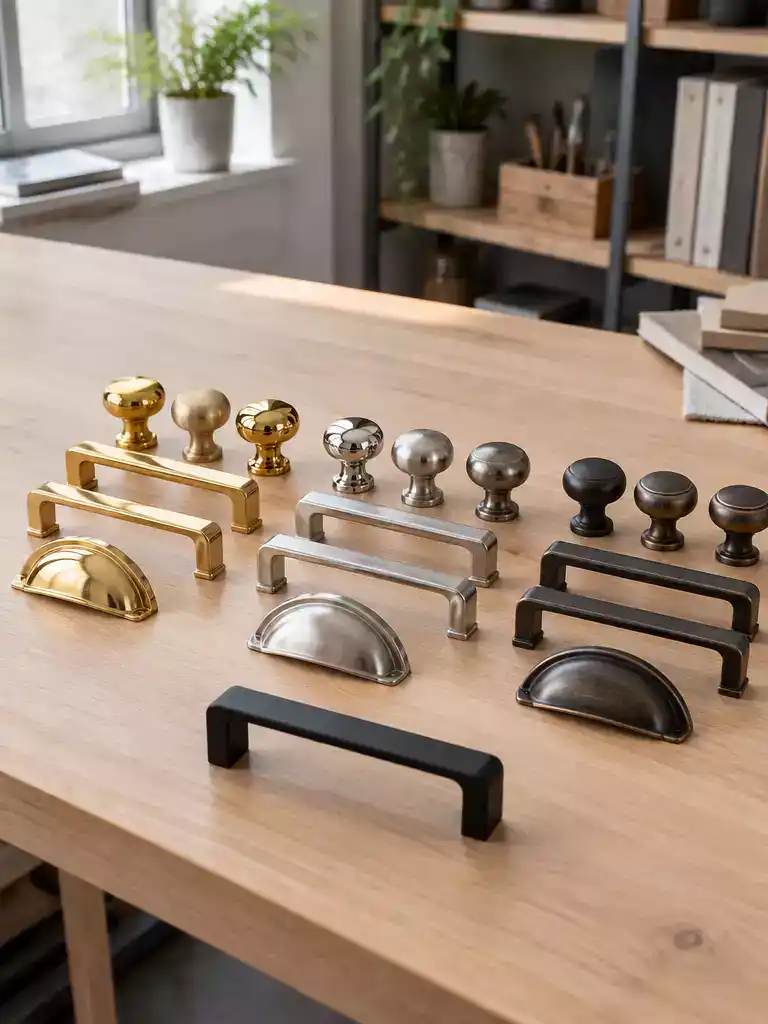
Understanding metal families helps you coordinate finishes without creating a disjointed, accidental aesthetic.
When you start shopping for hardware, the terminology can quickly become overwhelming. Manufacturers often use different names for the same look, which is why it helps to think in terms of finish families rather than specific product labels. By grouping your hardware into these categories, you can better predict how different pieces will interact once they are installed in the same room.
The Neutral Bridge: Keep in mind that matte black is not a metal family. Because it lacks the reflective undertones of brass or nickel, it functions as a neutral, making it an effective way to bridge the gap between two otherwise clashing metal finishes.
To keep your home feeling intentional, it is helpful to categorize your potential purchases into these three primary metal groups:
- Brass: Includes satin, brushed, bright, antique, and oxidized variants. These generally carry warm, golden, or brownish tones.
- Nickel: Includes polished, bright, satin, and antique finishes. These are defined by their cool, silvery, or icy gray characteristics.
- Bronze: Includes oil-rubbed, antique, satin, and statuary finishes. These often provide the deepest, most muted tones in the warm spectrum.
Warning: Never trust online photos to judge a finish. Manufacturer labels vary wildly, and what one company calls “satin brass” may look entirely different from another brand’s version. Always verify the actual tone side-by-side in person before committing to a full-house purchase.
If you are planning to mix items from different families, remember that the goal is to maintain a sense of purpose. Bringing home samples and holding them together in the specific light of your home is the only way to avoid the “close-but-not-quite” trap that makes hardware look like a mistake.
⭐ Finish Families for Cohesive Hardware
Antique Brass Cabinet Knobs Drawer Pulls
✨ Editor’s Pick
Double Glass Barn Doors Hardware Kit
Scandinavian Privacy Lever in Black Finish
✨ Small Details That Matter
Beyond the metal itself, these final refinements ensure your hardware choices feel cohesive and intentional rather than like an afterthought.
- Hinge Consistency: Check if your existing door hinges match your new handles, as mismatched hinges can disrupt the flow of a room.
- Texture Coordination: Pair finishes with similar textures – such as brushed with brushed – to keep the visual language consistent across different hardware families.
6. Visual proximity
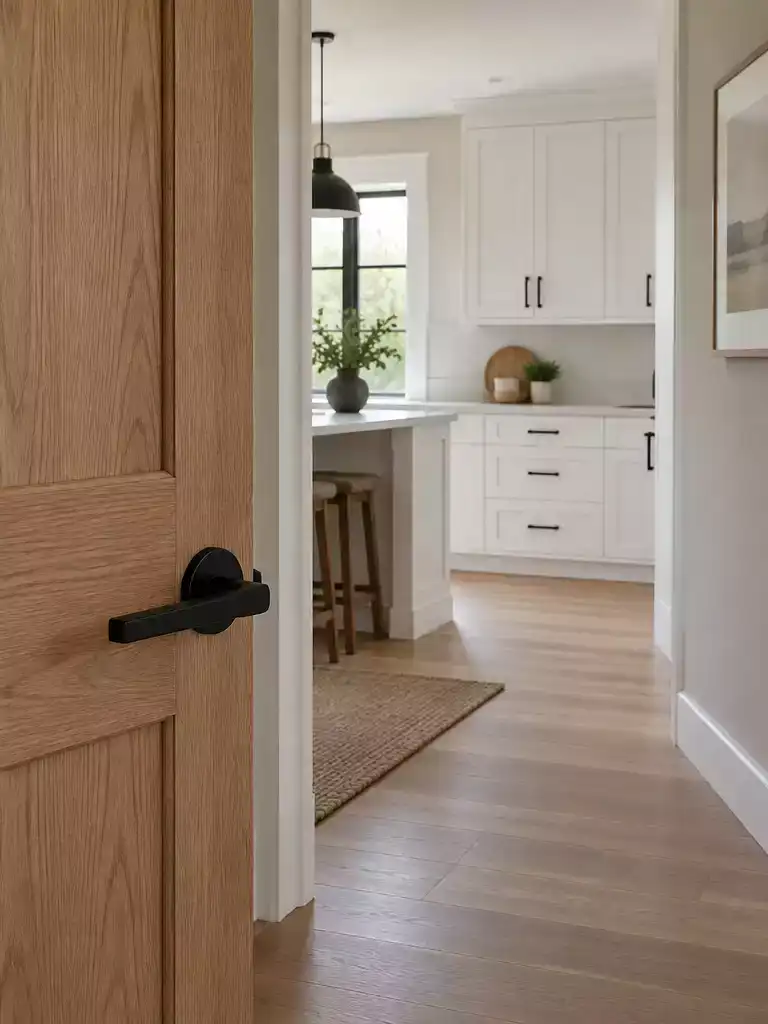
Control the flow of your home by understanding how hardware connects across your sightlines.
One of the most persistent myths in home design is the idea of a strict, universal rule for how close hardware must be to “match.” You might have read that fixtures must be within a certain number of feet to stay consistent, but the truth is far more flexible. There is no fixed inch or foot rule that dictates your hardware choices.
Instead, the best way to approach this is through the Same Frame Rule. If you are standing in a single spot and two different pieces of hardware are visible within your immediate field of view, they should either match or coordinate closely to avoid looking like a mistake.
The Same Frame Rule: If you can see a cabinet pull and a door handle at the same time without turning your head, they need to belong to the same design conversation. If they clash, the eye will immediately catch the inconsistency.
When hardware is separated by physical barriers like walls, hallways, or different rooms, you have significantly more freedom to vary the finishes. In these cases, your home can breathe, allowing for subtle transitions between styles or metal tones as you move from one zone to the next.
Think of your home as a series of curated vignettes rather than one giant, uniform space. You can safely mix a brass handle on a bedroom door with silver pulls in the bathroom if a hallway or a door acts as a visual buffer between them. This approach allows you to introduce variety without creating visual disorder, provided you keep the overall style of the hardware consistent even if the metal finish changes.
Quick Proximity Check:
- Same Space: If they share a room, they must coordinate.
- Different Rooms: If they are separated by a wall or door, you have room for variation.
- The “Glance” Test: If you catch both in a single glance while walking, treat them as a pair.
⭐ Visual Proximity Hardware We Love
Passage Door Knobs Matte Black Finish
Double Door Security Barricade Lock Device
✨ Editor’s Pick
Matte Black Privacy Interior Door Lever
🏡 How This Works in a Real Home:
- Transition zones: Use hallways or mudrooms as neutral buffers where you can shift from warm brass to cool nickel finishes.
- Daily visual flow: Observe your home’s sightlines from the sofa or kitchen island; if you can’t see both fixtures simultaneously, they don’t need to match.
- Intentional contrast: When mixing finishes in one room, anchor the dominant metal on larger, high-traffic door levers and use the secondary finish for smaller cabinet pulls.
7. Kitchen sightlines
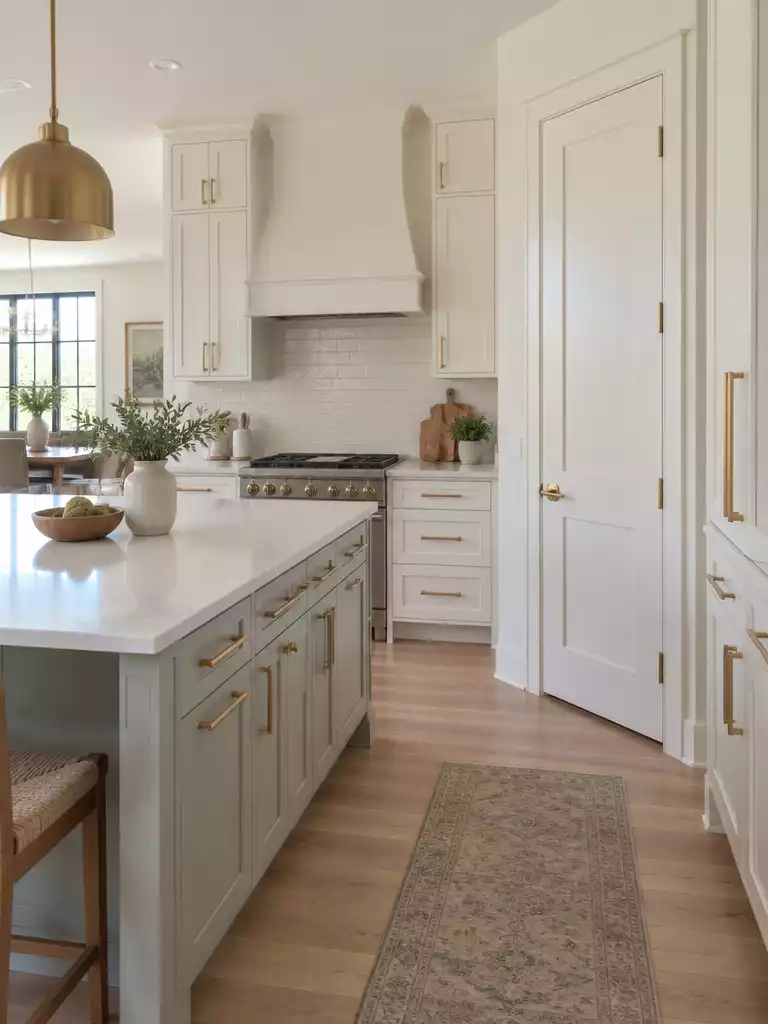
Evaluating your kitchen sightlines ensures your hardware choices feel intentional rather than accidental.
The most reliable way to decide if your door handles should match your kitchen cabinet hardware is the Photograph Test. Stand in the very center of your kitchen and take a picture of the room as you see it.
If your hardware appears in the same frame, they should be coordinated. This visual connection is what the eye uses to determine if a space feels designed or merely assembled over time.
The Sightline Reality Check: If you are standing in your kitchen and can see the pantry door handle, the cabinet pulls, and the drawer knobs at the same time, your brain will naturally compare them. If they clash, it will feel like a mistake.
Your home’s layout dictates how much freedom you actually have. In open-plan layouts where the kitchen flows directly into hallways or living areas, you need tighter coordination because everything is visible at once.
Conversely, if you have a compartmentalized, closed-off kitchen, you have significantly more room to vary your finishes. Since the hardware is separated by walls or distinct door frames, the “same frame” rule is broken, allowing you to treat the kitchen as its own distinct zone.
- ●
Open-Plan: Prioritize matching or closely coordinated finishes to keep the sightline clean. - ●
Closed-Off: You can safely introduce a different finish, provided it still shares an undertone with the rest of the home.
If you find that your hardware looks disjointed in your photograph, it is often because the finishes have different undertones. Before swapping out perfectly good hardware, check your lighting; sometimes a finish looks different depending on whether it is catching direct sunlight or sitting in a shadow.
⭐ Kitchen Sightlines Hardware to Consider
✨ Editor’s Pick
Square Matte Black Privacy Door Levers
Adjustable Child Safety Cabinet Door Locks
Solid Wood Barn Doors Hardware Kit
🏡 Real-Home Application: Balancing Your Sightlines
- Lighting variations: Test finishes in both morning sunlight and evening artificial light, as metallic undertones shift dramatically depending on the time of day.
- Hardware scale: When mixing, ensure the physical size of your door levers and cabinet pulls feels balanced so one doesn’t visually overpower the other.
- Bridge finishes: Use matte black as a neutral anchor between two different metals if you are struggling to make a gold and silver pairing feel intentional.
Existing fixture mix
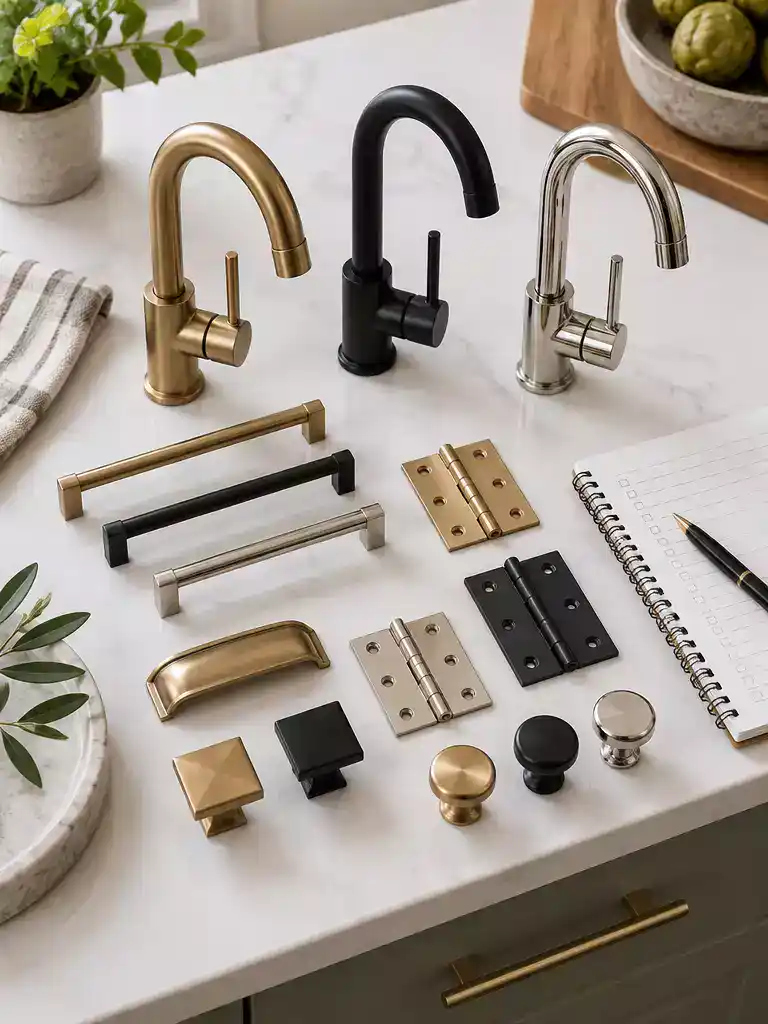
Audit your current hardware to ensure every metal choice feels intentional and cohesive.
Before you commit to a new finish, you need to map out what is already bolted to your home. It is easy to fall in love with a specific cabinet pull online, only to realize it clashes with the existing hinges or the faucet you just installed last year.
Creating a Finish Matrix – a simple inventory of every metal element in the room – is the most effective way to identify potential conflicts. By listing out your current faucets, hinges, light fixtures, and door handles, you can spot where a new finish might bridge the gap or create an accidental eyesore.
Download: The Hardware Finish Matrix
Use this checklist to audit your space. List every fixture by room, noting the finish, style (modern vs. traditional), and the current drilling pattern for knobs or pulls. Having this data on paper prevents costly replacement surprises.
Beyond the finish, you must pay close attention to the mechanics of your existing hardware. If you are replacing cabinet pulls, verify the center-to-center drilling distance to avoid the labor-intensive process of filling and redrilling holes.
Similarly, check the scale of your current door levers or knobs. If your existing door handles are large, heavy levers, swapping to a delicate, small-scale knob might look out of proportion – even if the finishes match perfectly.
Avoid the Replacement Trap
Do not assume all hardware is universal. Before purchasing, verify your existing drilling patterns and door thickness. Forcing a fit onto a door or cabinet that requires a different mounting mechanism often leads to damaged surfaces and extra repair costs.
⭐ Existing Fixture Mix Hardware Picks
Square Matte Black Privacy Door Lever
✨ Editor’s Pick
Oil Rubbed Bronze Privacy Door Lever
Round Solid Antique Brass Cabinet Knobs
⚖️ Quick Decision Guide: Matching vs. Mixing
- Choose matching if: You want a seamless, quiet aesthetic that makes hardware feel like a permanent, invisible part of the architecture.
- Skip mixing if: You are working in a smaller room where multiple finishes might create visual clutter instead of intentional depth.
- Pair it with: A neutral bridge like matte black, which acts as a versatile anchor between varying metal tones in a space.
9. Final verdict
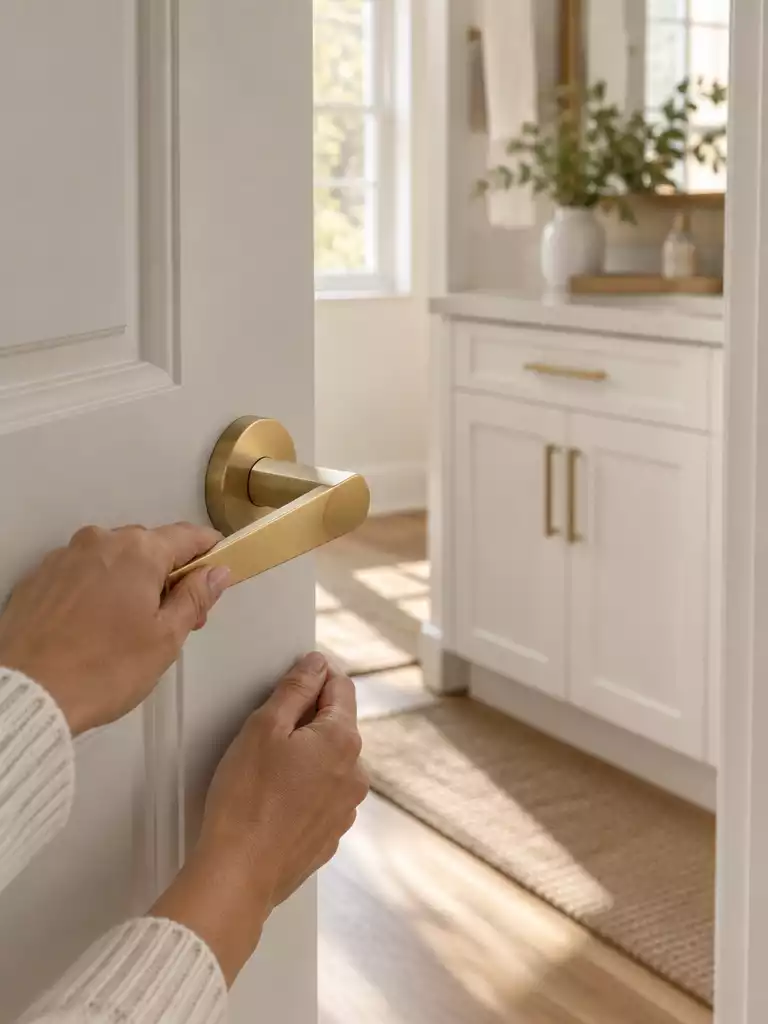
Choose a path that brings lasting visual harmony and confidence to your home’s design.
Ultimately, there is no universal professional rule that dictates whether your door handles must be identical to your cabinet hardware. The decision rests entirely on your personal design preference and the specific architectural language of your home.
If you prefer a quiet sense of cohesion and want to minimize the risk of visual clutter, matching your finishes across the board remains the safest and most effective strategy. It anchors the home in a singular aesthetic, allowing the hardware to function as a subtle, unified architectural detail rather than an individual accessory.
The Path to Intentional Mixing
If you choose to mix metals, your goal is to add depth and tension without creating chaos. This approach only works if you commit to a clear hierarchy, typically following the 70/30 rule. By ensuring that 70% of your hardware shares a primary finish while the remaining 30% acts as a deliberate accent, you transform a potential mismatch into a curated design statement.
Before you commit to a mix, verify that your undertones are consistent. If you pair a warm brass with a cool nickel, the clash will likely feel like an oversight rather than a bold choice. Keep your finish families in mind – remember that matte black serves as a neutral bridge, making it one of the easiest ways to incorporate variety without the risk of clashing metal tones.
Final Decision Framework
- Match: Use this approach for smaller homes, simpler floor plans, or if you want to ensure total visual continuity.
- Mix: Choose this for larger, open-plan spaces where you want to add character, provided you keep your finish count to two or three max.
- The Golden Rule: If you can see the hardware in the same field of view, the finishes should coordinate or match perfectly to avoid the “close-but-not-quite” mistake.
Hardware is a relatively low-stakes way to experiment with the character of your home. If you feel nervous about the outcome, start by matching your most prominent touchpoints – the door handles – and use the 70/30 split to anchor any secondary hardware choices. Once you audit your space and see the fixtures on paper, the right path forward will reveal itself.
⭐ Final Verdict on Hardware Coordination
Black Metal Kitchen Cabinet Door Pull
Antique Brass Interior Door Hinge Kit
✨ Editor’s Pick
Rustic Heavy Duty Metal Barn Door Pull
📈 The Long-Term Payoff
While mixing metals can add immediate character, consistent, high-quality hardware choices ensure your home feels polished to future buyers. A cohesive approach – whether unified or carefully curated – prevents the “accidental” look that can detract from perceived value. Investing in quality finishes that coordinate well ensures your home remains timeless rather than trend-dependent.
Resale Strategy: Prioritize finish consistency in high-traffic zones to maintain a professional, high-end architectural appeal.
With all nine considerations laid out, the decision of whether to match or mix your hardware becomes significantly less daunting. Focus on the one or two choices that define your home’s primary sightlines rather than attempting to overhaul every fixture at once. A few intentional decisions regarding undertones and dominance are what actually create a cohesive, professional result.
The path to a curated look is found in consistency, not uniformity. Start by creating your own Finish Matrix using our checklist; once you see your existing elements on paper, the best approach for your specific space will become clear. When you prioritize the most visible touchpoints, such as your interior room doors, the rest of your hardware choices will naturally fall into place.
Related posts:
 Should Door Hardware Match Light Fixtures?
 Should Interior Doors Match the Walls or the Trim?
 Should Bedroom Doors Match the Walls or Trim
 Can you replace the French door handles? A Comprehensive Guide
 Discover the Versatility of Reversible Door Handles
 10 Pcs Stainless Steel Home Furniture Hardware Door Hinge Long 2.15 x 1.3 inch Review
 Home Master Hardware Door Hinges Review
 Dynasty Hardware Door Hinge Review