
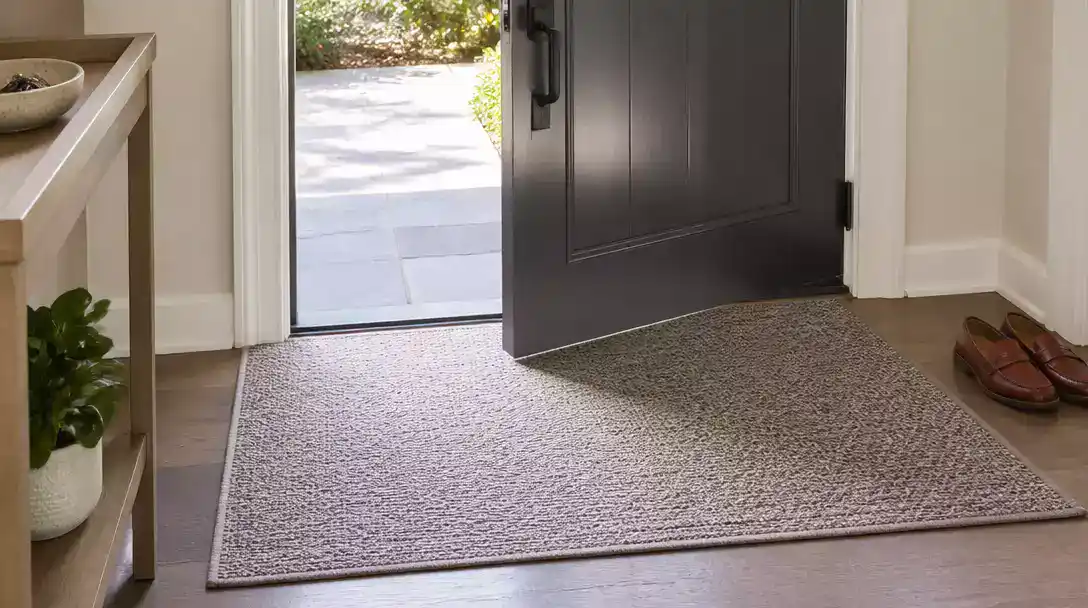
If your entry door drags, bunches, or stops completely against your current mat, you need a low-profile rug solution. This guide rounds up 10 door ideas worth saving that provide entry protection without interfering with your door’s swing. Here are the best functional options for your home.
Flatweave rug
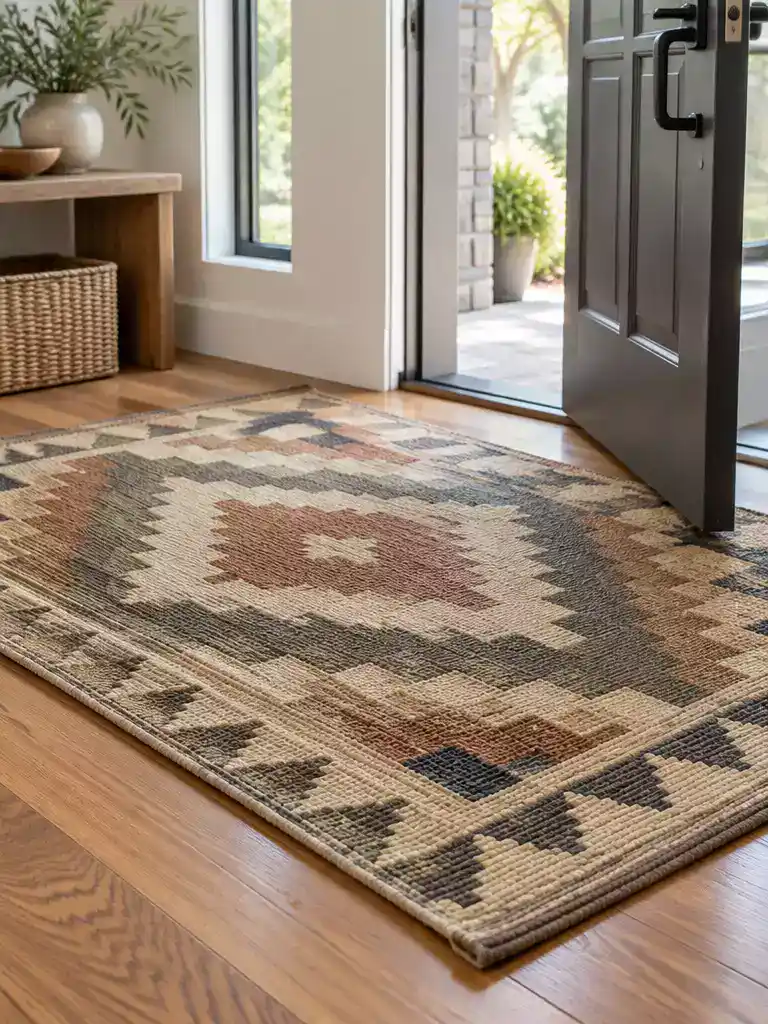
Achieve a polished look with a snag-free rug that glides under your door effortlessly.
As an Amazon Associate I earn from qualifying purchases. Affiliate links may earn me a commission at no extra cost to you.
A flatweave rug is your best bet when you need a floor covering that refuses to get crushed. Because these are constructed from tightly interlaced wool, cotton, or synthetic fibers without any loops or tufts, there is simply no pile height to catch on your door’s bottom edge.
These rugs are ideal for heavy traffic areas precisely because they lack the vertical structure that usually mats down over time. You will find they hold up exceptionally well under the constant friction of slamming doors and dirty shoes.
Essential Maintenance Tip:
Because these rugs lack a rubberized backing, they will slide across tile or hardwood floors if left unsecured. Always pair your flatweave with a thin, high-quality non-slip underlay to keep it firmly anchored in place.
When it comes to keeping them clean, a standard vacuum works perfectly for daily grit removal. For localized spills, you will want to stick to careful spot cleaning with a damp cloth, as the tight weave can trap moisture if it gets too soaked.
Skip this option if you are looking for a plush, cushioned feel underfoot, as the flat construction offers minimal padding. It is the right choice for anyone prioritizing mechanical clearance and a clean, minimalist aesthetic over interior softness.
⭐ Flatweave Rugs for Minimal Clearance
✨ Editor’s Pick
Textured Flatweave Outdoor Patio Rug
Striped Cotton Woven Front Door Rug
Heavy Duty Low Profile Entry Rug
💡 Why This Works
Because flatweave rugs lack the vertical pile of tufted alternatives, they provide a clean, structural solution for tight entryways. Their dense, interlaced construction resists the crushing force of constant foot traffic and door movement, ensuring the rug maintains its profile without bunching or creating a persistent tripping hazard at your threshold.
Mechanical Clearance: The primary benefit is a consistent, low-profile surface that won’t physically obstruct your door’s swing.
Kilim rug
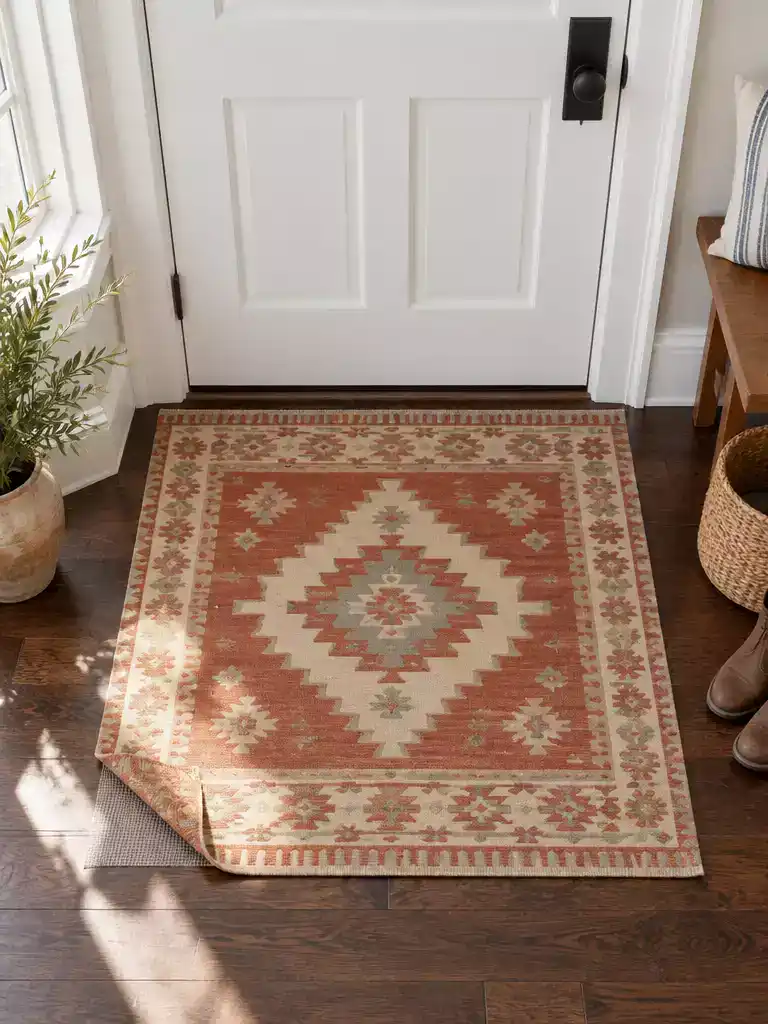
Bring heritage pattern to tight entryways without catching your door on the swing.
Traditional hand-woven wool kilims are an excellent choice for tight clearances because they lack pile entirely. Their flat construction means there is nothing for a door to crush or snag as it passes over the threshold.
Because these rugs are thin, they do not have the natural weight or rubber-grip backing found in modern utility mats. You will need to use a thin, adhesive-backed rug pad to prevent the corners from curling and the entire piece from shifting during daily use.
Heads up: Avoid placing these in high-moisture zones like primary exterior doors during rain or snow. While durable, wool fibers can trap moisture and are more difficult to deep-clean than synthetic alternatives.
These rugs perform best in secondary entries or mudrooms where foot traffic is relatively dry. If you decide on a kilim, look for a tight, dense weave to ensure the fabric remains flat against the floor over time.
⭐ Kilim Rugs We Love
Brown Low Profile Indoor Entry Mat
✨ Editor’s Pick
Sturdy Absorbent Low Profile Entry Mat
Super Absorbent Microfiber Entryway Rug
📋 Quick Reality Check: Will a Kilim Fit?
- Measure the gap: Use a standard penny (1.5mm thick) to test if the rug and pad combination remains thinner than your door’s clearance.
- Check for curling: Inspect the rug edges for any natural lift; hand-woven wool can sometimes fray or curl, which creates an instant door snag.
- Assess the substrate: Ensure your floor is level, as uneven tile or hardwood transitions will make a thin rug more prone to bunching under traffic.
Calculating the long-term mechanics of your entryway doesn’t require a total overhaul. Focus on how the clearance gap interacts with your rug choice over time, as a few precise measurements will prevent the mechanical fatigue that often causes rugs to fray or bunch.
Prioritizing materials that resist compression ensures your entrance stays functional and polished long after the initial installation is complete.
Woven Vinyl Rug
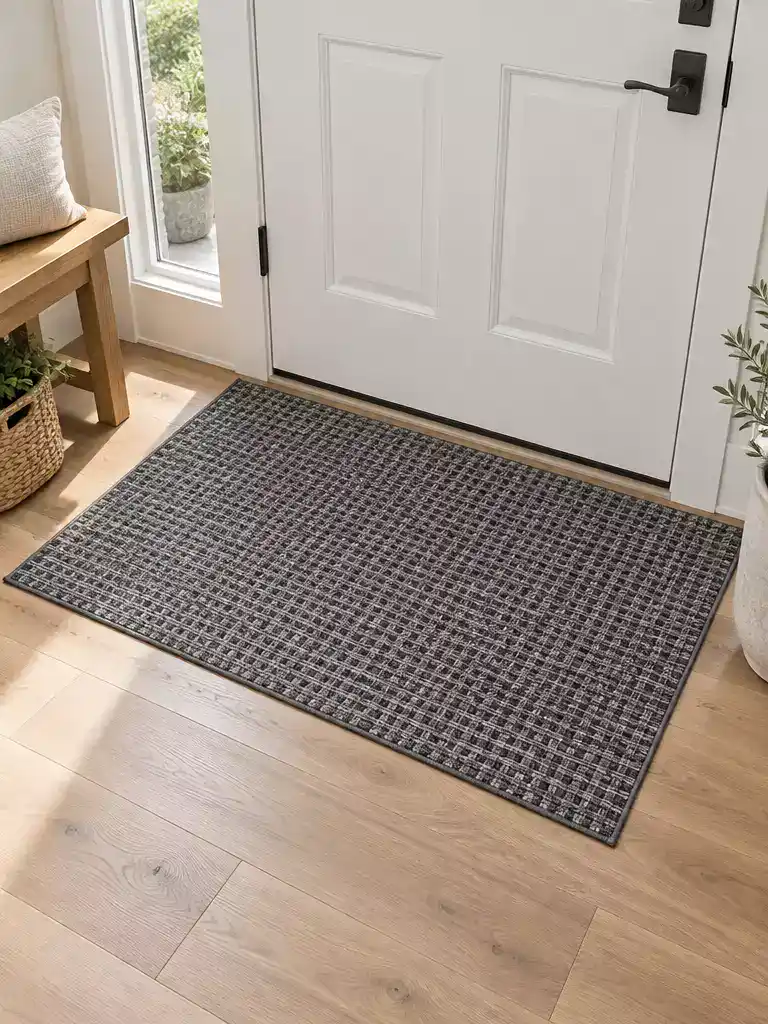
Wipe away dirt and moisture instantly with this ultra-thin, high-performance entryway solution.
Woven vinyl is arguably the most reliable choice for entries where door clearance is measured in millimeters. Because these rugs are engineered from synthetic fibers rather than threads, they do not absorb water, mud, or snow like traditional indoor textiles.
This makes them a top contender for high-traffic zones that lead directly from the outdoors. You can simply wipe them down with a damp cloth or take them outside to spray with a hose when they get visibly dirty.
Why choose vinyl for tight clearances? Unlike fabric rugs that can bunch, curl, or become crushed under the consistent friction of a door swing, woven vinyl maintains its structural integrity. Its inherent stiffness ensures it stays perfectly flat against the floor.
If you are tired of washing fabric mats that stay damp for hours, this is your best upgrade. It is an ideal fit for:
- Households with pets that track in mud or sand.
- Entryways facing north or those prone to moisture buildup.
- Minimalist home designs where you want low-maintenance utility without a messy, high-pile look.
One minor trade-off to keep in mind is the lack of soft cushion underfoot. If you prioritize comfort over cleaning ease, you might find this surface firmer than a standard runner.
⭐ Woven Vinyl Rugs Worth Buying
Coir Welcome Mat and Striped Rug
Gothic Spider Web Non Slip Mat
✨ Editor’s Pick
Vintage Wood Grain Accent Entry Rug
🏡 Real-Home Application
- Entryway transitions: Place these in mudrooms where wet boots meet hardwood to prevent moisture from warping your floors.
- Daily maintenance: Keep a standard spray bottle nearby to quickly rinse off salt or dirt after winter storms.
- Style integration: Choose a textured weave pattern to mimic high-end textile rugs while maintaining the ultra-thin, wipeable surface.
Needle-Punch Mat
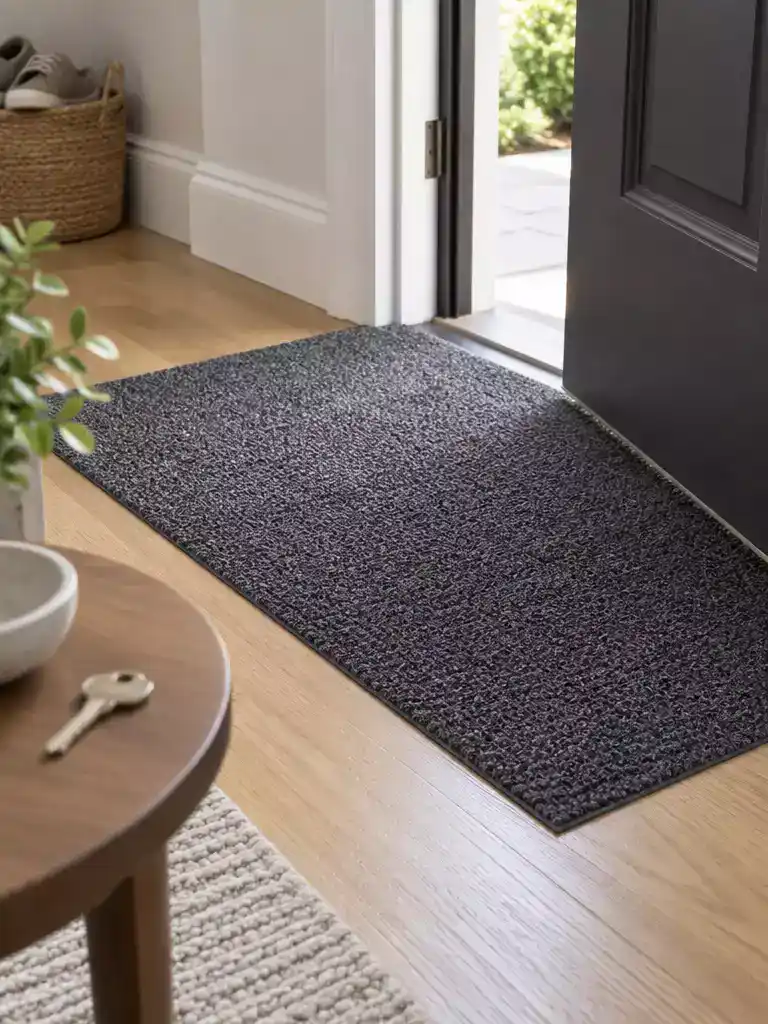
Scrape away grit efficiently with a dense, low-profile mat that stays flat under pressure.
The needle-punch mat functions as an industrial-grade scraper for your entryway. These are constructed from dense, synthetic fibers like polyester or polypropylene that are mechanically needled together to provide a stiff, effective surface for trapping dirt.
Because these mats are built for performance rather than plush comfort, they remain exceptionally thin. This makes them one of the most reliable choices for homes where the door clearance is less than a quarter-inch.
Critical Fitment Warning: Always look for a borderless design or a product you can trim yourself.
If you purchase a mat with a thick, molded rubber ramped edge, your door will likely snag or bind during operation. Stick to raw-edge mats to keep your clearance gap entirely clear.
Maintenance is straightforward for these high-traffic workhorses. You can simply vacuum the fibers to pull out trapped grit or shake the mat out outside.
If you find that your selected mat size is just a fraction too wide for the entryway, reach for a sharp utility knife. Many needle-punch materials are designed to be cut to size without fraying, allowing you to achieve a custom, wall-to-wall fit that prevents shifting.
⭐ Needle-Punch Mats for High Traffic
✨ Editor’s Pick
Heavy Duty Low Profile Welcome Mat
Thick Natural Coconut Fiber Scraper Mat
Waterproof Non Slip Outdoor Entry Mat
💰 What This Really Costs
- The price range: Expect to find quality low-profile entry mats priced between $108 and $163.
- Hidden expense: Don’t forget to budget for a separate heavy-duty gripper if your chosen mat lacks a stable rubber backing.
- Long-term value: Investing in a high-density synthetic mat saves money by preventing grit from grinding down your expensive hardwood or tile finish.
Low-Pile Runner
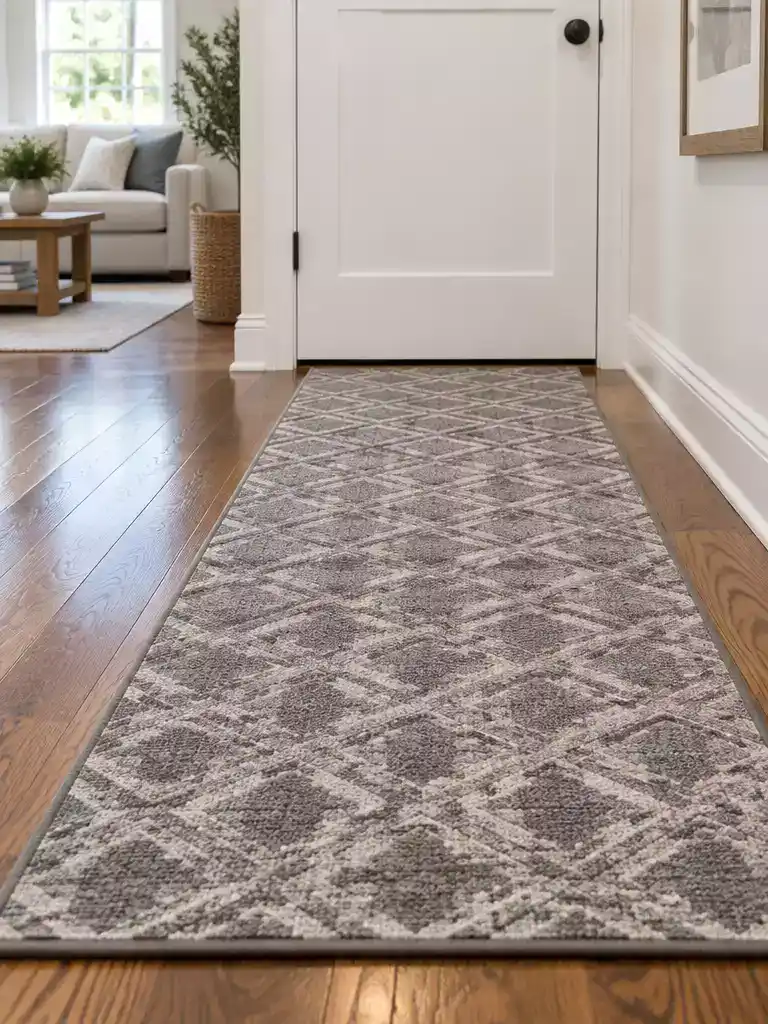
Control your hallway traffic with a dense, thin profile that stays firmly in place.
For entryways that function as a narrow hallway, a low-pile runner provides essential floor protection without turning your door swing into an obstacle course. You should look for options measuring 1/4 inch or thinner to ensure the door glides over the fabric rather than catching on the edge.
Because these runners are often used in high-traffic transition zones, density is your best friend. A tightly woven, low-profile rug resists the “matting down” effect where fibers flatten unevenly, which often leads to tripping hazards or unsightly wear patterns over time.
Pro Tip: Stick to washable synthetic or wool-blend runners for these zones.
Since entries are magnets for tracked-in mud and debris, the ability to toss your runner in the washing machine is a major advantage for keeping your entryway looking sharp.
While these rugs provide a softer feel underfoot than vinyl or rubber, they do not inherently “grip” the floor. You must pair your runner with a high-quality, non-slip underlay to ensure the rug stays anchored against the floor when the door swings open and shut.
These are best suited for indoor hallway entries where you want a bit of warmth underfoot. If your entry leads directly outside and is exposed to heavy rain or snow, you may want to look toward a more moisture-resistant material instead.
⭐ Low-Pile Runners We Love
Washable Non Slip Hallway Runner Rug
✨ Editor’s Pick
Checkered Low Pile Farmhouse Runner Rug
Floral Low Pile Hallway Runner Rug
🏡 How This Works in a Real Home:
- Entryway transitions: Place these runners parallel to the door frame to minimize trip hazards while maximizing floor coverage.
- Daily maintenance: Choose washable synthetic blends that survive repeated spin cycles, keeping your high-traffic hallway looking fresh and clean.
- Natural stability: Anchor your runner with a low-profile felt rug pad to keep it stationary without adding bulk to your threshold.
Carpet Tile Mat
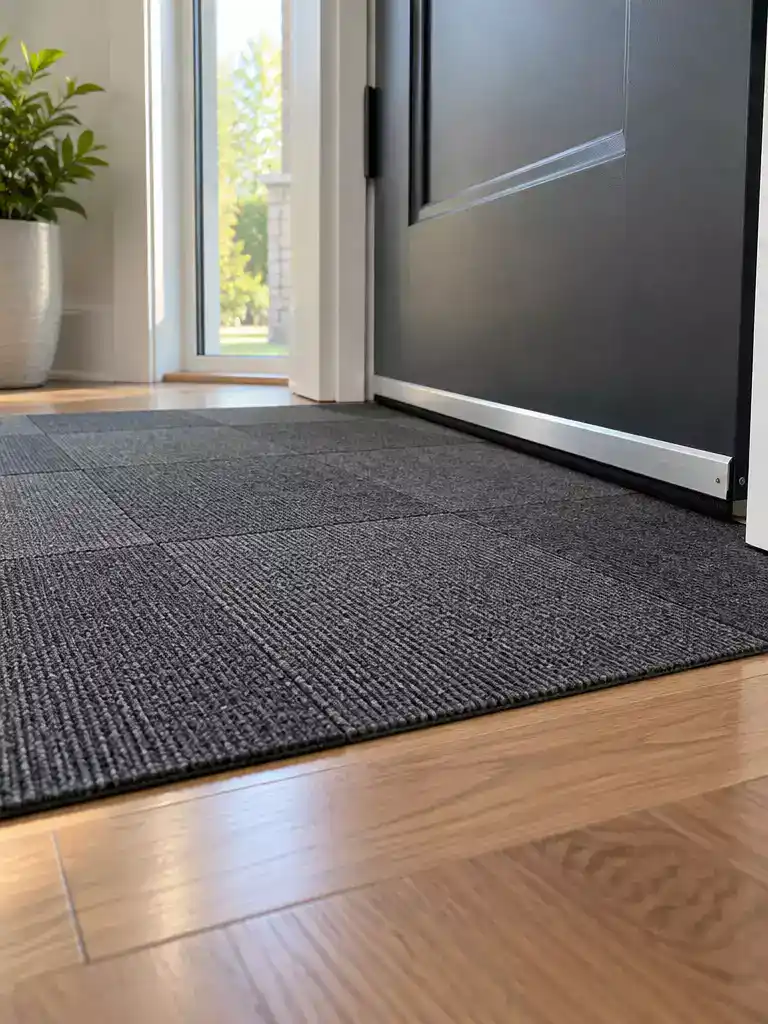
Refresh your entryway with modular tiles that prioritize a perfect, low-clearance fit every time.
Carpet tile mats are a modular solution for homeowners who want to avoid the commitment and bulk of a single-piece rug. Because they are composed of individual squares, you can easily replace one stained or worn tile without needing to swap out the entire entry mat.
These mats are typically constructed from dense nylon or polypropylene, which keeps the profile thin enough to sit under most tight-clearance doors. Their low-profile backing provides enough friction to stay in place, but they perform best when secured properly.
Installation Tip: To keep your tiles from shifting or creating a tripping hazard, use double-sided carpet tape along the perimeter of the installation area.
This simple extra step ensures that the door doesn’t catch on an individual tile corner during its swing.
Before you buy, confirm that your floor is level, as modular tiles can occasionally highlight uneven transitions if the substrate isn’t flat. If you have a high-traffic entry, look for tiles explicitly labeled for “commercial-grade” wear to ensure the texture stays dense and avoids matting down over time.
⭐ Carpet Tile Mats to Consider
Striped Cotton Woven Entryway Rug
Checkered Non Slip Indoor Outdoor Rug
✨ Editor’s Pick
Buffalo Plaid Washable Entryway Rug
Thin indoor-outdoor rug
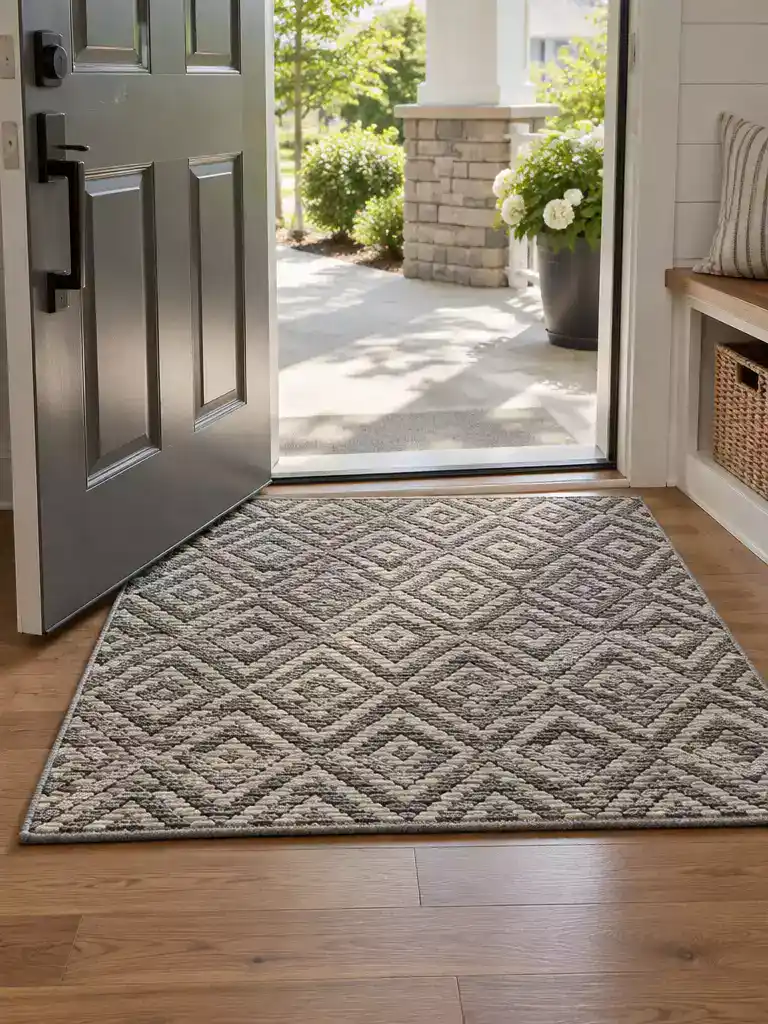
Protect your floors from outdoor grit while ensuring your door opens and closes without resistance.
These rugs are typically constructed from polypropylene or polyester, making them a top-tier choice for entries that lead directly to a patio, porch, or garage. Because they are moisture-resistant, they won’t absorb water or harbor mildew like natural fibers when someone walks in with wet shoes.
The flatwoven construction is the secret to their low profile, allowing them to sit under the door without catching or buckling. You will find that these options are rugged enough to handle heavy foot traffic while remaining thin enough to satisfy the strictest floor-clearance requirements.
Pro Tip: Even though the label says indoor-outdoor, they are not inherently sticky. Always use a high-quality non-slip pad specifically designed for the type of flooring you have, whether it is hardwood, tile, or laminate.
Maintenance is refreshingly simple compared to plush pile carpets. You can easily shake these out, vacuum them on a low setting, or take them outside to hose off mud and debris.
Why choose this for your entry?
- Moisture Resistance: Synthetic materials repel rain and melted snow instead of soaking it up.
- Superior Durability: The tight weave resists pilling and crushing even after thousands of footsteps.
- Easy Cleanup: A quick rinse with a garden hose restores the surface after a muddy day.
- Clearance Friendly: The lack of loops or pile ensures the door glides over the rug surface every time.
Skip this option if you are aiming for a soft, plush feeling underfoot, as the flatweave texture is firm and functional. If your primary goal is a low-profile rug that withstands the elements and keeps your entryway tidy, this is the most practical solution available.
⭐ Thin Indoor-Outdoor Rugs for Patios
✨ Editor’s Pick
Striped Cotton Woven Porch Rug
Black and Khaki Striped Porch Rug
Black and White Striped Porch Rug
✨ Small Details That Matter
Even the most durable outdoor rug can fall short if it lacks a refined finish or proper foundation at your specific threshold.
- Choose borderless designs: Opt for rugs with heat-sealed edges rather than thick, sewn-on bindings to ensure your door never snags.
- Secure the perimeter: Use low-profile carpet tape under the corners to maintain a crisp look and prevent tripping from curled rug edges.
Low-profile scraper mat
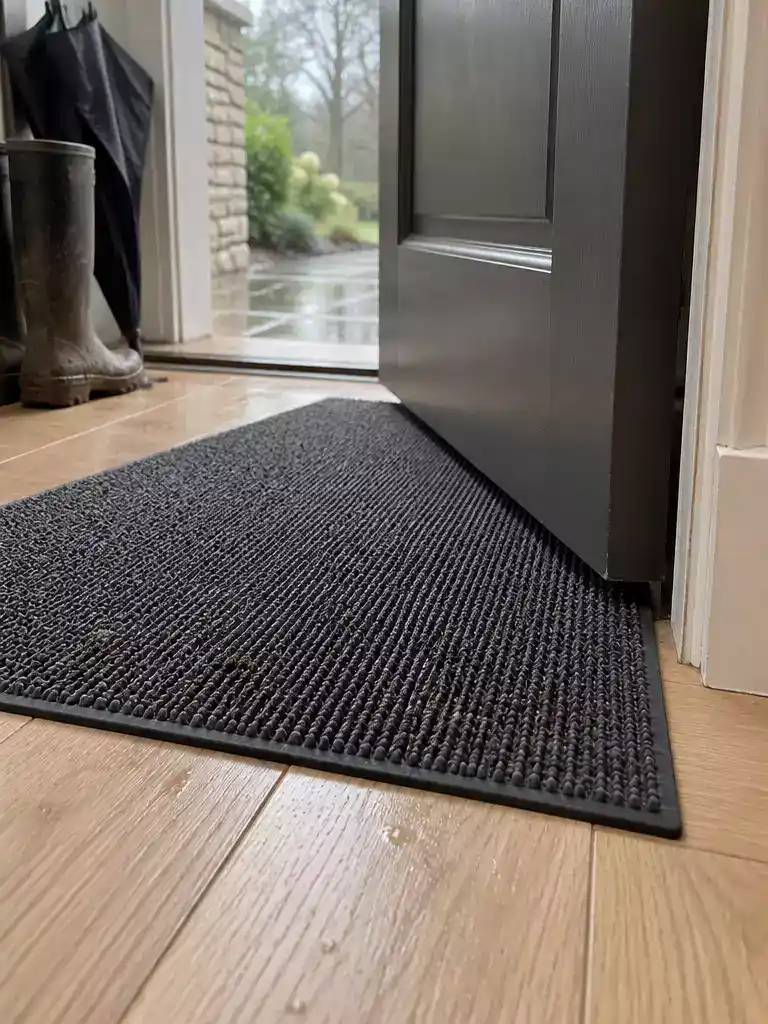
Engineered to trap grit and mud while staying safely beneath your swinging door.
The low-profile scraper mat is the workhorse of the entryway, specifically engineered to handle high-traffic zones where doors swing inward. These mats typically feature a 3/8-inch thickness, making them a reliable choice for standard door clearances that need maximum dirt-trapping power without the bulk.
The surface is covered in synthetic “fingers” or aggressive ridges designed to scrape sand and debris directly off the soles of shoes. Because these mats are built for utility, they are exceptionally durable and resist the crushing that would eventually ruin a standard plush rug.
Placement Warning: Measure your door’s swing radius carefully before purchasing. If your door has a frame or threshold that creates a “dead zone” of clearance, ensure the mat is placed strictly outside the arc of the door to avoid catching.
Maintenance is straightforward, as these mats are designed to be shaken out or hosed down whenever they collect too much debris. They are an ideal fit for homes where mud or snow is a regular visitor, particularly in mudrooms or primary entryways.
Stick to borderless designs whenever possible to minimize the risk of the door catching on a thick, molded edge. If your space is tight, look for mats that can be trimmed with heavy-duty shears to achieve a clean, custom fit across the threshold.
⭐ Low-Profile Scraper Mats We Love
Durable Heavy Duty Outdoor Welcome Mat
✨ Editor’s Pick
Heavy Duty Rubber Drainage Scraper Mat
All Weather Non Slip Door Mat Tray
💰 What This Really Costs
- The market range: Quality low-profile entry mats typically retail between $108 and $163, depending on the material and dimensions.
- Hidden installation cost: Don’t forget that you may need to purchase heavy-duty shears if custom trimming is required.
- Long-term investment: Spending more on a commercial-grade scraper mat usually pays off by protecting your interior flooring from grit.
Flat Jute Rug
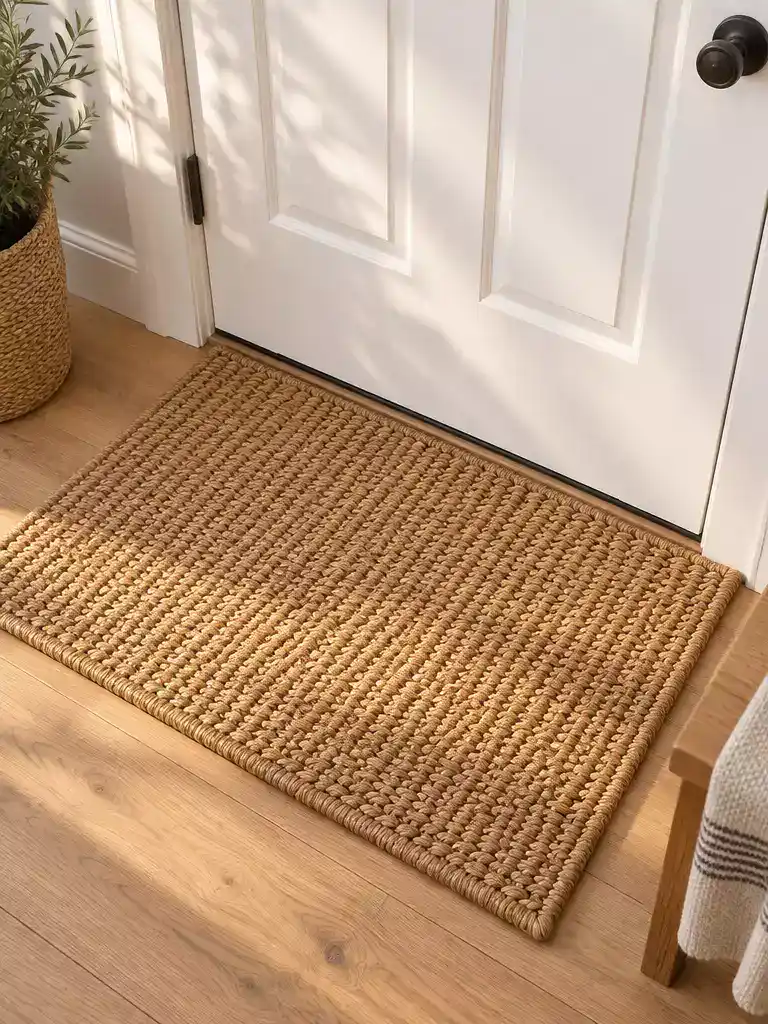
Bring earthy, raw texture to your entryway without the headache of door interference.
A flat-weave jute rug uses tough, natural fibers to create a low-profile base that sits well under tight-clearing doors. By choosing a tight, machine-loomed weave rather than a chunky braided style, you ensure the rug stays well below that tricky 1/4-inch threshold.
Think of this as a dry-zone specialist. Jute is highly absorbent, meaning it will soak up water and potentially develop mildew if used as your primary mudroom mat during rainy seasons.
Because these rugs are made from organic plant fibers, they are not designed for deep-scrubbing or heavy moisture. Use this option only in dry entryways, such as a secondary door or a mudroom that remains protected from direct outdoor elements.
These rugs can be prone to sliding on hardwood or tile when placed in high-traffic areas. You must pair them with a high-quality non-slip underlay to ensure the rug remains anchored and flat against the floor.
⭐ Flat Jute Rugs for Entryways
Braided Style Faux Jute Runner Rug
Floral Farmhouse Washable Entry Rug
✨ Editor’s Pick
Scalloped Floral Indoor Outdoor Entry Rug
⚠️ Where This Can Go Wrong:
- Moisture Traps: Avoid using jute near exterior doors where rain or snow boots create persistent dampness, as natural fibers easily mildew.
- Grit Abrasion: Heavy outdoor grit can become embedded in the weave, acting like sandpaper that wears down both your floors and the rug.
- Fraying Edges: Keep the rug away from high-pivot door hinges where the constant friction of the door swing can cause the fibers to unravel.
Felt-backed vinyl mat
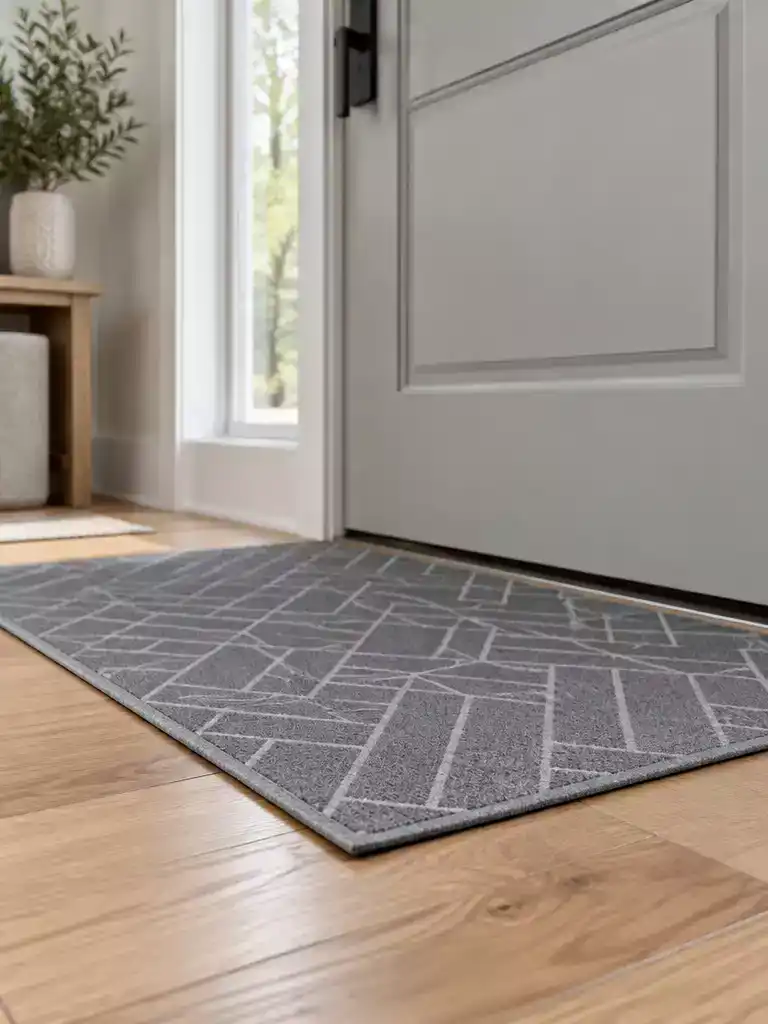
Get a seamless entry with a mat that stays perfectly in place without bunching up.
Felt-backed vinyl mats are designed specifically for high-traffic entryways where you need a set-it-and-forget-it solution. The core advantage here is the material pairing: a non-porous, wipe-clean vinyl top bonded to a dense, grippy felt backing.
Because the felt provides a natural, high-friction surface against hardwood or tile, you won’t need a separate, bulky non-slip pad. This keeps the total profile ultra-thin, making it ideal for doors with tight clearances that catch on standard woven rugs.
Why it works: The vinyl surface is completely non-porous, meaning it won’t soak up water or mud like fiber-based mats. When it gets dirty, you can simply wipe it down with a damp cloth or mild cleaner to restore the finish.
This is the right choice for busy households or mudrooms where you need durability without the maintenance of fabric. If you have a door that drags over every other mat you’ve tried, the flat, stable construction of these vinyl mats will likely solve the interference issue for good.
However, skip this if you prefer the soft, cushioned feeling of traditional wool or cotton underfoot. While these mats offer exceptional utility and a crisp, modern aesthetic, they do not provide the tactile warmth of a woven textile.
⭐ Felt-Backed Vinyl Mats to Consider
✨ Editor’s Pick
Brown Low Profile Indoor Entry Mat
Sturdy Absorbent Low Profile Entry Mat
Hello Doormat and Layered Rug Set
🏡 Real-Home Application
- Entry transition: Use these in narrow apartment mudrooms where a bulky rug would prevent the door from latching completely.
- Daily cleaning: Keep a microfiber cloth nearby; since the surface is non-porous, you can wipe off tracked-in dirt in seconds.
- Surface grip: Place them directly onto tiled entry floors, as the felt backing naturally grips smooth surfaces without needing extra adhesive.
With all ten low-profile rug and mat solutions in front of you, the path to a functional entryway is much clearer. You do not need to implement every suggestion; instead, narrowing it down to the one or two options that align with your specific door clearance is how you solve the problem for good.
Start by measuring your gap today and removing any existing mats that cause resistance or fraying. By prioritizing materials that actually fit your threshold, you ensure your entrance remains smooth and usable year-round. Whether you are addressing an exterior entryway or an interior mudroom, focusing on a clean, low-profile fit is the most reliable way to achieve a finished result that functions as well as it looks.
Related posts:
 What to Plant Beside a Front Door When There’s Barely Any Space
 The Mystery of Second-Floor Barn Doors: History, Purpose, and Evolution
 Pocket Doors for Laundry Rooms With Tight Floor Plans
 Clear or Reeded Glass for Interior French Doors?
 Must-Have Barn Door Floor Guides Revealed
 12 Front Door Trees in Pots That Make an Entry Look Instantly Finished
 14 Halloween Door Decorations for a Rental Entry
 Leadlight Doors and Stained Glass Doors