
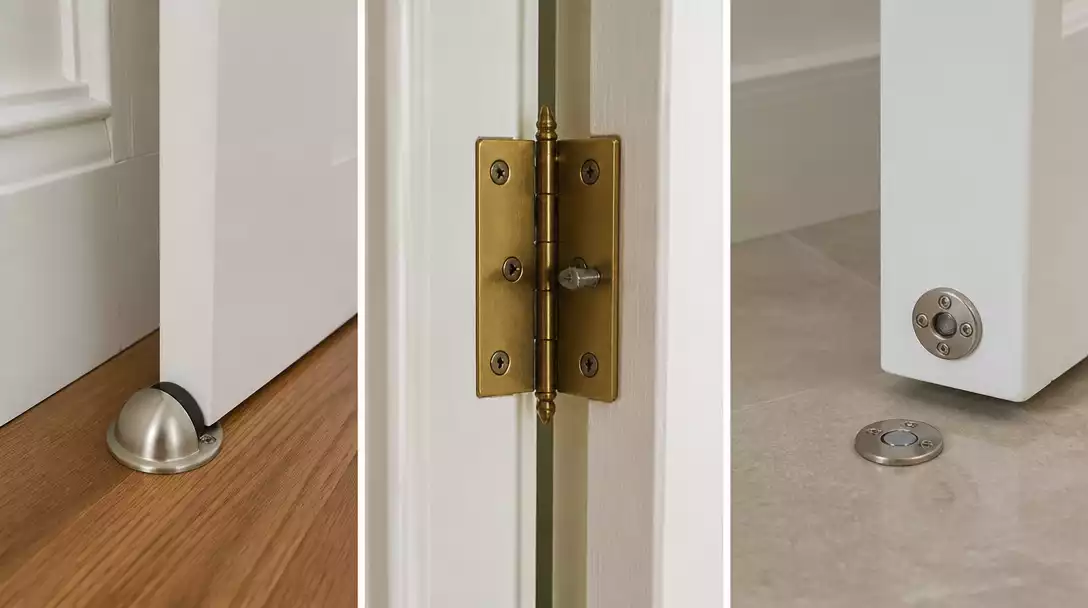
When a door swings into empty space or hits delicate furniture, you need specialized door stops to protect your home. This guide rounds up 10 door ideas worth saving to help you manage your swing path effectively. Find the exact solution that fits your floor plan below.
Hinge-pin stop
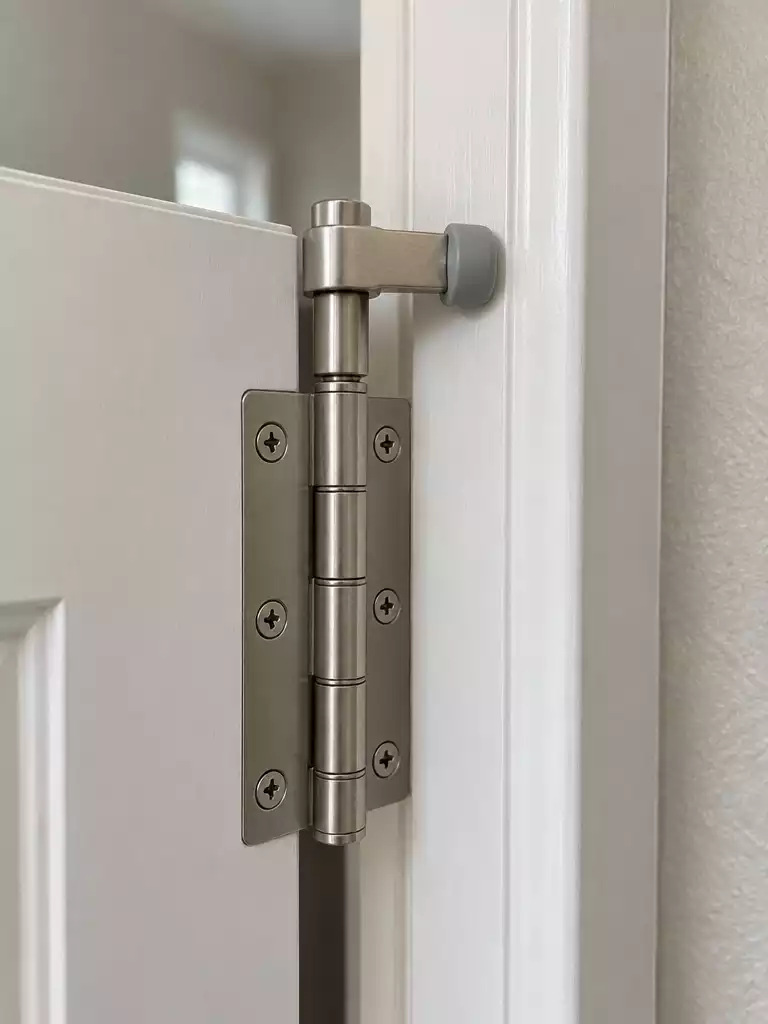
Control your door swing instantly with this simple, invisible DIY hinge upgrade.
As an Amazon Associate I earn from qualifying purchases. Affiliate links may earn me a commission at no extra cost to you.
The hinge-pin stop is the ultimate solution for rooms where you cannot mount a bumper to the wall. Because it replaces your existing top hinge pin, it remains almost entirely invisible while effectively limiting how far the door can travel.
Installation is a straightforward DIY project that takes less than five minutes. You simply remove your top hinge pin, slide the stop over it, and tap the pin back into place.
Budget-Friendly Tip: These typically retail between $3.47 and $10.97, making them the most affordable way to protect your trim and nearby cabinetry.
You can find them in zinc, steel, or brass finishes to match your current hardware.
Crucial Warning
This hardware is intended only for light-to-medium interior doors. If your door is out of square or uses non-standard hinge geometry, the stop may bend under pressure or fail to keep the door from striking your casing.
If you have a heavy, high-traffic door or notice the stop shifting after installation, it is time to move on to a more robust floor-mounted solution.
⭐ Top Hinge Pin Stops to Buy
✨ Editor’s Pick
Adjustable Hinge Pin Door Stop
💸 Affordable Upgrade Path:
- Bulk purchase savings: Buying a 5-pack for $10.97 significantly lowers your per-door cost compared to single-unit pricing.
- Finish matching: Choose plated brass or steel finishes to mimic premium hardware without the high-end price tag.
- Maintenance priority: Invest in solid metal construction rather than plastic, as hinge-mounted stops endure constant mechanical stress.
Floor-Mounted Dome Stop
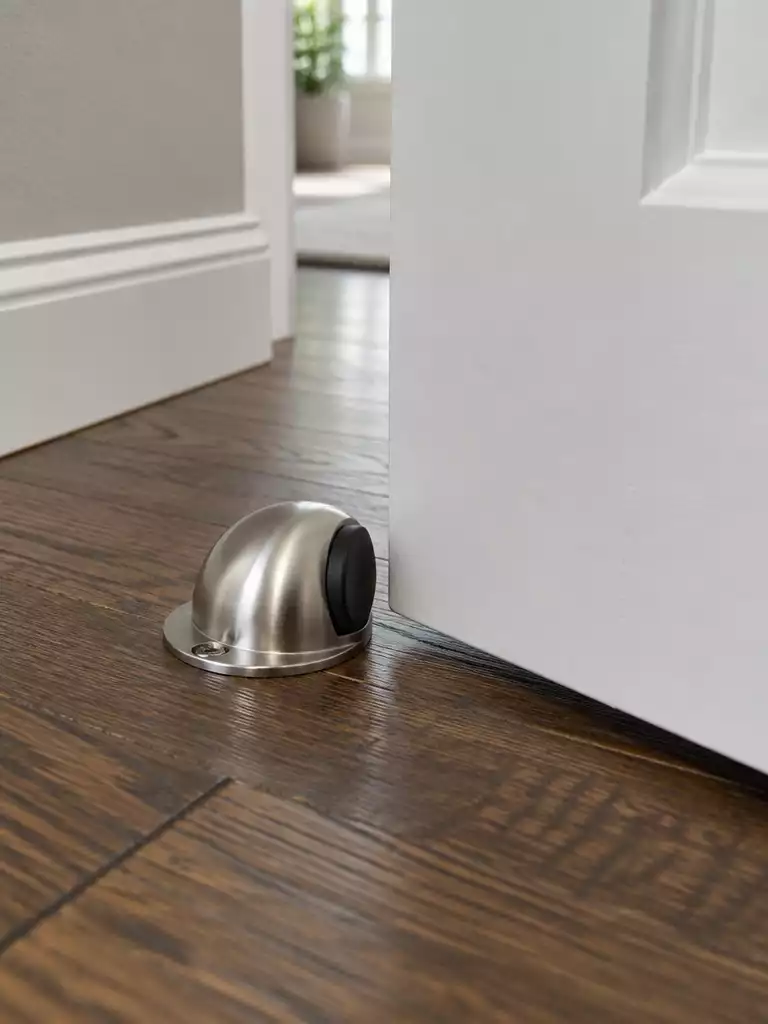
Protect your trim and cabinetry with a low-profile, permanent floor-mounted physical barrier.
A floor-mounted dome stop acts as a small, immovable metal button that strikes the door leaf before it can reach your walls or furniture. It is the ideal choice for high-traffic areas where you need a rock-solid physical barrier without the need for a wall to mount to.
Installation Requirement: Because this fixture requires drilling directly into your floor substrate, it is best for homeowners who are comfortable using a drill and selecting the correct anchors for hardwood, tile, or concrete.
Precision is everything when placing these stops, as you only get one chance to drill the hole. Use a piece of cardboard or painters tape to mark the exact point where the door meets its furthest desired swing before you bring out the power tools.
Always double-check your clearance before purchasing. If your door sits too high off the ground, a standard dome stop may slide right underneath the door leaf rather than catching it.
⭐ Best Floor Mounted Dome Stops
✨ Editor’s Pick
Clear Silicone Cabinet Door Bumpers
Heavy Duty Magnetic Door Catch
🏡 Real-Home Application:
- Clearance testing: Before drilling, slide a nickel under the door; if it passes easily, your dome stop may need a riser to make contact.
- Daily vacuuming: Choose a low-profile, rounded dome design to minimize the risk of catching your vacuum head or creating an awkward cleaning obstacle.
- Substrate safety: Use a masking tape template on your floor to visualize the stop’s location for 24 hours before committing to a permanent drill hole.
Choosing the right hardware is less about finding a universal fix and more about understanding how your specific door interacts with your flooring. Before you commit to a permanent installation, it is worth looking at how new flooring impacts your clearances to ensure you avoid long-term wear or unnecessary damage to your surfaces.
Solid protection comes from matching one sturdy, well-placed hardware solution to your floor’s unique material.
Magnetic Floor Stop
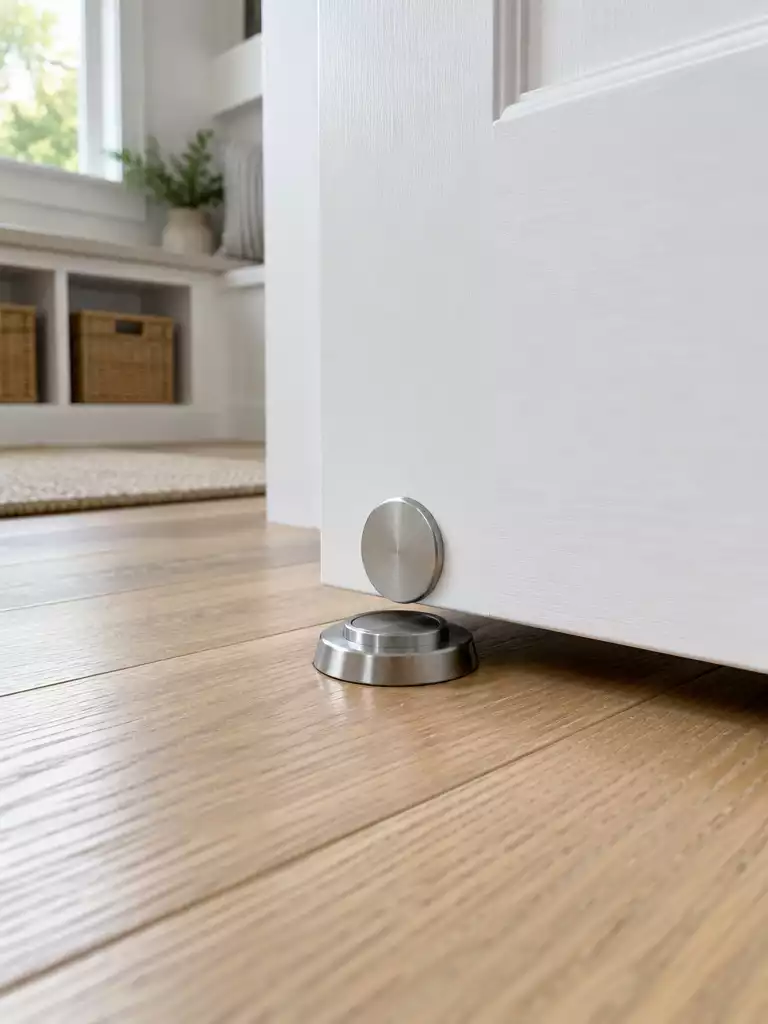
Control your door swing while keeping spaces open for airflow with this magnetic hold-open solution.
A magnetic floor stop serves a dual purpose, acting as both a hard stop for your door and a magnetic catch that keeps it open. It is an excellent choice for rooms where you frequently need to hold a door aside for ventilation or cleaning without it swinging shut unexpectedly.
Installation requires a two-part approach: one magnetic component is mounted into the floor substrate, while a small metal plate is fastened to the bottom of the door leaf. Because both parts require drilling, you must be comfortable working with your specific flooring material, whether it is tile, wood, or concrete.
The Alignment Factor: The primary point of failure for these stops is misalignment. If the magnets do not meet perfectly flush, the hold will be weak and the door may drift closed.
These units are functional for high-traffic areas, but they require precision. If you are not confident in your ability to measure and drill accurately into your floor, you might consider a simpler alternative like a weighted stop.
⭐ Magnetic Floor Stops We Love
Stainless Steel Magnetic Door Stopper
Magnetic Catch for Glass Doors
✨ Editor’s Pick
Magnetic RV Door Catch Holder
🏡 Real-Home Application:
- Clearance testing: Check the gap between your door bottom and floor; some low-profile magnetic catches require specific clearances to engage properly.
- Daily convenience: Position the catch where you naturally leave the door open, ensuring it doesn’t become a mid-room obstacle when not in use.
- Substrate safety: Use a magnetic probe or drill test-hole to ensure you aren’t hitting floor heating lines or electrical conduits before drilling.
Kick-Down Stop
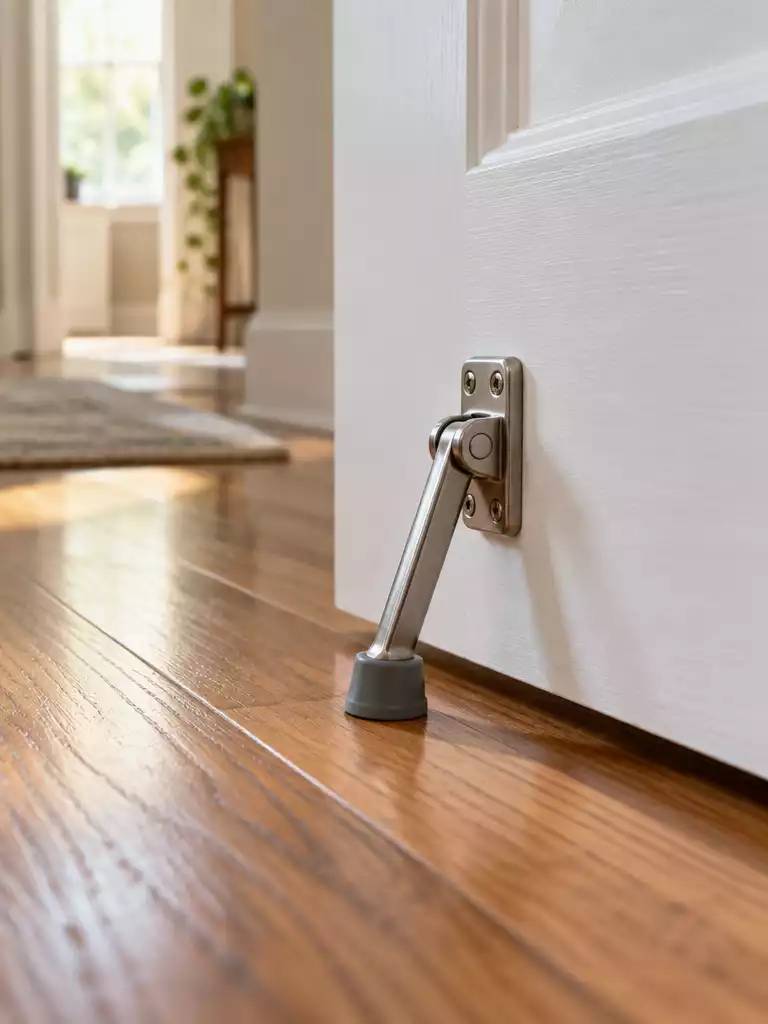
Control your door swing instantly with a simple, foot-operated friction lock for easy access.
This mechanism uses a spring-loaded or manual leg mounted directly to the bottom of your door. You engage it by pushing the lever down with your foot until the rubber tip contacts the floor, creating enough friction to hold the door exactly where you want it.
It is a practical choice for interior doors that only need to be held open occasionally. Think of times when you are carrying groceries, moving furniture, or simply want to keep a room ventilated for an hour.
Keep an eye on your floors: The rubber foot will naturally wear down over time with regular use. Check it periodically to ensure you aren’t scuffing your hardwood or tile as the rubber thins or collects grit.
Installation is straightforward but requires drilling into the door face or bottom edge. Because this is a permanent attachment, ensure you have the proper drill bits for your door material before you begin.
If you find that the door isn’t staying put, the mounting screws may have loosened or the rubber tip has lost its grip. A quick tightening of the screws or a replacement of the rubber foot is usually all it takes to get it back to full performance.
⭐ Kick-Down Stops That Work
✨ Editor’s Pick
Adjustable Kick Down Door Stopper
Flexible Spring Wall Door Stop
Portable Door Stop Alarm Set
🏡 Real-Home Application:
- Placement height: Mount the stop low enough to engage comfortably, but high enough to avoid frequent carpet snagging.
- Daily convenience: Use a kick-down stop on your pantry or laundry door to keep airflow constant during busy afternoons.
- Friction test: Check that the rubber tip sits flush on the floor; if it hits at an angle, it will slide.
Weighted Door Stop
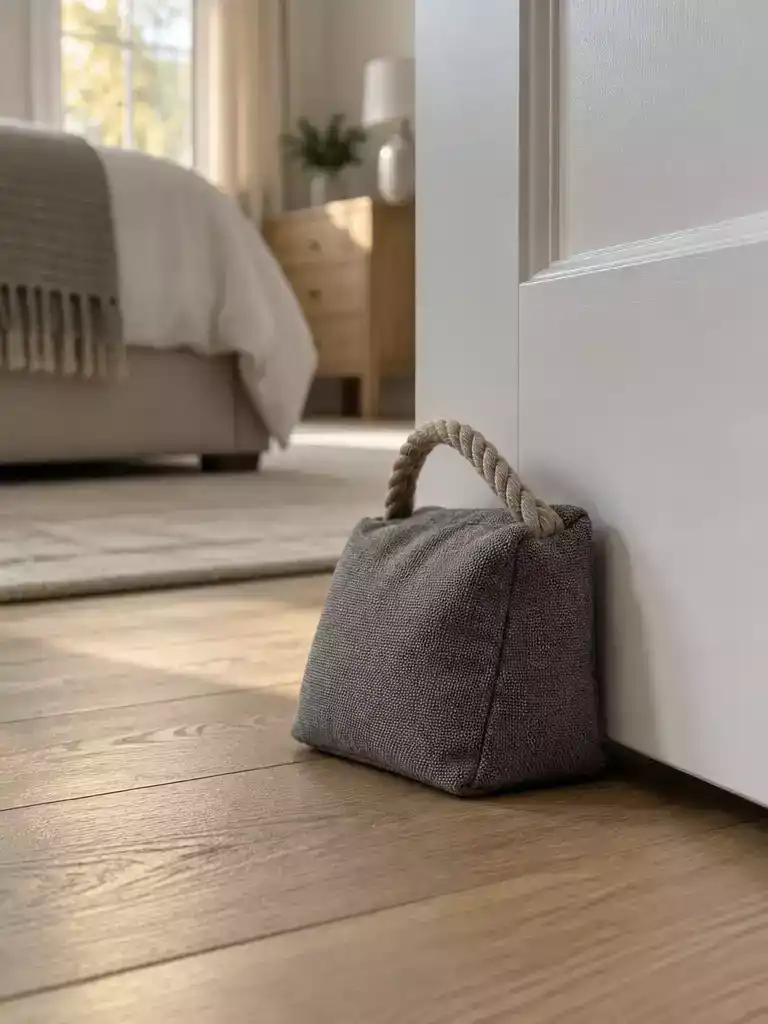
Control your door swing instantly without a single drill hole or lasting floor damage.
A weighted door stop relies entirely on mass and friction to keep your door in place. These portable units are typically filled with sand, metal beads, or heavy fabric, allowing them to anchor a door without any permanent installation.
Because they sit freely on the floor, they are the ideal solution for renters or anyone who wants to avoid drilling into expensive tile or hardwood. You simply place the stop against the door leaf, and the weight prevents the door from drifting closed or swinging into furniture.
Important Limitation
These stops are not designed for high-impact protection. If your door is pushed hard or catches a strong draft, the stop will likely slide across the floor rather than hold firm.
Who this is for:
- Renters who need a zero-damage solution.
- Rooms where the door only requires intermittent stopping.
- Homes with finished flooring where you prefer not to use adhesive or screws.
Who should skip this:
- High-traffic areas where the door is frequently slammed.
- Heavy or exterior doors that require a mechanical, locked position.
- Homes with small children or pets that might move or play with the weighted object.
⭐ Weighted Door Stops to Consider
Heavy Duty Security Door Bar
✨ Editor’s Pick
Rubber Wedge Door Stopper Set
Premium Rubber Door Wedge Stoppers
💡 Why This Works in a Real Home:
Because these stops rely on sheer mass, they bridge the gap between “temporary” and “functional” without requiring any permanent alterations to your flooring. They work best as a low-friction, non-committal solution that feels natural in a space where you swap between holding doors open for airflow and letting them close naturally.
Design Strategy: Use a fabric-covered or leather-weighted stop to add texture that complements your existing rugs and upholstery.
Rubber Door Wedge
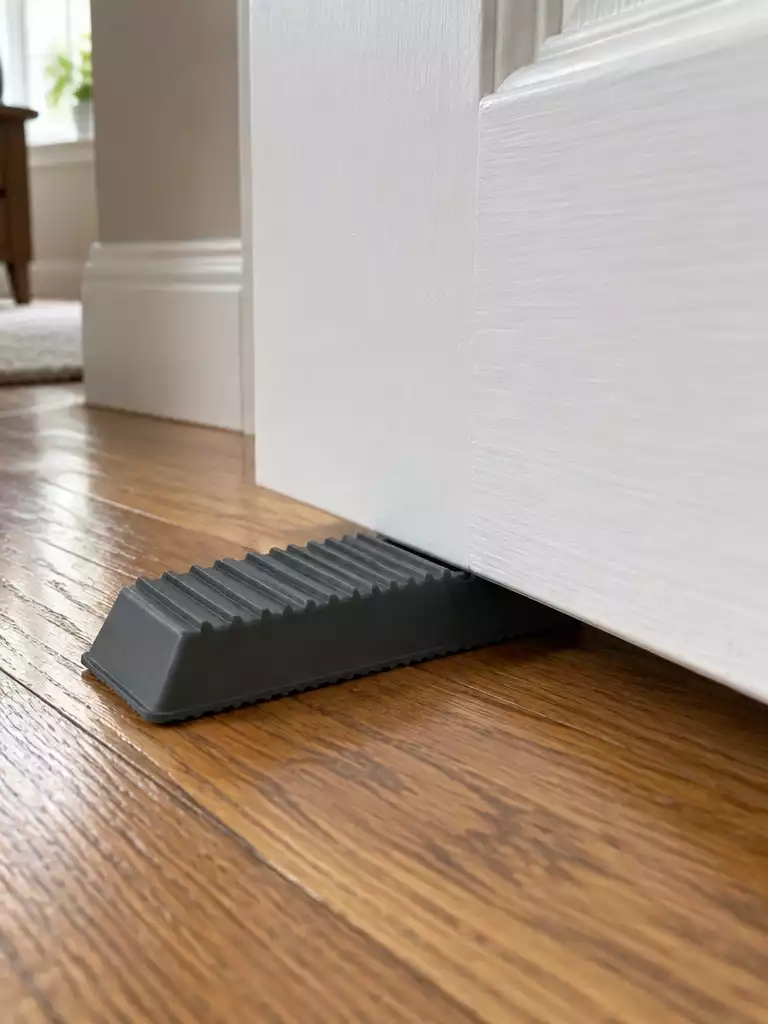
A fast, portable friction solution to hold doors open during projects or quick tasks.
A rubber door wedge is the ultimate quick-fix solution for temporary hold-open needs. You simply slide the tapered rubber block under the door leaf, and the friction against the floor keeps the door exactly where you want it.
Because these require no installation, they are perfect for renters or anyone who doesn’t want to drill into their floors or door frames. They are best kept in a junk drawer or toolbox for occasional use, such as when you are moving furniture, carrying groceries, or need extra ventilation.
Heads up: These are not meant to be permanent fixtures in high-traffic hallways.
They are easily kicked out of place and can create a significant trip hazard if left on the floor near a doorway.
If you have a heavy door or a slick floor surface, a wedge might slide if the door is pushed with enough force. For a more reliable, long-term solution that protects your walls and trim, you will eventually want to move toward a mounted floor or hinge-based stop.
⭐ Rubber Door Wedges We Love
✨ Editor’s Pick
Stackable Rubber Door Stopper Wedges
Zinc Alloy Rubber Cushion Stops
💡 Simple Steps That Help:
- Keep it accessible: Store the wedge in a magnetic pouch on the side of the door for easy retrieval.
- Surface testing: Pair the wedge with high-grip rubber textures to ensure it holds firm on slick hardwood floors.
- Strategic storage: Use a wall-mounted hook near the frame to keep the wedge off the floor when not needed.
Overhead Door Stop
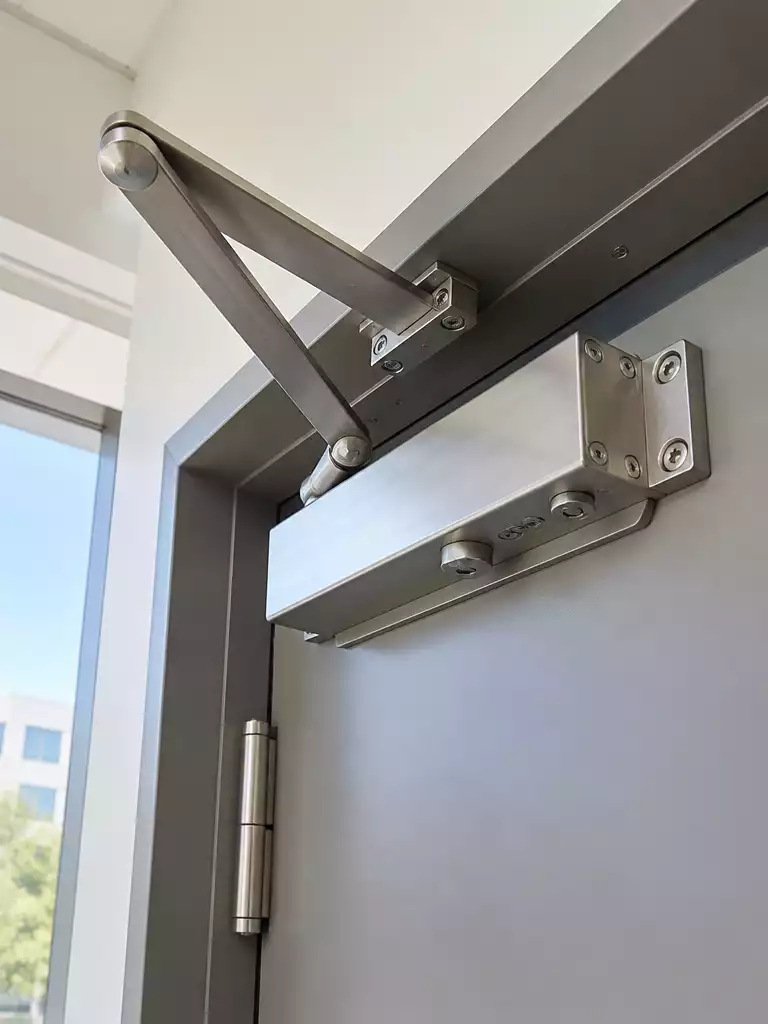
Master precise control over door swing and closing speed with professional-grade overhead hardware.
When you have a heavy door or expensive nearby trim, an overhead door stop provides the most sophisticated level of motion control. Unlike floor or hinge-based options, this hardware manages the door’s entire path from the top of the frame.
Installation is complex and typically requires a professional to ensure the arm assembly is aligned perfectly. If it is not mounted with precision, you risk binding the door, damaging the frame, or causing the mechanism to fail under tension.
Warning: Improper installation is the most common cause of failed latching and excessive closing force.
Do not attempt this as a casual weekend DIY project if you lack experience with hydraulic door closers.
This solution is ideal if your primary goal is to protect high-end hardware or prevent a heavy door from slamming shut. You can adjust the sweep and latch valves to dictate exactly how fast the door closes and where it stops, providing total control over your home’s traffic flow.
⭐ Overhead Door Stops to Buy
✨ Editor’s Pick
Storm Door Closer Bracket Kit
🧰 Questions for Your Installer:
- Structural integrity: Does the door frame require additional blocking or reinforcement to support the weight of the overhead hardware?
- Clearance requirements: Will the arm assembly clear existing door trim or decorative moulding without requiring unsightly modifications to the frame?
- Maintenance schedule: How often should the hydraulic valves be tuned to ensure the door remains smooth and quiet over time?
Hinge Restrictor
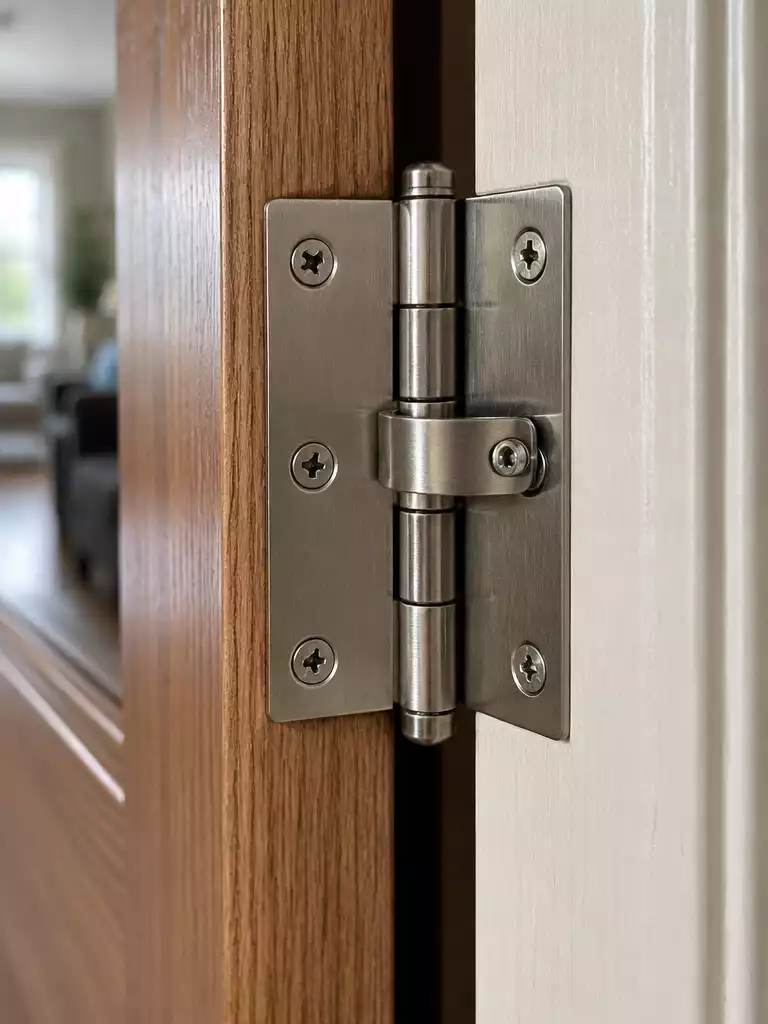
Control your door swing discreetly by limiting the hinge movement behind the door casing.
A hinge restrictor is a small, specialized clip that attaches directly to your existing door hinge to physically limit its opening angle. Unlike bulky floor stops, this hardware stays tucked away, making it an ideal choice for narrow hallways where you want to keep the floor clear.
Compatibility Alert
These clips are brand-specific and often hinge-model specific. If your hinge geometry doesn’t match the manufacturer’s specs exactly, the clip will fail to seat or may cause the door to bind.
Installation requires you to partially remove the hinge pin and slide the restrictor into the knuckle assembly. Once seated, it creates a hard stop that prevents the door from swinging wide enough to hit delicate trim or nearby furniture.
Use this if: You are a confident DIYer who can accurately identify your hinge brand and you want a completely invisible stop solution.
Skip this if: Your door is heavy, solid wood, or already shows signs of sagging at the hinges. Forcing a restrictor onto a misaligned door will only exacerbate hinge wear and likely lead to hardware failure.
⭐ Hinge Restrictors for Your Home
✨ Editor’s Pick
Multi Purpose Door Hinge Lubricant
⚖️ Quick Decision Guide
- Choose this if: You want a completely invisible stop that doesn’t interfere with your floor cleaning routine.
- Skip this if: Your hinges are non-standard or show early signs of movement, as clips can cause binding.
- Pair it with: A soft wall bumper or floor stop for the rare, high-impact slam that exceeds hinge capacity.
Floor-Mounted Catch
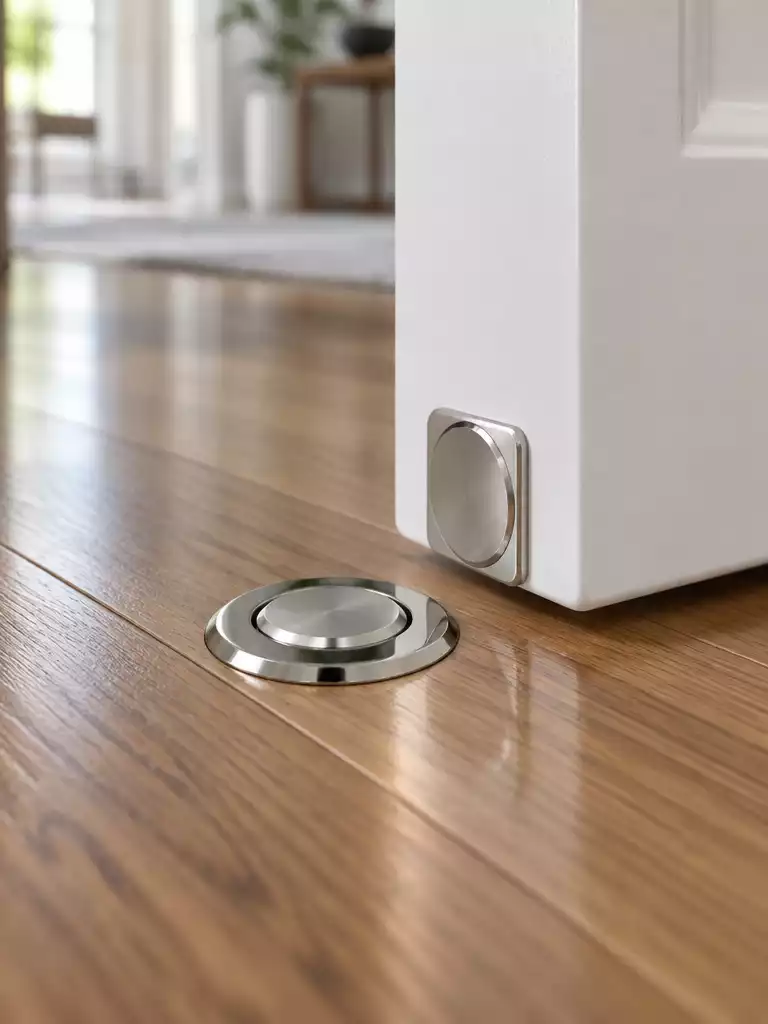
Achieve a clean, professional look while keeping your high-traffic doors securely open.
A floor-mounted catch offers a concealed aesthetic that traditional bumpers simply cannot match. This hardware uses a magnetic socket that sits flush, or near-flush, with your floor surface to grab a corresponding plate on the bottom of the door.
Because these units are designed to hold the door open rather than just stopping its swing, they are a perfect match for rooms where you need steady airflow or easy movement. They provide a secure hold that keeps your door from drifting shut without requiring bulky wall-mounted hardware.
Warning: Precision is non-negotiable. This solution requires specific core drilling into your floor substrate and an exact, mirrored mounting on the door bottom.
If you are not comfortable using specialized drilling tools to cut into your hardwood, tile, or stone flooring, this is not a weekend DIY project. A professional installation ensures the magnets align perfectly, preventing the weak hold or rattling that occurs with poor alignment.
⭐ Floor Mounted Catches to Consider
Barn Door Roller Stopper Set
Heavy Duty Sliding Barn Door Kit
✨ Editor’s Pick
Barn Door Soft Close Mechanism
⚠️ Common Mistakes to Avoid When Installing Floor Catches:
- Imprecise hole depth: Drilling too deep or shallow ruins the flush aesthetic and prevents the magnet from catching the door plate effectively.
- Ignoring floor substrate: Using the wrong anchors for concrete versus hardwood can cause the socket to pull loose from the floor over time.
- Rushing the alignment: Failing to perfectly center the door plate over the floor socket leads to weak holds, rattling, and frustrating door drift.
Hold-Open Closer
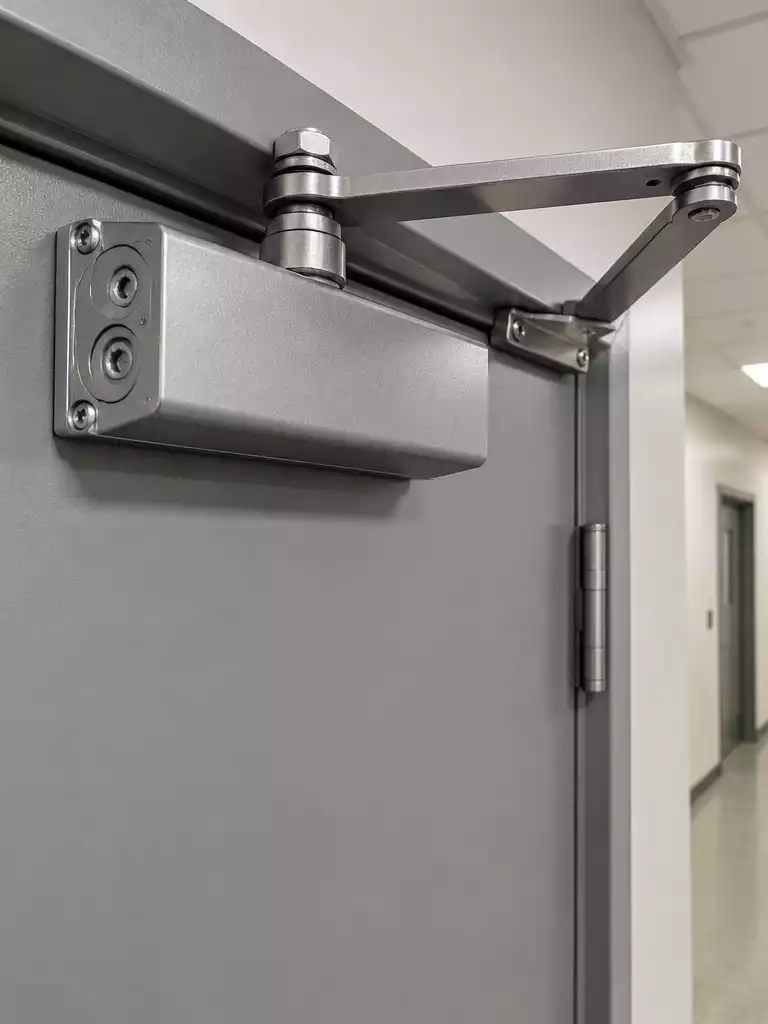
Control your heavy door’s movement and keep it exactly where you need it.
A hold-open closer is a professional-grade hydraulic solution designed for heavy-duty interior doors or fire-rated openings. Unlike simple bumpers, it manages the door’s entire range of motion by using internal hydraulic valves to control closing speed and latching force.
The hold-open feature is activated by a friction nut or a specific setting on the arm, allowing the door to stay at a precise angle until you nudge it shut. This level of control is essential for high-traffic areas or rooms where you need to move heavy items through without the door swinging back at you.
Warning: Tuning the sweep and latch valves requires a delicate touch to avoid slamming or binding. If you are not comfortable with mechanical adjustments, hire a professional to ensure the door complies with safety and fire codes.
This hardware is not meant for lightweight closet doors or standard bedroom privacy doors. It is best suited for scenarios where you need the door to remain open for ventilation or accessibility, but want the mechanical advantage of a controlled, automatic swing when released.
⭐ Hold-Open Closers We Love
✨ Editor’s Pick
Smooth Touch Hold Open Closer
Heavy Duty Storm Door Closer
Retractable Automatic Screen Door Closer
🧰 Questions for Your Installer:
- Fire-code compliance: Does this specific model meet the requirements for your building’s fire-rated door assemblies?
- Adjustment scope: Can you demonstrate how to fine-tune the sweep and latch valves to prevent future slamming?
- Long-term maintenance: What is the recommended service interval for checking the friction nut and hydraulic fluid levels?
You now have ten practical directions for managing door swing and protecting your surfaces without a wall behind the door. Focus on the specific needs of your room rather than trying to apply every method at once, as the right mechanical choice will carry the entire entry.
The entry you are picturing comes together through a single, deliberate decision that matches your floor type and door weight. Start by assessing your swing path to see which solution provides the most stability, and consider how fixing gaps under doors might impact your final hardware choice. Choose for how it fits your home day to day, and you will not have to second-guess the hardware later.
Related posts:
 The Power Behind Magnetic Locks: How Much Force Is Needed to Open Them?
 10 Smart Locks for Doors Behind Storm Doors
 17 Interior French Door Ideas That Instantly Open Up Small Rooms
 15 Glass Framed Door Ideas That Pull Light Into Dark Rooms
 17 Sliding Door Living Rooms That Flow Right Into the Garden
 16 Glass Door Designs For Bright Interior Rooms
 15 Bathroom French Doors That Give Powder Rooms Personality
 Gray Walls White Trim Black Doors: 12 Rooms That Get It Right