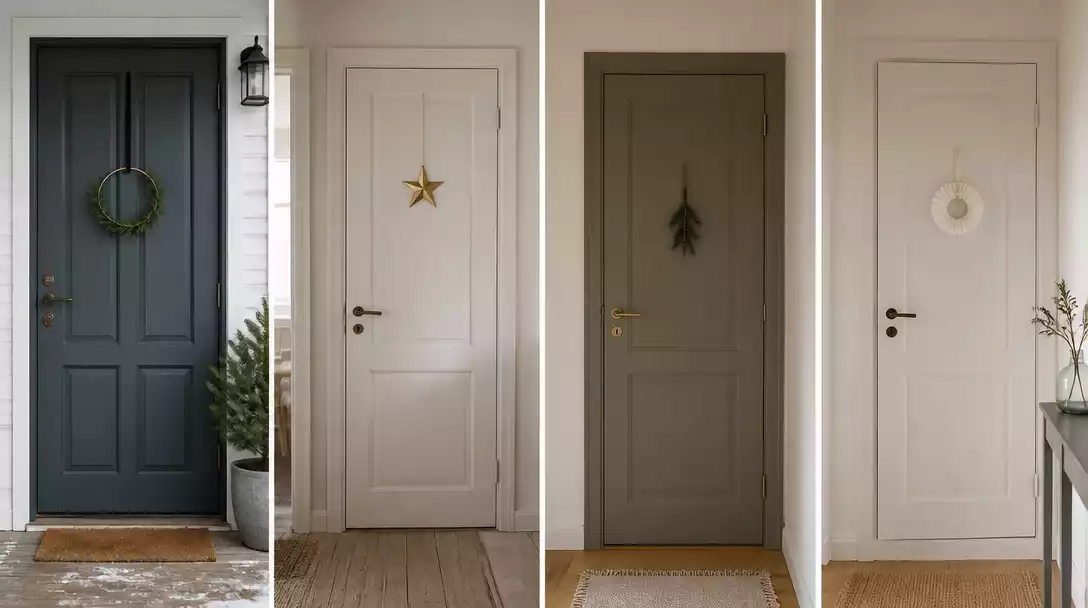
10 minimal Christmas door decor ideas show how simple shapes, restrained materials, and open space can make your entry feel seasonal without looking crowded. Save these 10 ideas to find a look that fits your home, then start with the simplest silhouette.
Single Cedar Hoop
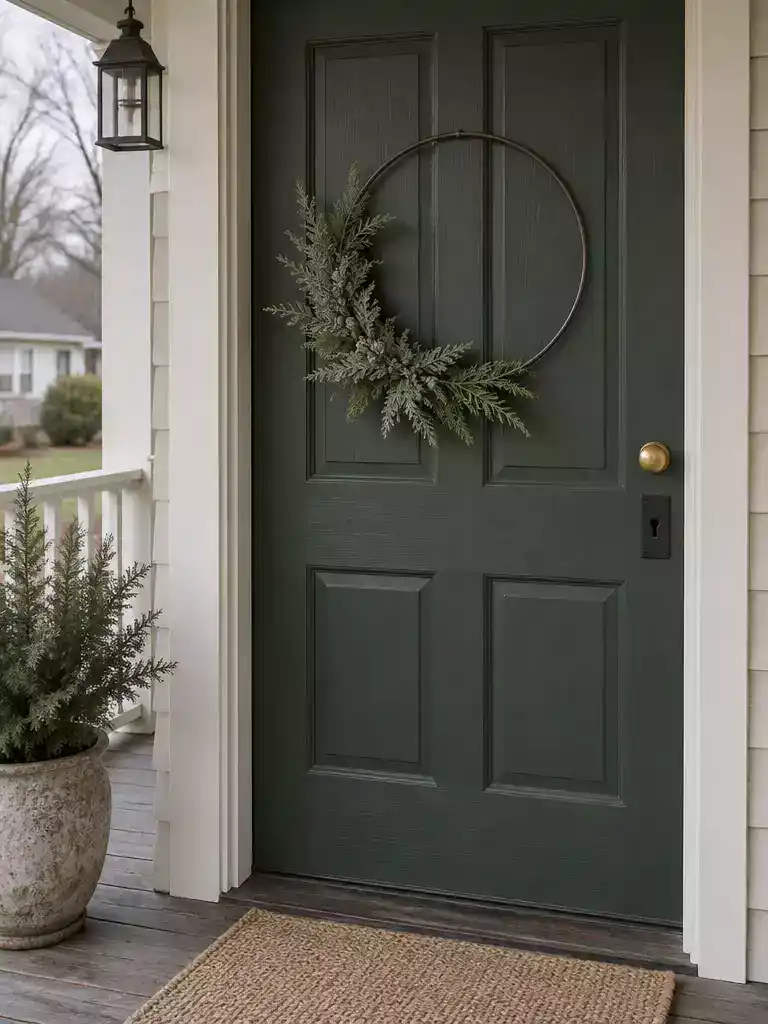
A little cedar and an open ring can make your door look ready for the season. If you want color instead, try one of these Christmas sash ideas on the same ring.
As an Amazon Associate we earn from qualifying purchases.
Picture a plain metal ring with cedar tucked into just one lower section, and the rest of the hoop left bare. That open gap is the whole idea. Cedar’s fine, layered foliage does the visual work, so the circle reads clearly against your door instead of disappearing under greenery.
A 16 to 20 inch hoop is a common wreath size, so it makes a sensible starting point. Hold it against your door before you buy anything, and make sure you still have plenty of visible door showing around it.
Who it suits: A covered porch or sheltered entry, and anyone who wants a light, airy seasonal touch.
Who should skip it: Doors that take direct wind, sun, or rain. Fresh cedar will dry out over time, so plan on a short display window or swapping in new sprigs.
Fresh cedar costs little if you already own a hoop and can source a few sprigs locally. Replacing greenery adds up over a season, though. If you want it to last, a preserved or weather-resistant build is worth the extra money.
Before you hang it, check three things:
- The hoop is light enough for its hanger.
- It does not rub the door surface.
- It clears the door when you open it fully.
Use a removable, padded hanger wherever the ring touches the door.
⭐ Cedar Wreaths Worth Considering
✨ Editor’s Pick
Twenty Four Inch Faux Cedar Wreath
📈 Does It Add Value at Resale?
A cedar hoop is a seasonal decoration rather than a permanent fixture, so it is unlikely to weigh much with a buyer. Its appeal is short-lived by design. Most of the money goes into fresh sprigs you replace over the season, while a preserved build holds its look for longer. Fresh greenery is a near-term expense you enjoy while it lasts.
Takeaway: Buy fresh cedar for the season, and choose a preserved build only if longevity matters.
Brass Advent Star
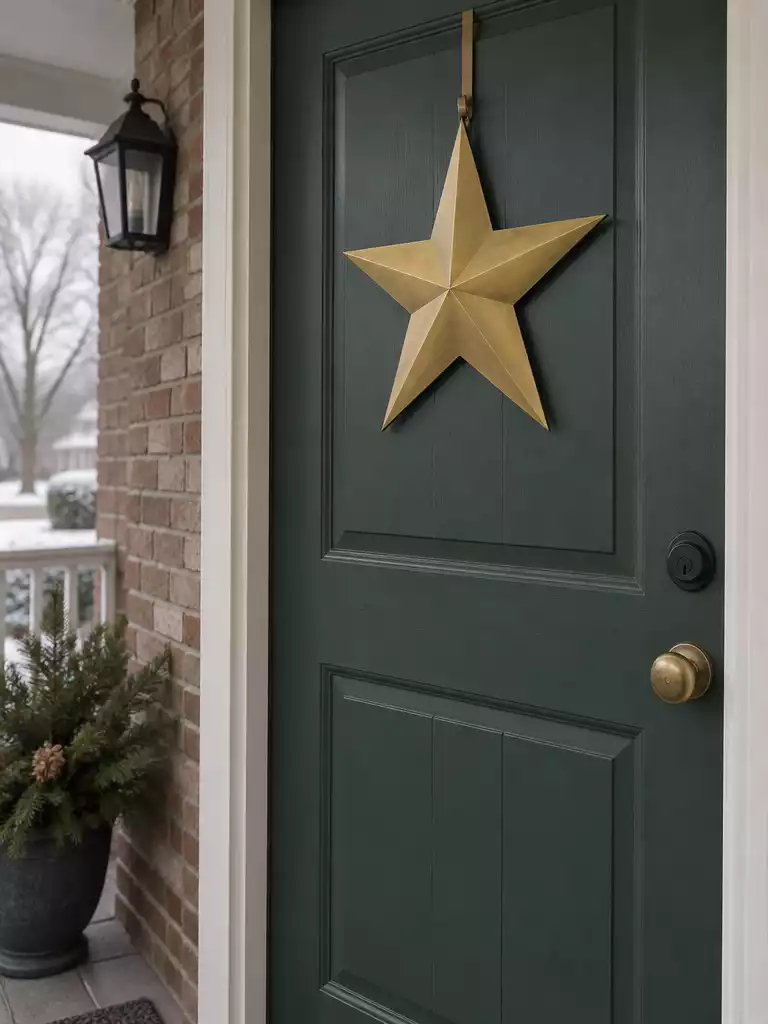
One clean metal shape that catches the light and still leaves your door visible. A stenciled DIY Christmas door mat adds color below it.
A brass advent star is exactly what it sounds like: a single flat star, hung on its own, with nothing wrapped around it. The clean angular outline and warm metal finish do all the work, so there’s no bow, no greenery pile, and no lights. It suits a front door that’s already painted in a calm color and you want one crisp point of seasonal detail.
Metal earns its spot here because it doesn’t shed, dry out, or wilt like the cut greenery and paper ideas on this list. It’s one of the stronger choices for a longer stretch outside. That benefit depends on finish quality, though. Uncoated or cheap metal can tarnish or corrode, so look for a sealed, lacquered, or properly coated surface before you buy.
Flat cut-metal or handcrafted brass? A pre-made star blank suits a capable DIYer who wants to finish the piece with paint or a sealant. A finished piece gives you a cleaner surface and fewer sharp edges, which matters if it’s going to hang where people brush past it.
Before you hang it:
- Run a finger around every point and edge. Sand or file any sharp tips.
- Use a felt-backed over-the-door hanger or a suitable adhesive hook.
- Make sure no exposed wire or bare metal touches the door, since it can scrape the paint.
Keep the star simple. A small ribbon or one restrained sprig of greenery is fine, but anything beyond that starts competing with the shape. If the star is the only thing on the door, it reads as deliberate. Add a second ornament and it starts to look like a collection.
⭐ A Woven Star to Consider
✨ Editor’s Pick
Woven Rattan Star Ornament Set
💡 Why the Single Star Looks Deliberate:
A brass star works because it gives the eye one clear edge to follow. Against a calm painted door, its points catch the light and create a small, sharp highlight, while the open space around it keeps attention from wandering. Metal holds its outline better than paper or fabric, so the shape stays crisp for as long as it hangs.
Takeaway: A sharp, sealed metal outline needs no extra decoration to look finished.
Start with the entry’s exposure, then factor in hardware and door movement; those checks narrow the field before style details become a costly second guess. A simple silhouette can still feel considered when it suits the surface and clears the lock and edge, and Christmas door ideas offer restrained inspiration.
💡 The Calls Worth Getting Right:
- Reserve paper, citrus, and fabric for shelter; explore Christmas door ideas.
- Use a suitable hanger; magnets need compatible steel doors.
- Soft backing and a movement test protect finish, lock, and edge.
One Pine Sprig
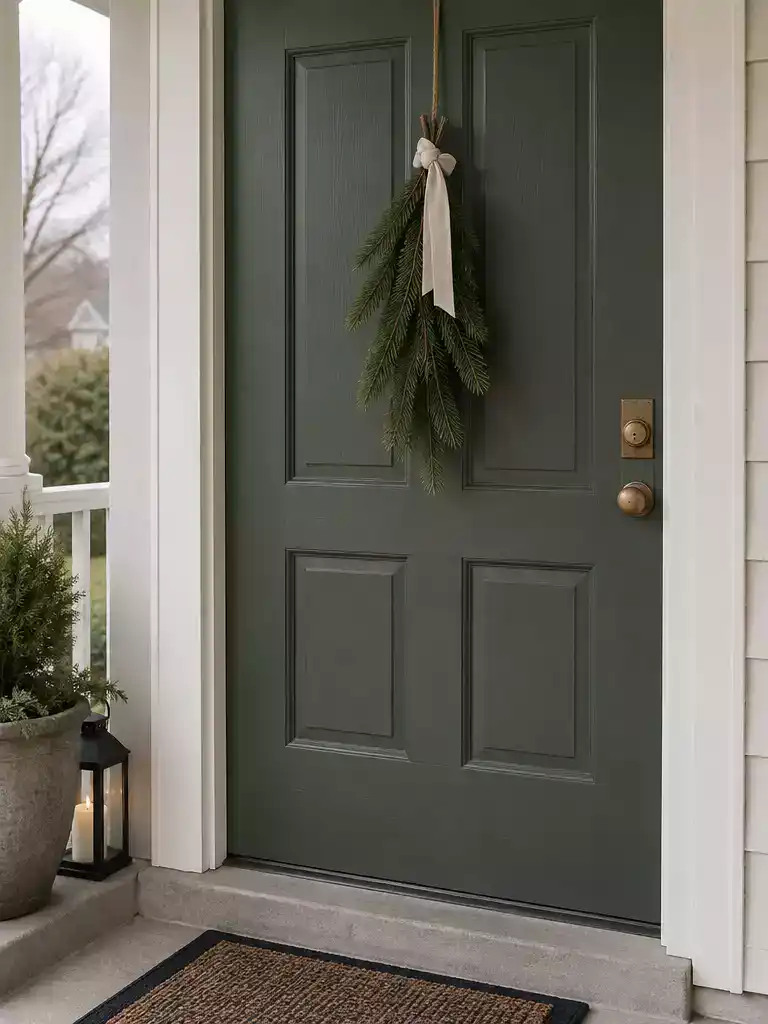
One clean green line that says Christmas and leaves the rest of your door bare. If you want more greenery, a pair of planters dressed in faux stems adds it beside the door.
This is the most minimal option on the list, and the whole idea hangs on one thing: the quantity. A single stem of pine, tied with a ribbon loop or hung from a slim hanger, gives you a vertical line instead of a bundle or a mini garland. Most of the door stays visible, which is the point.
The sprig works best on a door with a clear panel or a plain painted surface. Its narrow outline reads as a directional line, so it pairs well with the vertical panels of a door. Compared with the cedar hoop, it feels more like a single brushstroke than a frame.
- Hanging: A plain ribbon loop or a minimalist hanger keeps the look clean. If the stem attaches to a lightweight hoop or tag, the hoop is only a support, not a second focal point.
- Additions: Stick to one plain ribbon, or a lightweight tag if you need one. Anything more starts to crowd the line.
- Placement: Pick a spot where the green stands out from the door. A dark door can swallow the outline.
Fresh pine is inexpensive compared with a full wreath, but how long it lasts depends on sourcing and conditions. It holds up much better indoors or on a protected porch than in direct sun, wind, or rain. Plan to replace it when it starts to dry.
Watch the door edge
An oversized stem, a stiff tie point, or a loose loop can catch on the door edge or weatherstripping when the door opens. Hang it short and light, then open and close the door before you step back. A slim door that cannot take a wreath can still carry one of these Christmas door hanger picks.
After hanging, check the sprig every few days if it sits outside. Look for needle drop, drying, and movement in the wind. If the stem starts to sag or shed heavily, take it down before it marks the door.
💡 Designer Note: Let the Texture Carry It:
Pine’s appeal is its texture, so give it a smooth, flat door surface where the needles are the only detail in the frame. A ribbon in cream or oatmeal keeps the line quiet, while a bright bow would pull the eye away from the stem. Hang it a little off-center, so the sprig looks placed on purpose rather than stuck on.
White Paper Wreath
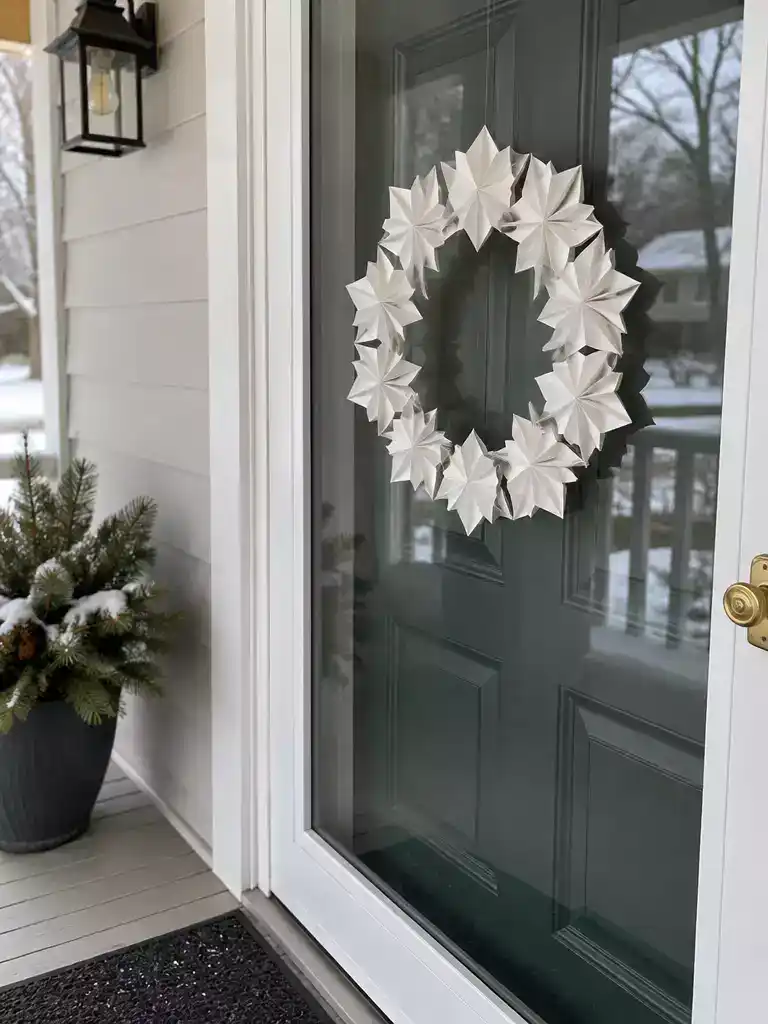
A crisp white silhouette that makes a plain door look ready for the season. If your door is narrow, a Christmas tree door hanger keeps the same simple look.
Paper is the most precise material in this group. A wreath cut from white or warm-white cardstock keeps sharp folds and clean edges, and when the shapes are spaced with visible gaps, the ring reads as a clear, simple outline. Think of it as the wreath for a hallway door, a storm door, or a porch that stays covered.
The biggest upside is cost. A few sheets of cardstock, a bit of glue, and an hour of patient cutting can produce a full piece, and it’s one of the easiest DIY builds on the list. No special tools or skills are needed beyond a steady hand.
Not for an exposed exterior door.
Moisture, wind, and sun all work against paper. Weather-resistant cardstock, lamination, or sealant can help a little, but none of them make it fully outdoor-proof.
Before you hang it, check the spot. A sheltered porch or an indoor door is the safe choice, and you’ll want a removable hanger that won’t mark the paint.
- Choose a shape with open gaps so the paper is not a dense layered centerpiece.
- Hang it on a removable hook or over-the-door hanger with soft backing.
- Keep it out of direct wind and rain, even on a covered porch.
- Take it down once the season ends and store it flat.
🔢 Do It in This Order:
With paper, the location decision comes first, because it determines how you build and treat the wreath.
- Confirm the spot is a sheltered porch or indoor door before cutting anything.
- Cut the shapes with open gaps, keeping the outline simple enough to read from a distance.
- Glue the pieces, then let them dry flat fully before adding any sealant or hanging.
- Fit the removable hanger, then open and close the door to confirm clearance.
Natural Linen Stocking
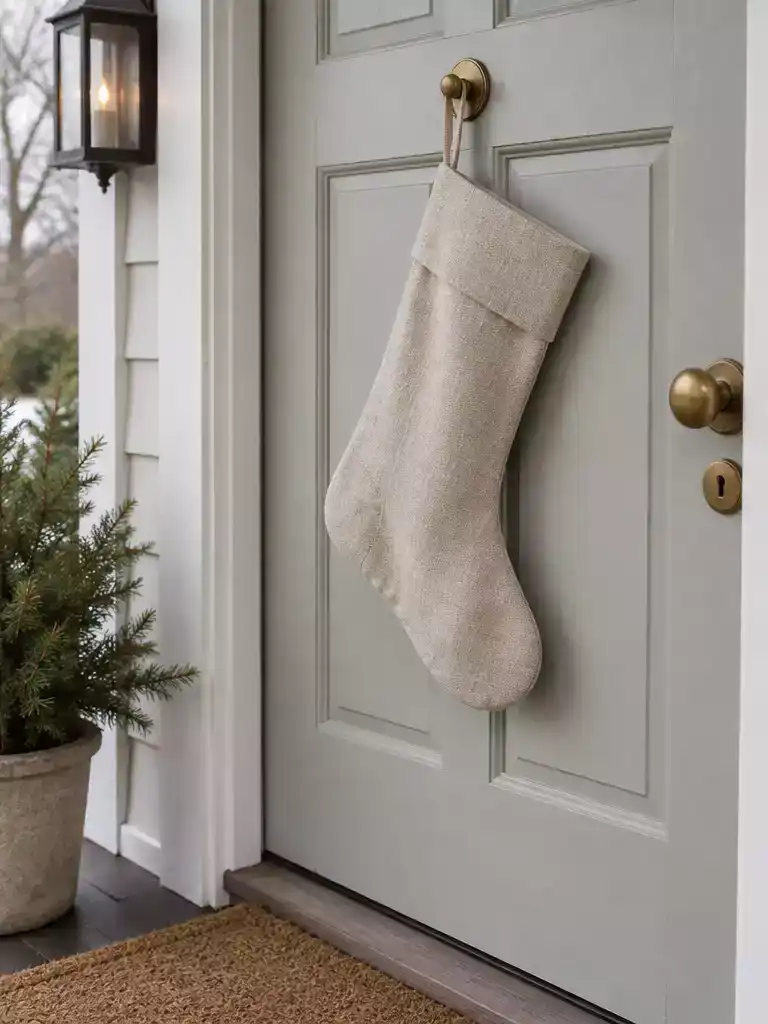
A single soft stocking that signals the season with texture alone, no tinsel required. If the family would rather make something by hand, try these painted Christmas door signs for a snowy weekend.
This is the one-piece version of the holiday door: a plain, untrimmed stocking in natural linen, hung alone. Its soft, drooping outline is the opposite of the paper wreath’s sharp circle, which is exactly why it works next to a minimal door. Choose it if you want visible woven texture and a warm neutral tone without any added color.
Linen shows its weave up close, with small slubs and a slightly uneven surface that reads as handmade even when it’s bought. You can sew one from fabric remnants if you’re comfortable with a straight seam and a simple turned hem. Purchased versions run from inexpensive to mid-range depending on fabric weight and whether the stitching is hand-finished.
Keep it empty. A stocking stuffed with anything will pull the shape out of line and make the fabric sag at the toe. Leave it flat and slim, with no lettering, faux fur, or pom-poms.
Exposure is the real limit. Linen handles moisture better than paper, but rain and wind-driven damp can stain or fade it, and a soaked stocking sags and can grow mildew if it stays wet. This one belongs under a covered entry or indoors, and it’s a poor pick for an open porch that takes weather head-on.
For hanging, use a wreath hanger, a knob, or a small hook that holds the stocking at the top loop without squeezing the fabric. Check that the stocking clears the door swing and the handle as you open and close the door. If the hanger rubs the fabric while the door moves, add a soft cloth pad or move it up a few inches.
💰 What This Really Costs:
- The real range: Purchased linen runs from inexpensive to mid-range, and fabric weight and hand-finishing drive that gap.
- Hidden cost: Your time is the biggest unplanned expense, since a straight seam and turned hem take patience on a first attempt.
- Worth it / not: Put your money into a tighter linen weave, since thin fabric loses shape sooner; skip any filling or trim.
Bare Twig Crescent
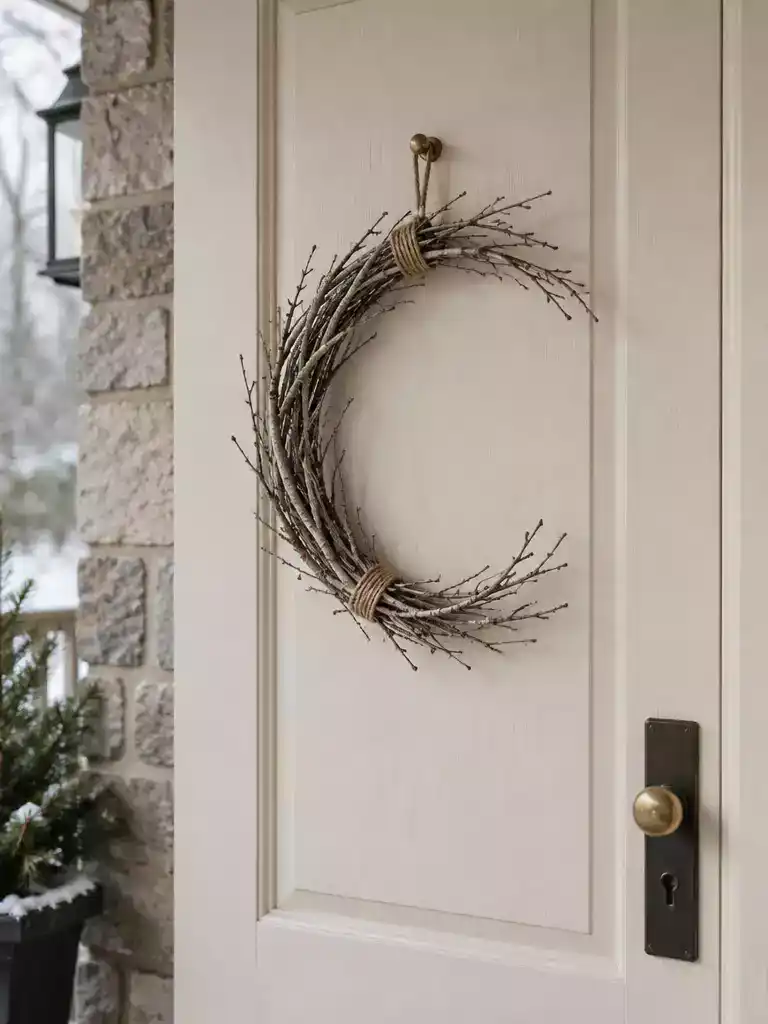
A quiet, handmade curve that says winter without filling the door.
This is the one that looks most like something you found on a walk. A bare crescent is a curved frame of twigs or branches with nothing hanging in the middle, and the open end is the whole point. It suits a covered porch or an indoor door, and it’s a good pick if you want something that reads as hand-shaped rather than store-bought.
Choose a crescent you can read from a few steps away. A tangle of thin branches looks busy up close and disappears from the sidewalk, so look for a few strong, well-spaced twigs with clear curves.
Quick check before you pick:
- Foraged or cheap branches keep materials close to free, but bending and wiring by hand takes real time.
- Twigs dry, crack, and weather, so a storm-exposed door is a poor home for this.
- Skip the professional build unless you need the same piece to last for several seasons.
The biggest surprise with this one is balance. A crescent sits unevenly, so it tends to tip toward its heaviest end, and that lowest twig can swing into the door when it opens. Use a light hook or a loop of ribbon, hang it, then open and close the door a few times before you walk away.
⭐ Natural Twig Wreaths to Shape
Natural Vine Wreath Frames for Crafting
Long Natural Grapevine Twig Garland
✨ Editor’s Pick
Handwoven Twelve Inch Natural Grapevine Wreaths
🔢 Do It in This Order:
Balance only shows once the crescent is finished, so building and hanging in the right order prevents rework.
- Secure every joint before choosing a hanger, since weight shifts once the frame is finished.
- Hold it up on a wall or hook indoors first to see which end sags.
- Adjust the hanging point until the crescent hangs level before fixing it to the door.
- Recheck clearance after a few days, since twigs can shift as they settle.
Wooden Tree Plaque
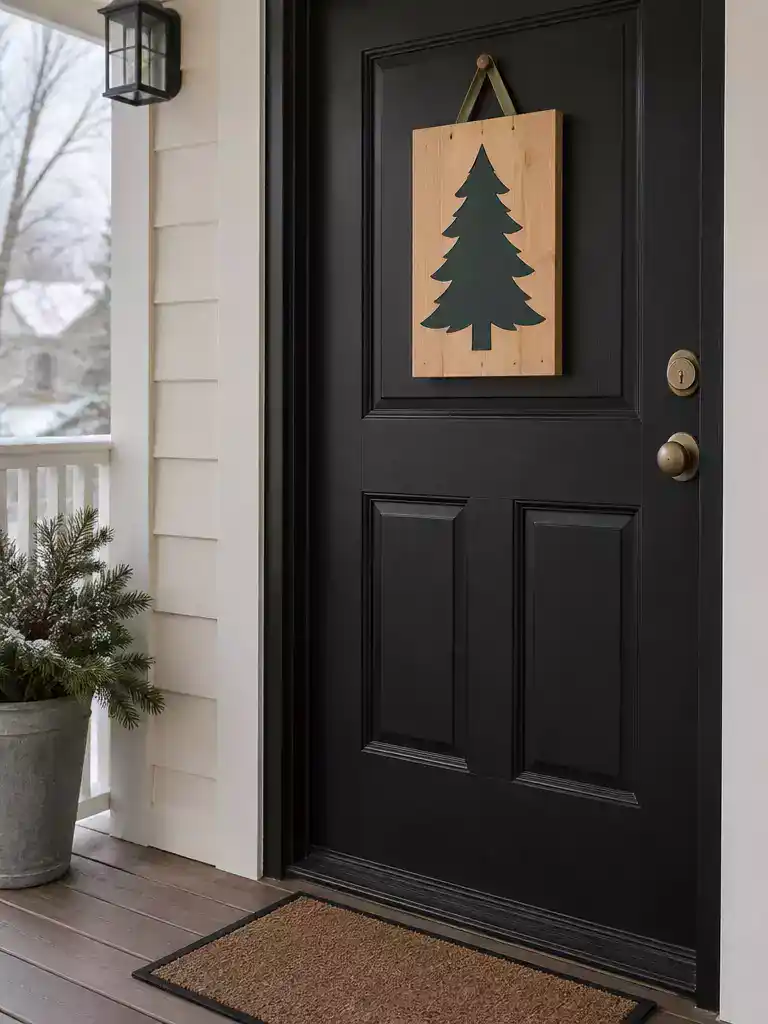
A quiet tree shape that holds its form season after season.
A flat wooden tree plaque is about as simple as seasonal door decor gets: one cut or painted pine silhouette on a plain board, with no winter scene and no cluster of little ornaments. Wood keeps its shape far better than paper or fresh greenery, which is why it lands among the stronger long-wear choices here. Its exterior performance depends on the sealing, not on the wood itself.
The weak point is the edge. Unfinished edges soak up moisture, and that is where swelling, cupping, and paint lifting start. A plaque that is only painted on its face can look fine for a few weeks and then start to fail at the corners.
Before you hang it, check these two things
- Edges are sealed on every side, including the back and the hanging hole, for the exposure the door actually gets.
- The plaque is light enough for its hanger, with a padded contact point so it never rubs the door finish.
Scrap wood or a plain blank keeps the cost down, and a simple tree shape with a painted finish is a manageable first project. If you want a crisp laser-cut profile or a smooth factory seal ready for outdoor weather, buying a finished piece is the cleaner route. Skip the DIY version if your door takes full sun and driving rain, unless you are prepared to reseal it every season.
⭐ Wooden Christmas Plaques to Browse
✨ Editor’s Pick
Wooden Christmas Truck Door Plaque
Interchangeable Wooden Seasonal Welcome Sign
📈 Does the Plaque Pay Off Over Time?
A sealed wooden plaque can be stored and reused, so its cost spreads across more than one season. Painted scrap-wood versions are cheap to try, but swollen edges and lifting paint mean buying a replacement. The money that pays back goes into sealing and a quality blank, not extra detail.
Seal first, decorate second: Seal every edge before buying extra detail; sealed wood is the version worth keeping.
Matte Ornament Trio
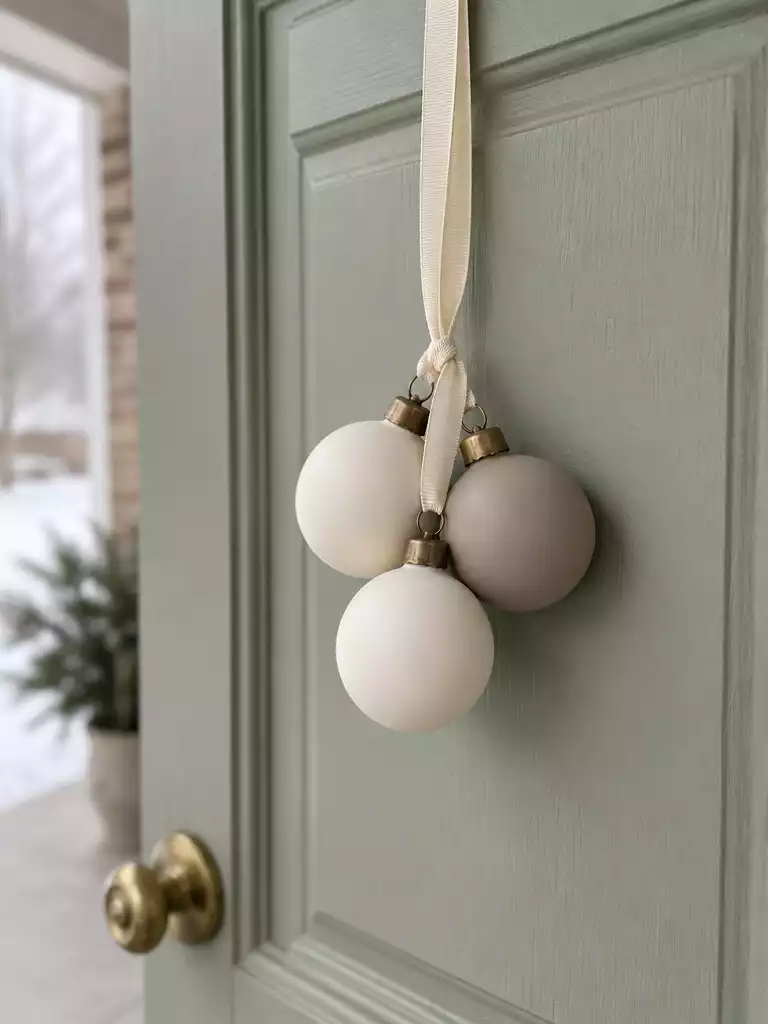
Three matching ornaments that look calm, deliberate, and finished from the sidewalk. Inside the house, each bedroom can get its own ornament door hanger in the same spirit.
Three ornaments, one color family, one small grouping. That’s the whole idea. Cream, warm white, or taupe balls with a soft matte finish read as a single composition from the walkway, and the repetition does the design work that a bright mixed set would otherwise do.
The trio works best on a door that already has some quiet texture to it, like painted wood or a simple steel panel. Glossy ornaments on a glossy door tend to compete, so keep the finishes flat on both.
- Best fit: a covered porch or an interior door where the trio can stay still.
- Skip it: an exposed door in open wind, since three loose ornaments will swing and knock together.
Buying a set of matching ornaments is the simplest route, and secondhand shops often carry neutral pieces in the same finish. Cost varies widely with where you shop, and a trio is generally less than a full wreath. If you already have matching ornaments, the only other things you need are a sturdy ribbon or cord and about 15 minutes.
Movement is the real drawback. Lightweight ornaments can swing, clink, or chip when wind catches them, and a chipped matte finish shows fast. Anchor each one at its attachment point, and use padded contact wherever a hook or cord touches the door.
Before you hang it
- Confirm all three sit at the same height so they do not strike one another.
- Open and close the door, and check that no ornament touches the door edge or the lock.
⭐ Matte Ornaments to Consider
Velvet Christmas Ball Ornaments, 36-Piece Flocked Set
Riceshoot Flocked Velvet Ornaments, Muted Tones, 24-Piece
Burgundy Matte Christmas Ball Ornaments, 4-Inch, Set
💡 The Detail That Pulls It Together:
Think of the trio as one small shape drawn on the door, so the empty space around it matters as much as the ornaments. Keep the spacing even and the group tight, and it reads as a single composition from the walk. Pick a tone that echoes your hardware, such as warm taupe beside brushed brass, so the entry feels cohesive without a second accent.
Dried Orange Hanger
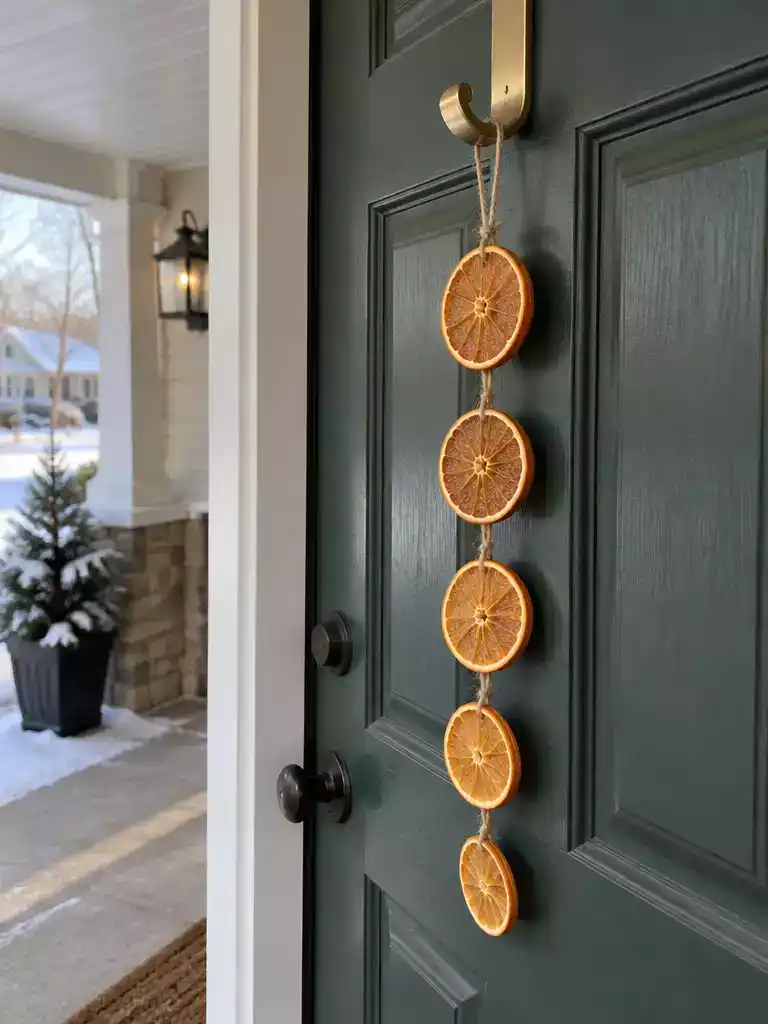
A little warm citrus color that brightens a plain door without crowding it.
Dried orange slices are the one warm color in this group. Picture a few thin rounds on natural twine, each with a translucent center and a rind that has gone a little rough and amber as it dried. That single bit of orange does the job of an accent without needing a second garland or a cluster of greenery.
This suits a covered entry or an indoor door, where the citrus can sit out of rain and direct sun. It is a poor pick for a front door that takes weather head-on. Moisture and strong light break down dried fruit fast, and it can shed or fade.
Keep the arrangement sparse. Two to four slices spaced along a short vertical line let each one read clearly. A crowded bunch turns the piece into a cluster, and the open door space disappears.
Home-drying keeps material costs low, but the work is real. Slices need time in an oven or dehydrator before they are ready to hang, and the process is hands-on from slicing to threading. If you already have a dehydrator running, this is an easy addition. If you don’t, you’ll spend more time on prep than the finished piece is worth to some readers.
Hanging check
- Use removable twine or ribbon, not a nail or wire that will scrape the paint.
- Hang the slices far enough from the door edge that they never brush the frame as it opens.
- Confirm the piece clears the lock, the peephole, and the door handle before you settle on placement.
⭐ Dried Orange Garland We Love
✨ Editor’s Pick
Natural Dried Orange Slice Garland
💡 Why One Orange Note Works:
Warm tones pull the eye, so one orange note on a neutral door becomes a focal point without any extra decoration. Dried slices also catch daylight through their translucent centers, giving a faint glow that flat paint and fabric can’t match. Hung in a short vertical line, they draw the eye down the door rather than across it, so the entry feels dressed but still open.
The payoff: the color does the talking, so the rest of the door can stay quiet and uncluttered.
Neutral Felt Bells
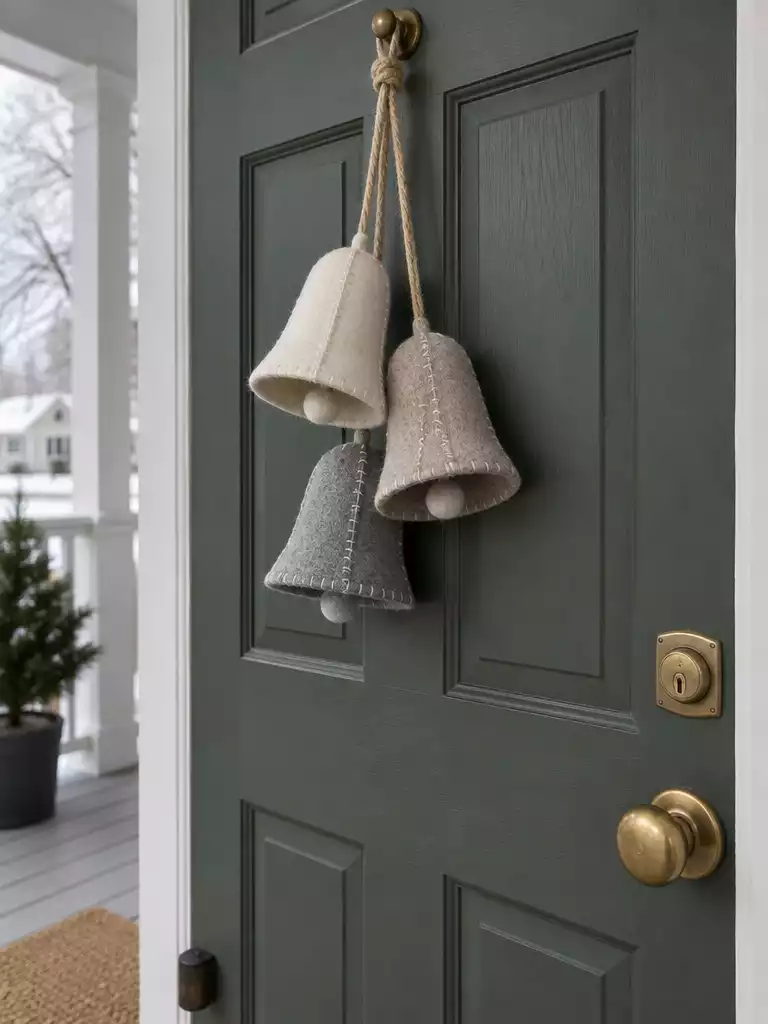
Three soft, quiet shapes that make a front door feel dressed for winter without a single bright color.
Felt bells are the softest thing on this list, and that’s exactly why they work for a door that’s already painted, lit, and lived in. Think of a small cluster of cream, oatmeal, and gray forms hanging from one cord. The surface is matte and slightly fuzzy, so it reads quietly from across the street instead of catching the eye like shiny ornaments do.
The contrast with the other pieces on this list matters. The brass star and sealed wooden plaque have hard, defined edges, and the paper wreath has crisp folds. Felt sits in a different category entirely, with a soft outline that absorbs light rather than reflecting it.
Felt is an indoor or covered-porch material. It takes on moisture easily, and on an exposed door it can sag, stain, or lose its rounded shape within a few wet weeks. If your door gets direct rain or sun, skip it.
- Good fit: a sheltered front door, a covered porch, or an interior entry you want to soften for the season.
- Skip it: an open porch that takes wind-driven rain, or a door that faces full afternoon sun.
Making these yourself is practical if you can cut simple shapes and stitch a clean seam. A few bells use very little felt, so small handmade pieces stay cheap. Buying makes sense if you want uniform sizes and neat finishing, since hand-stitched edges vary.
Hanging needs a little care. Use a padded or fabric-wrapped hanger that holds each bell without pinching the felt. Then open and close the door a few times to confirm the bells stay clear of the knob, lock, and door edge.
🔢 Do It in This Order:
Felt’s softness means placement and hanger should be settled before stitching, so you don’t rework bells that won’t fit.
- Confirm the door is sheltered and clear of direct rain or sun before choosing a size.
- Pick the hanger and mark its spot, then check clearance around knob, lock, and door edge.
- Make or buy the bells in matching sizes, sized to the hanger you chose.
- Hang the cluster, then open and close the door slowly to confirm the bells stay clear.
With all ten Minimal Christmas Door Decor Ideas in view, the main choice is how exposed your entry is and which material suits it. Metal and properly sealed wood are stronger candidates for longer exterior display; cedar needs shelter and care, while paper, fabric, twigs, and dried citrus are better indoors or under cover. Minimal styling comes from limiting materials and leaving the door visible, not adding more accents.
You don’t need crafting expertise or every idea to make the season clear; one or two well-chosen elements can carry the entry. Choose what fits your door’s exposure and materials you already have, then check the hanger, protect contact points, and test door clearance. Prices and lifespans depend on materials and conditions, so treat them as choices rather than guarantees. Save this list to compare materials when you’re ready to plan or make your decoration.
Related posts
 12 Rustic Christmas Door Decor Ideas
 12 Apartment Front Door Christmas Decor Ideas
 11 Front Door Christmas Decor Ideas
 10 Christmas Door Decor Ideas with Bows
 10 Jesus-Themed Christmas Door Decor Ideas
 10 Christmas Door Decor Ideas with Lights
 17 Christmas Door Ideas for Classroom That Turn the Door Into the Display
 11 Snowman Christmas Door Ideas