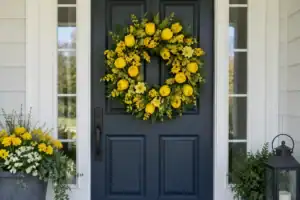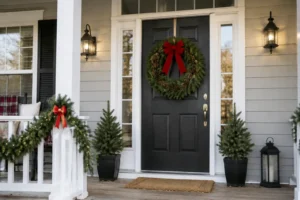
Spring outdoor flower pots for front porches turn a bare entry into a place that says welcome before anyone knocks. One pot can do it, and a pair by the door does it better. The pots below hold up in cool spring weather, and each one names the plants that match the light your porch really gets.
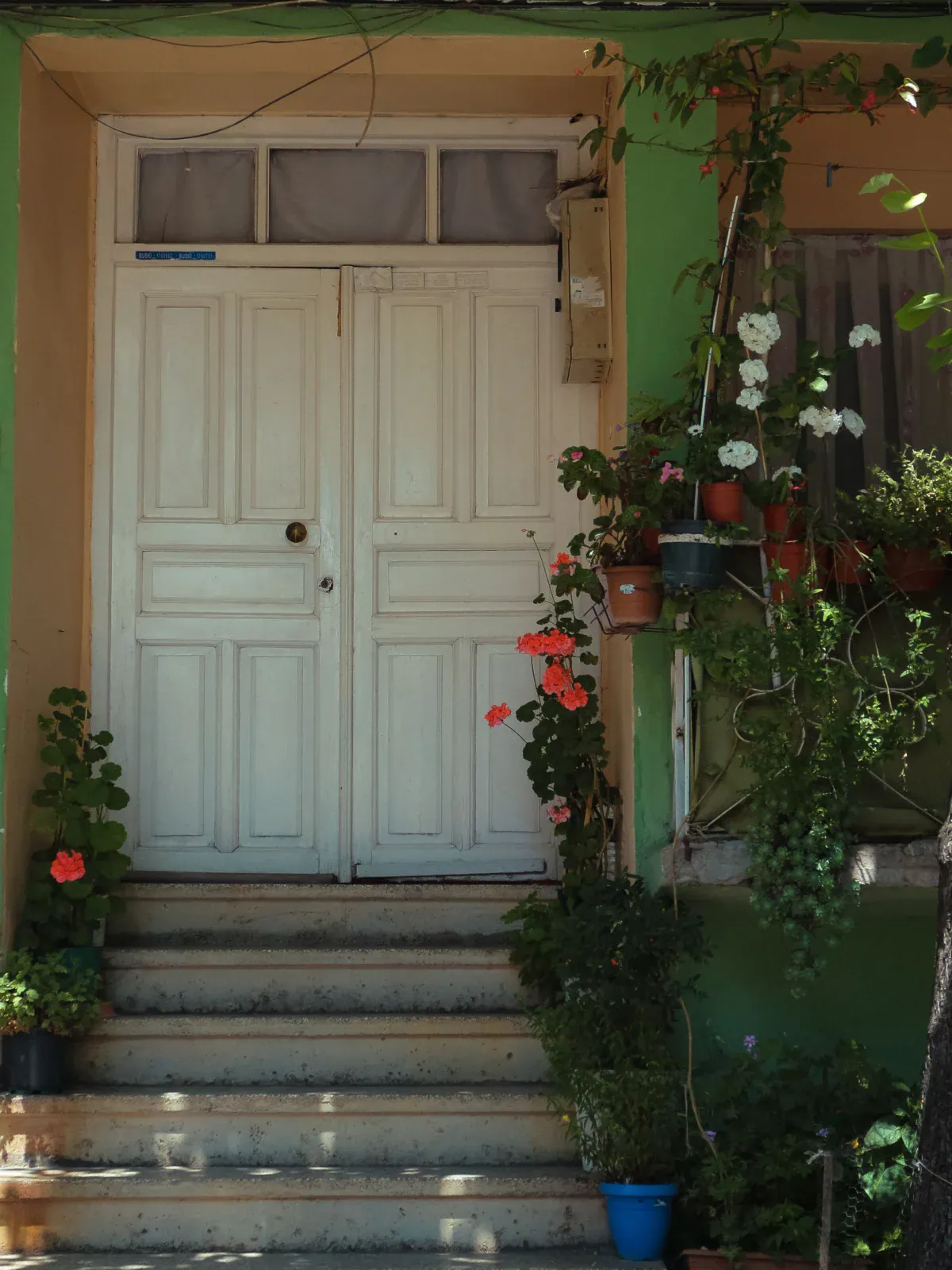
1. Classic Thriller Filler Spiller Pots That Look Planned
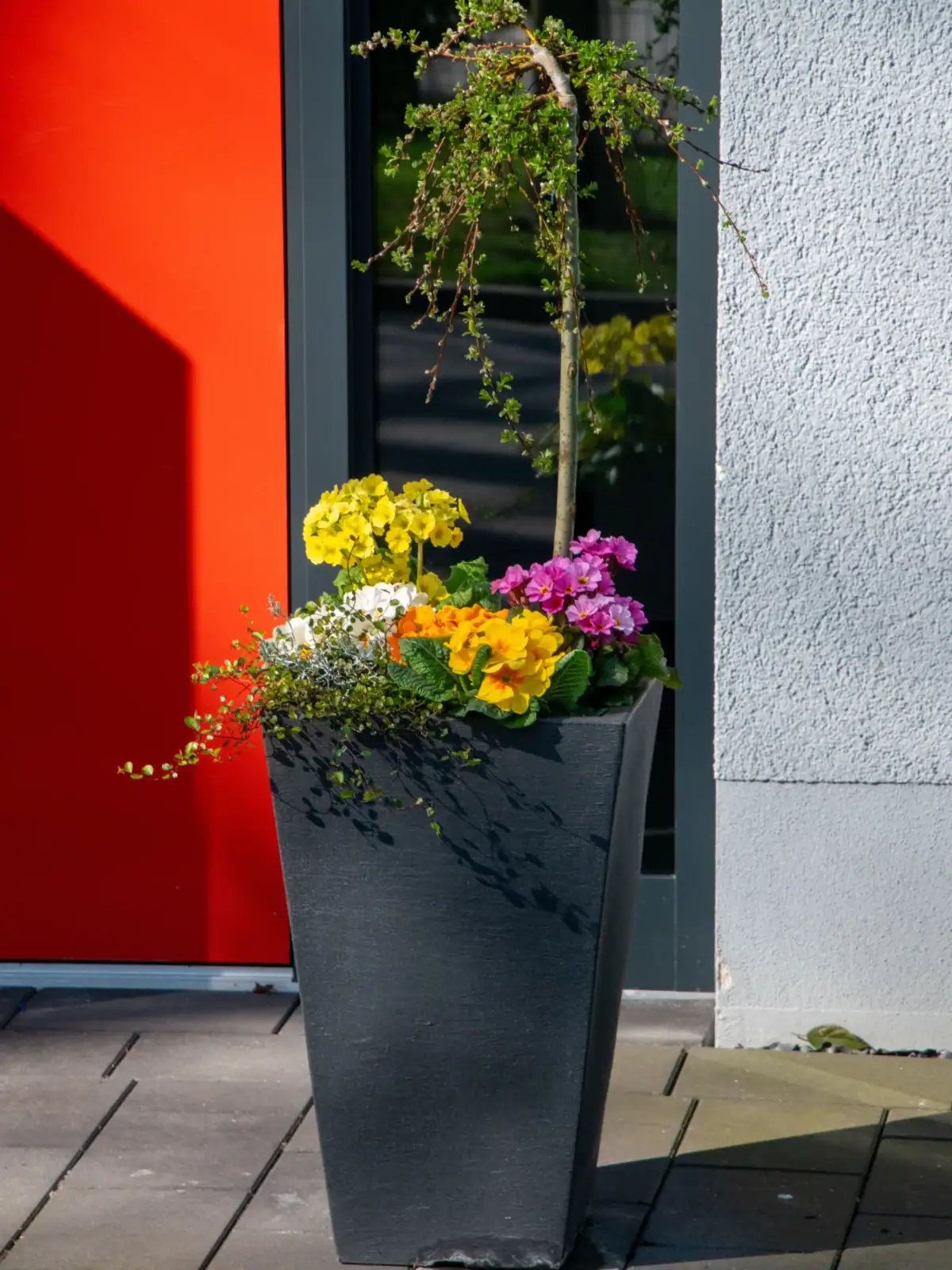
Most pots that look planned follow one shape, and it has a name: thriller, filler, spiller. The thriller is the tall plant in the center, the filler is the mounding color around it, and the spiller is the trailing plant that softens the rim. Put one of each in the pot and the result reads as a design, not a random mix.
For spring, a tall snapdragon or a small ornamental grass works as the thriller. Pansies or calibrachoa fill the middle, and sweet alyssum, bacopa, or ivy trail over the edge.
Pick plants that want the same sun and the same water, or one of them will sulk while the rest bloom. A pot that is at least 12 to 16 inches across gives the roots room and holds water longer than a small pot.
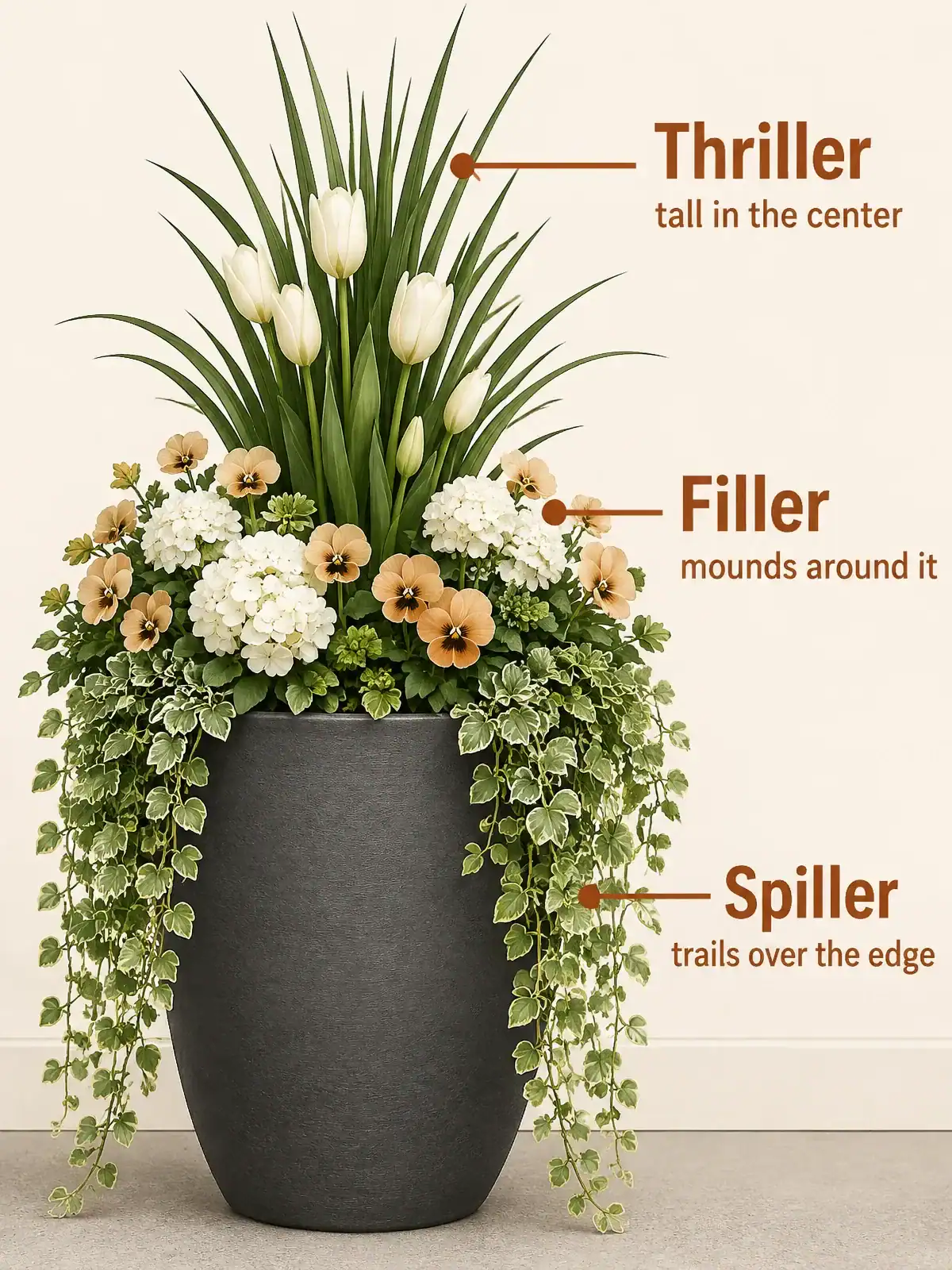
Start with the thriller filler spiller shape for the first pot, then change only the colors for the next one. The shape stays the same, so the porch still looks like one plan. Link the look to your front porch and entryway ideas and the pots will sit in a space that already feels finished.
2. Pansies in Mixed Colors That Survive a Light Frost
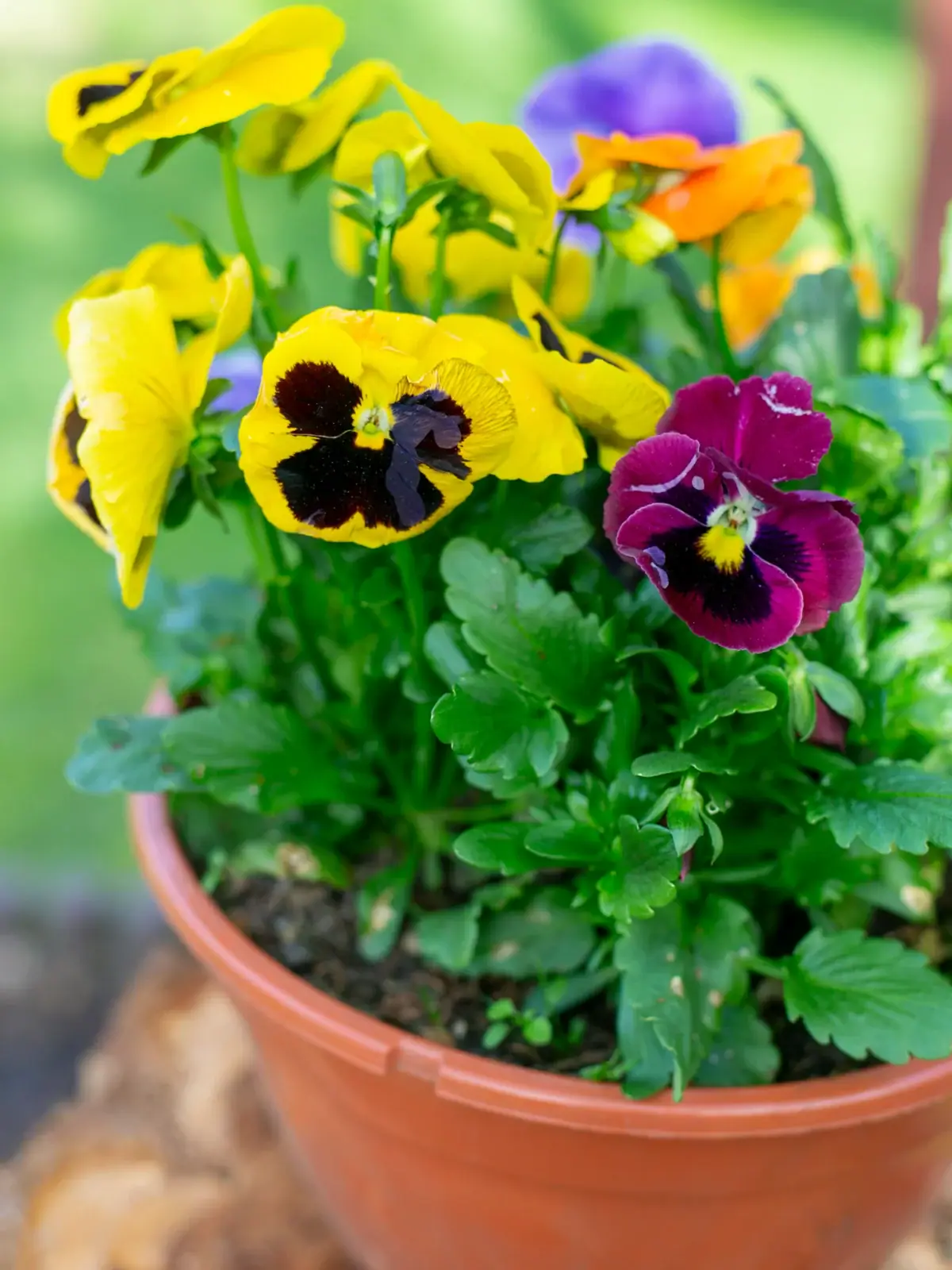
Trust pansies first in early spring, because they handle light to moderate frost down to 25 to 28 F. Mix purple, yellow, white, and blue in one wide pot and the color holds for weeks while the weather is still cool. They bloom hard in cool air and fade only when the heat arrives.
Your USDA hardiness zone tells you the average coldest winter night where you live, and it does not give you a safe local planting date or warn you about a late cold snap. Watch the night forecast, not the zone map, before you leave new pots out on the steps. Greenhouse plants are softer than outdoor-grown starts, so give them a sheltered spot for the first cold nights.
Before you put spring pots outside
Do These
- Cluster movable pots tight against the front wall on a frost night, or pull them into an unheated garage overnight.
- Cover pots with breathable frost cloth or an old cotton sheet held up on short stakes.
- Buy pansies and violas first, since they bloom through light frost.
Skip These
- Wrap thin plastic right against the leaves, since it freezes wet petals on contact.
- Leave tender summer flowers like petunias out before the last frost.
- Trust the zone map alone to say a night is safe.
Deadhead the spent blooms as you pass the door and the plants keep pushing out new color. When the days turn hot, move the pot to morning sun only and the pansies will last a little longer.
3. Tulip Towers in Tall Pots by the Door
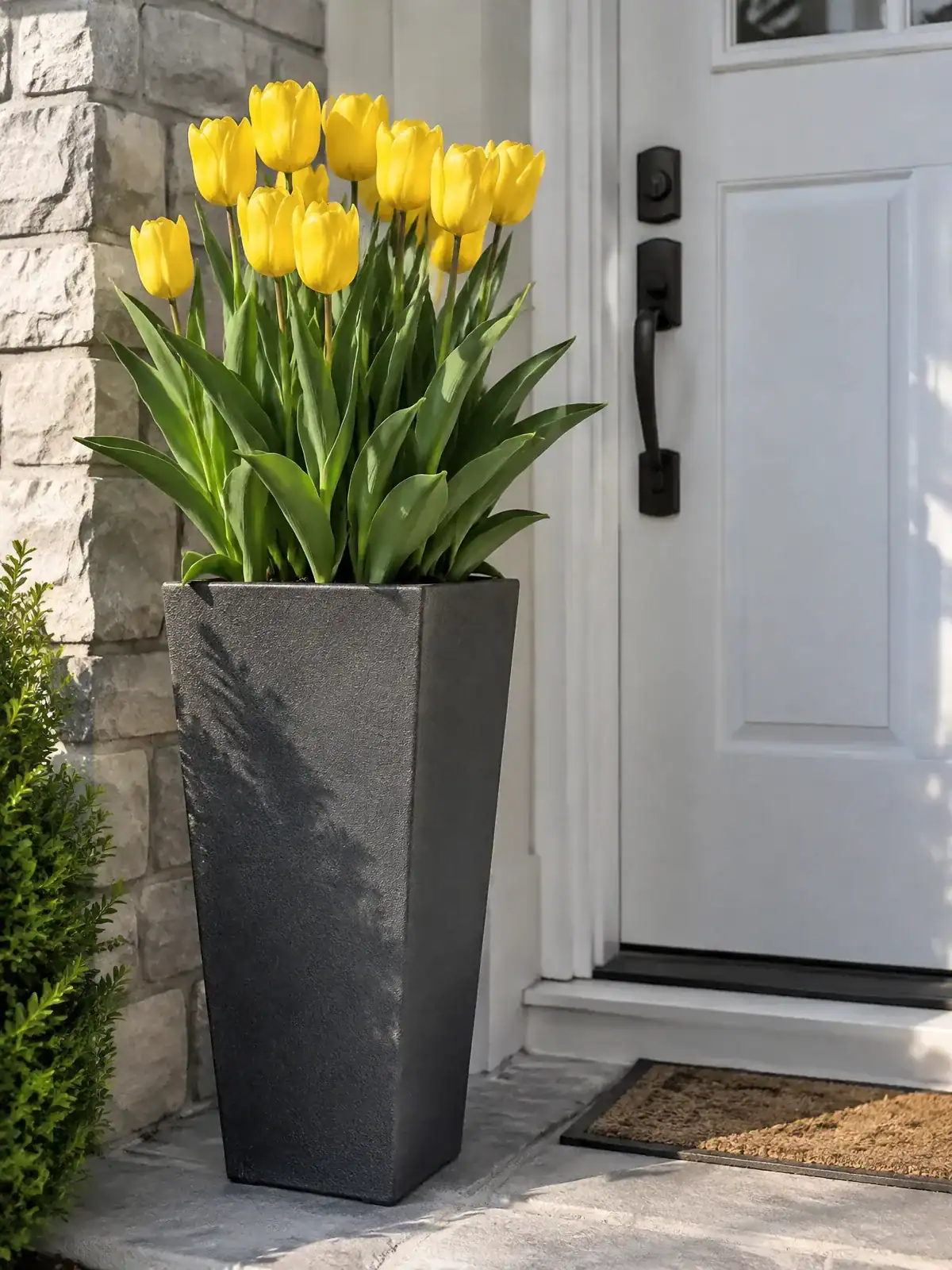
Tulips give a porch height that low flowers cannot, and one color in a tall pot reads clean from the street. Plant them in a deep pot, since tulips need room for roots, and group one color per pot instead of mixing every shade you own. The upright stems stay neat in wind that would flatten softer flowers.
Buy pre-chilled bulbs in spring, or chill them yourself over winter. Tulips need at least 12 to 16 weeks of cold treatment at 35 to 45 F before they bloom, so a bulb that never felt the cold will not flower well.
Plant bulbs pointy side up and keep the pot where the door shelters it from the worst gusts. A pair of tall pots frames the entry without crowding it. The same idea works as part of front door planter ideas that do not block the walkway.
Shop the look
Similar pieces to recreate this look
- TALL PLANTERSet of 2 Tall Round Planters, 22 InchShop on Amazon
- URN PLANTERArcadia Classic Plastic Urn PlanterShop on Amazon
- LARGE PLANTERKante Large Round Concrete Planter, 18 InchShop on Amazon
As an Amazon Associate we earn from qualifying purchases.
Cut tulips last only a few days indoors, so leave them in the pot and let them bloom where guests see them first.
4. Daffodils With Moss in a Medium Pot
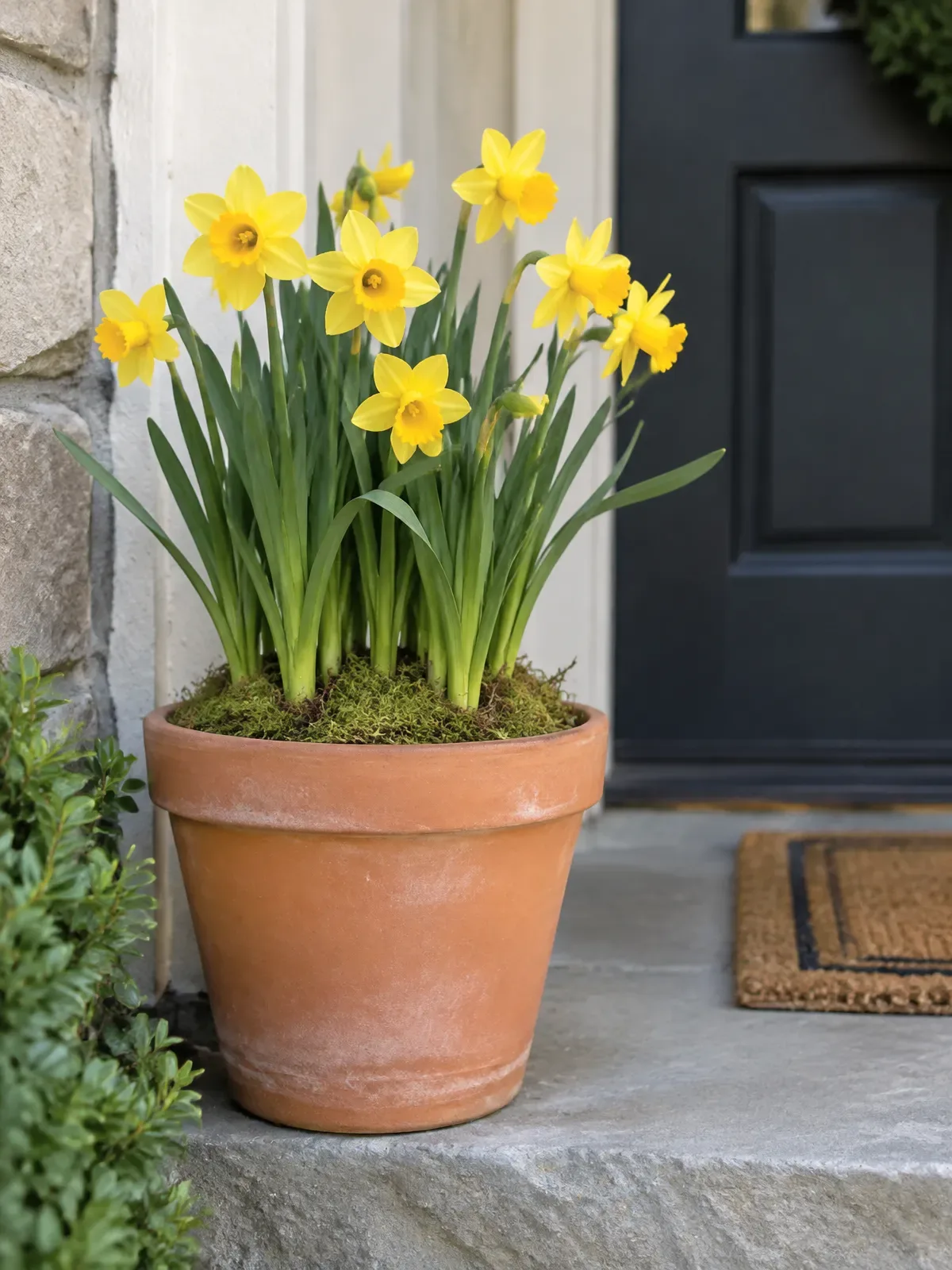
For a forgiving spring bulb in a porch pot, daffodils are hard to beat, and a medium pot suits them well. Their yellow and white trumpets read as spring from the sidewalk, and they bloom on stems that stand up in cool wind. Plant them in a group, not one lonely bulb, or the pot will look thin.
Cover the soil with a neat layer of green moss once the shoots are up. The moss hides bare soil, holds in moisture, and gives the pot a finished look that plain dirt never has. Water when the top of the mix feels dry, and let the leaves yellow and die back on their own after the flowers fade, since the leaves feed next year’s bulbs.
Miniature daffodils suit a medium pot best, because full-size stems can flop in a shallow one. Set the pot where it gets morning sun and it will bloom for weeks with almost no care.
5. Hyacinths in Matching Pots That Scent the Entry
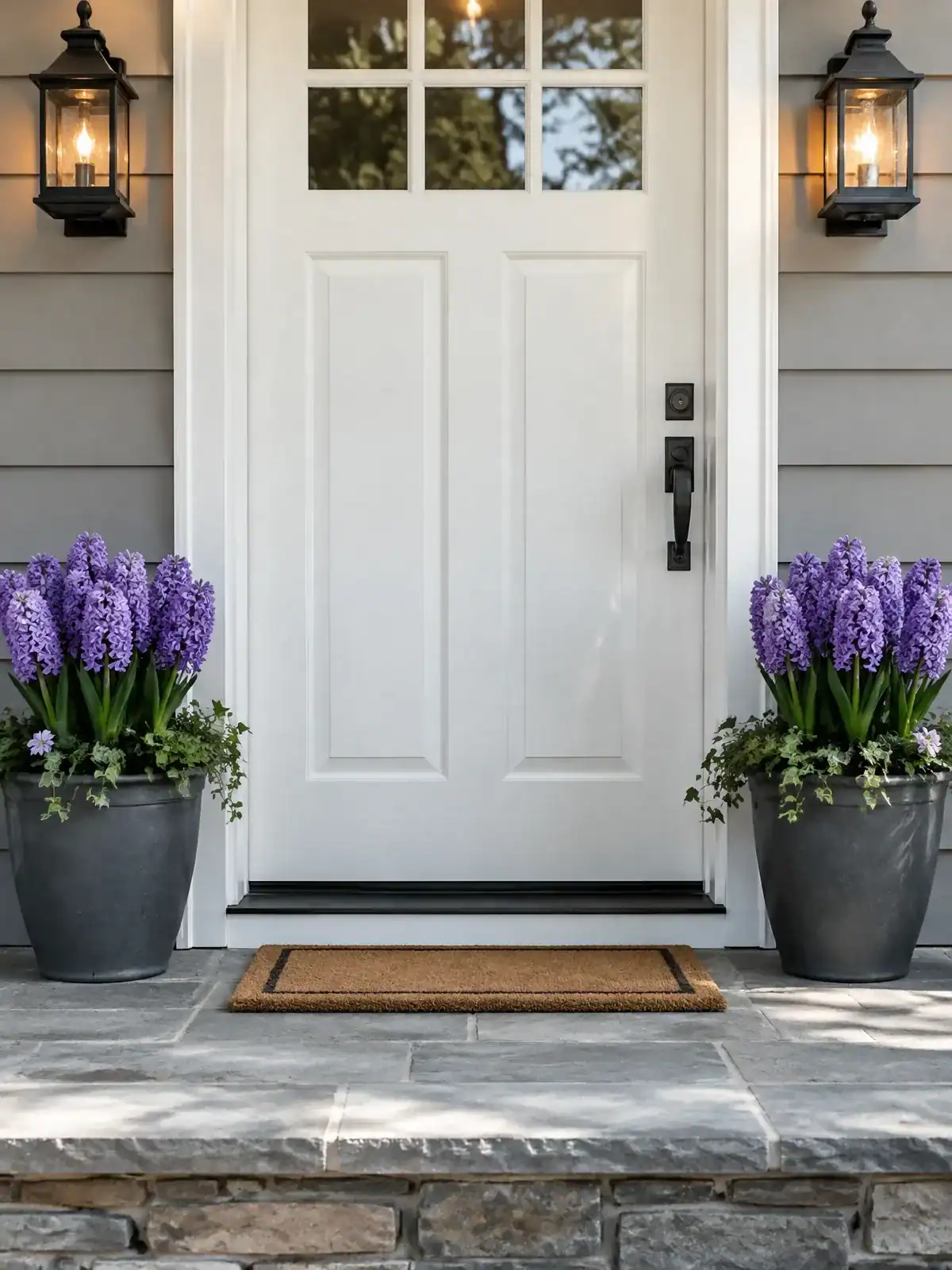
Guests smell hyacinths before they see them, and that is why they belong right by the door. Their dense spikes of purple, pink, or white blooms carry a sweet scent across the whole entry. Two matching pots, one on each side, make the door feel balanced and give the scent a double source.
Hyacinths bloom best in smaller pots, so do not bury them in a huge container where their stems look lost. Plant the bulbs close together for a full spike, and keep the pots where the scent drifts into the doorway. They flower for a short season, so enjoy them while they last and then swap the pots for the next round of spring color.
Shop the look
Similar pieces to recreate this look
- MATCHING POTSGarvee Tall Planters Set of 2, 16 InchShop on Amazon
- CERAMIC PLANTERCeramic Plant Pot With Drainage Hole and Saucer, 6 InchShop on Amazon
- PLANTER WITH SAUCERCeramic Planter Pot With Drainage Hole and Saucer, 6 InchShop on Amazon
As an Amazon Associate we earn from qualifying purchases.
If the scent feels too strong indoors, move the pots a step farther from the door and the breeze will soften it.
6. White Flowers With Silver Foliage for a Calm Porch
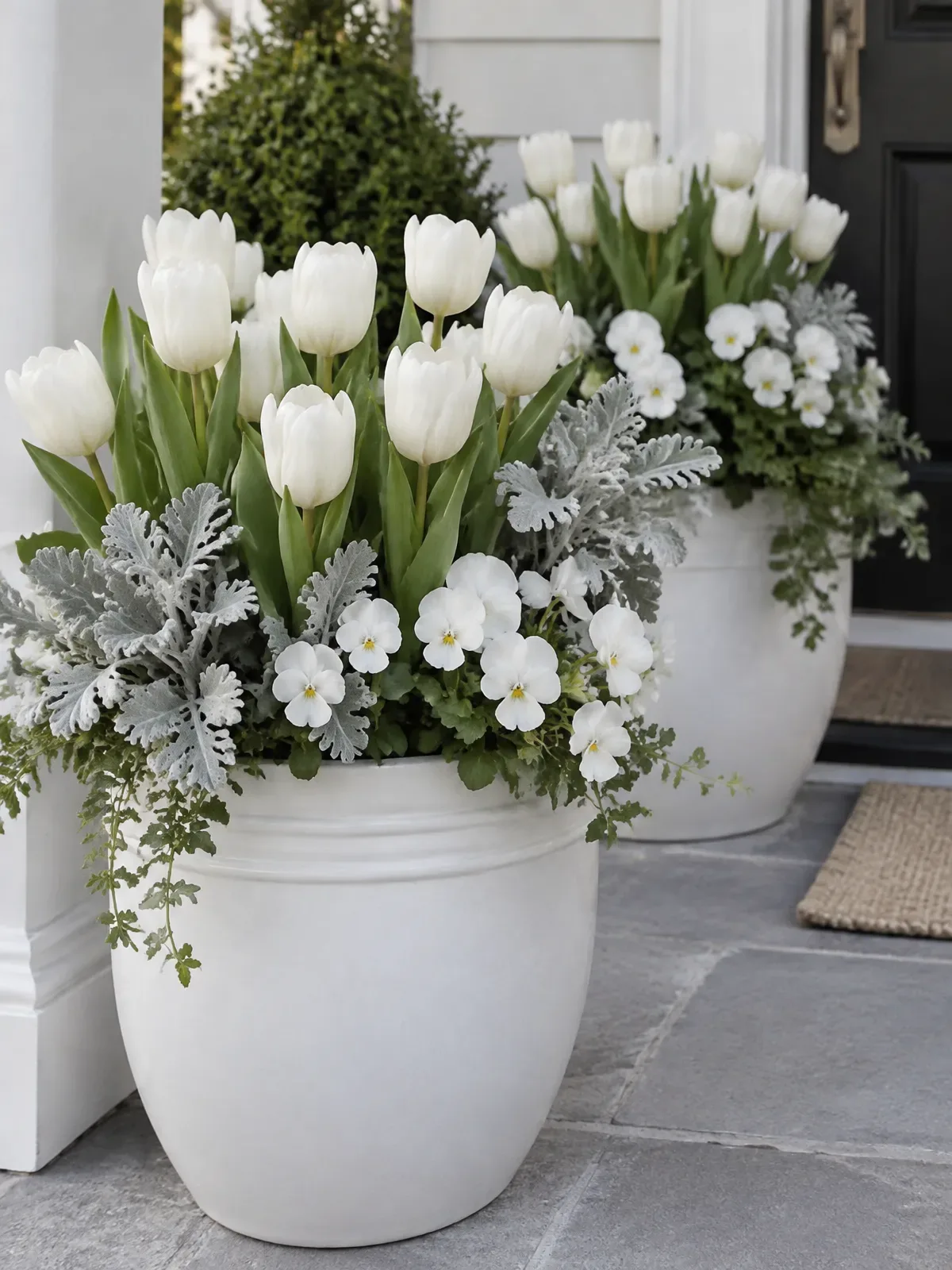
For the calmest look on this list, go white on white, and it suits a porch that already has a lot going on. White tulips give height, white pansies give low color, and silvery dusty miller ties them together with foliage that looks good even when nothing is blooming. The contrast between the white blooms and the silver leaves keeps the pot from looking flat.
Use matching white pots for this look, even plain ones, since the same pot in the same color is what makes it feel planned. Dusty miller is a foliage plant, so it holds its silver color all spring while the flowers come and go. Keep the pot in morning sun and water it when the top of the mix dries out.
This is the pot to pick when the door is already a strong color, since white flowers never fight with it. One white pot by the door is enough, and two matching ones make the entry feel quiet and orderly.
7. Pastel Cottage Pots With Tulips and Grape Hyacinths
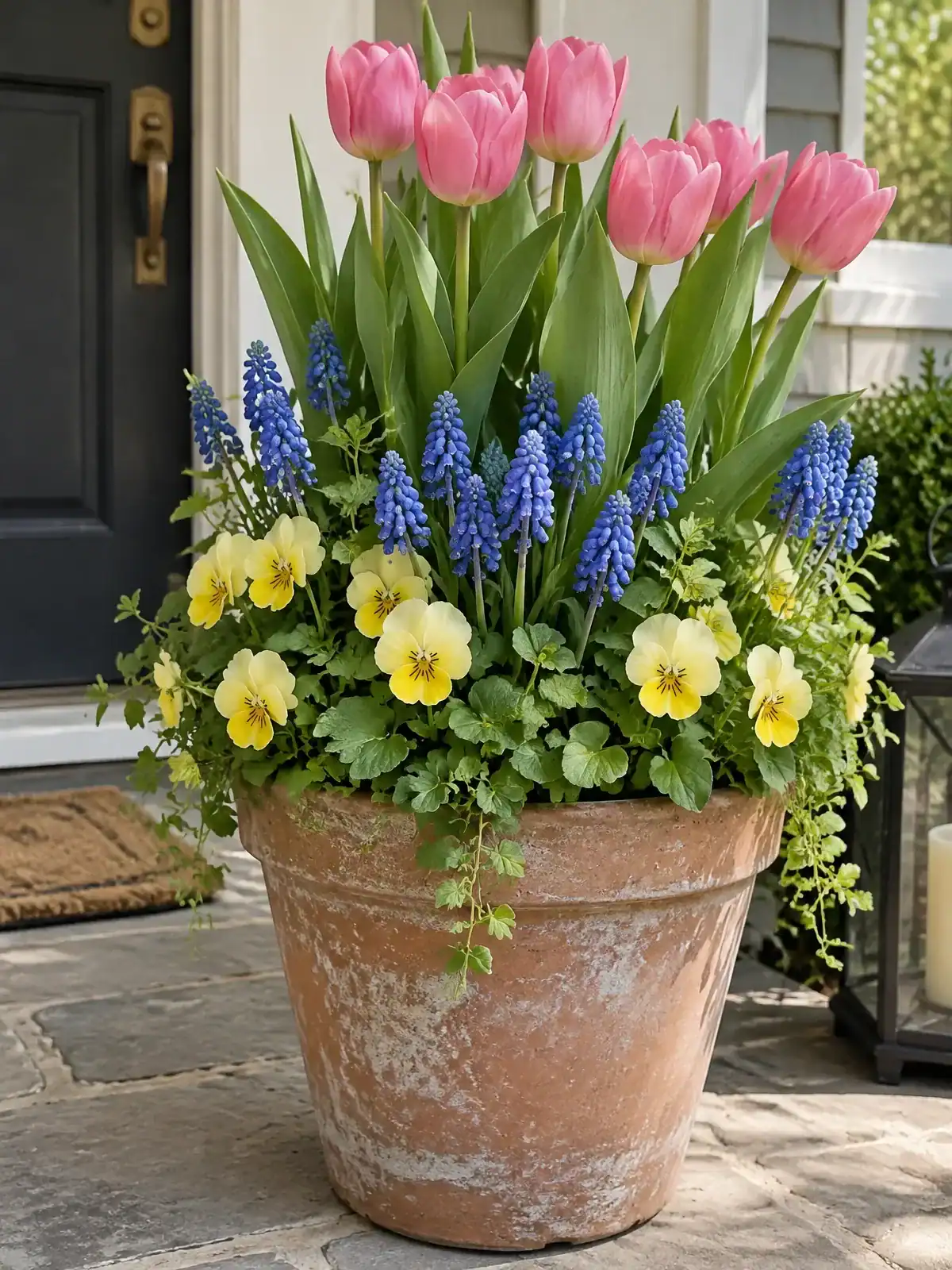
Pastel pots suit a cottage-style porch, where soft color feels at home. Pink tulips give the height, blue grape hyacinths fill the middle layer, and pale yellow or lavender pansies sit at the base. The three layers bloom at slightly different times, so the pot keeps changing instead of peaking all at once.
Plant the tulips deepest, the grape hyacinths above them, and the pansies at the top, and the pot will look layered from every side. Keep the palette to two bloom colors plus the green foliage, or the pastels turn muddy. A weathered terracotta pot suits this look better than a shiny one, since the soft finish matches the soft flowers.
Violas work in place of pansies here when you want smaller flowers and a longer bloom. Either way, deadhead the spent tulip heads once they fade so the pot stays tidy.
8. Bulb Lasagna Pots That Bloom in Layers
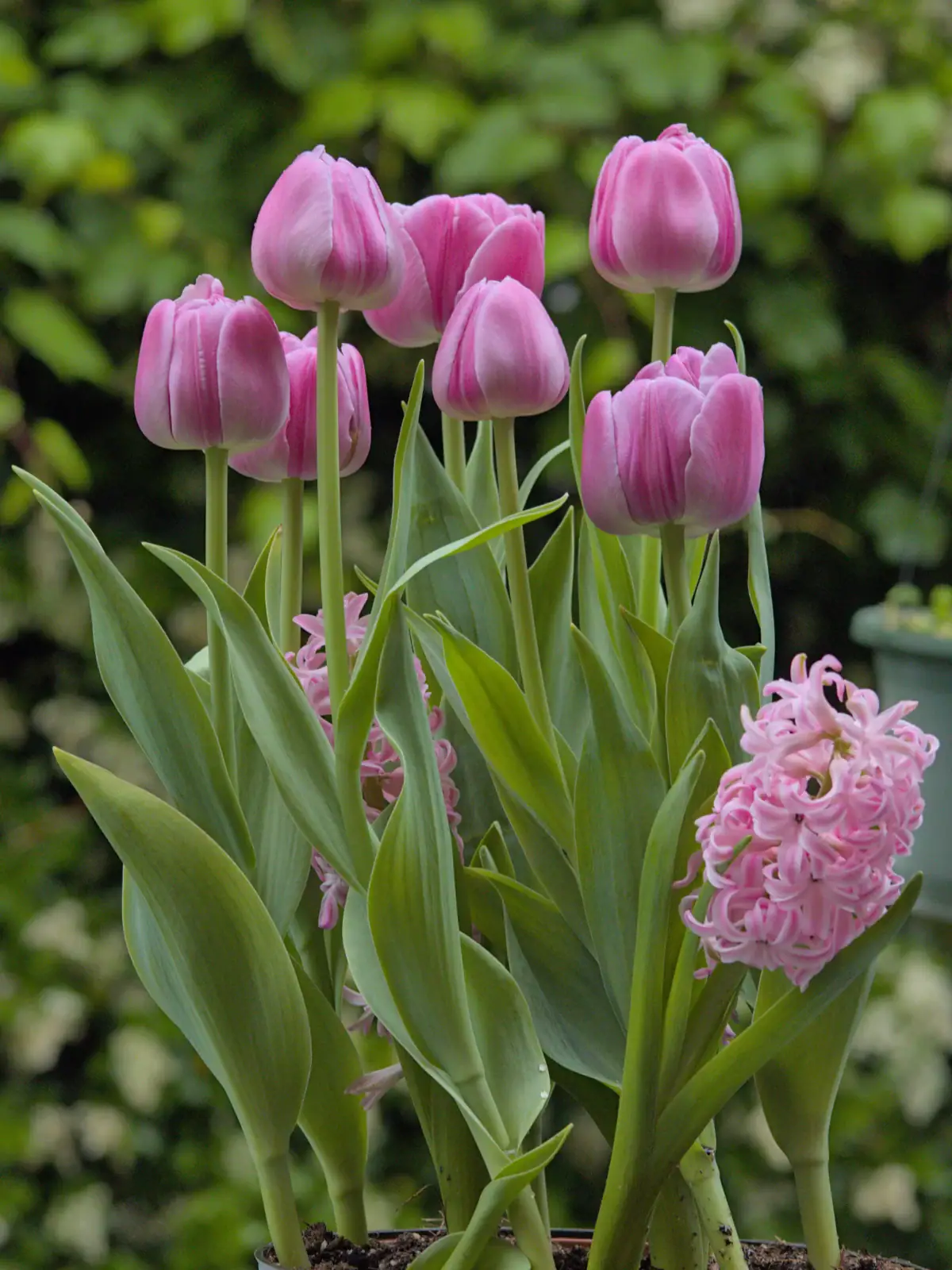
Layer bulbs in one pot, deepest first, and the flowers open in waves over weeks. Tulips go in the bottom layer, hyacinths in the middle, and pansies on top for instant color while the bulbs are still waking up. One pot can bloom from early spring into late spring without replanting.
Plant bulbs pointy side up, about 3 times as deep as the bulb is wide, and give the pot drainage holes so the bulbs never sit in water. Water only when the top inch is dry, and add bulb food at planting time. The layers need a deep pot, so do not try this in a shallow bowl.
Tulips bloom fine when planted in spring with no cold treatment at all.
Tulips need at least 12 to 16 weeks of cold treatment at 35 to 45 F before they bloom, so buy pre-chilled bulbs in spring or chill them over winter.
Any pot works for spring bulbs, with or without holes in the bottom.
Every spring pot needs drainage holes, since bulbs rot fast when they sit in water, and most spring container gardens do best with at least 4 to 6 hours of morning sun.
Spring pots need water every day, no matter the weather.
Water only when the top inch of mix is dry, and check the pot after rain before you water again.
Mark the pot with a small tag when you plant it, so you know what is still to come. The first shoots are the pansies, and the tulips follow a few weeks later.
9. Hellebores and Primroses for a Shady Porch
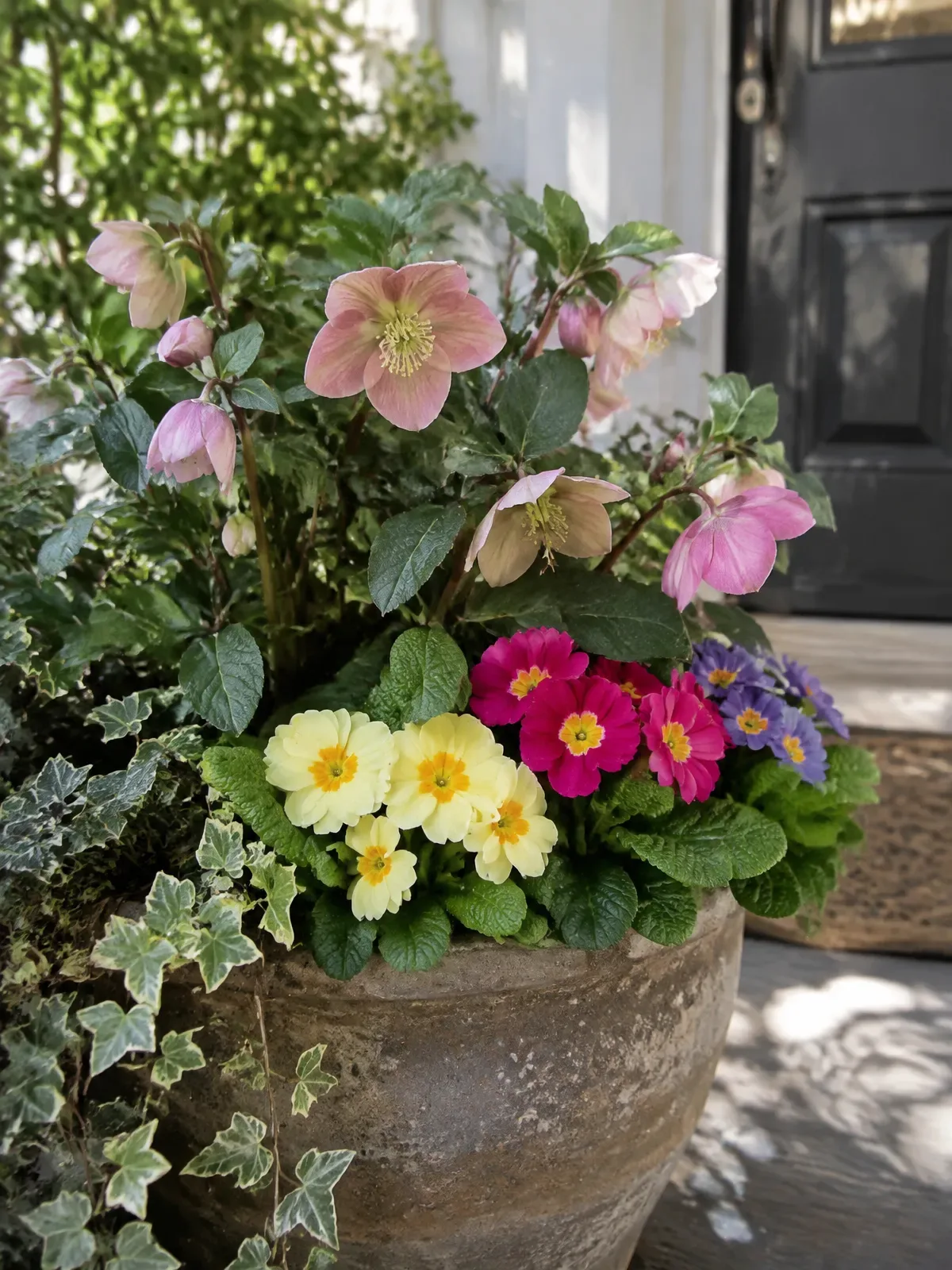
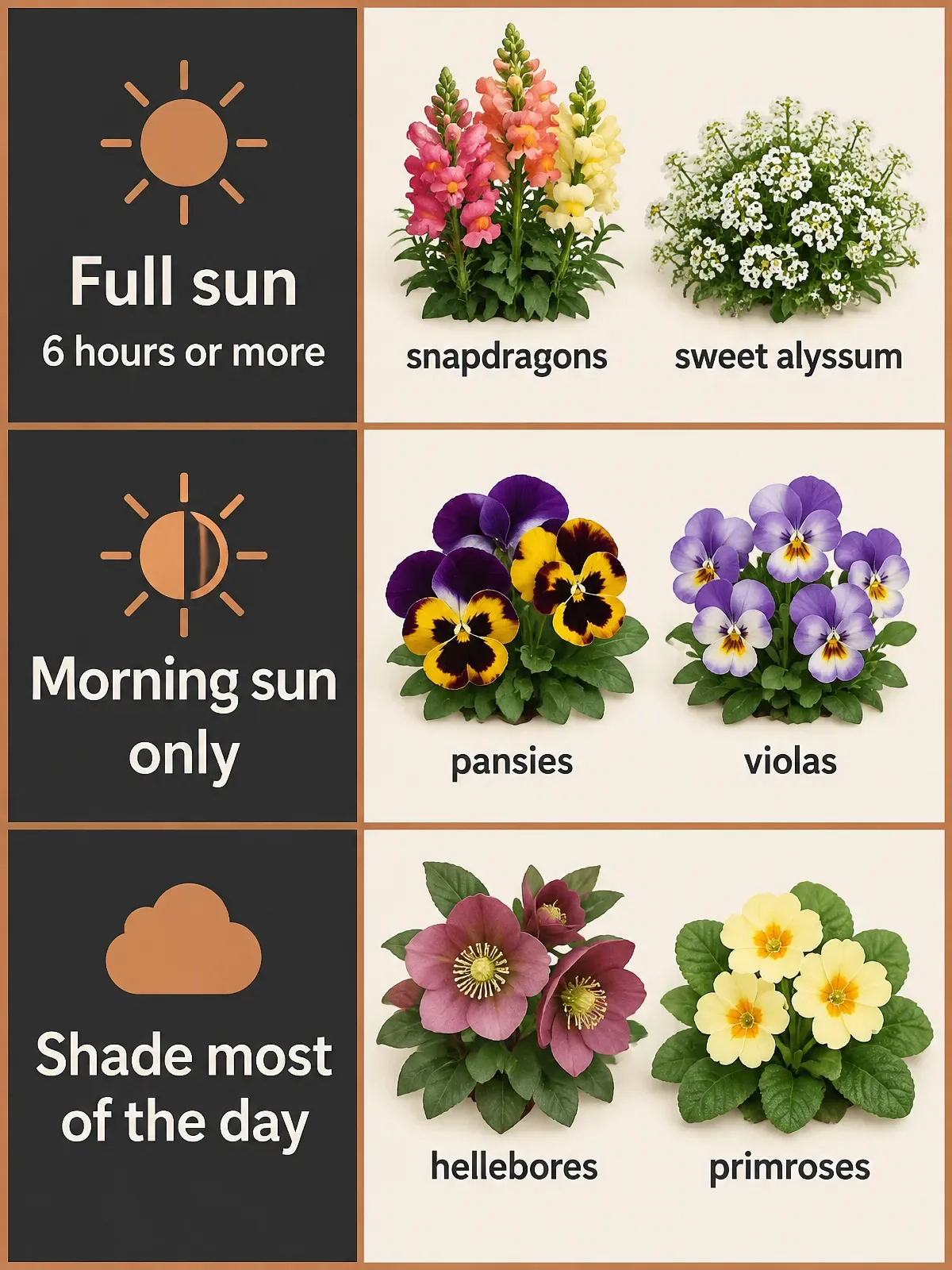
Shade does not mean a bare porch in spring, and hellebores and primroses are the plants for it. A hellebore holds the center of the pot with nodding pink or white blooms that open in late winter and early spring, while primroses pack the edge with jewel-toned flowers. Both prefer cool air and soft light, so a porch under deep eaves suits them.
A hellebore is a hardy perennial down to Zone 4, where winter lows reach -20 F in the ground, so it survives cold that would end a tender annual. A primrose needs shelter below 28 to 30 F, so pull the pot close to the house wall on the coldest nights.
After spring, move the hellebore into a shady bed and it will bloom again next year. For more ideas that suit low light, see front door plant ideas for entrances that get almost no sun.
Keep the pot out of afternoon sun, since shade plants scorch fast in hot light. Water the mix so it stays damp but never soggy, and the blooms will hold for weeks.
10. Snapdragons and Sweet Alyssum for a Sunny Porch
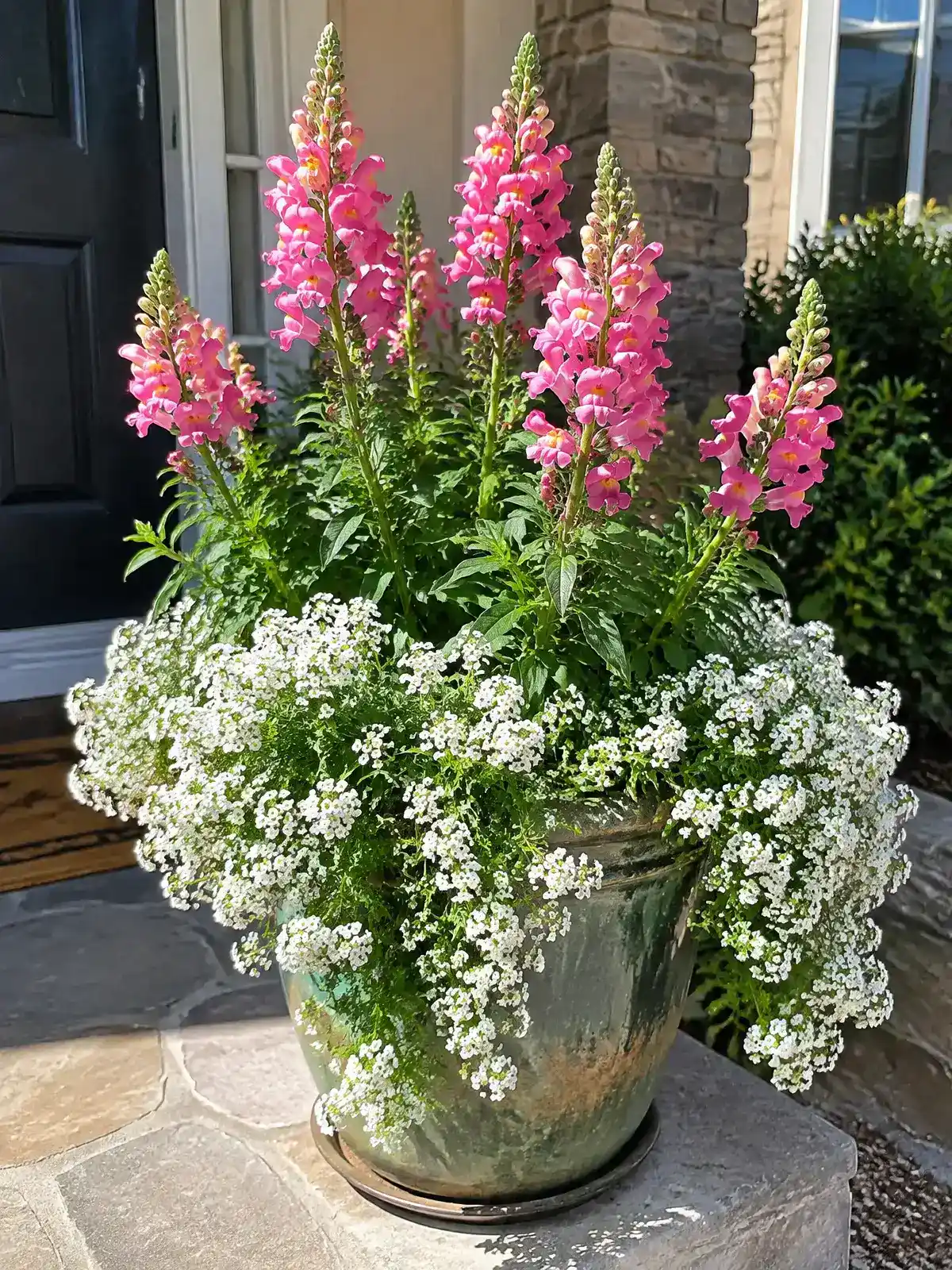
Give a sunny porch plants that love the sun, and snapdragons are the tall spring flower for the job. Their pink spikes stand up in full sun, and sweet alyssum spills over the rim in a soft white cloud that smells faintly of honey. Together they fill a large pot from top to edge without a bare spot.
Snapdragons tolerate 28 F, so they can go out while the nights are still cool, and they bloom best where the sun hits them for most of the day. Most spring container gardens do best with at least 4 to 6 hours of morning sun, and sun lovers like these want more than that when they can get it. Water the pot well in sun, since a large pot in full sun dries out faster than one in shade.
Pinch the snapdragon tips when the plants are young and they will branch out instead of growing one thin stem. Deadhead the spent spikes and new ones will follow.
11. Wooden Boxes With Violas for a Rustic Porch
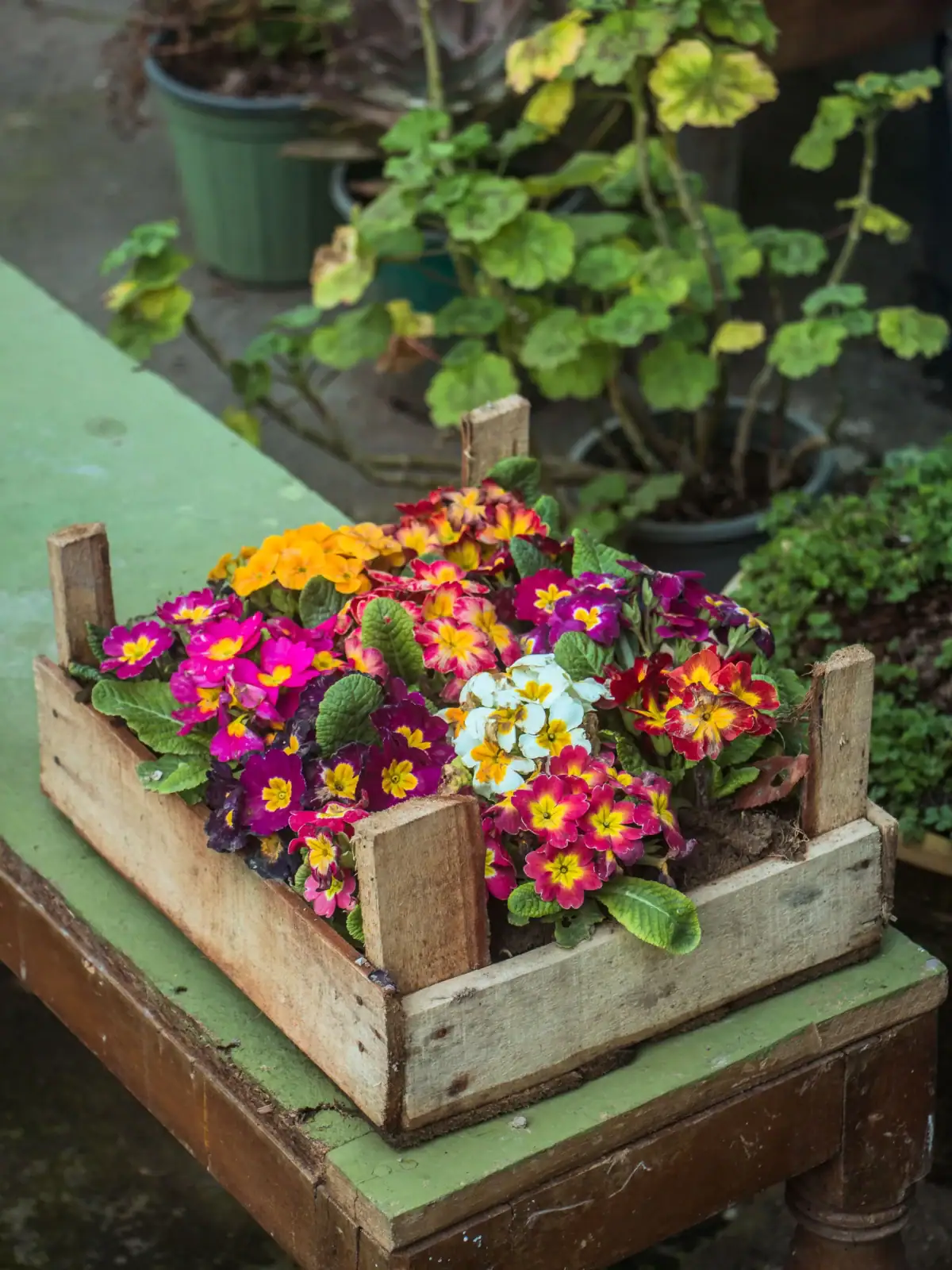
On a porch with wood siding or a farmhouse door, a rustic wooden box looks right at home, and violas are the flowers for it. Violas look like pansies with smaller flowers, and their size gives a box a softer look that lasts all spring. Their blooms keep coming as long as the weather stays cool, and they mix well with trailing greenery at the ends of the box.
Line the box so the wood stays dry, and make sure water can drain out of the bottom. Plant the violas close together so the box looks full from the start, and tuck a little ivy at each end to soften the corners. A long box suits a wide porch, while a short one fits a narrow step or a window ledge by the door.
Shop the look
Similar pieces to recreate this look
- WINDOW BOXWinlyn Rustic Wooden Planter BoxShop on Amazon
- RECTANGULAR PLANTERRectangular Flower Planters, 7 Pack, 17 InchShop on Amazon
- CEDAR BOXCedar Raised Garden Bed With Legs, Outdoor Planter BoxShop on Amazon
As an Amazon Associate we earn from qualifying purchases.
Wood weathers fast outdoors, so bring the box under cover in a hard rain or expect it to silver with age. Either way, the violas will carry the color.
12. Terracotta Pots With Geraniums for Warm Days
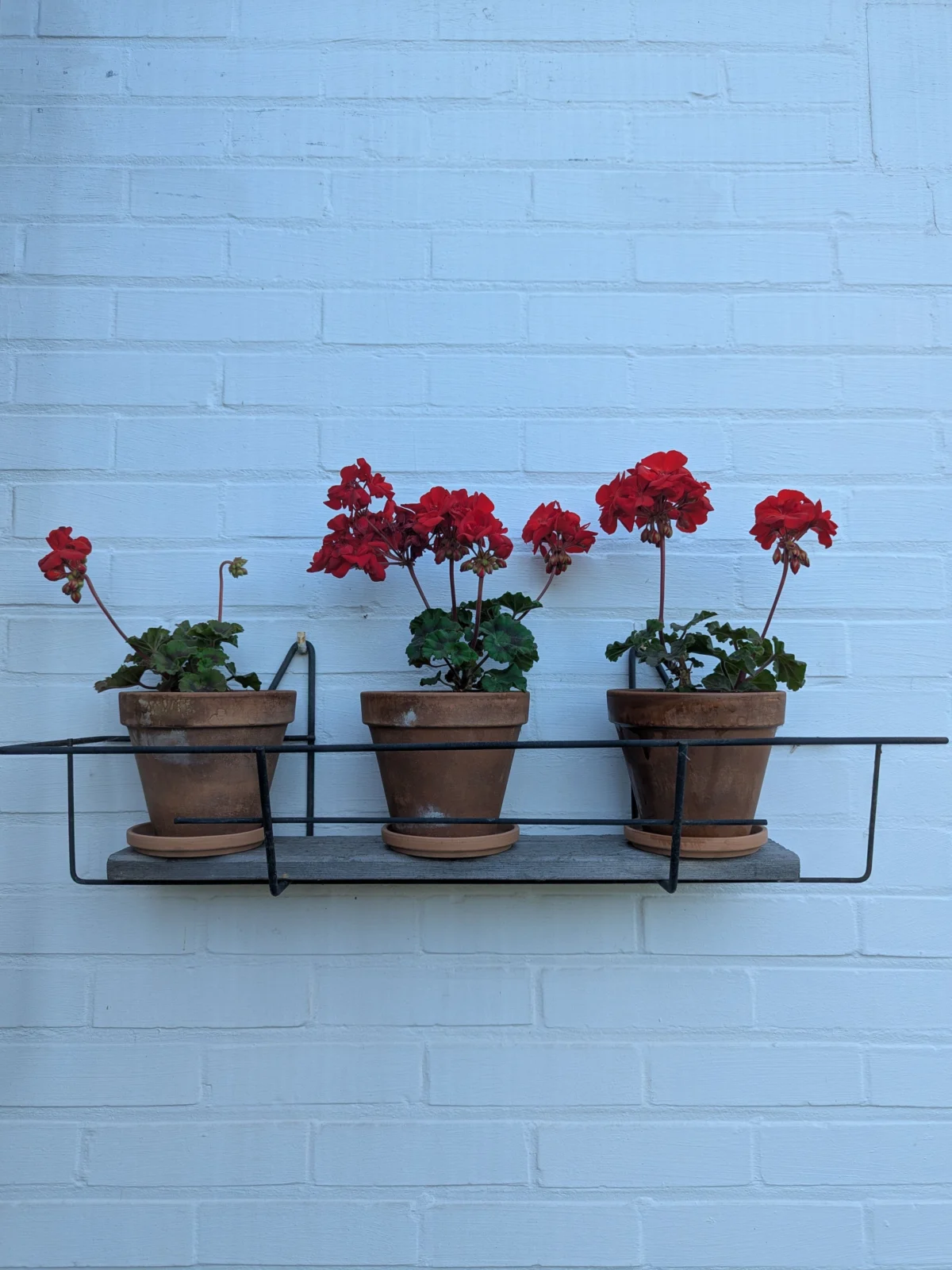
When the warm end of spring arrives, geraniums take over from pansies as they start to fade in the heat. Their red blooms sit above round green leaves, and a classic terracotta pot gives them the warm earth tone they suit best. Terracotta breathes, so the mix dries out between waterings, which geraniums prefer.
Keep an evergreen shrub or a small boxwood in the pot as a permanent center, and swap only the seasonal flowers around it. In early spring that might be pansies and daffodils, and in late spring you swap them for geraniums or trailing annuals once the nights stay warm. The pot keeps its shape all season while the color changes with the weather.
Shop the look
Similar pieces to recreate this look
- TERRACOTTA POTAged Terracotta Clay Planter Pot, 11 InchShop on Amazon
- CLAY POTOrceler Terracotta Pots With Saucer, 6 InchShop on Amazon
- TERRACOTTA SETTerracotta Pots Set With Saucer, 5/6/7 InchShop on Amazon
As an Amazon Associate we earn from qualifying purchases.
Terracotta is heavy once it is full of wet mix, so set the pot where you want it before you plant. A saucer under it keeps the porch clean when you water.
13. Herb and Flower Pots You Can Snip From
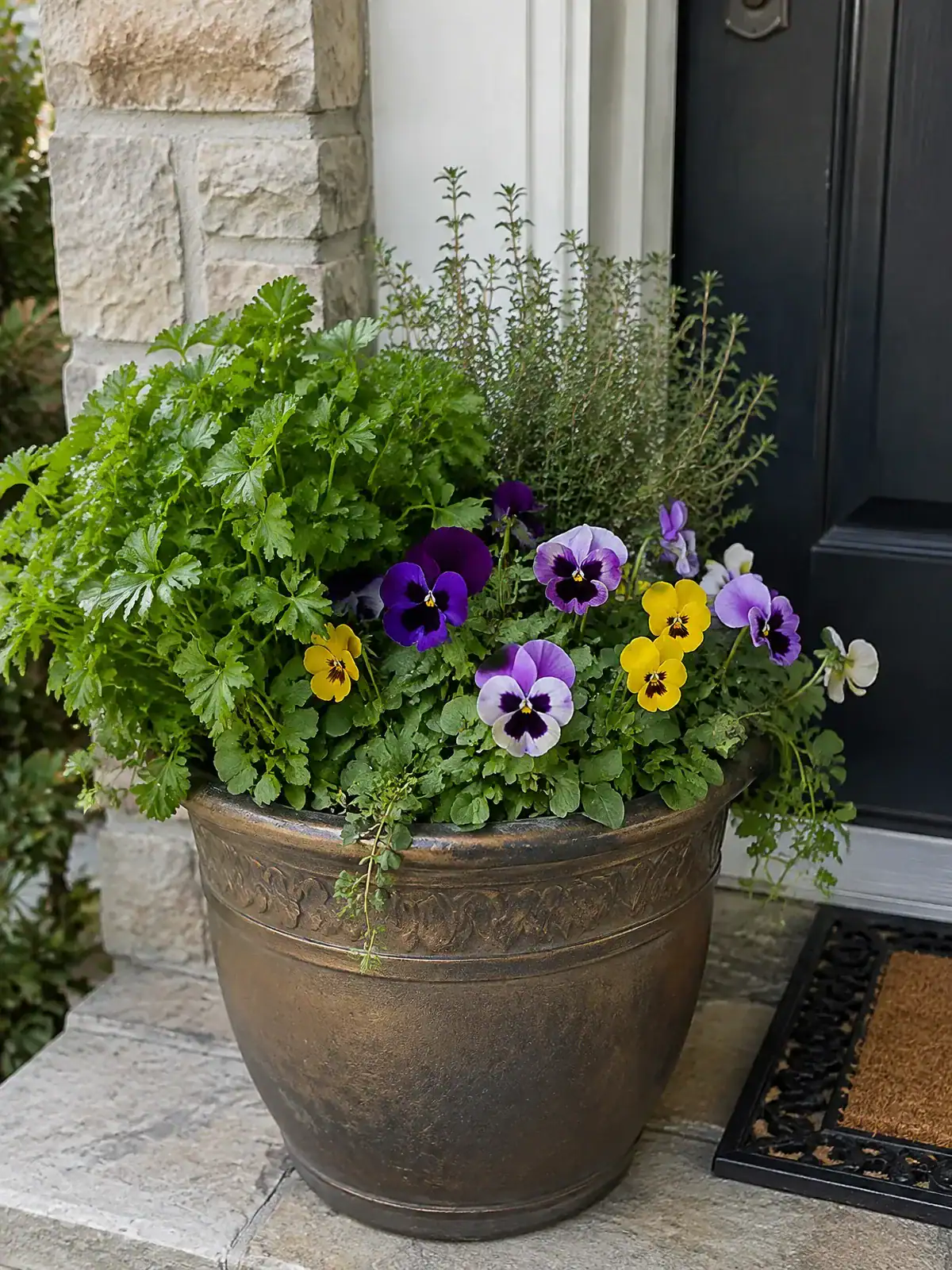
By the kitchen door, a pot can feed you as well as look good, and herbs mix well with spring flowers. Parsley gives a full green mound, thyme gives a low fragrant edge, and pansies give the color that makes the pot look like decor instead of a garden bed. Snip the herbs for cooking and the pot still looks full, since the flowers carry the display.
Keep the herbs and the flowers in the same light and water, or one side of the pot will fail while the other thrives. Parsley likes steady moisture, thyme likes it drier, so plant thyme at the edge where the mix dries first and parsley toward the center. Chives work in the same pot too, and their thin green spikes add height without shade.
Use the herbs often, since cutting them back keeps them bushy. A pot that gets snipped every week stays fuller than one that is left to grow leggy.
14. Wicker Baskets With Pansies and Ivy for a Covered Porch
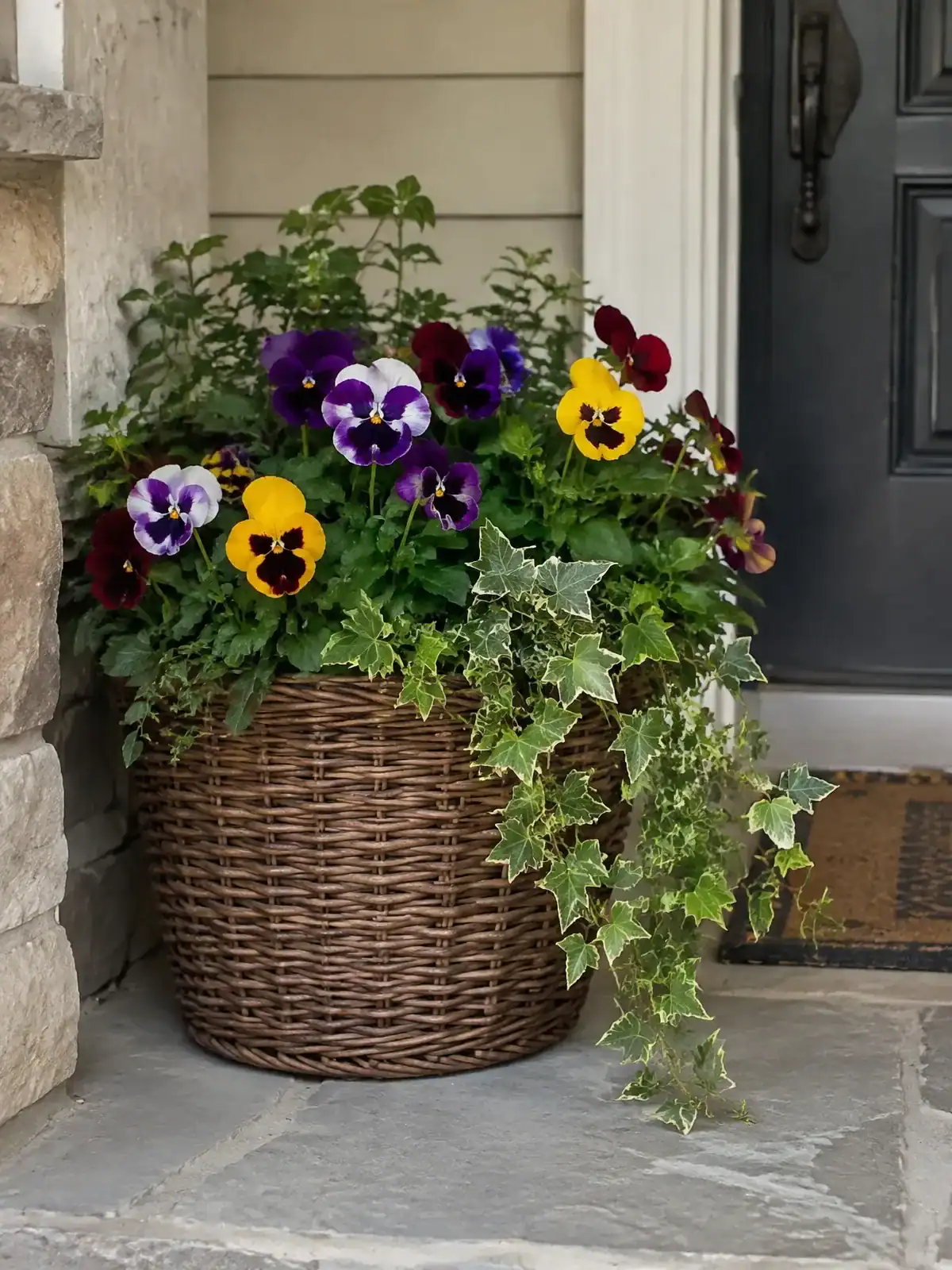
Try a wicker basket for a softer look than a hard pot gives, and plant it with pansies and ivy. The pansies give the color, and the ivy trails over the woven edge and softens the whole basket. The woven texture reads warm against stone steps or a painted door.
Line the basket well so the mix stays in and the wicker stays dry, and use it only on a covered porch. Too much weather can damage the basket over time, and a wet basket rots fast. Set it where the roof shelters it from rain, and water it by hand so the wicker never sits soaked.
Shop the look
Similar pieces to recreate this look
- WICKER BASKETHandwoven Boho Wicker Planter Basket, 12 InchShop on Amazon
- RATTAN BASKETRattan Planter Basket for PlantsShop on Amazon
- WOVEN BASKETWoven Jute Plant Basket for 10 Inch PotShop on Amazon
As an Amazon Associate we earn from qualifying purchases.
One basket by the door is enough, and a pair flanking the door works when the porch is wide and covered. Swap the pansies for trailing annuals when summer arrives and keep the same basket.
15. Spring Outdoor Flower Pots for Front Porches in One Big Pot
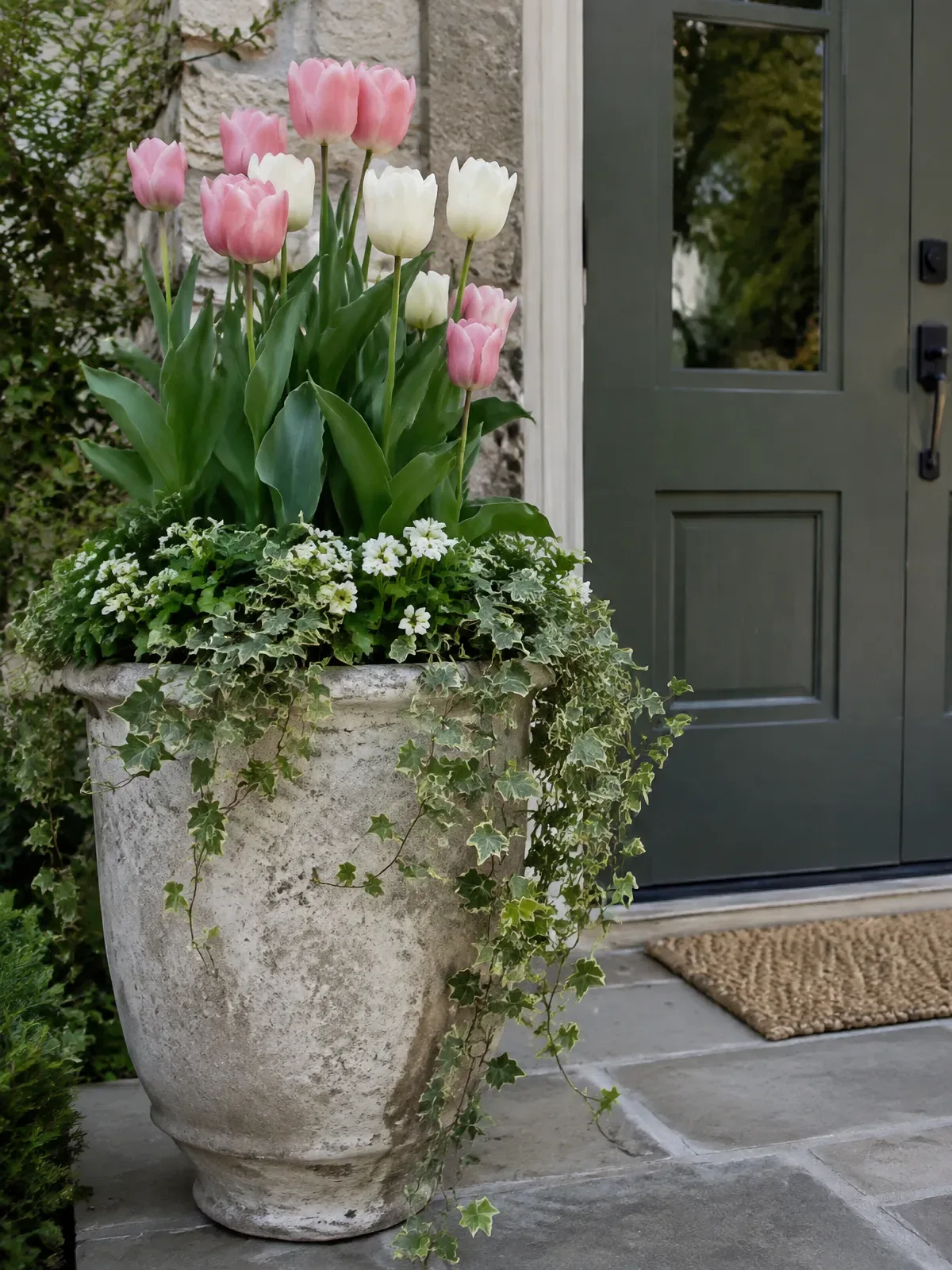
One strong pot beats a crowd of small ones on a small porch. Small pots dry out fast, tip over in wind, and make a narrow entry look cluttered, while one large pot anchors the space and reads as a choice. Put it beside the door, not in front of it, so the walkway stays clear.
Fill the big pot with tall tulips for height and trailing ivy to spill over the edge, and the pot will look full from every angle. A pot that is at least 12 to 16 inches across holds enough mix to keep the plants watered through a warm spring day.
One large pot costs less than five small ones and takes less time to water, too. For more small-space ideas, see spring small front porch decor ideas, and for the wider look around it, see spring front porch decor looks.
Shop the look
Similar pieces to recreate this look
- STATEMENT POTKante Large Round Bowl Concrete Planter, 19.9 InchShop on Amazon
- XL PLANTERRooTrimmer Large Plant Pots, 20 Inch, 3 PackShop on Amazon
- CONCRETE PLANTERKante Tall Concrete Planter, 21.7 InchShop on Amazon
As an Amazon Associate we earn from qualifying purchases.
Move the pot into place before you fill it, since a large pot full of wet mix is heavy to shift. Once it is planted, it only needs water and deadheading to carry the porch into summer.
Frequently Asked Questions
Do spring flower pots need drainage holes?
Yes, every pot needs drainage holes. Water that cannot escape sits at the bottom of the pot and rots the roots, and soggy roots are the main killer of spring pots. Check for holes before you plant, and drill them if the pot has none.
When do I swap spring pansies for summer flowers?
Swap them when the days turn hot and the pansies stretch and fade. Pansies fade once daytime highs pass 75 F, so move them to morning sun only for a last few weeks, then replace them with heat lovers like geraniums or petunias.
Can I reuse last year’s potting soil?
Yes, but do not reuse it as it is. Tip the old mix out, pick out the old roots, and blend it with new potting mix before you plant. New mix restores the air and the drainage that last year’s mix has lost.
Start with one pot by the door and the thriller, filler, spiller shape, then add a second pot when the first one is blooming. The porch will look planned long before spring is over.
Related posts
 19 Spring Front Porch Decor Looks That Make Guests Feel Welcome Instantly
 12 Front Door Ideas That Make Narrow Porches Feel Finished
 12 Front Door Planter Ideas for Small Porches
 Dining Room by Front Door Layouts That Keep Guests From Walking Through Dinner
 12 Front Door Trees in Pots That Make an Entry Look Instantly Finished
 16 Christmas Door Decorations Made for Snowy Porches
 Winter Porch Pots: 10 Planter Arrangements That Last From December to March
 15 Best Blue Front Door Inspiration Ideas That Say ‘Welcome Home’