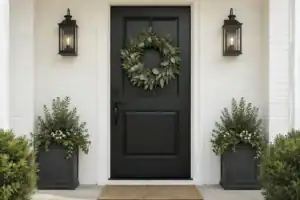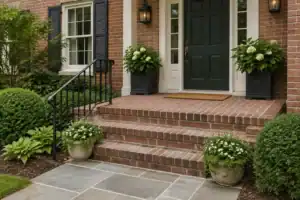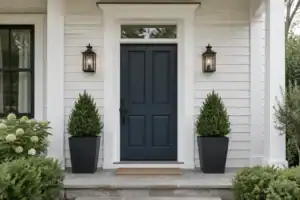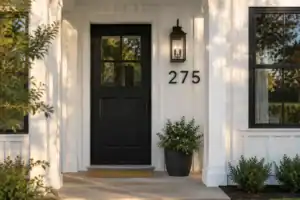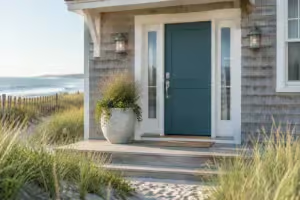
Most houses with a front-facing garage have two big doors on the facade, and only one of them is meant to be noticed. The front door is where guests walk in. The garage door is several times larger, so if it is the loudest color on the house, it takes over. That is why the question of whether your front door should match your garage door is really about which of the two should lead. The answer decides your paint colors, your hardware and a good part of your curb appeal.
The short answer
Usually no. Most painters and color consultants suggest letting the front door be the accent and letting the garage door recede by matching the siding or the trim. Matching both doors works well in two cases. One is a quiet, low-contrast scheme, such as white on white or black windows with black doors. The other is a garage tucked to the side and barely visible from the street. If your front door is one bold color, keep the garage door neutral.
Your options
Should the front door match the garage door? The four options
There are four common ways to handle it. They are guidelines rather than rules, and designers and painters do not all agree. Their advice points the same way, though: decide which door is the star and make the other one support it.
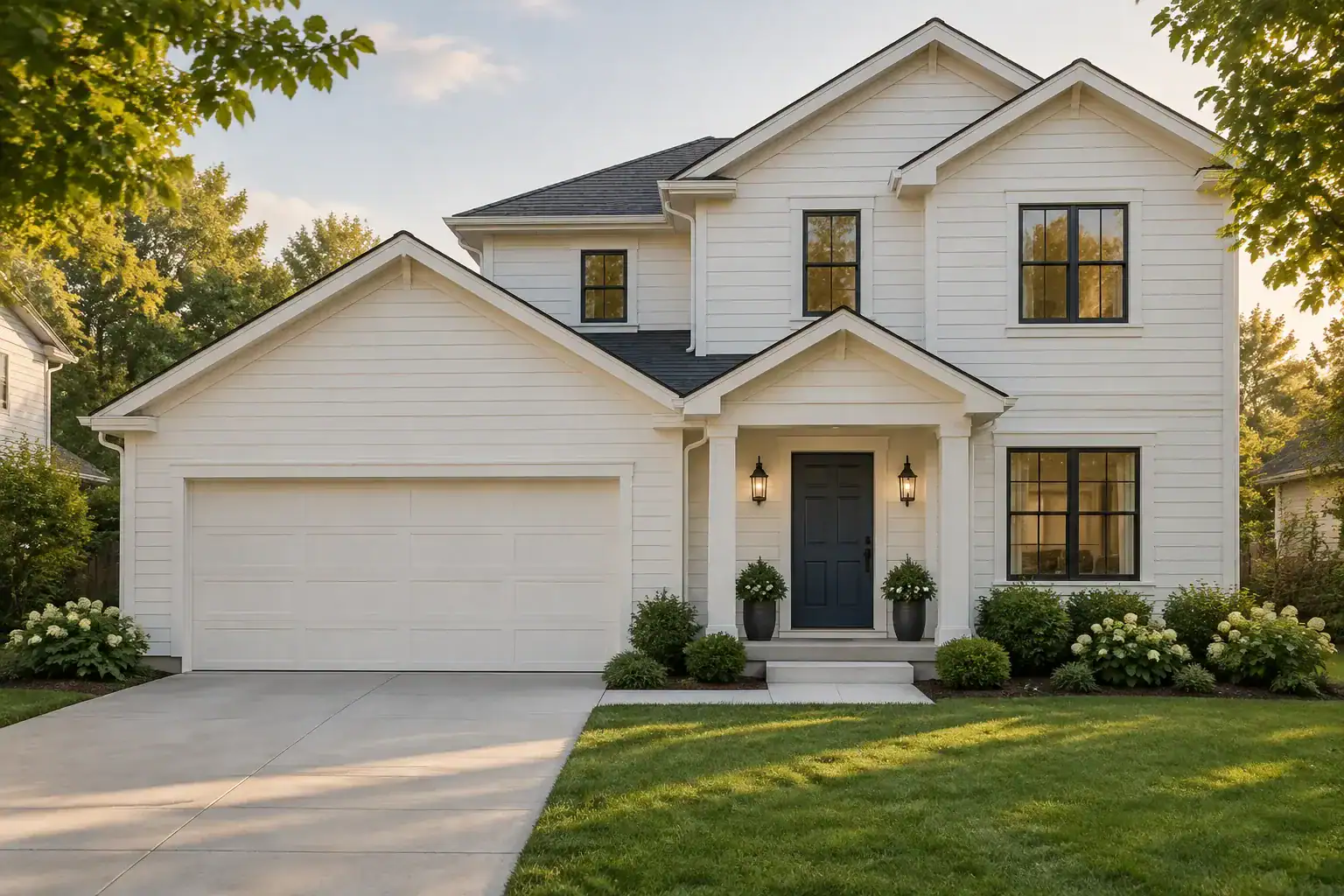
- Garage door matches the siding. The garage door fades into the wall, so the front door becomes the focal point. This is the safest choice and the one color consultants lean toward, because a large door in the body color draws no attention away from the entry.
- Garage door matches the trim. The garage door ties into the window trim and the front door surround. It works best with crisp white or soft neutral trim, and it keeps the facade looking planned without making the garage disappear completely.
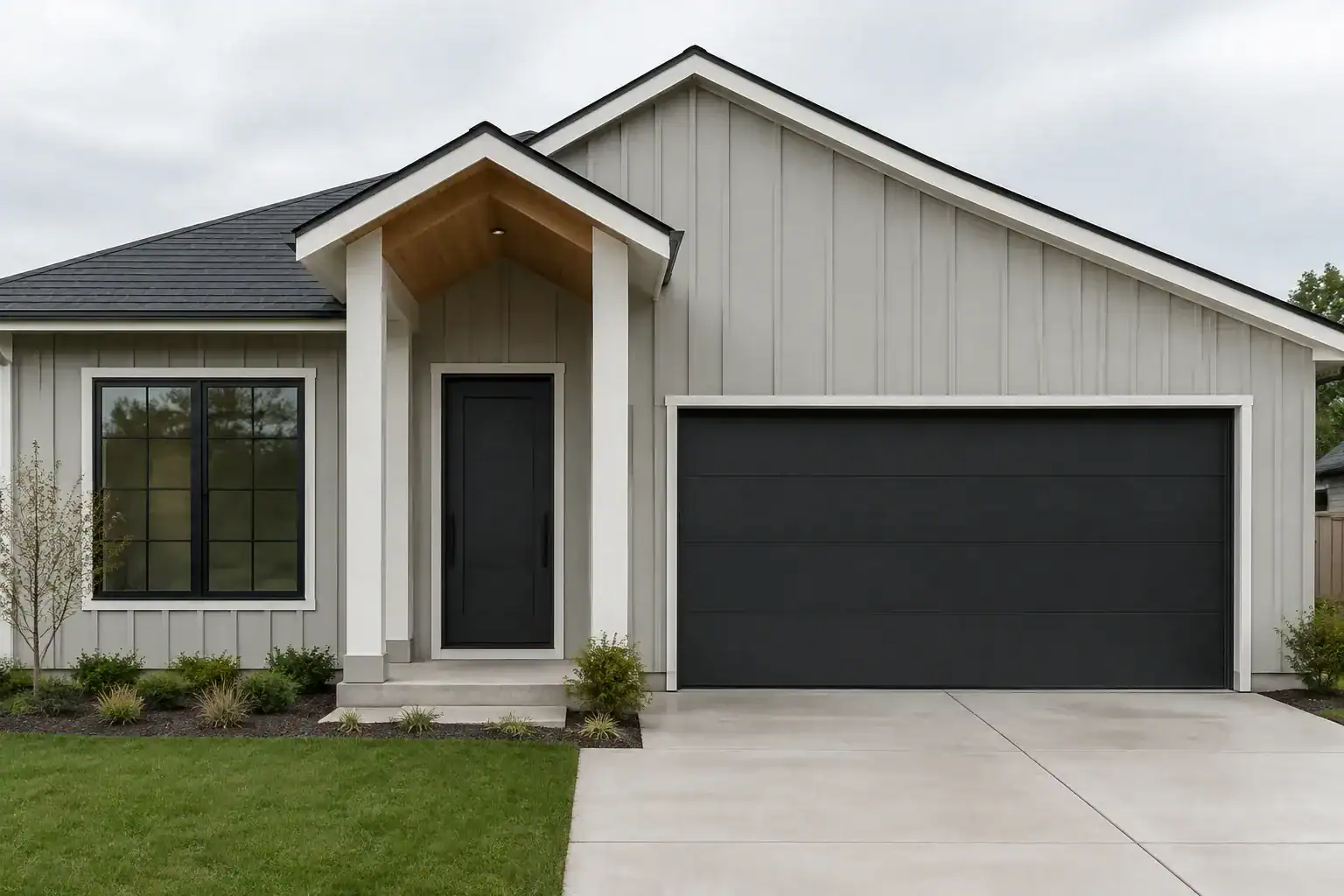
- Both doors match each other. This looks seamless in a quiet scheme, such as white on white or a dark door color that repeats black windows. It backfires when the shared color is bold, because two large blocks of the same strong color compete.
- Garage door takes a supporting color. With a bold front door, a calm white or navy garage door can work, especially on cottage-style houses, as long as the bold door color is not repeated on the garage.
Our take · James Davis
I would choose the garage door color first, because it is by far the biggest area of color on the front of the house. Then I would choose the front door so it stands out against it. In my view it goes wrong when people fall in love with a front door color and fit the garage around it: the garage ends up looking either like an afterthought or like a competitor.
Why it looks different
Why does the same color not look the same on both doors?
Because the two doors are not the same kind of object, and three differences do most of the damage.
- Size. Most single-car garage doors are 8 or 9 feet wide by 7 feet high, and the standard double-car door is 16 feet wide by 7 feet high. A standard entry door is 36 by 80 inches, as covered in our guide to what size front door suits a wide facade. By our calculation that is about 20 square feet for the front door. A 9 by 7 foot garage door is about 63 square feet and a 16 by 7 foot one is about 112, which is roughly three to six times as much paint.
- Material and sheen. Garage doors are often metal panels with a factory or painted finish, while front doors are commonly fiberglass, steel or wood. Each takes paint differently, so don’t assume that paints or stains match by eye, since whites in particular vary widely.
- Light. A porch roof or recess often shades the front door, while the garage door takes full sun on the street side. The same paint can read lighter on one and darker on the other, which is why a match that looked perfect on a chip can look off on the house.
Which choice fits
Which choice fits your house?
The usual options for the garage door are to match the body color, match the trim, or add a subtle contrast. Painters generally advise against matching the front door, because the front door should stay the focal point. The table below turns that into situations.
| Your situation | Garage door | Front door | Why |
|---|---|---|---|
| Garage faces the street and the front door is the one bold color | Siding color or trim color | The bold color | The large door recedes and the entry leads |
| Quiet scheme: white on white, or black windows with black doors | Same as the front door | Same as the garage door | One calm color reads as a single design decision |
| Garage is tucked to the side or set back | Matching is low risk | Your choice | It is barely visible from the street, so there is less competition |
| Very bold front door, such as red or yellow | Neutral: white, black or glass | The bold color | Keep the strong color on one door only |
| Cottage or traditional house with a bold front door | White or navy | The bold color | A calm supporting color suits the style |
| Dark garage door color on a sunny wall | Check the manufacturer first | Your choice | Heat and warranty, covered below |
Our take · James Davis
If I had to boil it down to one rule, it would be to keep the bold color on one door. Everything else in the table is taste. And if you cannot decide, paint the garage door the trim color: it is the low-risk choice, because that color is already on the house.
Heat and paint
Does the color of a garage door affect heat and the warranty?
It can. Darker colors absorb more heat, which matters most on metal doors on sunny walls. That heat can warp wooden doors and make steel doors expand and contract more, and painting without checking the maker’s specifications could void the warranty (Clopay). A DIY paint job typically shows wear within 2 to 5 years, against 10 to 15 years for a properly factory-finished door. Factory-finished dark colors, dark hardware, or forgiving mid-tones such as darker grays, deep blues and bronze are safer alternatives.
Check before you paint
If the garage door has a factory finish, read the warranty and the maker’s paint guidance before changing its color, especially for a dark shade. Fiberglass and metal also need paints formulated for them, so match the paint to the door material rather than to the color alone.
Our take · James Davis
On a factory-finished door I would stay with a color the maker approves, or choose a mid-tone, rather than go to near-black because a photo looked good. If you love the look of black, matte black handles and hinges on a lighter door get you most of the way there with none of the heat or warranty risk.
Common mix-ups
What do people get wrong about matching the two doors?
- Myth: the doors must be the exact same paint. Fact: matching can also mean the same color family or a complementary shade, and one of the experts quoted in the Homes & Gardens roundup says the exact same color is not a necessity.
- Myth: a bold garage door adds curb appeal. Fact: a garage door that repeats a bold front door color competes with the entry, so keep the strong color on one door.
- Myth: once the paint is chosen, hardware does not matter. Fact: one hardware style and finish across both doors ties them together, and a finish that appears nowhere else on the exterior looks out of place.
- Myth: any white matches any other white. Fact: whites vary widely, so compare your choice against the real siding and trim, not against another white from memory.
Before you paint
How do you test the colors before you commit?
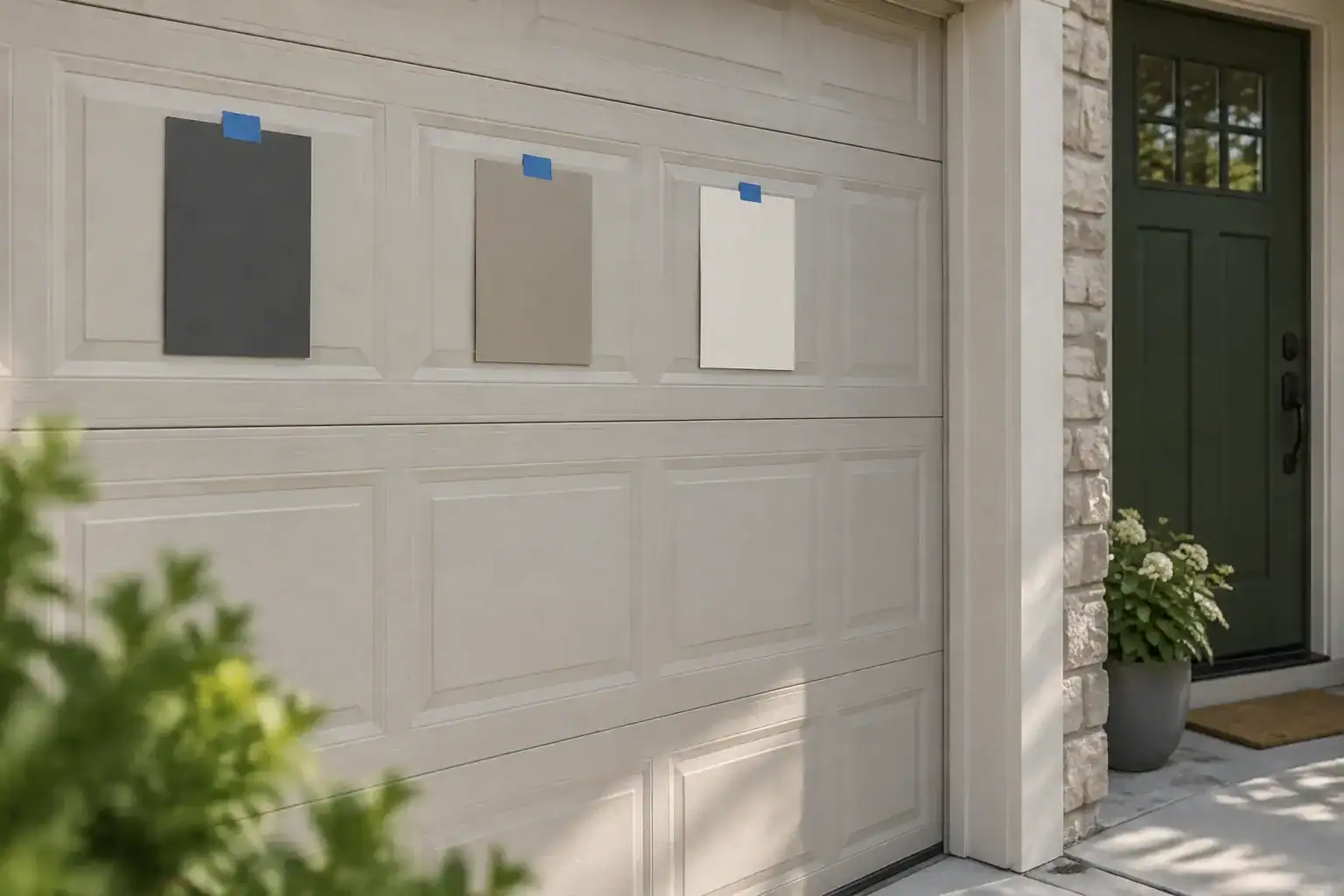
- Tape large sample boards, not tiny chips, on the garage door and beside the front door. Screen previews can differ from real paint.
- Look at them in morning, midday and evening light, and from across the street.
- Compare them against colors that will not change, such as the roof, brick or stone.
- Confirm the paint suits the door material: exterior latex works on metal and wood, while fiberglass needs a paint designed for it.
- Clean, sand and prime the door with a primer suited to its material before the final coats.
Next steps
What should you decide next?
If the garage door is settled and you are still choosing the front door color, narrow it by the house. See front door color for a white house, front door colors for a light gray house or neutral front door colors. If you are drawn to a dark door, black front door paint colors covers shades that hide dust and scuffs.
Should the garage door match the trim or the siding?
Either works. Matching the siding makes the garage door recede the most, while matching the trim ties it to the windows and the entry. If you are unsure, trim is the lower-risk choice because that color is already on the house.
Can I have a black front door with a white garage door?
Yes. When the front door is the single strong accent, some pros keep the garage door neutral, and white and black are both neutral options. A black front door with a white garage door works especially well when the siding or trim is also white.
What if my front door is stained wood and the garage door is painted?
Choose colors from the palette already on the house, and avoid mixing warm and cool tones. A wood-tone front door can sit well beside a painted garage door in a color drawn from the siding or trim.
Do HOA rules affect these colors?
Neighborhoods with associations or design review boards often limit exterior colors, so check the rules before you buy paint. The sources reviewed for this guide do not cover them.
In one sentence
Let the front door lead and the garage door recede, unless one quiet color ties both together.
Related posts
 Should Door Hardware Match Light Fixtures?
 Should Door Handles Match Cabinet Hardware?
 Should Bedroom Doors Match the Walls or Trim
 Should Interior Doors Match the Walls or the Trim?
 How to Choose Outdoor Lights for Your Front Door
 Replacing a Garage Door With French Doors: Is It Feasible?
 Product Comparison: Heavy Duty Garage Door Hinges with Galvanized Finish
 Garage Door Hinges #1-14 Gauge Steel Heavy Duty Review