A door draft stopper is one of the easiest things a quilter can sew from a scrap bin. These 8 door draft stopper DIY projects use leftover squares, flannel and a few cheap fillers. For more ways to calm a drafty entry, see our front door and entry ideas.
Some product links below are Amazon affiliate links. As an Amazon Associate we earn from qualifying purchases.
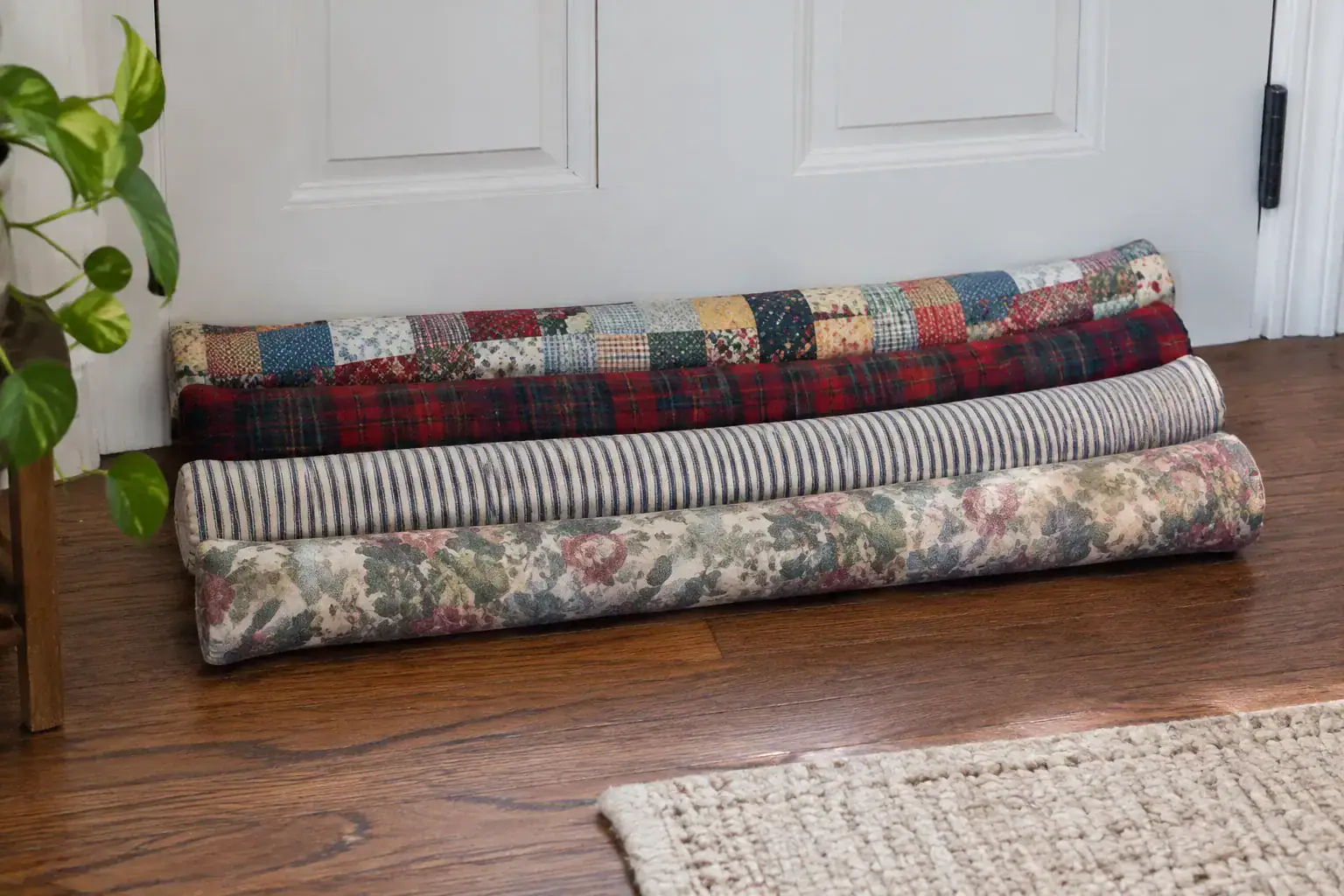
1. A Patchwork Stopper From Leftover Squares
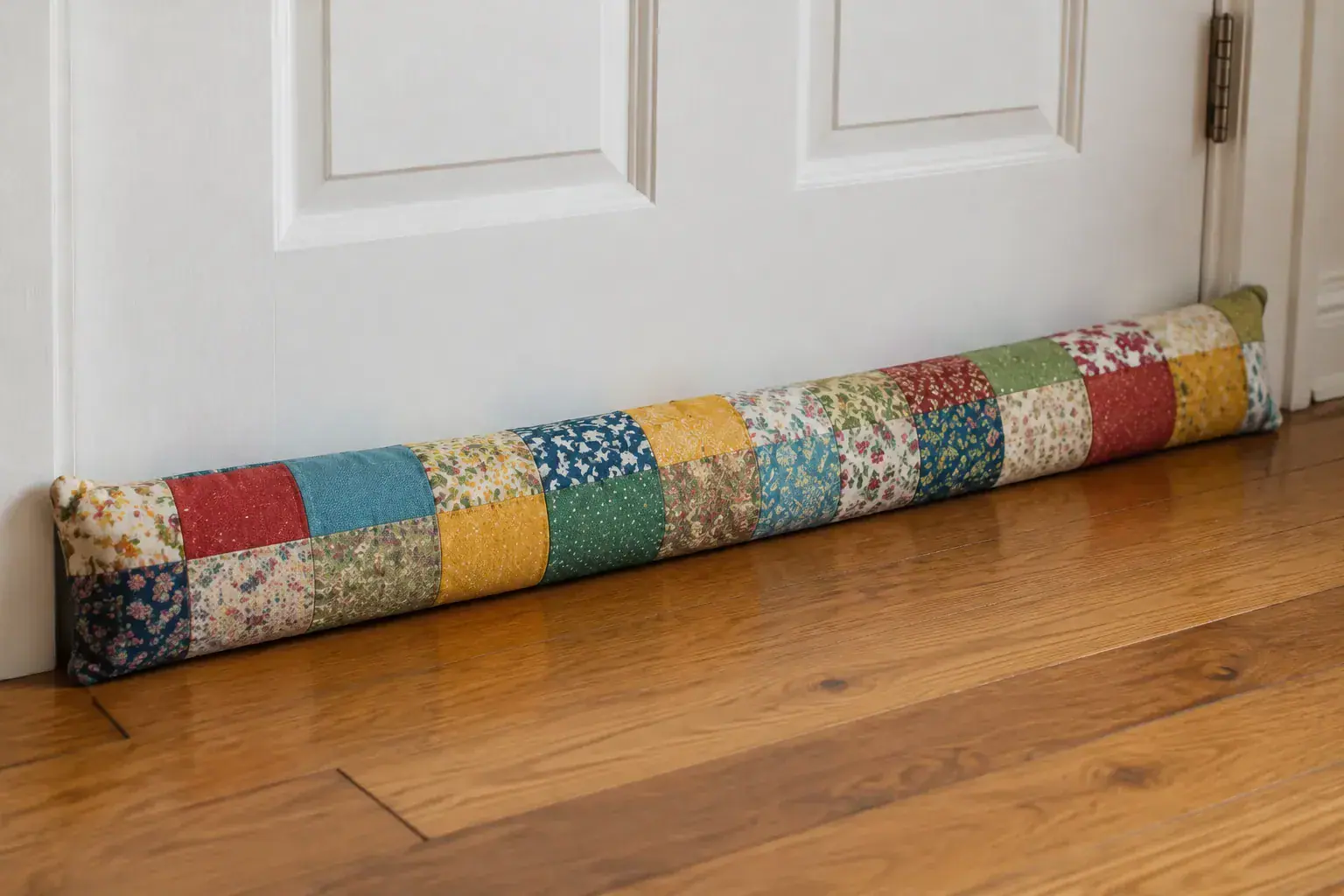
Start with the simplest project. Sew a strip of scrap squares into a tube about as long as your door is wide, then stuff it.
Press every seam open so the tube lies flat and the stitching holds under the weight of the filling. Pick squares that match in weight, since mixed weights pucker along the seams.
The calculator below sizes the fabric for any of the projects in this list, so you can cut before you sew.
The first number is the width of the strip you piece together, and the second is its length. If you piece squares, add the seams for each square to the strip width before you cut.
Shop this pick
Fabric squares and filling for a first stopper
- FABRIC SQUARESPrecut quilting fabric squares bundleShop on Amazon
- POLY FILLPolyester fiberfill stuffingShop on Amazon
As an Amazon Associate we earn from qualifying purchases.
2. A Flannel Snake With Felt Eyes
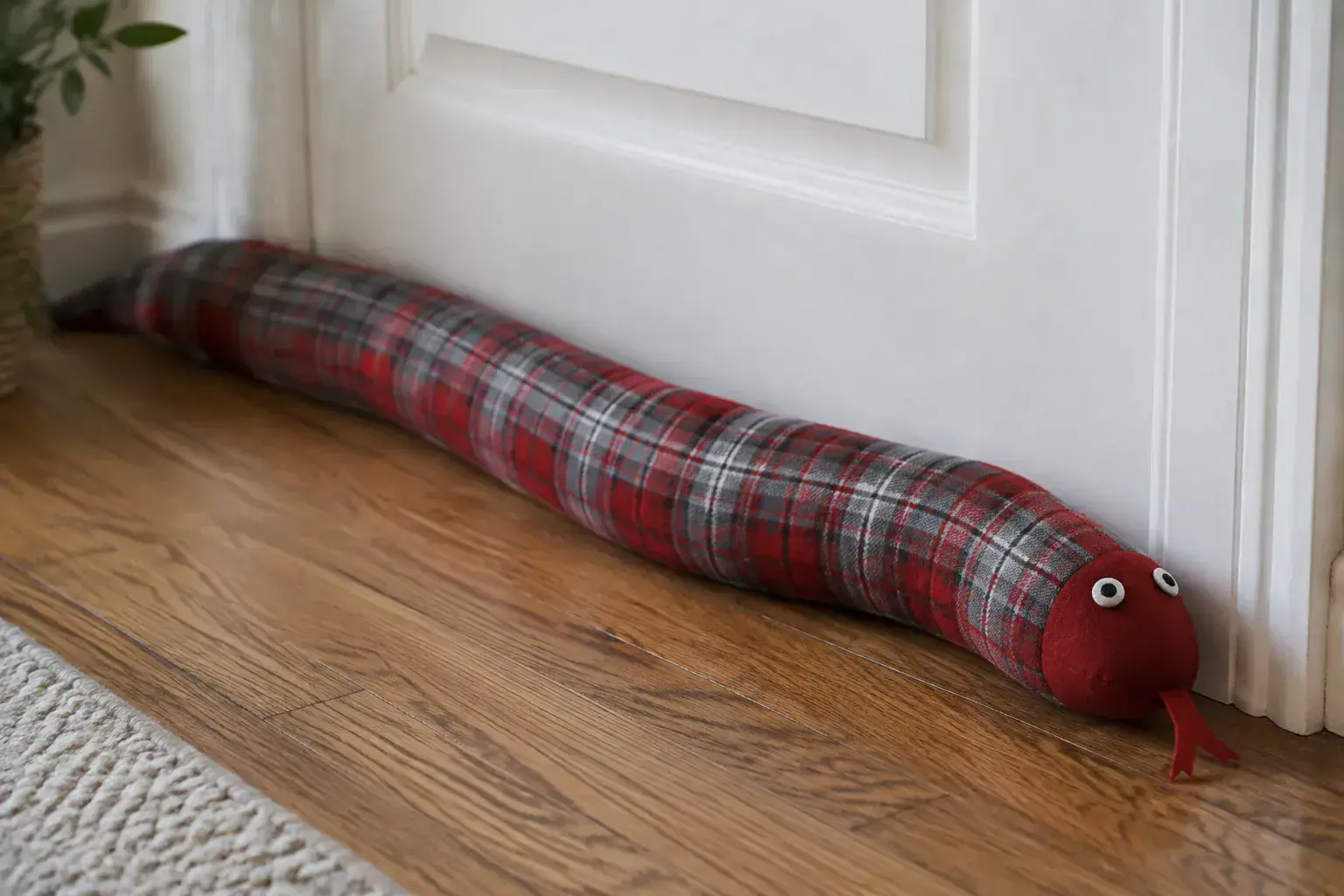
Flannel is soft and warm, so it suits a stopper that curls like a snake. A slight curve helps it hug the door, and small children like to play with it.
Use a long thin tube and sew on felt eyes and a tongue with a few hand stitches. Wash and dry the flannel before you cut it, because it can shrink more than cotton.
Shop this pick
Flannel for a soft, warm stopper
- FLANNEL FABRICPrecut flannel fabric bundleShop on Amazon
As an Amazon Associate we earn from qualifying purchases.
3. A Sand Weighted Tube That Stays Put
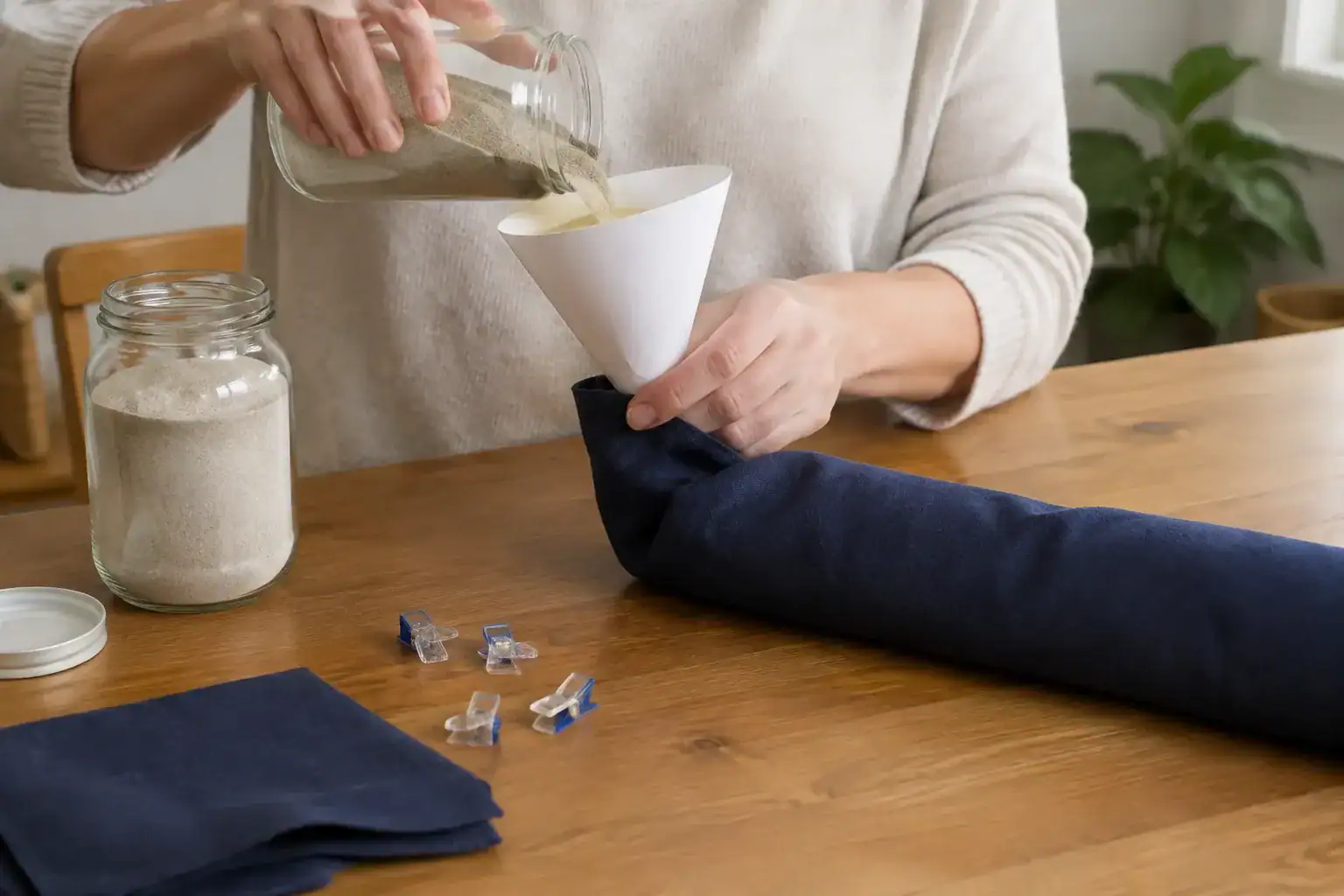
Weight keeps a stopper flat against the gap without sliding. Fill an inner tube with craft sand or poly pellets for the weight, then slide it into a washable outer cover that holds a layer of fiberfill.
Sew the seams twice and close the end with a tight stitch. Use a paper funnel and a spoon to fill the tube, then wipe the seam before you close it.
Keep weighted fillers away from toddlers
The U.S. Consumer Product Safety Commission says its small parts cylinder approximates the size of the fully expanded throat of a child under three years old. Pellets and sand are smaller than that, so a split seam is a real hazard, and a weighted stopper belongs out of reach of toddlers and pets that chew.
Shop this pick
Weighted fillers and tools for the job
- POLY PELLETSPoly pellets stuffing beads, weightedShop on Amazon
- CRAFT SANDFine craft sand fillerShop on Amazon
- SEWING CLIPSSewing clips for holding seamsShop on Amazon
As an Amazon Associate we earn from qualifying purchases.
The table lines up the fillers so you can choose before you buy.
| Filler | Weight | Feel | Watch for |
|---|---|---|---|
| Polyester fiberfill | Light | Soft | Slides on smooth floors |
| Poly pellets | Medium | Beanbag | Small beads if a seam splits |
| Craft sand | Heavy | Firm | Spills if a seam splits |
| Fiberfill over pellets | Medium | Soft outside | Needs an inner liner |
4. A Quilted Log With Stitched Lines
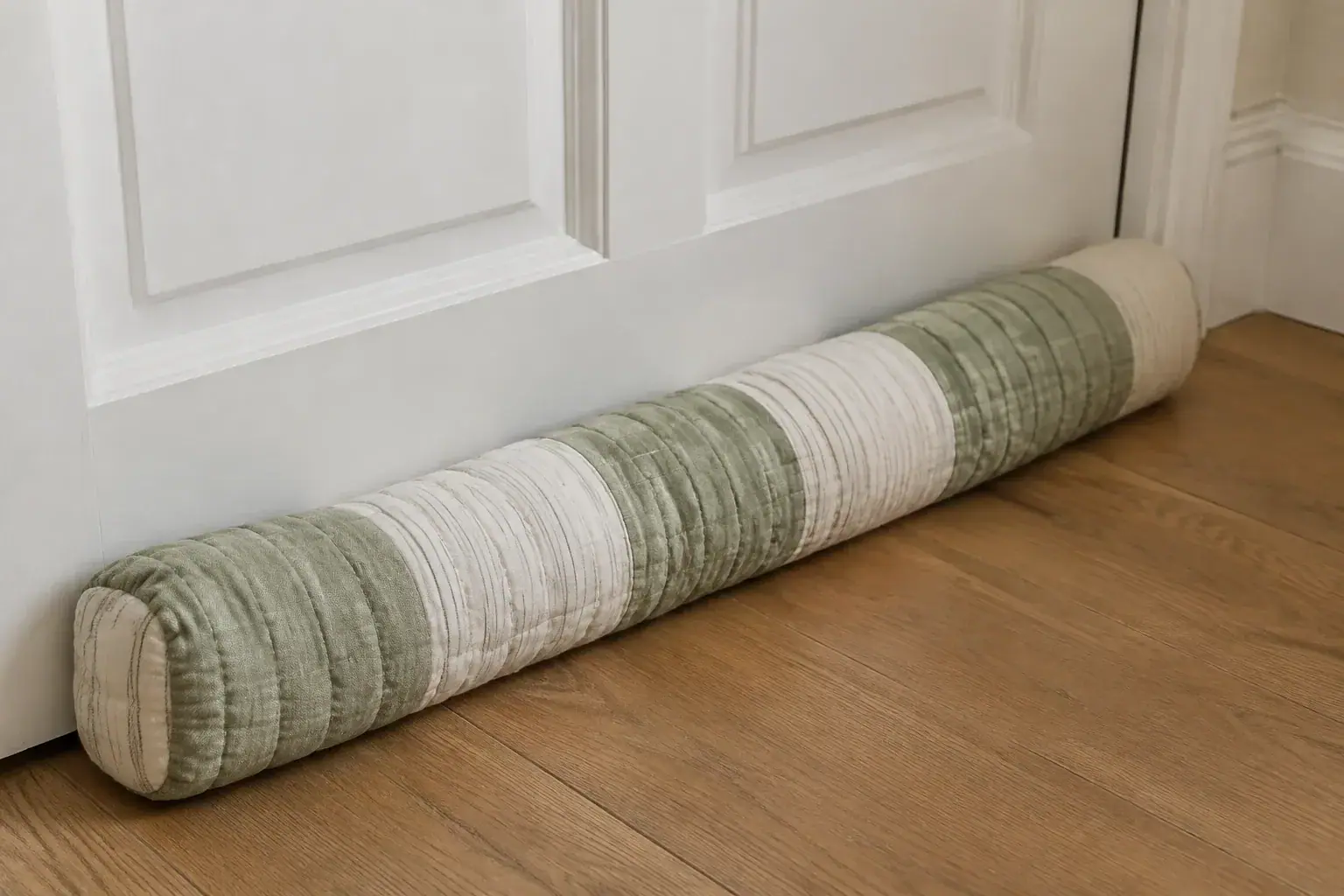
Treat the stopper as a tiny quilt if you like quilting. Layer two fabrics with batting, stitch straight lines across the panel and then sew it into a thick log.
The extra layers add body, and the stitched lines look neat on a bedroom door. Leave the batting a little loose near the seam so the tube still rolls.
Shop this pick
Batting for a quilted log
- QUILT BATTINGLow-loft polyester batting, crib sizeShop on Amazon
As an Amazon Associate we earn from qualifying purchases.
5. A Dachshund That Guards the Door
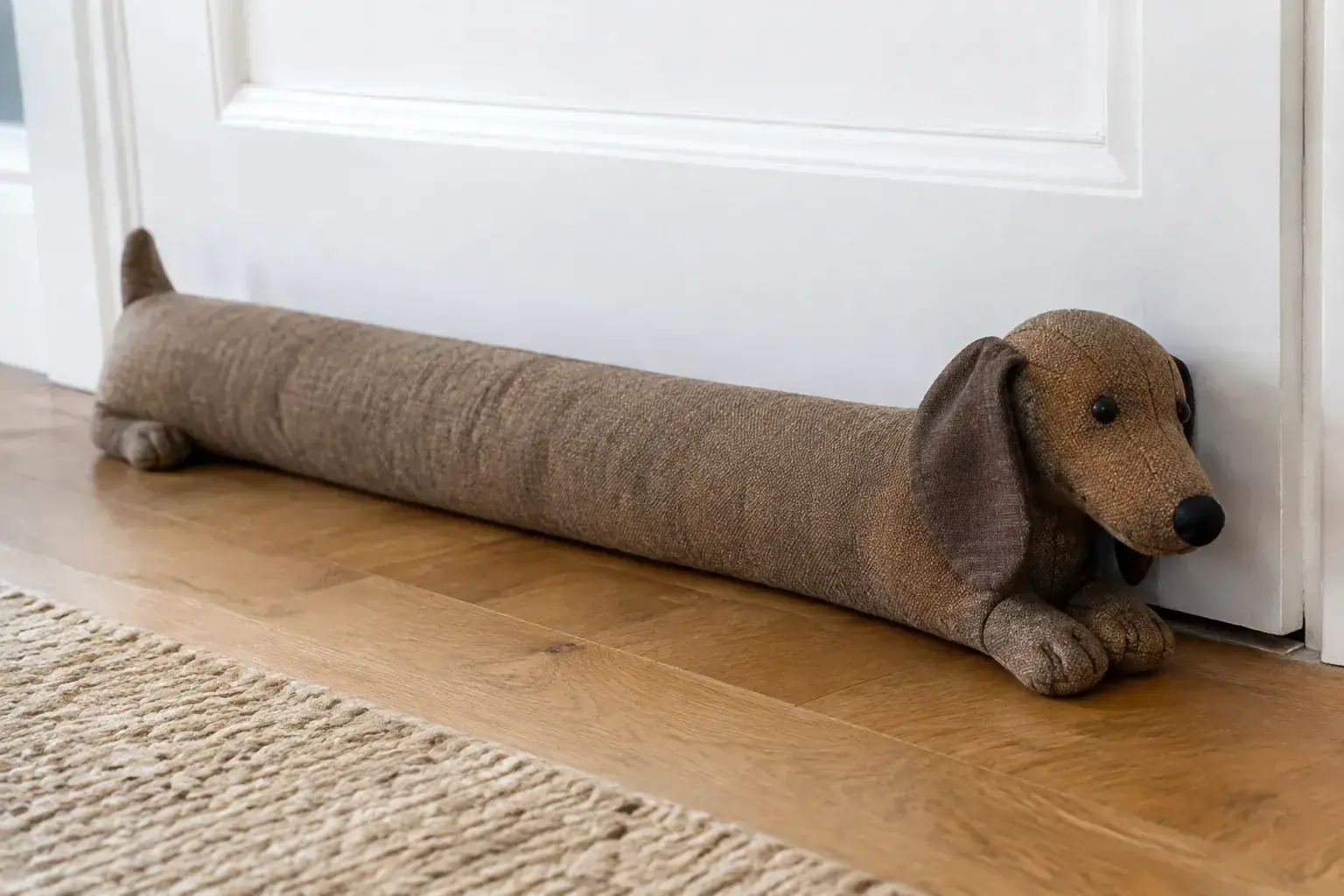
The long body of a dachshund is a natural draft stopper. Cut a long tube, add floppy ears and a small felt nose, and give it a name.
Kids love this one, and it can sit in a playroom doorway without looking like a stopper. Embroider the eyes for a young child, because a button can come off and become a small part.
Shop this pick
Felt for ears, noses and tongues
- CRAFT FELTAssorted stiff felt sheets for craftsShop on Amazon
As an Amazon Associate we earn from qualifying purchases.
6. A No-Sew Stopper Held Together With Glue
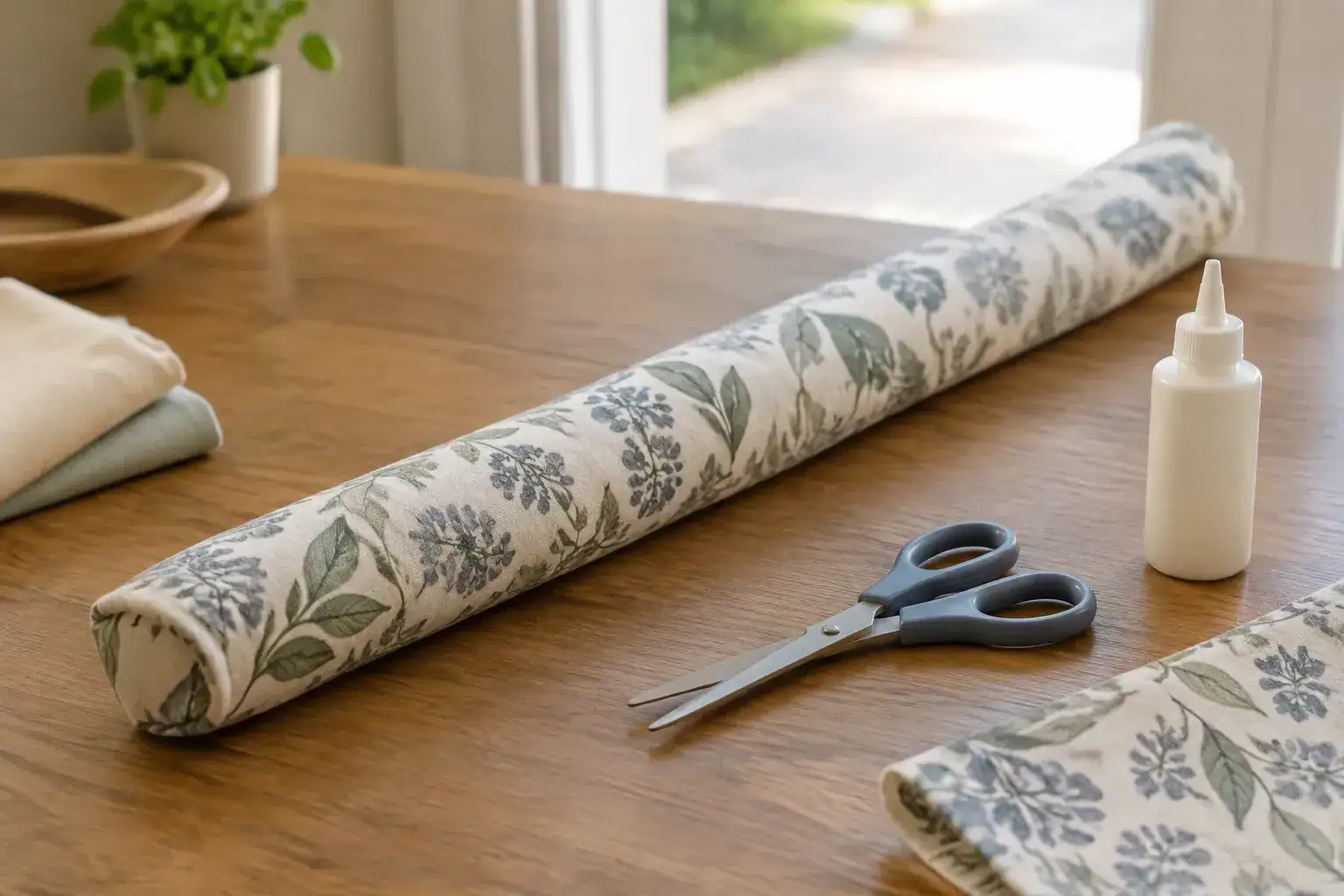
You can skip the sewing machine. Roll the fabric around the filling, close the seam with fabric glue and hold it with clips while the glue sets.
This works best for a stopper that stays in one spot and does not get dragged across the floor. Let the glue cure for the time on the label before you use it.
Shop this pick
Glue and thread for a quick finish
- FABRIC GLUEPermanent fabric glueShop on Amazon
- THREADAll purpose polyester sewing thread setShop on Amazon
As an Amazon Associate we earn from qualifying purchases.
7. A Double-Sided Stopper That Slides on the Door
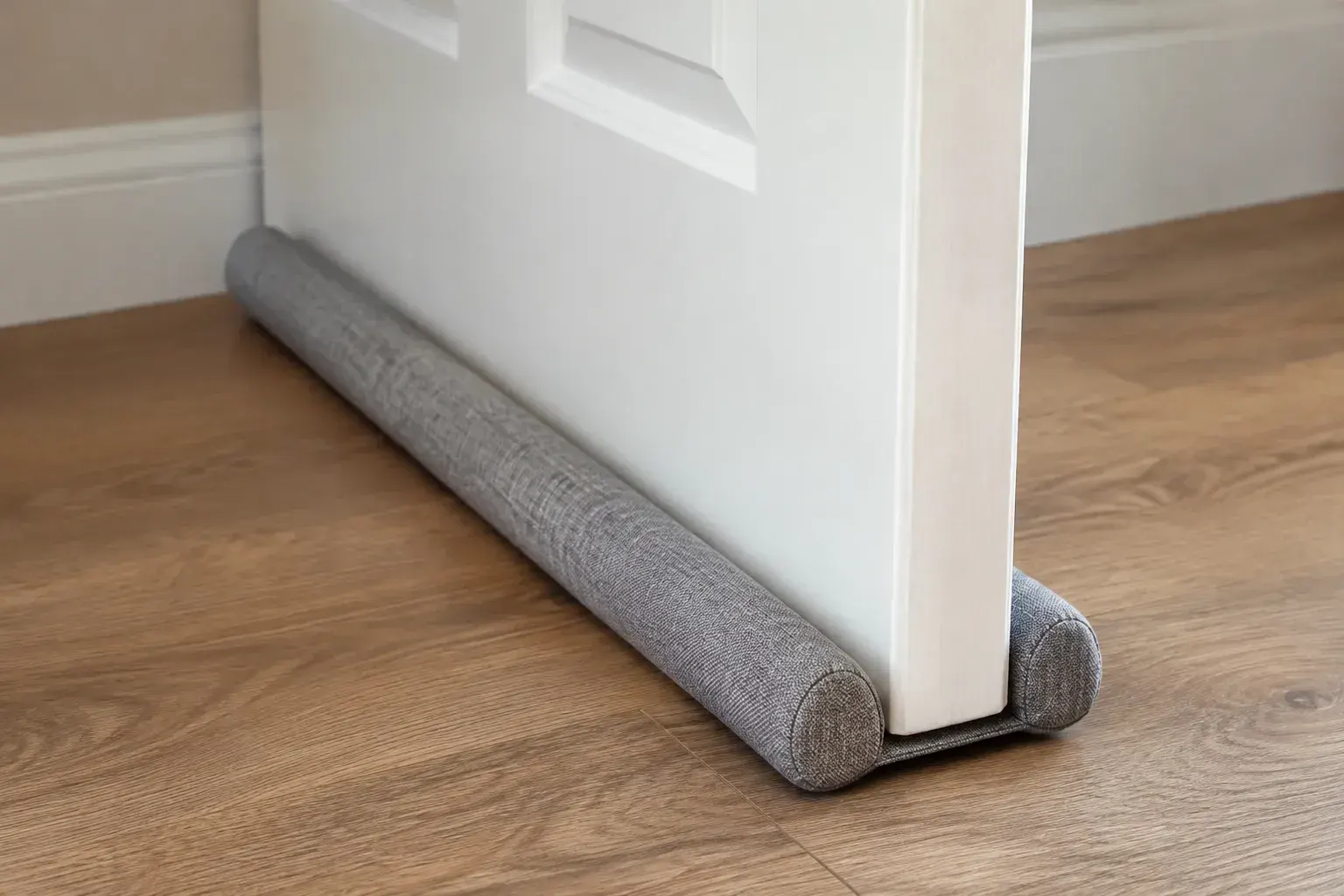
Cushions on both sides of the door, joined by a flat strip underneath, move with the door. You never have to push it back into place.
Make the strip a little thicker than the door so it slides freely. Cotton webbing works well for that strip, since it is strong and sews flat.
Shop this pick
Webbing for the strip under the door
- COTTON WEBBINGNatural heavy cotton webbing, 2 inchShop on Amazon
As an Amazon Associate we earn from qualifying purchases.
8. A Holiday Print for Christmas Week
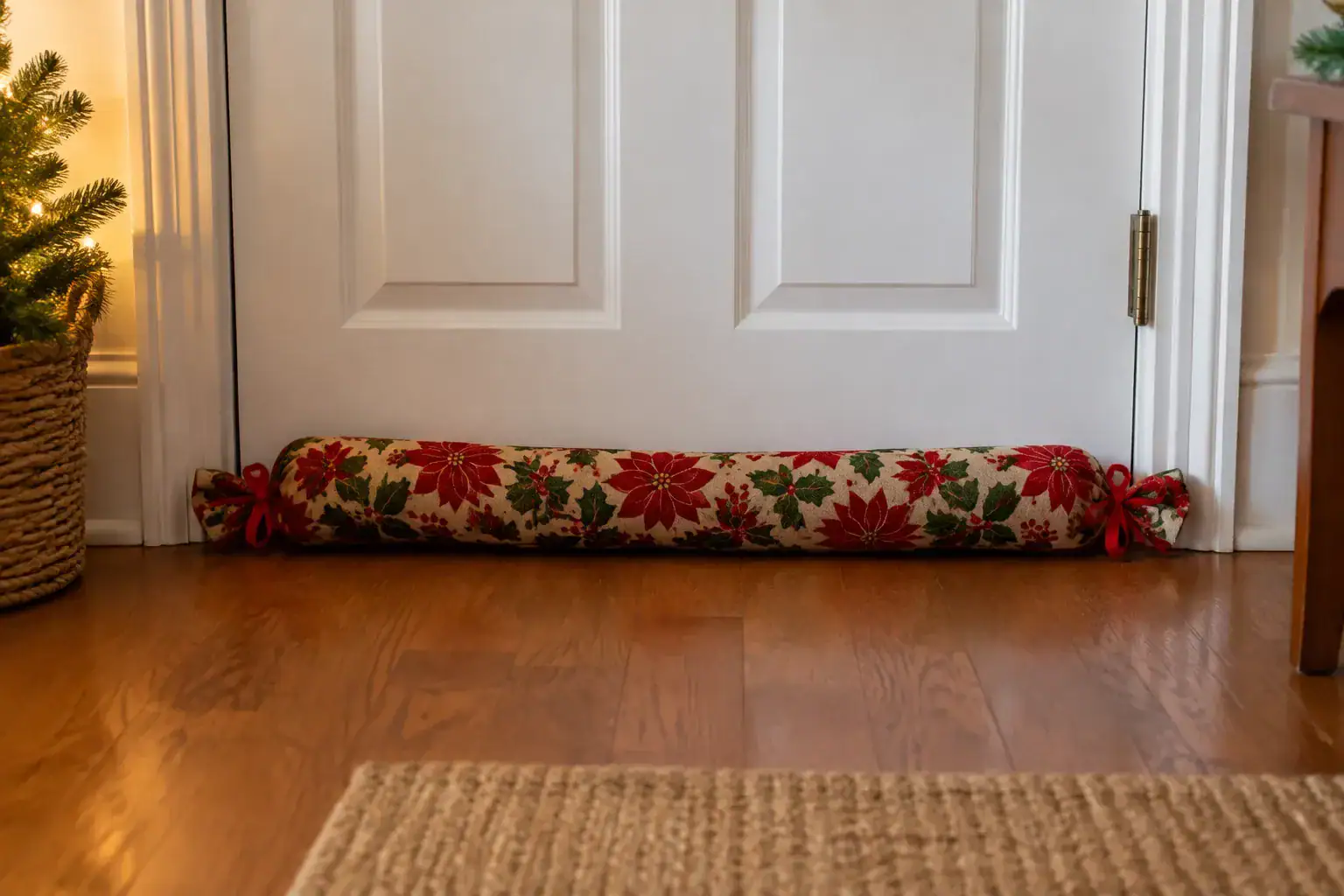
Festive scraps make a seasonal stopper you can pull out each December. Tie a small ribbon at one end and set it by the front door.
Pair it with other cozy touches, such as the ones in our Christmas door ideas.
Shop this pick
Holiday prints for a seasonal stopper
- CHRISTMAS FABRICChristmas cotton fat quarter bundle, 12 pieceShop on Amazon
As an Amazon Associate we earn from qualifying purchases.
A stopper is only one small part of sealing a house. ENERGY STAR lists the outer walls, windows, doors, and other openings as places where air leaks. It says EPA estimates that sealing and insulating the whole house saves an average of 15% on heating and cooling costs, and that figure is for a full job, not for one stopper.
Before you sew, run through this list.
- Measure the width of the door
- Wash and dry the fabric first
- Sew each seam twice
- Keep weighted fillers away from small children
- Leave the fabric tube a little loose so it molds to the floor
These checks take a few minutes and help the stopper last.
Our take · George Anderson
For most doors I would start with the patchwork stopper. It uses the scraps you already have, it needs no special filling and it is easy to remake when the fabric wears out.
Once you have sewn one, the others come quickly.
Quick Answers on Door Draft Stoppers
Does a draft stopper replace weatherstripping?
No. A stopper covers the gap along the bottom of one door, while weatherstripping seals the sides and top of the frame. If you can see daylight under the door, a new door sweep may do more than a stopper.
Can I wash a draft stopper?
Fiberfill stoppers with a cotton cover usually wash well, but check your fabric first. A weighted stopper needs a removable outer cover, so you can wash the cover and leave the inner liner alone.
Related posts
 DIY Christmas Door Mat Projects Cricut Owners Can Finish in an Afternoon
 11 French Door Projects That Save Money and Are Surprisingly Easy to Tackle
 15 DIY Wreaths for Front Door That Look Surprisingly Expensive
 Hollow Core Door Makeover DIY With Real Depth and Character
 17 Creative DIY Halloween Door Decorations
 17 DIY Fall Wreaths for a Standard Front Door
 16 DIY Front Door Fall Decor Ideas From Thrifted Bits
 Can You Use Bifold Doors as French Doors? A DIY Guide