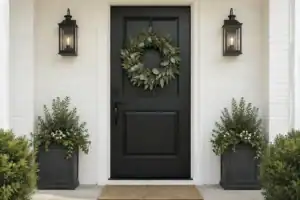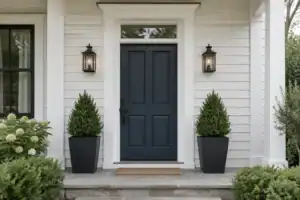

A standard front door requires specific proportions to look intentional rather than cluttered. This guide rounds up 17 DIY fall wreath ideas worth saving, ensuring you find the right scale for your entryway. Here are the designs to get you started, beginning with a classic pinecone project.
Pinecone Wreath

A durable, textured pinecone wreath brings rugged woodland character to any standard front door.
As an Amazon Associate I earn from qualifying purchases. Affiliate links may earn me a commission at no extra cost to you.
For a standard 36-inch door, a pinecone wreath provides the necessary weight and scale to hold its own against architectural details. Avoid thin, flimsy wire frames that struggle to support the heavy natural material of the cones.
Instead, prioritize a sturdy grapevine base, which offers both a reliable anchor point and adds to the natural, rustic aesthetic. The grapevine structure provides deep crevices where your wire can be easily tucked and hidden from view.
The Cluster Technique
Never rely on hot glue as your primary support, especially if your door faces direct wind or fluctuating temperatures. Glue should only act as a secondary stabilizer for individual pieces.
- Wire 3 to 5 pinecones together into a tight cluster using thin green paddle wire.
- Wrap the cluster tightly into the grapevine base, twisting the wire ends securely against the back side.
- Continue this process, overlapping clusters to ensure the base is completely covered and the weight is evenly distributed.
This construction method is ideal for anyone living in high-wind zones or areas with significant seasonal weather shifts. If you live in an extremely humid climate, keep in mind that raw pinecones may shift or open slightly over time; sealing them with a light matte clear coat can help preserve their shape.
⭐ Top Pinecone Wreaths for Your Door
✨ Editor’s Pick
Boho Farmhouse Fall Front Door Wreath
Large Sunflower and Pumpkin Fall Wreath
Vintage Pinecone Decorative Jingle Bell Ornaments
⚠️ Watch Out for These Common Mistakes:
- Inadequate Base Support: Using flimsy wire frames makes it nearly impossible to hold the weight of dense, natural pinecones securely.
- Reliance on Adhesives: Depending solely on hot glue causes parts to detach when winter temperatures drop or humidity levels shift.
- Scale Miscalculation: Choosing a wreath smaller than 20 inches often looks undersized and lost on a standard 36-inch front door.
Dried Apple Wreath

Bring a rustic, orchard-inspired charm to your porch with this fragrant and textured seasonal accent.
A dried apple wreath relies on the contrast between the translucent, dehydrated fruit slices and a sturdy base. To avoid a sparse look, you should use at least a 20-inch diameter grapevine base so the fruit covers the frame without looking cluttered.
Warning: Moisture is the enemy. Dried fruit is highly absorbent and will rehydrate, mold, or darken if exposed to rain or high humidity. Reserve this design strictly for porches that are deeply recessed or protected by a storm door.
The construction process requires a bit of patience to ensure longevity. You must seal every dried slice with a clear acrylic spray before assembly to prevent moisture absorption from the air.
If you live in a particularly damp climate, consider mixing in faux dried apple slices alongside the real ones. This hybrid approach gives you the organic look of natural fruit while significantly increasing the lifespan of the wreath.
⭐ Best Dried Apple Wreaths to Buy
Rustic Apple and Berry Fall Wreath
✨ Editor’s Pick
Autumn Harvest Wreath with Mini Pumpkins
Pumpkin and Eucalyptus Harvest Door Wreath
💰 What This Really Costs
- The real range: Expect to spend $15 to $30 for a quality grapevine base and decorative materials.
- Hidden cost: Don’t forget to budget for a high-quality clear acrylic spray to seal the organic fruit.
- Worth it: Investing in a sturdy grapevine frame is money well spent, as it prevents sagging issues.
Sunflower wreath

Bring a permanent glow to your entryway with a wreath designed for easy seasonal updates.
This design relies on a 24-inch grapevine base to provide the necessary structure for heavy flower heads. By opting for a larger base, you ensure the sunflowers have enough room to look lush without overwhelming a standard 36-inch door.
Skip the hot glue for your main floral attachments. Weaving stems directly into the grapevine allows you to remove the sunflowers later, turning this into a multi-purpose base for winter greenery or spring blooms.
To get the professional, flush look, use wire cutters to shorten your faux stems until only about two inches remain. This prevents the flowers from “floating” too far off the surface of your door.
Follow these steps to ensure your arrangement stays secure through autumn winds:
- Trim stems to two inches using heavy-duty wire cutters.
- Weave stems into the grapevine in a consistent clockwise direction.
- Secure with floral wire only if the stems feel loose after insertion.
- Balance the weight by clustering larger blooms at the bottom third of the wreath.
When the season shifts, simply pull the stems out and store the grapevine base for next year. It is one of the most cost-effective ways to maintain a fresh, seasonal look without buying a new foundation every October.
⭐ Sunflower Wreaths We Love
Hanging Sunflower Basket Door Wreath Sign
Large Yellow Wreath Bow for Decor
✨ Editor’s Pick
Rustic Farmhouse Sunflower Floral Fall Wreath
💡 Why This Works:
By using a grapevine base as a reusable skeleton rather than a permanent fixture, you gain the flexibility to swap stems for seasonal transitions without purchasing a new foundation. This approach respects the base’s integrity while allowing your entry to evolve from vibrant summer sunflowers to muted autumn tones with minimal effort.
Design takeaway: A single, high-quality grapevine base serves as a lifetime companion for your front door decor.
Wood Bead Wreath

Achieve a minimalist, modern aesthetic with consistent bead sizing and a rigid circular frame.
The wood bead wreath is a masterclass in geometric simplicity, making it the perfect choice for homeowners who prefer a clean, uncluttered entry. Unlike botanical wreaths that rely on volume, this design succeeds through precise weight distribution and uniform bead sizing.
Construction Essential: Always use a rigid metal hoop as your base rather than a flexible wire.
A flexible base will inevitably sag into an oval shape under the weight of the wood, ruining the perfect silhouette you are aiming for.
To assemble this look, choose a heavy-duty twine or fishing line for threading. These materials provide the necessary strength to pull the beads taut against the frame without snapping.
When stringing your beads, follow these steps to ensure a professional finish:
- • Measure Twice: Before securing the final knot, ensure the bead count is identical on both sides of the vertical axis.
- • Anchor Points: Use a dab of clear adhesive at the top and bottom of the hoop to prevent the entire strand from rotating during windy days.
- • Size Consistency: Stick to a single bead diameter for the main circle to maintain a clean, architectural silhouette.
This design is ideal for sheltered porches where you want a seasonal piece that won’t show signs of wilting or color fading. If your door is fully exposed to direct rain, however, you should skip this project, as moisture will cause the unfinished wood to expand and potentially crack.
⭐ Standout Wood Bead Wreaths
✨ Editor’s Pick
Wood Bead and Eucalyptus Greenery Wreath
Wood Beaded Lambs Ear Door Wreath
Rustic Farmhouse Sunflower and Pumpkin Wreath
🔢 The Right Sequence
Building this wreath requires a specific order of operations to ensure the beads stay perfectly circular and taut once hung.
- Secure your starting knot onto the metal hoop with a dab of super glue.
- Thread all beads fully before pulling the strand tight against the frame to check fit.
- Tie off the final knot and reinforce it with a small amount of clear adhesive.
It is common to worry that a wreath will look out of place depending on how much rain or sun your entryway gets. Understanding the functional limitations of your specific porch exposure is the best way to filter out unsuitable options immediately.
Selecting a design that matches your porch’s actual weather protection ensures your entry stays polished without needing constant maintenance or frequent replacements.
Raffia Loop Wreath

Create a textured, straw-like focal point that brings organic warmth to your standard door.
The secret to a high-end raffia look is finding the right knotting tension for your wire frame. You want to tie small, uniform bundles of raffia in tight, stacked loops until the underlying wire is completely hidden from view.
Caution: Moisture Control
Raffia is a natural, absorbent fiber that will quickly mildew if exposed to rain or heavy humidity. This design is strictly for fully covered entryways and should be taken indoors during damp fall weather.
To keep the wreath from looking sparse, aim for a 20-inch finished diameter on a 16-inch wire frame. This allows for enough “fluff” to extend outward without making the piece too heavy to hang securely.
Follow these steps to ensure your loops stay uniform:
- Cut your raffia strands into consistent 8-inch lengths before you begin tying.
- Start from the innermost ring of the wire frame and work your way outward for maximum volume.
- Trim any uneven ends with sharp fabric shears once the entire frame is covered to create a clean, circular silhouette.
This project is ideal for those who prefer a minimalist, monochromatic aesthetic using natural materials. If you live in a climate prone to autumn rain, it is best to choose a synthetic fiber alternative instead.
⭐ Raffia Loop Wreaths to Consider
Handmade Colorful Autumn Foliage Wreath
✨ Editor’s Pick
Artificial Silk Autumn Harvest Wreath
Wooden Hello Fall Door Hanger Sign
💡 Achieving a Balanced Silhouette:
- Visual Density: Focus on filling the wire frame evenly to avoid “bald spots” that reveal the structural frame beneath.
- Layering Strategy: Weave your raffia bundles in alternating directions to build natural, organic volume that mimics a rustic farm aesthetic.
- Negative Space: Leave just enough structure visible at the very edges to keep the wreath looking light and intentional rather than heavy.
Dried Herb Wreath

Bring a natural, aromatic touch to your entryway with a seasonal, short-term herb design.
The bundle and wrap method is the secret to this aromatic look, using fresh rosemary, sage, or bay leaves. You will need a sturdy wire frame to ensure enough airflow reaches the base of the stems.
This design is strictly for short-term display, usually lasting 2 to 4 weeks before the herbs become brittle. Because these botanicals are prone to rot if trapped against a solid surface, the wire frame provides the necessary ventilation to keep them stable during that window.
Avoid Direct Rain: Keep this wreath on a fully covered porch or sheltered entryway. Moisture will cause the herbs to mold rapidly, ruining the structure and scent of your display.
To construct your wreath, follow these quick steps for the best results:
- Group your herbs into small, uniform bundles of 4-6 stems each.
- Use thin floral wire to secure each bundle base tightly.
- Overlap the bundles around your wire frame, pinning them down as you move in a consistent circular direction.
- Ensure the stems are tucked under the leaves of the previous bundle to hide the mechanical connections.
This project is ideal for those who prioritize a fresh, organic aesthetic over long-term durability. If you live in a high-humidity climate, you should skip this project in favor of a preserved or faux botanical option.
⭐ Best Dried Herb Wreaths
Artificial Eucalyptus and Boxwood Leaf Wreath
Artificial Eucalyptus Wreath with White Berries
✨ Editor’s Pick
Eucalyptus and Olive Leaf Greenery Wreath
🔢 The Right Sequence to Preserve Freshness
Building this wreath in a specific order prevents premature wilting and ensures your herbs stay vibrant for that 2-4 week window.
- Prep individual herb bundles and wire them tightly before even touching your frame.
- Attach bundles in a consistent, overlapping clockwise direction to create a seamless, lush circle.
- Finish by tucking the final bundle’s stems securely under the first cluster’s leaves for a polished look.
Denim Rosette Wreath

Upcycle worn-out jeans into a durable, textured focal point for your front entryway.
This project is ideal for those who want a heavy-duty, textile-based wreath that survives the transition from late summer into cool autumn. It relies on the durability of denim strips rolled into tight rosettes to create a substantial, tactile display.
Warning: Denim is highly absorbent. Never use standard hot glue for outdoor placement, as the adhesive will fail once the fabric retains moisture and gains significant weight.
To build your own, start with a rigid foam or wood hoop base to support the weight of the fabric. Cut your denim into long, uniform strips, fold them in half lengthwise, and roll them tightly to form the rosette shape.
Use a waterproof industrial adhesive to secure each rosette to the base, ensuring you press firmly until the glue sets. Because denim can hold onto water during rainy spells, this design is best reserved for a sheltered doorway where it can stay dry.
⭐ Denim Rosette Wreaths We Love
✨ Editor’s Pick
Wooden Hello Fall Truck Door Sign
Rustic Twig Base Autumn Harvest Wreath
Embossed Flower Green Weatherproof Fabric Ribbon
💡 Simple Steps That Help:
- Fabric preparation: Use pinking shears to cut your denim strips; this prevents excessive fraying during the rolling process.
- Weight balance: Add smaller rosettes toward the outer edges of the hoop to maintain a clean, circular silhouette.
- Seasonal transition: Pair this wreath with a simple twine hanger to lean into the rugged, rustic aesthetic of autumn.
Magnolia Leaf Wreath

Create a sophisticated seasonal entrance by layering natural textures for deep, earthy contrast.
The magnolia leaf wreath relies on the inherent bicolor nature of the foliage to provide visual interest without needing extra seasonal ornaments. By tucking the stems into a grapevine base, you create a dense, layered look that mimics the way leaves naturally overlap on a branch.
The Shingle Technique: Attach each leaf so the shiny, dark green side faces outward while the fuzzy brown underside remains partially visible at the leaf base. This creates an immediate depth that makes the wreath feel full and high-end.
If you are DIYing this, you have to choose between fresh, preserved, or faux options. Each material performs differently based on your specific front door exposure:
Avoid using hot glue alone for this project, as the weight of the leaves combined with heat fluctuations will cause them to drop over time. Instead, use a combination of floral pins and wire to secure the stems directly into the grapevine base for a permanent hold.
⭐ Magnolia Leaf Wreaths to Consider
Large Eucalyptus and Olive Greenery Wreath
✨ Editor’s Pick
Artificial Autumn Leaf Wreath with Berries
Natural Grapevine Wreaths and Rattan Balls
💡 Designer Note: Mastering the Silhouette
Since magnolia leaves have a rigid structure, the key to a high-end look is maintaining a consistent “shingle” flow around the entire grapevine base. Aim for even tension across the wreath so the circle doesn’t drift into an oval. By alternating the direction of the leaves slightly as you work, you create a subtle, organic texture that feels sophisticated rather than perfectly uniform.
Burlap Plaid Wreath

Bring earthy autumn texture to your entryway with a structured, high-volume burlap design.
Burlap is a staple for fall, but its tendency to stretch and sag can turn a wreath into a drooping mess after just a few weeks. To keep your display sharp, skip the flimsy wire-only frames and start with a sturdy straw base that provides the necessary tension.
The secret to achieving a professional look without excessive weight is the “bubble” technique. Simply pull small, uniform sections of burlap through the wire or straw frame until you achieve a dense, rounded silhouette.
The Burlap “Sag” Prevention Guide
- Base Selection: Always use a straw or heavy-duty foam base to prevent the burlap from pulling the shape into an oval.
- Volume Control: Create “bubbles” by pulling 2-3 inch loops of fabric through the frame to maintain a consistent 20-22 inch diameter.
- Environment: Burlap is highly absorbent; keep this design on a fully covered porch to prevent moisture buildup and mildew.
This design is an excellent choice for homeowners who want a rustic, tactile look that complements traditional or farmhouse architecture. If your front door is exposed to direct rain or mist, you should skip this material entirely, as it will quickly lose its structure and harbor mold.
⭐ Burlap Plaid Wreaths Worth Buying
Fall Pumpkin Wreath with Plaid Bows
Fall Plaid Wreath Bow Ribbon Accessory
✨ Editor’s Pick
Football Wreath Sash with Ribbon Streamers
💡 Why This Works
The “bubble” technique mimics the natural, gathered aesthetic of high-end boutique wreaths while using minimal material. By pulling loops through the base, you create deep shadows and a full, rounded silhouette that feels substantial without the heavy cost of expensive fillers or complex floral arrangements.
Proportional Impact: This method fills the 20-22 inch range perfectly, ensuring your door looks intentionally styled rather than cluttered.
Sweater Yarn Wreath

Bring soft, tactile texture to your entryway with a cozy, low-profile yarn-wrapped design.
A sweater yarn wreath is the ideal project if your primary concern is door clearance. Because the yarn sits flat against the foam base, it avoids the bulky profile of botanical wreaths that often get crushed by storm doors.
To achieve a professional finish, you must ensure the yarn is wrapped tightly and consistently. Any gaps in the wrapping will expose the foam core, which ruins the clean, monochromatic look of the design.
Pro Tip: Use a high-density styrofoam or cardboard ring as your base. A thinner, lightweight base helps keep the overall weight down, preventing the wreath from shifting when the door swings.
This style is best suited for homeowners who prefer a minimalist aesthetic that leans into cozy textures rather than flashy colors. If you live in an area with high humidity or frequent rain, skip this material; wool and synthetic yarns can act as a sponge, holding onto moisture and leading to mildew on your door surface.
When selecting your yarn, stick to chunky wool blends or thick acrylics for the best coverage. Thin yarn will require significantly more time and patience to achieve the same full-bodied, sweater-like appearance.
⭐ Cozy Sweater Yarn Wreaths
✨ Editor’s Pick
Fall Wreath with LED Lights and Pumpkins
Artificial Silk Autumn Wreath with Pumpkins
Harvest Fall Wreath with Pinecones and Pumpkins
🏡 Real-Home Application:
- Storm door clearance: Measure the gap between your entry door and storm door; if it is less than two inches, opt for a thinner, flat yarn wrap to ensure smooth operation.
- Daily use: Avoid high-traffic entryways where the yarn can snag or unravel; this design thrives best on doors that remain stationary throughout the day.
- Natural finish: To keep it looking cozy rather than “crafty,” wrap in a single, muted neutral tone rather than mixing multiple bright, competing colors.
Fabric Scrap Wreath

Upcycle your leftover textile stash into a textured, high-impact wreath for a custom fall look.
This project relies on a simple knotting technique to build volume without needing heavy materials. You will need a 16-inch wire frame and strips of cotton or linen cut to approximately 6 inches in length.
To construct, simply loop each strip through the wire frame and pull tight until the base is completely obscured. The more strips you pack into the wire rings, the fuller and more substantial your finished display will appear.
Pro-Tip for Climate Control: Fabric is highly susceptible to mildew if it remains damp for long periods. If your entryway experiences high humidity or frequent rain, opt for synthetic blends instead of natural cotton to maintain the integrity of your display.
Because this wreath is lightweight, it is an ideal choice for doors with sensitive hardware or those that catch a significant amount of wind. However, keep in mind that fabric fibers will naturally fade if exposed to direct, harsh U.V. rays for the entire season.
If you want to keep this project looking intentional rather than cluttered, stick to a cohesive color palette when selecting your scraps. Using three to four shades from the same seasonal family creates a balanced, professional result that complements a standard 36-inch door perfectly.
⭐ Fabric Scrap Wreaths We Love
Rustic Thanksgiving Fall Wreath with Apples
✨ Editor’s Pick
Harvest Fall Wreath with Sunflowers and Pumpkins
Rustic Harvest Autumn Wreath with Pumpkins
💡 Why This Works
Using fabric scraps creates a soft, tactile depth that feels much more intentional than a standard store-bought wreath. By utilizing a knotting technique, you achieve a dense, plush silhouette that hides the wire frame completely, resulting in a custom, high-end look that turns leftover sewing supplies into a sophisticated seasonal focal point.
Design Benefit: The varied textures of cotton and linen add visual warmth that perfectly complements standard fall door colors.
Cinnamon Stick Wreath

Bring a warm, spicy scent to your entryway with this textured, wood-based fall display.
This project relies on creating uniform, dense bundles of cinnamon sticks to achieve a full, rustic silhouette. Because the finished product is significantly heavier than a standard grapevine or foliage wreath, you must prioritize structural integrity during construction.
Caution: Weight Load. Do not rely on decorative ribbon as your primary hanging method for this design.
The density of the cinnamon sticks creates substantial weight that will cause ribbon to sag or snap over time. Always use reinforced wire secured directly to your door hook or mounting hardware.
To build your wreath, start by grouping 4-6 sticks of equal length together, securing each cluster tightly with paddle wire. Once you have a collection of these bundles, wire them onto a sturdy metal or heavy-duty grapevine frame, overlapping each cluster to eliminate any gaps.
This design is best suited for sheltered front doors where humidity is low. If exposed to heavy rain, the moisture will cause the cinnamon to swell or lose its characteristic scent, and the wire ties may eventually loosen.
- • Cluster Prep: Keep bundles small enough that the paddle wire can grip the center of the sticks firmly.
- • Base Selection: Use a metal wire frame for maximum strength, as it won’t break down under the weight of the bundles.
- • Placement Tip: Position the wreath at eye level so the intricate texture of the bundles is the first thing guests notice.
⭐ Cinnamon Stick Wreaths to Consider
✨ Editor’s Pick
Buffalo Plaid Wreath Bow for Decor
Large Autumn Harvest Wreath Bow Sash
💰 What This Really Costs
- The real range: Expect to spend between $20 and $50, depending on the volume of cinnamon sticks required for your frame.
- Hidden cost: Factor in the price of heavy-duty paddle wire and a high-quality, weather-resistant mounting hook for your door.
- Worth it: Invest in real culinary-grade cinnamon sticks; they offer a much stronger, authentic fragrance than cheaper, synthetic craft alternatives.
Flannel Bow Wreath

Create a cozy, intentional entryway with a structured fabric focal point on natural grapevine.
This design relies on a minimalist aesthetic where a single, oversized flannel bow does the heavy lifting. By keeping the grapevine base clean and free of excessive foliage, you allow the pattern and texture of the fabric to stand out against your door.
Pro-Tip for Wind Resistance: To prevent your bow from drooping or losing its shape, use heavy-gauge floral wire to anchor the center knot directly to the grapevine frame.
Avoid relying solely on the ribbon’s own wire edges, as these will sag after repeated exposure to outdoor air movement.
Choose this style if you want a high-impact look that takes less than 30 minutes to assemble. It is an ideal fit for homeowners who appreciate a classic harvest aesthetic without the maintenance of dried botanicals.
However, skip this project if your front door faces direct, heavy rain. Flannel is prone to water saturation and fading, so it works best on a fully covered porch or a secondary entryway that is protected from the elements.
⭐ Flannel Bow Wreaths Worth Buying
✨ Editor’s Pick
Artificial Silk Autumn Harvest Wreath
Large Eucalyptus Greenery Wreath for Porch
Wooden Hello Fall Door Hanger Sign
🔢 The Right Sequence for Bow Stability
Establishing your structural anchor before layering decorative elements prevents the fabric from shifting or sagging once the door begins to move.
- Secure the base: Attach your grapevine wreath to the door hanger first to verify clearance.
- Wire the bow: Cinch the center of your flannel ribbon with floral wire before shaping.
- Anchor the focal point: Twist the wire ends deep into the grapevine core to lock the position.
Moss Mushroom Wreath

Bring a lush, woodland-inspired forest floor aesthetic directly to your front entryway this fall.
This design relies on the contrast between soft, preserved sheet moss and the structured shape of faux woodland mushrooms. Because the moss acts as a thick, porous foundation, it is best suited for sheltered entryways where moisture won’t cause the material to crumble or mold.
Pro Construction Tip: Avoid hot glue for the mushroom placement. Instead, use floral pins to secure the stems into the moss; this allows you to easily pull them out for cleaning or to rearrange your display as the season shifts.
Since this wreath uses a rigid base, it holds its shape perfectly without sagging over time. It is an ideal choice for a clean, nature-focused look that avoids the typical orange-and-yellow harvest palette.
If your door faces direct, heavy rain, you should skip this project in favor of more weather-resistant materials. For homeowners with a deep porch, however, the dense texture adds a sophisticated, high-end feel that standard faux floral wreaths cannot match.
⭐ Moss Mushroom Wreaths We Love
Adjustable Metal Wreath Hanger for Door
✨ Editor’s Pick
Large Sunflower and Pumpkin Fall Wreath
Natural Decorative Vine Ball Ornaments
💡 The Detail That Pulls It Together
To make a moss-based wreath look professionally styled rather than craft-store simple, prioritize varying the mushroom sizes and heights. By nesting smaller fungi near the edges and clustering larger caps toward the center, you mimic the organic, uneven growth patterns found on a real forest floor, giving your front door a high-end, bespoke presence.
Cotton Boll Wreath

Bring a soft, organic texture to your entryway with this layered cotton stem design.
The cotton boll wreath works best when you prioritize stem integration over simple adhesive application. By wiring individual stems directly into a grapevine base, you create a natural, circular flow that feels intentional rather than stuck on.
Work your way around the base in a single direction to keep the visual weight balanced. This technique prevents the wreath from looking lopsided and ensures the stems stay securely in place despite door movement.
Warning: Natural cotton bolls are highly absorbent and will act like a sponge in damp weather. Keep this design strictly for covered porches to prevent the bolls from turning gray or developing mold.
If you live in a high-humidity area, consider using faux cotton stems that feature a treated, moisture-resistant finish. They offer the same soft, high-contrast look without the risk of degradation during fall rain showers.
⭐ Cotton Boll Wreaths to Consider
Rustic Farmhouse Sunflower and Pumpkin Wreath
Artificial Harvest Fall Wreath with Peonies
✨ Editor’s Pick
Rustic Harvest Apple Wreath with Sign
⚠️ Mistakes That Ruin Cotton Wreaths:
- Ignoring directionality: Attaching stems inconsistently makes the wreath look chaotic rather than creating a beautiful, flowing circular silhouette.
- Skipping stem trimming: Leaving stems too long prevents the cotton bolls from sitting flush against your grapevine, resulting in a loose, unstable base.
- Overlooking moisture exposure: Placing natural bolls on an unsheltered door quickly leads to yellowing or mold growth as the cotton absorbs ambient humidity.
Wood Slice Wreath

Bring organic warmth to your entryway with the raw texture of natural wood slices.
This project relies on the contrast between natural bark edges and polished wood grain to create a high-texture look. Because wood slices are significantly heavier than fabric or foliage, weight management is the most critical part of your construction process.
Pro-Tip: Always use thin, lightweight wood slices to prevent the wreath from pulling away from your door hooks. If you find the pieces feel too heavy, opt for wood veneer discs instead of solid cross-cuts.
To ensure your design survives the season, you need a dual-attachment method. Relying solely on hot glue is a common mistake that leads to pieces popping off during temperature fluctuations.
- Placement: Use hot glue to position each wood slice exactly where you want it on a sturdy grapevine or flat wooden base.
- Reinforcement: Once the glue sets, use floral wire to anchor the heavier slices by wrapping the wire through the back of the wreath base.
- Balance: Spread the largest slices evenly around the circle to keep the weight distribution centered, preventing the wreath from tilting on your door.
This design is ideal for homeowners who prefer a neutral, rustic aesthetic that transitions perfectly from early fall through Thanksgiving. If you live in an area with extreme humidity, treat your wood slices with a matte outdoor-rated sealant to prevent warping or mold growth over time.
⭐ Wood Slice Wreaths to Buy
✨ Editor’s Pick
Natural Grapevine Wreath Base for DIY
Rustic Galvanized Flower Bucket Vase
🛠️ Practical Tips That Work:
- Slice thickness: Aim for slices between 0.5 to 1 inch thick to keep the overall wreath weight manageable.
- Natural finish: Skip shiny varnishes; use a matte sealant to preserve the raw, woodsy look of the bark.
- Hanging safety: Attach a heavy-duty wire loop to the back of your frame to prevent accidental drops during wind.
Dried Citrus Wreath

Bring a natural, aromatic glow to your entryway with this sun-drenched, hand-strung seasonal design.
This project relies entirely on your dehydration process, as any moisture left in the fruit will cause rot within days. You must slice your oranges, lemons, or limes into thin, even rounds and dry them in a low-heat oven until they are completely crisp to the touch.
Pro Tip: Use a needle and heavy-duty thread to string your dried slices into long garlands before wrapping them around your wire frame. This creates a dense, layered look that holds its shape better than gluing individual pieces directly to the base.
Because citrus is highly sensitive to humidity, this wreath is best suited for fully sheltered entryways where it stays dry. If your door is exposed to direct rain or mist, the fruit will quickly lose its structural integrity and darken in color.
Avoid heavy adhesives if possible, as they can pull away from the dried fruit skin over time. Use clear floral wire to secure your garlands to the frame for a clean, professional finish that won’t show through the citrus.
⭐ Dried Citrus Wreaths We Love
✨ Editor’s Pick
Fall Farmhouse Harvest Eucalyptus Wreath
Autumn Harvest Sunflower and Apple Wreath
💡 Why This Works:
Using a garland-style construction allows the individual citrus slices to overlap naturally, creating a fuller, more architectural silhouette that resists the “flat” look common in single-layer wreaths. This layered density provides structural weight that helps the wreath maintain its perfect circular shape while capturing the warm, autumnal light.
Visual Benefit: Proper overlapping masks the wire base completely, ensuring the finished piece looks like a solid, hand-crafted botanical arrangement.
You now have seventeen distinct ways to style your entry, ranging from structured botanical designs to textured textile projects. Selecting the one or two that align with your home’s specific architecture is far more effective than trying to incorporate every technique.
Mastering the wire-frame technique with a simple pinecone or wood bead base provides a solid foundation for any seasonal front door update. When you focus on a wreath that complements your porch’s exposure and scale, you achieve a finished look that feels intentional. A single, well-constructed piece carries the entire display, making your front door impression both polished and durable throughout the fall.
Related posts
 16 DIY Front Door Fall Decor Ideas From Thrifted Bits
 12 Modern Fall Wreaths for Front Doors in Clean Monochrome
 15 DIY Wreaths for Front Door That Look Surprisingly Expensive
 15 Fall Wreaths for Front Door With the Cozy Look Everyone Loves
 15 Fall Wreaths for Front Door Beyond Leaves and Burlap
 12 Modern Fall Front Door Decor in Muted Neutrals
 12 Small Front Door Fall Decor Ideas for a Narrow Slab
 17 Wreaths for Front Door Ideas That Make a Beautiful Impression