As an Amazon Associate we earn from qualifying purchases.
In the US the word is rabbet; rebate is the UK and Australian term for it. On a French door pair, the practical question is how the two leaves meet in the center, and the astragal that seals that seam.
A rabbet is a stepped cut along a door edge. On double doors, the meeting edge is where a rabbet or an astragal does its job.
Why the center seam matters
An astragal is the vertical strip on the meeting edge of double doors. Frame-Well calls the center seam the most vulnerable point of a double door.
The strip covers the gap, which blocks access to the latch bolts and makes pry-bar attacks harder. It also carries weatherstripping, so it cuts drafts, air and water leaks and bugs at the center.
It can make up for small misalignments caused by settling and seasonal wood movement, according to the same article.

Which type you have
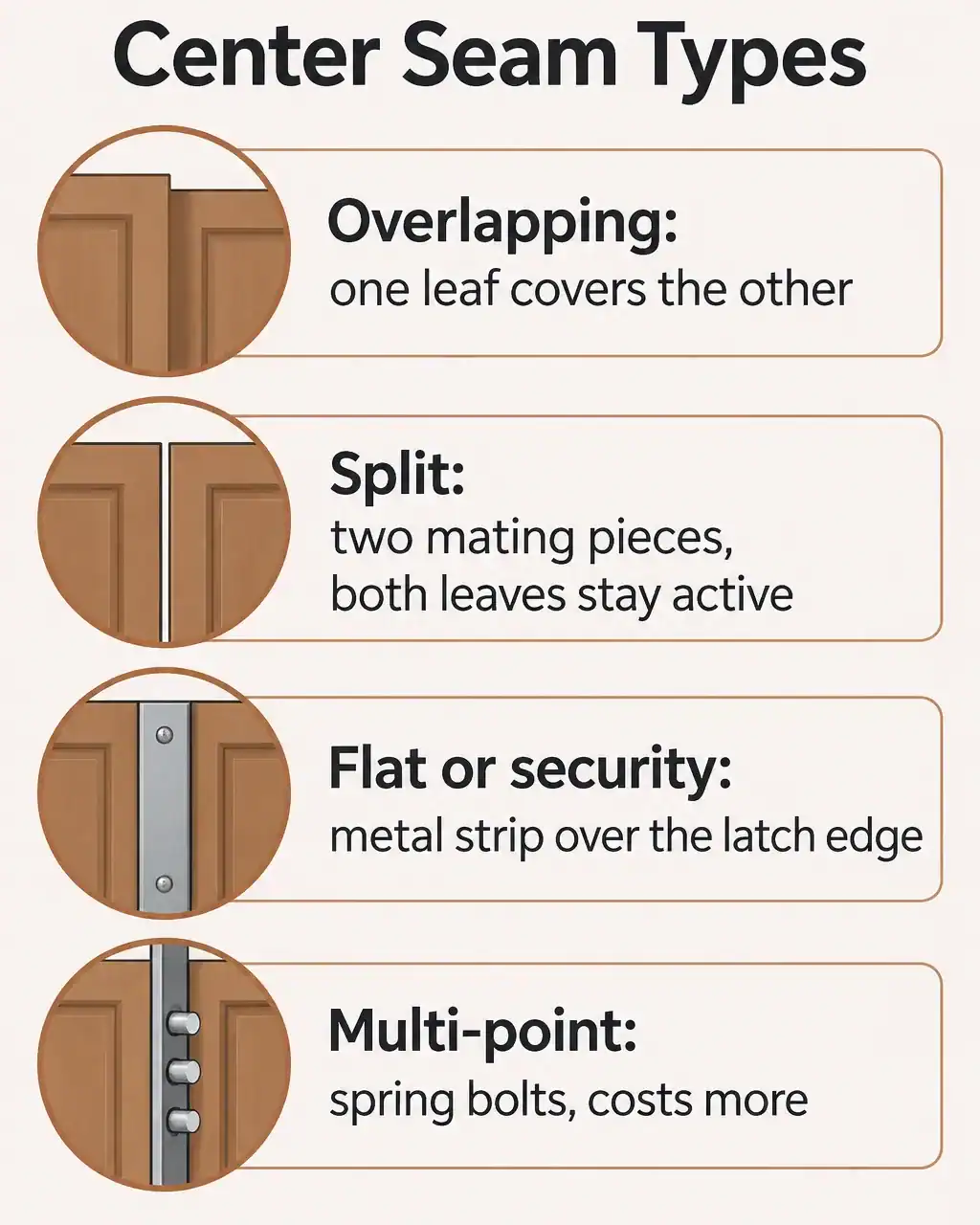
Frame-Well lists four. An overlapping strip on one leaf covers the other and sets a closing order. A split design has two mating pieces, one on each door, so both leaves stay active.
Engineer Fix adds names. A T-astragal overlaps the inactive door’s face and suits exterior doors, and a flush meeting-stile type is for pairs where both doors are active.
Check which one you have before buying a replacement.
Fixing a bad seam
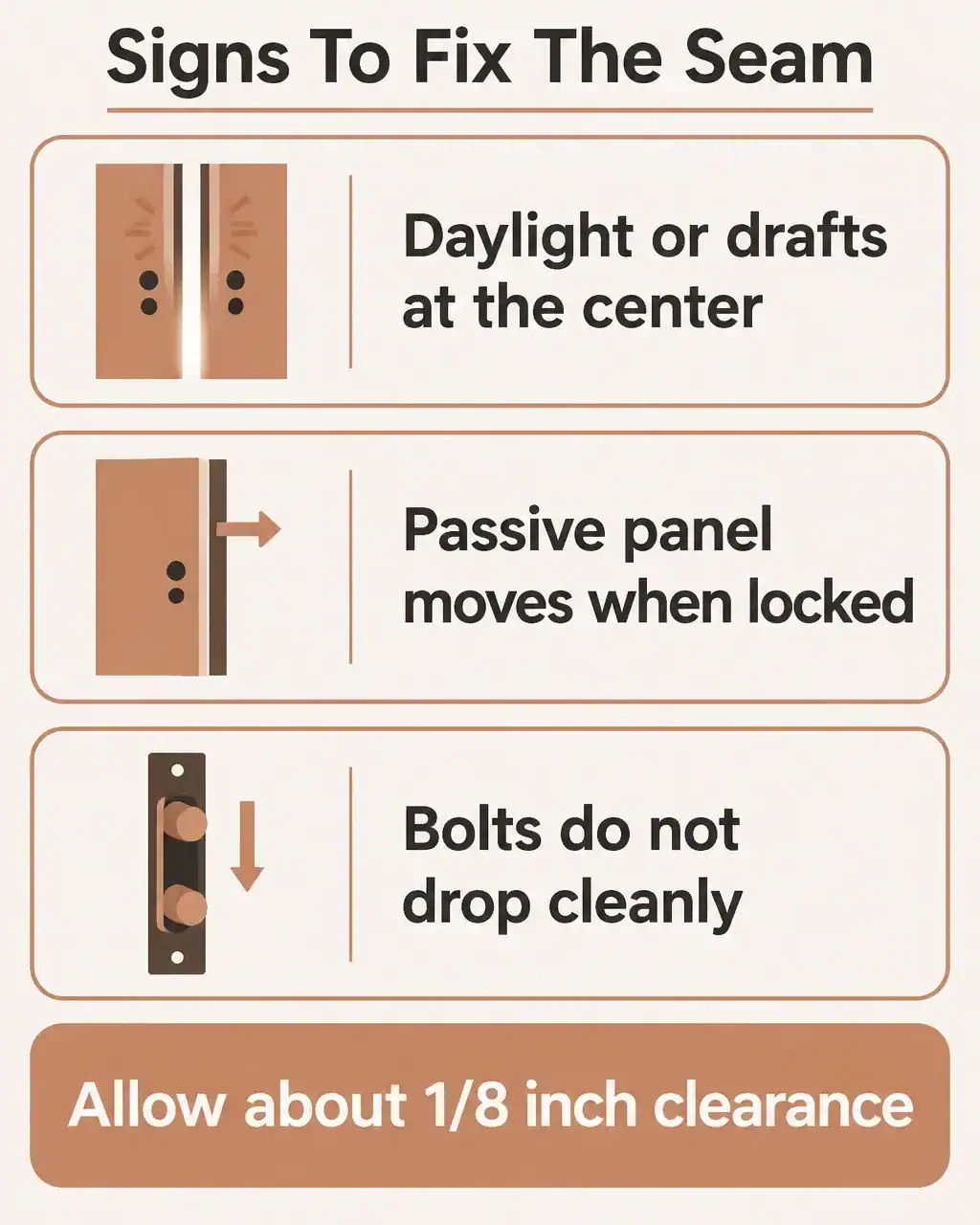
Three signs say the seam needs attention: daylight or drafts at the center, movement of the passive panel when locked, and bolts that do not drop cleanly.
For a typical replacement, remove the snap-on trim, loosen the set screws and remove the mounting screws. Line up the new piece with the existing holes and fasten it at the top and bottom.
Measure the full door height. Engineer Fix says to allow about 1/8 inch of clearance so it does not drag.
Frame-Well says a homeowner with basic tools can often manage a T-astragal swap. Steel and fire-rated assemblies call for a pro.
I found no source that gives a method for cutting a new rabbet into an existing door. Leave that to the door maker or a joiner.
My call · James Davis
Before cutting anything, I would try replacing the astragal and weatherstripping. A worn seal causes most seam complaints, and it is a screwdriver job, not a router job.
Shop this idea
The new astragal this swap fits
- T ASTRAGALPemko T Astragal Seal, AluminumShop on Amazon
Before you start
- Identify your astragal type.
- Measure the full height, head jamb to threshold.
- Allow about 1/8 inch of clearance.
- Call a pro for steel or fire-rated doors.
For related fit questions, see how far French doors open and how to secure them.
Related posts
 Are French Doors Better Than Sliding Patio Doors?
 Are Sliding Doors or French Doors More Energy Efficient?
 What Is the Difference Between French Doors and Double Doors?
 Can You Use Bifold Doors as French Doors? A DIY Guide
 How Long Does It Take To Install Exterior French Doors?
 Bedroom French Doors: Privacy, Cost and What to Know
 How To Stop French Doors Blowing In The Wind
 French Doors in a Manufactured Home: What the HUD Code Says