
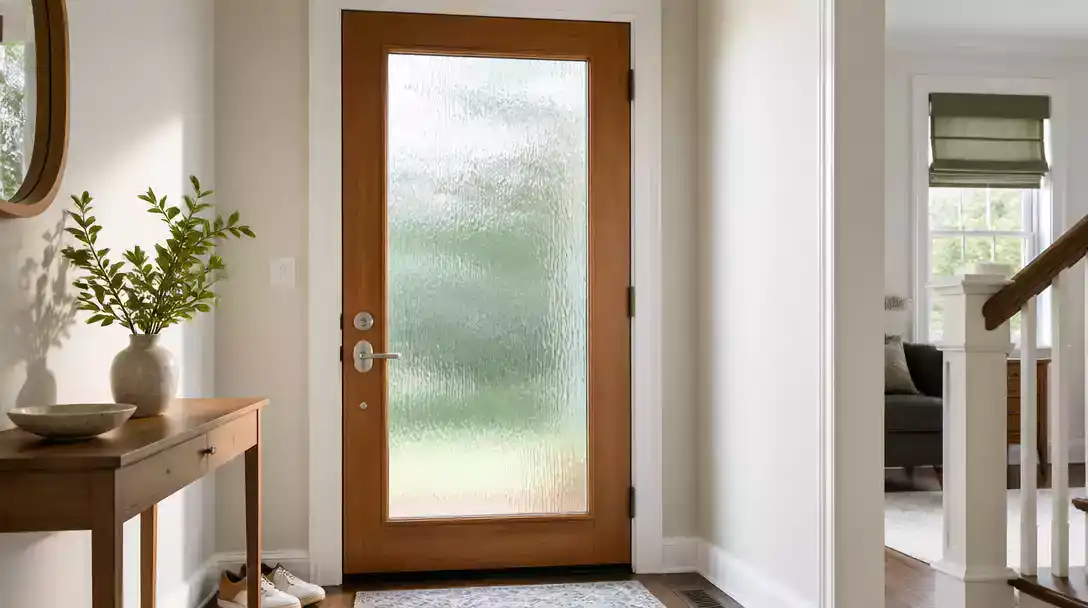
A dark, windowless foyer makes your home feel cramped, but the right front door glass options can bring in natural light without sacrificing privacy. This guide rounds up 14 door ideas worth saving to help you find the specific balance of clarity and texture your entry needs.
Clear glass
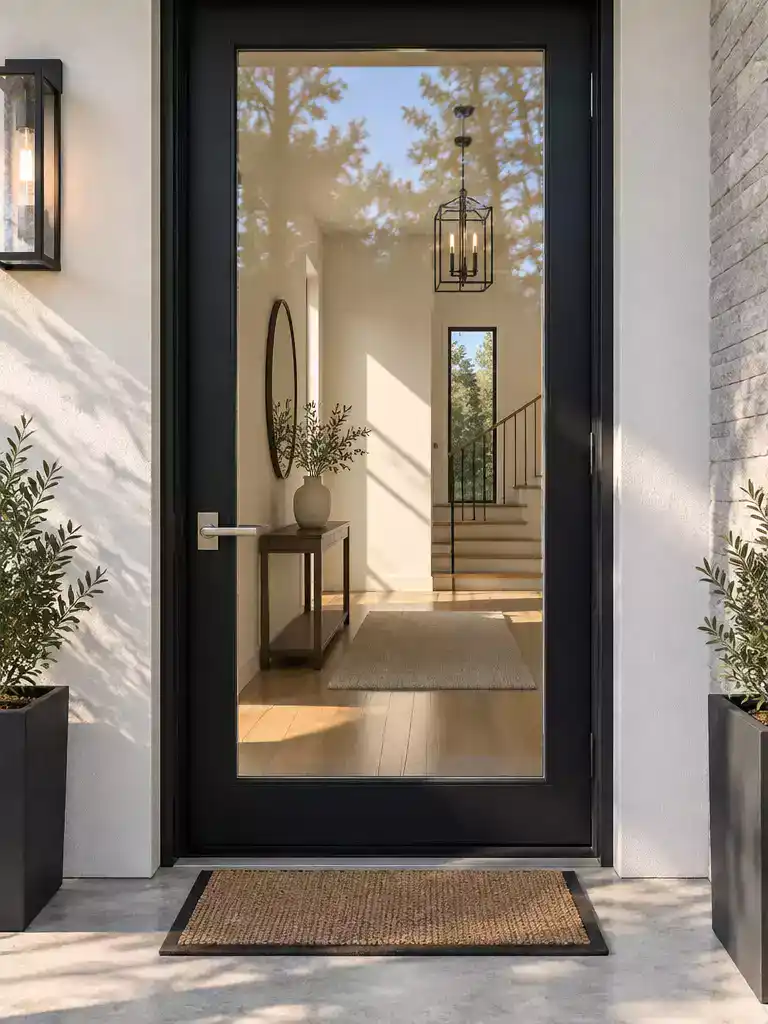
Maximize natural light with the highest clarity glazing available for your home entry.
As an Amazon Associate I earn from qualifying purchases. Affiliate links may earn me a commission at no extra cost to you.
Clear glass is the gold standard for brightness, offering a massive 82% light transmittance that effectively eliminates dark, cramped entryway conditions. It provides a completely unobstructed view, making it the top choice for properties where natural light is the primary concern.
The Zero Privacy Reality: This option offers no visual barrier, meaning anyone on your porch can see directly into your home.
Skip this if your door faces a busy street, a sidewalk, or close-proximity neighbors. It is best suited for homes with deep setbacks, rural land, or private gated driveways.
From a maintenance perspective, clear glass is the most demanding choice. Because it lacks any texture or frosting, even the lightest thumbprint or smudge is immediately visible.
You should prioritize this glass if:
- Your front door is located in a secluded or private setting.
- Your foyer is exceptionally dark and requires maximum sunlight intake.
- You are working with a tighter budget, as this is the most cost-friendly glazing option.
Always ensure your installer uses tempered glass to meet safety building codes for door inserts. While it is the most affordable route, plan to keep a glass cleaner and microfiber cloth nearby to maintain that crystal-clear finish.
⭐ Top Clear Glass Options for Foyers
✨ Editor’s Pick
Insulated Clear Glass Entry Door Insert
Venting Clear Glass Front Door Insert
Energy Efficient Clear Glass Door Insert
The Right Sequence: Keeping it Spotless
Since clear glass shows every imperfection, following a strict workflow during installation and cleaning prevents permanent frustration with streaks or trapped dust.
- Clean the interior: Wipe both sides of the pane thoroughly before securing the final door trim.
- Use lint-free cloths: Only use microfiber or specialized glass cloths to avoid leaving behind tiny paper fibers.
- Apply non-streak solution: Use a vinegar-based cleaner or plain water to prevent residue buildup that catches sunlight.
Low-Iron Glass
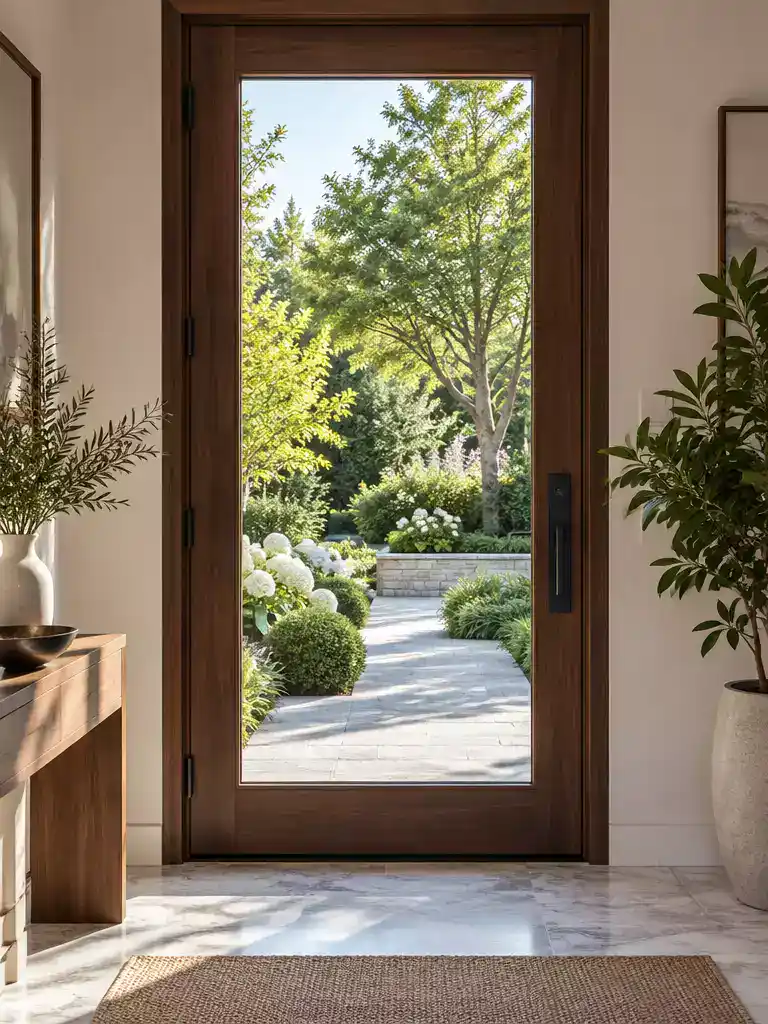
Experience a true-to-life, color-accurate view of your landscape without the distracting green tint.
Standard glass often contains a subtle green hue caused by iron content, which can dull the colors of your exterior view. Low-iron glass is manufactured to remove these impurities, resulting in a “water-white” appearance that provides maximum light transmission and perfect color clarity.
This is the best choice if you have a specific garden feature, colorful landscape, or architectural element you want to showcase. Since it lacks the tint of standard float glass, it makes the transition between your foyer and the outdoors feel almost seamless.
Important Considerations:
- Low-iron glass offers zero privacy; expect your foyer to be fully visible from the street.
- It carries a higher price tag than standard clear glass due to the specialized manufacturing process.
- The glass itself provides no additional thermal benefits, so prioritize an insulated, low-E glass unit for energy efficiency.
Skip this option if your foyer faces a high-traffic sidewalk or neighbors, as it offers no visual obstruction. If your entry is tucked away in a private, wooded lot, it is the premier way to bring the natural world inside without color distortion.
⭐ Best Low-Iron Glass for Brightness
White Front Door Glass Frame Kit
✨ Editor’s Pick
Clear Tempered Glass Door Insert Kit
Clear Frameless Glass Door Seal Strip
💰 What This Really Costs
- Premium material investment: Expect a higher price point than standard clear glass due to the specialized, iron-removing manufacturing process.
- Hidden installation fees: Budget for professional glazing labor, as precision sealing is required to maintain the glass’s pristine clarity.
- Long-term value: The cost is justified if you are highlighting a specific exterior garden or architectural feature you want to showcase.
Reeded glass
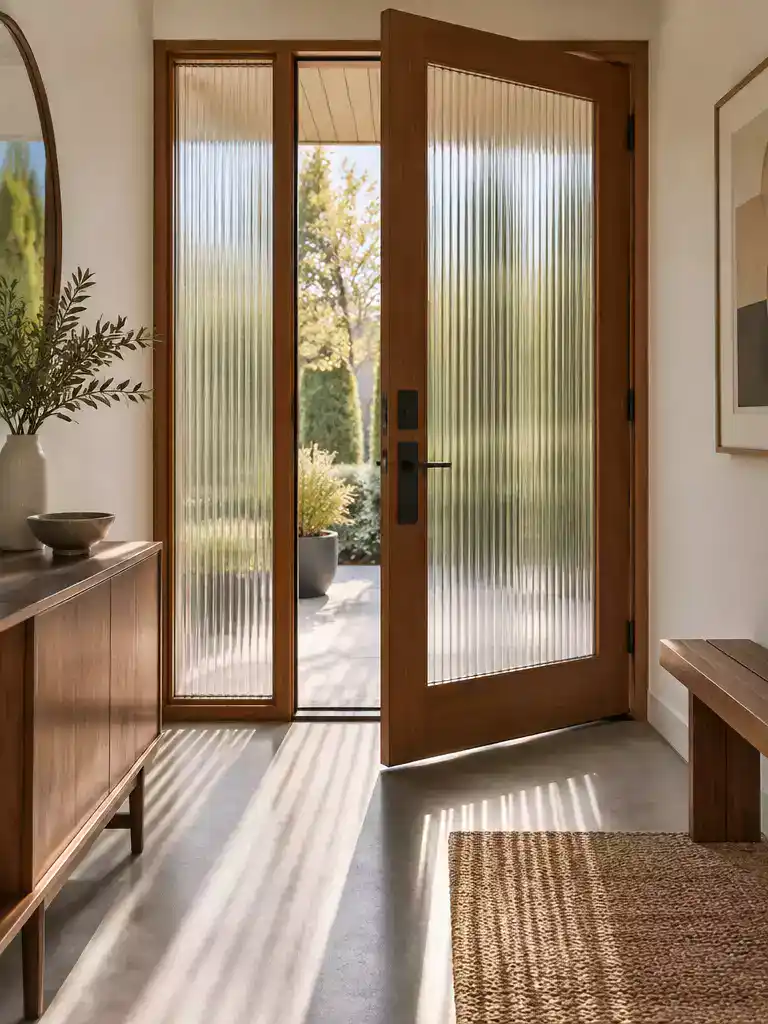
Transform your foyer with vertical lines that diffuse light while maintaining a modern, structured aesthetic.
Reeded glass is defined by its linear, ribbed texture that creates vertical distortion across the pane. It pulls natural light into your foyer while stretching the view of the outside world into long, abstract lines.
This option is a natural fit for modern or mid-century home styles where clean, geometric lines define the architecture. Because the texture is consistently vertical, it complements doors with paneling that follows a similar linear pattern.
Privacy vs. Light: Reeded glass provides a high level of privacy by blurring shapes into unrecognizable streaks. You will still receive significant natural light, but you lose the ability to see clearly through the door.
Before you commit, consider the orientation of the glass within your door frame. Vertical orientation is the standard for reeded glass, as it creates a sense of height and pulls light upward to brighten the ceiling of a dim foyer.
If you prefer a style that feels intentional and architectural, this is an excellent choice. It works much better for homeowners who want to obscure the view of the interior without resorting to completely opaque or frosted options.
⭐ Reeded Glass Styles We Love
Reeded Glass Privacy Window Film
Static Cling Fluted Glass Privacy Film
✨ Editor’s Pick
Decorative Reeded Glass Privacy Film
💡 Designer Note: Aligning Texture with Architecture
Reeded glass thrives when its rigid verticality is treated as a deliberate design element rather than just a functional privacy screen. In mid-century spaces, use this texture to mirror the clean lines of slat-wood wall paneling or linear hardware finishes. By repeating that vertical rhythm, you create a cohesive, architectural look that feels intentional and high-end.
Fluted glass
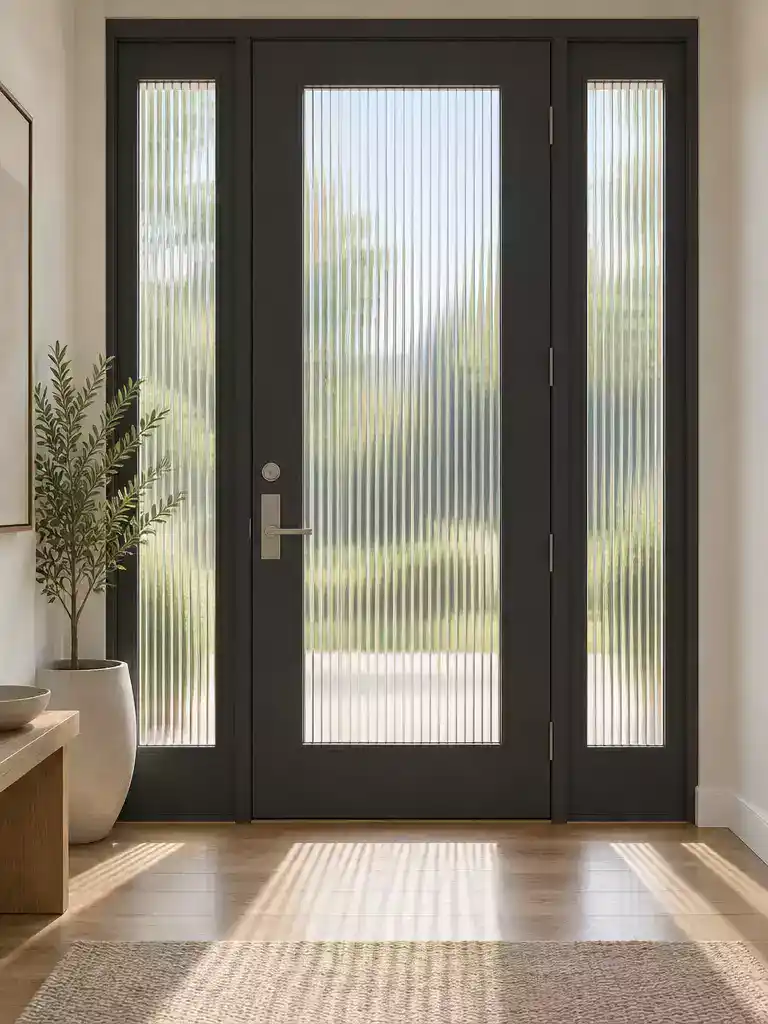
Bring light into your home while maintaining a clean, structured, and intentional architectural aesthetic.
Fluted glass is defined by its wide, deliberate vertical grooves that run the full length of the pane. Unlike reeded glass, which feels more delicate, these wider channels create a bold, rhythmic visual effect that feels like a intentional design feature rather than just a privacy film.
If you want your doorway to look like a modern architectural detail, this is your best option. It acts as a privacy screen that obscures direct sightlines into your home while allowing plenty of natural light to flood the foyer.
Best For: Homeowners who want a clean, organized look that complements modern, industrial, or mid-century home styles. It is an excellent choice for those who value privacy but refuse to settle for a flat, frosted finish.
Because the vertical lines are so prominent, they work best when the rest of your entryway hardware also follows a clean, linear path. Keep your door handle and hinges simple to avoid clashing with the glass’s strong geometric presence.
⭐ Fluted Glass Options for Privacy
✨ Editor’s Pick
Removable Reeded Glass Privacy Film
Static Cling Fluted Privacy Film
🏡 How This Works in a Real Home:
- Entryway orientation: Align your fluting vertically to visually pull the ceiling height upward, making a cramped foyer feel significantly taller.
- Privacy maintenance: Clean these panels with a soft microfiber cloth; the deep grooves can trap dust, so avoid thick, lint-heavy cleaning rags.
- Hardware coordination: Pair with matte black or brushed nickel door levers to emphasize the structured, modern lines of the glass without adding visual clutter.
A home that feels bright and welcoming the moment you step inside has a direct, positive impact on your daily mood. You do not need to navigate every single glass variation perfectly to achieve that shift; identifying your light and privacy requirements is really about narrowing down to the best glass frames for your specific lifestyle.
Focusing on how you want your entry to feel each morning is the only metric that truly dictates which door choice serves your home best.
Rain glass
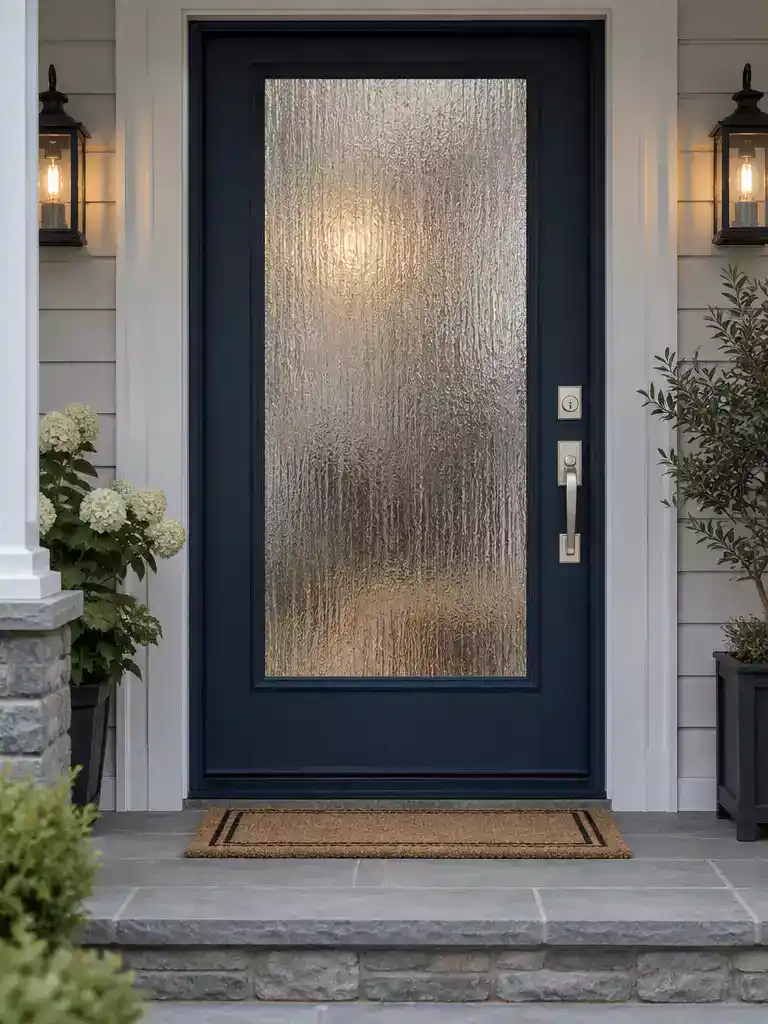
Enjoy a bright, luminous entry without sacrificing the privacy of your home’s interior.
Rain glass is defined by its signature vertical, streaky distortion that mimics the look of droplets running down a windowpane. It is a go-to choice for homeowners who need a high level of privacy but refuse to settle for a dim, cave-like foyer.
Because the texture is heavily patterned, it effectively obscures the view of anyone standing on your porch while still allowing a significant amount of natural light to filter through. It is exceptionally forgiving with maintenance, as the irregular ridges do an impressive job of hiding water spots, fingerprints, and dust.
Why choose Rain Glass?
- Provides high privacy without the heavy look of flat frosted glass.
- Matches perfectly with traditional, cottage, or farmhouse architectural styles.
- Hides exterior dirt and interior clutter better than smoother patterns.
If you live in a high-traffic area, this option allows you to keep your curtains open all day without feeling exposed. It creates a soft, diffused glow that makes the entry feel welcoming rather than harsh or overly clinical.
⭐ Rain Glass for Subtle Privacy
✨ Editor’s Pick
Clear Low-E Sidelight Glass Kit
🏡 How This Works in a Real Home:
- Entryway depth: Install this in deeper, covered porches to enhance the “glow” without sacrificing your family’s privacy.
- Daily maintenance: The rippled texture is a parent’s best friend for masking small handprints and muddy splashes.
- Natural integration: Pair with oil-rubbed bronze hardware to ground the glass’s organic, water-like appearance in traditional spaces.
Seeded glass
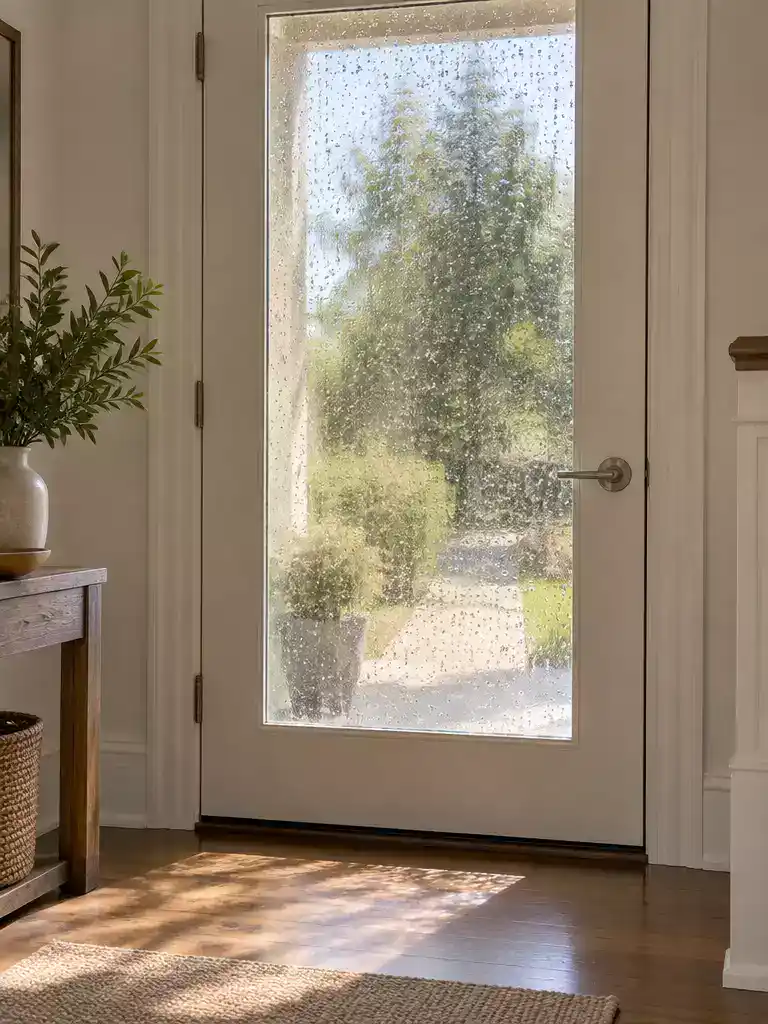
Bring a touch of historic character to your entry while keeping your foyer interior bright.
Seeded glass is defined by its signature tiny air bubbles trapped within the pane during the manufacturing process. These organic inclusions mimic the look of artisanal, hand-blown glass often found in early 20th-century homes.
If you are looking for a way to add architectural interest to your door without opting for a modern, perfectly smooth finish, this acts as a direct focal point. It provides a distinct vintage appeal that feels intentional and curated.
Privacy vs. Light Balance: Seeded glass offers moderate privacy by obscuring the view of the interior enough to mask specific details. Because the bubbles are relatively small, they do not significantly block light, keeping your entryway feeling open and airy.
This option is right for homeowners restoring a period home or those who prefer a traditional, warm aesthetic. If your home leans toward stark minimalism or polished high-tech design, the “imperfect” nature of the bubbles might feel out of place.
⭐ Seeded Glass for Antique Charm
✨ Editor’s Pick
Seeded Glass Outdoor Wall Sconce
Matte Black Seeded Glass Wall Lantern
💸 Budget-Friendly Version
- Decorative film: Apply seeded-look window film to standard clear glass for an immediate vintage aesthetic at home.
- Hardware focus: Pair simple, affordable glass with high-end, period-appropriate brass or oil-rubbed bronze door hardware instead.
- Where to spend: Invest your budget in tempered, dual-pane units to ensure safety and thermal performance before finalizing.
Water Glass
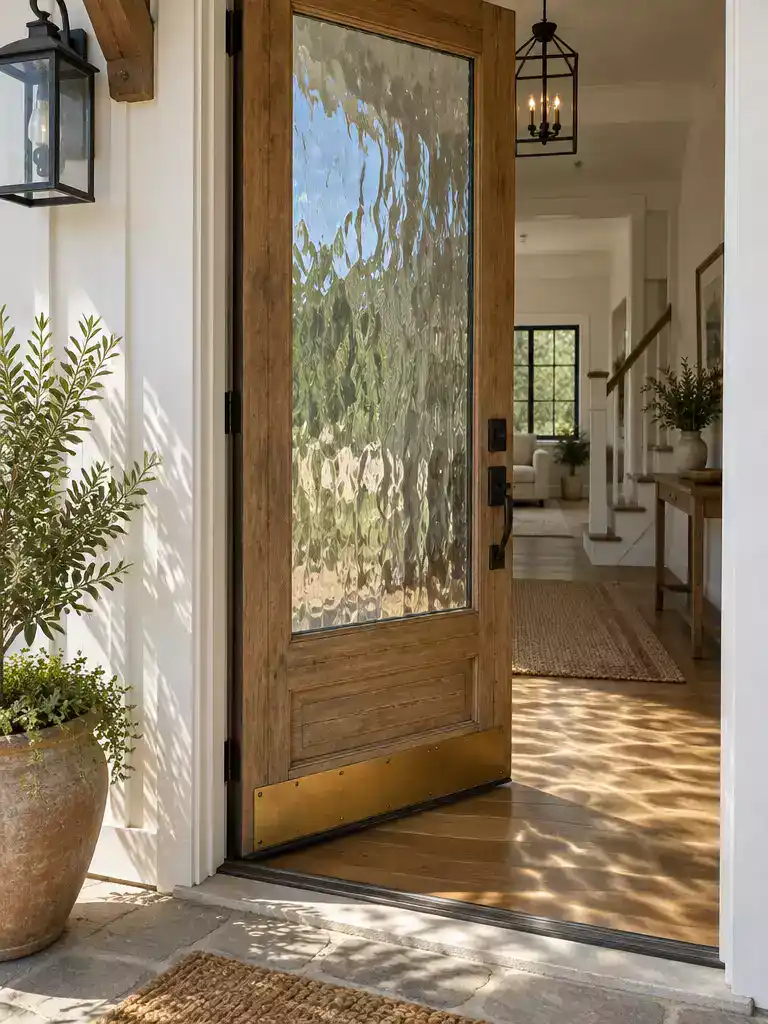
Bring organic movement and soft, diffused light into your home with a fluid, wavy finish.
Water glass captures the look of a pond’s surface, featuring a wavy distortion that breaks up direct lines of sight. It excels at pulling light into a dark foyer while creating an artistic, ripple-like pattern on your interior floors.
Best For: This option is a natural fit for cottage or farmhouse styles where the goal is to avoid the stark, clinical look of perfectly straight modern glass. It feels handmade and intentional, adding character to standard entryways.
Because the surface is not perfectly smooth, it provides a solid layer of moderate to high privacy. It obscures the exact details of what is happening outside your door without blocking the natural glow of the sun.
If you prefer a sharp, minimalist aesthetic, you might find this texture too busy. However, it is an ideal choice if you want to mask an unappealing view while still keeping your entryway bright and welcoming.
⭐ Water Glass for Visual Interest
✨ Editor’s Pick
Dusk to Dawn Water Glass Sconce
Modern Water Glass Outdoor Wall Light
✨ Finishing Touches
To make the organic, fluid movement of water glass feel truly integrated, coordinate your surrounding hardware and lighting finishes to anchor the foyer’s aesthetic.
- Hardware coordination: Opt for matte black or oil-rubbed bronze door levers, which define the glass edges and provide a sharp, grounding contrast to the soft, rippled texture.
- Lighting placement: Position a lantern or pendant fixture near the door to catch the glass waves at night, creating dramatic, dancing light patterns across your foyer walls.
Hammered Glass
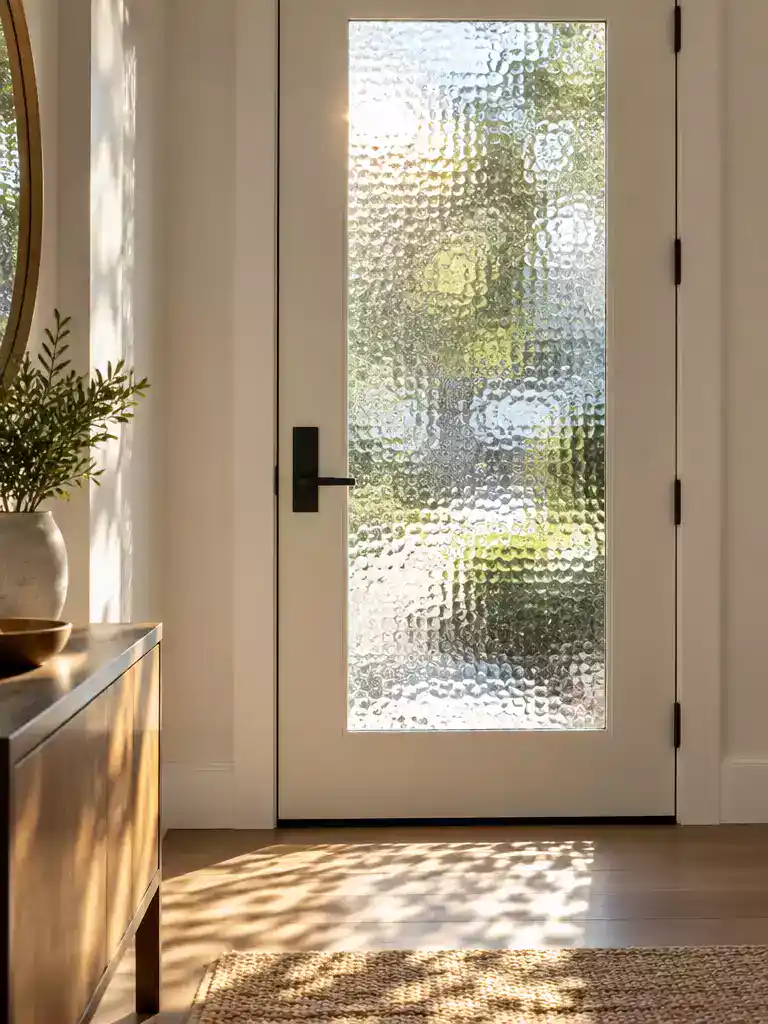
Transform a dark, exposed foyer into a bright, private sanctuary with textured, light-diffusing glass.
Hammered glass is defined by its series of uneven, dimpled indentations that create significant visual distortion. It is an ideal choice for homeowners who need maximum privacy without sacrificing the entry’s natural light.
Why it works: The irregular surface texture breaks up incoming light, creating a bright, glowing diffusion that hides the interior from outsiders. It is nearly impossible for anyone on the street to distinguish shapes or movement inside your home.
Because the surface is intentionally pitted and uneven, it is exceptionally forgiving when it comes to long-term wear. You will find that this texture effectively masks minor scratches, dust, or water spots that would be immediately noticeable on a standard clear pane.
Consider this option if your entryway faces a busy sidewalk or directly toward a neighbor’s window. It allows you to brighten a dim foyer while keeping your private life hidden from the outside world.
⚖️ Quick Decision Guide: Choosing Hammered Glass
- Choose this if: You occupy a high-traffic urban area and require total privacy without sacrificing natural light.
- Skip this if: You prefer a clean, unobstructed view of your front garden or wider exterior landscape.
- Pair it with: Brushed nickel or matte black hardware to ground the organic, textured look of the glass.
Glue-chip glass
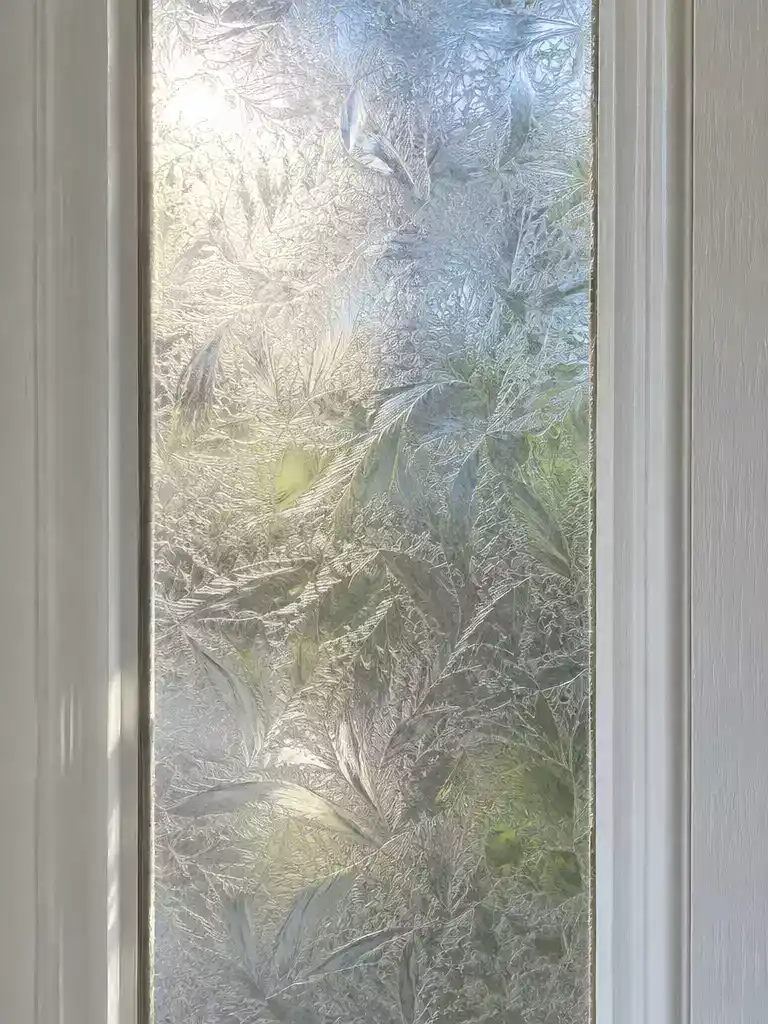
Achieve an artisanal, private finish with this unique, fern-like textured glass pattern.
Glue-chip glass is created through a distinct manufacturing process where animal glue is applied to the surface and then peeled away. This action pulls tiny flakes of the glass off, leaving behind a crystalline, fern-like pattern that is etched permanently into the pane.
Best For: This option is ideal for traditional, Victorian, or cottage-style homes where you want a decorative, vintage appearance. It provides an excellent level of privacy, making it perfect for front doors that face busy streets or close neighbors.
Because the texture is highly opaque, it is one of the most effective ways to obscure the view into your foyer while still allowing a significant amount of light to pass through. You gain a level of seclusion that clear or lightly textured glass simply cannot provide.
However, it is worth noting that this glass does not offer a clear view of the outdoors. If your goal is to showcase a specific landscape or garden feature, you should look at other options that offer less visual distortion.
⭐ Glue-Chip Glass for Privacy
Contemporary Frosted Glass Entry Door
Black Fiberglass Door with Frosted Glass
✨ Editor’s Pick
Modern Frosted Glass Fiberglass Door
💡 Why This Works
Glue-chip glass excels at brightening dark entryways because the unique, crystalline texture acts as a light diffuser. Instead of blocking sunlight, the pattern scatters it in multiple directions throughout your foyer, creating a soft, ethereal glow that masks the lack of direct natural light while maintaining high privacy levels.
Visual Benefit: It replaces a stark, dark door panel with a luminous, artistic focal point that feels intentional.
10. Frosted Glass
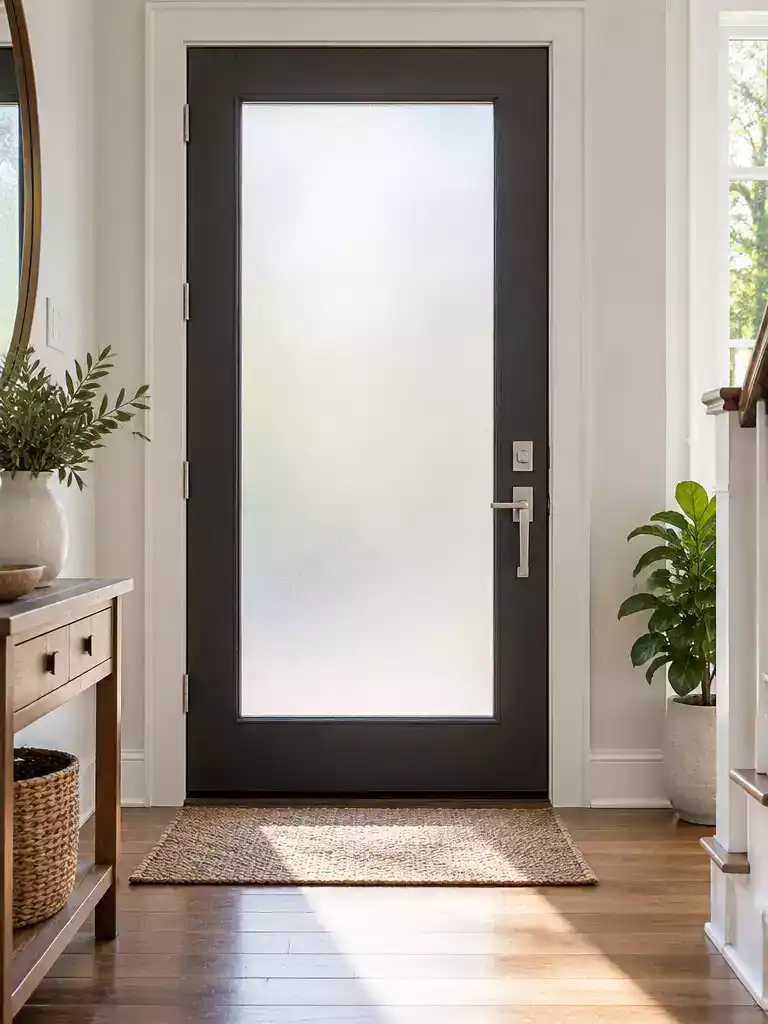
Achieve total privacy and a bright, welcoming glow without the fishbowl effect.
Frosted glass acts as the ultimate practical compromise for homeowners dealing with dark foyers on busy streets. By etching the surface to create a matte, translucent finish, you can achieve 70% to 85% light transmission while completely blocking the view of passersby.
Why it works: Unlike clear glass that leaves your entry feeling exposed, frosted options provide a clean, modern aesthetic that hides the interior entirely. You get the benefit of natural light without the need to hang curtains or blinds over your front door.
This option is ideal for any entryway where you want to eliminate the “fishbowl” feeling of standard windows. Because the diffusion is so consistent, it creates a soft, even light quality that fills the foyer without harsh glare.
Keep in mind that the glass itself does not provide insulation. Always ensure your chosen frosted pane is part of a high-performance, dual-pane insulated unit to maintain energy efficiency throughout the year.
⭐ Frosted Glass for Soft Light
✨ Editor’s Pick
Frosted Glass Privacy Window Film
Frosted Glass Sliding Barn Door
Diamond Pattern Frosted Window Film
📋 Before You Try This:
- Check light direction: Confirm your entryway receives enough natural light for frosting to actually create a “glow” effect.
- Verify glass thickness: Ensure your door frame can accommodate the thickness of a double-pane insulated frosted unit.
- Confirm safety glass: Double-check that your pane includes a “tempered” stamp to meet essential residential building codes.
Beveled Glass
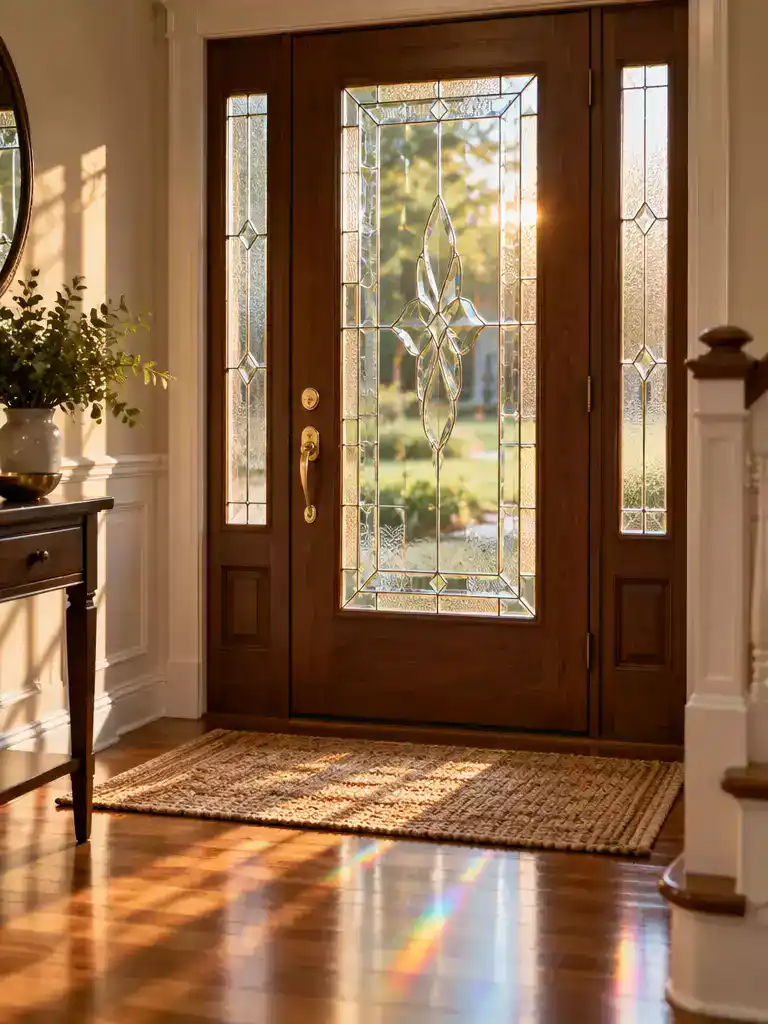
Transform harsh sunlight into a display of soft, prismatic light for a welcoming entry.
Beveled glass is defined by its thick, polished edges that are cut at an angle, acting like a prism to catch and refract direct sunlight. When the sun hits your door, these edges can cast small, colorful sparkles across your foyer floor.
This option is primarily an aesthetic choice for homeowners looking to add a focal point to their entry. It provides only low to moderate privacy, as the glass remains largely transparent despite the refractive edges.
Budget Note: Because of the intensive labor required to hand-grind and polish each individual edge, beveled glass is a high-cost investment. If you are working with a strict budget, reserve this choice for a small central accent pane rather than a full-door installation.
You should skip this if you need total privacy or live in a high-traffic area where passersby have a direct line of sight. It is best suited for homes with a private porch or a deep setback where you want to emphasize architectural detail over visual security.
⭐ Beveled Glass for Decorative Flair
Blue Floral Stained Glass Film
✨ Editor’s Pick
Wave Pattern Frosted Privacy Film
Textured Leaded Glass Privacy Film
💰 What This Really Costs
- High-End Labor: Beveled glass is a premium, labor-intensive investment due to the precision required for hand-grinding each edge.
- Hidden Upkeep: Plan for professional glass cleaning costs, as complex bevel patterns often collect dust and grime in crevices.
- Budget Strategy: Save significantly by using beveled glass for a small, decorative central accent pane rather than a full-door panel.
Clear Leaded Glass
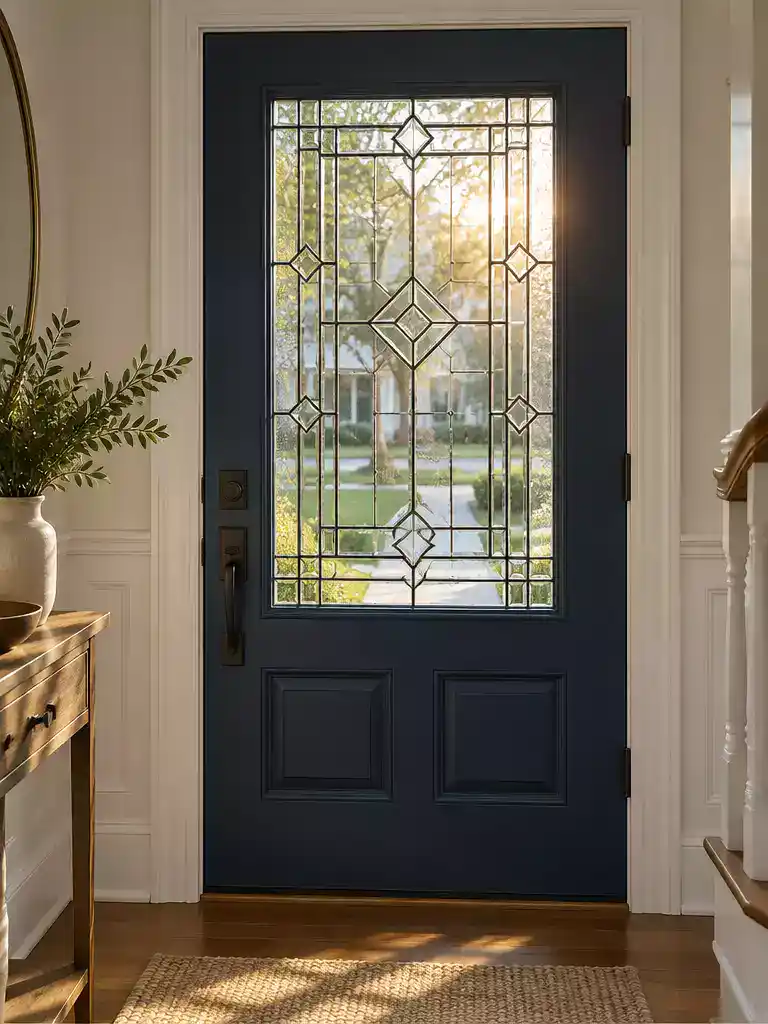
Enhance your entry with intricate glass patterns that serve as a sophisticated, traditional focal point.
Clear leaded glass is constructed by joining individual, hand-cut glass pieces with strips of lead or zinc, known as came. This technique creates a distinct, segmented appearance that draws the eye immediately to the entryway.
Because the came strips create physical barriers across the light path, this option often provides slightly less light transmission than a single, uninterrupted pane. It acts as a decorative centerpiece rather than a high-efficiency light harvester, making it best for homes where curb appeal and architectural detail take priority.
Best For: Traditional, Victorian, or historic-style homes that require a period-appropriate aesthetic.
Skip If: Your primary goal is maximum light intake or a minimalist, modern architectural style.
Due to the labor-intensive assembly process, these units are typically at the higher end of the pricing spectrum. You should ensure the manufacturer uses high-quality sealant at the came joints to maintain weather resistance and long-term durability.
While the aesthetic impact is undeniable, keep in mind that the privacy level here is quite low. Since the glass sections are clear, people can still see shapes and movement through the door, so it is best suited for homes with deep porches or private, non-street-facing entries.
⭐ Clear Leaded Glass for Entryways
✨ Editor’s Pick
Tempered Glass Door Insert with Blinds
Clear Glass Door Insert with Grilles
🧰 Questions for Your Installer:
- Sealing quality: How do you ensure the came joints between glass pieces remain airtight and moisture-resistant?
- Custom fit: Does the leaded assembly require a custom-sized door frame, or can it fit into standard openings?
- Maintenance needs: Will the lead or zinc came require specific cleaning products to prevent oxidation or dulling?
Textured Laminated Glass
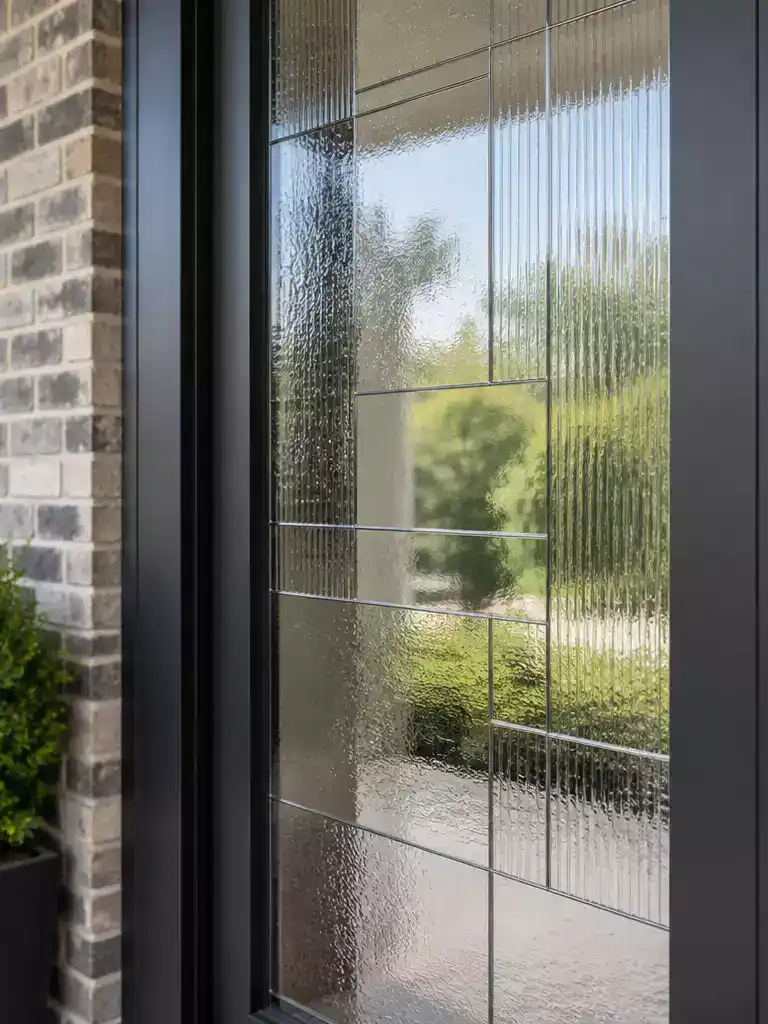
Boost your home’s security while maintaining a bright, private, and beautifully diffused foyer.
Textured laminated glass is built by bonding two sheets of glass around a strong plastic interlayer. This construction creates a safety-first barrier that holds the pane together even if it suffers a significant impact.
Security Note: Because the interlayer prevents the glass from shattering into shards, this is an ideal choice for high-traffic entryways or homes in areas where extra security is a priority.
You can choose from various textures embedded within the lamination to control exactly how much light enters your foyer. While the texture obscures the view from the outside to ensure privacy, the light still diffuses effectively, preventing that “closed-in” feeling common in dark entryways.
This option is a higher-cost investment compared to standard glass, but the peace of mind regarding safety is often worth the premium. It is the best fit for homeowners who refuse to compromise on either thermal efficiency or personal security when upgrading their front door.
📈 Does It Add Value?
While the initial cost is higher than standard glazing, textured laminated glass is a smart long-term investment for resale. Buyers prioritize homes that feel secure and private without sacrificing natural light. By choosing this durable, impact-resistant option, you enhance your property’s curb appeal while signaling a commitment to quality and safety that stands out during a home inspection.
Resale Advantage: High-security features consistently rank as top-tier selling points for safety-conscious families and high-traffic neighborhoods.
Clear Insulated Glass
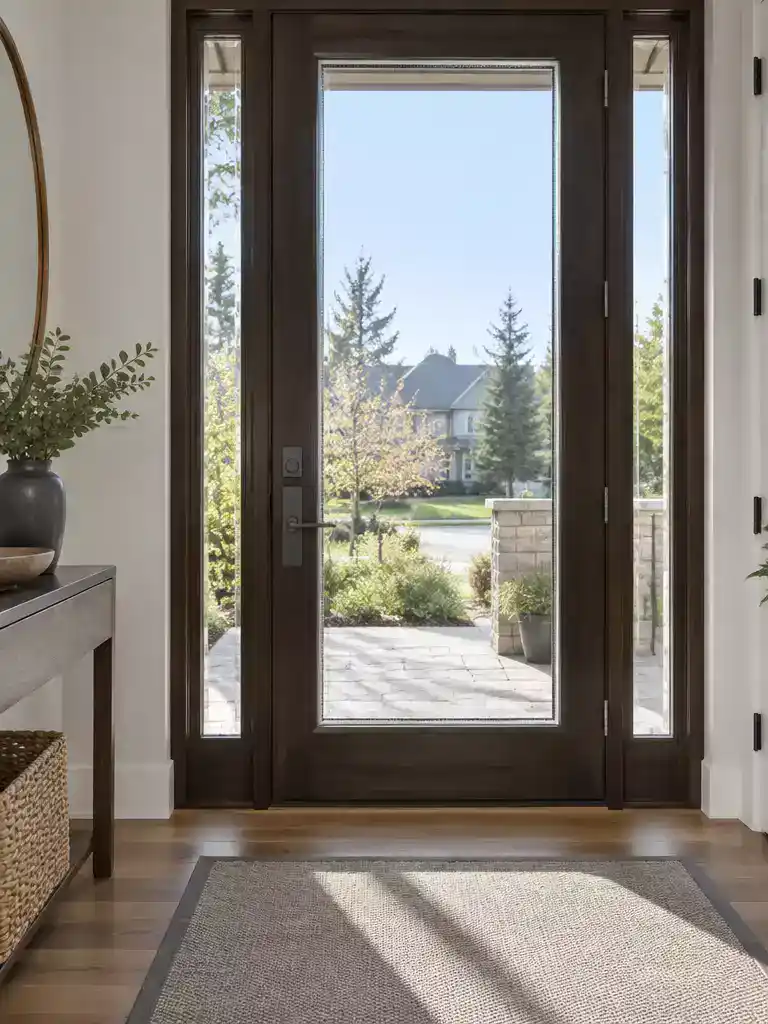
Maximize your natural light intake while keeping your home comfortable and draft-free year-round.
Clear insulated glass is the gold standard for homeowners who prioritize energy efficiency alongside maximum light transmission. By using a dual-pane construction with a gas-filled gap, this option significantly reduces heat transfer compared to traditional single-pane glazing.
This is the most functional choice for cold climates where preventing drafts and heat loss is a top priority. If your primary goal is to brighten a dim foyer without sacrificing your home’s thermal performance, this is your best path forward.
Important Consideration:
Because this glass is completely transparent, it offers zero privacy. If your entryway faces a public street or a high-traffic sidewalk, you may want to look into other options or pair this with interior window treatments.
⭐ Clear Insulated Glass for Performance
✨ Editor’s Pick
Fiberglass Front Door with Pet Door
Full Lite Fiberglass Prehung Door
With fourteen glass options now in view, the path to a brighter foyer is far less complicated than it first appeared. You certainly do not need to experiment with every style; the one or two solutions that align with your home’s lighting needs and architectural character will carry the entire entry.
Start by assessing your privacy requirements, then prioritize an insulated glass unit to ensure your home remains comfortable throughout the seasons. The foyer you are picturing comes from a few deliberate, technical choices rather than a complex list of upgrades. If you are still weighing your options, exploring front door makeover ideas can help you visualize how these glass panels transform your home’s exterior appeal. Once you settle on the right glass for your space, the rest of the project will fall into place with ease.
Related posts:
 12 Front Door Privacy Options for Homes Near the Sidewalk
 French Door Options: Which One is Right for You?
 10 Sliding Door Screen Options for Homes With Pets
 21 Dark Front Door Colors That Create Stunning Visual Contrast
 15 Glass Framed Door Ideas That Pull Light Into Dark Rooms
 14 Front Door Colors Designers Love for Dark Blue Houses
 14 Best French Door Ideas for Brightening Dark Hallways
 Wood or Glass Front Doors and What Each Gives Up