
Seventeen interior French door ideas that open up small rooms – full glass, pocket, bifold, frosted and more – with a configurator that balances light against privacy for your room, and the doors, kits and hardware to buy for the ideas that can be shopped.
One honest note before the ideas: not every idea here can be bought in a box. Six of the seventeen are looks you build or paint rather than products, so those sections carry no shop box – a wrong product would be worse than none. The eleven that can be shopped have a box at the end of their section.
The short answer: clear full-glass doors share the most light and make the strongest bigger-room effect. Frosted glass keeps most of the light and adds real privacy. Pocket and bifold versions give the light without eating floor space. Use the configurator after idea 3 to match the trade-off to your room.
1. Classic White Full-Glass Panels

Nothing beats the clean, timeless look of white-framed French doors with full glass panels. You get maximum light flow while the white frames practically disappear into your walls. You might not notice how the thin muntins create subtle shadow patterns that add dimension without blocking the view. Your eyes travel to the next room, making both spaces feel like one continuous area.
2. Sleek Narrow-Profile Frames

Those bulky door frames eat up visual space. Narrow-profile French doors slim everything down, giving you the glass without the heft. I installed these in my 1920s bungalow between the dining room and sunporch. The difference was shocking. The thinner frames (sometimes just 1.5 inches wide) create a more modern look while letting you place furniture closer to the opening without cramping the space.
3. Space-Saving Pocket French Doors

Why waste precious wall space with swinging doors? Pocket French doors slide completely into the wall cavity when open, giving you back every inch of floor space. The tracks are hidden in the ceiling and floor, creating a clean look when open or closed. Ensure your wall cavity is deep enough; standard 2×4 walls won’t cut it without clever framing tricks.
As an Amazon Associate we earn from qualifying purchases.
Shop the look
The pocket frame kit that makes idea 3 work
- Pocket Door Frame Kit with Soft Close, 30 x 80 4.5 stars (207 reviews)
Check Price on Amazon
Light or privacy? Get both, in balance
The light vs privacy configurator
Answer three quick questions. The configurator scores the ideas on this page for your room and shows the best three, with links down to their sections.
4. Accordion Bi-Fold French Doors

Want to open up a wall completely? Bi-fold French doors fold like an accordion, creating a wide, unobstructed opening that makes small rooms feel like part of a larger space. When fully open, you’ll need about 12-16 inches of stacking space for the panels, but the payoff is enormous, especially between living and outdoor spaces. Your tiny sunroom will suddenly feel like part of the backyard.
Shop the look
A bifold French door for wide openings
- Bifold French Door, Clear Glass, 32 x 80 4.5 stars (89 reviews)
Check Price on Amazon
5. Single French Door Solutions

Who says French doors must come in pairs? A single French door with multiple glass panes works wonders in tight spots where doubles won’t fit. I love using these for home offices, laundry rooms, or pantries. You get the light-sharing benefits without sacrificing wall space. The glass panels keep the connection to adjacent rooms without letting everyone see your messy desk.
Shop the look
A single French door for tight spots
- Single French Door, 10 Lite, Solid Core, 30 x 80 4.4 stars (8 reviews)
Check Price on Amazon
6. Frosted Glass for Privacy Plus Light

Not every room should be on display. Frosted glass French doors let light flow while hiding some things, perfect for bathrooms, bedrooms, or home offices. The diffused light is softer and more flattering than clear glass. Depending on your privacy needs, you can choose from various opacity levels, from barely-there haze to complete obscurity.
Shop the look
Frosted French doors, ready to hang
- Frosted French Doors, Pre-Hung, 60 x 80 5.0 stars (3 reviews)
Check Price on Amazon
7. Traditional Divided Lites for Character

French doors with divided lites (those small glass panes separated by muntins) add instant architectural character to plain rooms. Here’s something most people miss: smaller panes make a tiny room feel bigger because they break up the view in a way that suggests depth and distance. They’re particularly stunning in cottages, Craftsman homes, or anywhere you want to add old-world charm.
Shop the look
A 10-lite door for the divided look
- 10-Lite French Door, Clear Glass, 48 x 80 5.0 stars (1 reviews)
Check Price on Amazon
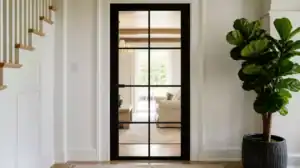
8. Bold Black Frames for Definition

Black is back, baby! Black-framed French doors create a dramatic contrast that defines the space between rooms. Against white walls, they pop like picture frames, drawing your eye through to the next space. Dark frames’ visual weight helps anchor a small room rather than crowding it. Ensure your ceiling height can handle the drama; at least 8 feet is ideal.
The 17 Ideas at a Glance
Every idea on this page with its glass, how much light it shares, how much privacy it gives, and where it works best.
| Idea | Glass | Light shared | Privacy | Best for |
|---|---|---|---|---|
| 1. Classic White Full-Glass | Full clear | Most | None | Living rooms |
| 2. Narrow-Profile Frames | Full clear, slim frames | Most | None | Modern rooms |
| 3. Pocket French Doors | Full clear | Most | Low | Tight floor plans |
| 4. Accordion Bi-Fold | Full clear | Most | Low | Wide openings |
| 5. Single French Door | Clear panes | Good | Low | Offices, pantries |
| 6. Frosted Glass | Frosted | Good | Most | Bedrooms, offices |
| 7. Divided Lites | Divided clear | Most | Low | Character homes |
| 8. Bold Black Frames | Full clear | Most | None | Statement entries |
| 9. Barely-There Light Frames | Full clear | Most | None | Small, dark rooms |
| 10. Transom-Topped | Clear + transom | Most | Some | Tall openings |
| 11. Sidelights | Clear + sidelights | Most | None | Grand entries |
| 12. Closet French Doors | Frosted or reeded | Good | Some | Closets, hallways |
| 13. Kitchen-to-Dining | Clear panes | Good | Low | Kitchen to dining |
| 14. Home Office Boundaries | Clear or frosted | Good | Some | Home offices |
| 15. Sunroom Transitions | Full clear | Most | None | Sunrooms |
| 16. Statement Hardware | Hardware only | No change | No change | Finishing any idea above |
| 17. Custom-Sized | Made to measure | Most | Varies | Odd openings |
9. Barely-There Light Frames

When you want French doors to disappear, choose frames painted the same colour as your walls. This trick makes the door opening feel like a natural extension of the wall rather than a separate element. The glass floats on the wall, creating an almost magical effect. Your eye focuses on the spaces beyond rather than the doors, making both rooms feel more spacious.
Shop the look
The door paint for the barely-there trick
- Rust-Oleum Door and Trim Paint, Satin White, Quart 4.6 stars (2,458 reviews)
Check Price on Amazon
10. Transom-Topped French Doors

French doors with transom windows above heighten standard door openings, drawing the eye upward and making ceilings feel higher. Basics are in transom windows over doors. That extra foot or two of glass above the door lets light reach deeper into interior rooms. I’ve seen north-facing rooms completely transformed by this simple addition. Suddenly, they’re bathed in light all day long without sacrificing wall space.
Shop the look
A transom window to sit above the doors
- Vinyl Transom Window, 12 x 48, Tempered Glass 5.0 stars (1 reviews)
Check Price on Amazon
11. Sidelights for Extra Width

Adding narrow fixed glass panels (sidelights) on either side of French doors creates a wider, more impressive opening without requiring additional clearance for swinging doors. Even 12-inch sidelights can dramatically increase the light flow between rooms while adding architectural interest. They make modest doorways feel grand without stealing floor space.
12. Closet French Doors

Replacing solid closet doors with French doors instantly brightens dark hallways and bedrooms. More are in charming French closet door ideas. The glass reflects light and creates depth where a flat wall once existed. You’ll need to keep your closet somewhat tidy, but the tradeoff is worth it! Choose reeded or fluted glass if you want light without revealing every detail of your storage habits.
13. Kitchen-to-Dining Connections

French doors between kitchens and dining areas create the perfect balance of separation and connection. When closed, they contain cooking noise and smells but allow conversation and light to flow during meal prep. The best part? You can see when dinner’s ready without shouting across the house. Unlike swinging doors, they stay put when open and won’t slam shut when someone walks by.
Shop the look
A glass panel door for kitchen to dining
- Glass Panel Interior Door, Frosted, 32 x 80 5.0 stars (5 reviews)
Check Price on Amazon
14. Home Office Boundaries

Working from home in a small space? French doors create a sound barrier without visual isolation. You can close them for Zoom calls but still feel connected to the rest of your home. Unlike solid doors, they prevent that closed-in, claustrophobic feeling that makes small home offices feel like closets. Your workspace feels like part of the home while still being defined as separate.
Shop the look
Blackout curtains made for French doors
- MIULEE Blackout French Door Curtains, Pair 4.5 stars (270 reviews)
Check Price on Amazon
15. Sunroom Transitions

French doors leading to sunrooms or enclosed porches create a gorgeous frame for plant-filled spaces. The threshold becomes a focal point rather than just a practical opening. What most people get wrong is that the swing direction of doors should open into the main living space, not the smaller sunroom, to preserve usable floor area in the smaller room.
16. Statement Hardware That Matters

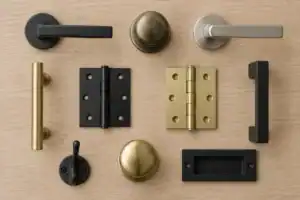
The proper hardware can make or break French doors in small spaces. Skip those tiny standard knobs! Oversized brass, matte black, or brushed nickel handles create visual interest and make the doors customizable. But watch the projection handles that stick out too far, which can catch clothing in tight spots. Flush or low-profile options work best in narrow hallways or tight corners.
Shop the look
Statement handles for French doors
- Matte Black Double French Door Handle Set 4.2 stars (64 reviews)
Check Price on Amazon
17. Custom-Sized Solutions
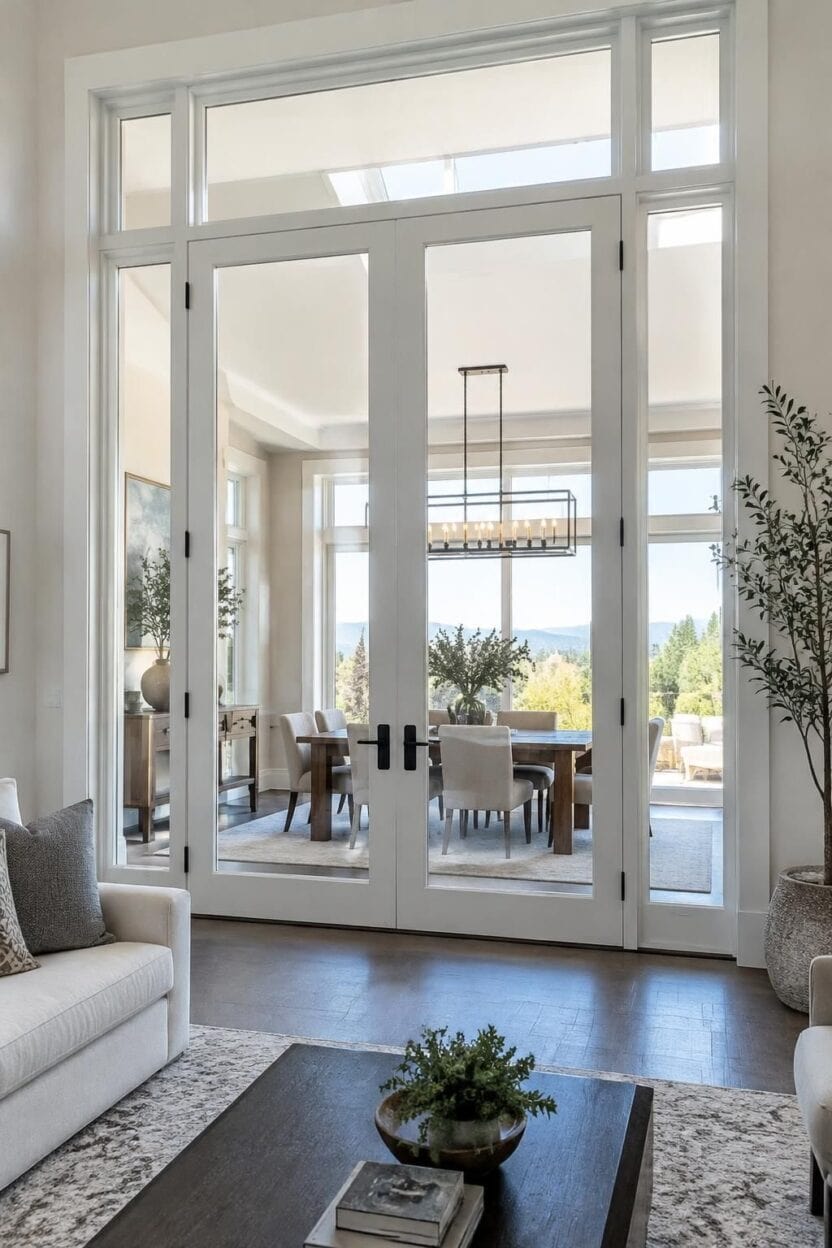
Standard door sizes don’t work everywhere, especially in older homes or unusual spaces. Custom French doors explicitly built for your opening can transform awkward spaces into architectural features. I once replaced a weird half-wall between a kitchen and dining room with custom 5-foot French doors; the homeowners said it felt like they’d added 100 square feet without moving a single wall.
Shop the look
A preassembled pair in an oversize fit
- Preassembled Clear Glass French Doors, 48 x 84 4.5 stars (57 reviews)
Check Price on Amazon
Make Your Move
The right French doors don’t just connect rooms; they transform how you experience your entire home. They’re problem-solvers disguised as beautiful design elements, working double duty to define spaces while eliminating the boxed-in feeling of small rooms.
Don’t settle for those hollow-core solid doors that came with your house. Swap even one key doorway for French doors and watch how you use those spaces differently. Start with the connection between your most-used rooms, the living room to the dining room, the kitchen to the family room, where the impact will be most significant. Your small rooms are waiting to breathe!
Free PDF download
Get the Free French Door Styles & Ideas Guide
The placements from this page, room by room — what each French door does there and what to know first — plus styles, glass and sizes in one printable guide.
Enter your email and the guide lands in your inbox. No spam, unsubscribe any time.
Interior French Door Questions
Do interior French doors really make a small room feel bigger?
Yes – by borrowing light and sightlines from the next room. Your eye travels through the glass, so the room reads as part of a larger space instead of a closed box. Clear glass gives the strongest effect; frosted glass keeps most of the light benefit with privacy on top.
Are French doors good for improving sound insulation between rooms?
Standard French doors provide moderate sound dampening – better than an open doorway but less than solid-core doors. For enhanced acoustic privacy, choose thicker, laminated glass panes and ensure weatherstripping or acoustic seals are installed around the frame and between the doors to minimise sound leakage.
What’s the typical cost difference between standard and custom-sized interior French doors?
Custom interior French doors can cost 50% to 200% more than standard, pre-hung units. The price drivers are non-standard dimensions, premium wood species (like mahogany vs. pine), specialised glass (e.g. tempered, low-E), and intricate muntin or panel designs. Complex installation for custom fits adds to the overall expense.
How much structural support do interior French doors, especially pocket versions, typically require?
Swinging interior French doors generally need a standard reinforced header above the opening, similar to any interior door. Pocket French doors demand more substantial framing: a wider, stronger header to prevent sagging under the door’s weight when open, and a wall cavity deep enough to fully conceal the door. This often means 2×6 framing or carefully constructed double 2×4 walls.
Can interior French doors be fitted with screens leading to a patio or sunroom?
Screens are readily compatible with interior French doors that transition to screened porches or patios. Retractable screen systems, which disappear into discreet side cassettes, are popular for a clean look. For out-swinging French doors, exterior-mounted traditional or sliding screens work well, while in-swing doors can accommodate various interior-mounted screen solutions.
What are the best ways to add privacy to clear glass French doors without replacing the glass?
Tailored curtains on decorative rods, sleek Roman shades, or cellular blinds mounted directly onto the door stiles or rails. For a durable, semi-permanent option, decorative window film – frosted, reeded, etched, or stained-glass patterns – obscures views while allowing light through. Idea 14 on this page uses blackout curtains made for French doors.
Image Disclaimer: The inspirational images featured in this article were created using artificial intelligence technology. While they showcase design possibilities, actual implementations may vary. Please consult with a professional for specific design and installation guidance.
Related posts
 12 Arched Doorway Ideas for Interior Rooms
 Ideas for Keeping French Doors Open
 15 Bathroom French Doors That Give Powder Rooms Personality
 16 Door Decorations for Home Ideas That Instantly Feel Welcoming
 15 Glass Framed Door Ideas That Pull Light Into Dark Rooms
 16 Glass Door Designs For Bright Interior Rooms
 10 Interior Door Colors for Rooms With Dark Furniture
 How Far Do French Doors Open