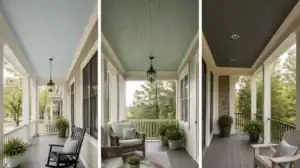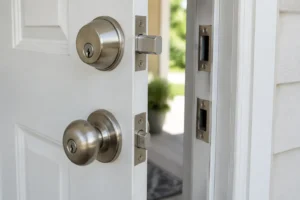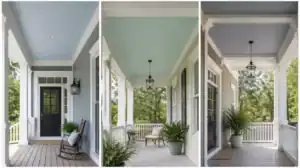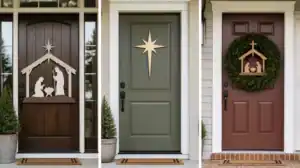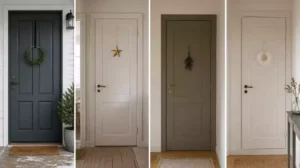

Your front door is the primary narrative gateway that sets the tone for your home. This guide rounds up 16 door decoration ideas worth saving to help you build a personalized, put-together entry. Find the specific accent that fits your porch style below.
Seasonal Wreath

A well-scaled wreath signals that your home is cared for and ready for the season.
As an Amazon Associate I earn from qualifying purchases. Affiliate links may earn me a commission at no extra cost to you.
A wreath acts as a living signifier that your home is maintained and present. It is the easiest way to give your entryway a pulse as the seasons shift.
The 1/3 Width Rule
Avoid choosing a wreath smaller than 30% of the door’s total width. Anything smaller will look lost and visually cheap, failing to act as a proper focal point.
When selecting your materials, consider the lifespan of your investment. Faux wreaths typically offer 3–5 years of use, while natural greenery provides a short-term, high-impact aesthetic that lasts 1–2 weeks.
Expert Tip: Skip the metal over-the-door hanger.
These hangers often scratch the paint or finish on your door frame over time. Use a heavy-duty magnetic hook instead to keep the wreath perfectly centered and protected.
.
📋 Quick Reality Check: Wreath Installation
- Check door clearance: Ensure that adding a wreath doesn’t cause the door to stick when closing or snag against the storm door.
- Inspect mounting surface: Verify your door finish is intact at the contact point to prevent moisture from causing rust or peeling paint.
- Test weight distribution: Confirm the wreath isn’t so heavy that it pulls on the hinge or causes the door to sit unevenly in the frame.
Personalized Name Sign

Clearly mark your territory with a custom sign that defines your home’s unique identity.
A personalized name sign acts as a direct handshake with everyone who walks up to your porch. It moves your entry beyond basic utility and signals that this space belongs to a specific family or household.
When selecting your material, durability should be the first factor you consider. You want a piece that survives seasonal weather shifts without warping or peeling.
If you live in a high-sun area, skip the acrylic options as they tend to crack and fade under intense UV rays. Stick with powder-coated metal or cedar for the best long-term return on your investment.
.
📋 Quick Reality Check: Before You Drill
- Hardware clearance: Measure the distance between your door handle and the mounting point to ensure the sign doesn’t snag clothing.
- Wall surface: Confirm your mounting hardware is rated for your specific siding material, whether it is stucco, brick, or wood.
- Street visibility: Test the sign’s placement from the sidewalk to ensure font size remains legible for visitors and emergency services.
Potted Plant Pairing

Soften rigid architectural lines with greenery that grounds your home’s entrance.
Potted plants serve as the easiest way to bridge the gap between your home’s structure and the surrounding landscape. By selecting the right containers and greenery, you add organic texture that instantly makes a standard doorway feel established and cared for.
The key to success is choosing pot materials that survive your specific environment. If you live in an area with heavy frost, skip porous terracotta, which can crack when moisture freezes inside the clay.
When selecting your plants, prioritize scale over quantity. A single, well-proportioned evergreen like a boxwood or juniper provides a permanent, structured look that requires minimal maintenance throughout the year.
Avoid the common mistake of choosing plants that are too small for your porch footprint. If the pot doesn’t look substantial enough to anchor the door frame, it will feel like an afterthought rather than a design choice.
Watch the Clearance:
Ensure your plant choice never blocks the swing of the door or creates a tripping hazard. If space is tight, use wall-mounted planters instead of floor pots to keep your walkway clear.
.
💡 How This Works in a Real Home:
- Grouped Heights: Place taller junipers or ferns toward the back, layering shorter ornamental kale in front to create visual depth.
- Seasonal Rotation: Use lightweight plastic liners inside decorative pots so you can swap out seasonal plantings without moving the heavy exterior containers.
- Foundation Anchoring: Position your largest pots at the base of the door frame to visually widen a narrow entry and provide a sense of stability.
Doormat Layering

Create depth and visual interest at your threshold by layering a patterned rug under your doormat.
Layering a smaller coir mat over a larger outdoor area rug instantly gives your entryway a custom, curated feel. This technique works best if your existing doormat looks lost or small against the scale of your front door.
Choose an under-layer rug at least 12 to 24 inches wider than your primary doormat to ensure the border remains visible. This creates a grounded look that frames your entry point effectively.
Watch Your Step
Avoid using lightweight or thin indoor rugs as your base layer, as these often bunch up and create a serious tripping hazard. Always select a low-profile, weather-rated outdoor rug that stays flat against your porch surface.
If you live in an area with heavy snow or frequent rain, skip natural wool or high-pile rugs for the base layer. Stick to synthetic fibers that won’t hold moisture or develop mildew under the coir mat.
📋 Quick Reality Check
- Door Clearance: Measure the gap between your door bottom and the porch to ensure the layered mats won’t snag or bind during swinging.
- Surface Material: Confirm your porch surface is level, as uneven stone or cracked concrete can cause the base rug to ripple and create a tripping hazard.
- Moisture Drainage: Check that your porch has proper slope, as synthetic base layers can trap water against wood decking, leading to potential rot if moisture persists.
Designing a welcoming entrance often feels like high-stakes work, but your home’s curb appeal relies on a few core layers rather than every single detail. Before exploring more ways to dress up your doorway, consider checking if your entryway layout needs a simple refresh to handle these new additions.
Focus on selecting two or three high-impact accents that balance aesthetic charm with the long-term maintenance required for your specific porch environment.
Hanging Garland

Frame your entryway with lush greenery to create an inviting, continuous border that elevates your home’s curb appeal.
A hanging garland acts as a living frame that draws the eye directly to your entryway. Unlike a simple centered wreath, this option provides a sweeping, architectural look that defines the entire doorway.
When selecting your materials, consider the weight and the environment. Faux greenery is the most practical investment for long-term use, typically lasting 3 to 5 years, while fresh natural boughs provide a high-sensory experience but will wilt and require replacement within 1 to 2 weeks.
Installation Tip: Always test your mounting hardware before hanging a heavy, light-integrated garland. Use damage-free clips designed for exterior trim to ensure your door casing finish remains pristine throughout the season.
This decorating style is perfect for homeowners who want a polished, complete look that feels intentional and high-end. However, you should skip this if your door hardware is already prone to catching, or if your door swing lacks the clearance for added frame thickness.
.
📋 Quick Reality Check: Before You Buy
- Door clearance: Test if your storm door or inward-swinging door has enough gap to accommodate bulky foliage.
- Handle obstruction: Ensure the garland won’t tangle with your lock or handle, which makes daily entry frustrating.
- Weight capacity: Verify your door frame material can support the weight of a pre-lit garland without damaging trim.
String or Lantern Lighting

Transform your porch into a glow-filled sanctuary that welcomes you home every single evening.
Lighting is the quickest way to shift your entryway from a dark threshold into a warm, inviting focal point. Whether you opt for cascading strings or structured lanterns, the goal is to create an ambient glow that mimics the comfort of the indoors.
Choose bulbs with a 2700K temperature to ensure you get that soft, golden hour warmth rather than a harsh, clinical blue light. If you are struggling with limited outlets, solar-powered stakes can line a walkway, though they won’t provide the same intensity as hardwired fixtures.
Watch the Glare
Avoid mounting light sources directly at eye level, which can create blinding glare for guests approaching your door. Position your lanterns or sconces slightly above or beside the frame to keep the light diffused and soft.
Metal lanterns are a safer bet for long-term durability, especially if you prioritize rust-resistant finishes like powder-coated iron. If you live in a high-wind area, choose weighted lanterns that won’t shift when the door swings open.
.
💡 Why This Works:
Lighting is the ultimate “curb appeal” multiplier because it bridges the gap between your home’s architecture and the surrounding neighborhood. By warming up the entry, you eliminate the visual “black hole” effect that occurs at night, creating a subconscious cue that the home is occupied, secure, and ready to welcome guests.
The Psychological Perk: Proper ambient lighting reduces guest anxiety and establishes a clear, inviting narrative from the street.
Decorative Door Knocker

Add a touch of tactile history and functional charm to your front entrance.
A decorative door knocker serves as the perfect bridge between your home’s architecture and your personal style. It replaces the anonymous doorbell with a tactile invitation, signaling that your home has character and history.
When selecting your finish and form, consider the era of your home to ensure the piece feels like a natural extension of the entryway. An ornate, heavy iron knocker might overwhelm a sleek modern ranch, while a minimalist brass circle likely feels out of place on a historic Victorian home.
Installation is often the step where homeowners run into trouble. Avoid mounting the knocker too low, as this forces guests to stoop, or too high, which makes it awkward to reach.
Avoid the “Hardware Clash”: Check your existing handle set and hinges before buying. If your door features brushed nickel hardware, a polished brass knocker will likely look disjointed unless you plan to swap out your other fixtures to match.
If you live in a high-wind area, choose a heavier, solid-cast metal piece that won’t rattle against the door during a storm. This simple addition is one of the most cost-effective ways to make your home feel genuinely “lived in” and approachable.
.
✨ Small Details That Matter
Beyond the knocker itself, these final styling elements help integrate the piece into your existing entrance for a cohesive, intentional look.
- Hardware coordination: Ensure your knocker finish matches your deadbolt and handle set to prevent a disjointed, cluttered aesthetic.
- Mounting precision: Use a template to confirm the knocker is centered at eye level before drilling to avoid unsightly, irreparable holes.
Address Plaque

Boost curb appeal and ensure your home is easily identified with high-contrast, permanent signage.
An address plaque serves as the final, functional detail that makes an entryway feel truly complete. It moves your home from a generic house number to a place with a distinct street-side identity.
Street-side visibility is the non-negotiable rule here. If a delivery driver or guest cannot read your numbers from the curb, the plaque fails its primary purpose.
Pro-Tip: Always prioritize high contrast between your house siding and the plaque material. A dark bronze plaque on a navy door will disappear; instead, opt for white, silver, or aged brass lettering to ensure it pops.
Avoid placing your plaque too high or too far from the door frame, as this creates a disconnected, floating look. You want the address to feel like a deliberate part of your door’s framing, not an afterthought tacked onto a random patch of siding.
.
⚖️ Quick Decision Guide:
- Choose cast metal: Opt for this if you want a classic, enduring finish that lasts 10+ years effortlessly.
- Skip acrylic: Avoid this option in high-UV areas, as it tends to fade or crack within 3–5 years.
- Pair it with: Match your plaque finish to your existing door hardware for a cohesive, professional-looking entry statement.
Painted Accent Color

Refresh your exterior instantly by choosing a high-contrast hue that defines your home’s personality.
Painting your front door is the most effective way to change your home’s curb appeal in a single afternoon. A high-gloss or semi-gloss finish provides a durable, reflective surface that stands up to daily wear while signaling that your home is meticulously cared for.
Choosing the right contrast is essential to avoid a muddy look from the street. Opt for colors that sit opposite your siding on the color wheel, such as a crisp yellow against navy siding or a deep charcoal against white brick.
Before you commit to a gallon of paint, consider the surrounding neighborhood context. A neon or hyper-saturated color might feel out of place if the rest of your street sticks to traditional, muted palettes.
For those looking to achieve a professional-grade finish, focus on these practical steps:
- Prep the surface: Lightly sand the existing finish and apply a high-quality bonding primer to ensure the new color adheres properly.
- Use exterior-grade acrylic latex: This formula resists peeling, cracking, and UV fading, keeping your door looking fresh for 5 to 10 years.
- Mind the finish: Always choose semi-gloss or high-gloss over flat paint, as glossier finishes are significantly easier to wipe clean when dirt or dust accumulates.
Avoid: Never paint over peeling or bubbled paint without stripping it first, as the new coat will fail within months. Additionally, skip overly trendy colors if your home has a permanent exterior stone or brick color that might clash with the undertones.
.
🔢 The Right Sequence: Painting for Longevity
Painting your door out of order often leads to hardware clogs or uneven edges that peel within a single season.
- Remove hardware: Take off handles and knockers first to ensure a clean, professional-looking coat.
- Sand and prime: Scuff the surface and apply a bonding primer to prevent premature chipping later.
- Paint and cure: Apply thin, even layers and allow the door to fully cure before reattaching hardware.
Hanging Basket

Add life to your entryway by drawing the eye upward with cascading greenery and color.
A hanging basket acts as a vertical anchor, softening the rigid corners of a door frame that often feel stark. It is the ideal solution for homeowners who want to maximize a small porch footprint without cluttering the floor space.
Before you drill, consider the material of your bracket and the weight of your chosen vessel. Fiberglass or wire baskets offer the best longevity, typically lasting up to a decade, whereas woven seagrass will break down after two or three seasons if exposed to constant moisture.
Watch your height: Avoid placing the basket so high that the plant growth obstructs the view of the door or creates a cramped feeling.
If your entryway lacks a covered porch, stick to hardy, sun-loving varieties that won’t wilt in harsh midday heat. This approach ensures your vertical decor stays vibrant rather than becoming a chore to maintain.
.
🧰 Questions for Your Installer:
- Bracket clearance: Does the mounting hardware allow for the door to swing fully open without hitting the basket?
- Weight capacity: Will the siding or door frame support the weight of the basket once the soil is saturated?
- Drainage management: Can we install a drip tray or liner to prevent water runoff from staining the door finish?
Festive Bells or Charms

Add an auditory layer of hospitality that announces guests with a gentle, melodic chime.
As an Amazon Associate I earn from qualifying purchases. Affiliate links may earn me a commission at no extra cost to you.
Auditory welcoming is often the missing element in a front porch design. Unlike visual decor, bells and charms offer a sensory experience that signals a home is active and ready to receive visitors.
These accents work best for porches with a clear breeze, allowing the movement of the door to create a soft, rhythmic sound. If you live in an exceptionally high-wind area, stick to heavier, solid-metal bells rather than delicate glass or thin plastic charms to prevent rattling and damage.
Avoid Clutter Regret
Resist the urge to layer these alongside a heavy wreath, as the combination often creates a disorganized, chaotic look. Choose one focal point—either the wreath or the bells—to keep your entry feeling curated rather than crowded.
.
🧰 Questions to Ask Before You Hang
- Surface Compatibility: Will the hanging hardware damage your door’s finish or material during high-wind movement?
- Wind Resistance: Does the chime material risk scratching the door panel if the wind catches it frequently?
- Weight Distribution: Is the mounting point secure enough to support the bells without causing the charm to tilt?
Symmetrical Planters

Create an instant sense of order and formal hospitality with perfectly balanced side-by-side greenery.
As an Amazon Associate I earn from qualifying purchases. Affiliate links may earn me a commission at no extra cost to you.
Placing matching planters on either side of your threshold is the quickest way to establish formal hospitality. This arrangement draws the eye directly toward the center, framing your entryway as the main event of the porch.
When selecting your containers, scale is the most common pitfall. A planter that is too small for the porch footprint will look like an afterthought, so aim for vessels that occupy at least one-quarter of the door’s height.
Pro-Tip: Ensure you are using identical plant varieties in both pots to maintain the intended visual balance. If you are dealing with freezing winters, fiberglass is your best bet to prevent the cracking often seen with traditional terracotta.
Avoid the “Tiny Pot” Trap
Never use planters that block the swing of your door or interfere with your main path. If your porch is narrow, opt for taller, narrow-profile planters instead of wide, bulky ones to keep the walkway clear.
.
💡 Why This Works
Symmetry taps into our brain’s natural desire for order, immediately signaling that a home is well-tended. By creating a balanced corridor for the eyes to follow, you subconsciously lower the barrier for guests, making the doorway feel like a curated, welcoming destination rather than just another transition point.
The Visual Payoff: A structured, mirrored entry creates an instant sense of permanence and sophisticated, formal hospitality.
Ribbon and Bow Accent

Add soft, hand-tied charm to your entry with durable, weather-resistant fabric accents.
As an Amazon Associate I earn from qualifying purchases. Affiliate links may earn me a commission at no extra cost to you.
A well-placed bow provides an immediate sense of hand-tied softness that feels more intentional and welcoming than mass-produced hardware. This approach is perfect for homeowners who want to change the personality of their entry without investing in new fixtures or paint.
Avoid thin, flimsy ribbons. These fail to hold their shape in the wind and frequently look cheap against a solid front door. Always prioritize wired ribbon for your bows to ensure they remain structured and full throughout the season.
When selecting your material, remember that fading is the primary enemy of outdoor fabric. Stick to UV-resistant polyester if your door receives direct afternoon sun, and save delicate silk or cotton blends for protected, covered porches only.
.
💡 Why This Works:
Adding a bow introduces an organic, flowing element that breaks up the rigid, vertical lines of a standard door frame. This visual softness creates an immediate sense of warmth and hospitality, signaling that your home is a cared-for, personal space rather than just a functional entry point.
Design Benefit: The added texture softens architectural edges and creates a focal point that draws guests inward.
Window Insert Decor

Control your natural light and entry privacy with simple, non-permanent glass treatments.
As an Amazon Associate I earn from qualifying purchases. Affiliate links may earn me a commission at no extra cost to you.
Window inserts allow you to balance natural light with necessary privacy, especially if your front door has large glass panels. This solution is perfect for homeowners who want to obscure the view from the street without installing heavy curtains or bulky metal security bars.
The most common approach involves static cling frosted vinyl, which applies easily with water and can be removed without damaging the glass. If you prefer a more structured look, lightweight metal frames can be mounted to the door to provide a decorative grid pattern.
Avoid the Security Bar Trap
Steer clear of thick, industrial-looking metal inserts that mimic security bars. These can make your entryway feel restrictive and unwelcoming rather than curated.
Choose frosted vinyl if you are a renter or move often, as it leaves no trace upon removal. Homeowners looking for a permanent architectural upgrade should opt for metal framing or professional etched glass inserts.
.
Welcome Bench Styling

Transform your porch into a functional seating area that invites guests to linger comfortably.
As an Amazon Associate I earn from qualifying purchases. Affiliate links may earn me a commission at no extra cost to you.
A welcome bench acts as a functional anchor for your entry, offering a place to set down bags or take off shoes. This addition is perfect for homeowners with spacious porches who want to signal that their home is a place of genuine rest and hospitality.
If your porch is on the narrow side, skip the bench to avoid creating a tripping hazard or blocking the natural swing of your door. Always prioritize clear traffic flow over decorative furniture.
Pro-Tip: Only use weather-rated fabrics for any cushions or pillows you add to the bench. Standard indoor textiles will trap moisture and develop mildew within a single season of outdoor exposure.
.
🏡 Real-Home Application for Porch Seating:
- Ergonomic Clearance: Measure at least 30 inches of clearance around the bench to ensure your guests can move freely without catching their heels on the door frame.
- Daily Functionality: Choose a bench with a slatted seat design; this prevents rainwater from pooling, helping your cushions stay dry and mildew-free during seasonal transitions.
- Natural Styling: Offset the rigid lines of a metal or wood bench by placing a single, oversized floor lantern nearby to anchor the bench visually to the house.
Fresh Floral Swag

Bring immediate, high-sensory impact to your entryway with the fleeting scent of real flowers.
As an Amazon Associate I earn from qualifying purchases. Affiliate links may earn me a commission at no extra cost to you.
A fresh floral swag is the ultimate “living” decoration, perfect for homeowners who want an immediate, high-sensory upgrade for a specific event or weekend. Unlike structured wreaths, an asymmetrical swag provides a more relaxed, botanical feel that draws the eye downward along the side of your door.
If you prioritize the authentic scent and organic texture of real blooms, this is your best option. However, be prepared for the maintenance; a fresh swag typically lasts only 3 to 7 days before the petals begin to wilt or dry out.
Warning: Watch the weight of your swag carefully. Use a sturdy, door-rated hook rather than thin wire to prevent the swag from sagging or scratching your finish as it shifts in the breeze.
To maximize the display, monitor your arrangement for sun-wilt if your door faces south. You can mist the foliage lightly each morning to extend its peak condition by a day or two.
.
🔢 The Right Sequence for Maximum Freshness:
Arranging your floral display requires a specific order of operations to ensure the stems stay hydrated and the door remains pristine while the blooms are in place.
- Prep the stems: Trim ends at a 45-degree angle to increase surface area for better water absorption.
- Secure the base: Use floral foam or a water-retaining tube hidden behind the swag to keep flowers nourished.
- Mount with care: Hang the finished swag using a padded hook to protect the door finish from scratching.
With all sixteen decorative concepts reviewed, you now have a clear view of how to anchor your home’s entry. Selecting one or two elements that align with your architecture is far more effective than attempting the entire list.
The most inviting front door entryways rely on deliberate, high-impact choices rather than clutter. Once you decide on the primary accent that complements your home, the rest of the styling simply falls into place.
Related posts
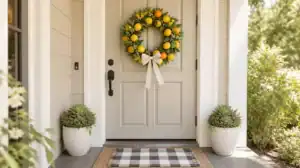 14 Door Decorations for Summer Ideas That Feel Bright and Breezy
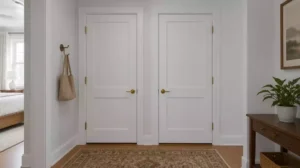 How to Make Every Door in Your House Feel Like One Design
 15 Sliding Wardrobe Designs That Make a Small Bedroom Feel Bigger
 12 Front Door Styles That Instantly Upgrade Any Home
 17 Interior French Door Ideas That Instantly Open Up Small Rooms
 14 Office Door Christmas Decorations Ideas
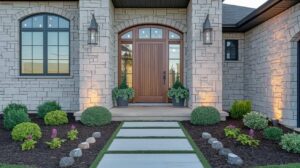 19 Wooden Entrance Door Inspirations That Instantly Elevate Curb Appeal
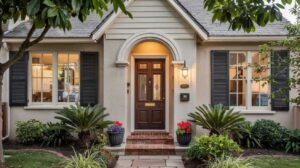 21 Best Front Door Colours to Instantly Boost Curb Appeal