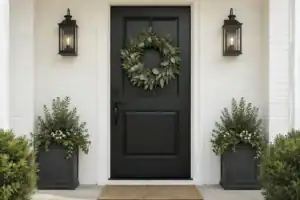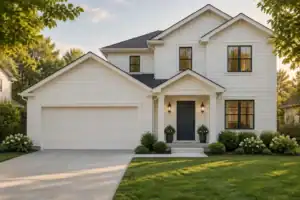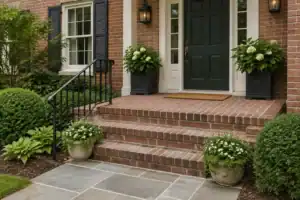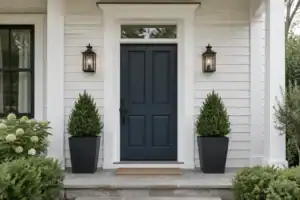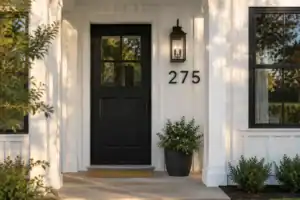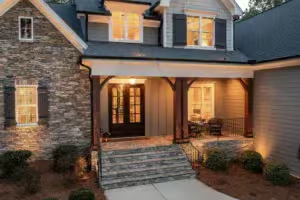

A standard builder-grade entry often lacks the character your home deserves. This guide rounds up 14 door design ideas worth saving that prioritize material quality and proportion, helping you select a high-end upgrade that fits your home perfectly. Let’s look at the first option.
Flush Panel

Achieve a monolithic, high-end architectural look with clean, hardware-free flush design.
As an Amazon Associate I earn from qualifying purchases. Affiliate links may earn me a commission at no extra cost to you.
Many homeowners assume that a flat, simple door looks inexpensive, but the opposite is true. A true flush panel entry creates a monolithic, architectural silhouette that feels far more custom than a standard multi-panel design.
The secret to pulling this off lies in the margins. You are looking for a narrow, perfectly consistent reveal – the gap between the door and the frame – which serves as the hallmark of a professional-grade installation.
When selecting your slab, stick to matte or non-reflective finishes. Glossy surfaces often backfire by highlighting every minor imperfection or dust particle on the door’s surface.
Pro-Tip: The Heavy-Core Rule
Always insist on a heavy-core slab for your entry. A hollow-sounding door destroys the luxury illusion the moment a guest reaches for the handle.
If you want to keep the profile truly clean, consider using a recessed pull rather than a traditional handle. This choice keeps the face of the door completely uninterrupted and emphasizes the modern geometry.
Use this guide to ensure your installation hits the right notes:
- Hardware: Use high-density, solid-metal hardware that provides a substantial, weighted feel.
- Installation: Hire a professional to ensure the door sits perfectly in plane with the surrounding wall.
- Finish: Opt for high-quality matte paint or a consistent wood grain applied in a controlled factory environment.
This design is an ideal match for modern or minimalist home aesthetics. If your home leans heavily into traditional or ornate styling, the lack of depth in a flush panel may feel disconnected from your architecture.
⭐ Top Flush Panel Doors to Consider
✨ Editor’s Pick
Double Exterior Doors with Glass Panels
Pine Dutch Door Slab with Glass
Solid Wood Dutch Exterior Door Slab
🛠️ Practical Steps That Help:
- Check the reveal: Use a feeler gauge during dry-fitting to ensure a consistent, tight gap around the entire perimeter.
- Test the swing: Confirm the slab hangs perfectly plumb so the door doesn’t self-close or drift when left unlatched.
- Seal the edges: Apply high-quality weatherstripping before installation to maintain the clean, gap-free look while preventing air leakage.
Shaker Panel

Crisp geometry and deep shadow lines create a tailored, architectural entrance for any home.
Think of the Shaker panel door as the architectural equivalent of a perfectly pressed white shirt. It relies on geometric restraint rather than ornate carvings to command attention.
The design works by using recessed center panels surrounded by squared-off stiles and rails. This construction creates intentional shadow lines that define the door’s depth and structure throughout the day.
The “Less is More” Rule: Keep your panel count low. A single or two-panel configuration feels significantly more expensive than a busy, multi-panel design which can look cluttered and dated.
This style is an ideal match for transitional or traditional homes looking to modernize their curb appeal without stripping away all character. It avoids the “cutesy” look often associated with multi-lite decorative glass.
If you want to incorporate light, choose clear glass or simple geometric panes that respect the door’s rigid lines. Avoid clashing hardware styles, as the door’s simplicity will highlight even the smallest mismatch in metal finishes.
Watch the reveals.
Shaker styles are unforgiving when it comes to installation errors. A misaligned reveal or uneven shadow line will immediately telegraph a budget installation, so ensure your frame is perfectly plumb.
⭐ Shaker Panel Doors We Love
✨ Editor’s Pick
Unfinished Pine Shaker Cabinet Door Set
🧰 Questions for Your Installer:
- Frame alignment: Will you re-shim the existing frame to ensure the reveals are perfectly consistent and plumb?
- Panel integrity: Can you confirm the slab features a heavy-duty core that resists warping in our local climate?
- Hardware fitment: Are you using a templated jig to ensure the hardware aligns flawlessly with the door’s crisp edges?
Black Framed Glass

Create a striking focal point that blurs the lines between architecture and light.
Black metal framing transforms a standard entry into an architectural feature, effectively turning the doorway into a piece of art. This industrial-luxe look relies entirely on contrast, drawing the eye toward the grid pattern and framing whatever lies on the other side of the glass.
This design is most effective for homes with clean, modern lines or transitional facades that need a sharp, defining edge. If your home leans toward heavy ornamentation or rustic materials, the stark geometry of thin black muntins may feel disconnected from the rest of the architecture.
Quality Matters: The difference between a high-end look and a “home improvement store” aesthetic is the coating.
Look for powder-coated finishes that resist flaking; cheap, spray-painted metal will show scratches and wear within the first season.
Professional glazing is non-negotiable for this style. When the glass is not factory-sealed to a high standard, you risk condensation forming between the panes, which instantly ruins the crisp, clean look you are paying for.
Balance transparency by considering the view from the street. If your entry lacks a private porch or deep setback, opt for privacy glass in the lower panels while keeping the upper panels clear to maintain the architectural grid.
⭐ Black Framed Glass Doors to Buy
Vinyl Door Sweep for Exterior Doors
Fixed Kerf Vinyl Door Bottom Sweep
✨ Editor’s Pick
Black Foam Door Corner Gap Seals
🧰 Questions for Your Installer
- Glazing integrity: How do you guarantee the seal between glass panes to prevent future moisture or condensation?
- Flash detailing: What specific flashing methods will you use around the frame to ensure long-term water protection?
- Thermal performance: Does this specific steel-and-glass assembly include a thermal break to prevent cold transfer this winter?
Solid Wood

Experience the unmatched warmth and heavy-duty presence that only authentic timber can provide.
When you place your hand on a solid wood door, you instantly feel the difference in heft and density. This is not a surface treatment; it is a structural statement that signals quality to anyone approaching your home.
The secret to a high-end look lies in the grain pattern. Look for vertical grain timber where the lines run straight and parallel, which commands a higher price than knotty, swirling wood.
Pro Tip: Stick to stable species like Walnut or African Mahogany. These woods resist the natural movement that often plagues lesser timber, keeping your seams tight and your hardware aligned.
This is a premium investment that requires a commitment to maintenance. If your entrance lacks a deep, protective overhang, direct sun and rain will cause the finish to break down, leading to swelling or cracking.
If you aren’t prepared for recurring upkeep, it is better to look at high-definition fiberglass alternatives. However, for those who value the authentic character of natural materials, no other door compares.
⭐ Solid Wood Doors Worth Buying
✨ Editor’s Pick
Staple On Door Bottom Weather Seal
Matte Black Entry Door Knob Lock
Modern Wood Front Door with Glass
📈 The Long-Term Payoff:
Solid wood serves as a premier architectural asset that signals high-end craftsmanship to future buyers. While the initial investment – ranging from $650 to over $3,000 – is significant, the timeless appeal of natural, vertical-grain timber consistently elevates curb appeal in a way that synthetic materials rarely replicate, provided it is properly maintained.
Resale Insight: A well-cared-for wood entry remains one of the most reliable features for boosting home value.
Your front entry acts as the primary architectural handshake of your home, but it does not require you to obsess over every single detail to achieve a high-end look. Focusing on the right structural levers creates a professional finish that stands the test of time.
Prioritize high-quality hardware and scale over complex designs to ensure your entryway feels intentional, substantial, and effortlessly expensive.
Pivot

Create a museum-grade entrance that turns every swing into a dramatic, architectural statement.
Pivot doors trade traditional hinges for a rotating axis, resulting in a movement that feels undeniably expensive. Because these doors are almost always oversized, they provide the kind of grand scale found in high-end galleries rather than standard residential housing.
The primary draw here is the hidden hardware. With no visible hinges to clutter the frame, you achieve a continuous, uninterrupted profile that makes the entire entryway feel like a custom-made sculpture.
Expert Warning: This is strictly a professional-only installation. Pivot doors require precise structural engineering to distribute the weight of the massive slab, and they are not suitable for standard DIY door frame swaps.
The experience of using a pivot door is defined by its balance. A well-engineered system feels weightless, allowing even a heavy, massive door to glide open with a fingertip.
If you are working with a standard-sized opening, you should skip this style. Pivot doors perform best when given the space to be tall and wide; forcing them into small frames ruins the intended dramatic effect.
⭐ Pivot Doors That Feel Luxurious
Stainless Steel Door Scratch Protector Plate
✨ Editor’s Pick
Heavy Duty Commercial Pivot Door Hinge
Fixed Metal Awning for Front Doors
🧰 Questions for Your Installer:
- Structural readiness: Can you confirm our existing header and floor substrate will support a pivot-specific weight distribution?
- Hardware access: How do we perform routine maintenance or adjustments on the hidden pivot hardware post-installation?
- Weather sealing: What specific weather-stripping system will be used to prevent air leakage around the pivot point?
Arched

Soften rigid architectural lines with a custom, historic silhouette that commands immediate attention.
An arched doorway functions as a piece of custom millwork, immediately signaling that a home was designed with intention. These entries soften the rigid, horizontal lines common in standard builds, bringing a sense of historic formality to the facade.
Because these require precise scribing to match your existing masonry or siding, they are inherently bespoke investments. You should look for a builder who specializes in arched frames, as even a slight gap between the door and the arch will telegraph poor craftsmanship.
Avoid the Arch If:
Your home features strictly mid-century modern lines or a low-slung, flat roofline. Forcing a curved entry into a strictly geometric home often looks like a design mistake rather than an upgrade.
Installation is significantly more complex than a standard header install, which is why these projects push toward the higher end of installed entry-door budgets. You are paying for the specialized labor required to ensure the frame is perfectly plumb and weather-sealed against the curve.
If you have an arched opening, focus on a solid slab that highlights the curve rather than competing with it. Keep ornamentation minimal; the shape itself is the feature that adds the most value to your curb appeal.
⭐ Arched Doors We Love
✨ Editor’s Pick
Paintable Arch Door Trim Strip
Triangle Metal Frame Door Entrance Awning
🏡 How This Works in a Real Home:
- Entryway transitions: Use an arched door to create a soft, welcoming “threshold” effect that visually separates your entry from the rest of the home’s sharper interior geometry.
- Daily operation: Ensure your entry landing is fully covered; the curved top is a common point for water to pool or seep if not perfectly flashed.
- Natural finish: A stained wood finish often highlights the craftsmanship of the arch better than solid paint, which can sometimes look “flat” on a custom curved surface.
Double Door

Create an immediate sense of scale and hospitality with a perfectly balanced double entry.
Double doors transform a standard entryway into a grand architectural statement. By doubling the width of your threshold, you create a focal point that anchors the entire facade of your home.
The secret to pulling this off without it looking like a mistake is total symmetry. Both doors must mirror each other in finish, hardware, and panel design to maintain a high-end, intentional appearance.
Pro Tip: Use a dummy handle on the inactive door that perfectly matches the active side. This creates the illusion of two fully functional, heavy-duty entries while keeping the inactive side secure and fixed.
Installation is the most common point of failure for this design. Because you are dealing with two moving slabs, the meeting rail – the center point where the doors touch – must be perfectly flush to prevent air leaks and ensure a high-quality, quiet latching action.
Consider these points before committing to a double door layout:
- Facade Proportion: Ensure your entryway width can actually support two doors; if the door overwhelms the surrounding siding or brick, the scale will feel off.
- Hardware Quality: Never compromise here, as cheap, lightweight handles will ruin the “heft” and luxury feel of such a large entrance.
- Security: Invest in a multi-point locking system for the inactive door to ensure both panels are as secure as a single solid slab.
⭐ Double Doors to Consider
✨ Editor’s Pick
Frosted Glass French Pantry Door Slab
Magnetic Screen Door for French Doors
Square Dummy Lever for French Doors
🧰 Questions for Your Installer:
- Meeting rail alignment: Ask how they ensure the center seal remains weathertight and flush over seasonal temperature shifts.
- Hardware integration: Confirm if the inactive door’s locking mechanism provides genuine security or just aesthetic symmetry.
- Structural support: Clarify if your current header is rated to carry the additional weight of a wide, dual-door assembly.
Steel

Achieve a sharp, architectural look with the durability and low-maintenance profile of steel.
Many homeowners associate steel with industrial warehouses or utility sheds, but a high-end steel door offers a glass-smooth, powder-coated finish that feels remarkably refined. Because steel does not expand or contract like wood, it maintains a crisp, razor-sharp edge profile that makes other materials look rounded or soft by comparison.
The Thermal Advantage
If you live in a climate with extreme temperature swings, ensure your door includes a thermal break. This design feature prevents the exterior steel skin from transferring heat or cold to the interior, keeping your entryway from radiating a chill in the winter or feeling hot to the touch in the summer.
This material is the professional’s choice for homeowners who prioritize zero maintenance and a modern aesthetic. While fiberglass tries to mimic wood, steel leans into its own identity as a precise, engineered component of your facade.
Avoid the “builder-grade” trap by steering clear of thin, lightweight slabs that sound hollow when you knock on them. A true luxury steel entry should feel substantial and secure, signaling quality the moment you reach for the handle.
⭐ Steel Doors That Are Secure
T Shaped Over Door Hooks
✨ Editor’s Pick
Magnetic Curtain Rods for Metal Doors
Magnetic Wreath Hanger for Metal Doors
⚖️ Quick Decision Guide
- Choose this if: You want a high-performance modern look that requires almost zero ongoing maintenance or annual upkeep.
- Skip this if: Your entryway lacks significant overhead protection, as constant moisture exposure can eventually lead to rust.
- Pair it with: Minimalist, matte black or brushed stainless steel hardware to emphasize the sharp, engineered aesthetic.
Fiberglass

Get the warmth of premium wood grain without the constant sanding, staining, and warping.
Fiberglass is the smartest choice for homeowners who want a high-end look but live in climates that destroy wood. Unlike timber, which swells and shrinks with seasonal moisture, fiberglass remains dimensionally stable year-round.
The secret to making this material look expensive lies in the molding process. High-end manufacturers use deep-embossed grain patterns that mimic the natural texture of oak or mahogany rather than a flat, plastic-looking surface.
Pro-Tip: Always opt for a factory-applied finish when ordering.
Factory stains are cured in controlled environments to prevent the blotchy, uneven appearance often seen with DIY painting or staining.
This is a low-maintenance powerhouse, but it is not completely indestructible. If the door frame isn’t detailed with proper flashing or if the foaming around the backer is sloppy, you risk water intrusion that can compromise the entry over time.
If you are replacing a standard size, this is a manageable project for a skilled DIYer. However, if you are planning custom glazing or complex trim work, professional installation is recommended to ensure the frame is perfectly square and weather-sealed.
⭐ Fiberglass Doors Worth Buying
✨ Editor’s Pick
Fiberglass Entry Door with Frosted Glass
Finished Fiberglass Entry Door with Glass
📋 Quick Reality Check: Before You Commit to Fiberglass
- Check the reveal: Ensure the door slab sits perfectly centered in the frame to prevent air leaks and binding.
- Inspect the backing: Confirm the installer uses high-quality insulating foam around the perimeter to eliminate hollow, plastic-sounding vibrations.
- Verify the finish: Test a sample of the factory stain or paint in direct sunlight to ensure the grain depth looks authentic, not flat.
Frosted Glass Insert

Create a bright, welcoming foyer while keeping your private life shielded from the street.
A frosted glass insert transforms a standard entry by replacing solid panels with a column of diffused light. This design provides the perfect balance between inviting natural brightness indoors and maintaining total privacy from neighbors or passersby.
When selecting your insert, the intentionality of the shape matters more than the glass itself. A long, vertical strip creates a modern, elongated silhouette, whereas small, decorative ovals often feel dated and visually cluttered.
Pro Tip: Choose the Right Finish
Always request acid-etched glass rather than sandblasted alternatives. The acid-etched process results in a smoother, more uniform surface that resists fingerprints and is significantly easier to wipe clean.
The overall look hinges on the quality of the seal and the frame surrounding the glass. If the frame appears thick or inconsistent, it will cheapen the entire door assembly immediately.
This design is an ideal choice for homeowners whose entryways currently feel like dark, closed-off boxes. It is best to avoid this style if your home is in a high-security area where you prefer a completely solid, impenetrable barrier.
⭐ Frosted Glass Doors We Love
✨ Editor’s Pick
Thanksgiving Pumpkin Tower Door Banner
🧰 Questions for Your Installer:
- Glass Seal Integrity: How do you guarantee the perimeter seal remains watertight to prevent moisture buildup between the panes?
- Custom Fitment: Can you ensure the frame thickness matches our existing door hardware to keep the profile sleek and flush?
- Long-term Performance: Does the glazing method allow for simple glass replacement in the future if the finish becomes damaged or scratched?
Vertical Slat

Create a sense of height and custom architectural drama with clean, rhythmic vertical lines.
The vertical rhythm of these doors works by drawing the eye upward, making your entryway feel significantly taller and more imposing. This design choice mimics high-end custom millwork, signaling that the door was crafted specifically for your home’s proportions rather than pulled from a standard catalog.
Consistency is the primary indicator of quality here. You want to ensure the gaps between slats are narrow and perfectly uniform, as any variation in spacing will immediately ruin the intended high-end shadow effect.
Expert Installation Tip: Because this design relies on precise geometry, it is rarely a DIY job. Hire a professional carpenter to ensure the slats are structurally sound and perfectly aligned, especially if you are opting for an oversized height.
Material choice dictates both the longevity and the luxury feel of this door. Opt for high-quality hardwoods like Ipe or Cedar, which withstand the elements while maintaining a rich, deep color profile.
- Who it suits: Modern and contemporary homes that embrace strong, linear architectural elements.
- Who should skip: Homeowners looking for a low-maintenance, “set it and forget it” door, as the deep grooves require occasional cleaning.
- The “Busy” Trap: Avoid designs with slats that are too thin or clustered; they create a cluttered, vibrating visual effect that loses its impact from the street.
A well-executed vertical slat design feels like a single, cohesive unit. When done right, it transforms the front of your house into a sculpture rather than just a point of entry.
⭐ Vertical Slat Doors to Consider
✨ Editor’s Pick
Keyless Entry Smart Lock with Handle
Exterior Door Lock Set with Deadbolt
🏡 How This Works in a Real Home:
- Entryway Scale: Use vertical slats on homes with low rooflines to visually lift the facade and create grander proportions.
- Daily Maintenance: Keep a soft-bristled brush or pressurized air tool on hand to clear dust from the deep grooves.
- Natural Integration: Select a clear oil finish for Ipe or Cedar to highlight organic grain, avoiding heavy, opaque, plastic-like stains.
Two Tone

Use color blocking to frame your entryway and highlight custom architectural details.
A two-tone entry is a designer-driven technique that uses paint to draw the eye directly to your home’s transition point. By separating the color of the door slab from the surrounding casing, you create an intentional frame that makes a standard entryway feel like a custom feature.
Restraint is essential here to keep your facade feeling high-end rather than chaotic. The most successful combinations use a darker, saturated shade for the door itself – like charcoal or navy – paired with a lighter, neutral tone for the trim.
Avoid the “Trend Trap”
Skip jarring combinations like bright red with neon trim, which cheapen your curb appeal. Stick to timeless, neutral palettes like black and grey, or deep earth tones paired with crisp white.
If you are painting this yourself, remember that sheen consistency is the secret professional painters use to make the two-tone look cohesive. Ensure the door and the casing share the same level of luster, whether that is a durable semi-gloss or a modern satin finish.
⭐ Two Tone Doors That Stand Out
✨ Editor’s Pick
Exterior Door Lock Set with Deadbolt
💰 What This Really Costs
- The budget range: Professional entry door projects typically span $400 to $6,000+, depending on material and custom complexity.
- Hidden labor costs: Factor in the additional time for precise masking and multiple coats required for multi-color systems.
- Long-term value: Investing in factory-applied finishes often outperforms DIY paint jobs, reducing the need for costly future maintenance.
Carved Wood

Transform your home entrance into a bespoke piece of functional art with hand-carved timber.
A carved wood door acts less like a barrier and more like a sculptural centerpiece for your home. These doors rely on depth, with hand-worked recesses that create shifting shadows as the sun moves across your facade throughout the day.
Because these are crafted by artisans rather than pulled from a warehouse, they serve as the ultimate signal of a custom, high-end residence. You will find that the rarity of true carved detailing provides a level of architectural character that mass-produced materials simply cannot replicate.
Critical Maintenance Alert
Carved surfaces act as catch-alls for rain, dust, and debris, which can lead to moisture buildup in the recesses. Only install these in fully covered entries with significant overhang protection to prevent premature rot and finish breakdown.
This design choice is strictly for homeowners committed to specialized care. If you live in a harsh climate or have an exposed entry, the maintenance required to keep the wood from cracking or the finish from failing will be significant.
⭐ Carved Wood Doors to Consider
✨ Editor’s Pick
Front Door Handleset with Cove Knob
📈 The Long-Term Payoff:
Carved wood is a significant investment that prioritizes aesthetic rarity over low-effort utility. While it commands attention and boosts the perceived value of high-end homes, it requires a steady commitment to maintenance. When protected from the elements, the craftsmanship remains an enduring, sculptural feature that sets your property apart in the resale market.
Investment Strategy: Prioritize this artisanal choice only for sheltered, prominent entries where the wood’s intricate details can be preserved.
Full Glass Modern

Create a resort-style entryway that blurs the line between your home and the outdoors.
A full glass door acts as a transparent wall, instantly making a cramped foyer feel double the size. This design is the ultimate choice for homeowners looking to maximize natural light and achieve a resort-like aesthetic.
Because these doors provide high transparency, they work best for homes with private, gated, or recessed entries. If your home faces a busy street, you may want to reconsider this style or invest in smart-tinting glass options.
Pro Tip: Always specify high-performance, low-E glass to prevent unwanted heat gain during the summer months. The glass should be the hero of the design, so keep the frame profile as thin as possible to maintain that vanishing effect.
Installation for these units is a job for professionals only. The glass is heavy, and the structural integrity of the frame is vital to prevent long-term sagging or seal failure.
⭐ Full Glass Modern Doors We Love
Sliding Door Security Bar with Lock
✨ Editor’s Pick
Premium Vinyl Sliding Door Track Cover
Light Filtering Vinyl Vertical Blinds
🔢 The Right Sequence for Full-Glass Entries
Installing a full-glass system requires precise structural coordination to ensure the door operates smoothly without compromising your home’s thermal efficiency.
- Verify rough opening: Confirm your frame is perfectly square and plumb before ordering any glass components.
- Select thermal glazing: Prioritize low-E, high-performance glass to prevent excessive solar heat gain in your foyer.
- Professional installation: Hire experienced installers to manage the heavy glass weight and ensure airtight weather sealing.
You have now navigated fourteen distinct ways to elevate your entry, each offering a specific shift in your home’s character. Selecting the one or two designs that genuinely match your home’s architecture is the only move that matters, rather than attempting to reconcile every style presented here.
The curb appeal you are targeting relies on a single, high-quality decision that anchors the entire facade. Start by measuring your existing opening and narrowing down the materials that best suit your maintenance goals. When you prioritize the door that fits your home’s bones, everything else falls into place with much less effort than you might expect.
Related posts
 16 Door Decorations for Home Ideas That Instantly Feel Welcoming
 How to Make Every Door in Your House Feel Like One Design
 14 Door Decorations for Summer Ideas That Feel Bright and Breezy
 12 Front Door Ideas That Make Narrow Porches Feel Finished
 17 Door Designs That Instantly Make a Room Look More Expensive
 How to Make Several Room Doors Along One Hallway Feel More Cohesive
 12 Door Handle Upgrades That Make Cabinets Feel Custom
 Why Some Homes Feel Welcoming Before You Reach the Front Door