
Choosing French doors for the bathroom often feels like a trade-off between light and privacy. This guide covers 10 door ideas worth saving that prioritize opacity and material warmth to ensure your entry feels private, functional, and exactly right for your home.
Frosted Glass Panels

Create an invisible, light-filled transition that keeps your private bathroom routine completely out of sight.
As an Amazon Associate I earn from qualifying purchases. Affiliate links may earn me a commission at no extra cost to you.
Frosted glass panels create an invisible door effect, making your bathroom feel like a seamless extension of the bedroom until you actually pull them shut. They utilize a uniform, satin-finish coating that completely obscures sightlines, ensuring total privacy while letting natural light bleed through into darker hallways or bedrooms.
This is the standard choice for a purely minimalist aesthetic where you want the architecture to do the talking rather than the glass texture. Unlike the rhythmic patterns of reeded or fluted glass, these panels offer a smooth, clean surface that feels intentional and quiet.
Pro Tip: Safety First
Always verify that your supplier is providing tempered frosted glass for your bathroom installation. This is a non-negotiable safety code requirement in most regions to prevent injury from glass breakage in high-moisture, high-traffic areas.
If you are aiming for a classic, bright look, pair these panels with white painted frames. The lack of visual distraction makes this style perfect for smaller ensuites where you need to preserve every inch of perceived space.
.
💰 What This Really Costs
- The real range: Standard frosted French door pairs typically run between $800 and $2,500 depending on material quality.
- Hidden cost: Budget an extra $500 to $1,500 for professional installation to ensure your frames are sealed perfectly.
- Worth it: Opting for solid-core construction prevents long-term warping in humid bathrooms, protecting your initial investment for years.
Reeded Glass Doors

Create a bright, airy connection between your suite while maintaining essential visual privacy.
Reeded glass doors use a series of vertical ribs to create a distinct visual rhythm that catches light differently than standard flat glass. These ribs act as a built-in light diffuser, which is why this style is a top choice for master suites where the bedroom is already bright and airy.
The high-privacy, high-light ratio here is the main draw for homeowners. You get to keep the bathroom feeling spacious and illuminated, yet the vertical lines effectively distort any figures behind the door.
Design Tip: Pair these panels with warm wood frames like hemlock or oak to ground the look. The organic texture of the wood complements the vertical lines of the glass, reinforcing a natural, spa-like atmosphere.
If you are looking to make your doorway appear taller, this is your best option. The continuous vertical lines draw the eye upward, creating an illusion of height that benefits even standard-sized door openings.
These doors are best suited for master bathrooms that share a wall with a well-lit bedroom or hallway. If you require total, complete concealment with zero light bleed – such as for a powder room off a busy living area – the distortion of reeded glass might be too subtle for your comfort level.
.
💡 Why This Works
Reeded glass excels at turning harsh, direct light into a soft, glowing diffusion that mimics the tranquil atmosphere of a high-end spa. By breaking up light through vertical ribs, it effectively camouflages silhouettes while ensuring your bathroom feels bright and welcoming rather than closed-off or clinical.
Light diffusion benefit: The ribbed texture creates a flattering, soft-focus effect that transforms standard daylight into a calming horizontal glow.
Fluted Glass

Create a bold, industrial-chic statement that prioritizes privacy through deep, structured glass geometry.
Fluted glass moves beyond the subtle texture of reeded styles by utilizing wider, deeper grooves that create a sharper degree of visual distortion. This look is a deliberate architectural choice, making the door a primary design feature rather than a background element.
The deep channels catch and refract light in a way that feels intentional and high-contrast, perfect for a luxury loft or modern spa aesthetic. If your bathroom design leans toward industrial-chic, this style effectively anchors the space.
Pro Styling Tip: Pair these doors with matte black or charcoal frames to emphasize the vertical lines of the fluting. The contrast between the rigid dark frame and the structured glass creates a striking, gallery-like entrance.
Because the flutes are more pronounced than standard reed patterns, they provide a higher level of privacy while still permitting light to pass through. It is an excellent middle ground for those who want to avoid the total opacity of frosted glass but need more concealment than basic textured glass provides.
.
💰 Where the Budget Goes:
- The real range: Expect to spend between $2,000 and $6,000+ for custom fluted glass French door configurations.
- Hidden installation: Factor in an additional $500 to $1,500 for professional labor to ensure precise alignment.
- Worth it: Prioritize moisture-resistant hardware like stainless steel or brass to prevent rust and long-term hardware fatigue.
Black Framed Frosted Glass

Transform your ordinary bathroom entry into a striking, gallery-style focal point that prioritizes absolute privacy.
Black framed French doors provide a sharp, high-contrast look that instantly turns a standard bathroom threshold into a piece of architectural art. The deep, rigid lines of the frame offer a striking visual anchor against neutral or light-colored walls.
You should prioritize steel or aluminum frames if your bathroom is prone to high humidity. Unlike solid wood, these metal profiles are inherently resistant to rust and warping, ensuring your doors maintain a perfect seal for years.
The frosted glass insert acts as a total privacy filter, completely obscuring the interior while still allowing light to travel between rooms. This combination keeps the bathroom feeling like an extension of your bedroom without sacrificing any necessary seclusion.
Safety Requirement: Never settle for standard glass in a bathroom setting.
Always verify that your frosted glass is tempered, as this is a strict building code requirement for safety in rooms with high moisture and potential for impact.
.
💰 What This Really Costs
- The price range: Expect to spend between $2,000 and $6,000+ for high-quality custom steel or aluminum French door pairs.
- Installation fees: Budget an additional $500 to $1,500 for professional labor to ensure your frames remain perfectly square.
- Where to invest: Prioritize structural steel construction over thinner aluminum to prevent long-term bowing in humid bathroom environments.
Navigating bathroom door longevity is less about finding a perfect product and more about choosing materials that withstand daily humidity. Securing a reliable long-term door investment provides peace of mind far beyond the initial installation.
Prioritizing moisture-resistant framing and high-quality hardware ensures your bathroom entry remains structurally sound and visually polished for years.
Sandblasted Glass

Create a serene, foggy barrier that balances total privacy with a soft, natural aesthetic.
If you want your bathroom to feel like a quiet, Japanese-inspired retreat, sandblasted glass is your best starting point. Unlike the crisp, geometric lines of fluted glass, this surface features a random, pebbled texture that mimics the look of condensation or light rain on a window.
This irregular finish creates a soft, foggy barrier that completely hides sightlines. Because the texture is organic rather than structural, it avoids the rigid, industrial feel that comes with grooved glass options.
Pro Tip: Maintenance Matters
Sandblasted glass is often more forgiving than standard frosted panels. The pebbled surface hides fingerprints and water spots effectively, making it a low-effort choice for steamy master bathrooms.
This style works best for homeowners who prefer a zen, earthy atmosphere over a modern or industrial aesthetic. It provides a high level of opacity, ensuring that someone inside the bathroom remains entirely unseen from the bedroom.
Those who prefer a clinical, ultra-smooth surface should look toward standard frosted panels instead. If your heart is set on high-contrast, sharp architectural lines, you may find the foggy, diffused nature of sandblasted glass too soft for your taste.
.
🏡 How This Works in a Real Home:
- Cleaning efficiency: Use a simple microfiber cloth to wipe down the textured surface, which naturally disguises soap splatter.
- Daily privacy: The random, misty pattern ensures total opacity even when the bedroom lights are bright at night.
- Natural integration: Pair with raw linen towels or stone accessories to lean into the organic, calming spa aesthetic perfectly.
Sheer Curtained Panels

Experience boutique-hotel privacy with fabric inserts that soften light while keeping your bathroom retreat intimate.
Sheer curtained panels offer a lived-in luxury feel that rigid glass treatments simply cannot replicate. By integrating fabric directly between the glass layers or behind the panes, you gain the ability to switch between an open, airy aesthetic during the day and a fully private, intimate sanctuary at night.
This style is the perfect match for homeowners aiming for a romantic, boutique-hotel vibe in their master suite. It works best in spaces where you want to maintain a connection to the bedroom light while still having the option to block sightlines completely when the bathroom is in use.
Pro-Tip for Fabric Selection: Always opt for high-quality, moisture-wicking polyester or specialized synthetic blends for these inserts.
Avoid heavy cottons or natural linens, as these fibers will readily absorb bathroom humidity and become breeding grounds for mildew over time.
If you choose this route, stick to a monochromatic white-on-white palette for the frames and fabric. This prevents the door from becoming too visually busy and keeps the focus on the soft, diffused light entering your room.
Who should skip this? If you live in a high-humidity climate without aggressive bathroom ventilation, the extra maintenance required to keep fabric inserts crisp and clean may prove frustrating. In those cases, a sandblasted or rain glass treatment provides a similar diffused look with significantly less upkeep.
.
⚖️ Quick Decision Guide: Choose the Right Version
- Choose this if: You want a romantic, boutique-hotel aesthetic that can be adjusted based on the time of day.
- Skip this if: Your bathroom lacks strong ventilation, as fabric can trap moisture and harbor mildew over time.
- Pair it with: Clean, white-painted frames to keep the look sophisticated rather than cluttered or overly ornate.
Textured Rain Glass

Maximize natural light in windowless spaces while maintaining a high level of complete privacy.
Textured rain glass is defined by its pecked, irregular surface that mimics the appearance of water droplets trailing down a window. This pattern creates a highly effective visual barrier, making it an excellent choice for bathrooms where you need total privacy without sacrificing natural light.
Because the texture is non-uniform, it is significantly more forgiving than clear or frosted glass. You will find that it hides soap splatter and fingerprints, reducing the frequency of deep cleaning required to keep the entrance looking sharp.
Pro Tip: Pair rain glass with a pivot mechanism rather than standard hinges. This creates a wide, unobstructed opening that feels more like a luxury spa entrance than a standard bedroom door.
This style is particularly effective in windowless ensuites that rely on borrowed light from the bedroom. The irregular droplets diffuse the incoming light, preventing the harsh glare that can sometimes occur with smooth glass while keeping the room feeling bright and airy.
Always verify that your supplier is providing tempered safety glass for these panels. Given the moisture levels and potential for impact in a bathroom, non-tempered glass presents a significant safety risk that should never be ignored.
.
⚖️ Quick Decision Guide
- Choose this if: You want a high-privacy barrier that hides soap splatter and smudges without looking clinical or flat.
- Skip this if: You prefer a sleek, minimalist surface that is completely flush, as rain glass has a tactile, uneven texture.
- Pair it with: Matte charcoal or brushed nickel hardware to ground the organic, water-inspired pattern of the glass panels.
Warm Wood Frames

Bring organic grounding to your master suite with the tactile warmth of natural timber.
Warm wood frames are for the homeowner who wants to break up the clinical, cold feel of a standard bathroom. By choosing species like hemlock, oak, or maple, you introduce a natural texture that feels more like a retreat and less like a sterile utility space.
These frames rely on the natural grain for their visual appeal rather than heavy layers of opaque paint. To keep the look authentic, skip the thick lacquers and instead opt for light oils or clear varnishes that highlight the wood’s organic character.
Humidity Warning: Because bathrooms are steam-heavy, moisture resistance is your biggest hurdle.
Always insist on solid-core construction to prevent the wood from bowing or warping over time. Ensure your installer uses a professional-grade penetrating sealer on all edges, especially the bottom rail, to lock out moisture before the doors are hung.
⚖️ Quick Decision Guide: Wood Species
- Choose Hemlock if: You want a light, uniform grain that paints or stains easily for a soft finish.
- Skip Oak if: Your bathroom is exceptionally small, as its bold, heavy grain pattern can overwhelm tight spaces.
- Pair it with: Brushed brass or matte black hardware to anchor the natural warmth and prevent a dated look.
White Painted Frames

Create a seamless transition that blends your bathroom into the room’s architecture.
White painted frames offer a clean-slate effect by allowing the door to visually disappear into your wall color. This is the go-to configuration for coastal, farmhouse, or minimalist spa layouts where you want the architecture to feel light and airy.
When selecting your material, opt for high-quality MDF or steel over raw wood. These materials provide a smoother, more durable surface that resists the seasonal shrinking and swelling common in humid bathroom environments.
Finishing Tip
Always specify a satin or semi-gloss paint finish for these frames. Unlike matte finishes, these sheens are significantly easier to wipe down when dealing with toothpaste splatter or condensation buildup.
You should choose this style if your primary goal is maximizing the perception of space in a smaller ensuite. Because the frame blends with the trim, it breaks up the wall less than dark wood or black metal alternatives.
However, skip this if you are aiming for an industrial or high-contrast design. White frames can sometimes look too clinical in a space that lacks other warm, natural textures to balance the brightness.
.
Pocket French Doors

Recover lost floor space with a clever door configuration that disappears into your walls.
Pocket French doors are the only option on this list that solves a fundamental floor-space problem. By sliding the doors directly into a wall cavity, you eliminate the entire swing radius that would otherwise dictate your furniture placement.
This configuration is ideal for smaller en-suites where a traditional door would hit a vanity or block a towel rack. If you are struggling with a cramped layout, this is your best path to gaining back usable floor area.
Structural Reality Check: Unlike standard hinged doors, pocket units require cutting into your wall to install a dedicated pocket frame.
This process is not a weekend DIY project and requires professional labor to ensure the structural integrity of the wall and perfect hardware alignment.
Before you commit, keep in mind that these doors are often slightly narrower than standard French door pairs. Most pocket French configurations fall between 30 and 32 inches per panel to fit within standard wall construction.
Choose this style if your goal is a seamless, modern aesthetic that hides the door entirely when open. Skip it if you are looking for a quick, low-impact upgrade for a bathroom that already has plenty of clearance.
.
🧰 Questions for Your Installer:
- Wall Integrity: Are there hidden plumbing lines or electrical conduits inside the wall cavity that prevent pocket installation?
- Hardware Access: How will we access the sliding track or rollers for future repairs without tearing open the wall?
- Structural Modification: Does this doorway require a header adjustment to support the weight of the pocket frame and door panels?
You now have ten distinct ways to balance light and privacy for your bathroom entry. Selecting the one or two styles that match your layout is all that is required to achieve that cohesive, spa-like feel without overcomplicating your renovation.
Focusing on the right opacity and frame material carries the entire project. When you choose an approach that aligns with your specific privacy needs, you create a space that feels intentional. For more insights on how these choices improve privacy, you can explore creative interior door ideas to finalize your plan with confidence.
Related posts
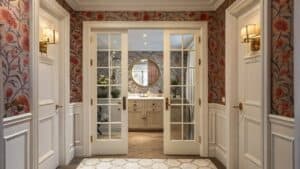 15 Bathroom French Doors That Give Powder Rooms Personality
 Revolutionize Your Bathroom With Pocket Doors
 Water Dripping From Bathroom Door Frame
 What Type of Door is Best for a Bathroom?
 11 Bathroom Sliding Door Ideas
 Are Sliding Doors or French Doors More Energy Efficient?
 What Is the Difference Between French Doors and Double Doors?
 French Doors in a Manufactured Home: What the HUD Code Says