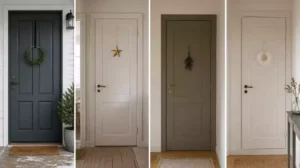

Choosing between deep green, navy, and black for your front door requires balancing curb appeal with the reality of daily wear. This guide cuts through the noise to highlight 6 practical factors that ensure you choose a finish that actually lasts. Let’s look at the first one.
1. Heat and Fading

Protecting your entryway from extreme solar absorption keeps your finish looking rich for years.
As an Amazon Associate I earn from qualifying purchases. Affiliate links may earn me a commission at no extra cost to you.
The “solar collector” effect is the most common reason front doors fail prematurely. When you choose a black finish for an entry exposed to direct afternoon sun, you are essentially painting your door to absorb nearly the entire spectrum of solar energy.
On a 90-degree day, that surface temperature can climb high enough to stress panel joints, compromise weatherstripping, and degrade the chemical bonds of your paint. While deep navy and forest green are also dark, they reflect a tiny fraction more energy than absolute black, which helps keep surface temperatures in a more manageable range.
Warning: The South/West Exposure Rule
If your front door faces south or west and lacks a porch, awning, or deep overhang, black paint is a high-risk choice. Without shade, the extreme heat cycles will lead to premature chalking and finish failure, especially on wood doors. If you must have a dark look in these exposures, consider a high-quality fiberglass door, which offers superior thermal stability compared to wood.
You can identify if your door is under too much stress using a simple, practical test. If the door surface feels uncomfortably hot to the touch in the middle of a July afternoon, your finish is likely being compromised by heat-induced expansion and contraction.
Over time, this thermal stress causes the paint to lose its elasticity and begin to break down. Choosing a slightly lighter, higher-LRV (Light Reflectance Value) alternative like navy or deep green acts as a buffer against this structural fatigue. These colors offer that sophisticated, high-contrast look you want, but they are significantly more forgiving when the sun hits them at the peak of the day.
By opting for a shade that manages solar energy more effectively, you avoid the cycle of constant maintenance that comes with a black door in a harsh environment. This heat absorption difference is the primary reason why navy and forest green are easier to live with over the long term, as they keep your exterior materials intact while maintaining their depth and character.
📋 What to Check Before You Commit:
- Thermal Breakage: Inspect your existing door material; wood is prone to warping under intense, unshaded solar heat.
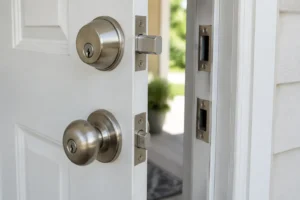
- Hardware Heat: Check if your handle set gets hot enough to burn; dark colors will only exacerbate this issue.
- Available Shade: Verify if your porch or awning provides enough coverage to protect the finish during peak afternoon hours.
2. Dust and Watermarks

Choosing colors that naturally hide debris keeps your entryway looking clean with minimal effort.
Think of the last time you saw a black car sitting in a driveway after a light rain or a windy day. Every speck of pollen, every dried water droplet, and even the smallest fingerprint stands out in stark, high-contrast white against that deep pigment.
Your front door faces the exact same environmental reality, only it is usually located in a more sheltered, stagnant area where dust tends to settle and linger. While black is undeniably dramatic, it is the most unforgiving choice for anyone who prefers a tidy appearance without having to wipe down their entrance every few days.
Navy and deep green sit in a visual sweet spot. These colors are dark enough to provide that sophisticated weight you likely want, but they contain enough chromatic depth to swallow up minor dust and organic debris. Because they aren’t absolute zero on the color spectrum, they don’t force every bit of light-colored dirt to pop against the surface.
Your choice of sheen also plays a significant role in your maintenance routine. Black doors are often finished in high-gloss paint to achieve a “rich” or “lacquered” look, but high-gloss is a magnet for highlighting every scuff, fingerprint, and uneven surface imperfection.
Pro Tip: Embrace the Lower Sheen
For high-traffic entries, opt for a satin or eggshell finish on your navy or green door. These lower-sheen options are significantly better at diffusing light, which effectively masks the minor surface imperfections and fingerprints that would otherwise be glaring on a high-gloss black finish.
If you live in a climate with heavy pollen or frequent morning dew, moving away from black is one of the quickest ways to reduce your exterior cleaning to-do list. You retain the elegant, moody aesthetic while gaining a much more forgiving surface that looks clean even when you haven’t touched it in a month.
⚠️ Watch Out for These Maintenance Traps:
- The Gloss Pitfall: High-gloss finishes on dark doors make every single fingerprint and scratch look like a bright, white blemish.
- Spot-Repair Failure: Trying to touch up just one section often creates a “flash” effect, where the new paint clashes with aged, chalky pigment.
- Skipping Deglossing: Applying fresh paint over a dirty or shiny surface prevents proper adhesion, leading to premature peeling and a costly full-face redo.
Navigating the daily curb appeal of your home often feels like a high-stakes balancing act, but most of the pressure comes from overthinking minor details. Focusing on the technical performance of your finish is far more effective than chasing an abstract design ideal found in standard entryway trends.
Your home’s long-term visual character depends on choosing a finish that respects your local sun exposure rather than trying to force a popular but high-maintenance shade.
3. Softness in Daylight

Deep, saturated tones retain their character and warmth even under soft, indirect daylight.
The biggest visual trap with a black front door is what we call the “flat shadow” effect. When clouds roll in or your entryway sits in the shade of a porch, black paint often ceases to look like a chosen design color and instead collapses into a dark, featureless void.
Because black absorbs nearly all visible light, it loses its depth the moment natural sunlight isn’t hitting it directly. Deep green and navy, however, are different creatures entirely. They possess distinct undertones—blue, plum, or forest green—that allow them to hold onto their color integrity even when the light is muted.
The Chroma Advantage: Unlike black, which can drop to an absolute zero or a flat gray in the shade, navy and deep green maintain their “chroma.” This means that even on an overcast day, your door still reads as a deliberate, rich color, giving your entrance a sense of personality rather than a missing gap in your home’s facade.
It is also worth considering your home’s orientation. If you have a north-facing entrance, you aren’t getting that direct, warm southern exposure to “wake up” the color. In these instances, a black door will almost always look colder and harsher than intended.
Deep green and navy act as a softer bridge. They feel more integrated with the surrounding environment, especially if you have mature landscaping or natural foliage near your entry. They don’t fight the natural light; they work with it to create a welcoming, elegant threshold that doesn’t disappear into the shadows.
Pro Tip: The Sample Test
Never judge a paint color against a brochure. Paint a 12×12 sample board and move it to your doorway. Observe it in the bright morning sun, the harsh afternoon glare, and the deep shade of the evening. If the color “goes gray” or loses its personality in the shade, it’s not the right match for your specific light conditions.
Ultimately, these colors feel “softer” to the human eye. By avoiding the extreme contrast of black, you avoid the harsh transition that can make an entrance feel disconnected from the rest of the house. You are choosing a look that remains sophisticated and visible, whether it’s a brilliant sunny morning or a gloomy, overcast afternoon.
⚖️ Quick Decision Guide: Choosing Your Tone
- Choose deep green if: You want a natural, organic transition that complements mature garden foliage and earthy masonry tones.
- Choose navy if: Your home features gray stone or crisp white siding and you prefer a cleaner, coastal-inspired aesthetic.
- Pair it with: Warm white or cream trim to help the door anchor the entrance without feeling overly stark.
4. Touch-Up and Upkeep

Keep your entry looking fresh with simple maintenance habits that avoid the dreaded patch-work look.
The most frustrating part of choosing a black front door is the “flash” problem. When you try to touch up a small scratch or a ding on a black door, the new paint rarely blends with the old, leaving a visible, duller, or shinier patch that catches the light differently.
Because black is such an intense pigment, it is notoriously unforgiving. Once the sun starts to break down the finish—a process known as chalking—any spot-repair will stand out like a sore thumb against the weathered surface. Navy and deep green are more forgiving during this transition, as their pigments don’t show the shift between old and new paint as starkly as absolute black does.
The “Flash” Trap
Spot-painting is often a losing battle on high-gloss black doors. The shift in sheen between the original coat and your touch-up will almost always create a visible halo, meaning you usually end up needing to repaint the entire face of the door anyway.
If you want to avoid a full repaint every few years, your approach to maintenance is more important than the specific color you choose. You need to focus on deglossing and cleaning before you ever touch a brush to the door. If you skip cleaning away the dust and oxidized paint, no amount of high-end paint will stick properly or blend in.
The Pro Finish Checklist
- Prep: Always degloss the existing finish with a light sanding or liquid deglosser to ensure the new paint bites into the surface.
- Sheen: Stick to satin or eggshell for dark doors; these finishes are significantly more effective at masking minor surface imperfections than high-gloss.
- Samples: Paint a 12×12 board and move it around your entry at different times of day—what looks rich in the shop can look muddy on your porch.
- Condition-Based Maintenance: Don’t wait for the door to look “bad.” Inspect it biannually; if you see light chalking, a simple thorough cleaning can often restore the color before a repaint is necessary.
Ultimately, maintenance is condition-based. If your door is sound and free of deep dents or peeling, a quick, thorough clean and a fresh coat of high-quality exterior paint will keep it looking intentional for years. When you choose navy or deep green, you are choosing a finish that is slightly more graceful as it ages, giving you more time between those inevitable weekend maintenance projects.
5. Fit With Brick and Stone

Aligning your door color with the natural undertones of your masonry creates a cohesive look.
One of the most common regrets in exterior design happens when a door color fights the existing masonry rather than complementing it. A frequent mistake is placing a blue-based navy against an orange-red brick, which can often result in an unintended purple cast that feels off the moment the sun hits it.
Instead, look to the color wheel to identify your home’s natural undertones before you commit to a paint shade. If your brick leans heavily into warm, earthy reds and oranges, deep green acts as an organic, sophisticated partner that feels intentional and grounded.
The Masonry Test: Before you buy a full gallon, paint a 12×12 board and lean it against your brick or stone in different light conditions. Observe how the color shifts from morning to late afternoon, as masonry colors can drastically change the way we perceive the paint’s undertones.
For homes built with gray-toned stone or cooler masonry, navy is often the superior choice. It bridges the gap between the cool gray of the stone and the rest of the facade, creating a neutral but authoritative anchor for the entrance.
Regardless of the color you choose, the trim coordination is just as important. Stark, brilliant white trim can sometimes look too harsh against a dark door and natural masonry. For an all-white exterior, see our tips on picking a door for a white house. Consider these guidelines for a more classic, cohesive finish:
- Warm White or Cream: These shades are generally safer and more harmonious when pairing dark doors with brick or stone.
- Avoid High Contrast: If your brick is multicolored or busy, a softer, aged shade like sage or a dusty blue often integrates better than a high-contrast black.
- Trim Coordination: Ensure that your trim color doesn’t clash with the specific undertones of your masonry, as the trim acts as a frame for both the door and the stone.
If you find that your home has highly varied, multi-toned brick, be extra cautious with navy. Unless the brick has specific gray or purple undertones, navy can easily clash. In these situations, deep green or even a muted, earthy charcoal often provides the necessary depth without the risk of fighting the masonry’s natural character.
🏡 How This Works in a Real Home:
- Garden integration: Use deep green to pull your surrounding landscaping colors directly onto the home facade for a seamless architectural transition.
- Daily upkeep: Choose a satin or eggshell finish rather than high-gloss to hide fingerprints and scuffs on high-traffic entries.
- Natural lighting: Test your sample board under the porch eave, where shadows naturally intensify colors, to ensure it doesn’t look like a black hole.
6. Best Use Cases

Choosing the right backdrop for deep tones ensures your entryway feels intentional and timeless.
Deep green and navy aren’t just alternatives to black; they are strategic design choices that work harmoniously with specific architectural styles. When you move away from the high-contrast “black hole” look, you gain the ability to integrate your door into the surrounding environment rather than having it compete for attention.
These colors shine brightest in the following scenarios:
- Traditional and Period Architecture: Deep, earthy tones feel authentic to the history of older homes. They provide a sophisticated depth that black often lacks on classic trim profiles.
- White Siding or Render: If your home features crisp white clapboard or smooth stucco, navy acts as a definitive anchor. It creates a classic, coastal aesthetic that feels fresh and balanced.
- Red or Orange Brick: Deep green is the organic partner for warm-toned masonry. It taps into natural color relationships, helping the home feel cohesive rather than disjointed.
- North-Facing or Shaded Entries: In areas where you don’t have direct sunlight to “pop” a black door, deep green and navy prevent the entrance from looking like a void. They retain their color and personality even in shadow.
- Landscaping-Heavy Facades: If your home is surrounded by mature gardens or lush greenery, a deep green door pulls those natural tones onto the house itself. It creates a seamless transition from the yard to the entryway.
The Design Philosophy: Restrained vs. Dominant
Use deep green or navy when your goal is a restrained, long-lasting look. While black is often used to make a loud, dominant statement, these deeper hues integrate with your home’s existing materials, resulting in a facade that feels thoughtful and permanent rather than trendy.
Before you commit, remember that these colors behave differently based on the masonry or siding they sit against. Always perform an on-site test with a sample board, observing how the color shifts from early morning light to the deep shade of late afternoon.
⚖️ Quick Decision Guide: Choosing Your Color
- Choose deep green if: Your home features warm red brick or you want to pull lush garden tones inward.
- Skip deep green if: Your facade is dominated by cool-toned gray stone or modern, starkly metallic architectural finishes.
- Pair navy with: Crisp white trim or light-gray stone to create a clean, coastal bridge between classic and modern.
Final Verdict

Choosing the right balance between classic curb appeal and manageable, long-term maintenance.
Black is the industry standard for a reason. It is universally recognized, provides the highest possible contrast, and carries a weight that makes an entrance feel significant. If your primary goal is maximizing broad resale appeal or achieving a sharp, graphic look that stands out against light siding, black remains the safest bet. However, the livability reality is that black is the most demanding color you can choose for a front door.
Because black absorbs nearly all solar energy, it acts as a heat magnet, which accelerates the degradation of your door’s finish and stresses the underlying materials. Beyond the heat factor, black is notoriously unforgiving when it comes to everyday life—it highlights every speck of pollen, water streak, and fingerprint, often requiring a higher-gloss finish that makes even minor surface imperfections impossible to ignore.
The Decision Framework:
- Choose Black if: Your entry is fully shaded by a deep porch or awning, you prioritize high-contrast curb appeal above all else, and you are diligent about regular cleaning.
- Choose Deep Green or Navy if: Your door faces south or west, you want a classic look that integrates with your landscaping, or you prefer a lower-maintenance finish that hides daily wear and tear.
Deep green and navy offer the best balance of sophisticated, classic appeal and visual comfort. They deliver that same dark, grounding presence as black, but they possess enough chroma to feel intentional and “soft” rather than harsh. When the light hits them, they retain their personality—navy keeps its cool blue depth, and forest green holds onto its earthiness—whereas black often collapses into a flat shadow or a void in overcast conditions.
Ultimately, ignore the trend cycles and prioritize your home’s specific micro-climate. If you have an unshaded, high-exposure entry, selecting a dark green or navy finish is a strategic move that saves you from premature paint failure. It is the difference between a door you maintain because you want to, versus a door that demands your attention the moment the sun comes out.
Ready to refresh your entryway?
Download our Front Door Exterior Refresh Planner to track your paint specifications, monitor maintenance intervals, and ensure your next project lasts for years to come.
📈 The Long-Term Payoff
Choosing deep green or navy isn’t just about avoiding the “patchwork” look of high-maintenance black; it’s an investment in your home’s exterior longevity. By reducing the surface-level heat stress on wood or fiberglass panels, you actively extend the lifespan of your door’s finish and hardware, ultimately preserving your curb appeal for years longer than a standard high-gloss black paint job.
Strategic Investment: Choosing a durable, low-maintenance color reduces the frequency of expensive, professional-grade repainting cycles.
With all six factors on the table, the path to a durable, low-maintenance entrance is much clearer. You do not need to implement every suggestion at once to see a difference; the most effective results come from prioritizing your home’s specific sun exposure and material needs.
Test a sample board in your actual light this weekend to see how the color holds up. Making one or two deliberate, informed choices is what truly upgrades your curb appeal. You can also explore additional color guidance to finalize your plan with confidence.
Related posts
 19 Backyard French Door Ideas That Make BBQs Easier
 Why Some Homes Feel Welcoming Before You Reach the Front Door
 15 Best Front Door Colors for a Green House
 Why are my French doors leaking?
 Why Do French Doors Have the Knob in the Middle?
 Why Choose French Doors
 Why Barn Doors Solve the Swing-Space Problem So Well
 Why Sliding Doors That Open in the Middle Beat a Standard Slider