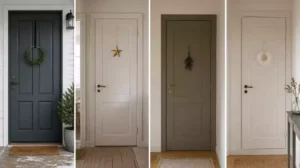

Cost & Resale Analysis
A steel entry door replacement returns roughly 188% of its cost at resale. A custom pivot door on a mid-range home? Almost no data says you’ll get that money back. Here’s how to spend smart – and where to stop spending.
Key Takeaways
- A standard steel entry door replacement averages ~188% ROI nationally (about $2,355 cost, ~$4,430 in resale value), making it one of the single highest-return home improvement projects in the U.S. right now.
- The cheapest fix often has the highest return rate. Repainting, repairing minor damage, and refreshing hardware costs a fraction of a full replacement – and 92% of REALTORS say sellers should address curb appeal before listing.
- Fiberglass “grand entrance” systems (door + sidelights + transom) land around 70–100% ROI depending on region, but the cost is significantly higher and the return is far more sensitive to whether you’re matching or overshooting your neighborhood.
- Smart locks, security hardware, and energy features are moderate add-ons, not primary investments. Smart-home packages may add 3–5% to property value overall, but no study isolates the front door’s share of that number.
- Custom wood doors, pivot systems, and structural reconfigurations have weak or nonexistent ROI data for mid-range homes. Treat these as lifestyle decisions, not financial ones.
The ROI Landscape – What the Data Actually Says Right Now
The annual Cost vs. Value report published by Zonda is the closest thing to a national standard for measuring what home improvement projects return at resale. It works by pricing standardized mid-range projects using contractor bids, then having local real estate professionals estimate how much each project would add to a home’s resale value. The results are aggregated by city, region, and nationally.
In 2024 data, exterior projects dominated the top of the ROI rankings – garage door replacements and steel entry door replacements held the top two spots. A typical steel entry door replacement came in at an average project cost of about $2,355 with an estimated resale value of roughly $4,430, producing a national ROI of approximately 188%.
That number is not normal. The trajectory has been steep: steel entry door ROI sat around 64% in 2022, rose to about 101% in 2023, and then nearly doubled to ~188% in 2024. Multiple industry analyses attribute this to tight existing-home supply and buyers willing to pay more for move-in-ready exteriors. Entry door projects also carry one of the lowest absolute costs among exterior upgrades, which makes their cost recovery ratio especially favorable compared to big siding or addition projects.
What “188% ROI” actually means
The formula is: (estimated resale value increase ÷ project cost) × 100%. A 188% return on a $2,355 project means the project is estimated to add ~$4,430 to resale value – you recover your full cost and then some. But these are real estate professionals’ estimates, not guaranteed flip profits. They reflect what buyers in that market are typically willing to pay more for a home that includes the improvement.
One critical caveat: 2024–2025 conditions are historically unusual. Commentators on the Cost vs. Value series describe these as the highest exterior-project ROIs in the report’s history. If inventory loosens or buyer competition cools, these numbers may compress. They remain directionally useful – steel doors have been strong performers for years – but don’t treat 188% as a permanent guarantee.
Backing this up from a different angle: NAR’s 2023 Remodeling Impact Report found that 92% of REALTORS recommend sellers address curb appeal before listing, and 97–98% consider it important or very important for attracting buyers. While that report focuses more broadly on landscaping and outdoor features, it reinforces that front-of-house elements – the entry door included – are treated by agents as a direct lever for sale price and time on market.

The Upgrades That Pay for Themselves (and Then Some)
Two categories of front door work have the strongest cost-recovery evidence. Both are notably low-cost relative to the return they generate.
Steel prehung replacement in the existing opening
This is the benchmark. The project as defined in Cost vs. Value data involves removing the existing door and jamb and installing a new 20-gauge steel prehung unit in the same opening – no structural changes, no widening, no sidelights. At approximately $2,355 average cost and ~$4,430 in estimated resale value, it produces roughly 188% ROI nationally. Regional breakdowns show it above 150% in multiple U.S. regions – East North Central states report around 161–162%, and several other regions track between 150% and 200%+.
The return is strongest when you’re replacing a door that is visibly dated, dented, rusted, or obviously builder-grade in a neighborhood where most nearby sales show clean, panel-style entries. The low absolute cost makes this especially compelling: even if ROI moderates in future years, the financial exposure is small.
Repaint, repair, and hardware refresh (no replacement)
If your door is structurally sound but looks tired – peeling paint, faded finish, mismatched or corroded hardware, worn weather-stripping – the math gets even simpler. Materials for a repaint and minor repair run a small fraction of a full replacement. New weather-stripping, a coordinated handleset, updated house numbers, and a coat of paint that works with your exterior palette eliminate the “deferred maintenance” signal that turns off buyers.
There is no CVV line item for “repaint your front door,” so no specific ROI percentage exists. But the qualitative evidence is strong: NAR data consistently shows REALTORS treating curb appeal improvements as one of the most cost-effective pre-listing moves, and a visible, well-maintained entry is the centerpiece of that first impression. For a spend of well under $500 in most cases, the risk of negative ROI is essentially zero.
Before You Replace: The Checklist That Might Save You Thousands
A full replacement isn’t always necessary. Consider it only if:
- The door warps, sticks, or won’t seal properly (structural, not cosmetic)
- There’s visible rust-through, rot, or cracking that can’t be patched
- Drafts, condensation, or ice at the threshold would flag at inspection
- The style is clearly behind your neighborhood’s current standard (e.g., a flat slab next to craftsman panel doors on every recent comp)
- The frame or jamb is damaged and needs to come out anyway
If none of those apply, a repaint + hardware refresh is likely the smarter financial move.
Printable Checklist
Do I Need a Full Replacement or Just a Refresh?
Walk to your front door. Answer five questions. Know your next move.
Check each that applies to your door:
Warps, sticks, or won’t seal properly
The door drags on the frame, won’t latch without force, or has visible gaps when closed. This is structural – paint won’t fix it.
Visible rust-through, rot, or cracking
Surface damage you can feel with your hand or see through. Patching buys time, but if the material is compromised, it’s replacement territory.
Drafts, condensation, or ice at the threshold
Cold air leaking in, moisture forming on the inside surface, or frost at the base. These signal seal failure and would likely flag on a buyer’s inspection.
Clearly behind the neighborhood standard
Pull up listing photos from the last 5–10 sales near you. If every comp has craftsman panel doors and yours is a flat slab, the mismatch is costing you.
Frame or jamb is damaged
Soft wood, visible separation from the wall, or a frame that’s shifted out of square. If the jamb has to come out anyway, you’re already in replacement scope.
Print this page, walk to your front door, and check what applies. Bring it to your contractor conversation – or skip the call entirely.
The Middle Tier – Positive ROI, but Context-Dependent
These upgrades can return their cost, but only under the right conditions. The common thread: whether they pay off depends on your specific neighborhood, home price tier, and how well the upgrade matches what buyers in your market expect to see.
Fiberglass “grand entrance” systems
A “grand entrance” in Cost vs. Value terms typically means a fiberglass door plus sidelights and/or a transom with decorative glass. The project cost is significantly higher than a simple steel replacement. Recent ROI syntheses place these systems in the ~70–100% ROI range nationally, with some regions – such as the Mountain region at approximately 100.4% – hitting break-even or slightly above.
The risk here is overshoot. A grand entrance on a $350K ranch in a subdivision of builder-grade doors will likely not recover its cost. The same installation on a $600K traditional home in a neighborhood where most comps already have sidelights may return every dollar. Before committing, look at the last 5–10 sales within a quarter-mile of your home and note what their entries look like in listing photos.
Standard fiberglass or wood door replacements
Outside the grand entrance category, standard fiberglass and wood replacements – same opening, no added glass systems – commonly fall in the 50–90% ROI band per recent cost-vs-value syntheses. Fiberglass tends to be more cost-effective; solid wood carries higher material and finishing costs, and the market doesn’t consistently pay a full premium for wood unless the neighborhood standard calls for it (think historic districts or explicitly wood-dominant streetscapes).
For mid-range homes, a basic fiberglass replacement is a reasonable move when your existing door is clearly sub-par. Solid wood skews more toward personal preference than provable financial return.
Smart locks (as part of a broader package)
Smart-home analyses report that homes with integrated tech features – thermostats, security systems, locks, lighting – can command 3–5% higher asking prices or outperform similar non-smart listings in competitive markets. A 2024 review on smart locks found they can increase resale appeal by signaling convenience and modernity – but this is framed qualitatively, not as a specific dollar premium.
A smart deadbolt on an already solid, well-maintained door is a plausible moderate-ROI addition, mostly through faster sale and differentiation in a competitive market. A smart lock on a dented, peeling door is decorating a problem. Fix the fundamentals first.
Decorative glass panels and sidelights (when they match the architecture)
CVV data treats doors with sidelights and transoms as part of “grand entrance” project categories, where ROI runs closer to break-even than to the outsized returns of a plain steel swap. Glass adds natural light and visual interest, but it also raises cost, can worsen thermal performance without high-spec glazing, and introduces a privacy consideration for some buyers.
Glass and sidelights are best justified when they match what comparable homes in your market already have. Adding them where comps don’t have them is a style decision, not a resale play.
Project-Level Cost vs. Value Comparison
| Upgrade Type | Avg. Cost | Est. Resale Value Added | ROI Range | Confidence |
|---|---|---|---|---|
| Steel prehung replacement (20-gauge, existing opening) | ~$2,355 | ~$4,430 | ~188% national; 150%+ in most regions | High |
| Fiberglass grand entrance (door + sidelights/transom) | Significantly higher than steel (varies) | Not isolated nationally | ~70–100% depending on region | Medium |
| Standard fiberglass or wood replacement (no major glass) | Higher than steel; no single national figure | Positive but smaller spread | ~50–90% | Medium |
| Repaint/refinish + minor repairs (no replacement) | Low (fraction of replacement) | Not measured separately | Qualitatively very high | Medium (strong directional, no specific %) |
| Custom pivot / aluminum-glass system (structural changes) | Very high (custom fabrication) | Not measured | Unknown; likely <100% for mid-range | Low |
Sources: 2024 Cost vs. Value data (Zonda), summarized by DASMA, Amarr, Premier Mortgage, and Frame Well.
Save This · Share This
Front Door ROI Cheat Sheet
Cost vs. Return by Upgrade Type
Clear Winner: Steel Prehung Replacement
~$2,355 cost → ~$4,430 resale value. ≈188% ROI nationally – the highest-return front door project in current data.
| Upgrade Type | Avg. Cost | Resale Value | ROI Range | Confidence |
|---|---|---|---|---|
| Steel prehung replacement 20-gauge, existing opening | ~$2,355 | ~$4,430 | ~188% 150%+ most regions | HIGH |
| Fiberglass grand entrance Door + sidelights/transom | Significantly higher | Not isolated | 70–100% Region-dependent | MED |
| Standard fiberglass or wood No major glass additions | Higher than steel | Positive but smaller | 50–90% | MED |
| Repaint + hardware refresh No replacement needed | Under $500 | Not measured separately | Very high Directional, no % | MED |
| Custom pivot / aluminum-glass Structural changes required | Very high (custom) | Not measured | Unknown Likely <100% | LOW |
Source: 2024 Cost vs. Value Report (Zonda/Hanley Wood), summarized by DASMA, Amarr, Premier Mortgage & Frame Well. ROI = (resale value added ÷ project cost) × 100%. Figures reflect national averages; regional results vary.
The Money Traps – Upgrades That Rarely Pay Back
Some front door upgrades are genuinely rewarding to live with – but that doesn’t make them financially smart if resale recovery matters to you. The pattern across all of these: high cost, weak or missing ROI evidence, and a buyer pool that may appreciate the result without being willing to pay a premium for it.
Custom solid wood on a mid-range home
A stain-grade mahogany or walnut door with artisan detailing can cost several times what a well-chosen fiberglass unit runs. The visual difference in listing photos – where most buyers form their first impression – is often subtle compared to a properly finished fiberglass panel door. No cost-vs-value data shows mid-range buyers consistently paying the full premium for solid wood over fiberglass. In historic districts or neighborhoods where wood is the clear standard, matching that standard makes sense. Everywhere else, this is a personal preference purchase.
Large pivot doors, aluminum-glass systems, and oversized openings
These are not broken out as a standard category in any national cost-vs-value study. The costs are high – custom fabrication, structural engineering, possible header modifications – and the buyer pool that specifically values this aesthetic is small outside architect-designed modern or luxury properties. On a standard subdivision home, a dramatic pivot door may draw compliments, but the data to support cost recovery simply doesn’t exist.
Structural reconfiguration for aesthetics
Widening the opening to fit a double door, adding sidelights where none existed (requiring framing and possibly load-bearing work), or relocating the entry entirely – all of these move you out of the “replacement” category that produces strong ROI and into custom construction territory. CVV projects specifically model replacements in the existing opening. Once you start cutting walls, the cost escalates and the documented returns don’t follow.
A smart lock on a door that needs replacing
An isolated tech gadget – a $250 smart lock mounted to a peeling, warped, or visibly dated door – sends a mixed signal. Buyers notice the door condition before they notice the lock brand. Smart features add value as part of a coherent story (solid door, clean hardware, integrated tech). By themselves, on a door that has bigger problems, they’re a footnote.
Over-Improvement Traps
- Grand entrance on a starter home. If most comps within a quarter-mile have single doors with no sidelights, a $4K+ door-and-glass system will likely not close the gap in value. You’re spending to a standard that doesn’t exist in your market.
- Exotic wood in a vinyl-siding neighborhood. A hand-carved walnut door on a home with vinyl siding and aluminum windows creates a visual mismatch – and the cost will not be reflected in the appraisal.
- Structural changes to the entry without a comp-supported reason. Cutting a new opening for double doors, widening for sidelights, or adding a portico sounds dramatic. But if your comps sold fine with standard single entries, the added construction cost is unlikely to come back.

The Spending Hierarchy – Where to Put Your Dollars First
If you’re thinking about your front door with resale in mind, the evidence supports a specific order of operations. Spend from the top down, and stop when the next tier no longer makes financial sense for your home and neighborhood.
Step 1: Fix What’s Broken and Refresh What’s Faded
Repair dents, rot, and cracks. Repaint or refinish the door and surrounding trim in a color that fits your exterior. Replace worn weather-stripping and the threshold. Install a coordinated handleset, lock, house numbers, and entry lighting that read as intentional rather than mismatched. This is the highest return-per-dollar tier and should always come first.
Step 2: Replace If Warranted – Steel or Fiberglass in the Existing Opening
If the door is warped, rusted through, rotted, badly sealed, or clearly behind the neighborhood’s current standard, a mid-priced steel or fiberglass prehung unit installed by a competent pro is the empirically safest high-ROI move. Stick to the existing opening. This is where the ~188% national ROI figure comes from.
Step 3: Layer Energy, Security, and Tech Where They Fit
Energy: Prioritize a solid core, good weather-stripping, and insulated glass where applicable. Research on energy-efficiency retrofits shows these investments contribute to property value through lower operating costs, but the door’s isolated share is modest – think of it as rounding out your home’s overall efficiency story, not a standalone value driver.
Security: A robust deadbolt with a reinforced strike plate, and a multi-point lock if the door supports one. These contribute to buyer confidence and perceived quality but don’t justify major overspend on their own.
Smart lock: Add one when your likely buyer pool will value it and you have at least some broader smart-home context. It’s a moderate-ROI differentiator, not a primary investment. A smart deadbolt on an otherwise solid, clean entry makes sense. A smart lock as a substitute for addressing the door itself does not.
Step 4: Consider Glass and Grand Entrance Elements – Cautiously
If most comparable homes at your price point have sidelights or decorative glass, matching that level helps you avoid being the house that looks like it skipped a step. If your comps mostly have simple single doors, paying thousands more for a full glass package is unlikely to return its cost. CVV data shows grand entrance systems are significantly more hit-or-miss than standard steel replacements.
Step 5: Stop Before You Over-Improve
Premium artisan doors, large glass pivot systems, and bespoke metalwork are for houses where the rest of the exterior and the neighborhood clearly support that level of investment. On a standard mid-range home, buyers may admire them but won’t pay anywhere close to the incremental cost. Reserve this tier for architect-designed homes and luxury builds – or for the pure satisfaction of living behind a door you love, with clear eyes about the financial return.
Feature-Level Impact at a Glance
| Feature / Add-On | Cost Range | ROI Category | Key Condition |
|---|---|---|---|
| Repaint + hardware refresh | Low (under $500 typical) | High | Door is structurally sound |
| Smart deadbolt/lock | Low to moderate (few hundred $) | Moderate | Door is already solid; part of broader smart-home setup |
| Quality handleset + coordinated hardware | Low to moderate | Moderate | Leverages curb appeal on an adequate door |
| Decorative glass insert (retrofit) | Moderate | Moderate | Matches home style; no privacy or thermal tradeoff |
| Reinforced deadbolt + multi-point lock | Moderate | Moderate (qualitative) | Strongest in safety-concerned markets |
| Added sidelights/transom (structural work) | High | Low to Moderate | Only if comps at your price tier already have them |
| Solid wood (premium species) over fiberglass | High incremental | Low to Moderate | Historic or wood-dominant neighborhoods only |
| Pivot / aluminum-glass system | Very high | Uncertain / Likely Low | Luxury or modern-design comps only; no CVV data |
Printable Worksheet
Front Door Budget Planner
Spend in the right order. Stop at the right tier.
Do This First – Comp Check
Pull up listing photos from the last 5–10 sales near your home. Note what their front doors look like – material, style, glass, hardware. That gap (or lack of one) is your real spending guide.
My comps show: (material, style, glass, hardware notes)
Fix What’s Broken & Refresh What’s Faded
Repaint/refinish door & trim · Repair dents, rot, cracks · Replace weather-stripping & threshold · New coordinated handleset, lock, house numbers, entry lighting
My estimated cost
ROI expectation
Very high – lowest risk tier
What my comps suggest about this tier
Running total: $
Replace If Warranted – Steel or Fiberglass
Mid-priced steel or fiberglass prehung unit in the existing opening. Only if door is warped, rusted through, rotted, badly sealed, or clearly behind neighborhood standard.
My estimated cost
ROI expectation
~188% national avg (steel)
What my comps suggest about this tier
☐ Checkpoint: Does my door actually need replacing? (Warped, rusted, rotted, failing seal, or clearly behind comps?) If no – stop here.
Running total: $
Layer Energy, Security & Smart Tech
Insulated core & glass · Reinforced deadbolt with multi-point lock · Smart deadbolt (only if broader smart-home context exists)
My estimated cost
ROI expectation
Moderate – supports value, doesn’t drive it
What my comps suggest about this tier
☐ Checkpoint: Is my door already solid and my neighborhood tech-forward? If no smart-home context exists – skip the smart lock.
Running total: $
Glass & Grand Entrance Elements
Sidelights, transoms, decorative glass. Only match what comps already have – don’t introduce what the neighborhood doesn’t.
My estimated cost
ROI expectation
~70–100% – hit-or-miss
What my comps suggest about this tier
☐ Checkpoint: Do most comps at my price point already have sidelights or glass? If not – stop here.
Running total: $
Premium / Custom – Proceed with Eyes Open
Artisan wood doors, pivot systems, bespoke metalwork, structural reconfigurations. No ROI data exists for mid-range homes. This is a lifestyle decision.
My estimated cost
ROI expectation
Unknown – likely under 100%
What my comps suggest about this tier
☐ Checkpoint: Is the rest of my exterior and neighborhood clearly at this level? If I’m honest, am I spending for resale – or for myself? If for resale, stop.
Running total: $
My Plan – Final Numbers
Stopping at tier
Total planned spend
Why I’m stopping at this tier
Fill this out before you get a single quote. The most common regret isn’t spending too little – it’s spending too much on the wrong tier.
What the Data Doesn’t Tell You (and Why That Matters)
Being honest about the gaps in the evidence matters as much as citing the strong numbers. Several limitations shape how far you should trust any front-door ROI claim – including the ones above.
Feature-level granularity is weak. Cost vs. Value and NAR data are project-level. They don’t isolate the incremental value of a specific paint color vs. another, one glass pattern vs. another, or a $150 handleset vs. a $50 one. Guidance at that level is informed inference, not measured price premiums.
Energy and security effects are studied at the package level. Rigorous academic research on energy retrofits and property value exists, but it examines whole-building packages (insulation, windows, HVAC), not the front door in isolation. Similarly, smart-home value studies look at integrated feature sets, not a single lock. The direction of the evidence (efficiency and security add value) is clear; the door’s individual share is not.
Current market conditions are unusually favorable. The 188% ROI figure reflects a market with constrained inventory and aggressive buyer competition. Multiple Cost vs. Value commentators describe 2024 exterior-project returns as the highest in the report’s history. If housing supply normalizes, these ratios will likely compress. The directional signal – that steel entry doors are strong ROI projects – holds across many years of data. The specific percentages may not.
Academic housing economics rarely studies single components. Peer-reviewed research tends to analyze renovation packages, energy ratings, or broad quality indices – not individual doors. Most door-specific ROI data comes from industry cost-vs-value reports rather than academic sources. The reports are well-constructed and widely cited, but they’re industry research, not peer-reviewed economics.
“Low ROI” here means “no evidence of return,” not necessarily “evidence of no return.” Custom wood, pivot systems, and structural reconfigurations aren’t tracked in CVV data. It’s possible they add value in some contexts. We just can’t prove it – which means if you spend on them, you should do so knowing the financial outcome is genuinely unknown.
Use This Framework Before You Get a Single Quote
Pull up the listing photos from the last 5–10 sales near your home. Note what their front doors look like – material, style, glass, hardware. Compare to yours. That gap (or lack of one) is your actual spending guide. Follow the hierarchy above: fix and refresh first, replace if warranted, then layer features only if your comps support them. The most common regret isn’t spending too little – it’s spending too much on the wrong tier.

Related posts
 12 Neutral Front Door Colors That Boost Home Value
 19 Interior French Doors That Quietly Add $10K in Home Value
 15 Best Front Door & Curb Appeal Ideas That Buyers Notice First
 21 Front Door Ideas With Stylish Mats
 21 Pretty Pink Front Door Inspirations for Playful Charm
 14 Best Front Door Colors for Log Cabin
 14 Art Deco Front Door Ideas
 12 Best Front Door Ideas