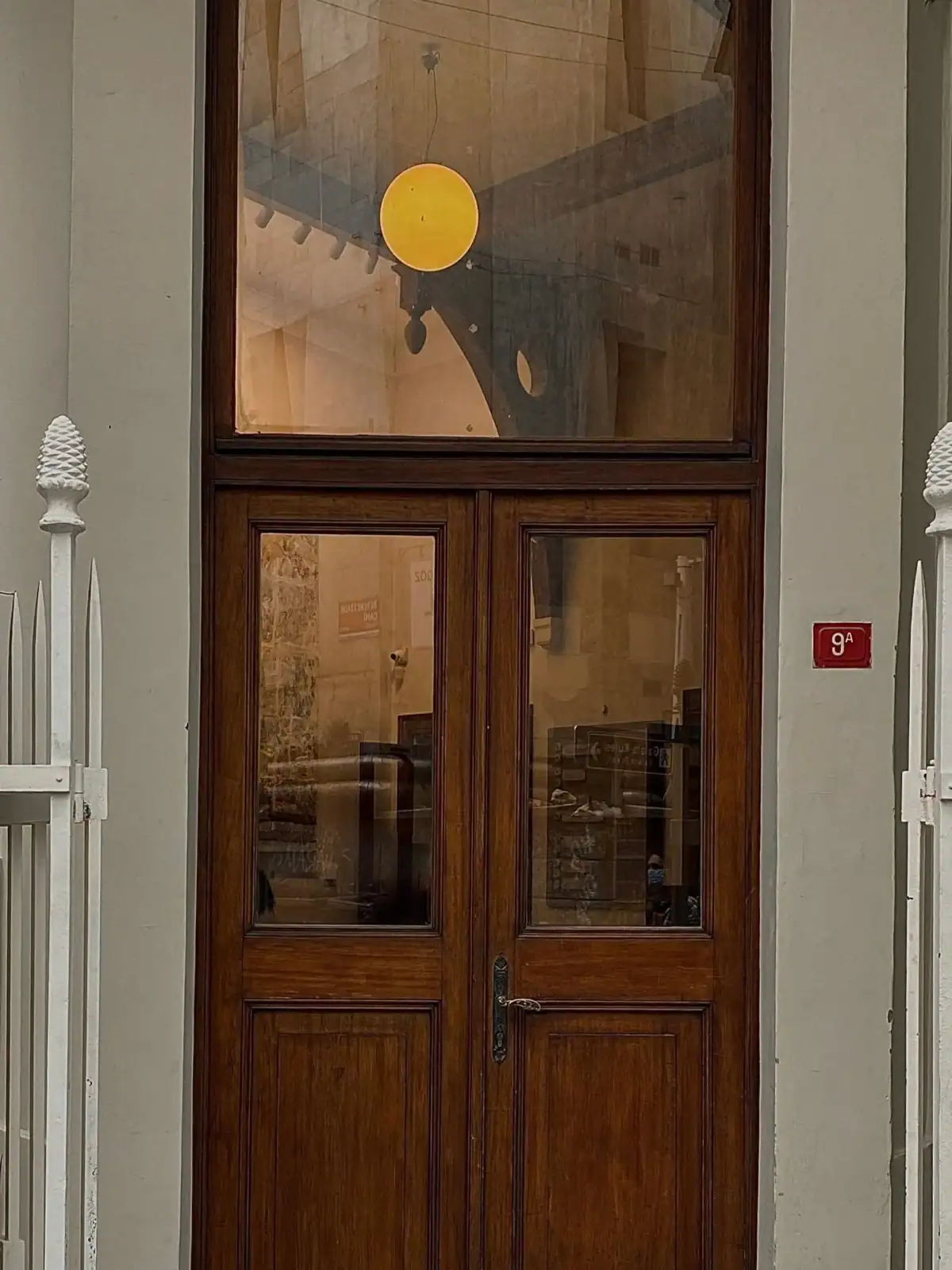
The small window over your front door does more work than any other pane in the house. It throws daylight deep into the hall, and it also puts the entry on show to the street after dark. Start with what a transom window is first, then pick from these transom window treatments that keep the hall bright while no one can see in.
As an Amazon Associate we earn from qualifying purchases.
1. Long Drapes That Make the Entry Feel Taller
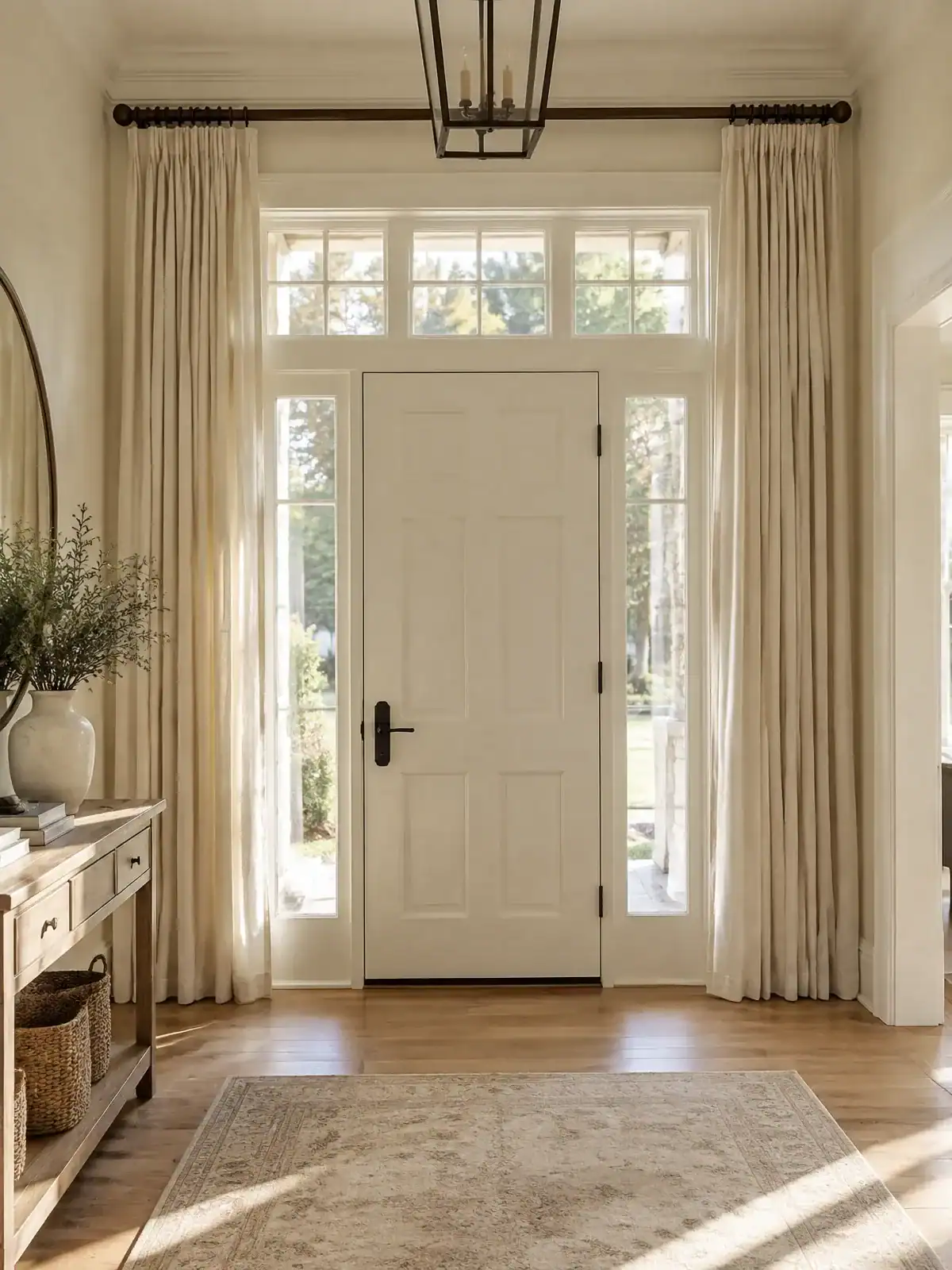
Long drapes treat the door and the transom as one tall unit, and that is why they make a low entry feel taller. Mount the rod 4 to 6 inches above the transom frame, and let the panels fall to the floor on both sides of the door. The extra height draws the eye up past the door and over the glass, so the whole opening reads as one graceful shape.
Extend the rod 6 to 12 inches past the frame on each side so the panels stack off the glass when they are open. That keeps the transom clear in the day and lets you pull the panels shut at night. Pick a fabric with some weight, since thin panels swing when the door opens and shut, and a heavier weave hangs straight.
2. Sheer Panels That Soften the Light
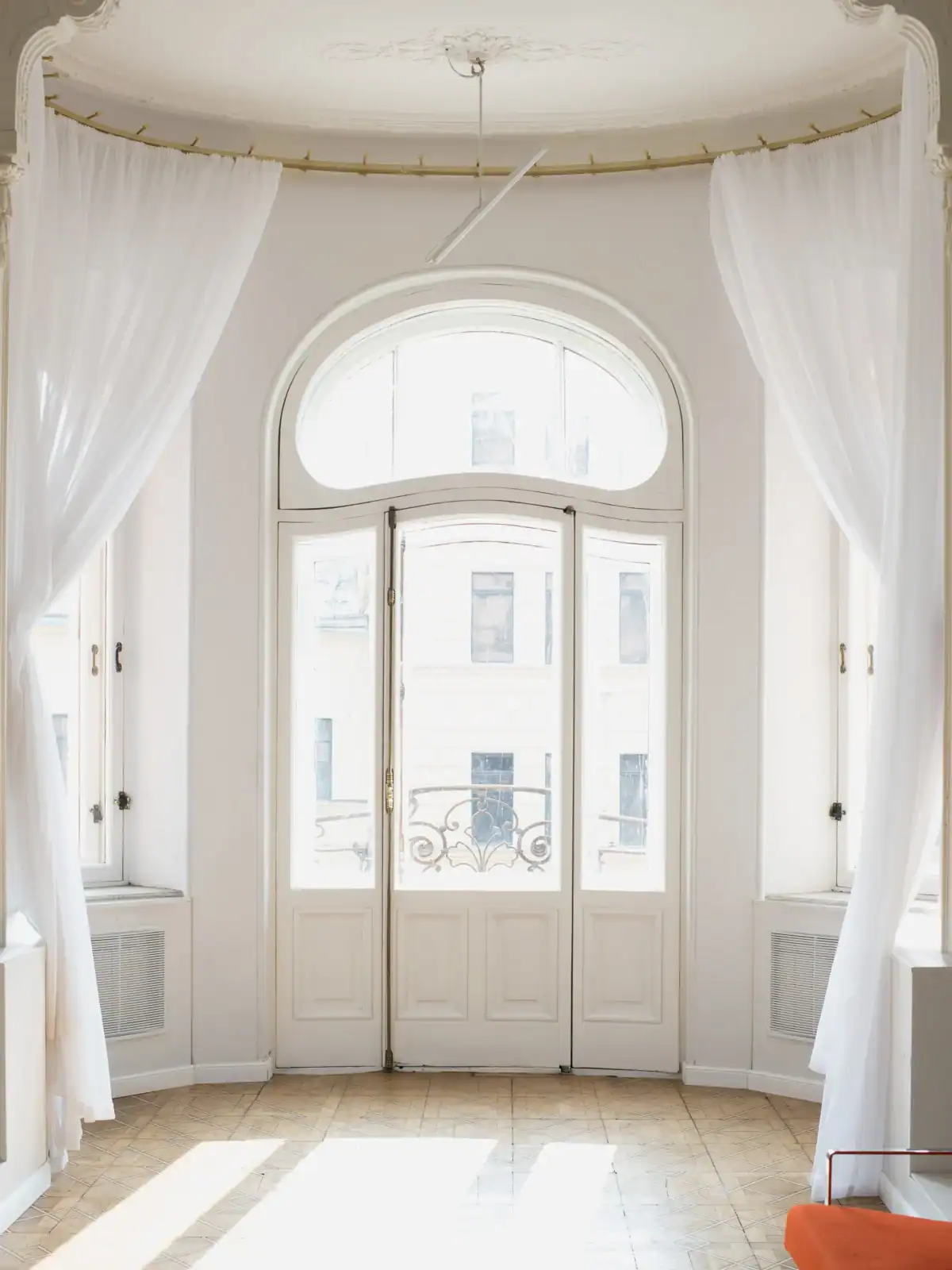
Sheer panels soften the light without shutting it out, and that is the whole point of a transom. The glass above the door is there to bring daylight into the hall, so a treatment that blocks it defeats the window. A sheer panel lets the light through in a soft wash and blurs the view from the street during the day.
Shop the look
Similar pieces to recreate this look
- SHEER PANELSWhite sheer curtain panels, 2-packShop on Amazon
- VOILE PANELSSheer voile curtains, 2 panelsShop on Amazon
- LINEN SHEER PANELSNatural linen sheer curtainsShop on Amazon
As an Amazon Associate we earn from qualifying purchases.
Hang sheers on their own when the street is far from the door or the entry faces a garden. Pair them with a heavier panel on a double rod when the door faces the sidewalk, and draw the heavy layer at night. The sheer layer stays put all day, so the hall never goes dark.
Wash sheer panels often, since dust shows on pale fabric fast. A light color keeps the entry bright, and a linen weave adds texture without adding weight.
3. A Valance That Frames the Transom
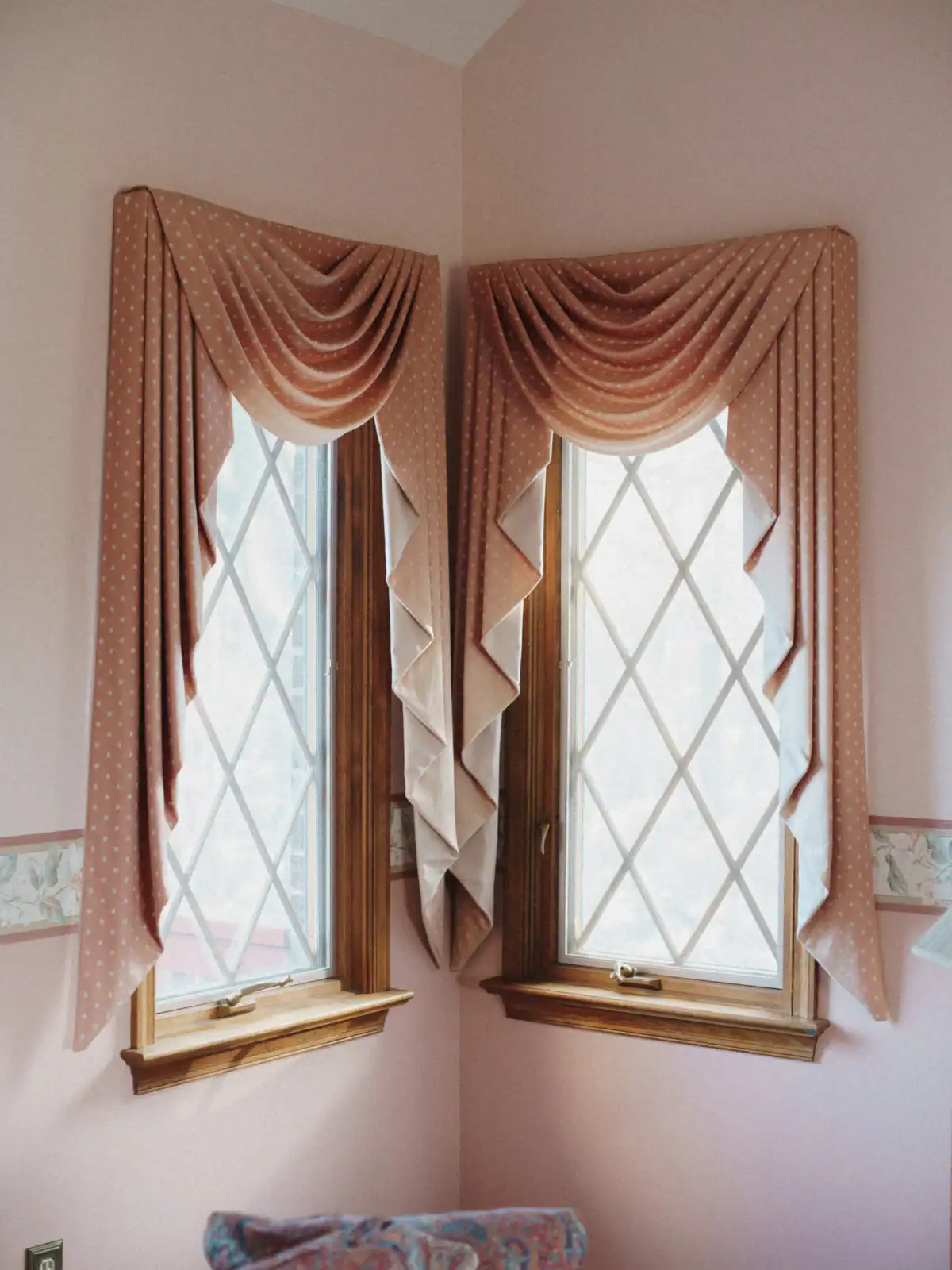
When the entry already gets the light right, a valance dresses the transom without covering any glass. It is a short band of fabric that frames the top of the opening and hides the rod, the header, and the raw edge of the wall above the door. The room keeps every bit of daylight, and the doorway looks finished.
A soft swag suits a classic entry, while a flat straight band suits a plain modern door. Measure the transom first, since a valance that is too deep eats into the glass and one that is too short looks lost above a wide door. Keep the fabric light so the band does not sag between its brackets.
4. Roman Shades That Fit the Short Opening
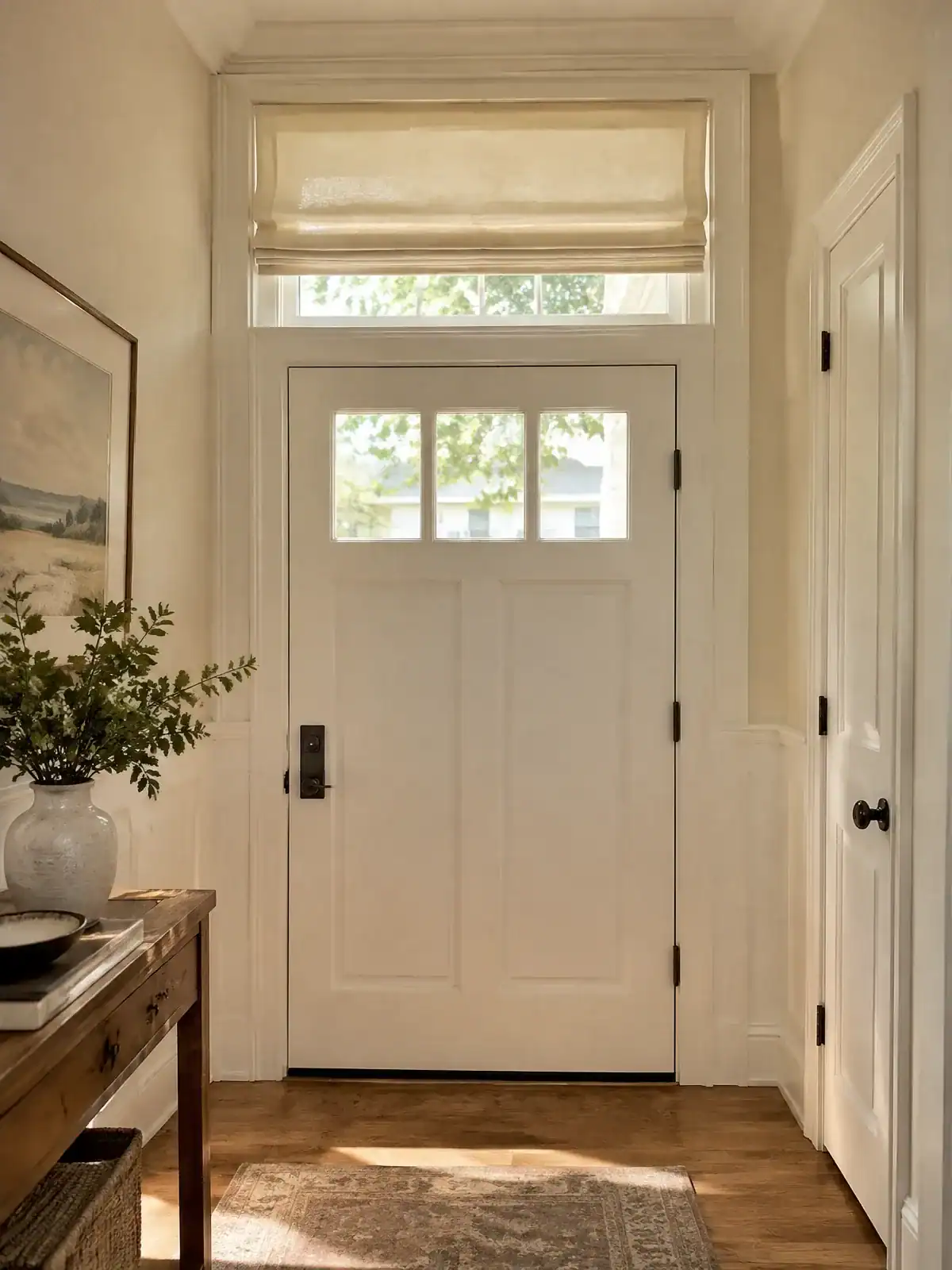
Roman shades suit the short, wide shape of a transom because they fold up into neat pleats instead of bunching at the sides. A shade cut to the transom fits the opening like it was made for it, and the fabric falls flat when it is down. Cordless versions keep the front of the shade clean, with no cords hanging in front of the glass.
Shop the look
Similar pieces to recreate this look
- ROMAN SHADESBamboo roman shade, 34 by 64 inchesShop on Amazon
- CORDLESS ROMAN SHADESCordless roman shade, Belgian flaxShop on Amazon
- BLACKOUT ROMAN SHADESBlackout roman shade, linenShop on Amazon
As an Amazon Associate we earn from qualifying purchases.
Mount the shade inside the frame when the transom has depth, since the shade then sits flush with the wall and the trim shows. Mount it outside the frame when the opening is shallow or out of square, since the shade then covers the flaws. A blackout lining turns the same shade into a night layer for a bedroom transom.
5. Cafe Curtains for a Casual Entry
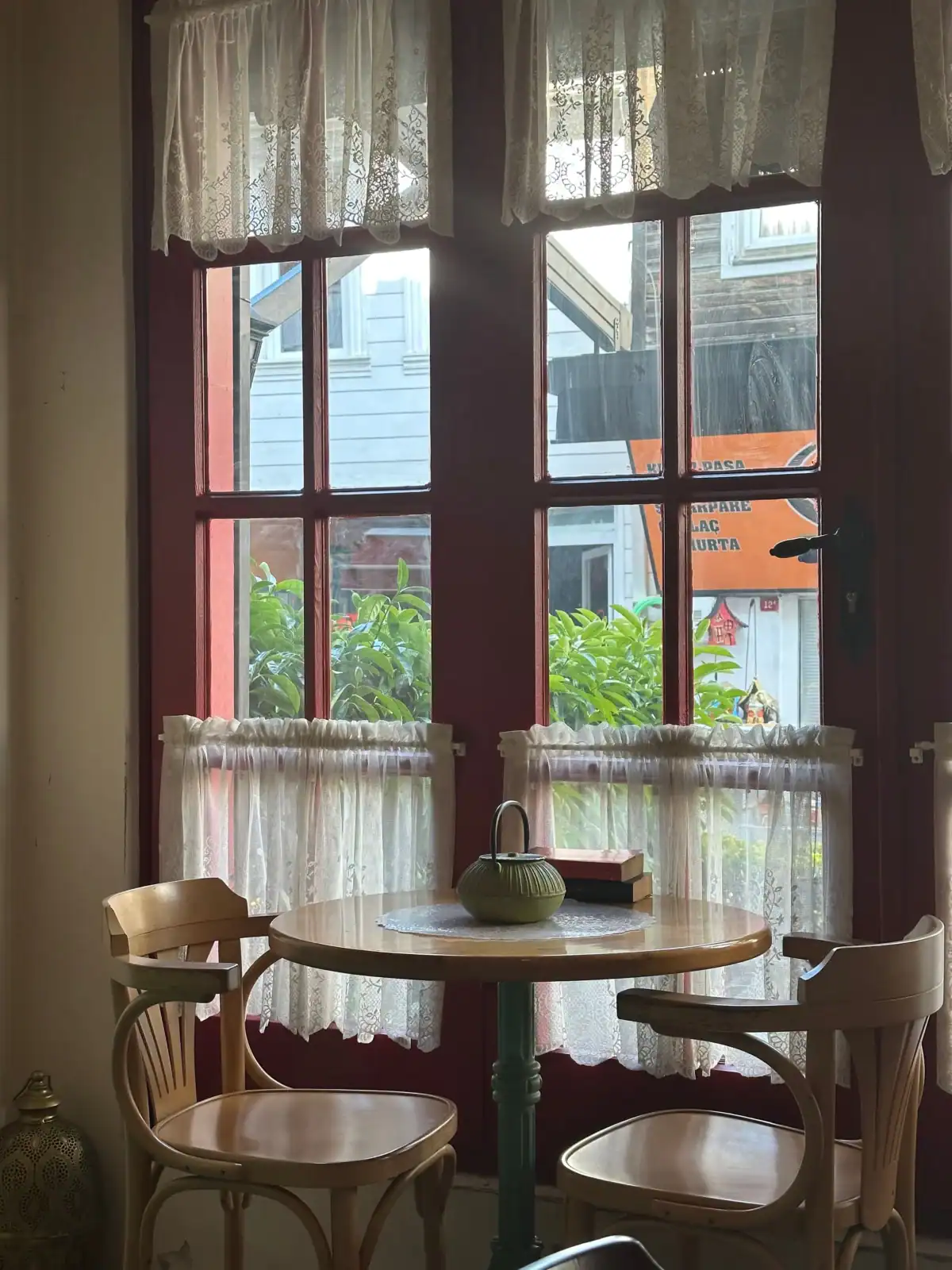
Cafe curtains cover the lower half of the glass and leave the top half open, which is a neat match for a transom that sits above eye level. The lower half gives privacy from the street, while the open top half keeps the daylight coming in over the rod. A lace or voile cafe curtain softens the view without shutting the room in.
Hang the rod across the middle of the transom, not at the top, and keep the curtain short enough to clear the trim below. This treatment suits a cottage entry or a back door more than a formal front door, since it reads casual. It also suits a transom over a kitchen door, where the light matters more than a dressed look.
6. Frosted Window Film That Keeps the Entry Bright
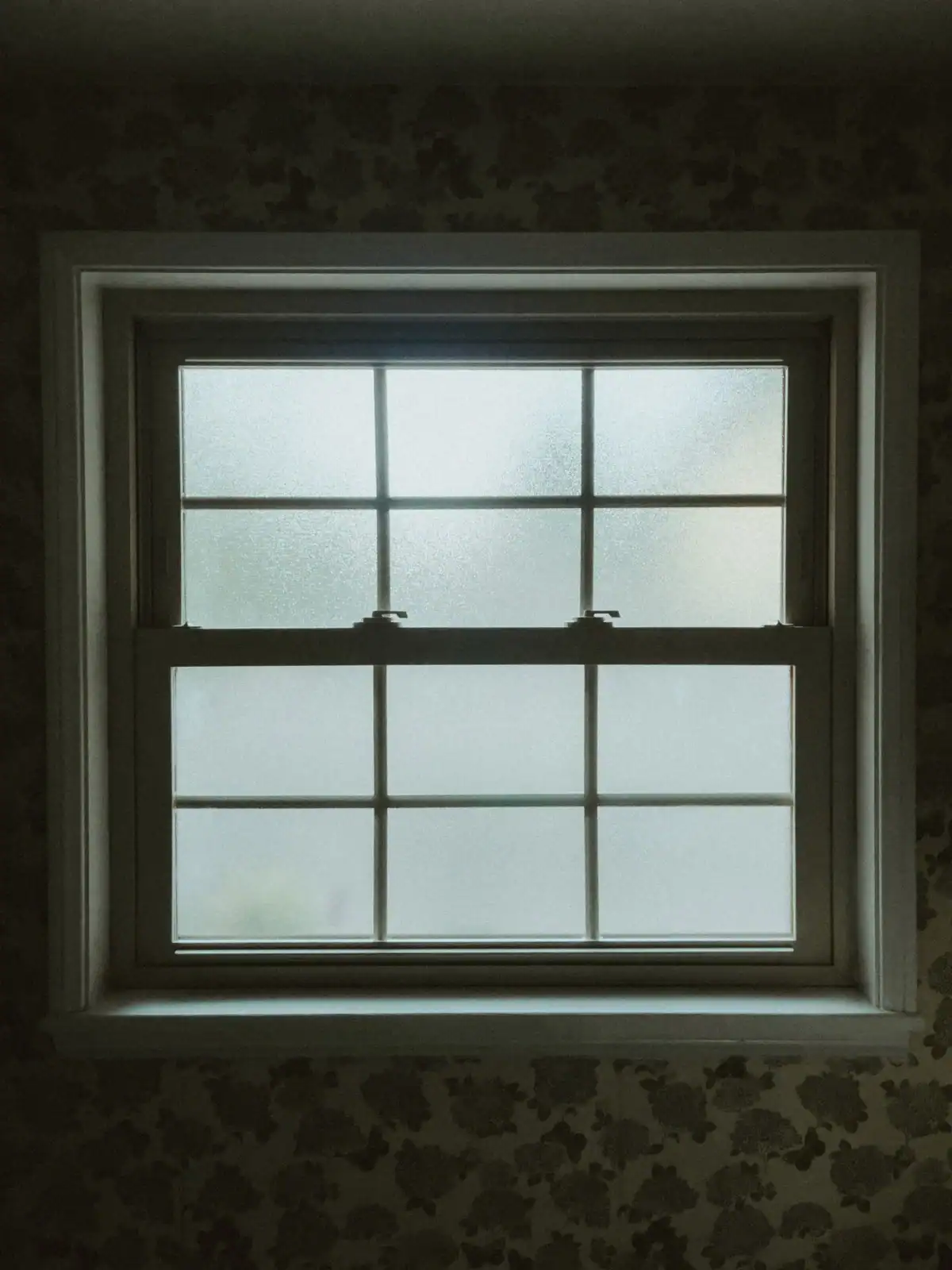
Frosted film is the simplest way to make a front-door transom private without losing the light. The film blurs the view while passing most of the light, so the hall stays bright and no one outside can pick out shapes inside.
It needs no rod, no brackets, and no clearance, which suits a shallow transom that would fight a blind. For more ways to keep the door private, see our front door privacy options.
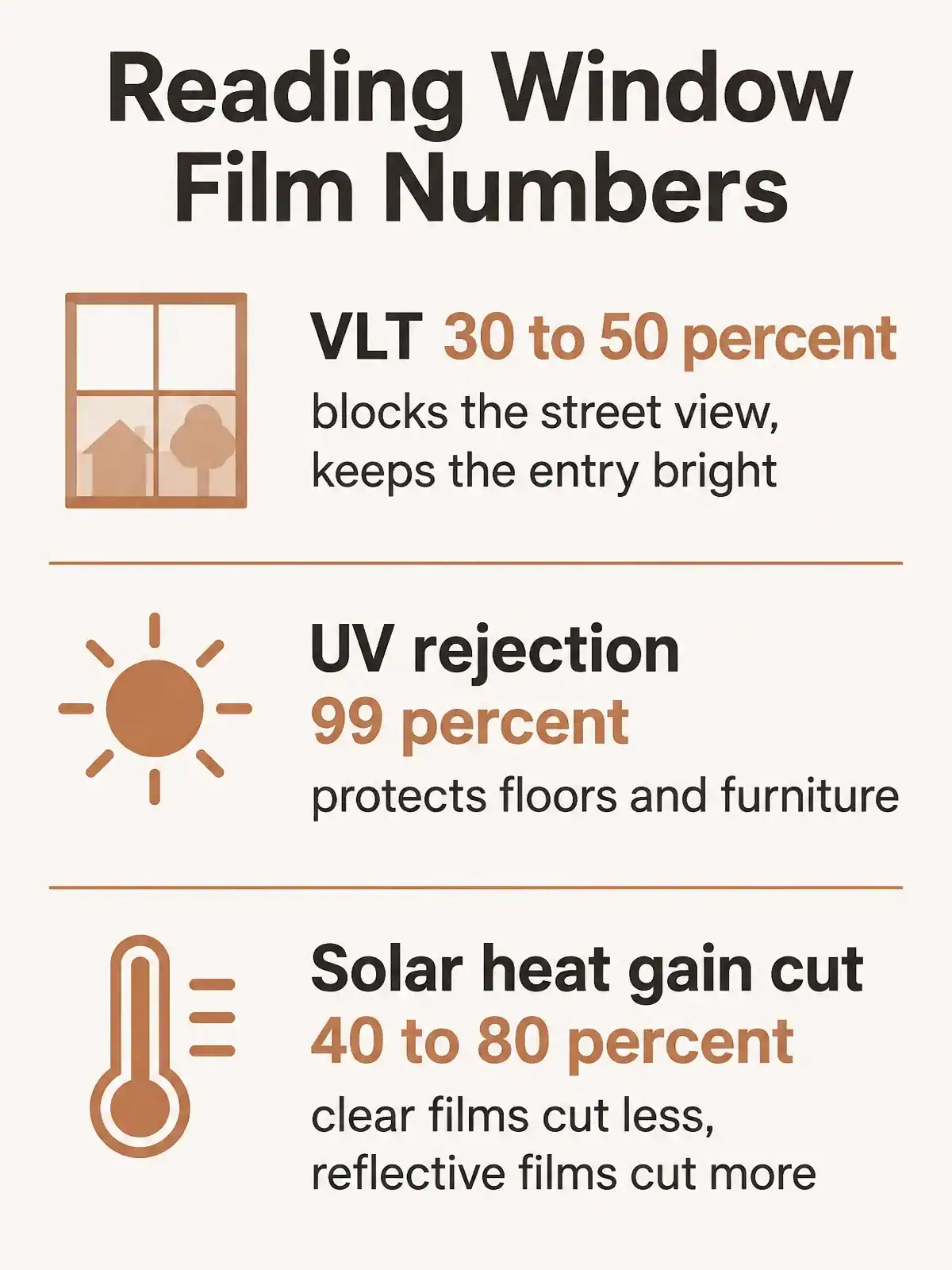
Film specs come down to three numbers. UV rejection is usually 99 percent, which protects floors and furniture from sun damage.
Solar heat gain reduction runs from about 40 percent for clear films to 80 percent for reflective ones. Visible light transmission, or VLT, runs from 5 percent, nearly black, to 70 percent, nearly clear.
A transom over a door rarely needs the darkest film. A 30 to 50 percent VLT blocks the view from the street while keeping the entry bright, so start there and go darker only if the door faces a bright western sun.
Frosted film sticks straight to the glass, and a decorative pattern works the same way. Etched-look films come in dots and full designs, and they peel off when you sell the house. Privacy glass costs more, since the frosting is baked into the pane, but it never peels.
Before you stick film on the transom
Best practice
- Clean the glass first, then cut the film slightly larger than the pane.
- Spray soapy slip solution on the glass and the film so you can slide it into place.
- Squeegee from the center to the edges, then trim the excess with a sharp knife.
Common mistake
- Skip the cleaning step, since dust under the film shows as bubbles.
- Clean the film with abrasives, which scratch it; use a soft cloth and mild soap.
Clean the film with a soft cloth and mild soap, and never use abrasives on it. A short routine keeps the film clear, and the transom keeps doing its job.
7. Roller Shades for a Clean Look
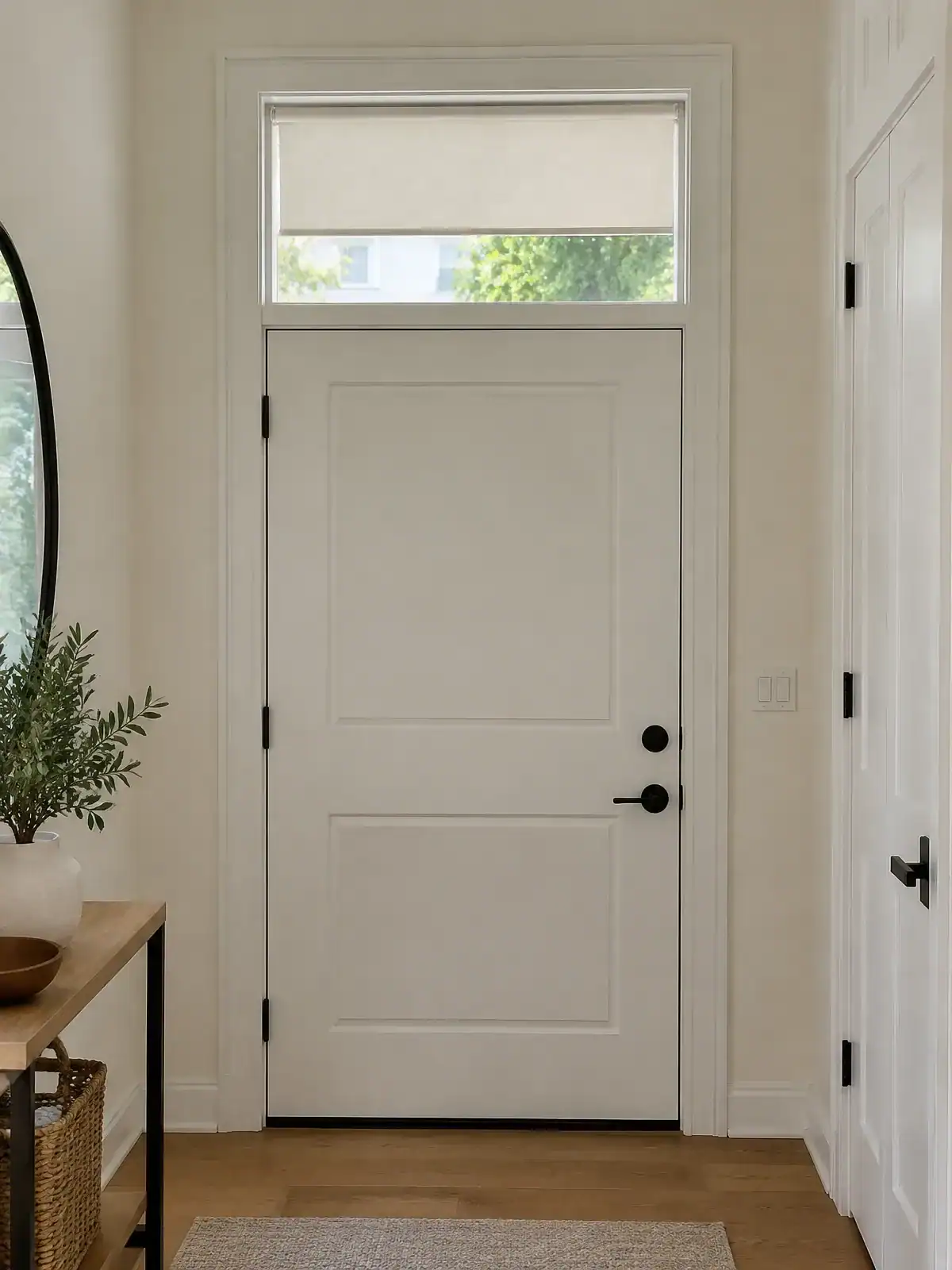
For a clean look with nothing on show, a roller shade is a flat sheet of fabric that rolls up out of sight. Lower it for privacy at night, roll it up in the morning, and the transom is bare glass again. The shade takes up almost no room when it is up, which matters on a short opening where a folded shade would eat the glass.
Shop the look
Similar pieces to recreate this look
- ROLLER SHADESCordless light-filtering roller shadeShop on Amazon
- CORDLESS ROLLER SHADESBlackout cordless roller shade, 36 by 72 inchesShop on Amazon
- BLACKOUT ROLLER SHADESBlackout cordless roller shade, 23 by 72 inchesShop on Amazon
As an Amazon Associate we earn from qualifying purchases.
Pick a light-filtering fabric when the entry needs soft daylight all day, and a blackout fabric when the transom sits over a bedroom. Cordless rollers suit a high transom, since there is no cord to reach for. A slim bottom bar keeps the shade hanging straight, and a spring roller needs no chain at all.
8. Cellular Shades That Insulate the Entry
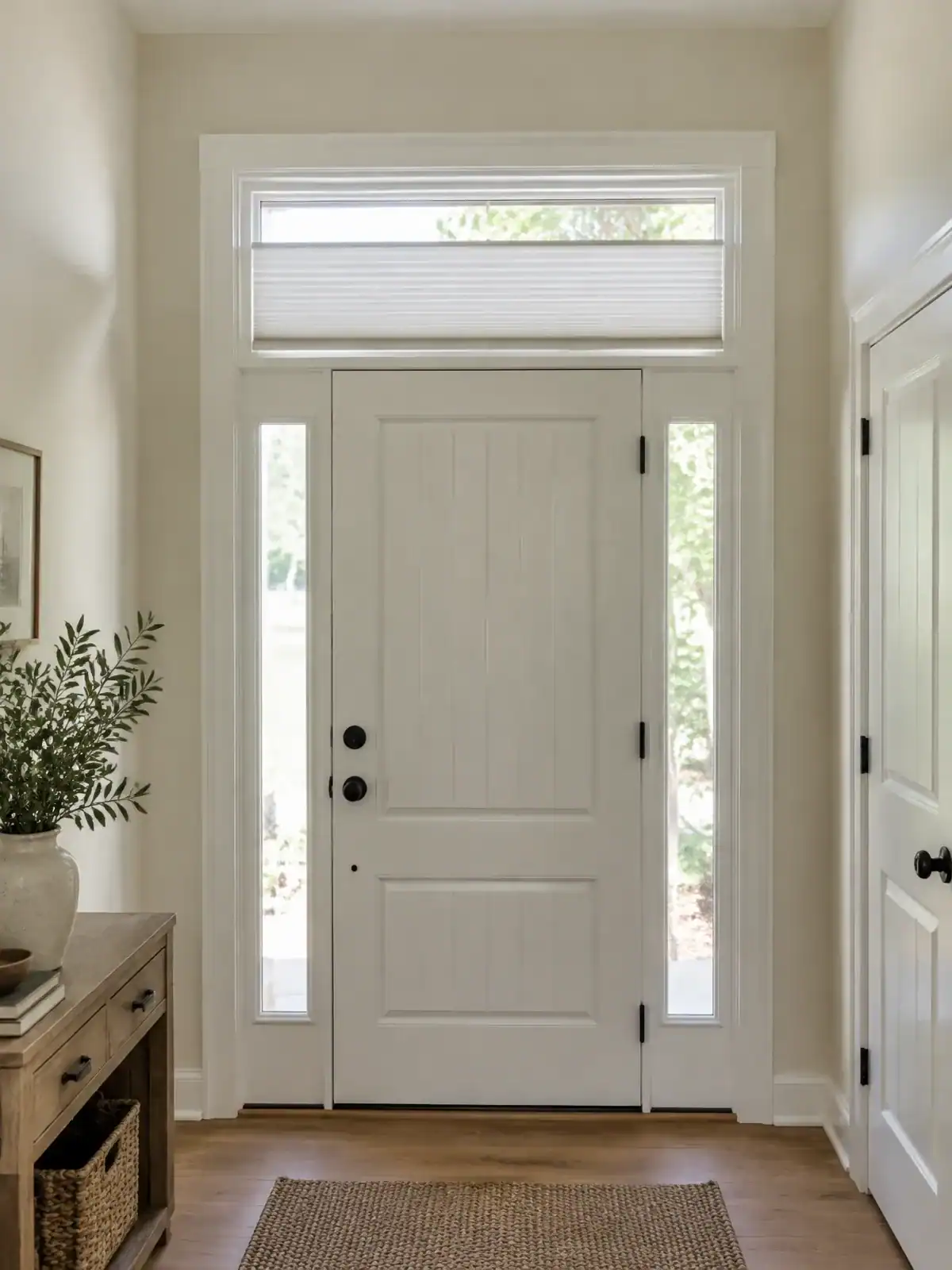
Cellular shades trap air in honeycomb cells, and that trapped air is what slows heat moving through the glass. A transom adds glass area to the wall, and glass is the weakest insulator in the wall, so a cellular shade earns its place on a front-door transom in a cold climate. A tightly installed cellular shade can reduce heat loss through a window by 40 percent or more in cold months.
Shop the look
Similar pieces to recreate this look
- CELLULAR SHADESCordless blackout cellular shade, 34 by 48 inchesShop on Amazon
- HONEYCOMB SHADESCordless cellular shade, 31 by 72 inchesShop on Amazon
- CORDLESS CELLULAR SHADESCordless cellular shade, 35 by 48 inchesShop on Amazon
As an Amazon Associate we earn from qualifying purchases.
Double-cell shades add a second layer of air pockets, which gives more insulation than a single cell. The shade still folds up small, so the transom looks bare when the shade is up. Side tracks close the gap at the edges, and that tight fit is what makes the insulation work.
Use a light-filtering fabric in the entry so the hall keeps its daylight, and save blackout fabric for a bedroom transom. Cordless operation suits the height, since the shade sits well above hand level.
9. Plantation Shutters That Suit a Wide Transom
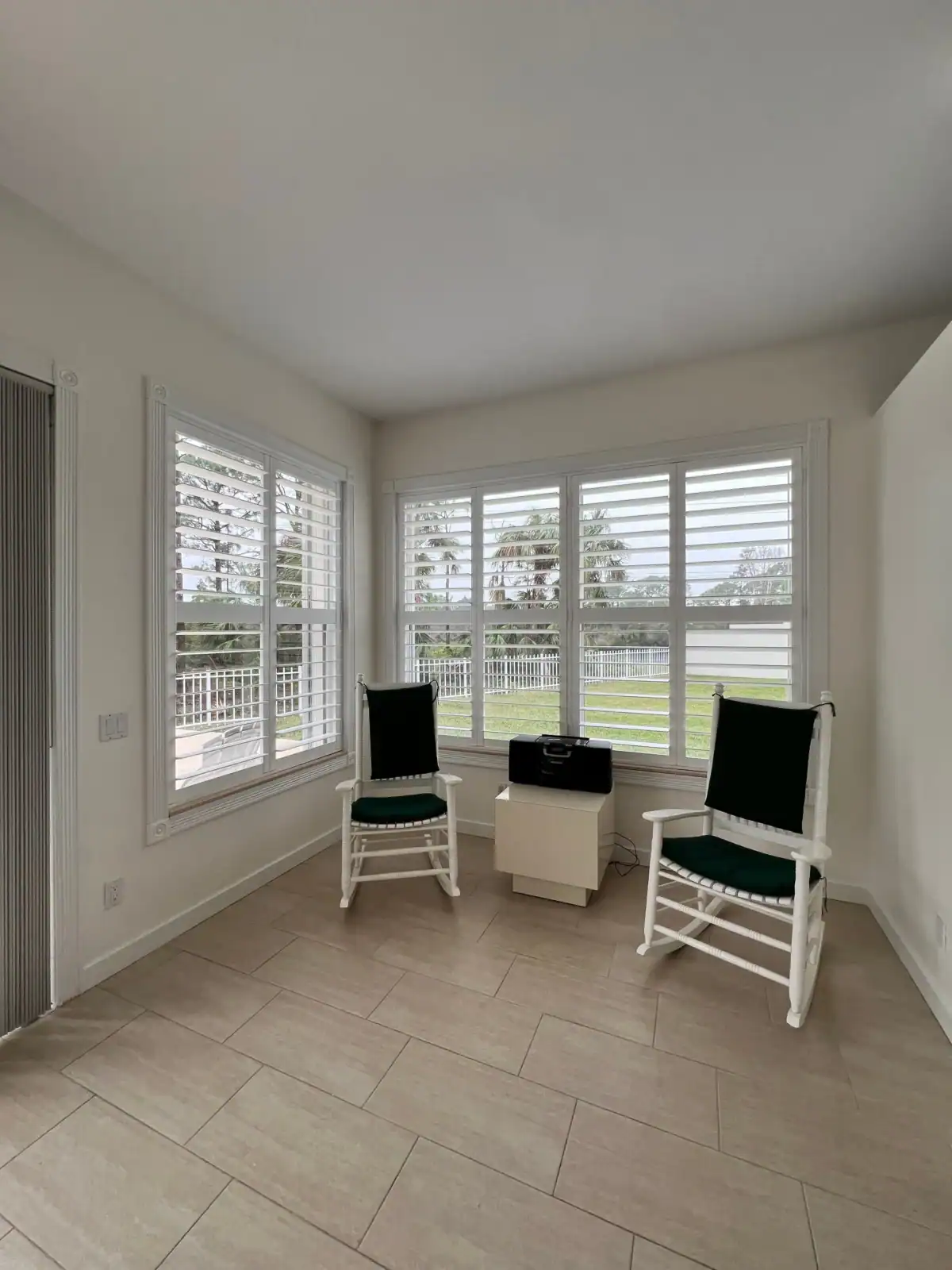
Plantation shutters give a wide transom a clean fitted look, and the louvers tilt to steer the light. Tilt them open in the morning for a bright hall, tilt them shut at night for privacy, and the transom never needs a second layer. The shutters suit a wide transom best, where the panels can run the full width without a joint in the middle.
Check the depth of the transom pocket before you order, since shutters need more room than film or a shade. A shallow recess rules them out, and a deep one takes them well. Painted white shutters keep the entry bright, while a wood stain warms a hallway with wood floors.
10. Woven Wood Shades That Warm the Entry
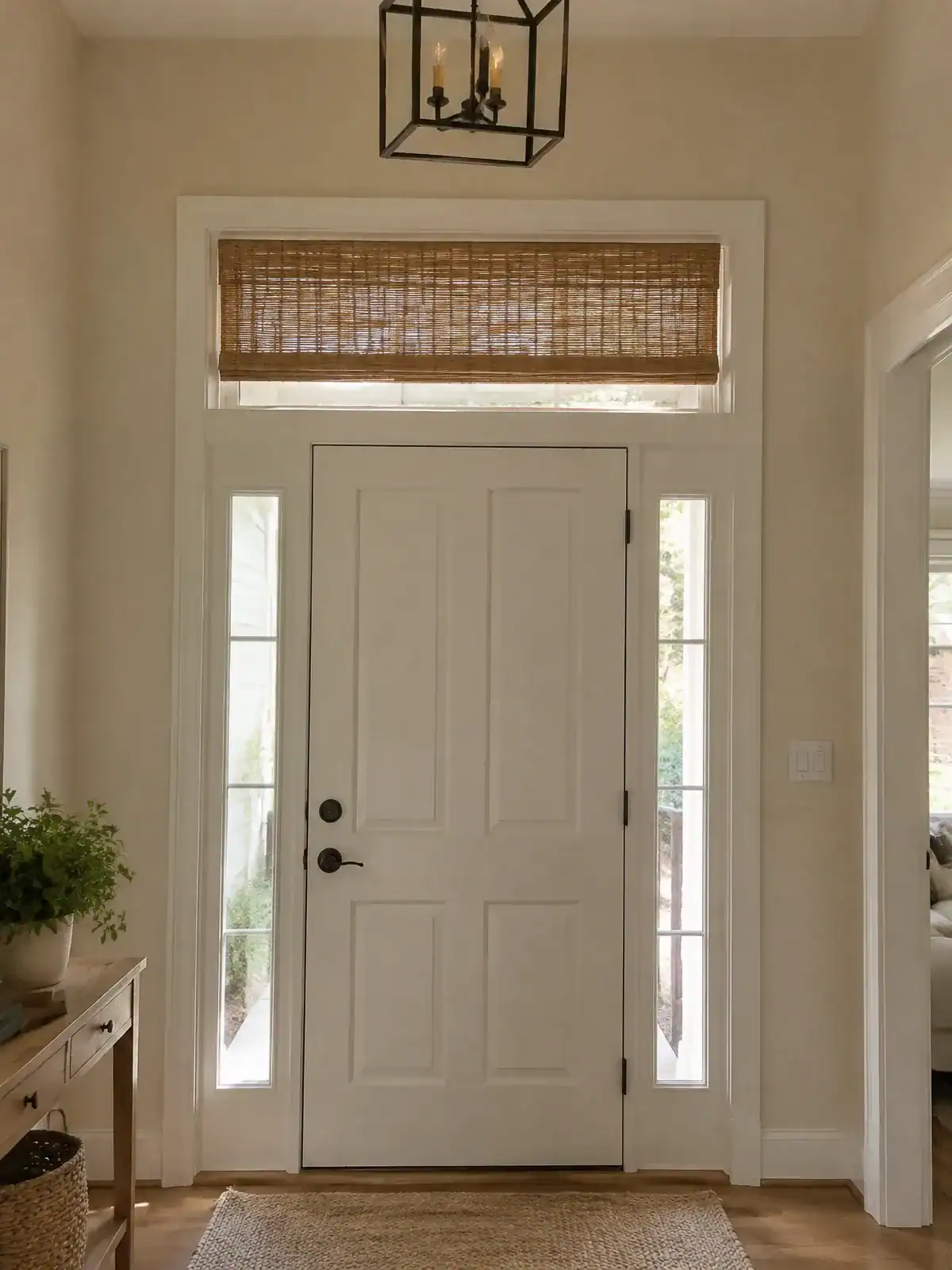
Woven wood shades bring a warm, natural texture to the entry, and the weave filters the light into a soft glow. Bamboo and reeds suit a hallway with wood floors or a front door in a warm stain, since the shade picks up the same tones. The shade filters the sun without shutting it out, so the hall keeps its daylight.
Shop the look
Similar pieces to recreate this look
- BAMBOO ROMAN SHADESBamboo roman shade, 34.5 by 48 inchesShop on Amazon
- BAMBOO WINDOW SHADESBamboo blinds for interior windowsShop on Amazon
As an Amazon Associate we earn from qualifying purchases.
A woven wood shade on its own gives medium privacy, so pair it with a liner when the door faces the street. The liner pulls down behind the weave at night and rolls away in the day. Keep the shade dry, since natural fibers spot when they stay damp.
11. Stained Glass Inserts That Turn the Transom Into a Feature
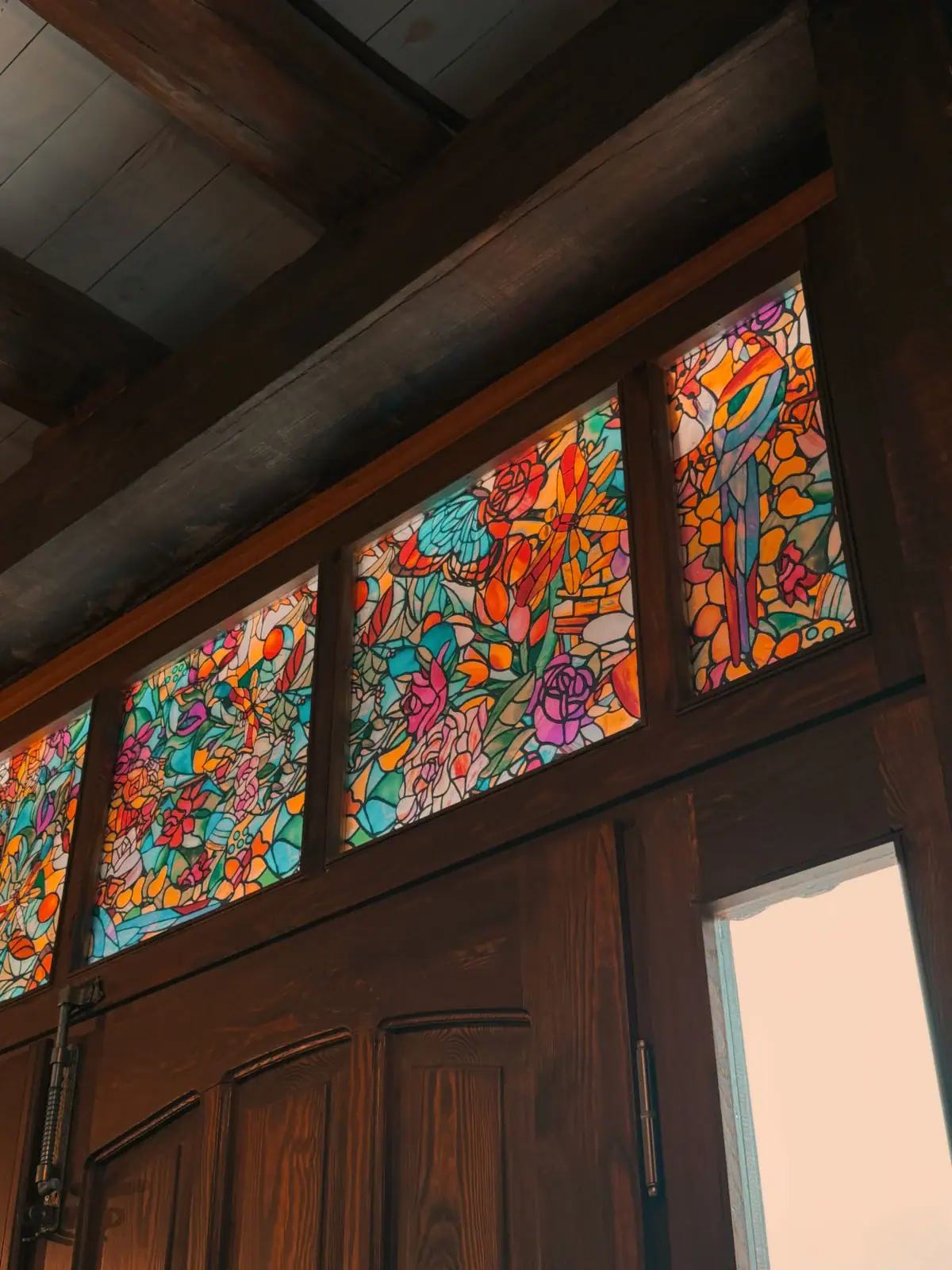
Stained glass turns the transom into the feature of the entry, and it gives privacy at the same time. Colored glass breaks up the view from the street while letting colored light fall into the hall. The insert sits flush in the frame, so it needs no rod, no cord, and no clearance.
A custom insert costs more than film, but it lasts as long as the door and never needs washing beyond a wipe. A simpler panel in one or two colors suits a plain door, while a full design suits an entry with wood trim and warm light. Match the colors to the hall, since the glass throws its colors onto the wall in the afternoon sun.
12. Motorized Shades for a Hard-to-Reach Transom
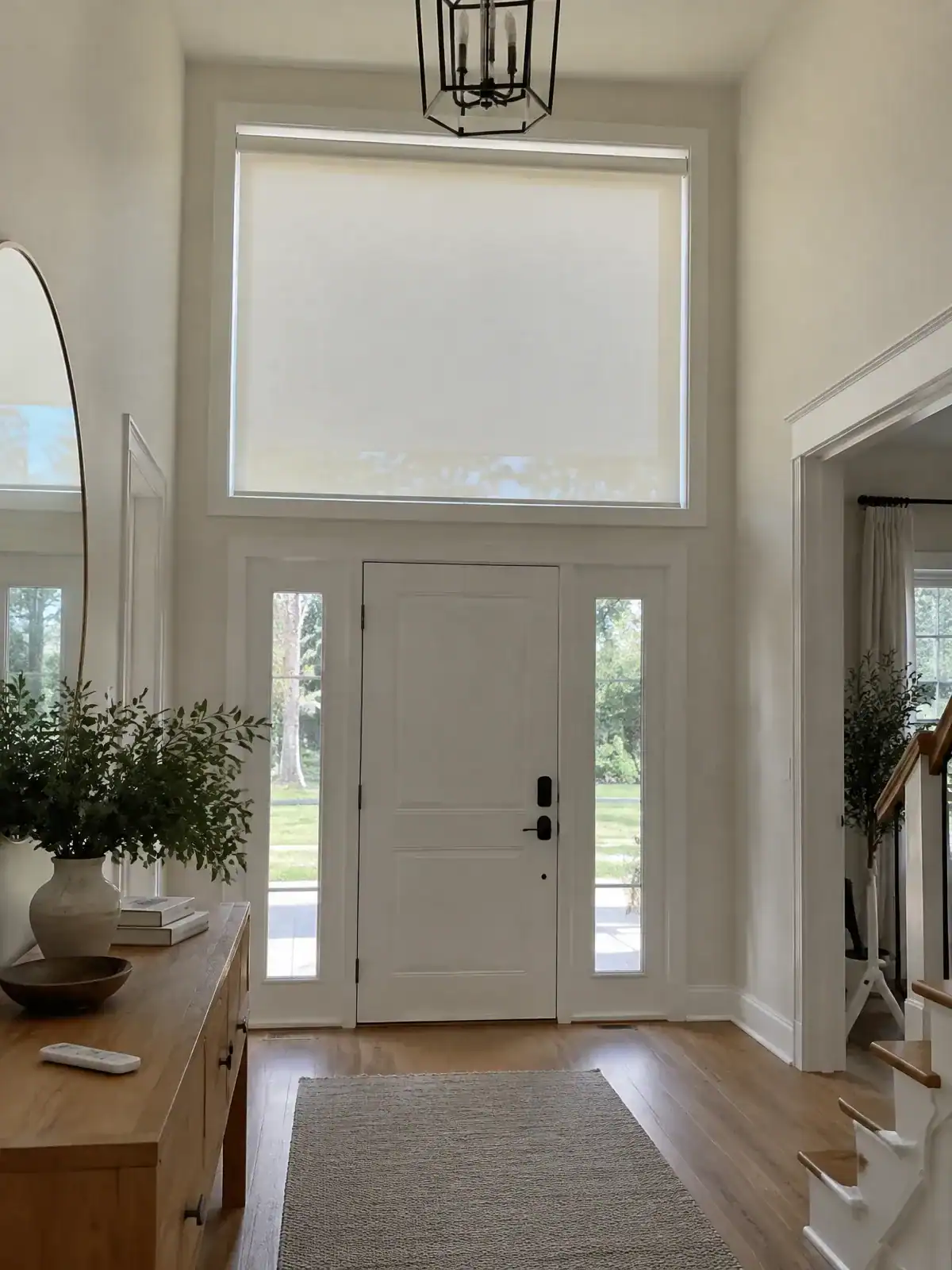
High windows are hard to reach by hand, and a transom sits higher than most. For transoms that sit 7 feet up, motorized shades or wand controls avoid the ladder, and a remote or phone app moves the shade from the floor. That matters most over a front door, where the transom is out of reach and the shade still needs moving twice a day.
Battery-powered motors suit a transom best, since there is no wiring to run through the wall. A wand control costs less and still keeps your feet on the floor. Check that the shade runs on a cordless motor, and keep the remote where you will find it at night.
13. Wooden Blinds That Tilt the Light
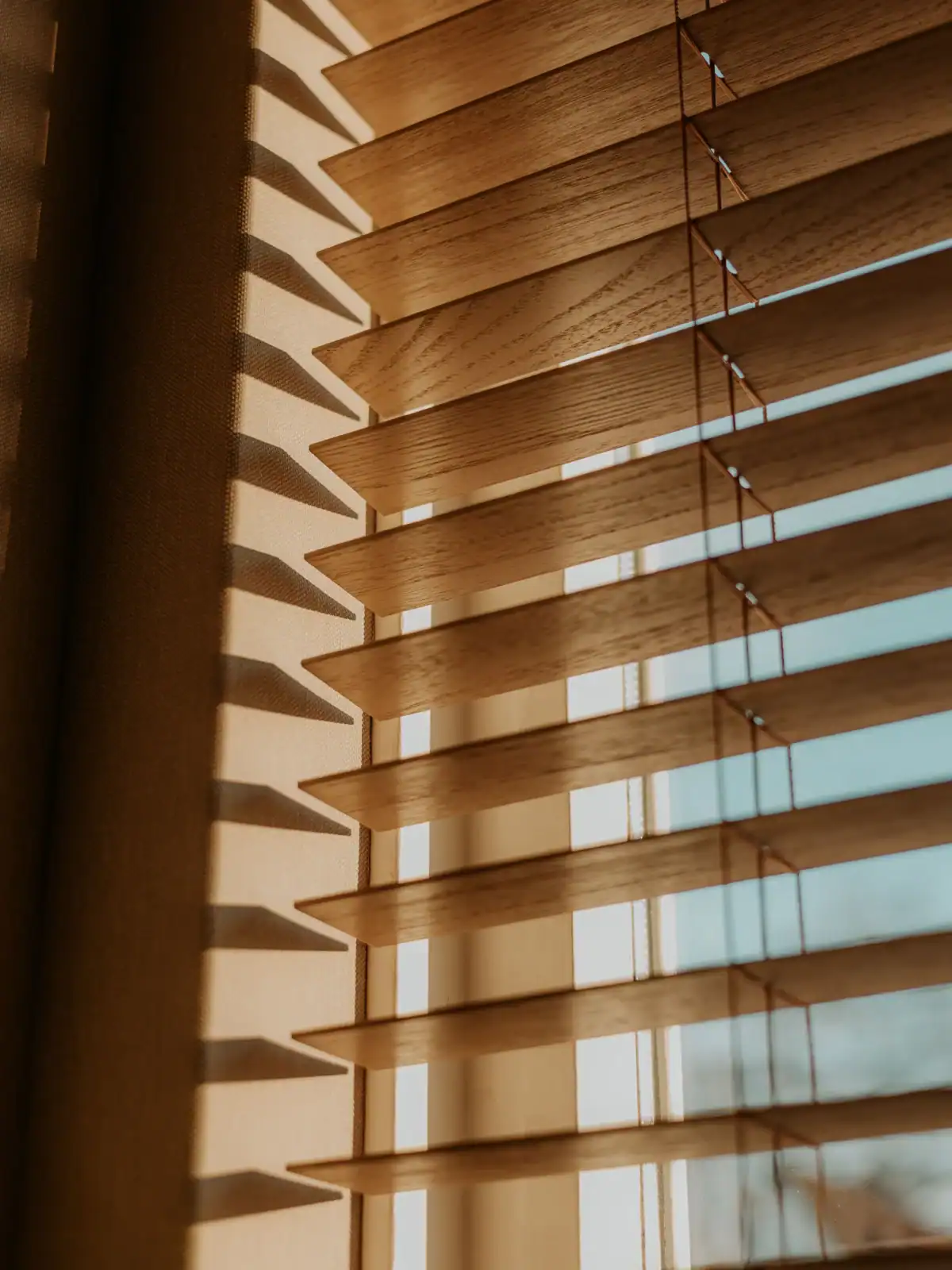
Wooden blinds tilt to steer the light, and that control is what makes them work on a small transom pane. Tilt the slats up to bounce daylight toward the ceiling, tilt them down to cut the glare, and close them flat for privacy at night. The wood warms a plain white entry, and the slats read as furniture rather than fabric.
Measure the transom depth before you order, since wooden slats need room to tilt inside the frame. A shallow pocket takes a slim slat, while a deep pocket takes a wide one. Dust the slats with a dry cloth, since water spots the wood.
14. Pleated Shades That Fold Away Neatly
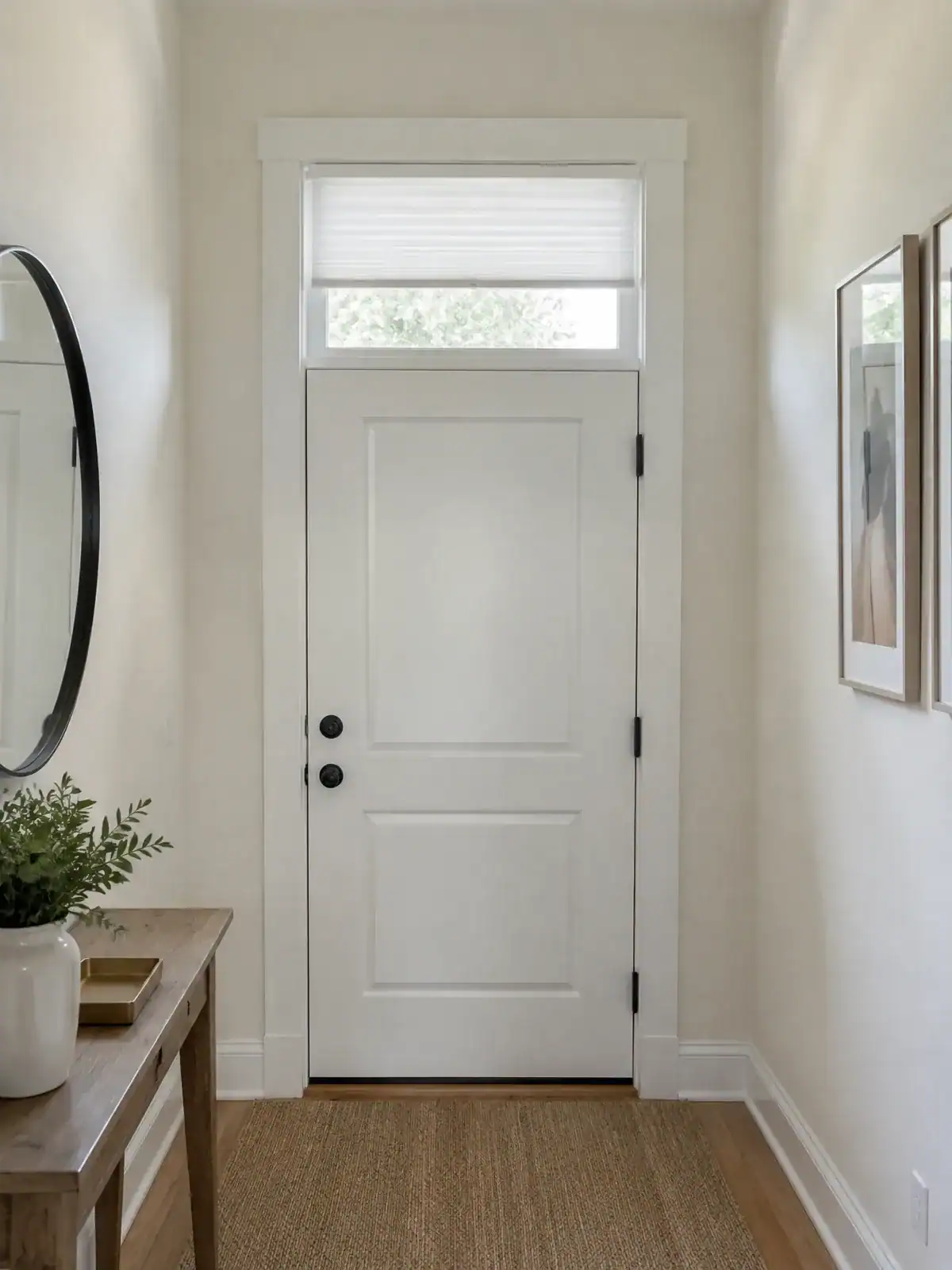
Pleated shades fold flat into a slim stack, so they suit a narrow transom where a bulky shade would cover the glass even when it is up. The crisp folds read as clean lines, and the shade drops straight down when you need it. A top-down bottom-up version opens from the top, which lets light in over the shade while the lower half stays covered.
A pleated shade costs less than a cellular shade and gives less insulation, so pick it for the look rather than the warmth. It suits a transom over an interior door, where heat loss is not the question. Keep the cords out of reach of small children, and pick a cordless lift when the transom sits over a door children use.
15. Layered Treatments for Day and Night Privacy
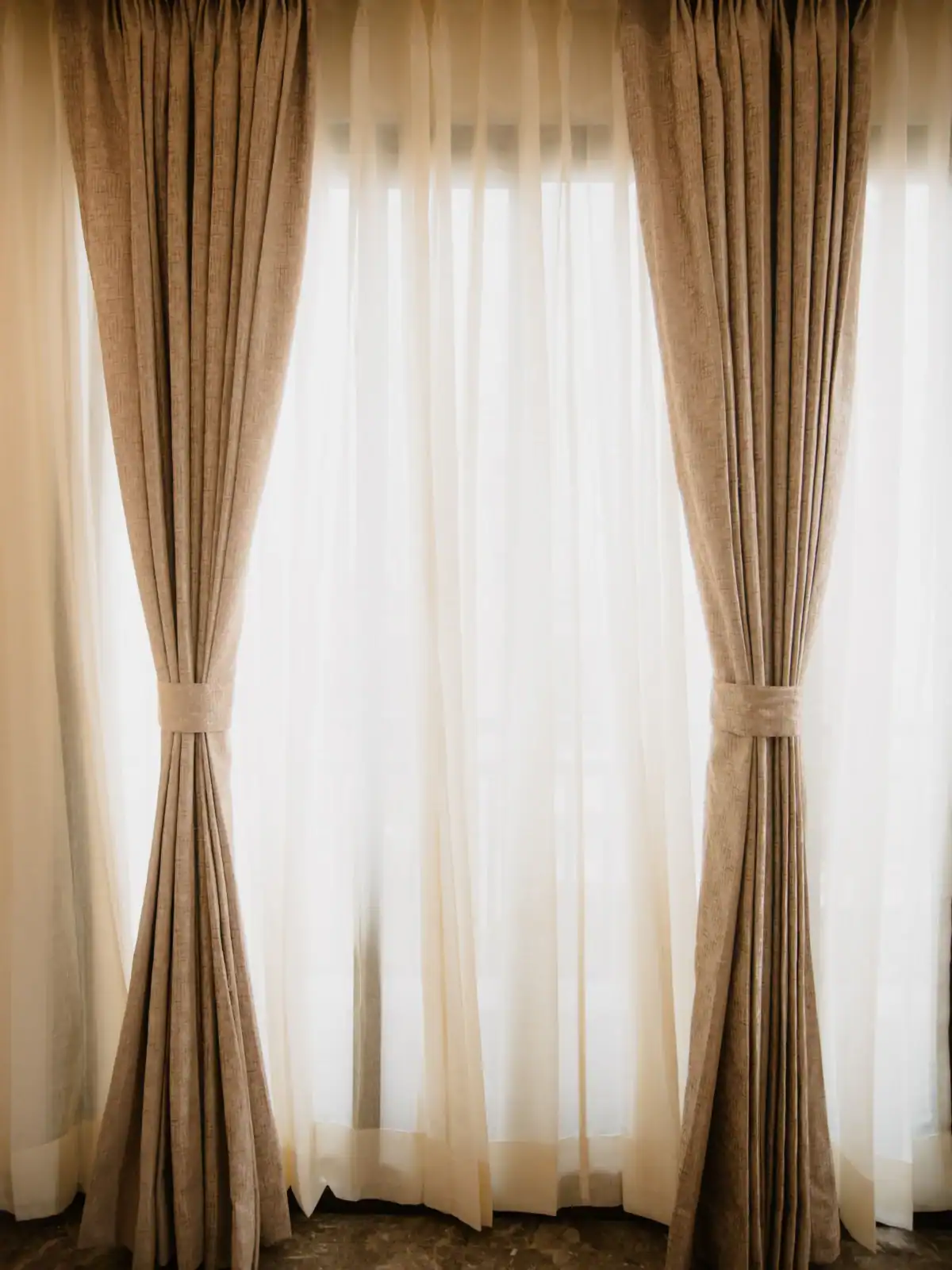
One layer rarely does the whole job on a front-door transom. A sheer layer keeps the entry bright in the day, and a heavier layer closes it off at night, and the two together solve the day-night gap that catches most people out. A sheer that looks private by day can turn see-through after dark with the lights on, so the entry needs a night layer, not just a day layer.
Shop the look
Similar pieces to recreate this look
- SHEER VOILE PANELSWhite sheer curtains, 4 panelsShop on Amazon
- BLACKOUT PANELSBlackout curtains, 2 panelsShop on Amazon
- DOUBLE CURTAIN RODDouble curtain rod, 48 to 84 inchesShop on Amazon
As an Amazon Associate we earn from qualifying purchases.
Hang both layers on a double curtain rod, with the sheer closest to the glass and the heavy panel in front. The sheer stays put all day, and the heavy panel draws shut at night. For more on dressing the door below the transom, see our French door privacy ideas.
A layered shade works the same way in a smaller package, with a light-filtering front and a blackout back on one headrail. It suits a transom with no room for two rods. Either way, the day layer and the night layer each do one job, and neither has to do both.
16. Etched Glass Designs That Personalize the Pane
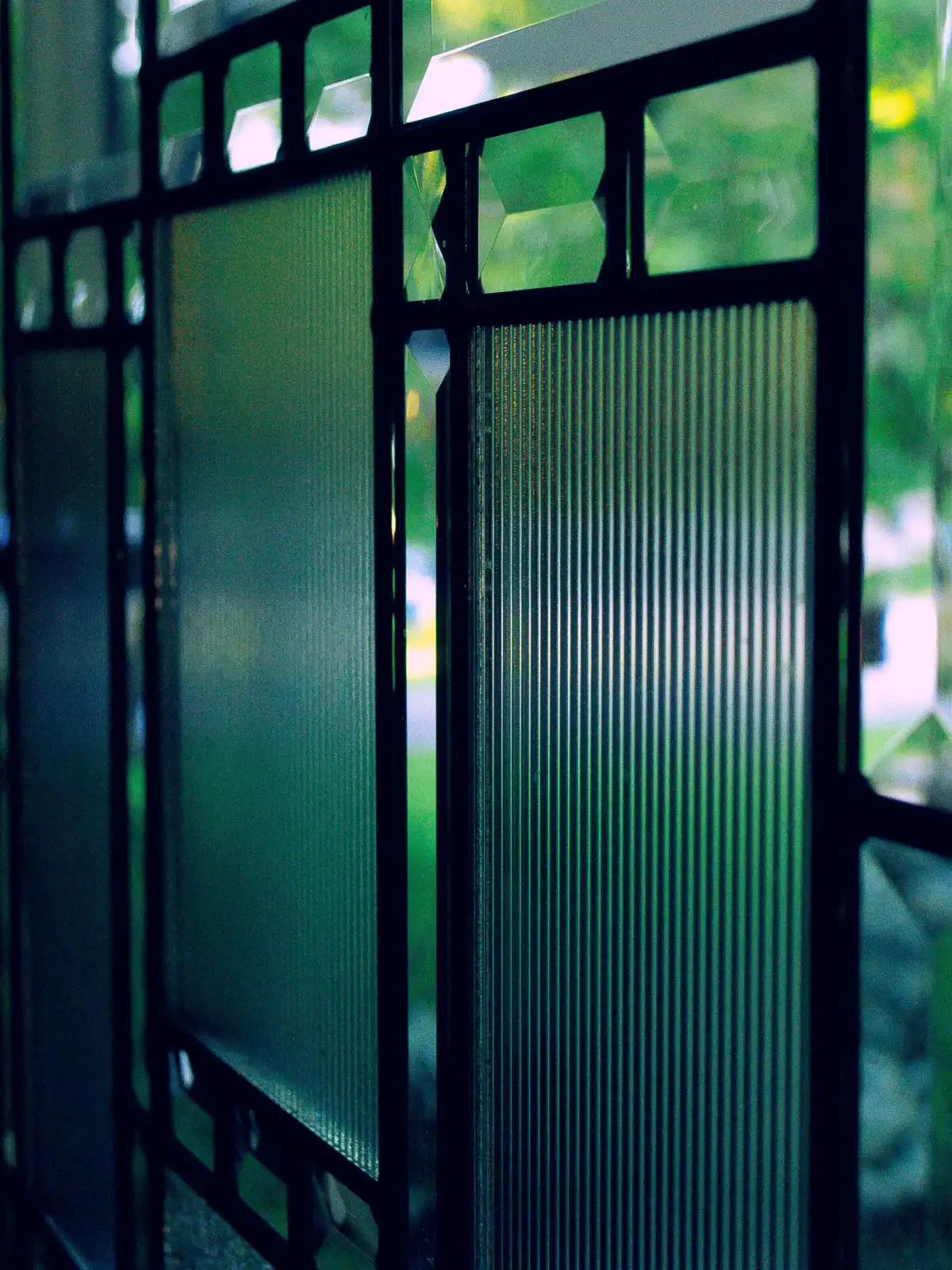
Etched glass gives privacy with a pattern, and the pattern is the whole point. A geometric design or a leaf motif blurs the view while letting the light through, and the glass reads as a detail rather than a cover. It suits a transom that needs privacy all day, every day, with no moving parts at all.
An etched film gives the same look for less money, and it peels off when tastes change. Real etched glass costs more and stays with the door, so pick it when the pattern is part of the house. Keep the pattern simple on a small transom, since a busy design fights the trim around it.
17. Beaded Curtains for a Light Boho Layer
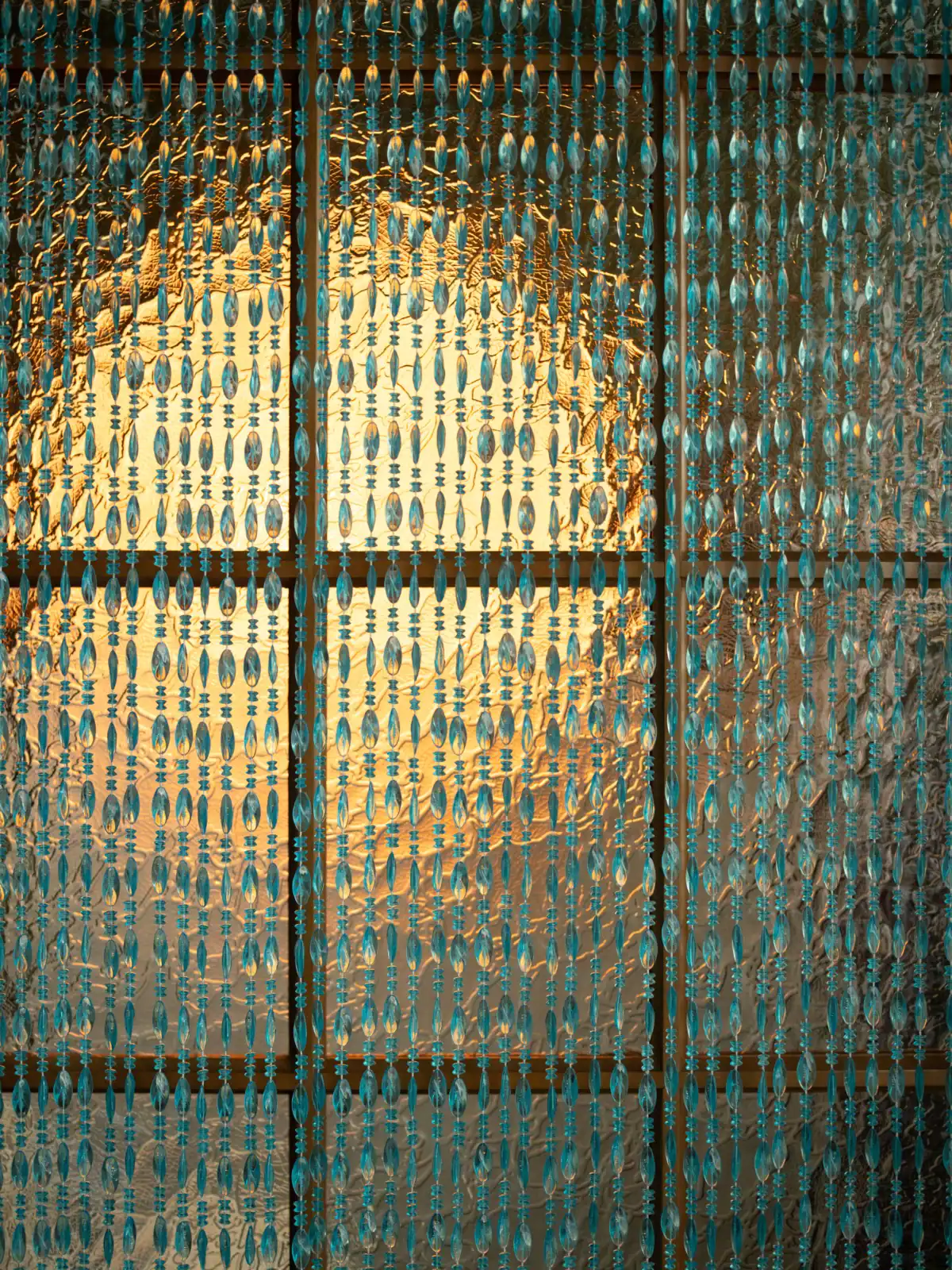
Beaded curtains suit a transom over an interior door, where the job is to soften the opening rather than block it. Strings of wood or glass beads catch the light and move with the air, and they mark the doorway without closing it. They give little privacy and no insulation, so they belong inside the house, not on a front door.
Beads rattle in a draft, so keep them for interior openings where the air is still. A wood bead curtain suits a warm hallway, while glass beads suit a bright room with white trim. Hang the curtain from a simple rod, and keep it short enough to clear the door below.
18. Arched Shades That Follow the Curve
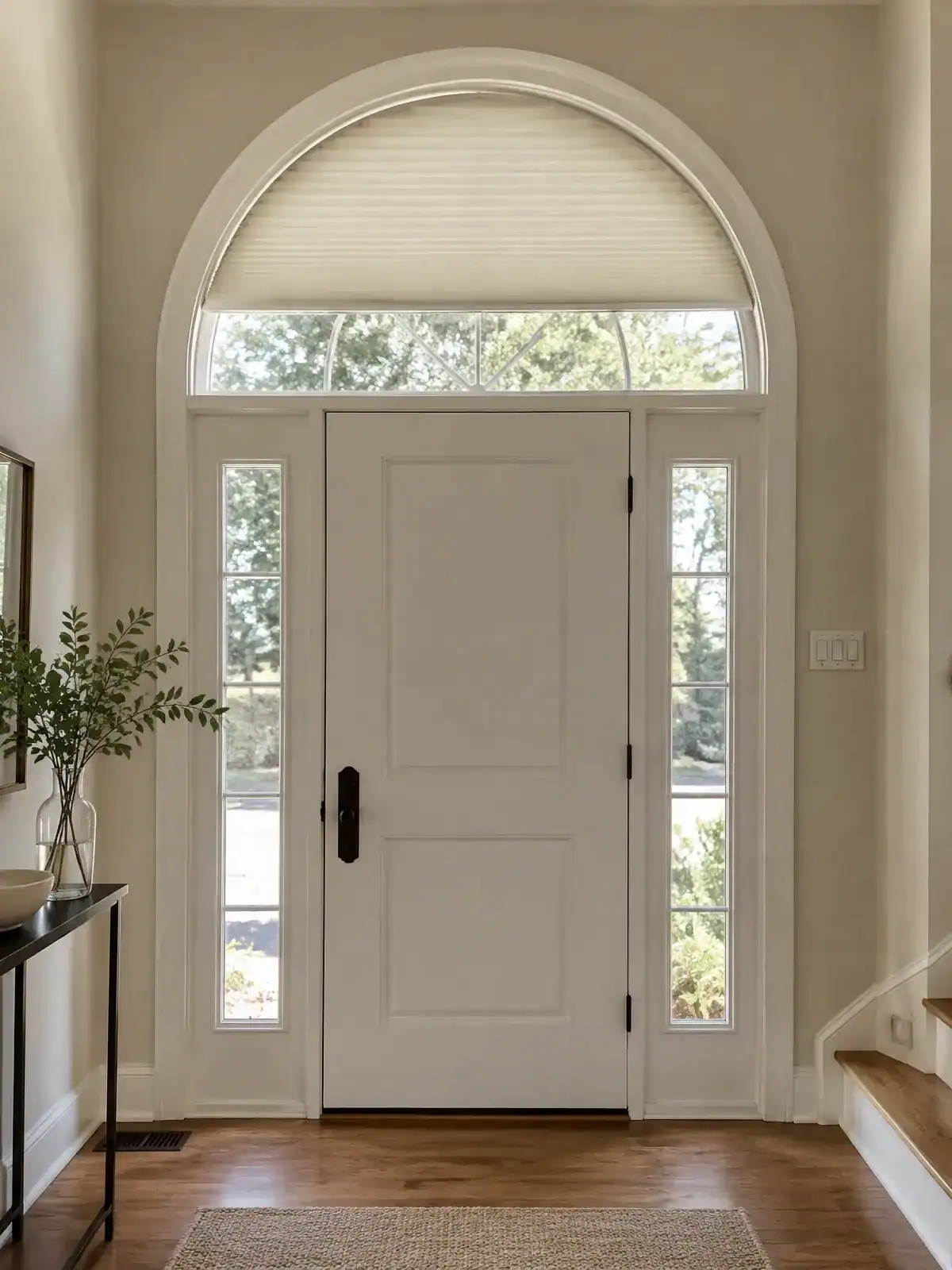
An arched transom needs a shade that follows the curve, and a flat shade only fights it. Arched shades are made to the shape of the opening, so the fabric fills the arch instead of leaving a gap at the top. The shade reads as part of the window, and the arch keeps its shape.
A fixed arched shade suits a transom that never needs opening, since it stays in place and filters the light all day. A moving arched shade costs more, but it lets you raise the fabric when you want the full arch back. Measure the arch with care, since a shade cut to the wrong curve never sits right.
How to Pick the Right Transom Window Treatments for Your Entry
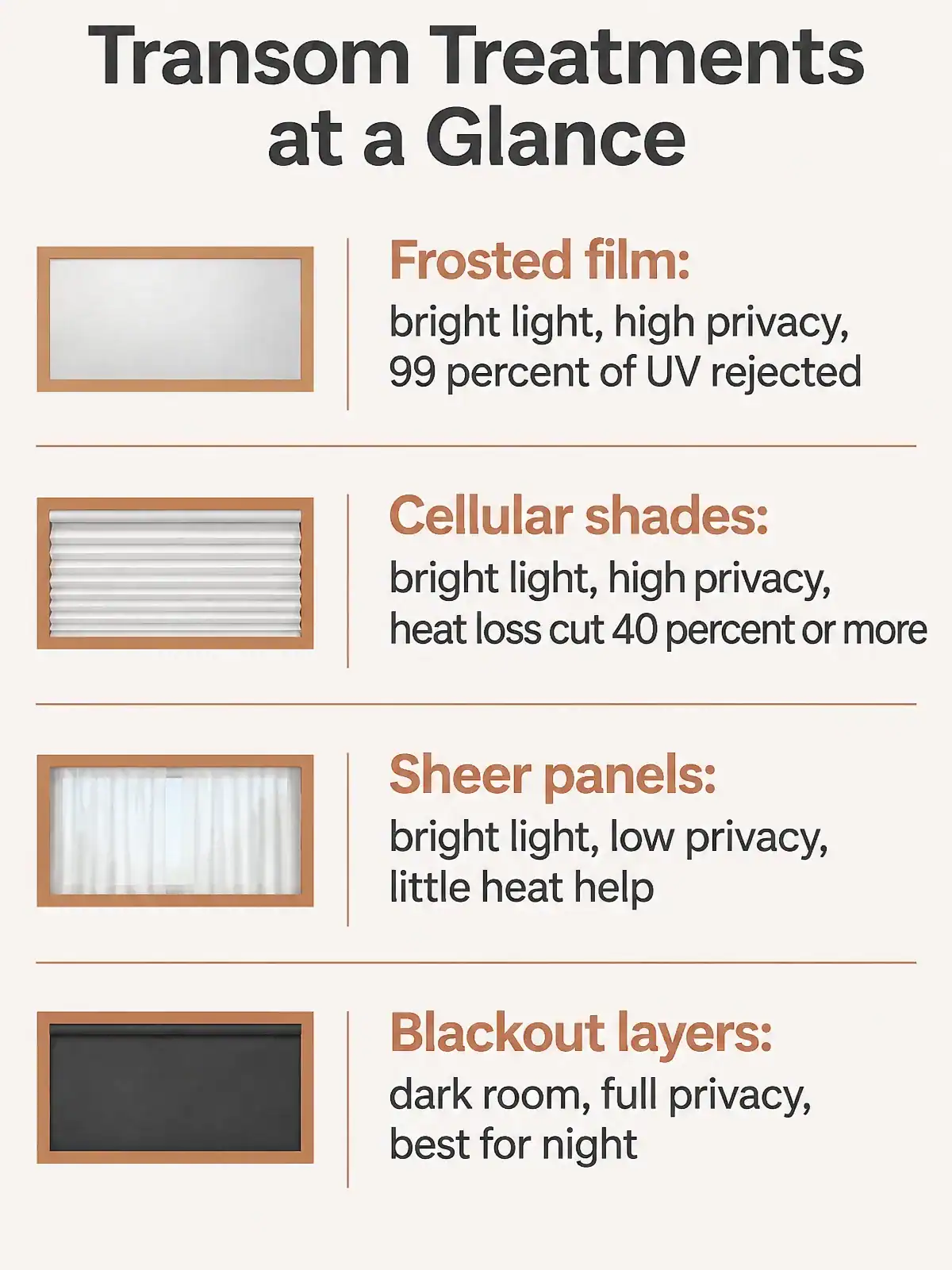
Start by measuring the opening before you fall for a treatment. Most transoms range from about 8 to 24 inches tall while matching the width of the opening below, so the short height rules out some options fast. Measure the width, the height, and the depth, then rank light, privacy, and heat in order of importance.
Depth decides what fits. Film needs none, curtains need a rod above the frame, and shutters need the deepest pocket of all.
Reach decides how you will work it: a shade you cannot reach needs a motor, a wand, or a cordless lift. The table below puts the common treatments side by side so you can see the trade at a glance.
| Treatment | Light | Privacy | Heat help |
|---|---|---|---|
| Frosted film | Bright | High | Some |
| Sheer panels | Bright | Low | Little |
| Cellular shades | Soft | High | Strong |
| Roman shades | Soft | High | Some |
| Roller shades | Adjustable | High | Some |
| Plantation shutters | Adjustable | High | Some |
| Layered treatments | Bright by day | High at night | Some |
If the door below the transom is a French door, the same choices apply to its glass too, so read our window covering ideas for French doors before you order. And when the treatment is set, the entry outside the door deserves the same care: our front porch and entryway ideas cover the porch side.
99%
of UV blocked by window film, which protects floors and furniture
40% or more
heat loss cut by tightly installed cellular shades in cold months
30 to 50%
VLT that blocks the street view while keeping the entry bright
Sources: Build-Construct; Engineer Fix.
Pick the treatment that fits your depth, your reach, and your ranking of light, privacy, and heat. The right one is the one you will actually use twice a day, not the one that looks best in a photo.
Our take · James Davis
If I had to pick one treatment for a front-door transom, I would start with frosted film. It costs little, it fits every transom, and it solves the privacy problem without darkening the hall. Add sheers over it when you want the entry to feel dressed, and you are done.
Start with the film, then add fabric only if the entry still feels bare. That order keeps the cost down and the light up.
Frequently Asked Questions
Can I remove window film from a transom later?
Yes. Etched-look films peel off when you sell the house or change your mind, and the glass underneath is left as it was. Privacy glass, where the frosting is baked into the pane, cannot be removed.
Do I need a professional to fit shutters on a transom?
Not always. A ready-made shutter that matches the opening goes up with basic tools, but a wide or arched transom usually needs a made-to-measure shutter, and that is a job for a pro. Measure the depth first, since a shallow pocket rules shutters out before you spend anything.
What if my transom window opens?
Pick a treatment that swings out of the way. Film stays on the glass and never blocks the sash, while a shade mounted clear of the frame lets the window hinge open. Curtains hung from a rod above the transom also stay clear, since they never touch the sash.
Related posts
 10 French Doors for Bathroom: Spa-Luxe and Still Private
 Dining Room by Front Door Layouts That Keep Guests From Walking Through Dinner
 How to Keep a French Door Closed
 How to Keep Your Shed Door Open: A Comprehensive Guide
 12 Interior French Door Ideas Designers Keep to Themselves
 How to Keep a Front Door Looking Good in Salt Air
 11 Storm Doors for Front Door Styles That Keep Winter Drafts Outside
 Christmas Wreath Crafts for Kids That Keep Little Hands Busy on Snow Days