
January arrives, the tree comes down, and the wreath that filled the front door all December is suddenly in your arms with nowhere to go. Learning how to store wreaths after the holidays the right way takes about an hour, and it decides whether that same wreath comes out full next December or flat and tired. This guide walks through the whole job: what to gather, how to clean and wrap each kind of wreath, which container fits it, and where to keep it until next year.
How this works
About an hour, an easy job, and the only cost is a container if you do not own one yet. The wreath itself decides the storage: a full artificial wreath needs a hard-sided container that holds its shape, a flat grapevine wreath can hang on a hook, and a pre-lit wreath needs its wires kept loose. Clean it, wrap it in tissue paper, lay it flat, and keep it somewhere dry.
How to Store Wreaths After the Holidays

The whole job is four moves: clean it, measure it, pack it loose, and shelve it somewhere dry. The sections below take them one at a time.
What You Need Before You Pack It Away

Gather everything before you lift the wreath off the door. You need a wreath storage container or a wreath storage bag that fits without squeezing the wreath. Add white tissue paper, bubble wrap for ornaments, a few silica gel packets, scissors, and a marker with a label for the outside.
Shop This Step
Bags and supplies for packing a wreath away
- STORAGE BAGWreath Storage Bag 5-Pack, 26 InchesShop on Amazon
- SILICA GELSilica Gel Packs, 15 Pack, 20 GramShop on Amazon
- TISSUE PAPERAcid Free Archival Tissue Paper, 100 SheetsShop on Amazon
As an Amazon Associate we earn from qualifying purchases.
Tissue paper does the quiet work. It sits between branches so they do not rub, and it keeps ornaments from knocking against each other in the container. Use plain white tissue paper, not printed wrapping paper, because print can rub off onto pale branches over months in storage.
Silica gel packets pull damp air out of the container, and bubble wrap guards the pieces that break first: glass balls, ceramic birds, thin pinecones. A marker and a label sound small, but they save you opening every round container next December to find the one you want.
- Time About an hour
- Skill Easy
- Cost A container, if you need one
If you own more than one wreath, pack them one at a time. Each wreath gets its own container, and a second container costs less than replacing a crushed one.
Clean and Dry the Wreath First

Work on a table with room to turn the wreath. Cold branches snap more easily than warm ones, so let a wreath from outside warm up indoors before you touch it.
Lift the wreath off its hook with both hands, one on each side, and carry it flat. A wreath carried by one edge sags under its own weight, and the branches on that side bend out of shape.
Before you start
Unplug a pre-lit wreath before you pack it, and take the batteries out of any battery pack. Never store a wreath with its lights switched on.
Shake the wreath gently over the table first, and let any loose needles and dust fall away before you wrap it. Pick off dead leaves and any ornament that has come loose, and set loose pieces aside to glue back later.
Run a dry cloth over dusty branches, and wipe sticky sap spots with a damp cloth. Let the wreath dry fully before you wrap it, because damp branches packed away will smell musty by next year.
A pre-lit wreath needs one more check before the lid goes on. Plug it in once, look for a dark section, and fix loose bulbs or a loose plug now, before the wreath goes away for months. If a whole section stays dark, that is a repair for the shop that sold it, not a storage job.
Measure the Wreath Then Pick the Container

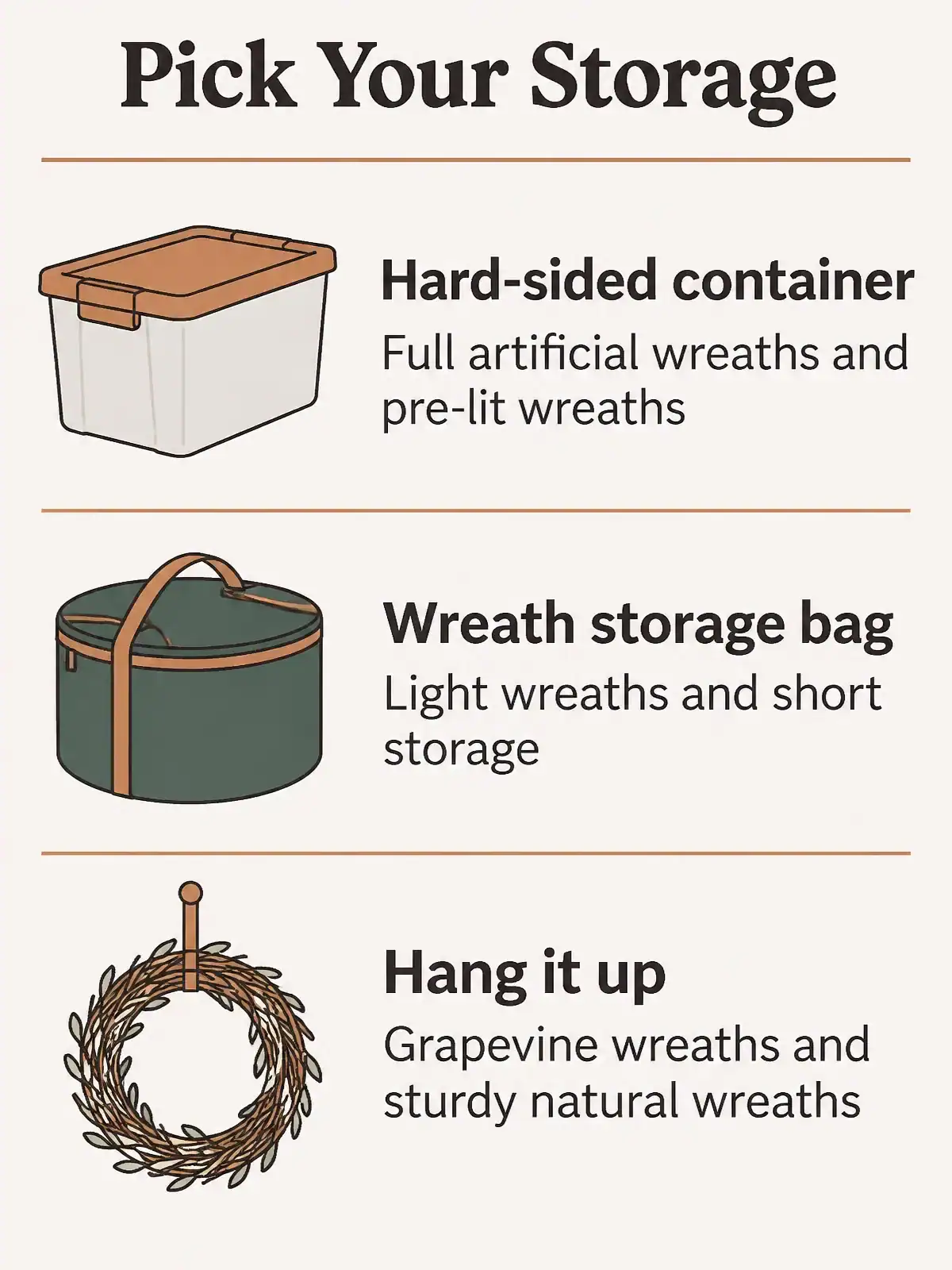
The wreath decides the container, not the other way round. A full artificial wreath holds its shape only when nothing presses on it, so it belongs in a hard-sided container with room to spare. A flat grapevine wreath has a stiff frame of its own, so it can hang on a hook in a closet and come out the same shape it went in.
Measure the wreath across its widest point first, before buying anything. Measure across the bow too if it sticks out past the branches.
Pick a container at least 2 inches wider than the wreath (Do it Best). A 24-inch wreath needs a container at least 26 inches wide.
Hard-sided containers come in standard widths, so round up to the next size on the shelf when your wreath falls between two of them.
Shop This Step
Hard-sided containers that fit the wreaths in this guide
- STORAGE CONTAINERHard Shell Wreath Storage Container, 24 InchShop on Amazon
- STORAGE CONTAINERHearth and Harbor Wreath Storage Container, 30 InchShop on Amazon
- STORAGE CONTAINERZOBER Christmas Wreath Storage Container, 36 InchShop on Amazon
As an Amazon Associate we earn from qualifying purchases.
A wreath storage bag suits a light wreath and a short stay. Bags fold flat when empty, which helps when shelf space is tight, but they give no guard against a heavy box landing on top.
Hang the bag from a hook and it holds its shape. Pile boxes on it and the wreath inside flattens.
A pre-lit wreath is the fussiest of the three. Its wires tangle when the wreath is squeezed, and a bent wire can break inside its coating where you cannot see it. Give it the widest container you own, lay it flat, and keep the wire loose around the frame instead of winding it tight.
Natural wreaths follow a different rule. A natural wreath dries out over months no matter how you store it, so it rarely makes a second year. If you love it, hang it in a dry spot and enjoy it while it lasts; if it sheds and fades, compost it and start over next year.
Pack It So Nothing Presses on It
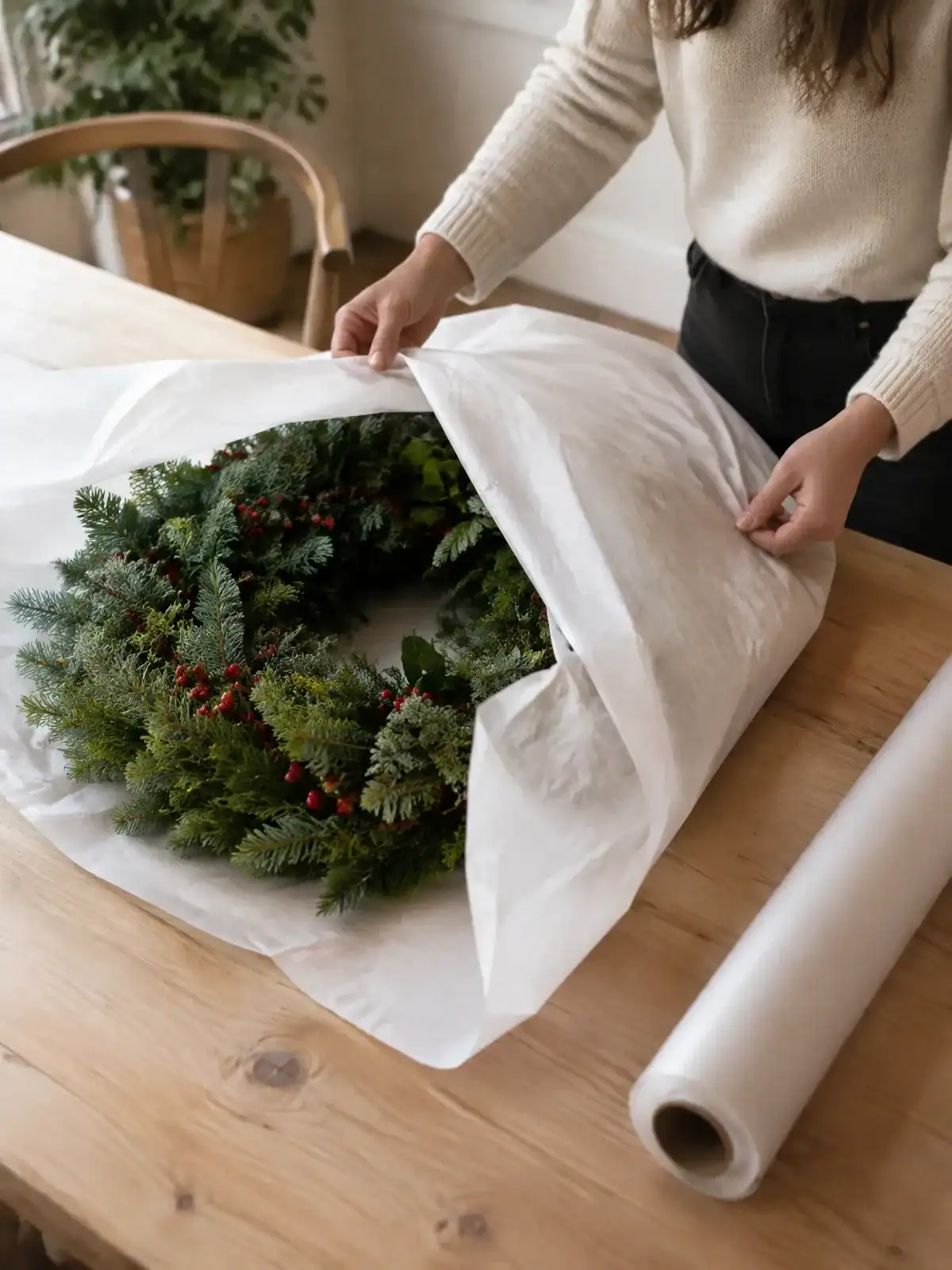
Wrap the wreath loose, not tight. The goal is a layer of tissue paper between every branch and the box, so nothing rubs or presses flat while it sits there for months.
Here is the whole job, in order.
- Wrap it in tissue paper. Lay a large sheet of tissue paper on the table and set the wreath on it. Fold the paper up and over the wreath, tucking it loosely around the branches so nothing presses flat. Two sheets beat one tight sheet: loose layers cushion, tight wrapping crushes.
- Guard the ornaments. Wrap glass balls and other breakables in small pieces of bubble wrap before the tissue paper goes on. Leave wired ornaments attached to the wreath if they sit tight; take off any that dangle, wrap them on their own, and tuck them in the middle of the wreath.
- Drop in silica gel. Tuck two or three silica gel packets around the wreath, one on each side, before you close the container. They soak up damp air inside the container, which keeps metal hooks from spotting and ribbon from going limp.
- Lay it flat in the container. Set the wrapped wreath flat in a hard-sided container or a wreath storage bag, face up, with nothing stacked on top. A wreath stored on its side slides and settles, and the bottom edge takes the weight all year.
- Label it and shelve it. Write the wreath and the door it hung on across the label, and stick the label where you can read it without opening the container. Then carry the container flat to its shelf, and leave the lid shut until next year.
Whether you hang the wreath or lay it flat depends on the wreath itself. A full artificial wreath and a pre-lit wreath go flat in a hard-sided container, a light wreath can go in a bag, and a stiff grapevine wreath can hang on a hook.
Where to Put It for the Next Eleven Months
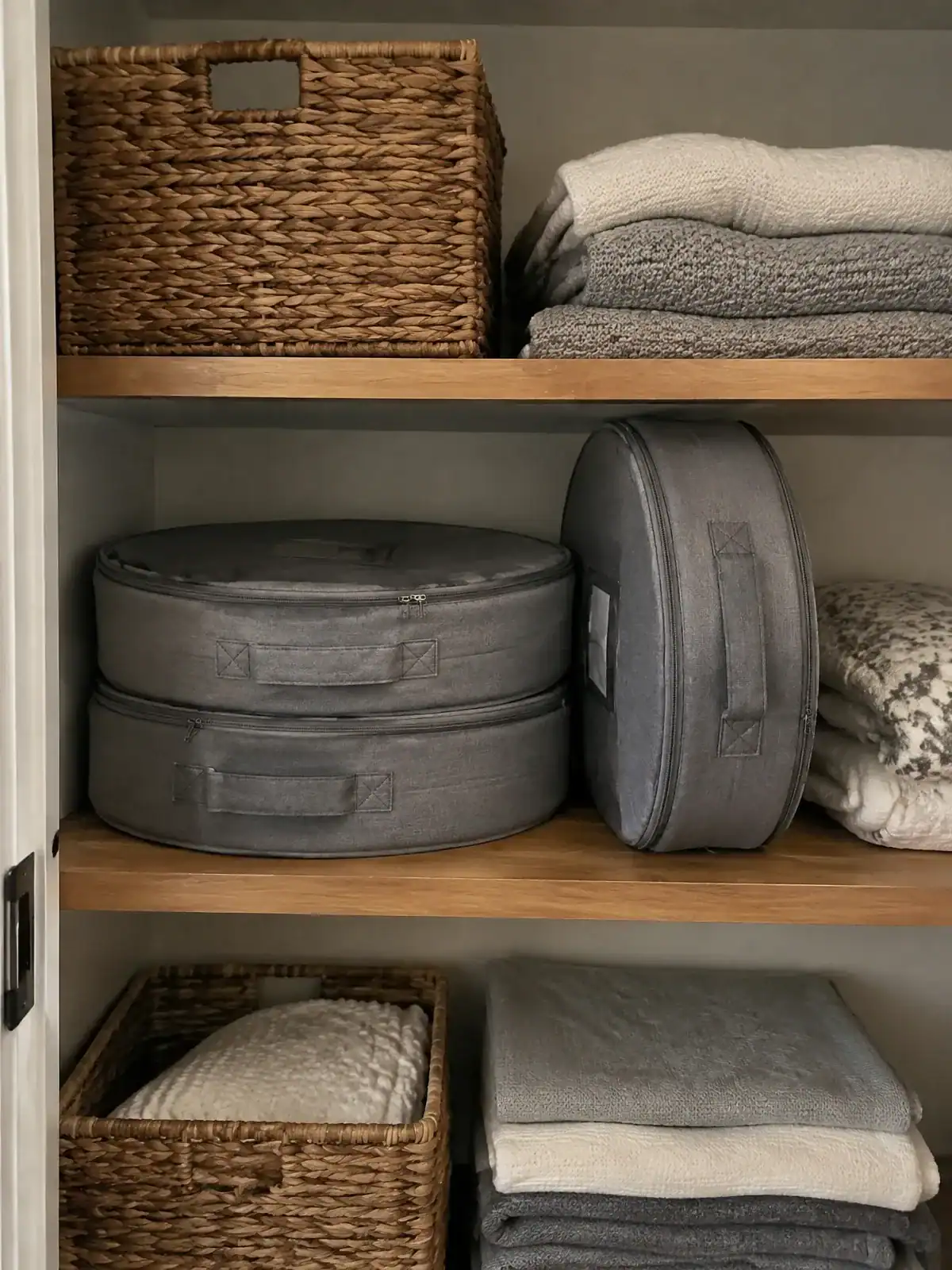
Pick a dry spot off the floor and out of direct sun. A closet shelf, the top of a wardrobe, or a shelf in a dry garage all work, as long as the container sits flat and nothing heavy rests on top of it.
Humidity is damp in the air, and it is the quiet enemy here. Damp air gets into a container that is not sealed, and it leaves metal hooks spotted and ribbon limp. A sealed hard-sided container with silica gel inside handles most rooms; a damp basement or a hot attic does not suit any wreath, sealed or not.
Pests look for the same dry, dark shelf you do. Moths and mice chew natural fibres and ribbon, so a sealed container earns its keep here. Check the spot once in a while through the year: a quick look tells you if damp or droppings have shown up before they ruin the wreath.
Keep the container where you can reach it without climbing. A wreath stored on a high garage shelf tends to stay there, and the step ladder comes out only when you really need it. Waist-high shelving in a closet is the easiest home for it.
Mistakes That Ruin a Wreath in Storage
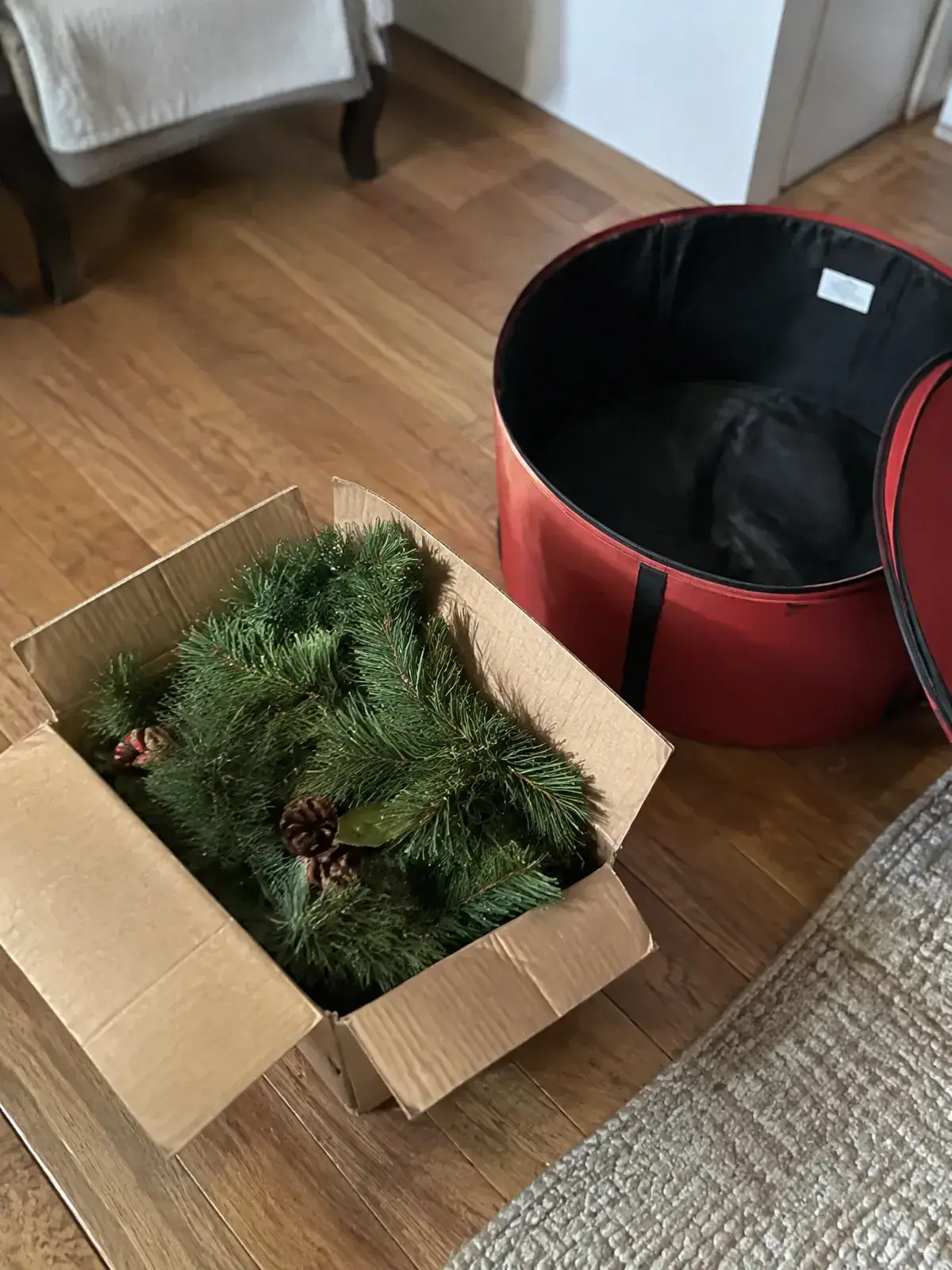
A wreath rarely comes out of storage worse for time alone. It comes out crushed, damp, or chewed, and each of those has a plain cause. These are the ones to watch for.
Before you close the lid
Do
- Wrap the wreath in tissue paper so branches do not rub.
- Lay the wreath flat, face up, with nothing on top.
- Drop silica gel packets inside and seal the container.
Don’t
- Squeeze a full wreath into a box that is too small.
- Stack heavy boxes on top of the wreath container.
- Store a damp wreath, or one with its lights still on.
The most common mistake is the small box. A wreath squeezed into a container that is too small spends months pressed flat, and branches bent that way rarely spring back. Measure the wreath across its widest point first, and pick a container with room around it.
The second mistake is weight on top. A wreath container looks sturdy, so it ends up at the bottom of a stack of holiday boxes. Put it on its own shelf, or on top of the stack, and nothing will press on it all year.
Waking It Up Next December

Take the container down flat and open it on a table, not over the floor. Lift the wreath out by its frame, shake the tissue paper off, and let it sit for a bit so the branches settle back into place.
Fluff the branches with your hands, working from the inside of the ring outwards, and straighten any ornament that turned sideways. Plug a pre-lit wreath in and check every section before you hang it, so you are not fixing lights on a ladder.
Our take · James Davis
If you buy one thing for this job, buy a hard-sided container. Bags cost less and fold away, but a wreath in a bag under a pile of boxes is the one that comes back flat.
Hang it, step back, and look at the whole entry. wreath hanging without damage or holes covers the method for your door so it goes back up clean. If the wreath still looks good, keep it in rotation, and browse Christmas wreaths for the front door for a second one to swap in mid-season. A few front door Christmas decor ideas can lift the rest of the porch, the mat, the garland and the lights, without buying a new wreath.
Frequently Asked Questions
Can I store a wreath in a plastic bag?
You can, but a bag gives no guard against crushing. A light grapevine wreath in a bag hung on a hook does fine. A full artificial wreath needs a hard-sided container to hold its shape.
How do I stop a pre-lit wreath from tangling in storage?
Lay it flat and keep the wire loose around the frame. Never wind the wire tight, and never fold the wreath to fit a smaller container.
My wreath came out flat. Can I fix it?
Often, yes. Hang it up, fluff the branches by hand from the inside out, and give it a day to settle. Branches bent for months in a small box may stay bent, and that wreath is better off replaced.
Where is the best place to store a wreath?
A dry closet shelf, off the floor and out of direct sun. Keep the container flat, sealed, and free of weight on top, with silica gel packets inside.
That is the whole job: clean, wrap, pack, shelve.
Pack it like you want to see it again
Clean it, wrap it loose in tissue paper, lay it flat in a container that fits, and shelve it somewhere dry. Next December, the wreath comes out looking like the one you took down.
Related posts
 White Garage Doors That Keep a Colonial Looking Classic Year After Year
 12 Welcome Signs for Front Door That Feel Personal Not Store-Bought
 15 Trending Front Door Paint Colours We’re Loving This Year
 15 French Door Trends That Will Dominate Renovations This Year
 14 Best Front Door Planter Combos That Look Good Year-Round
 Barn Door Hardware That Wont Rattle Loose in a Year
 14 Door Mat for Front Door That Won’t Fade in Full Sun
 Why Black Front Doors Fade Faster in Full Sun