As an Amazon Associate we earn from qualifying purchases.
You turn the thumbturn and it stops halfway. You lean on the door, try again, and the bolt slides home with a clunk. When a deadbolt won’t lock, or only locks while you push or pull the door, the lock itself is usually fine. The bolt is hitting the frame because the door has shifted, and that is a fix most people can make in under an hour with a screwdriver.
The short answer
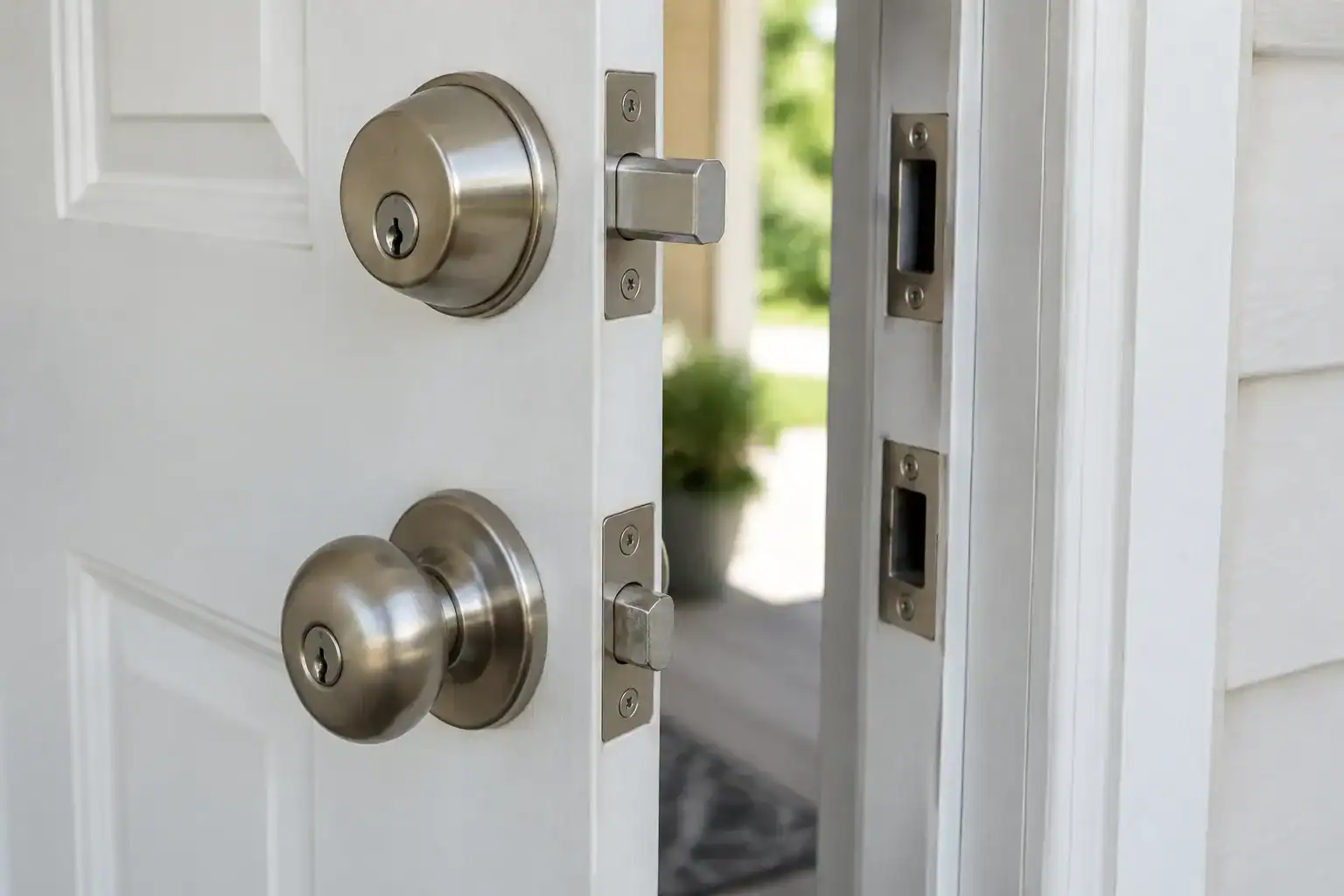
Open the door and work the lock. If the deadbolt moves smoothly with the door open but sticks with the door closed, the bolt is out of line with the strike plate: tighten the hinges, then adjust the strike. If the deadbolt is stiff even with the door open, the problem is inside the lock: overtightened mounting screws, dirt, or worn parts.
1 in.
minimum depth of the bolt hole in the door frame
9 in.-lbf
most twisting force the bolt should need under the BHMA standard
3 in.
hinge screw that reaches the wall framing behind the jamb
Sources: Kwikset installation instructions, the ANSI/BHMA A156.40 residential deadbolt standard, and This Old House.
01 / Lock or door?
Is it the lock or the door?
A deadbolt that won’t lock has one of two problems: the bolt is jammed inside the door, or it is hitting the frame. A two-minute test tells you which one you have, so you don’t take apart a good lock or file a strike plate that was never the issue.
- Open the door and work the lock. Turn the thumbturn and the key several times each. Watch the bolt slide all the way out and back.
- Close the door and try again. Note whether it gets harder, stops partway, or makes a scraping sound.
- Push, then pull. With the door closed, push the door toward the stop and turn the lock. Then pull it toward you by the handle and try again. Also try lifting the handle slightly.
- Read the result. Smooth when open but stiff when closed means alignment. Stiff in both positions means the lock. If it only locks while you push, pull, or lift, that direction tells you where the door needs to move.
Our take · George Anderson
I do the door-open test before I touch a single tool. Most “broken” deadbolts I’m asked to look at work perfectly with the door open. Nine times out of ten the fix is on the hinge side of the door, not at the lock.
02 / Find the rub
How do you find where the bolt is hitting?
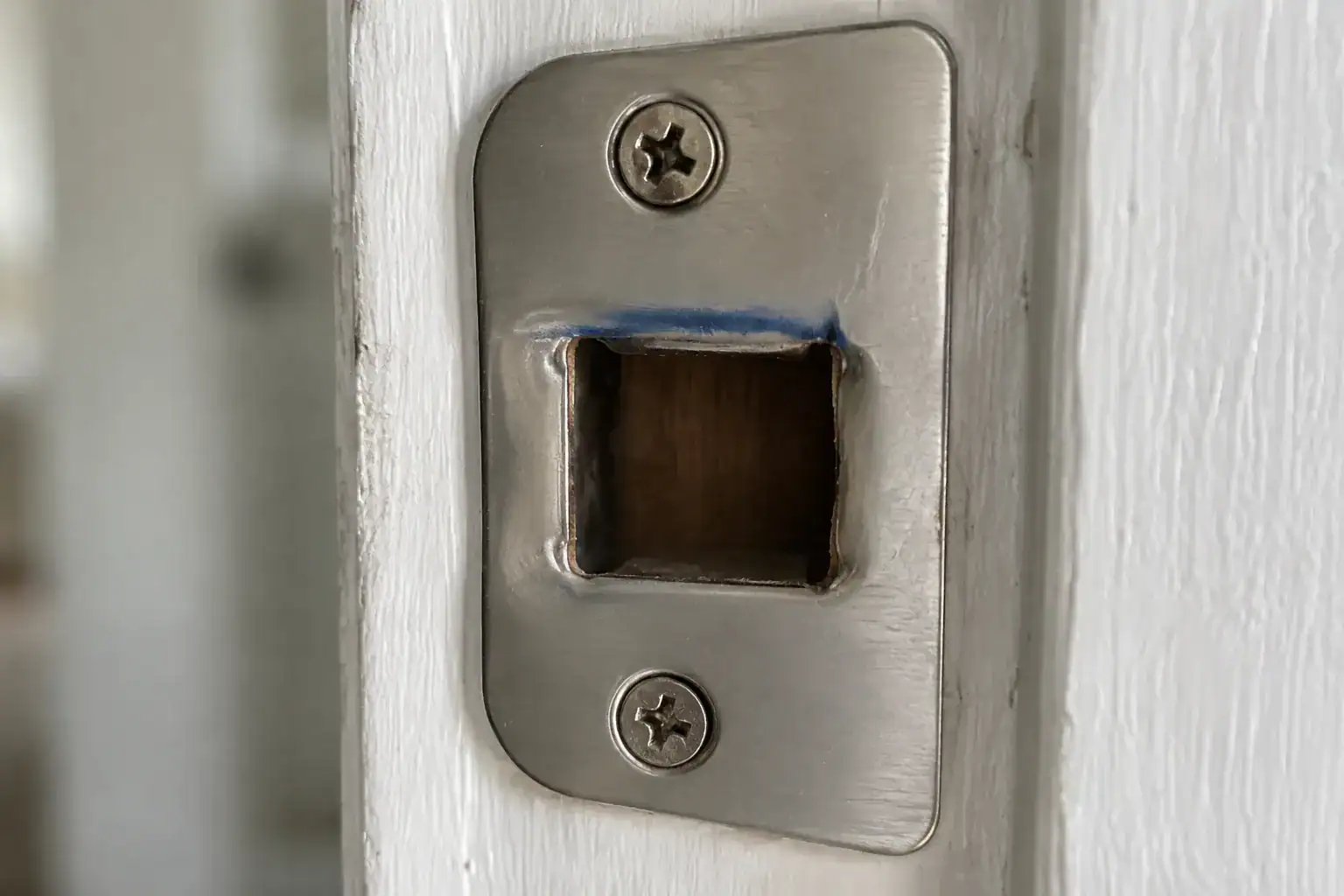
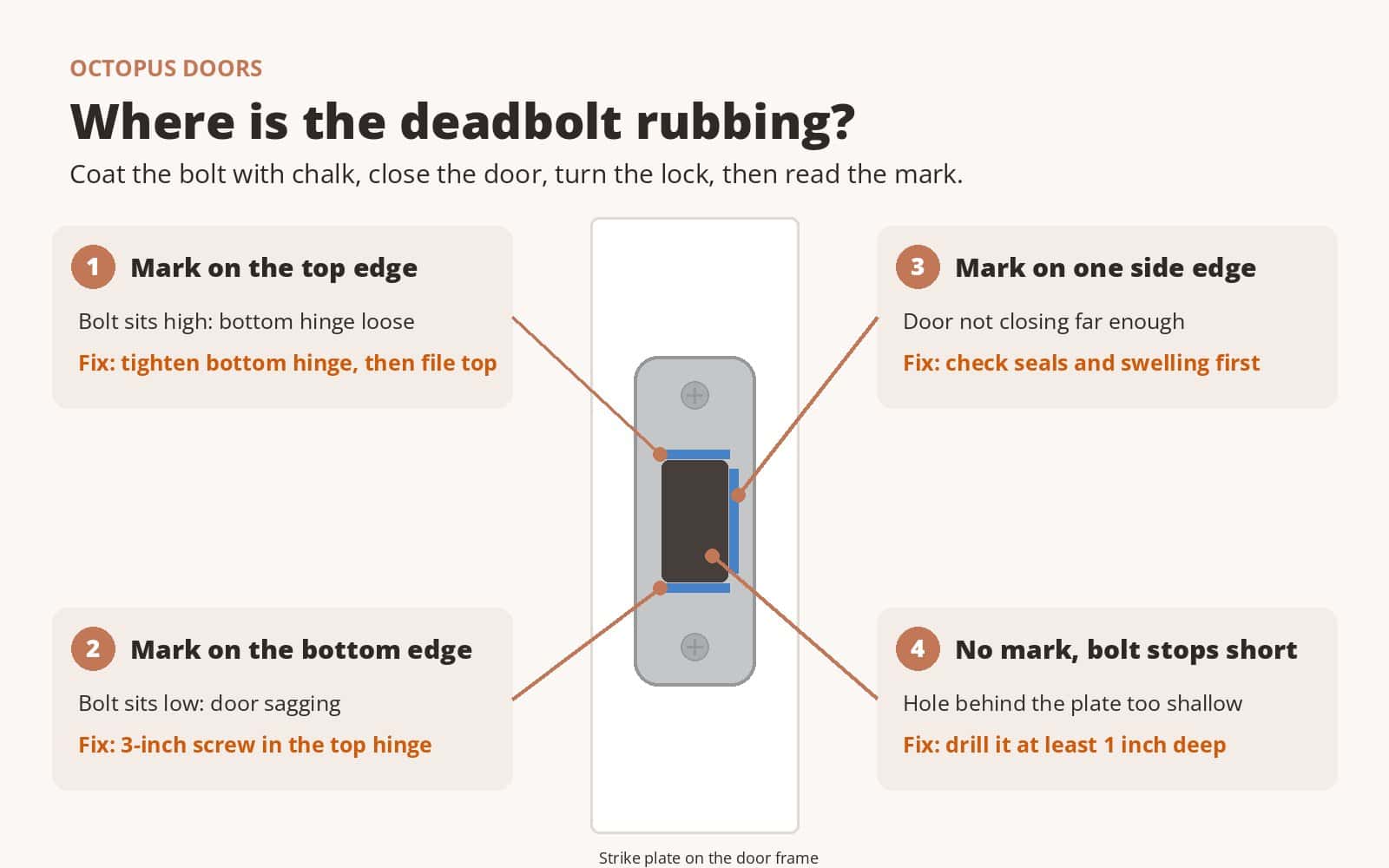
The bolt leaves a mark where it rubs the strike plate. To see it clearly, rub chalk, a dry-erase marker, or lipstick on the end and edges of the extended bolt. Retract it, close the door, and turn the lock as far as it goes. Open the door and look at the strike plate. Where the color landed is where the bolt is catching.
| What you see | Likely cause | Fix first |
|---|---|---|
| Mark on the bottom edge of the opening; locks if you lift the handle | Door sagging on loose top hinge screws | Tighten the top hinge; add a 3-inch screw |
| Mark on the top edge; locks if you push down on the handle | Bottom hinge loose, frame shifted, or strike set too low | Tighten the bottom hinge; then file or move the strike |
| Mark on one side edge; locks only if you push the door in | Door not closing far enough: new seals, swelling, or paint buildup | Deal with the seal or swelling; then adjust the strike |
| No mark, but the bolt stops short | Hole behind the strike too shallow or blocked | Clear it and drill it to at least 1 inch deep |
| Stiff with the door open too | Lock problem: tight screws, dirt, wrong latch setting, wear | See section 06 |
03 / Hinges first
Why should you fix the hinges before the strike plate?
Hinges come first because a loose hinge lets the whole door drop or tilt, and the bolt follows it. Filing the strike plate only hides that movement, and the door keeps shifting. Open the door halfway and lift the latch side by the handle. If the door moves up and down or you see the hinge leaves shift, the screws are loose.
- Tighten every hinge screw on both the door and the frame side. Snug, not stripped.
- If a screw spins without tightening, the hole is stripped. Pack it with glue-coated wood slivers or toothpicks, let it dry, and drive the screw again.
- On the frame side of the top hinge, replace one short screw with a 3-inch screw. It passes through the jamb and bites the wall framing behind it, which pulls the top of the door back toward the hinge side.
- Drill a pilot hole first, and stop when the screw is snug. Overdriving a long screw can pull the jamb out of shape.
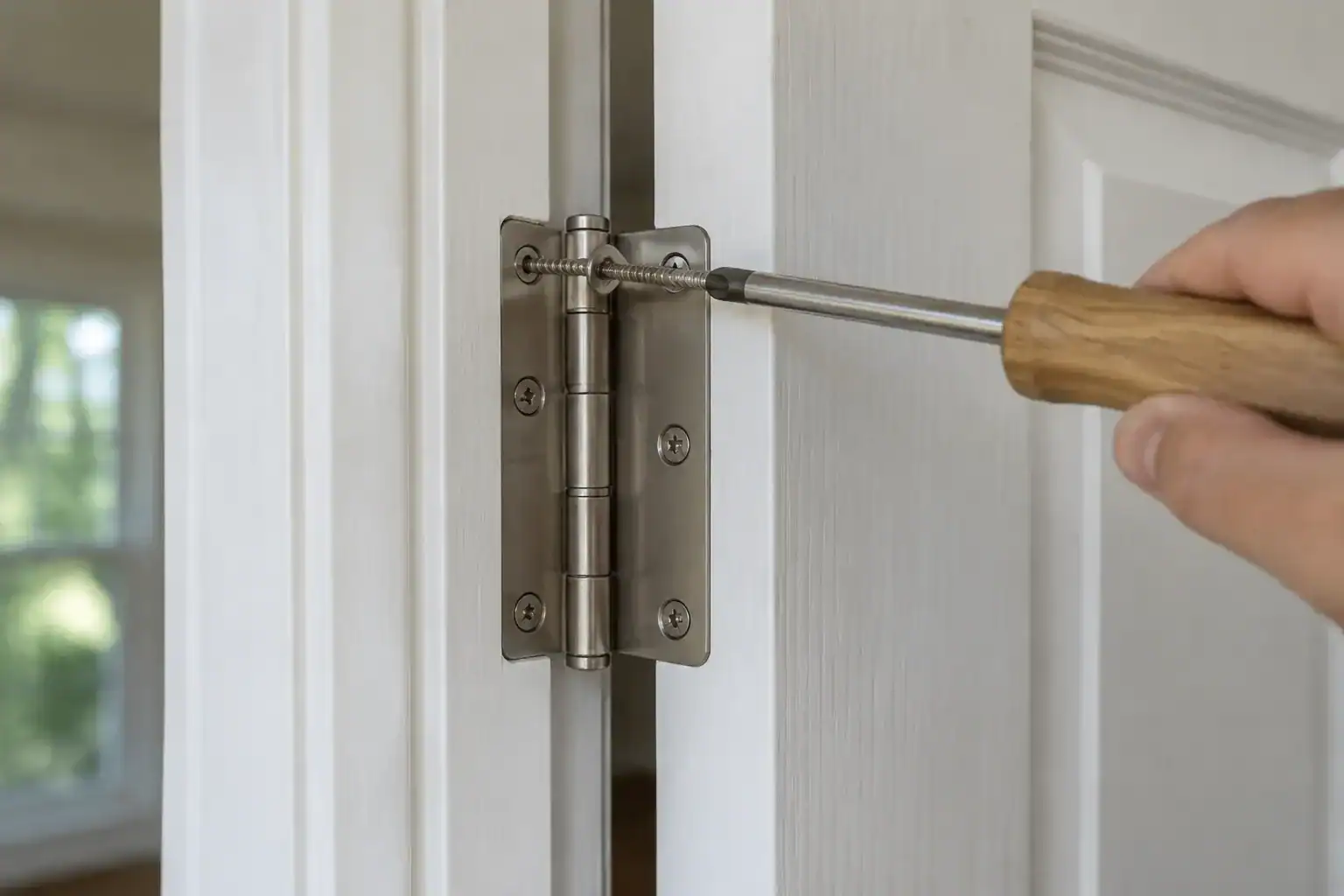
The 3-inch hinge screw is a standard fix in This Old House’s guide to realigning a deadbolt and strike plate. Test the lock after each change. If the door still binds or drags on the floor, decide whether to repair or replace the sagging door before you work on the strike.
Our take · George Anderson
One long screw in the top hinge fixes more deadbolts than any amount of filing. I always try it first, because it corrects the door instead of chasing the problem with the strike plate.
04 / Adjust the strike
Shop this idea
The 3 in screw this fix calls for
- LONG SCREWSDeck Screws, 3 in, #10, 300 PiecesShop on Amazon
How do you adjust a deadbolt strike plate?
Adjust the strike plate only after the hinges are tight and the mark is still there. For a small miss of about 1/8 inch or less, enlarge the opening. For anything bigger, move the plate.
- Enlarge the opening. Remove the plate and file the edge that carries the mark, a little at a time. Refit it and test often. A hole that is too big lets the bolt rattle.
- Move the plate. Fill the old screw holes with glued wood plugs or toothpicks. Mark the new position, chisel the recess to match, drill pilot holes, and screw the plate down.
- Check the depth. Kwikset’s deadbolt installation guide calls for a hole in the door frame at least 1 inch (25 mm) deep. A shallower hole stops the bolt before it reaches full throw.
- Use long screws. When the plate goes back on, long screws that reach the framing make the frame much harder to kick in. Our guide to door reinforcement plates covers heavier strikes and frame kits.
Check the bolt is fully out
A bolt that only travels partway may sit in the frame without reaching full extension, so the door can be less secure than it looks. After any fix, lock the door and check that the thumbturn reaches its full stop and the bolt feels solid when you push on the door.
05 / Seals and swelling
Shop this idea
For the filing and refit in these steps
- METAL FILEFlat Metal File, 8 inShop on Amazon
- STRIKE PLATESDeadbolt Strike Plates, 2 PiecesShop on Amazon
What if the door doesn’t close far enough?
If the deadbolt only locks when you push the door in, the door is stopping short of where the bolt and strike line up. Two causes account for most cases: new weatherstripping and seasonal swelling.
Fresh weatherstripping is thick until it compresses. If the door now needs a shove to latch, the seal may be too thick for the gap, or the strike may need to move slightly toward the stop. When you weatherstrip the door, close it on the new seal and check the deadbolt before you call the job done.
Wood doors and frames also swell and shrink with humidity. The Forest Products Laboratory’s chapter on wood and moisture explains why wood changes size as it takes up and gives off water. A deadbolt that locks easily in winter and binds in humid summer weather is usually a door that has swollen, and you can fix a door that sticks in humidity without touching the lock.
06 / Lock problems
What if the deadbolt is stiff even with the door open?
If the deadbolt is stiff with the door wide open, the problem is inside the lock. Check these in order, because the first two cost nothing.
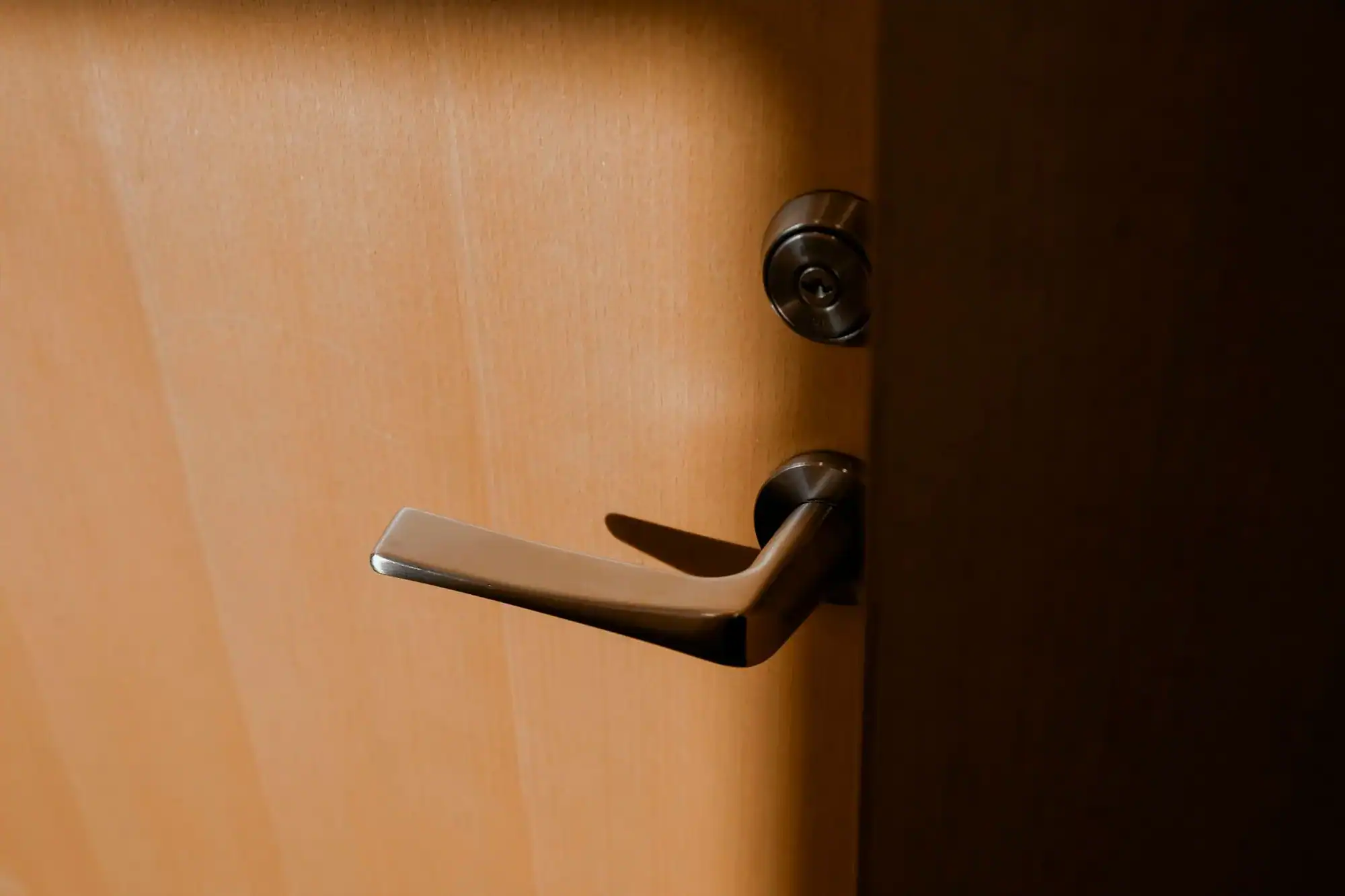
- Overtightened screws. The two long screws that hold the inside and outside halves together can squeeze the mechanism. Kwikset’s instructions say to adjust these screws if the bolt does not extend or retract smoothly. Back them off a quarter turn and test.
- Bolt not centered. The bolt should sit centered in its hole in the door edge, and the turnpiece should sit flat against the door. A bolt that rubs the side of the hole drags at every turn.
- Wrong backset setting. Residential deadbolts usually adjust for a 2-3/8 or 2-3/4 inch backset, the distance from the door edge to the center of the lock. If the bolt was set for the wrong one, the parts don’t line up and the lock binds.
- Dirt or dryness. Use a dry lubricant, sparingly. For its locks, Allegion, the company behind Schlage, recommends a small amount of flaked graphite on the key and warns that too much attracts moisture and gums up the cylinder.
- Wear. A key that only turns when wiggled, or a bolt that feels gritty after cleaning, usually means worn parts. A new deadbolt is often cheaper than a repair.
How stiff is too stiff? BHMA’s summary of the residential deadbolt standard says the force to retract the latch or bolt must not exceed 9 inch-pounds of torque. Our calculation: on a thumbturn wing about 1 inch from its center, that is roughly 9 pounds of push at the tip. If you need two hands or a firm grip, something is wrong.
Our take · George Anderson
I skip oil sprays in the keyway. They feel smooth for a week, then they hold dust. A puff of dry lubricant and a few turns of the key do more, and if that doesn’t help, I check the screws before I blame the cylinder.
07 / Know the limits
When should you call a locksmith or replace the deadbolt?
Call a locksmith or replace the lock when the key spins without moving the bolt, the bolt won’t fully extend with the door open, the cylinder has been damaged, or someone has tried to force the door. Replace keys you can’t account for as well.
When you buy a new deadbolt, look for an ANSI/BHMA A156.40 rating. The standard grades residential deadbolts A, B, or C separately for durability, security, and finish, and Grade A is the top level in each. If the trouble is with the knob or lever latch rather than the deadbolt, see what to do when a door latch only works if you lift the handle.
Why does my deadbolt only lock when I push or pull the door?
Pushing or pulling moves the door just far enough for the bolt to line up with the hole in the strike plate. The door has shifted or is not closing fully. Tighten the hinges first, then adjust the strike plate.
How deep should the deadbolt hole in the door frame be?
Kwikset’s installation instructions call for a hole at least 1 inch deep in the door frame behind the strike plate. A shallower hole stops the bolt before it extends fully.
Why does my deadbolt lock in winter but stick in summer?
Wood doors and frames take up moisture in humid weather and swell slightly. That can shift the door enough for the bolt to catch the strike plate. Fixing the swelling or adjusting the strike solves it.
What lubricant should I use on a deadbolt?
Use a dry lubricant in small amounts. Allegion, the company behind Schlage, recommends a little flaked graphite on the key for its locks and warns that too much can attract moisture and gum up the cylinder.
Is a deadbolt that is hard to turn a security problem?
It can be. If the bolt does not reach full extension, the door may be less secure than it looks. Fix the alignment so the bolt slides fully into the frame with light effort.
The takeaway
When a deadbolt won’t lock, test it with the door open first. Smooth when open means alignment: tighten the hinges, add a long screw to the top hinge, then adjust the strike. Stiff when open means the lock: loosen the mounting screws, check the bolt, and use dry lubricant sparingly.
Shop this idea
A replacement deadbolt like this
- DEADBOLTSingle Cylinder Deadbolt, Satin NickelShop on Amazon
Related posts
 Why Your Door Lock Keeps Clicking or Beeping and How to Fix It
 Barn Door Hardware That Wont Rattle Loose in a Year
 Why the Wall Shakes When a Door Closes and How to Fix It
 How to Fix a Leaking or Sagging Shower Door
 Door Too Close to the Wall for Trim? How to Fix It
 The Complete Guide to Gaps Under Doors: Sizes, Purpose and How to Fix Them
 Can You Use Expanding Foam to Fix Skirting Boards?
 How to Fix a Front Door That Sticks in Humidity