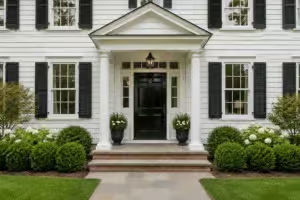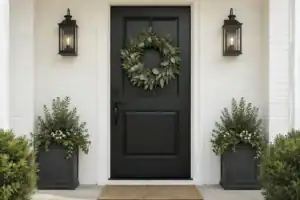
Choosing a black front door is a high-contrast design move, but it often triggers a premature finish failure due to intense solar heat. This guide narrows down the seven technical mechanisms that cause this decline so you can protect your investment. Here is why fading happens.
1. UV exposure
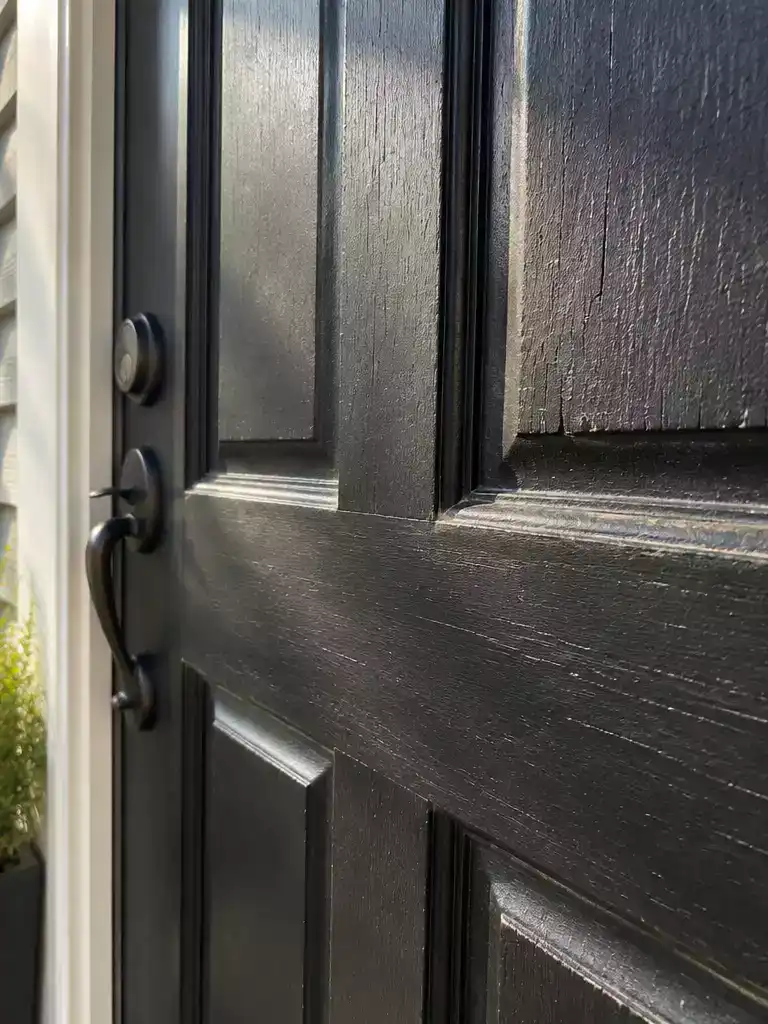
Understanding how sunlight affects your door finish helps you protect your home’s welcoming entrance.
As an Amazon Associate I earn from qualifying purchases. Affiliate links may earn me a commission at no extra cost to you.
When you choose a black finish for your front door, you are essentially inviting the sun to test the limits of your paint. Ultraviolet (UV) radiation is the primary driver of color loss, acting like a slow-motion chemical attack on your home’s exterior.
The process is a photochemical reaction that happens at the molecular level. As UV rays hit the surface, they systematically sever the chemical bonds within the coating system. Once these molecular chains break, the finish loses its structural integrity, transitioning from the deep, rich black you initially applied to a dull, washed-out appearance.
The Directional Penalty: If your front door faces south or west, it is on the front lines of this degradation. These orientations receive the most concentrated, direct solar radiation throughout the day, which dramatically accelerates the breakdown process compared to north- or east-facing entries.
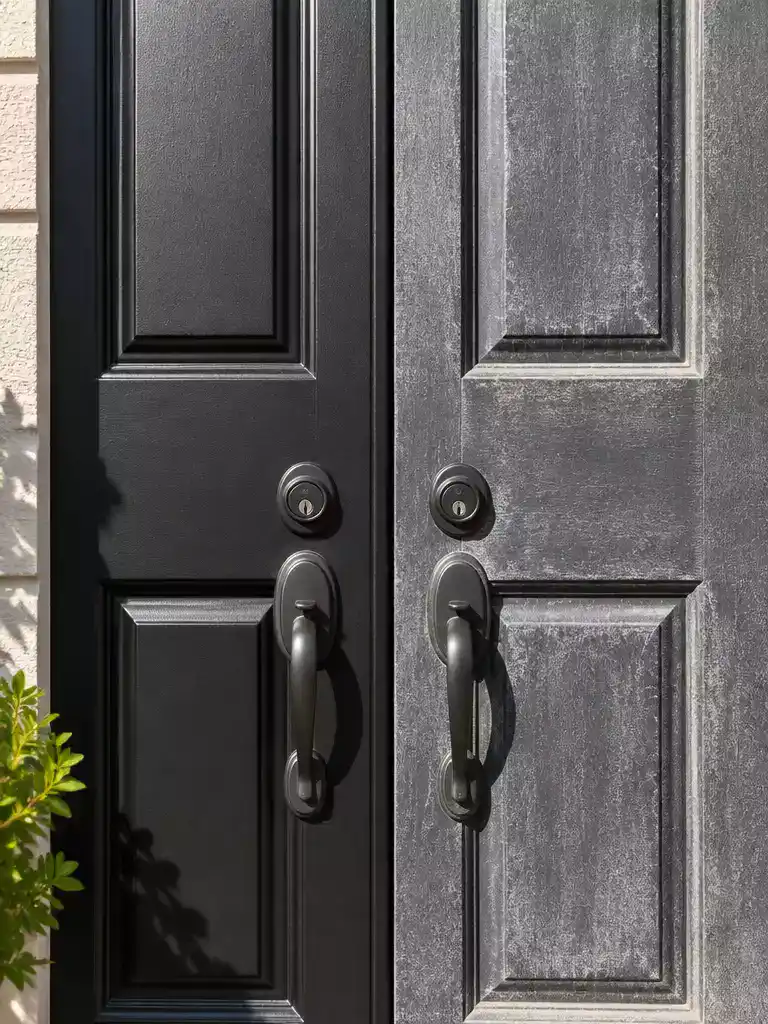
This isn’t just about the color looking slightly off; it is about the physical degradation of the material. As the UV radiation weakens the binder that holds your pigment particles in place, the finish begins to lose its ability to protect the door underneath. This is why you often see black doors that have lost their luster and look powdery to the touch—the chemical foundation of the paint has simply been dismantled by the sun.
⭐ Top Entry Doors for Your Home
Double Exterior Doors with Glass Panels
Pine Dutch Door Slab with Glass
Fiberglass Entry Door with Privacy Glass
🔢 The Right Sequence for Protection:
UV damage is cumulative, so establishing a protective barrier before the finish begins to chalk is the only way to avoid a full-door sanding project later.
- Assess orientation: Determine if your door faces south or west, as these require more frequent UV-blocker applications.
- Test for chalking: Wipe a clean, dark cloth across the door surface to check for powdery residue buildup.
- Apply clear topcoat: Use a high-performance, UV-blocking clear finish to seal the black pigment against further solar radiation.
Solar heat gain
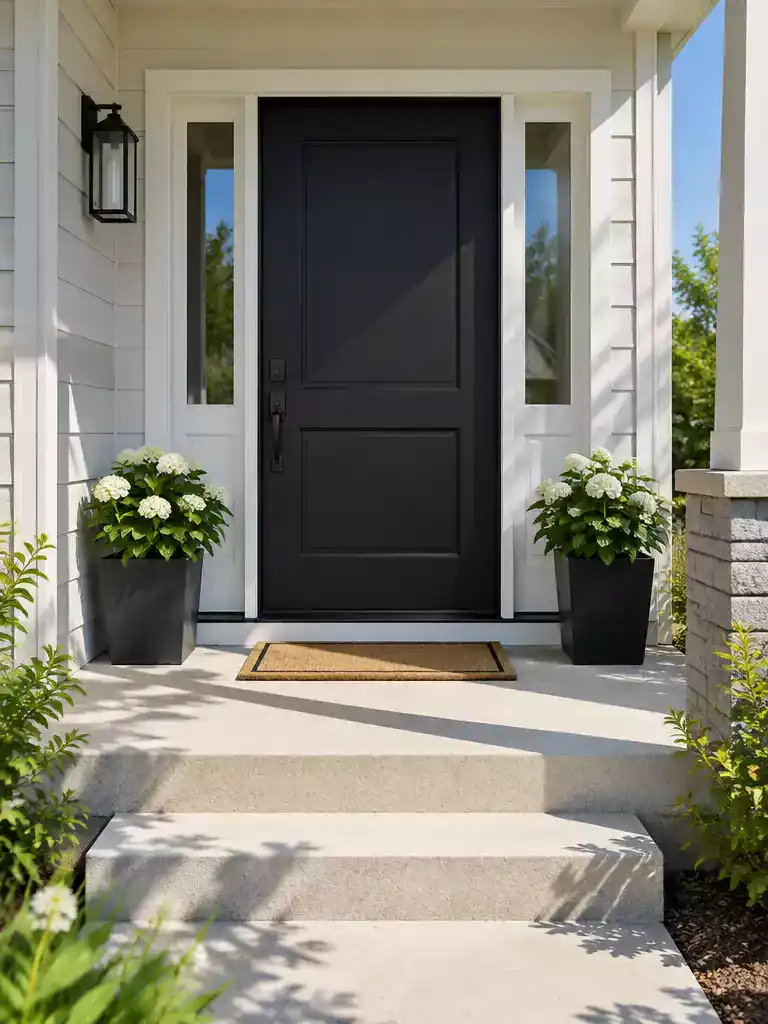
Understanding how your door captures heat is the secret to preventing finish failure.
The physics behind a black door’s performance is relatively simple, yet it creates a significant burden on the finish. Because black surfaces have very high solar absorptivity, they capture up to 90% of incoming solar energy rather than reflecting it away.
While a lighter color might stay cool to the touch, a black door acts like a thermal sponge in direct sunlight. On a standard 86°F day, surface temperatures on a black door can climb between 149°F and 167°F. This isn’t just a minor temperature increase; it is an extreme environmental stressor that directly compromises the chemistry of your paint.
The Catalyst for Damage
Think of this sustained heat as a high-speed accelerator for finish degradation. When the door remains this hot for hours at a time, it forces the paint film to lose its flexibility, which leads to premature chalking and blistering. This is the primary reason why black doors often show wear years before a white or tan door would in the exact same location.
If your front door is situated in full sun, specifically on a south- or west-facing wall, it is essentially being “baked” daily. This heat cycles through the door material, putting the coating under constant pressure. Once the heat forces the finish to blister or chalk, the structural integrity of the paint is broken, allowing moisture to find its way into the substrate beneath.
Common Mistake: Ignoring Orientation
A common error homeowners make is choosing a black finish for a west-facing entry without accounting for the late-afternoon intensity. If your door receives direct, unshaded sunlight for more than four hours a day, the heat buildup is nearly impossible to avoid. If you are committed to the black aesthetic in these high-exposure spots, you must use high-performance, heat-reflective coatings to mitigate the damage.
⭐ Best Weatherstripping for Door Insulation
Adhesive Foam Tape for Door Insulation
V-Shaped Replacement Door Seal Strip
D-Shape Rubber Weather Seal Strip
📋 Quick Reality Check: Is Your Door Ready for the Sun?
- Check orientation: Determine if your entryway faces south or west, as these spots receive the most intense, finish-destroying thermal radiation.
- Feel the temperature: Place your hand on the door during peak afternoon sun to gauge if it feels hot enough to potentially blister your existing paint.
- Assess current wear: Look for early signs of distress like chalky residue or fine cracks, which indicate the surface is already struggling with heat-induced degradation.
Protecting your home’s curb appeal doesn’t require mastery of every technical detail. Focusing on a few high-impact variables keeps your long-term investment secure without unnecessary stress.
🎯 The Calls Worth Getting Right:
- Select premium coatings to avoid common color finish failures early.
- Prioritize substrate compatibility by reviewing your specific door material options carefully.
- Proactive maintenance cycles provide more ROI than chasing expensive, reactive repairs.
3. Thermal cycling
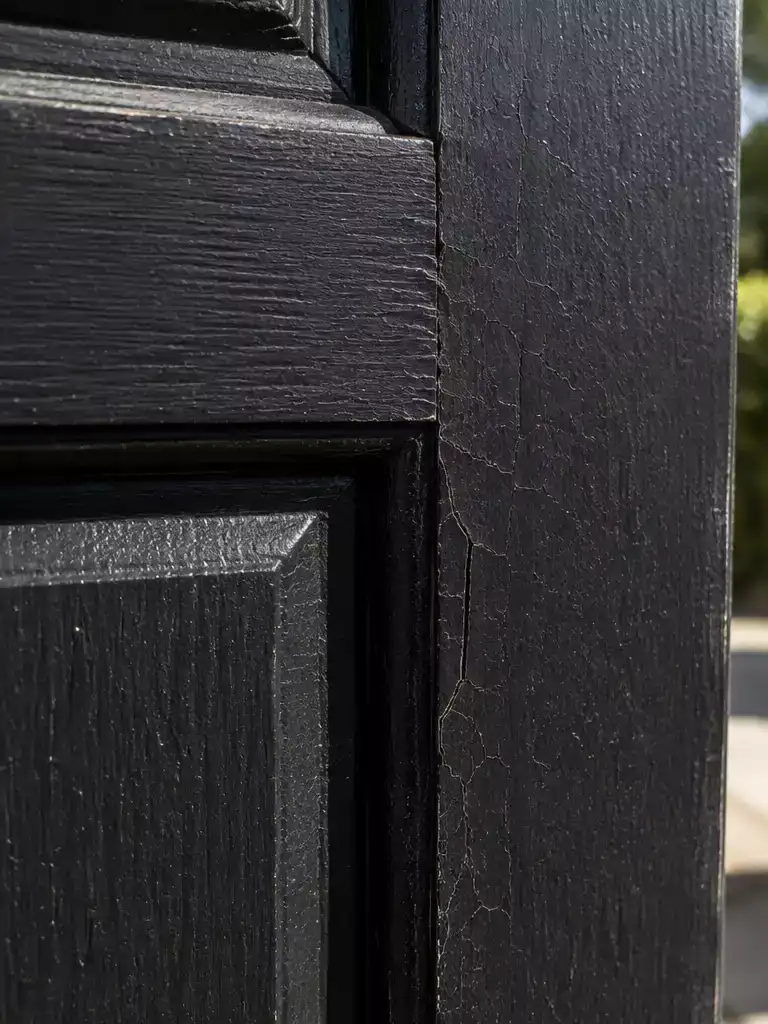
Recognizing the early signs of surface stress helps you prevent permanent damage to your door.
Black doors are essentially heat magnets, and that absorption creates a relentless cycle of expansion and contraction every single day. As the sun hits the door in the morning, the surface temperature climbs rapidly, forcing the material to expand; as the sun sets, the door cools and contracts.
This constant movement acts like a physical workout for your paint film. Because the paint must stretch and shrink along with the door, it eventually loses its elasticity and begins to fail at points of highest stress, such as panel joints, rails, stiles, and edges.
Watch for These Failure Indicators
- Micro-checking: Fine, hairline cracks appearing across the surface of the paint.
- Alligatoring: A pattern of deep cracks that resembles reptile skin, indicating the paint film has lost its bond to the substrate.
- Edge lifting: The paint peeling or curling specifically along the seams where two parts of the door meet.
You might notice these issues starting in the corners or along the horizontal rails first. These areas act as stress concentrations where the material movement is most intense.
Once the finish develops these micro-cracks, the damage moves from aesthetic to structural. These fissures provide a direct path for moisture to reach the substrate—whether that is wood, steel, or fiberglass.
If water gets behind the paint, you are looking at more than just a faded finish. You are facing the risk of rot, rust, or delamination, which often requires a full door replacement rather than a simple afternoon of sanding and repainting.
Pro-Tip: Check the Joints
Run your fingernail along the seams of your door panels. If you feel a catch or see a white line where the paint has split, the thermal cycling has already compromised your seal. It is time to consult a professional about refreshing your coating system before the next rainy season.
⭐ Effective Door Sweeps and Thresholds
Hardwood Flat Profile Doorway Threshold
Vinyl Threshold Seal Replacement Insert
Adjustable Double Bubble Door Sweep
🔢 The Right Sequence to Prevent Premature Failure
Thermal cycling is inevitable, but you can minimize stress on your finish by following these maintenance steps in the correct order to keep moisture out.
- Inspect seal integrity: Check for hairline cracks in the caulk around panel joints and door stiles.
- Apply flexible sealant: Use a high-quality, paintable exterior sealant to bridge gaps before applying topcoats.
- Apply UV-resistant coating: Finish with a premium, high-flexibility exterior paint designed to move with the substrate.
4. Pigment stability
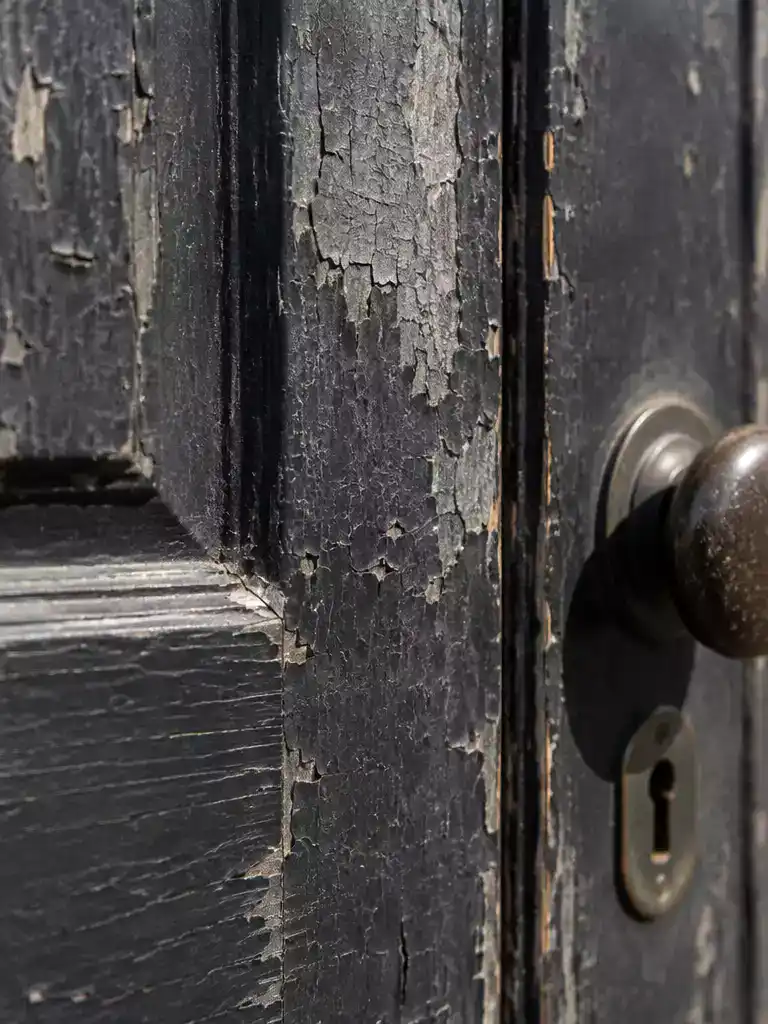
Understanding how pigments react to the sun helps you choose a finish that lasts.
When you choose a black finish, you are entering a trade-off between color vibrancy and chemical stability. Organic pigments are often responsible for that deep, rich, and vivid black that looks stunning on a new door, but they are inherently susceptible to the intense energy of UV radiation.
Under constant sun exposure, the molecular bonds holding those organic pigments together begin to sever. This is why a door that looks like a midnight black in the showroom can start to take on a washed-out, dusty grey character after only a few seasons.
The Pigment Trade-off
If you prioritize long-term color retention, look for coatings that utilize inorganic pigments like iron oxides or carbon black. While they may lack the initial “pop” of certain organic formulas, they are mineral-based and significantly more resistant to the photochemical reactions that cause premature fading.
Think of inorganic pigments as the “heavy lifters” of the paint world. Because they are mineral-based, they don’t break down nearly as fast when faced with the high-heat, high-UV environments typical of south- or west-facing entryways.
You don’t necessarily have to sacrifice the look you want, but you do need to be realistic about maintenance. If you choose a high-vibrancy organic black, expect to move up your repainting schedule to counteract the inevitable fading that occurs as the pigments lose their structural battle against the sun.
⭐ Quality Paints and Primers for Doors
Exterior Paint and Primer in One
Acrylic Enamel Paint for Wood Doors
Flat White Primer Spray Paint
⚖️ Quick Decision Guide: Pigment Selection
- Choose organic: Use these when you absolutely require that deep, saturated “show-home” black and are prepared for more frequent maintenance.
- Choose inorganic: Opt for these mineral-based iron oxides for south- or west-facing doors where long-term UV resistance is your primary goal.
- Pair it with: Always combine your chosen pigment with a high-performance, UV-blocking clear coat to physically shield the color from direct solar radiation.
5. Binder breakdown
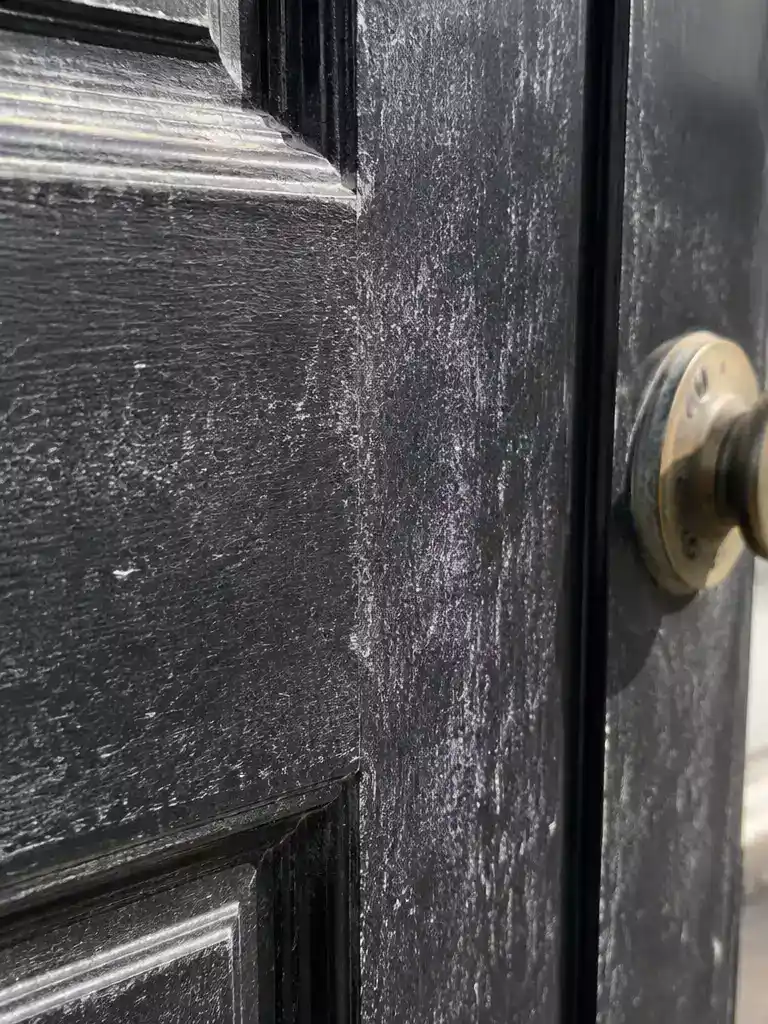
Understanding how your paint holds together is the secret to preventing a dull, powdery finish.
Think of the binder as the structural glue of your paint. Its primary job is to anchor the pigment particles to the door surface and to each other, creating a cohesive, protective film.
When your door sits in direct sunlight, it isn’t just fighting the heat; it is fighting a photochemical war. UV radiation and extreme surface temperatures work together to systematically degrade the resin that makes up this binder. As the resin breaks down, it loses its ability to hold the pigments in place.
Chalking is the most common physical evidence of this failure. You will notice a fine, white, powdery layer on the surface of your black door when you run your hand across it. This powder is actually the loose pigment left behind after the binder has been destroyed by the sun.
The type of chemistry used in your paint makes a significant difference in how quickly this happens. Acrylic latex binders are generally more capable of withstanding the harsh reality of UV exposure than traditional oil or alkyd-based paints.
Oil and alkyd binders tend to become brittle much faster when subjected to the high heat absorption of a black door. Once they lose their flexibility, the film doesn’t just lose color—it begins to crack and flake away entirely. Choosing a high-quality acrylic system is one of the most effective ways to delay this breakdown process and keep your door looking rich and deep rather than washed out and dusty.
⭐ Wood Stains and Sealers We Love
Satin Polyurethane Waterproof Wood Varnish
Water Based Wood Stain and Varnish
Nano Poly Wood Sealer and Waterproofer
🏡 Practical Ways to Manage Binder Health:
- Scheduled Hand-Wipe: Run a clean cloth over the door every six months to detect early, invisible chalking.
- Routine Cleaning: Gently wash away surface dust and pollutants to prevent them from embedding into the weakening resin.
- Clear Coat Shield: Consider a professional-grade, UV-blocking clear topcoat to provide a sacrificial layer that protects the colored binder.
6. Door material
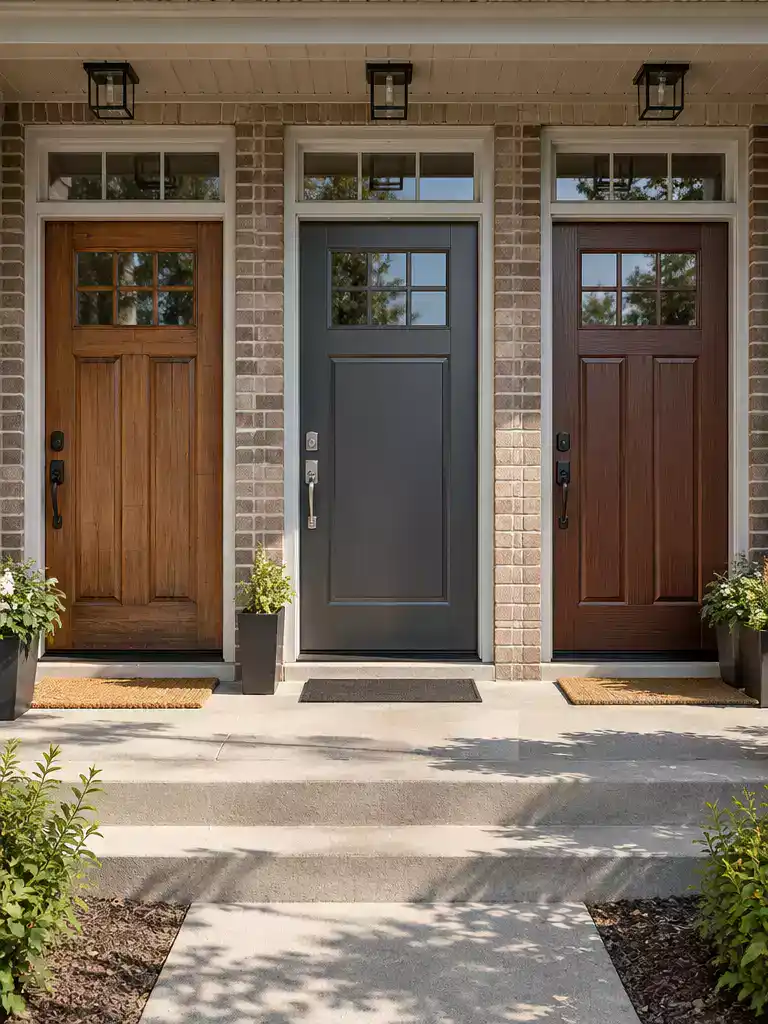
Understanding your door’s foundation is the first step toward preventing premature finish failure.
Your door’s material acts as the battlefield for the finish. While the coating system is your primary defense against the sun, the substrate underneath dictates how well that protection will hold up over time.
Think of the substrate as the foundation of your home’s curb appeal. If the foundation is prone to movement or extreme heat retention, even the most expensive paint will eventually struggle to maintain its integrity.
- Wood: Highly vulnerable. It suffers from lignin degradation under direct UV exposure, which breaks down the surface fibers and causes the finish to lose its grip. It requires the most frequent maintenance cycles to prevent checking and warping.
- Steel: High thermal conductivity. This material heats up rapidly in the sun, which puts immense physical stress on the paint film. That intense heat can lead to faster coating failure compared to more thermally stable materials.
- Fiberglass: Most fade-resistant. Its primary advantage is dimensional stability—it doesn’t expand or contract nearly as much as wood or steel. While it isn’t immune to finish degradation, it provides the most reliable base for your paint to hold onto.
Regardless of which material you have, the finish system remains your front line. A fiberglass door might provide a more stable base, but it still requires a high-quality, UV-resistant coating to prevent the finish from chalking or peeling under southern or western sun exposure.
If you are currently dealing with a wood door, recognize that you are signing up for more consistent maintenance. You are managing a living material that reacts to the environment, meaning your focus should be on high-quality primers and flexible topcoats that can move with the wood as it breathes.
⭐ Standout Door Hardware and Slabs
Matte Black Entry Door Knob Lock
Wood Door Lock Installation Drilling Kit
Composite Front Entry Door with Ironwork
Paint quality
Selecting high-performance coatings is the most effective way to prevent premature finish failure.
When you choose a black finish for your front door, you are essentially asking your paint to perform under extreme environmental stress. Budget paints often appear identical to premium options on the day they are applied, but they lack the heavy-duty chemical additives required to survive high surface temperatures and intense radiation.
Premium exterior coatings are engineered with advanced UV-absorbers and superior acrylic resins that maintain their flexibility even when the door reaches 150°F. These high-grade formulas are designed to resist the rapid binder breakdown that plagues lower-cost alternatives, keeping your deep black color vivid for years rather than months.
Pro-Tip: Prioritize the Resin
When shopping for your project, look specifically for 100% acrylic latex formulations. These resins offer significantly better elasticity and resistance to UV-induced brittleness compared to oil or alkyd-based paints, which tend to fail much faster on dark-colored surfaces exposed to direct sunlight.
The quality of your paint is the single most significant factor in extending the time between repaints. While the upfront cost of premium paint might be higher, it is a strategic investment that prevents the recurring labor and material costs of fixing a chalky, peeling, or faded finish.
⭐ Shop Quality Paints for Exterior Doors
Exterior Paint and Primer All-in-One
Satin Interior Exterior Floor Paint
Charcoal Gray Metallic Spray Paint
🧰 Ask Before You Hire
- UV-blocking additives: Can you confirm the coating contains specific UV-absorbers designed for high-heat exterior exposure?
- Substrate compatibility: Which specific primer do you recommend to ensure the finish bonds properly to my door material?
- Warranty terms: Does your labor warranty cover premature chalking or finish failure caused by the unique heat absorption of black paint?
With all seven technical factors on the table, the path to a long-lasting finish becomes much clearer. Focus your attention on the two or three variables that directly impact your specific sun exposure, as these will do the heavy lifting in protecting your exterior door investment.
You do not need to overhaul your entire approach to solve the fading issue; rather, prioritize a high-grade coating system and proper surface preparation to yield the best results for your front door color. By addressing the primary drivers of thermal stress and binder breakdown early, you ensure the finish remains sharp and intact for years to come.
Related posts
 14 Door Mat for Front Door That Won’t Fade in Full Sun
 Fiberglass vs Wood Front Doors for Full Sun
 10 Front Door Plant Ideas for Entrances That Get Almost No Sun
 Why Deep Green and Navy Front Doors Are Easier to Live With Than Black
 Why Some Homes Feel Welcoming Before You Reach the Front Door
 Why Are My French Doors Leaking? Causes and Fixes
 Why Choose French Doors
 Why Sliding Doors That Open in the Middle Beat a Standard Slider