
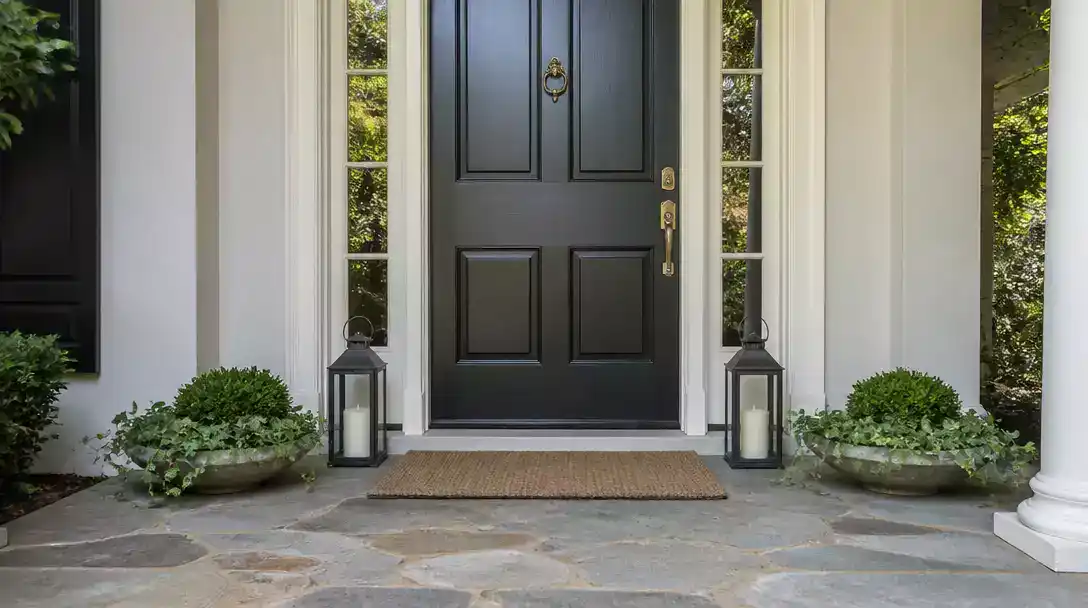
Selecting planters for front doors with sidelights requires balancing porch greenery without obstructing your natural light. This guide covers 11 practical arrangements worth saving to help you frame your entry with precise scale and symmetry. Here are the best low-profile concepts to try.
Low stone bowls
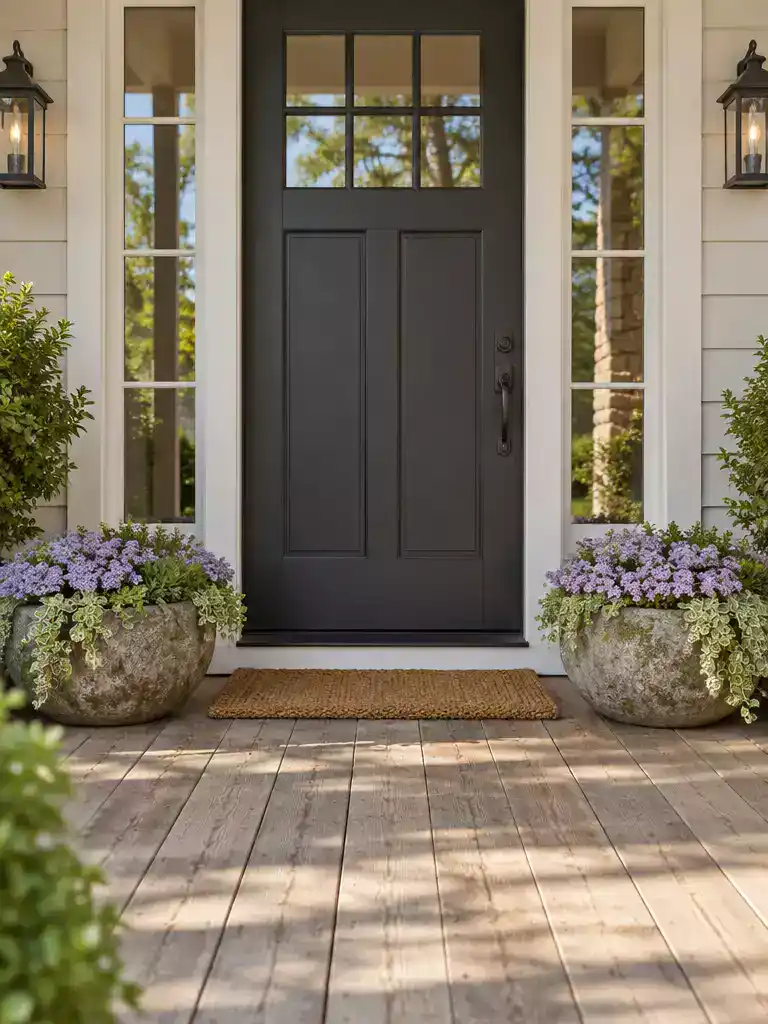
Ground your entry with heavy stone, keeping foliage low to preserve your natural light.
As an Amazon Associate I earn from qualifying purchases. Affiliate links may earn me a commission at no extra cost to you.
Stone bowls provide a heavy, grounded aesthetic that works especially well for porches with traditional or craftsman architecture. Because these containers are inherently low-profile, they act as a stable base for mounding plants without ever creeping into your sidelight glass.
To keep your porch floor in good shape, focus on these tactical setup requirements:
- Drainage is mandatory: Ensure you drill drainage holes into the base of the stone if they aren’t pre-drilled to prevent standing water from staining your porch deck.
- Floor placement: Place these directly on the porch surface rather than using elevated plant stands to ensure they remain well below the bottom edge of the sidelights.
- Plant selection: Opt for low-growing, mounding species like creeping phlox, sedum, or creeping thyme that naturally hug the rim of the bowl.
Pro Tip for Stone Care: If you are placing these on a wood or painted porch, use thin, clear adhesive furniture pads on the bottom of the bowl.
This simple addition creates a small gap for airflow and prevents moisture from getting trapped between the stone and your porch finish.
⭐ Low Stone Bowls for Entryways
✨ Editor’s Pick
Ceramic Miniature Pumpkin Succulent Pots
Why This Works: Architectural Contrast
Stone’s natural texture provides a sophisticated visual counterpoint to the clean, reflective glass of sidelights. By choosing a low-profile bowl shape, you create a sense of permanence and weight that anchors the entry without competing for height. This material choice is particularly effective for balancing the vertical lines of modern or traditional frames with a softer, organic silhouette that keeps sightlines completely clear.
Style Takeaway: Match your stone color to your home’s existing masonry or trim to create a cohesive, custom-designed entryway look.
Under-Sill Troughs
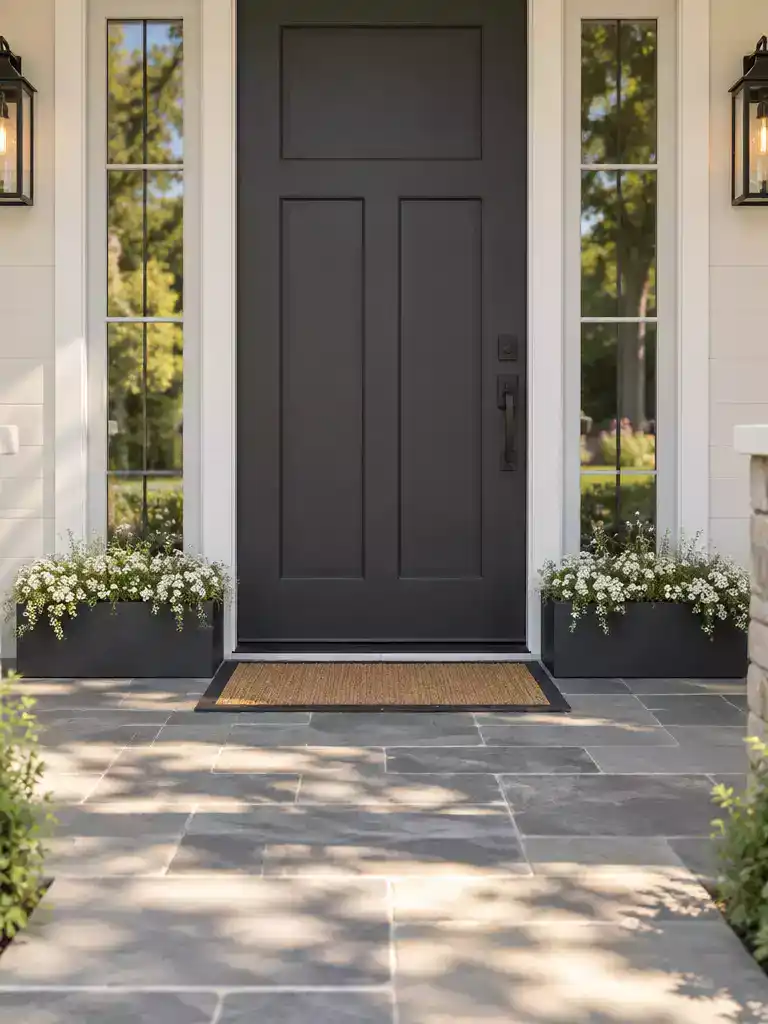
Maximize natural light by using low-profile troughs that perfectly frame your sidelights.
When you have sidelights, the narrow footprint directly beneath the glass is prime real estate for greenery. Under-sill troughs are specifically designed to nestle into this tight space without obstructing your view or the light coming into your entryway.
Because these containers sit directly on the porch floor and align with the glass, you want to prioritize lightweight materials. Fiberglass is your best choice here; it provides the look of heavy stone or ceramic but is light enough to swap out easily when you refresh your seasonal displays.
The “Less is More” Rule
Avoid the temptation to pack these troughs with tall, spiky “thrillers.” Stick to compact, non-vertical species like sweet alyssum or lobelia to ensure your foliage never climbs above the sill line.
If you are struggling to keep your sidelights clear, follow this quick-pick guide for plant selection:
- ✔Trailing Lobelia: Best for keeping height minimal while adding color.
- ✔Sweet Alyssum: Perfect for a low, mounded look that stays tight to the container.
- ✔Creeping Jenny: Use this for a vibrant, low-growing spill effect that avoids the glass entirely.
Always keep your drainage holes clear of debris to prevent water from pooling on your porch surface. Remember that overfilling these troughs is the quickest way to ruin the clean, architectural lines of your entryway.
⭐ Under-Sill Troughs We Love
Metal Railing Window Box Planter
✨ Editor’s Pick
Artificial Greenery Stems for Planters
Artificial Daisy Bundles for Window Boxes
🏡 Practical Application for Troughs:
- Porch Floor Protection: Use small pot feet or risers to lift your troughs, preventing moisture buildup and staining on stone or wood decking.
- Seasonal Refresh: Choose fiberglass troughs for their weight; swapping out plants becomes a five-minute task rather than a heavy, back-straining project.
- Sidelight Sightlines: Before planting, hold a ruler against your glass to verify your plants won’t grow into the lower 6–8 inches of the pane.
Outer-corner urns
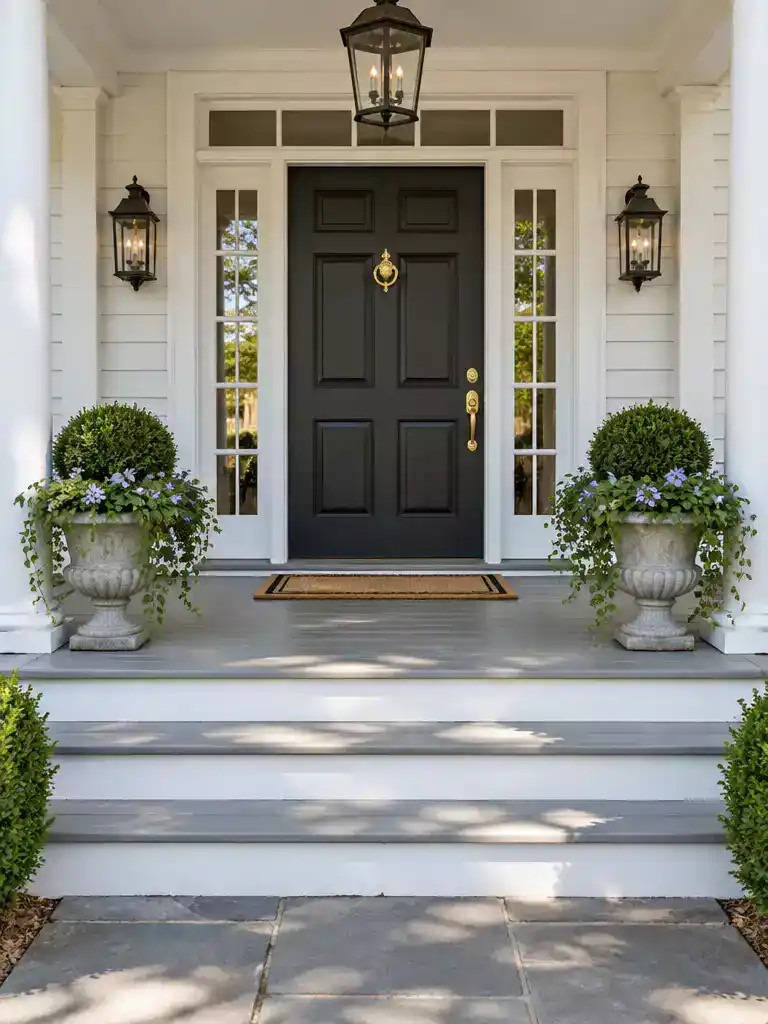
Frame your entryway with perimeter anchors that leave your sidelights completely unobstructed and clear.
Think of outer-corner urns as the architectural anchors for your porch space. By positioning these containers at the extreme edges of your entry, you create a defined border that leads the eye toward the door without encroaching on the sidelight glass.
Because these sit outside the primary traffic zone of your door, you have more flexibility with container size than you would with pots placed directly against the frame. However, you must avoid the common temptation to fill them with tall, spiky “thriller” plants.
Warning: The Vertical Trap
Avoid any plant species that grow vertically into the sightline of your sidelights. If a plant rises higher than your knee, it is likely creating a visual barrier that hides the glass you are trying to feature.
To keep the look clean and intentional, focus on these planting strategies for your corner urns:
- Rounded Shrubs: Select dwarf varieties that maintain a tight, globe-like shape to avoid wild growth.
- Spilling Vines: Use trailing plants like ivy or creeping jenny that naturally drape over the urn edge rather than reaching upward.
- Layered Mounds: Keep the center of the urn low to ensure the overall silhouette stays well below the bottom of the glass.
These urns work best for homeowners who want a structured, formal feel to their entryway. If your porch is narrow, however, skip this idea in favor of wall-mounted or under-sill options to ensure your path to the door remains completely clear.
⭐ Outer-Corner Urns to Consider
Artificial Daisy Trailing Vines
Classic Traditional Plastic Urn Planter
✨ Editor’s Pick
Artificial Bougainvillea Trailing Vines
Achieving a balanced entrance feels like a heavy task because every detail seems to weigh on the overall look of your front door entryway. In reality, the visual weight of your porch rests on just a few strategic placements rather than a full overhaul of every corner.
Solid entry aesthetics rely on maintaining consistent sightlines at the edges, where minor adjustments anchor the symmetry of your porch.
Short Boxwood Pots
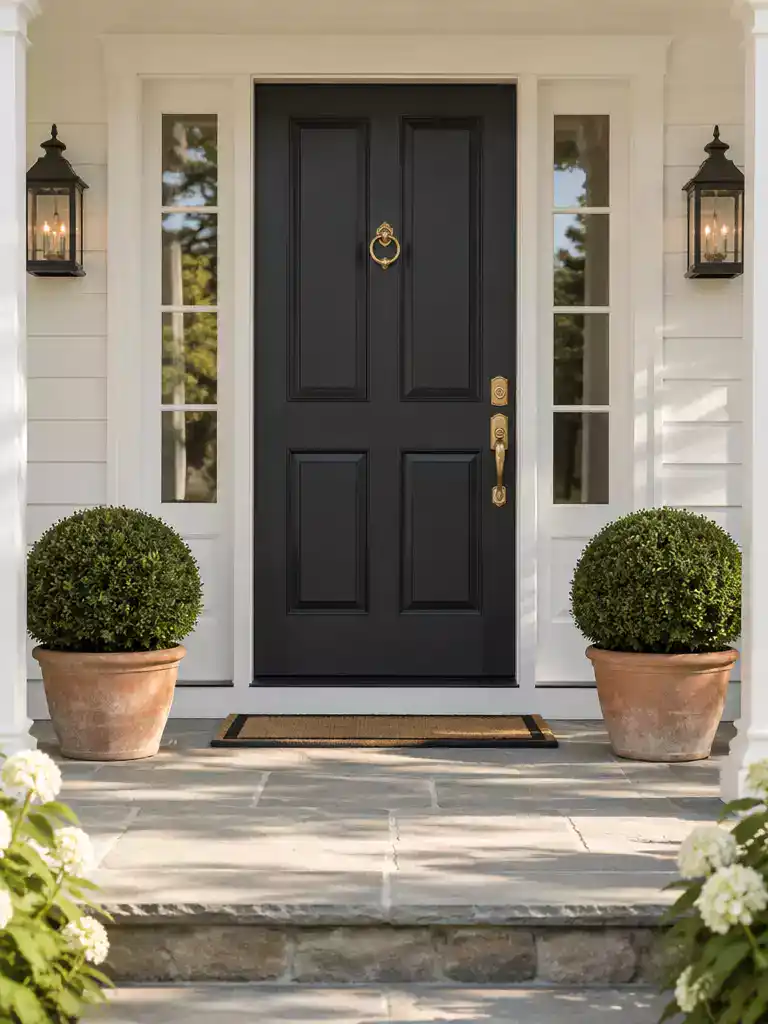
Achieve a formal, symmetrical entryway look by keeping clipped boxwood strictly below your sidelight glass.
Clipped boxwood provides a structured, formal aesthetic that works especially well for traditional or colonial-style architecture. Because boxwood is naturally dense, the key to using it with sidelights is constant, precise maintenance.
You must prune these frequently to stay within the “low-visibility” zone. If you let them grow unchecked, they quickly turn into solid walls that block the light you are trying to preserve.
Maintenance Checklist for Boxwood Pots:
- Pruning: Trim monthly during the growing season to maintain a tight, low-mounded sphere.
- Placement: Situate these at the outer edges of the porch; never push them against the door frame where they might impede the swing.
- Hydration: Potted boxwood dries out faster than ground-planted shrubs; check the soil moisture twice weekly during summer.
Choose this option if you prefer a classic, tailored look and don’t mind a consistent monthly maintenance schedule. If you are looking for a “set it and forget it” plant, you should skip boxwood in favor of lower-maintenance container options like stone bowls or shallow basins.
⭐ Short Boxwood Pots for Entryways
✨ Editor’s Pick
Artificial Boxwood Topiary Balls
Lattice Design Square Outdoor Planter
Classic Round Resin Urn Planters
✨ Complete the Look: Precision Pruning Tips
Since boxwood is a dense, high-impact plant, the way you finish your pruning determines whether your entry looks manicured or overgrown. Small adjustments keep the shape tight and clean, ensuring the foliage enhances your sidelights rather than competing with them.
- Hand-prune layers: Use sharp bypass shears instead of hedge trimmers to thin out the center, allowing light to reach the inner branches for healthier growth.
- Angle the base: Taper the bottom of your boxwood slightly inward to create a cleaner shadow line against the pot, which makes the plant appear smaller and more deliberate.
Low Fern Baskets
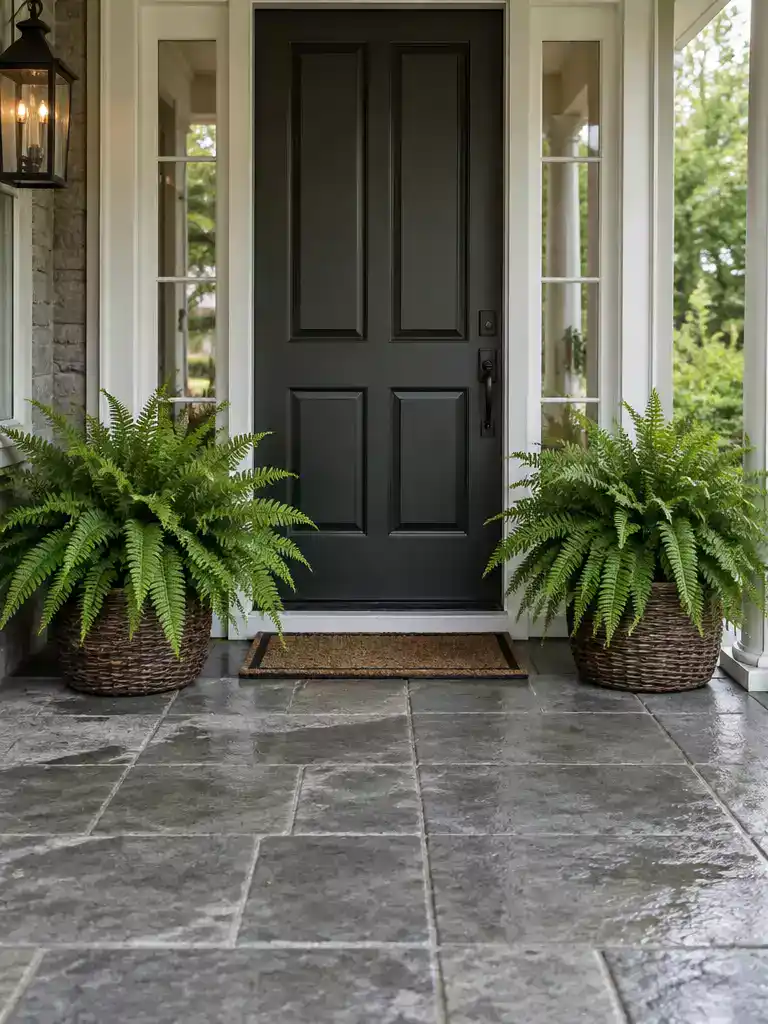
Refresh shaded entryways with lush, low-profile greenery that frames your sidelights without blocking natural light.
If your front door stays tucked under a deep porch or faces north, ferns are your best bet for a full, soft look. The trick here is to avoid the standard, upright hanging varieties that grow tall and end up brushing against your glass.
Instead, hunt for “low and full” cultivars that spread outward. Using coir-lined baskets allows for better airflow around the root ball, which helps prevent the damp, musty buildup that can damage your porch floor over time.
Care Tip: Watering Without the Splash
Ferns need consistent moisture to stay green, but keep the spray away from your glass sidelights. Use a long-reach watering wand to direct water straight to the base of the soil rather than misting the foliage near the door.
These baskets work best when placed directly on the floor level. This keeps the heaviest part of the plant well below the bottom of the sidelight sill, ensuring your entrance feels shielded but never hidden.
If you notice the fronds starting to reach toward the door glass, it is time for a quick trim. Regular rotation of the baskets will also encourage even growth, preventing the plants from leaning too heavily into the natural light source.
⭐ Low Fern Baskets We Love
Artificial Begonia Hanging Flower Baskets
✨ Editor’s Pick
Artificial Hanging Fern Flower Baskets
Metal Wire Hanging Baskets
💡 Practical Tips for Lush Entryways:
- Soil management: Use a lightweight, moisture-retentive potting mix to prevent the heavy, saturated soil that weighs down baskets.
- Strategic placement: Hang baskets at a height where the bottom edge clears the floor but remains below the glass.
- Leaf maintenance: Gently wipe away any dust or pollen from the sidelights after watering to keep glass crystal clear.
Dwarf Hydrangea Tubs
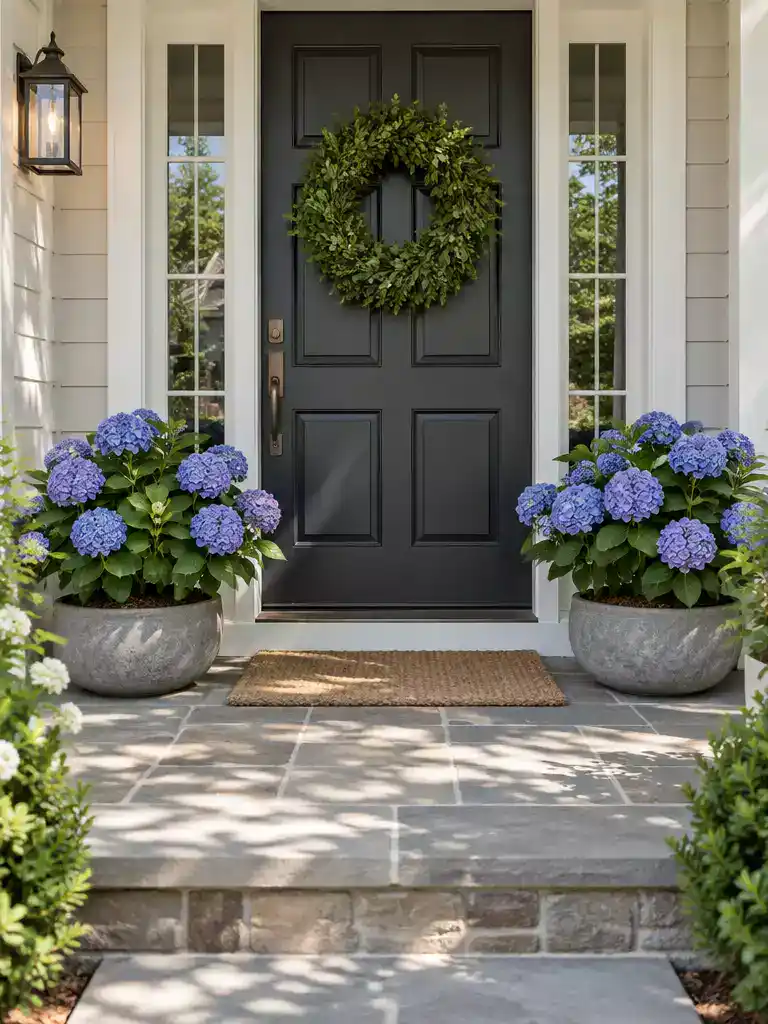
Add soft, rounded floral color while keeping your sidelights completely clear and open.
When you want flowering shrubs at your entryway, the key is strictly limiting your plant choice to true dwarf varieties. Standard hydrangeas will quickly grow to block your glass, so look for labels specifying a mature height of 18–24 inches.
These plants are thirsty, so your tub needs enough soil volume to retain moisture without requiring a daily watering schedule. Keep these containers slightly offset from the door frame to ensure the blooms spread outward into the porch space rather than encroaching on the sidelight sightlines.
Pro-Tip: Moisture Management
Because hydrangeas wilt fast in direct heat, place these where they get morning sun but afternoon shade. If you notice the leaves drooping, the plant is telling you it needs more water before the soil dries out completely.
This look works best for cottage or traditional home styles where a softer, organic shape balances out the straight vertical lines of your sidelights. If your porch is narrow and high-traffic, you might want to skip this option, as the spreading foliage can catch on clothing or bags when you are entering the door.
⭐ Dwarf Hydrangea Tubs to Consider
Rustic Galvanized Metal Planter Tubs
Hot Dipped Galvanized Steel Tub
✨ Editor’s Pick
Artificial Silk Hydrangea Flower Stems
🏡 How This Works in a Real Home:
- Strategic placement: Position tubs at least six inches away from the door frame to prevent bulky leaves from snagging bags or clothing.
- Daily maintenance: Keep a small watering can nearby; dwarf varieties in shallow tubs dry out faster, especially during hot, breezy afternoons.
- Natural integration: Tuck the tubs into corners; their rounded, full habit naturally softens the sharp, vertical lines of your sidelights and door frame.
Trailing Ivy Bowls
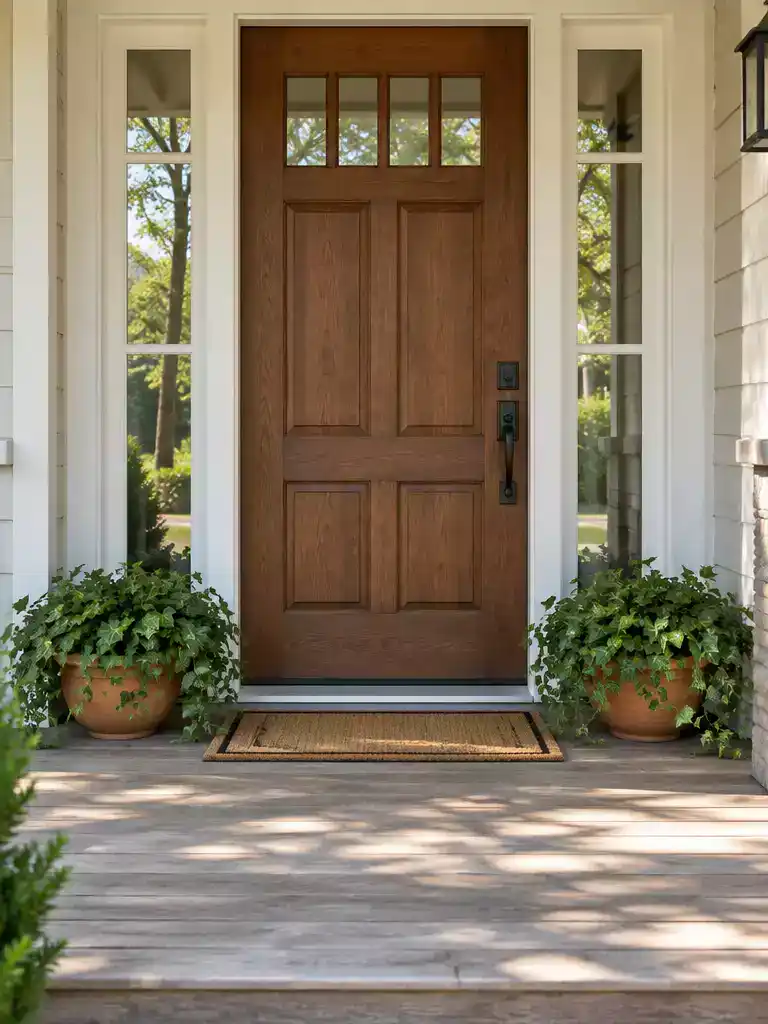
Create a lush, organic frame that spills outward without ever touching your glass sidelights.
If you want a soft, cascading look that avoids the stiff verticality of traditional porch plants, trailing ivy bowls are your best bet. English ivy naturally grows outward and downward, making it one of the few plants that won’t fight for space near your door frame.
The key to success here is choosing a bowl that is wide and shallow rather than deep and narrow. A wider base encourages the ivy to spill over the sides, effectively framing your entry while leaving your sidelight glass completely clear of foliage.
Pro Maintenance Tip: Because ivy is a vigorous grower, you must prune the stems back every few weeks. This keeps the runners from creeping across your porch floor or interfering with the door threshold, which could become a trip hazard over time.
These bowls are an excellent choice for homeowners who prefer a low-maintenance, organic aesthetic. However, if your porch is a high-traffic zone where people frequently bump into containers, you might want to consider a trailing succulent instead, as ivy stems can be brittle if stepped on or brushed against too harshly.
⭐ Trailing Ivy Bowls for Porches
✨ Editor’s Pick
Rustic Galvanized Metal Flower Buckets
Metal Wire Round Hanging Planters
Large Ceramic Indoor Outdoor Planter
💡 The Detail That Pulls It Together:
To keep your ivy looking intentional rather than wild, focus on the container’s finish. Choosing a matte, earthy ceramic or a weathered terra cotta bowl complements the natural green foliage and anchors the spill. This prevents the ivy from feeling like an afterthought, turning a simple trailing plant into a deliberate, polished piece of your entry’s architectural framing.
Low Mounded Planters
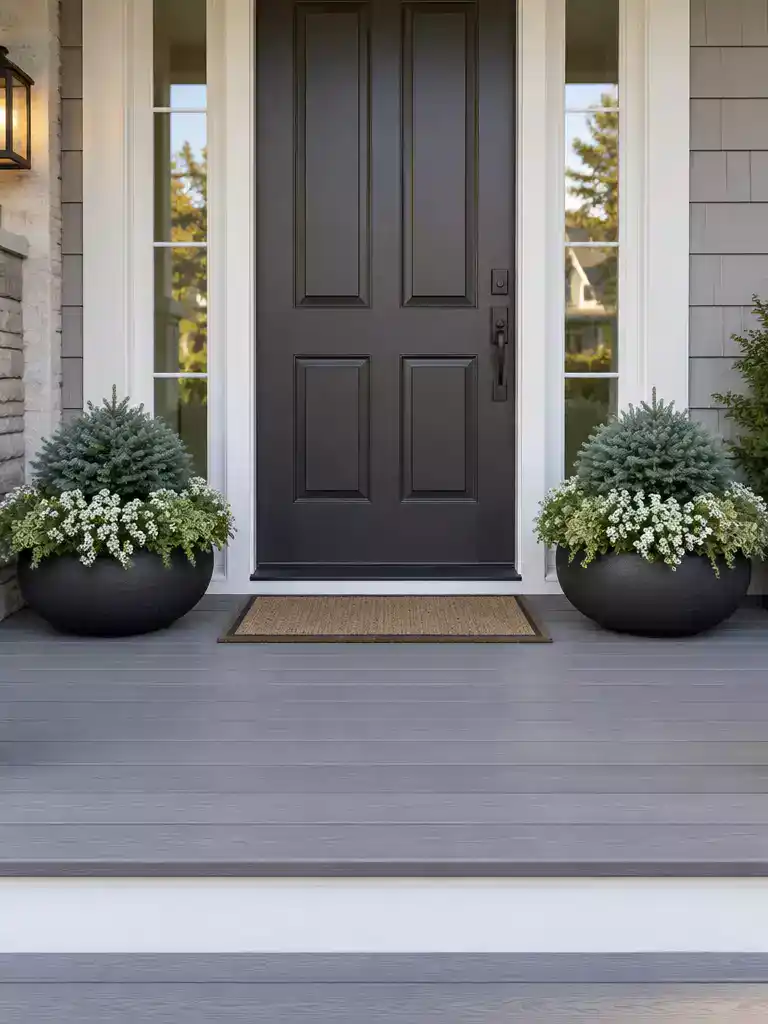
Create a soft, rounded perimeter that frames your entrance without obscuring light or view.
Low mounded planters rely on a tight, dome-like silhouette to maintain a clean boundary at the base of your sidelights. By choosing compact species, you prevent foliage from becoming leggy or reaching toward the glass edges.
Pro Tip: Stick to a mix of two textures, such as a dwarf evergreen for structure and a low-growing filler for softness. This creates visual interest without the bulk of taller, vertical planting designs.
These arrangements are best for homeowners who prefer a tailored, architectural look that feels intentional rather than overgrown. If you struggle with constant pruning, you may want to choose slower-growing perennials to maintain that specific rounded shape.
To keep the mound healthy and well-defined, follow these maintenance steps:
- Trim weekly: Use garden shears to snip any stems that break the established dome shape.
- Monitor moisture: Low-growing annuals in small mounds often dry out faster than taller pots; check the soil twice weekly.
- Positioning: Place the containers on the outer edge of the threshold to ensure the mound stays well below the sidelight sill.
⭐ Low Mounded Planters We Love
Beige Pedestal Urn Planter Pots
✨ Editor’s Pick
Modern Tall White Round Planters
Halloween Sandworm Tentacle Plant Stakes
⚖️ Quick Decision Guide: Choosing Your Mound
- Choose evergreen shrubs: Opt for these when you need year-round architectural structure that withstands seasonal weather changes.
- Skip the perennials: Avoid fast-growing, heavy bloomers that may lose their tight, mounded shape mid-season.
- Pair with stone: Use natural stone or low-profile ceramic pots to ground the mound and prevent it from appearing top-heavy.
Wide Shallow Basins
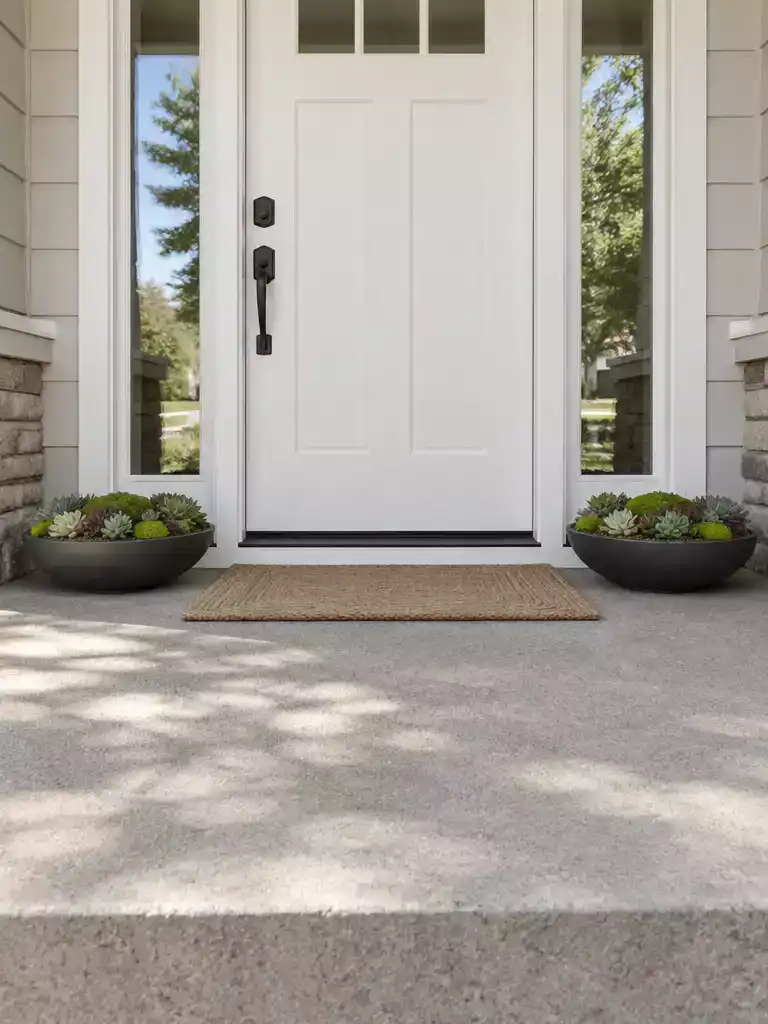
Preserve your sidelight views with low-profile greenery that keeps porch sightlines completely open.
Wide shallow basins are the most reliable solution for protecting sidelight clarity because their height is physically limited. By choosing a container with a broad diameter but minimal depth, you effectively force a low-profile planting style.
These are ideal for homeowners who struggle with overplanting or the urge to add height where it doesn’t belong. If you tend to crowd your entryway, the limited soil volume in a shallow basin acts as a natural guardrail against vertical growth.
Pro Tip: Keep the center of your basin sparse or exposed to reduce visual density. A crowded center often encourages plants to reach upward toward the light, which can eventually creep into your sidelight view.
When selecting your plant palette, prioritize species that spread horizontally rather than vertically. Consider these low-maintenance options for your basins:
- Sedum varieties: Creeping types like ‘Dragon’s Blood’ or ‘Blue Spruce’ stay flush with the soil.
- Moss gardens: Perfect for shaded porches, providing a lush, green carpet that never grows tall.
- Hardy succulents: Hens-and-chicks work well because they form tight rosettes that stay close to the rim.
⭐ Wide Shallow Basins to Consider
Large White Lattice Planter Boxes
Beige Vertical Stripe Planter Pots
✨ Editor’s Pick
White Lattice Design Planter Box
💡 Why This Works
Wide, shallow basins shift the visual focus downward, anchoring your entryway without competing for space at eye level. By limiting soil depth, you naturally discourage the vertical, leggy growth that typically blocks sidelight glass, creating a clean, professional finish that feels intentional rather than cluttered.
Visual Benefit: Keeps the sidelight glass clear while providing a grounded, symmetrical foundation for your entrance.
Offset Planter Pair
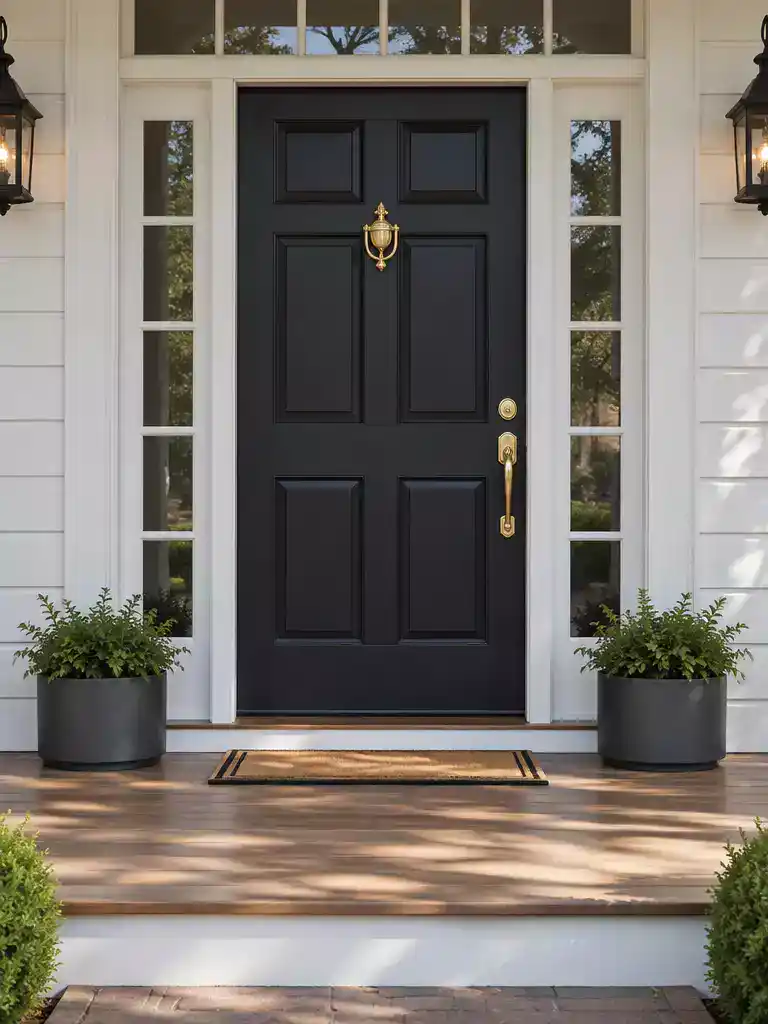
Achieve perfect entry balance by positioning identical containers outside the sidelight sightlines.
The offset technique is all about creating order without encroaching on your natural light. By placing your planters at the outer edges of the sidelights rather than directly in front of them, you draw the eye toward the door while keeping the glass completely clear.
This strategy relies entirely on precision and uniformity. Because you are creating a visual frame, even a slight misalignment will feel amplified by the vertical lines of your door frame.
Pro-Tip: Use a Level
Before planting, place a spirit level on top of your empty containers to ensure they sit flush against the porch surface. Consistent height across the pair is the most important factor in maintaining a professional, balanced appearance.
For the best result, select identical species and pot sizes for both sides of the entrance. If one plant grows faster or fills out more than the other, you must prune them consistently to maintain that mirror-image effect.
- Measure Twice: Check the width of your sidelights and ensure your planters stay within the footprint of the porch walls to avoid blocking the door swing.
- Select Matches: Use two identical pots of the same material and color to prevent visual clutter at the entry.
- Monitor Growth: Check both planters weekly to ensure your pruning keeps them at the exact same height.
This layout works best for homeowners who value a formal, symmetrical porch aesthetic. If your porch is narrow or asymmetrical, you may find that an offset pair makes the space feel crowded instead of framed.
⭐ Offset Planter Pair Picks
✨ Editor’s Pick
Tall Black Modern Outdoor Planters
Tall Tapered Square Outdoor Planters
Large Tall Weather Resistant Planters
Low Gourd Pots
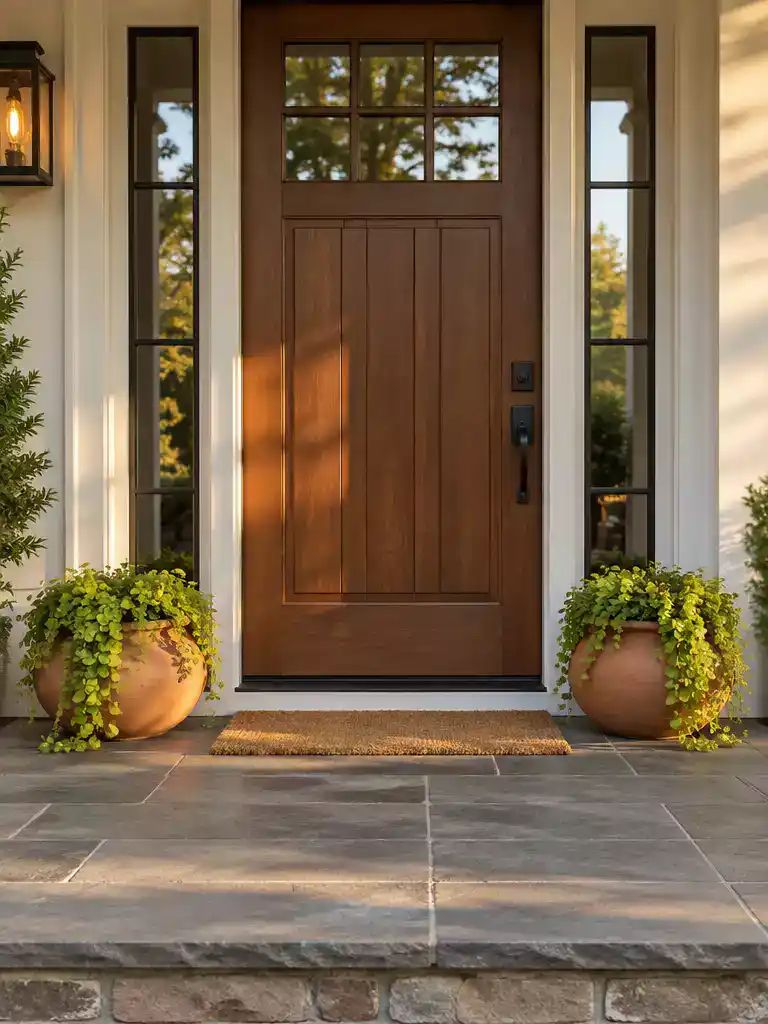
Bring organic, rounded character to your entry without cluttering your sidelight sightlines.
Low gourd pots lean into a rustic, organic aesthetic that works best for homes with natural siding or cottage-style porches. Their bulbous, rounded base provides a softer visual contrast to the straight, vertical lines of your sidelights and door frame.
Because these containers often draw the eye with their unique silhouette, they are best suited for minimalists who want a strong shape without needing tall plants. If you prefer a more decorative look, stick to low-growing or trailing varieties to ensure the foliage never creeps upward into the glass area.
Pro-Tip for Drainage
Gourd-shaped pots can sometimes trap moisture at the base if they are narrow at the bottom. Before you plant, ensure you have drilled ample drainage holes and use a layer of drainage rock at the very bottom to prevent soggy roots.
When selecting your plants for these containers, consider these options to maintain the low-profile look:
- Creeping Jenny: A vibrant, trailing plant that highlights the pot’s rounded edges without gaining height.
- Sedum: Ideal for a low-maintenance, drought-tolerant look that stays close to the soil surface.
- Dwarf Sweet Alyssum: Provides a soft, mounded carpet of flowers that stays well below the door sill.
Warning: Watch the Growth
Even with trailing plants, keep a pair of garden snips handy for monthly maintenance. If your ivy or creeping plants start to reach for the sidelight glass or spill onto the door threshold, trim them back immediately to preserve your clear entry view.
⭐ Low Gourd Pots We Love
Large Whiskey Barrel Garden Planters
✨ Editor’s Pick
Artificial Fall Gourd Plant Stakes
Adjustable Stainless Steel Planter Insert
✨ Finishing Touches
Since gourd pots possess a distinct, sculptural silhouette, the plants you choose should enhance – not compete with – the container’s natural curves.
- Choose spilling foliage: Select trailing plants that mimic the pot’s organic roundness, effectively softening the transition from the container to your porch surface.
- Prioritize texture contrast: Use fine-textured moss or tiny, delicate leaves to emphasize the weight and smooth shape of the gourd-style exterior.
You now have eleven practical ways to arrange your porch planters without obstructing your sidelights. Selecting the one or two configurations that align with your home’s architectural style is all you need to create a balanced, intentional entry.
A clean, open sightline is the primary goal, so measure your sill heights and choose containers that keep the glass clear. Whether you opt for low-profile planter arrangements or a simple pair of matching bowls, focus on the scale that fits your specific doorway. When you coordinate your containers to frame the glass rather than fight for space, the entire entrance feels instantly finished and well-considered.
Related posts:
 11 Colonial Front Doors With Sidelights Under a Pediment
 11 Cottage Front Doors With Sidelights Under Climbing Roses
 12 Shaker Front Doors With Sidelights in Flat Recessed Panels
 14 Craftsman Front Doors With Sidelights and Shelf Molding
 10 Front Door Planter Ideas
 12 Front Door Planter Ideas for Small Porches
 14 Best Front Door Planter Combos That Look Good Year-Round
 15 Best Front Door & Curb Appeal Ideas That Buyers Notice First