
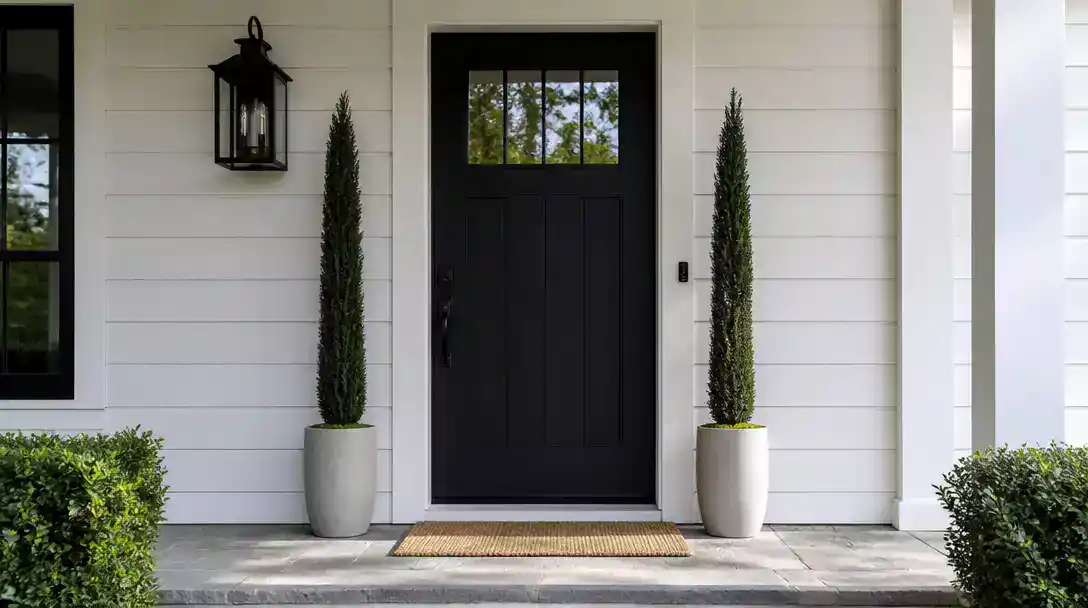
Choosing plants for a narrow front entryway is a high-stakes decision because the wrong selection quickly creates a cluttered, overgrown walkway. This guide narrows the options to 10 expert-vetted solutions that maintain a clean vertical line, helping you decide with confidence. Let’s start with the most reliable choice.
1. Sky Pencil Holly
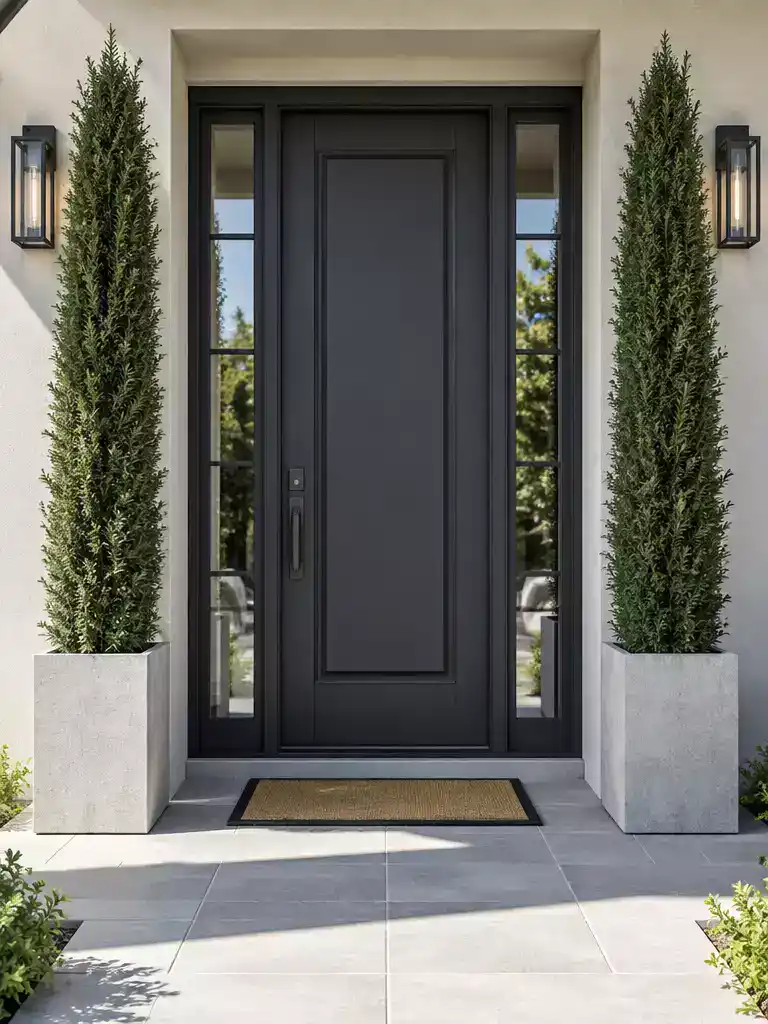
Create a sophisticated, architectural silhouette that frames your entryway without ever crowding the path.
As an Amazon Associate I earn from qualifying purchases. Affiliate links may earn me a commission at no extra cost to you.
Think of the Sky Pencil Holly as a living architectural pillar. It brings the clean, formal look of a carved stone column to your front door, but with the softness of natural greenery.
Because it maintains a strict width of only 1 to 3 feet, it is the gold standard for tight corners where you need height but have zero room for spreading branches. You get the vertical impact you crave without the risk of the plant eventually clawing at your guests as they try to walk through your front door.
Maintenance & Growth Expectations
- Growth Rate: Expect about 6–12 inches of vertical growth per year.
- Mature Size: Reaches 4–10 feet in height while staying within that narrow 1–3 foot width.
- Hardiness: Reliable in zones 6–9.
- Lifespan: A long-term investment, typically lasting around 40 years.
The best part about this plant is that it is truly a “set it and forget it” choice. The beauty of the Sky Pencil Holly lies in its natural, tight vertical habit, so you should resist the urge to shape it with shears.
Pruning into the core of the plant to force a shape will only expose bare wood and ruin that clean, column-like silhouette you bought it for. If you see browning on the foliage, don’t rush to add fertilizer.
Watch Your Moisture Levels
Browning on a Sky Pencil Holly is almost never a nutrient issue. It is almost always a signal that the roots are either suffocating in waterlogged soil or suffering from extreme, prolonged drought. Check your soil drainage before planting to avoid this common heartbreak.
If you need something with an even more refined, dense texture than the Holly, consider moving on to the Yew.
⭐ Top Sky Pencil Holly Alternatives
✨ Editor’s Pick
Five Foot Artificial Cedar Topiary Trees
Four Foot Artificial Cedar Topiary Trees
Eight Piece Artificial Tall Grass Plants
💡 Quick Ways to Apply This:
- Frame the entryway: Plant one Sky Pencil on each side of the door to create a formal, balanced architectural entrance.
- Check your clearance: Ensure you have at least 3 feet of width available so the pillar doesn’t feel like an obstacle.
- Skip the shears: Let these grow into their natural column shape to maintain the intended formal silhouette and prevent bare spots.
2. Columnar Yew
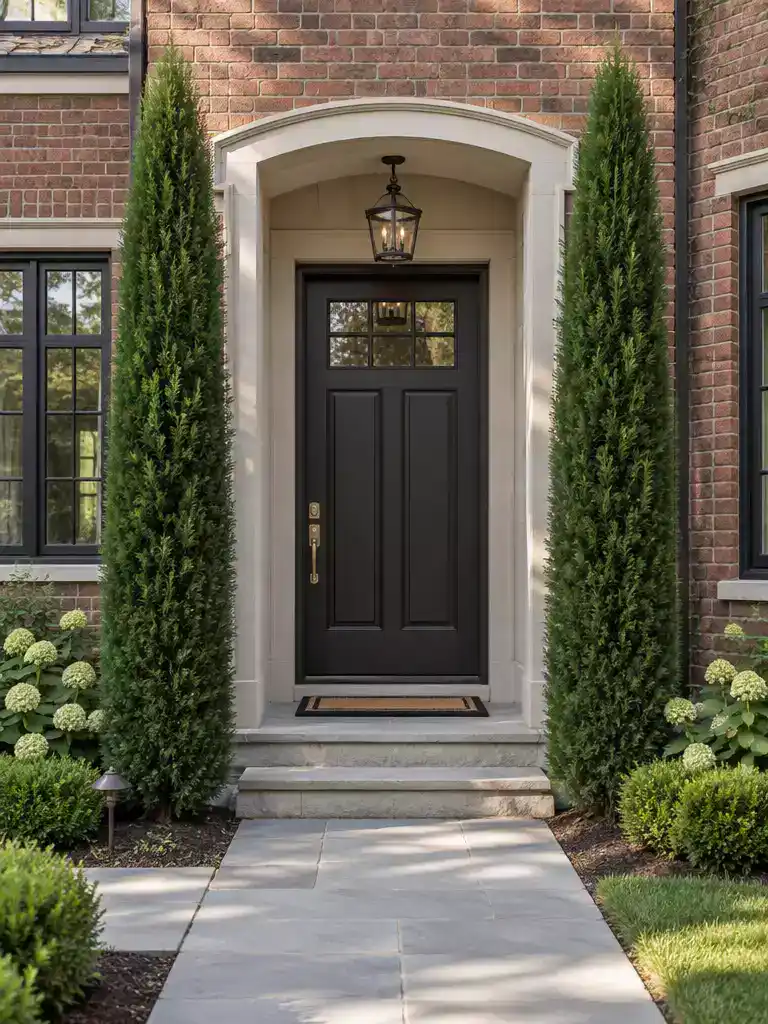
Create a permanent architectural statement with a slow-growing evergreen that thrives in the shade.
When your clearance is restricted to a mere 12 to 18 inches, the ‘Stonehenge Skinny’ Yew is often the most reliable solution you can find. Unlike faster-growing shrubs that demand constant trimming to keep them from encroaching on your walkway, this cultivar holds its tight, upright form with very little intervention.
It is an ideal choice for north-facing or shaded entryways where other shrubs might thin out or become leggy. While many popular foundation plants struggle to maintain their density without consistent full sun, the Yew remains robust and deep green in low-light conditions.
The Longevity Factor
If you are looking for a long-term investment, this is it. While many shrubs meant for tight spaces are fast-growing and short-lived, a well-placed Yew can grace your entrance for up to 60 years. You are essentially setting the architectural tone for your home’s exterior for decades to come.
However, there is one non-negotiable rule you must follow to keep these plants healthy: never prune into old, leafless wood. Unlike some other shrubs that can be cut back aggressively to rejuvenate, Yews do not sprout new growth from bare branches; if you prune too deep, that section will remain empty permanently.
Beyond pruning, your primary responsibility is soil management. These plants are sensitive to “wet feet,” so they require well-drained soil to prevent root rot.
Avoid the “Wet Feet” Trap
Before planting, check your drainage. If water pools in your foundation bed after a heavy rain, do not plant a Yew there without first amending the soil or installing a drainage solution. This plant is highly susceptible to root issues in waterlogged sites.
If you have a shaded or partially shaded entry and want a clean, professional look that requires minimal labor, the Columnar Yew offers a level of stability that few other narrow-profile plants can match.
⭐ Best Columnar Yew Style Plants
Four Foot Artificial Triple Ball Topiary
✨ Editor’s Pick
Two Set Artificial Boxwood Topiary Balls
📋 What to Check First
- Clearance verification: Measure your available horizontal space to confirm it falls within the 12–18 inch required footprint.
- Drainage assessment: Dig a small test hole to ensure water drains quickly, avoiding the “wet feet” that kill Yews.
- Old growth inspection: Verify the nursery specimen has healthy foliage near the base to avoid permanent, unsightly bare spots.
Dwarf Hinoki Cypress
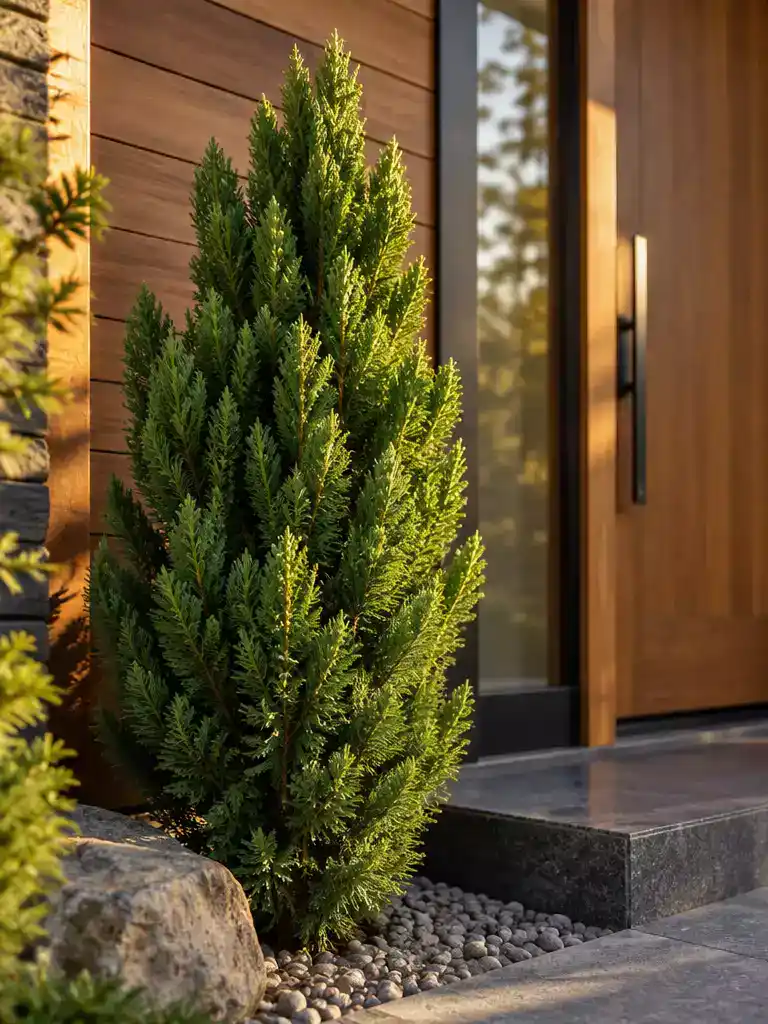
Achieve a sophisticated, slow-growing vertical accent that respects your limited entryway footprint.
The biggest mistake homeowners make with this species is falling for the “dwarf” label without checking the specific growth habit. Many varieties, such as the popular Nana Gracilis, grow into broad, mounded shapes that eventually spill over your walkway and create a maintenance nightmare.
For an entrance where space is at a premium, you must look specifically for the ‘Vokel’s Upright’ cultivar. Unlike its mounded cousins, this selection maintains a tight, vertical silhouette that thrives in small, fixed-size foundation beds without requiring constant intervention.
Key Selection Insight: Don’t rely on the “dwarf” tag alone. Always verify the label explicitly states “upright” to ensure you aren’t bringing home a plant destined to become a wide, spreading shrub.
Because these plants are incredibly slow-growing – typically adding only 0.5 to 4 inches per year – they are a perfect long-term investment for a front door. You won’t be battling overgrown branches every season, but you do need to be diligent before you buy.
Before you commit to a plant at the nursery, perform a quick root health check. Pull the plant gently from its nursery pot to inspect the root ball; if you see roots circling tightly around the edge, skip it, as this is a sign of long-term stress that will hinder its performance in your entryway.
Quick Specs for Planning
- Target Cultivar: ‘Vokel’s Upright’
- Growth Rate: 0.5–4 inches per year
- Mature Size (10 years): Approx. 4 ft tall by 12 inches wide
- Best For: Small, fixed-size foundation beds
If you choose the right variety and inspect your pots for healthy root systems, you’ll have a refined, fan-like evergreen that frames your door with architectural precision. It is the definition of a “set it and forget it” choice for the design-conscious homeowner who prefers structure over constant pruning.
⭐ Dwarf Hinoki Cypress We Love
Three Foot Artificial Cedar Barrel Trees
Resin Skeleton Planter for Mini Plants
✨ Editor’s Pick
Three Foot Artificial Cedar Topiary Trees
📋 Before You Buy: A Nursery Audit
- Verify the label: Check that the tag specifies “upright” growth; generic “dwarf” labels often hide sprawling, mounded varieties.
- Inspect root health: Gently pop the plant from its container to ensure roots aren’t circling or tightly bound.
- Measure maturity: Confirm the 12-inch width expectation fits your specific entryway clearance to avoid future walkway encroachment.
Impulsive planting often leads to a cycle of replacement costs that drain your budget without adding the curb appeal you expect. By selecting the right vertical structure now, you avoid the expensive error of removing overgrown plants that obstruct your front door entrance later.
Focusing on long-term architectural fit prevents the financial regret of correcting landscape choices that fail to age gracefully alongside your home.
4. Upright Juniper
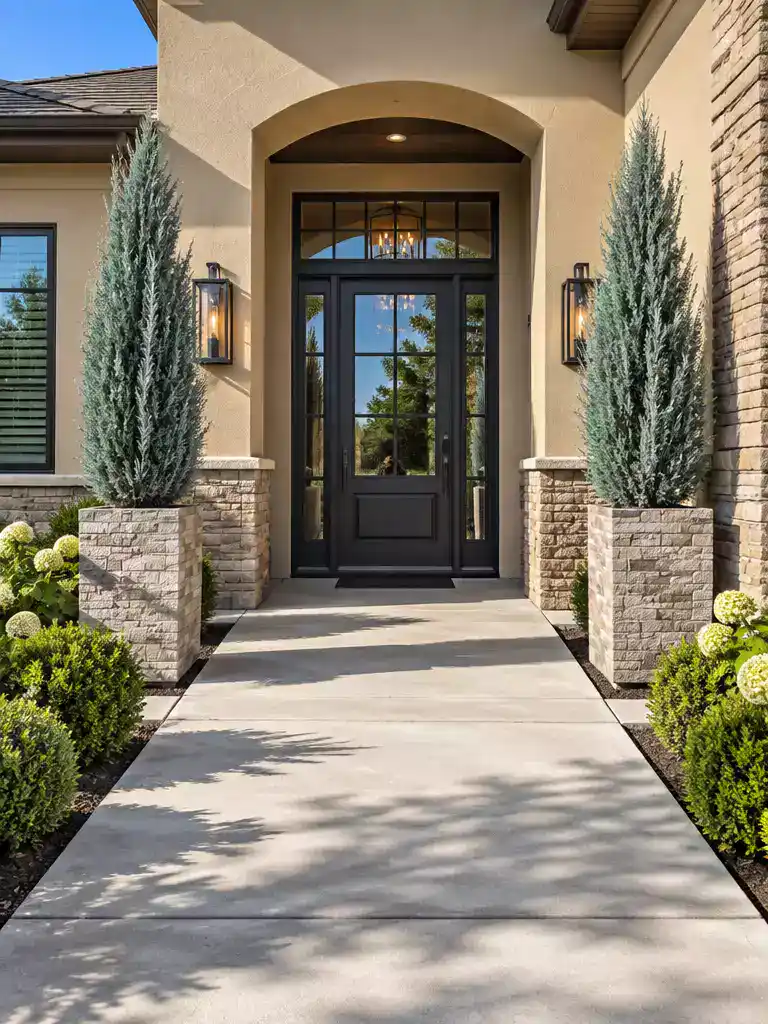
Bring a cool, architectural edge to your entryway with a plant that stays narrow and bright.
When you need an immediate sense of completion, the ‘Blue Arrow’ Juniper is your go-to. Unlike shrubs that take years to fill out, this cultivar pushes growth at a rate of 15–18 inches per year, quickly establishing a finished, professional look right next to your front door.
The standout feature here is the color. Its striking blue-silver foliage offers a crisp, cooling contrast against warm-toned home exteriors like brick, cedar, or tan stucco, making the entrance feel intentional and curated rather than just “planted.”
The Naming Trap: Always double-check your nursery tag for the specific ‘Blue Arrow’ name. Avoid broad, spreading columnar types like ‘Hetz Columnar’ – at 6–8 feet wide, they will swallow your walkway and force you to prune constantly just to keep the path clear.
Because this plant wants to be a tight, upright column, it has very specific light requirements. You must place this in a location that receives full sun throughout the day. If you try to tuck this into a shaded corner, the center of the plant will eventually thin out and lose that dense, pillar-like silhouette, leaving you with a sparse, spindly look that is difficult to reverse.
Avoid this mistake: Do not attempt to force a Juniper into a narrow space where it will be constantly brushed against by people walking by. These plants are best suited for spots with at least 2 feet of clearance, ensuring they stay pristine and untouched by high-traffic footfalls.
While the ‘Blue Arrow’ is a reliable performer, it thrives best when you don’t overcomplicate its maintenance. Its natural growth habit is exactly what you want, so resist the urge to shear it into shape. Keeping it in a sunny spot with well-draining soil is the only “labor” this plant requires for years of consistent, vertical structure.
⭐ Upright Juniper Picks for Porches
✨ Editor’s Pick
Six Piece Multicolor Small Plant Pots
Two Piece Large Black Tapered Planters
Six Piece Artificial Tall Grass Plants
💡 The Detail That Pulls It Together
To make a ‘Blue Arrow’ Juniper look intentional rather than like an afterthought, pair it with dark mulch or slate-colored stone. The deep, cool tones of the foliage can look slightly washed out against light-colored soil, but they pop beautifully against high-contrast, dark ground cover, creating a sharp, modern silhouette that frames your entryway with precision.
5. Columnar Boxwood
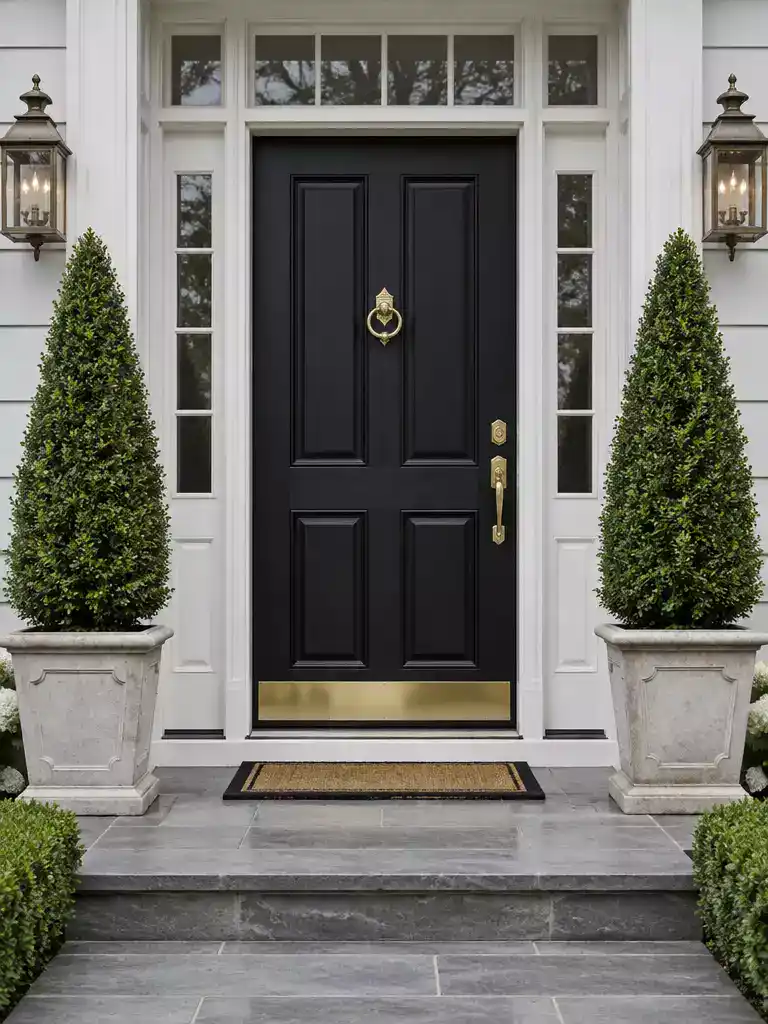
Achieve a timeless, formal entrance with the refined vertical structure of the Graham Blandy boxwood.
When you want an entrance that feels established and sophisticated, the ‘Graham Blandy’ variety of boxwood is in a league of its own. Often referred to as the aristocrat of narrow plants, it offers a formal, upright silhouette that stays remarkably tight without constant intervention.
Unlike standard mounded boxwoods that eventually spill over your walkway, the ‘Graham Blandy’ is a slow-growing investment. It typically adds only 3–6 inches of height per year, meaning you won’t be fighting an overgrown mess in two seasons. It reaches a mature height of 7–9 feet while keeping a narrow 1–2 foot width, making it perfect for framing a doorway without encroaching on your guests’ path.
Maintenance Insight: This is arguably the lowest-labor option for a formal look. Because of its naturally columnar habit, you can avoid the “mounded boxwood trap” entirely. It requires very little pruning to maintain its shape, allowing you to focus your energy on other home projects instead of trimming shrubs every weekend.
To ensure you get the right look, be very specific at the nursery. It is easy to accidentally grab a standard boxwood cultivar if you aren’t looking for the “columnar” label. If you buy the wrong type, you will eventually find yourself trying to force a naturally round plant into a column, which rarely ends well.
Mistake to Avoid: Do not assume all “boxwood” tags are the same. Only the ‘Graham Blandy’ cultivar will provide this specific verticality. If the tag doesn’t explicitly name the columnar variety, put it back – it will likely grow wider than your space allows.
This plant thrives as a long-term structural element. It is best suited for traditional or symmetrical home entryways where you want to signal a sense of permanence and intentional design. If you are looking for a “set it and forget it” plant that adds immediate, high-end architectural value to your front door, this is your primary choice.
⭐ Columnar Boxwood for Entryways
Four Pack Artificial Eucalyptus Ficus Branches
✨ Editor’s Pick
Twenty Four Inch Artificial Boxwood Balls
Adjustable Tall Column Plant Pot Riser
📈 The Long-Term Payoff
Choosing a ‘Graham Blandy’ boxwood is a strategic investment in your home’s curb appeal. Because it is slow-growing and maintains its architectural shape for decades, it avoids the “overgrown” look that often forces homeowners to rip out and replace foundation plantings, saving you significant time and costly replacement labor down the road.
Structural longevity: This cultivar provides a permanent, high-end look that adds consistent value to traditional home entrances.
Dwarf Nandina
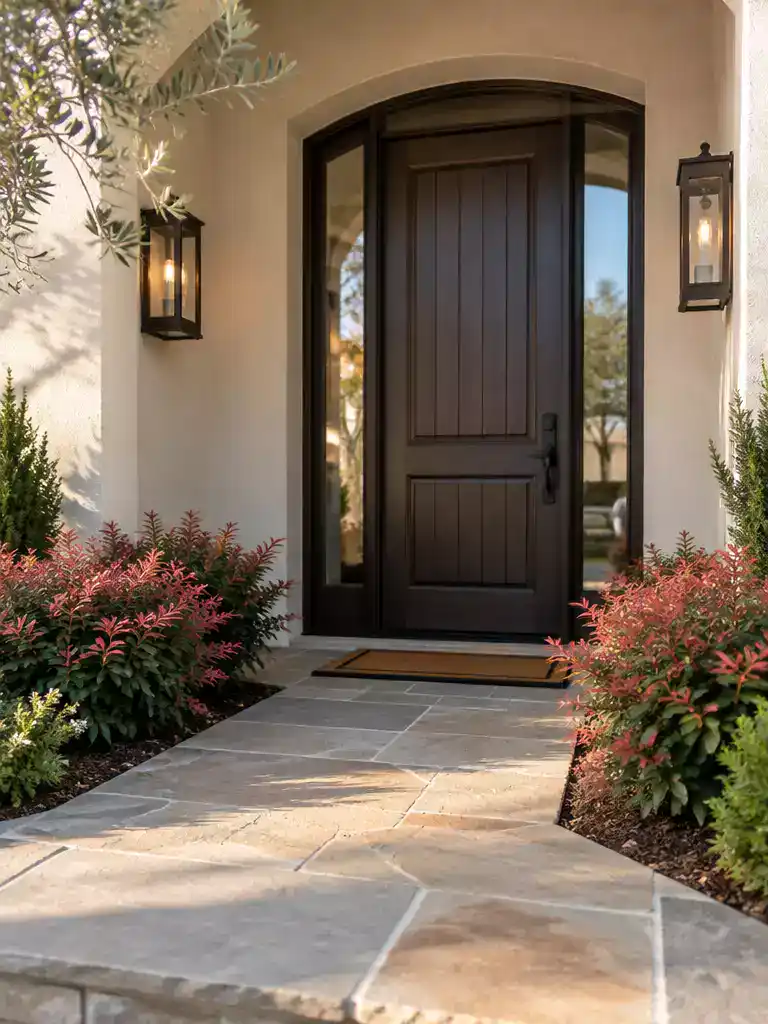
Add seasonal warmth and evergreen structure to tiny corners without blocking your path.
When your entryway is tight, you need a plant that acts as a low-profile bridge between the structure of your home and the hardscape of your walkway. The ‘Harbor Dwarf’ Nandina is a standout solution for this specific challenge.
It stays naturally compact, typically reaching 2–3 feet in height and width, which prevents the “walkway squeeze” that happens when fast-growing shrubs eventually take over your porch. Unlike larger varieties, it maintains a tidy footprint that keeps your entrance clear while still providing year-round foliage.
The Seasonal Shift: One of the most compelling reasons to choose this cultivar is the foliage behavior. While it remains evergreen, the leaves transition to a rich, reddish hue during the winter months, offering a pop of color when most other foundation plants go dormant.
It is important to be precise at the nursery, as not all Nandinas are created equal. Avoid the ‘Gulf Stream’ variety if your space is ultra-narrow, as it can grow 3–5 feet wide and will quickly crowd a tight landing. The ‘Harbor Dwarf’ is specifically bred to stay within those tighter bounds.
Quick Specs for Planning
- Cultivar: ‘Harbor Dwarf’
- Mature Size: 2–3 feet tall and wide
- Maintenance: Low; very tough once established
- Best Use: Under-planting in containers or narrow corner beds
While the ‘Harbor Dwarf’ is known for being remarkably tough and resilient, it is not invincible. It tolerates a variety of soil types, but it still requires reasonable drainage to truly thrive. If you notice water pooling in your garden bed after a heavy rain, address that drainage before planting; even hardy shrubs can struggle with persistent “wet feet” over time.
If you have a slightly larger container or a small, fixed corner bed, this plant serves as an excellent “filler.” It creates a lush, manicured look without the high-labor requirements of plants that need constant shearing to stay in shape.
Avoid the “Gulf Stream” Trap: Always double-check the plant tag before buying. ‘Gulf Stream’ Nandina is beautiful, but its mature width of 3–5 feet is often too aggressive for restricted front door spaces.
⭐ Dwarf Nandina Foliage Ideas
✨ Editor’s Pick
Six Piece Artificial Nandina Berry Stems
Five Piece Artificial Fall Eucalyptus Stems
⚖️ Quick Decision Guide: Choosing Your Nandina
- Choose ‘Harbor Dwarf’: Pick this variety when your walkway clearance is strictly limited to 3 feet or less.
- Skip ‘Gulf Stream’: Avoid this cultivar in narrow entries, as its 3–5 foot width will eventually block your path.
- Pair it with: Combine with stone pavers or mulch to highlight the winter red foliage against neutral, earthy tones.
7. Columnar Euonymus
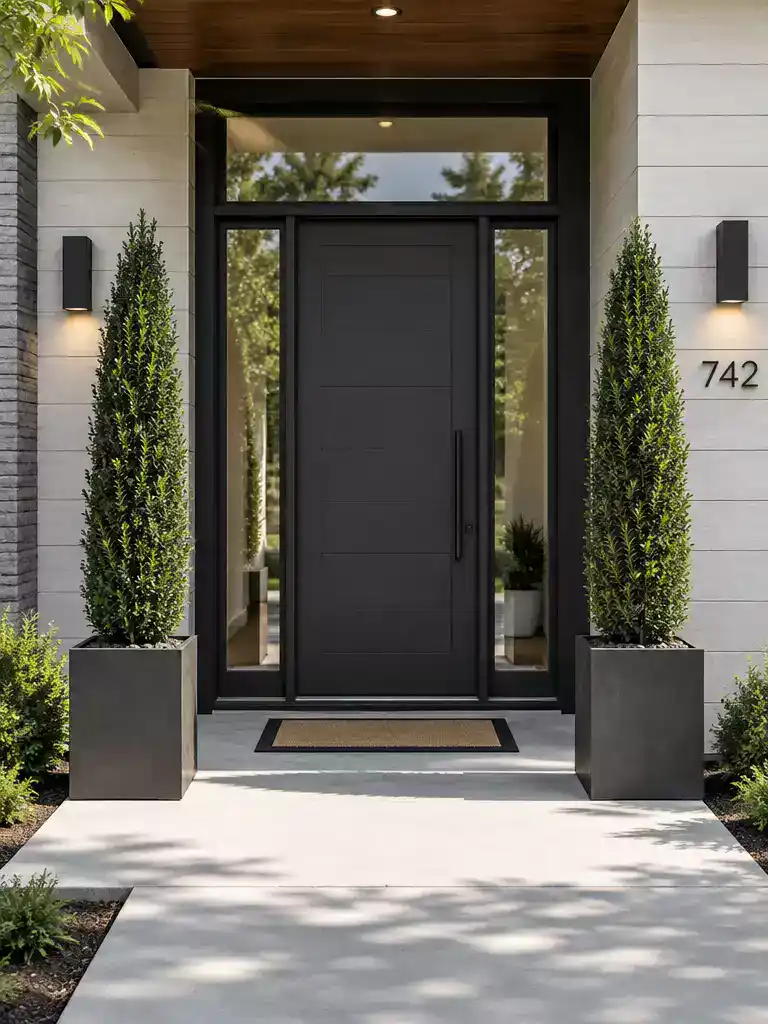
Create a sophisticated, evergreen architectural silhouette that respects your narrow walkway footprint.
When you need a living pillar that doesn’t demand a wide berth, the ‘Green Spire’ Euonymus is a standout choice. It maintains a strictly upright, columnar habit that typically stays within a 1 to 2-foot width, making it an ideal candidate for entryways where every inch of clearance counts.
Unlike deciduous shrubs that leave you with bare sticks during the winter, this is a reliable evergreen. It provides consistent, year-round structure that keeps your front door looking polished even when the rest of the garden goes dormant. Its dense foliage creates a clean, uniform look that fits perfectly with modern or minimalist home styles.
Pro-Tip: Drainage is Key
While the ‘Green Spire’ is a tough performer, it has one non-negotiable requirement: well-drained soil. Avoid planting it in low spots where water pools after a heavy rain, as this can lead to root stress that ruins the plant’s structural integrity.
To keep the maintenance low, focus on choosing the right spot from day one. Because it grows in a naturally compact, vertical form, you won’t need to fight its shape with constant shearing. It is a set-it-and-forget-it plant that rewards you with a crisp, professional look for years.
Be careful not to confuse this with broader, mounded euonymus varieties that can quickly overwhelm a tight space. Always verify the ‘Green Spire’ cultivar name on the nursery tag to ensure you are getting the true columnar habit necessary for your entryway.
💡 Why This Works for Modern Spaces:
The ‘Green Spire’ Euonymus excels in tight entryways because its rigid, vertical growth habit provides architectural weight without the visual “clutter” of broader shrubs. By mimicking a structural column, it helps define a clean, geometric frame for your doorway, which is a hallmark of high-end, minimalist landscaping.
Modern Curb Appeal: It creates a sharp, uniform silhouette that makes even the most compact entryway feel intentionally designed.
8. Upright Rosemary
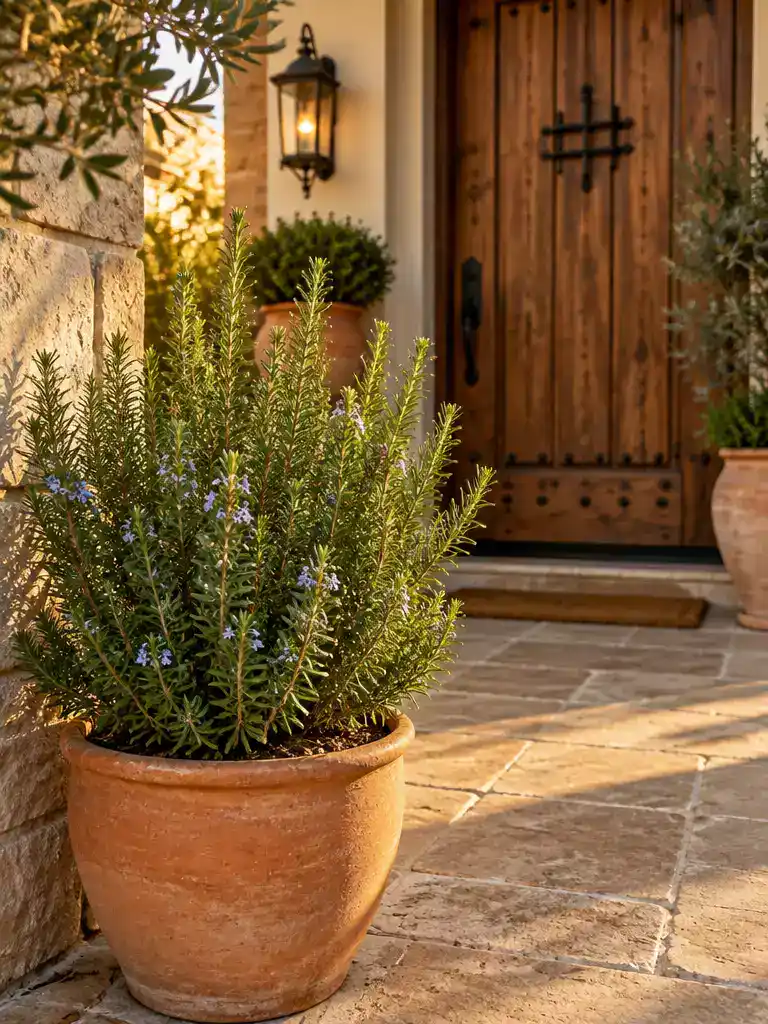
Bring a sensory, Mediterranean-inspired touch to your entryway with the fragrant, vertical beauty of rosemary.
If you want your front door to greet you with a fresh, herbal scent every time you step inside, Upright Rosemary is the only plant on this list that truly delivers on the fragrance factor. Unlike the other structural evergreens we’ve discussed, this is a living, culinary-grade addition that turns your entryway into a sensory experience.
However, be honest about your space before you commit. This is not a “barely any space” plant; it needs room to breathe and typically reaches a mature width of 3 to 6 feet. If your walkway is tight, this plant will eventually become an obstacle you have to dodge, which defeats the point of a welcoming, clear entrance.
Warning: The Pruning Trap
Never prune rosemary back into old, woody stems. Unlike other shrubs that bounce back from a hard cut, rosemary will not recover from cutting into leafless wood; it will simply leave a permanent, unsightly bald spot in your plant’s silhouette.
To keep an upright rosemary thriving, you must prioritize two specific conditions: full sun and excellent drainage. It is a high-maintenance choice compared to the stoic hollies and boxwoods on this list, making it better suited for the homeowner who views gardening as a regular hobby rather than a “set it and forget it” chore.
Key requirements for success:
- Sun Exposure: It demands a full-sun location; if your entry is shaded by a porch roof or nearby trees, the plant will quickly become sparse and leggy.
- Drainage: High-quality, well-draining soil is non-negotiable. If water tends to pool near your front door after a rain, rosemary will likely succumb to root rot within a single season.
- Lifespan: While variable, you can expect a healthy plant to last anywhere from 10 to 30 years with the right care.
If you have the width and the sun, the payoff is a lush, architectural plant that adds a rustic, high-end feel to your curb appeal. Just ensure you are prepared to manage its growth through light, selective harvesting rather than aggressive, structural pruning.
⭐ Upright Rosemary Herb Containers
Six Piece Artificial Greenery Mixed Stems
✨ Editor’s Pick
Eight Pack Self Watering Herb Pots
Decorative Gothic Cauldron Herb Planter
⚖️ Quick Decision Guide: Is Rosemary Right for You?
- Choose this if: You want a sensory garden and have at least 3 to 6 feet of lateral clearance.
- Skip this if: Your entrance is shaded or you prefer a “set it and forget it” low-maintenance structural plant.
- Pair it with: A stone or terra-cotta container to lean into the rustic, Mediterranean aesthetic of the foliage.
9. Compact Lavender
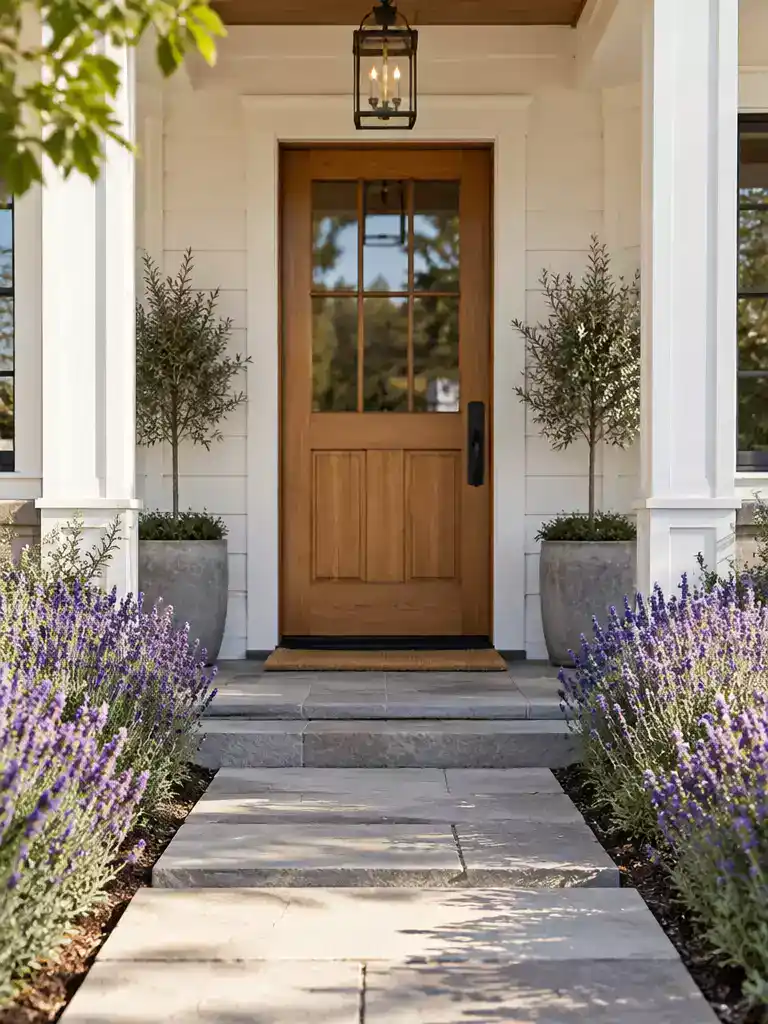
Create a soft, fragrant, and classic cottage-style entrance that thrives in narrow, sun-drenched spaces.
If you love the classic, romantic look of a cottage garden but only have a sliver of space, varieties like ‘Hidcote’ or ‘Munstead’ are your best bet. These compact cultivars are specifically bred to stay within a 12 to 24-inch width, making them perfect for tight, sunny entryways where larger shrubs would simply take over the path.
The “Woody” Warning: Lavender is not a “plant it and forget it” shrub. Because it is a semi-woody perennial, it requires a mandatory annual prune to stay tight and productive; otherwise, the center will inevitably become sparse, woody, and unattractive.
Unlike the long-lived Yew or Holly, compact lavender has a more modest lifespan of about 8 to 10 years. You should view this as a medium-term structural choice rather than a permanent fixture, planning for eventual replacement as the plants naturally age out.
To keep these thriving in a high-traffic entrance, keep these three requirements in mind:
- Full Sun: Lavender will not perform in the shade; it needs direct, unfiltered light to maintain its compact shape and floral production.
- Drainage: These plants despise “wet feet.” If your entrance bed holds water after a rainstorm, you must amend the soil or use raised planters to ensure fast drainage.
- Pruning: Aim to prune immediately after the first flush of flowers fades, but never cut back into the old, leafless woody stems, as they will not sprout new growth.
Avoid the “Over-Watering” Trap
Lavender is highly drought-tolerant once established. If you are regularly watering your entryway annuals or grass nearby, ensure the lavender is in a spot that doesn’t receive the excess runoff, as constant moisture is the fastest way to kill it.
⭐ Compact Lavender for Small Spaces
✨ Editor’s Pick
Two Set Artificial Lavender Topiary Trees
💡 Why This Works
Lavender provides a unique sensory experience that most architectural shrubs lack, turning a tight, utilitarian entryway into a fragrant, inviting threshold. Its ability to maintain a dense, upright form without needing wide lateral space makes it a high-impact choice for softening the harsh lines of a narrow door frame.
Sensory Curb Appeal: Using plants that engage your sense of smell creates a more memorable and welcoming home entrance.
10. Blue Fescue
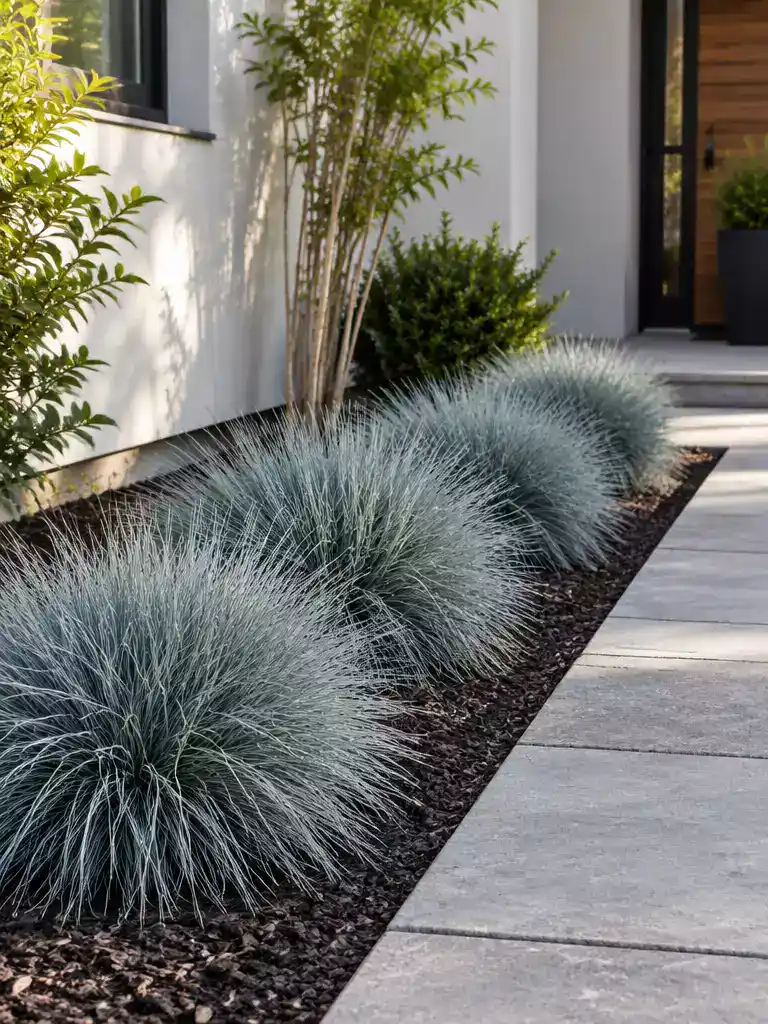
Add a sharp, architectural pop of blue-grey color without encroaching on your walkway space.
When you have a truly tiny footprint, Blue Fescue is your go-to for adding texture that doesn’t feel like a bush. These small, mounded grasses maintain a footprint of only 8 to 18 inches, making them the smallest option on this list for tight foundation beds or container edges.
The striking blue-grey color acts as a cooling visual element against warm-toned exterior materials like brick, terracotta, or tan stucco, providing a modern contrast that looks intentional rather than accidental. Because they stay so low to the ground, they are unlikely to ever block your path, provided you respect their need for a little breathing room.
The Crown Rot Warning
Blue Fescue is highly sensitive to moisture. Overwatering is the number one cause of failure; it requires excellent drainage to survive. If you notice the center of the plant turning brown or mushy, it is likely suffering from crown rot due to wet feet.
It is important to understand that this is not a “plant it and forget it” shrub. Blue Fescue has a relatively short lifespan of 3 to 5 years, after which the center often becomes woody and sparse, signaling that it is time to divide the plant or replace it entirely.
If you are looking for a permanent, structural pillar, this isn’t it. Instead, think of Blue Fescue as a disposable architectural accent that you can use to soften the edges of a larger planting or define a walkway border where other, more permanent plants would simply be too large.
⭐ Blue Fescue Grass for Pots
✨ Editor’s Pick
Natural Dried Corn Tassel Grass Decor
Two Piece Large Gradient Blue Planters
Sixteen Bundles Artificial Tall Grass Plants
With ten specialized plant options now laid out, the path to a clear, functional entryway becomes a matter of measurement rather than guesswork. You do not need to implement every idea on this list to achieve a professional result; choosing the one or two varieties that match your specific light and space constraints is what actually defines the success of your curb appeal.
A polished entrance relies on architectural consistency, so focus on the plants that provide the height you need without encroaching on your walkway. If you are still weighing your options, download our planting checklist to confirm your dimensions before you commit to a purchase. When you get the foundational choices right, the rest of your front door entrance naturally feels intentional, clean, and perfectly scaled for the long term.
Related posts:
 Maximizing Space with Style: The Pros and Cons of Installing a Pocket Door at the Top of the Stairs
 19 Charming Small Space Patio French Door Ideas
 15 Sliding-Door Wardrobe Designs That Save Space and Look Sleek
 Transform Your Space With Stylish Barn Doors
 Why Barn Doors Solve the Swing-Space Problem So Well
 15 Best Front Door & Curb Appeal Ideas That Buyers Notice First
 21 Front Door Ideas With Stylish Mats
 21 Pretty Pink Front Door Inspirations for Playful Charm