Choosing a doorknob finish sounds minor – until you multiply it by every door in your house. The wrong pick means premature corrosion, a clashing look that drags down resale, or spending twice to fix what should have been right the first time. This guide walks you through a finish decision based on where you live, how your rooms function, and what buyers notice – not just what looks good on a screen.
Key Takeaways
- ✦ Start with your environment, not the color. Coastal air, bathroom humidity, and high-traffic entries will corrode or chip the wrong finish within a few years – no matter how good it looked in the store.
- ✦ Limit your home to two or three finishes in the same undertone family (warm or cool). Mixing warm brass knobs with cool chrome fixtures in the same sightline is the most common mistake that makes a home look unfinished.
- ✦ Matte black is the most versatile neutral heading into 2026, followed by brushed brass and satin nickel. All three work across minimalist, traditional, and transitional styles.
- ✦ If you change knobs, change exposed hinges to match. Mismatched hinges are one of the fastest ways to undercut an otherwise polished room – and it’s a cost people forget to budget for.
- ✦ Always test physical finish samples under your actual room lighting. A brass that glows warm under showroom halogens can look flat or greenish under your kitchen’s cool LEDs.
- ✦ Replacing builder-grade shiny brass with brushed nickel or oil-rubbed bronze is the single most-recommended hardware swap for resale – staging professionals cite it consistently as a signal that a home has been maintained and updated.
Start With Your Environment, Not Your Pinterest Board
Before you pick a color, pick a finish that will survive the conditions in your home. This step alone eliminates half your options and saves you from replacing hardware that pits, chips, or corrodes within a few years.
The durability gap between finishes is real and significant. PVD-coated hardware (Physical Vapor Deposition – a vacuum-applied metal coating) lasts 25+ years and resists scratches, UV, and corrosion better than anything else on the market. At the other end, unlacquered polished brass starts developing patina within weeks and requires regular polishing to keep its bright look.
Your entry door takes the worst beating – direct sun, rain, temperature swings, and the most hands touching it daily. That’s where you want PVD-coated, 316 stainless steel, or solid brass/bronze hardware, not a standard plated finish that will show wear within a year or two. The full guide is front door handlesets, knobs and levers.
⚠ Coastal and Salt-Air Homes
If you live within a few miles of the coast, salt-laden air causes oxidation and pitting corrosion on standard hardware. The distinction between 304 and 316 stainless steel matters here: 316 stainless contains molybdenum for chloride resistance and is the standard for oceanfront properties. Regular 304 stainless, satin nickel, and standard chrome plating can all develop surface corrosion in these conditions.
Use: 316 stainless steel, solid silicon bronze, or PVD-coated hardware.
Avoid: Standard chrome plating, satin nickel, and 304 stainless steel for exterior doors.
Bathrooms present a similar (if less extreme) challenge. Constant humidity accelerates tarnishing on brass and can cause a milky film on nickel over time. Chrome and stainless steel hold up best in high-moisture rooms. Bedrooms and hallways are the most forgiving – low moisture, moderate traffic – so those rooms give you the widest range of finish options.
The pattern: let the harshest room narrow your choices first, then pick a color and finish that also works across your lower-demand rooms. Not the other way around.
The Finishes That Actually Matter Right Now (And Which Ones to Avoid)
There are dozens of finish names and codes in the hardware industry, but realistically, six or seven finishes account for most of what you’ll find at retailers and what makes sense for a residential home. Here’s what each one actually looks like, where it belongs, and what it costs you in maintenance.
Matte Black (Powder Coated)
A non-reflective black that reads as clean and grounded. Matte black is the dominant finish heading into 2026, and for a practical reason: it pairs with both warm and cool palettes, hides fingerprints well, and works across minimalist, farmhouse, industrial, and transitional interiors. It’s the closest thing to a universal neutral in door hardware.
Maintenance reality: Low day-to-day upkeep. Wipe with a damp cloth. However, quality varies by manufacturer – lower-quality powder coats can chip on edges over time, so look at the brand’s coating specs and warranty before buying in bulk for your whole house.
Satin / Brushed Nickel
A warm-toned silver-gray with a brushed, non-reflective surface. This finish has been a whole-house workhorse for years because it hides fingerprints and water spots well and works in every room. It reads as warm-undertoned, which makes it pair naturally with brass and bronze accents.
Maintenance reality: Can develop a milky tarnish in high-humidity rooms over time. Clean with a 1:1 vinegar-water solution. Avoid ammonia, bleach, and abrasive pads.
Satin / Brushed Brass
A warm gold with a soft, non-mirror surface. Satin brass has surged behind matte black as a feature finish – it adds warmth and visual weight to a room without the high-maintenance commitment of polished brass. It’s a strong mid-century modern, transitional, and coastal pick.
Maintenance reality: Living (unlacquered) versions develop patina over time – this is intentional, not a defect. Lacquered versions hold their color longer but may need re-coating eventually. Either way, skip harsh chemical cleaners.
Oil-Rubbed Bronze
A dark brown-black with warm undertones and visible depth where the dark color thins at contact points. This is a living finish – it lightens on spots you touch frequently and darkens in recesses. Traditional homes, farmhouse interiors, and formal spaces use it most.
Maintenance reality: You need to accept the patina or you’ll be fighting the finish constantly. Avoid abrasive cleaners – they strip the dark coating and accelerate wear in ways you don’t want.
Polished Chrome
A mirror-like, cool silver. Chrome is the most moisture-resistant decorative finish available, which is why it dominates bathrooms. It also reads as very modern and clinical, so it works well in contemporary kitchens and minimalist spaces.
Maintenance reality: Shows every fingerprint and water spot. You’ll be wiping chrome hardware more often than any other finish. Clean with mild soap only – abrasives scratch the mirror surface.
316 Stainless Steel (Satin)
A silver-gray with a subtle brushed texture, similar in appearance to brushed nickel but built from a single material rather than a plating. The 316 grade is the coastal and exterior standard due to its molybdenum content that resists chloride pitting.
Maintenance reality: Minimal. Wipe with a mild cleaner. This is a buy-it-and-forget-it finish for anyone prioritizing longevity over decorative warmth.
PVD-Coated Finishes
PVD coating is a finish method, not a color – it can produce gold, black, bronze, and nickel tones. The difference is durability: PVD deposits an ultra-thin but extremely hard metal layer in a vacuum chamber, creating a surface that resists scratches, UV, and corrosion far better than standard electroplating. Lifespan of 25+ years.
Maintenance reality: The lowest-maintenance option available. Standard household cleaners are safe. This is the premium choice for front entries, coastal homes, and anyone who doesn’t want to think about their hardware after it’s installed.
⚠ Two Finishes That Require Commitment
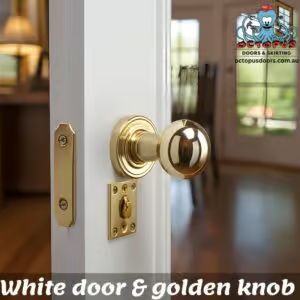
Unlacquered polished brass: This is a bright gold that starts changing within weeks. It’s the most period-appropriate finish for traditional and Victorian interiors, but it requires regular polishing to maintain its shine. If you’re not prepared for that upkeep, go with lacquered or satin brass instead.
Standard chrome plating on exterior doors: Chrome is excellent indoors, but standard chrome plating on an exterior door exposed to weather – especially in a coastal climate – can pit and corrode. Reserve it for interior use.
Printable Cheat Sheet
Door Hardware Finish Guide
Durability, maintenance & best rooms at a glance
Warm
Cool
Neutral
PVD-Coated Finishes
Warm / Cool / Neutral
Gold, black, bronze, or nickel tones depending on coating
316 Stainless Steel (Satin)
Cool
Silver-gray, brushed texture
Polished Chrome
Cool
Mirror-like, cool silver
Satin / Brushed Nickel
Warm
Warm silver-gray, brushed non-reflective
Matte Black (Powder Coated)
Neutral
Non-reflective black — pairs with warm and cool palettes
Satin / Brushed Brass
Warm
Warm gold with soft, non-mirror sheen
Oil-Rubbed Bronze
Warm
Dark brown-black with warm undertones — a living finish
Polished Brass (Unlacquered)
Warm
Bright gold — starts changing within weeks
⚠ Coastal & Salt-Air Homes
Use: PVD-coated, 316 stainless steel, solid silicon bronze
Avoid: Standard chrome, satin nickel, 304 stainless on exterior doors
⚠ Bathrooms (High Humidity)
Use: Polished chrome, satin nickel, 316 stainless
Avoid: Unlacquered brass, oil-rubbed bronze (humidity accelerates tarnish)
⚠ Exterior & Entry Doors
Use: PVD-coated, 316 stainless, solid brass or bronze
Avoid: Standard plated finishes, chrome plating, powder coat without UV rating
💡 In-Store Tip
Check the undertone badge on each finish above and compare it to your existing light fixtures and plumbing hardware. Matching is in hardware matching light fixtures. If your fixtures are warm-toned (brass, bronze, nickel), stay in the warm family. If chrome dominates, go cool. Matte black works with both.
Match Your Home’s Style Without Overthinking It
Once you know which finishes survive your conditions, the style question gets much simpler. Hardware that aligns with your home’s architecture creates visual coherence – and mismatched choices disrupt it even when the individual pieces are expensive. Find your home’s style below, grab the two or three recommended finishes, and cross-reference with what survived the durability filter in Section 1.
If your home blends styles (common in renovated properties), use your exterior materials as a guide. Warm exterior materials like brick pair naturally with warm-undertoned hardware – brass, bronze, nickel. Crisp neutral exteriors (white siding, gray stone) suit cleaner profiles in matte black, chrome, or stainless.
The Room-by-Room Decision Framework
Not every room needs the same finish, and not every room has the same constraints. Some rooms impose hard requirements based on moisture, cleaning frequency, or traffic volume. Others give you full freedom to pick based on look alone. Knowing which is which prevents both over-spending on industrial-grade hardware for a guest bedroom and under-spending on a bathroom that eats through cheap finishes.
Rooms with Hard Constraints
Front entry door: This takes the most weather, UV, and daily use. Go with PVD-coated, 316 stainless, or solid brass/bronze. Standard plated finishes degrade visibly here – and your front door is the first thing guests and buyers see.
Kitchen: High-touch, grease, moisture, and frequent cleaning. Satin nickel, brushed chrome, and matte black all handle this well. One extra consideration: if your appliances are stainless, your cabinet pulls are brushed nickel, or your faucet is chrome, your doorknobs should coordinate – a gold-toned knob on a door next to a wall of stainless appliances will look like an afterthought.
Bathrooms: Constant humidity is the enemy of brass and an accelerator of tarnish on nickel. Polished chrome and satin nickel are the dominant bathroom picks for good reason. Chrome shows water spots more readily, but it holds up to moisture better than nearly anything else. An important note: it is widely accepted in interior design for bathrooms to use a different finish (usually chrome or nickel) than the rest of the house, especially when plumbing fixtures are already in that finish.
Mudroom and laundry: Utility spaces with heavy daily wear. Satin stainless, matte black, and satin chrome resist scratches and clean easily.
Rooms with Full Freedom
Bedrooms: Low traffic and minimal moisture. Any finish that works with your whole-house scheme fits here. This is where comfort and aesthetics take priority over durability.
Living and dining rooms: Social spaces where guests spend the most time. Warmer, more expressive finishes – polished brass, satin brass, antique finishes, bronze – can make these rooms feel more considered and inviting.
Home office: Satin nickel, matte black, or brushed brass all give a professional look without demanding much upkeep.
Children’s rooms: Prioritize fingerprint resistance and durability. Satin nickel and matte black are the two finishes that handle heavy daily use from small hands without showing every smudge.

The Coordination Rules That Prevent Expensive Mistakes
This is where most door hardware projects go sideways – not in picking a bad finish, but in how that finish relates to everything else in the room. A polished brass knob that looks gorgeous on its own will look wrong next to a chrome light fixture. The rules below keep your hardware from clashing with itself or with your fixtures.
The Undertone Rule
Every metallic finish carries a warm or cool undertone. Warm finishes pair with warm finishes. Cool finishes pair with cool finishes. Mixing warm and cool metals in close visual proximity – say, a brass doorknob on a door directly below a chrome overhead light – creates a disjointed appearance that makes a room feel unfinished.
Warm Undertone
Polished brass, satin brass, antique brass, satin/brushed nickel, polished nickel, bronze, copper, rose gold
Cool Undertone
Polished chrome, satin/brushed chrome
Neutral (Pairs with Either)
Matte black
Proven pairings that work well together: satin brass + black, satin brass + bronze, satin nickel + polished nickel, antique brass + bronze, and antique nickel + black.
The Two-to-Three Finish Limit
Pick one primary finish for the majority of your doors and one or two accent finishes for feature areas (front entry, powder room, or a statement closet). Distribute the primary finish evenly throughout the house – if brushed nickel shows up on one floor and disappears on another, it reads as random rather than intentional. Some designers note that deliberate mixing avoids a “builder’s special” feel, and the consensus is that mixing works when the undertones stay consistent and there’s a clear hierarchy between the primary and secondary finishes.
The Hinge Trap
This is the hidden cost people forget. When you change doorknob finishes, exposed hinges need to match. A matte black knob on a door with shiny brass hinges looks half-finished. Budget for hinge replacement or refinishing when you’re planning a full-house hardware swap. One exception from design practice: gold-toned hinges can remain if you’re switching to oil-rubbed bronze, since these tones coordinate.
Light Fixture Coordination
Your doorknob finish and light fixture finish should share an undertone, especially when they’re in the same sightline. Buyers – even those who can’t articulate why – notice when a room’s metals all speak the same language. Coordinating hardware with light fixtures creates a “pulled together” impression that carries weight both while you live there and when it’s time to sell.
Printable Planning Worksheet
Room-by-Room Door Hardware Planner
List every door. Match every finish. Walk room to room, fill this in, and have a complete shopping list with quantities and budget before you order anything.
Quick Undertone Reference
WARM
Polished brass · Satin brass · Antique brass · Brushed nickel · Polished nickel · Bronze · Copper · Rose gold
COOL
Polished chrome · Satin chrome · Brushed chrome
NEUTRAL
Matte black (pairs with either)
How to use: Print this out and walk door-to-door with a pen. Fill in each row, check for undertone clashes, and tally your budget at the bottom. You’ll have a complete shopping list when you’re done.
Budget Summary
Total Knob Cost
Total Hinge Cost
PROJECT TOTAL
Pro Tip: Most homes have 15–25 interior doors. Print extra copies of this worksheet if you need more rows. Count closet doors and pantry doors — people forget those and end up placing a second order.
Test Before You Commit – Lighting Changes Everything
The same brass doorknob can look rich and warm in a showroom, then flat and greenish under the cool LEDs in your kitchen. Lighting is one of the most overlooked factors in finish selection, and it’s the number one reason people order hardware online, install it, and feel let down.
Light color temperature is measured in Kelvin (K), and it directly shifts how metallic finishes read:
Warm Light (2700–3000K)
Enriches brass, bronze, and copper. Makes them look richer and more golden. Creates a cozy atmosphere. This is your typical “soft white” bulb.
Cool Light (4000–5000K)
Flatters chrome and stainless steel, giving them a sharper, more reflective quality. Creates a modern, clinical feel. Common in kitchens and home offices.
Natural Daylight (~5000K)
Shows the truest color and tone of any finish. Use this as your baseline for evaluating samples.
Sheen level matters too. Polished finishes reflect light strongly and amplify glare – they make a room feel brighter but show every mark. Satin and brushed finishes diffuse light, reducing hot spots and maintaining a more consistent appearance as light changes throughout the day. Matte finishes absorb the most light and are the least affected by changing conditions.
💡 How to Test Finishes Before You Buy
Order two or three physical finish samples (many hardware brands sell or loan these). Hold or tape each sample to the actual door where it will be installed. Check it at two times: once during the day with natural light, and once at night with only your room’s artificial lighting on. A finish that looks good at both times is one you can commit to.
Pay special attention to brass finishes under cool LEDs, and chrome finishes in rooms lit primarily by warm-toned bulbs. These are the combinations most likely to look different from what you expected.

What Buyers Actually Notice (The Resale Angle)
Door hardware registers with buyers even when they can’t name what they’re reacting to. Refined, consistent hardware signals that a home has been maintained and that the owner paid attention to details – and dated or mismatched hardware signals the opposite. This perception influences how buyers feel walking through a home, which directly affects offers.
The most consistently recommended hardware swap for resale is replacing builder-grade shiny brass with brushed nickel or oil-rubbed bronze. Staging professionals point to this as a fast, relatively low-cost change that shifts the entire impression of a home from “original and untouched” to “updated and cared for.”
Neighborhood demographics factor in too. In areas attracting younger buyers, brushed nickel tends to test better. In neighborhoods with older, traditional homes, oil-rubbed bronze lands better. Either way, coordinating your doorknob finish with your light fixture finish – so the metals in a room feel intentional rather than random – is one of the fastest ways to make a home look “pulled together” during a showing.
Durable finishes that still look new after years of use also reduce buyer anxiety about deferred maintenance. When knobs and locks show visible wear – chipping, corrosion, loose fittings – buyers start wondering what else in the home has been neglected.
A Note on ROI
Staging professionals consistently recommend hardware updates, but there are no rigorous studies isolating the exact dollar-for-dollar return of swapping, say, old brass for brushed nickel. The advice is based on professional experience and buyer feedback patterns, not controlled data. That doesn’t make it wrong – it just means you should treat specific ROI claims with some skepticism and focus on the broader principle: coordinated, well-maintained hardware creates a positive impression that supports your asking price.
Doorknob Finish Comparison Table
This table compares the major residential finishes across the factors that actually affect your decision. Durability ratings are based on ANSI/BHMA testing standards for corrosion, scratch, and UV resistance.
💡 The 60-Second Finish Decision
If you want to cut through the noise fast, follow this sequence:
- Filter by environment. Cross off anything that won’t survive your front door’s exposure, your bathroom’s humidity, or your coastal air. (Refer to Section 1.)
- Pick your undertone family – warm or cool. Look at your existing light fixtures and plumbing fixtures. If they’re mostly brass, nickel, or bronze, you’re in the warm family. If chrome dominates, you’re cool. Matte black works with either.
- Choose one primary finish + one accent finish. The primary goes on 80% of your doors. The accent goes on your entry, powder room, or wherever you want a focal point.
- Order physical samples. Test each under your room’s actual daytime and nighttime lighting. (Refer to Section 6.)
- Budget for hinges. If you’re swapping finishes, count every exposed hinge that needs to match. Add that cost before you commit.
⚠ 5 Mistakes That Cost You Twice
- Forgetting the hinges. New matte black knobs next to old shiny brass hinges make the whole door look worse than it did before you started. Budget for hinge swaps or plan around finishes that coordinate with your existing hinges.
- Using plated finishes on exterior or coastal doors. Standard chrome plating, satin nickel, and 304 stainless pit and corrode in salt air and heavy weather. You’ll be replacing them within a few years.
- Choosing based on how a finish looks on screen. Screen colors and showroom lighting are almost never the same as your home’s lighting. A finish selected online or in-store without an in-room test leads to buyer’s remorse more than any other single factor.
- Mixing warm and cool metals in the same sightline. A brass knob beneath a chrome light fixture creates visual tension that makes a room feel unfinished – even if both pieces are individually expensive.
- Using bleach, ammonia, or abrasive pads on decorative finishes. These accelerate patina on brass and bronze, scratch chrome and nickel, and can strip clear coats entirely. Stick to mild dish soap or diluted vinegar for most finishes – and just a damp cloth for matte black and PVD.

Related posts
 A Complete Guide to Choosing Your Front Door Paint Color
 Choosing a Door Color When the Rooms on Each Side Are Different Colors
 The Ultimate Guide to Choosing the Right Size Sliding Door Fly Screen
 Finding the Perfect Fit: A Guide to Door Hinge Screw Sizes
 Securing Safety: Choosing the Right Screw Sizes for Fire Door Hinges
 What to Know Before Choosing a Safety Door
 Choosing the Right Paint for Doors: Sheen, Primer and Prep
 How to Install Dummy Door Knobs on French Doors