
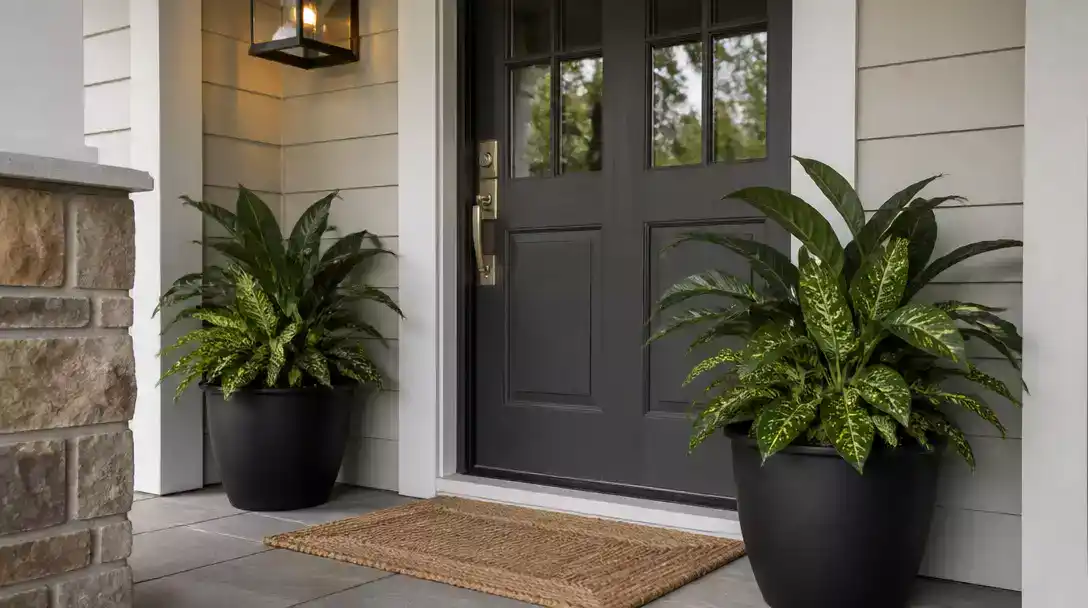
A shaded entrance doesn’t have to be a barren dead zone. This guide collects 10 plant ideas worth saving that thrive in low light, helping you select the right greenery for your home. Here are 10 reliable choices to refresh your entry this weekend.
Cast iron plant
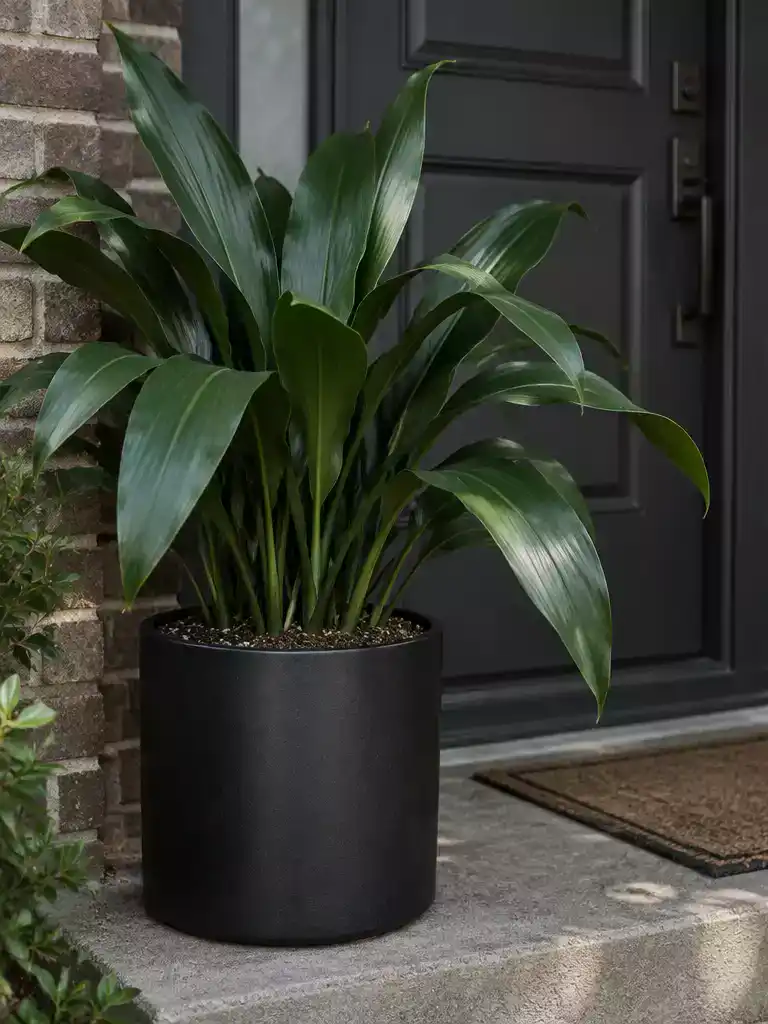
A virtually indestructible choice for dark entryways, providing year-round architectural greenery with minimal fuss.
As an Amazon Associate I earn from qualifying purchases. Affiliate links may earn me a commission at no extra cost to you.
The cast iron plant (Aspidistra elatior) earns its name because it is nearly impossible to kill, making it the gold standard for north-facing, dark entries. Its architectural, clumping habit grows upward, which keeps it neatly contained in narrow, modern pots without sprawling into your walkway.
Warning: The Root Rot Risk
Because this plant grows slowly in deep shade, it doesn’t process water quickly. Always let the soil dry out significantly between waterings to prevent root rot.
To really make the deep green, leathery leaves pop, place them in a matte-black pot. This creates a high-contrast look that feels intentional and styled, even in the darkest corner of your porch.
- ✔
Best for: Narrow, urban-style entryways where space is at a premium. - ✔
Avoid if: You are a habitual over-waterer who likes to keep soil constantly damp.
⭐ Top Planters for Cast Iron Plants
✨ Editor’s Pick
Tall Striped Outdoor Planters Set
Large Whiskey Barrel Style Plant Pots
Modern Tapered Black Plastic Flower Pots
💡 Designer Note: Why the Matte-Black Pot Works
In deep-shade entries, your biggest enemy is visual “mush” – where dark green foliage disappears against dark shadows or brick. Using a matte-black container creates a clean, intentional silhouette that defines the space. The lack of shine ensures the pot doesn’t reflect stray light, letting the leathery texture of the cast iron plant stand out as the primary focal point.
Japanese Aucuba
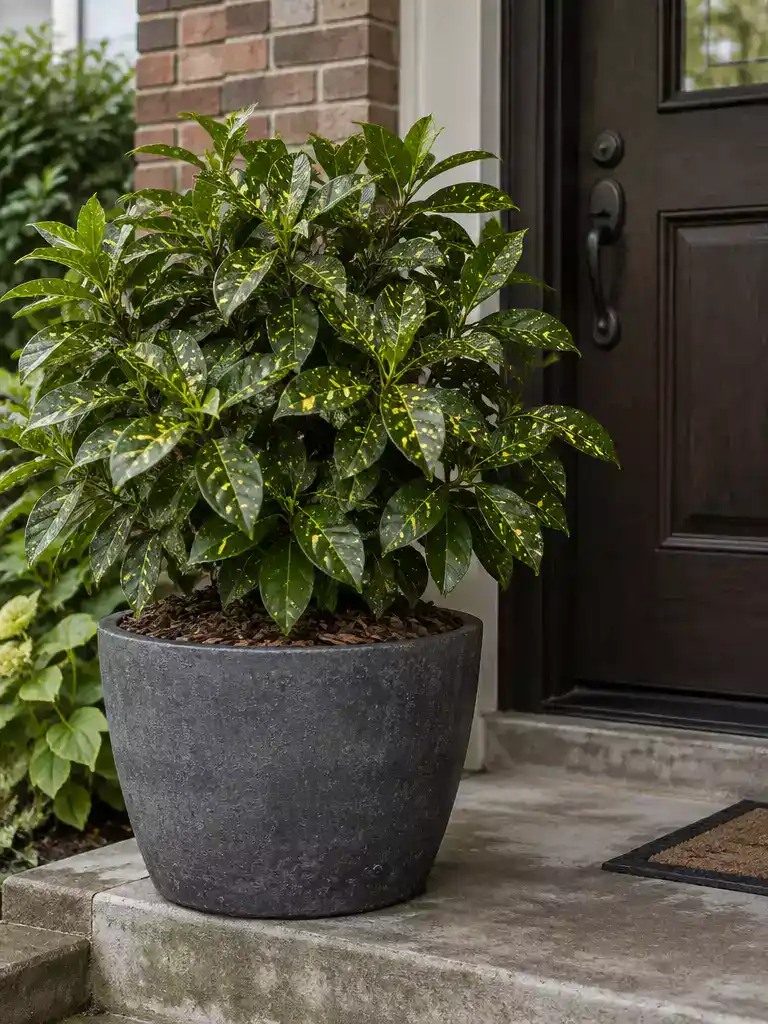
Bring light to your darkest porch corners with gold-flecked, high-contrast foliage that thrives in shade.
The Japanese Aucuba is a secret weapon for north-facing entryways that feel gloomy. Its glossy, gold-speckled leaves act like natural reflectors, catching ambient light and brightening up corners that would otherwise disappear into the shadows.
Caution: Size Matters. This is a true shrub, not a delicate perennial, so it will quickly outgrow small, cramped porches.
If you don’t have a large foundation bed or the space for a substantial, heavy container, this plant will require regular, disciplined pruning to keep your doorway accessible.
Because this shrub has a larger root system than typical shade perennials, it demands consistent moisture to stay healthy. Use a quality potting mix and apply a layer of mulch to keep the root zone cool and hydrated during the summer heat.
- Best for: Large stoops, sheltered foundation beds, or oversized containers.
- Maintenance: Keep soil consistently moist; prune annually to maintain your desired shape.
- Avoid if: Your porch is narrow or high-traffic, as the branches can be brittle if brushed against constantly.
If you have the floor space, the Japanese Aucuba provides a bold, permanent structure that looks intentional all year long. Just be sure to keep it out of direct sun, as those bright gold spots will scorch and turn brown if exposed to harsh afternoon rays.
⭐ Best Japanese Aucuba Garden Shrubs
Tall Artificial Evergreen Cypress Topiary Trees
✨ Editor’s Pick
Artificial Cypress Bushes for Autumn Decor
Durable Outdoor Plant Pots for Shrubs
Designing a low-light entryway for long-term health is less about perfecting every corner and more about getting the foundational elements right. Establishing a solid base ensures your plants remain a lasting design asset for your home.
💡 What Moves the Needle:
- Prioritize proper drainage to prevent root rot in stagnant shade settings.
- Assess container scale to ensure your plants thrive without outgrowing the porch.
- Focus on foliage texture rather than blooms for consistent, year-round success.
Sweet Box
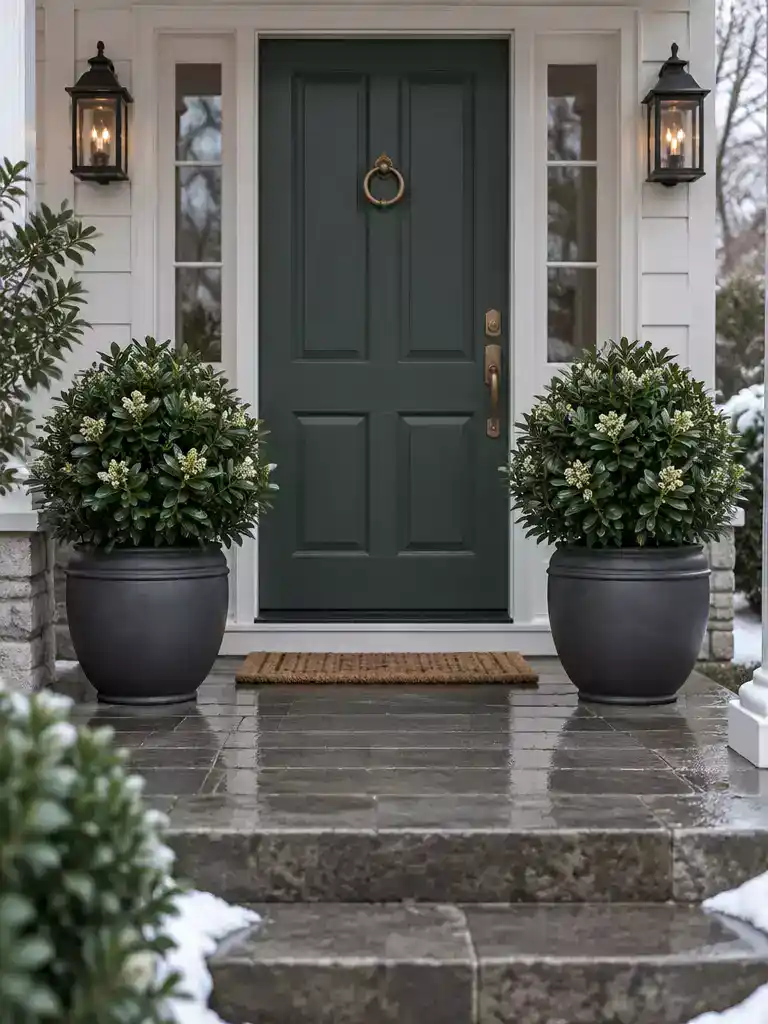
Fill your doorway with subtle, sweet fragrance during the quiet transition of late winter.
The Sweet Box, or Sarcococca, serves as a reliable secret weapon for entries that feel lifeless during the colder months. It is an evergreen shrub that maintains a dense, tidy habit, making it an ideal candidate for formal, symmetrical arrangements.
Why it works: Unlike many shade plants that disappear or turn brown when the temperature drops, this plant stays lush year-round. It rewards your patience in late winter with small, white flowers that emit a surprising, honey-like perfume right at your doorstep.
Because it grows slowly and keeps a naturally compact shape, you won’t find yourself constantly pruning it to keep your walkway clear. It is best suited for homeowners who want a polished, low-maintenance look without the need for frequent shaping.
This is the right choice if you appreciate year-round greenery and want a plant that provides an olfactory welcome to guests. If you are looking for a plant that grows aggressively to fill a massive space, you should look elsewhere as its slow growth is its primary feature.
⭐ Sweet Box Plants We Love
Artificial Wheat Grass for Garden Decor
Artificial Topiary Ball Trees for Outdoors
✨ Editor’s Pick
Artificial Cedar Topiary Trees for Porch
💡 Why This Works
By introducing a plant that blooms in late winter, you transform your entrance from a dormant, shadowy zone into a sensory highlight during the harshest months. The sweet, honey-like fragrance creates an unexpected, welcoming atmosphere at the threshold when most other garden life is still fully asleep.
Sensory strategy: Using scent as a design element makes a small, dark entryway feel intentionally curated and inviting.
Hellebore
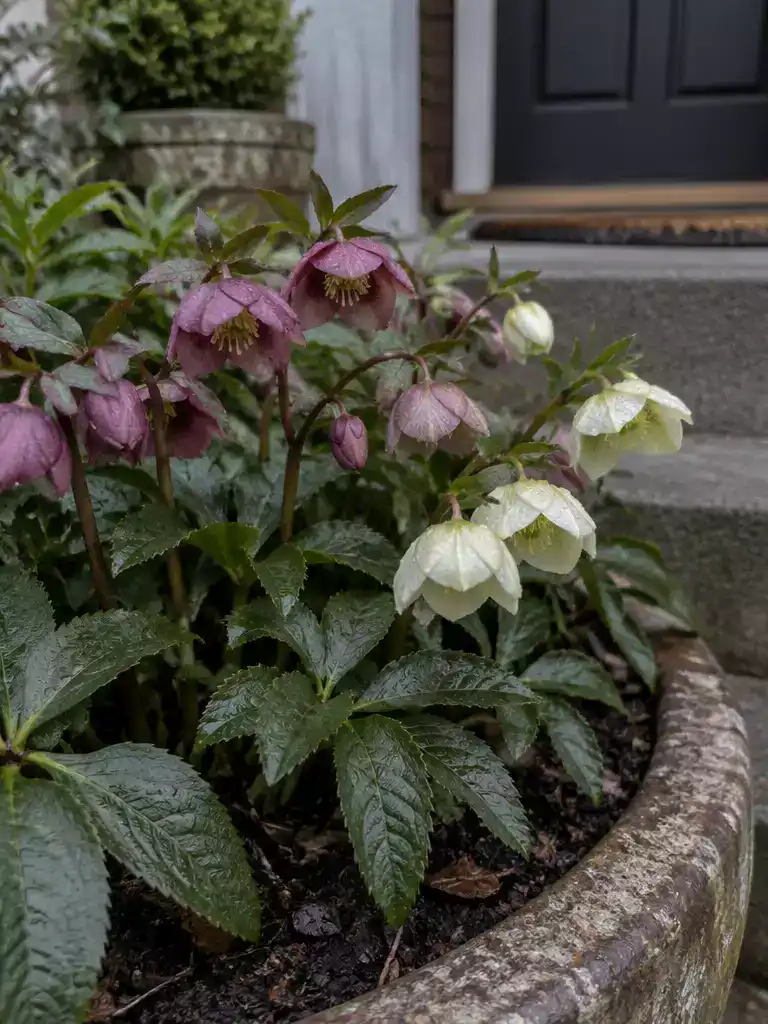
Bring early season color to your darkest entryway with these resilient, shade-loving winter bloomers.
Hellebores are your go-to choice if you want early season interest in an entrance that usually sits dormant until late spring. While many shade plants offer only uniform green foliage, these perennials provide leathery, evergreen leaves topped with nodding, lantern-like flowers long before the rest of your garden wakes up.
Design Tip: Placement Matters
Because Hellebores have a broad, spreading growth habit, they are best suited for foundation beds rather than narrow, cramped containers. If you have a small porch with limited soil space, you might find them a bit too sprawling compared to more vertical, architectural plants.
Understand that this plant favors a naturalistic aesthetic over the rigid, uniform look of a Cast Iron Plant or Mondo Grass. They thrive when left relatively undisturbed, allowing them to fill in a shaded corner near your door foundation over time.
⭐ Hellebore Garden Pots to Consider
✨ Editor’s Pick
Self Watering Plastic Flower Pots
Adjustable Steel Plant Support Stakes
Cute Smiley Face Rocking Chair Planter
📋 Quick Reality Check: Is Your Light Level Sufficient?
- Observe ambient light: Even though Hellebores love shade, they still require some indirect light to produce those signature winter blooms.
- Check for “dead” shade: If your porch is a completely light-starved cave, Hellebores will survive as foliage but likely won’t flower.
- Verify exposure: Ensure your foundation spot avoids harsh, direct afternoon sun, which can scorch the leathery leaves, even in cooler seasons.
Autumn Fern
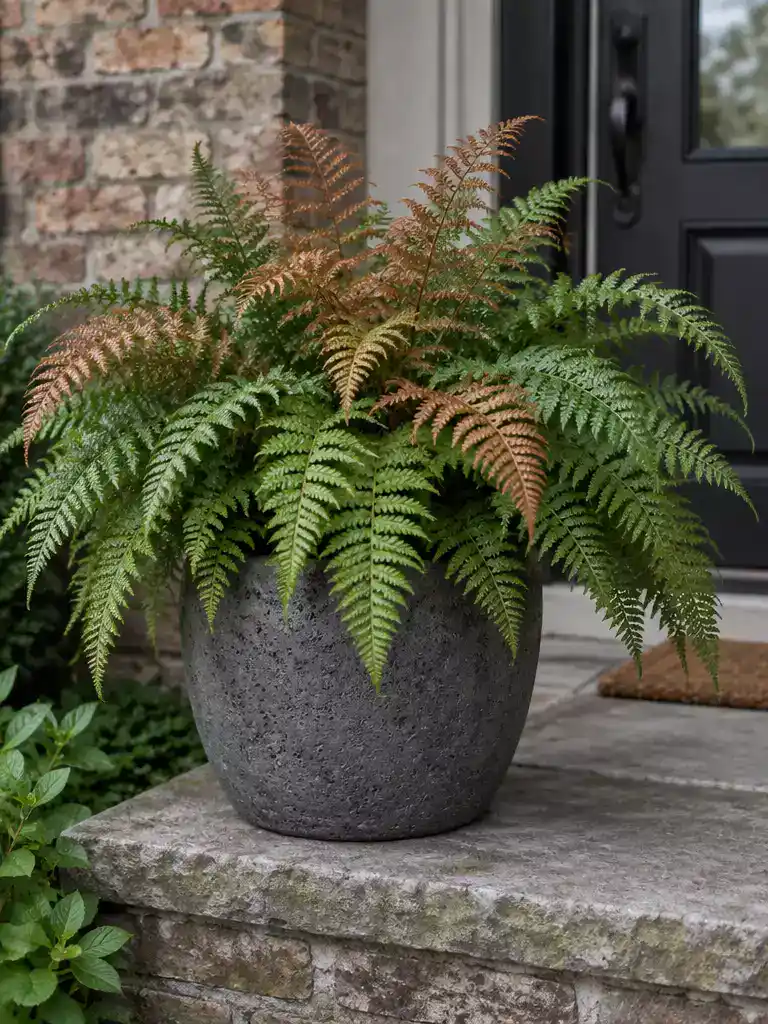
Bring warmth to your dark entryway with the unique, color-shifting foliage of this hardy fern.
The Autumn Fern is a standout choice for shaded entryways because of its striking color progression. Its new fronds emerge as a brilliant, coppery bronze before maturing into a deep, glossy green, adding much-needed contrast against dark stone or brick.
Styling Tip: Use these plants to soften the hard edges of your concrete steps or entrance path. Their arching habit creates a natural, cascading effect that makes formal entryways feel more inviting.
While they excel in low-light spots, they do require consistent moisture to thrive. You must protect them from drying winds, which can quickly turn the delicate edges of the fronds brown and brittle.
This is the right choice if you want a plant that looks lush and organic rather than stiff or architectural. If your porch is extremely exposed to high winds, however, you may want to select a plant with tougher, leathery leaves instead.
⭐ Autumn Fern Foliage Picks
Artificial Tall Grass for Garden Beds
✨ Editor’s Pick
Stainless Steel Plant Pot Insert Set
Artificial Fall Eucalyptus Leaves Stems
✨ Finishing Touches for Ferns
Selecting the right container and placement ensures your Autumn Fern stays vibrant and doesn’t suffer from the drying effects of porch airflow.
- Potting material: Choose glazed ceramic or plastic pots to help retain the consistent soil moisture these ferns desperately crave.
- Layering strategy: Place these in the front of deeper containers, allowing their arching fronds to spill over the edge and soften your entryway’s footprint.
Japanese Aralia
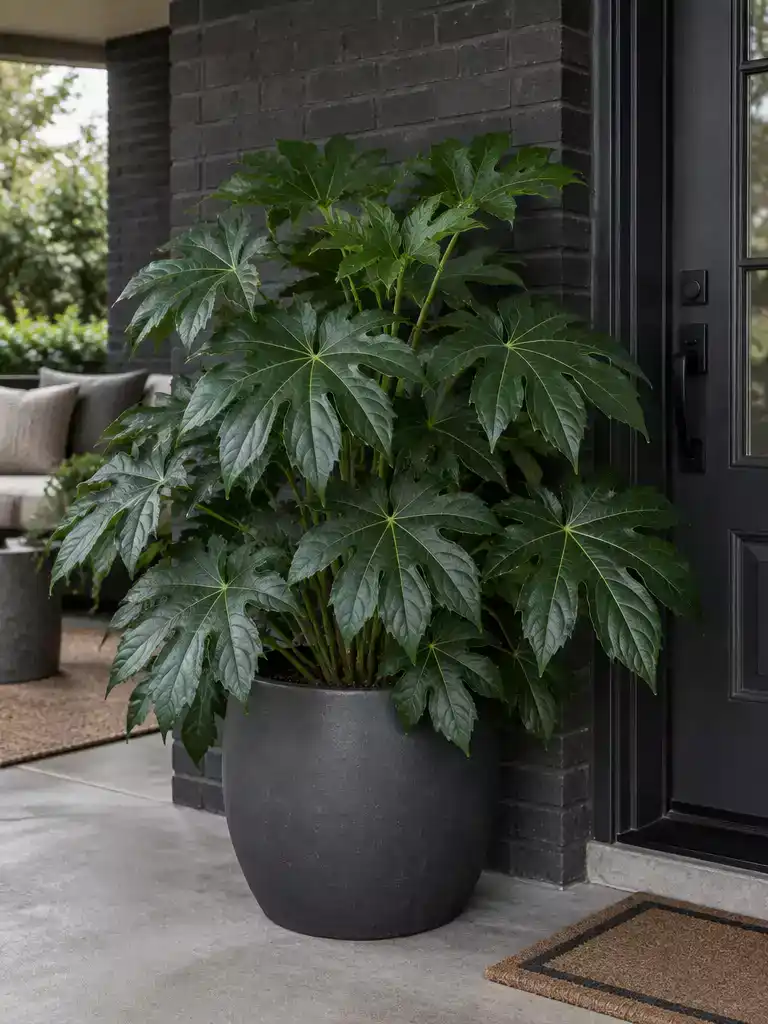
Bring a bold, high-impact tropical look to your shaded porch with these architectural leaves.
The Japanese Aralia (Fatsia japonica) is the go-to for designers wanting to add a bold, tropical aesthetic to deep-shade areas. Its massive, hand-shaped leaves provide a high-impact, coarse texture that stands out against dark brick or stone foundations.
Size Warning: This is strictly for spacious entryways or wide porches. The leaves are broad and can be easily damaged by high-traffic brushing, so keep it tucked away from narrow pathways.
Because this plant grows into a substantial shrub, it needs a large container to remain stable and healthy. It thrives in deep, consistent shade where other plants would struggle, but it requires a sheltered corner to keep those large, delicate leaves from snapping in high winds.
Ideal placement strategy:
- Use it as a standalone focal point in a corner where it won’t be brushed against by guests.
- Select a heavy, weighted pot to prevent the large foliage from tipping the plant over in the wind.
- Ensure the area has enough clearance to accommodate the plant’s wide, horizontal reach.
⭐ Japanese Aralia Garden Plants
Realistic UV Resistant Fake Grass Stems
Artificial Wheat Grass for Home Decor
✨ Editor’s Pick
Artificial Fall Flowers for Outdoor Planters
🏡 Real-Home Application for Tropical Foliage:
- Traffic flow: Place these in corners away from door-swing arcs to prevent guests from accidentally snapping the broad, brittle leaves.
- Wind buffering: Use a heavy, dense ceramic pot to keep the plant stable, as large, sail-like leaves catch wind easily on exposed porches.
- Visual pairing: Underplant the base with smaller, low-growing varieties like mondo grass to hide the soil and balance the plant’s massive upper canopy.
Japanese Sedge
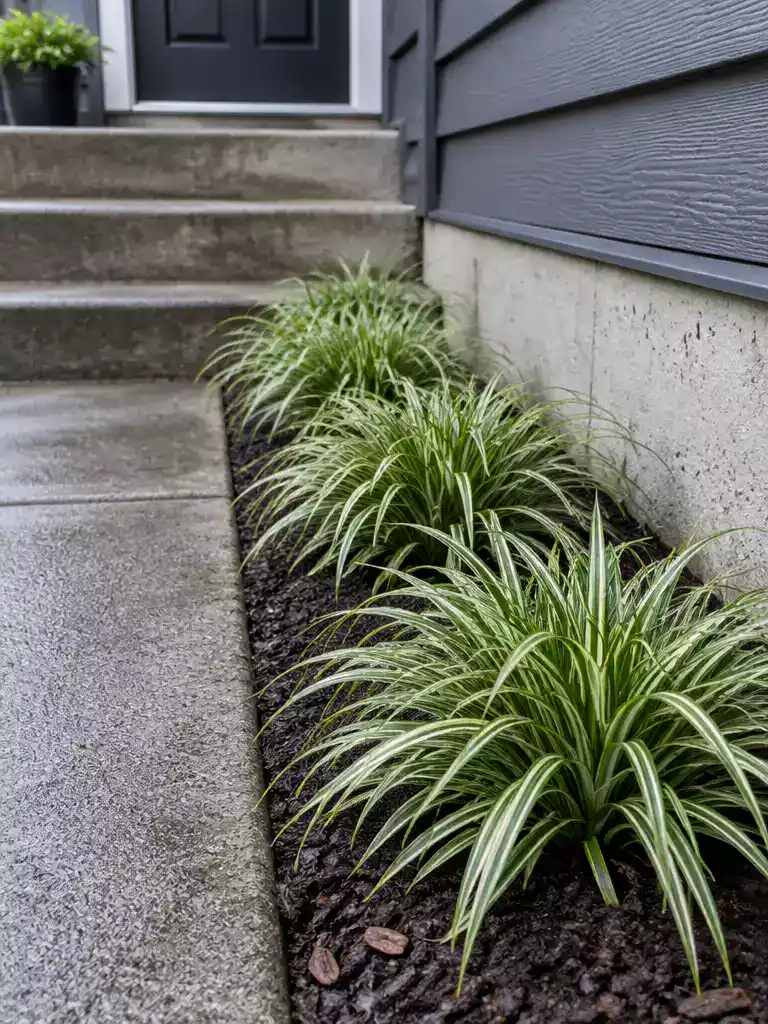
Keep your shaded entryway clear and accessible with this low-profile, grass-like texture.
Japanese Sedge is the ultimate problem-solver for tight, functional entryways where you need greenery without the bulk. Its refined, mounding habit stays low to the ground, ensuring it never encroaches on your walkway or obscures your door numbers.
This plant is a top choice if you are dealing with narrow strips of soil between a concrete path and your home’s foundation. It also performs exceptionally well in small, shallow containers where larger shrubs would eventually become root-bound.
Why choose Japanese Sedge? Its slow, predictable growth means you won’t be out there with shears every month just to keep your front door accessible.
Because it maintains such a neat, tufted structure, it functions best as a soft border or a low-filler plant. Avoid planting it in areas where foot traffic is heavy, as the arching blades can be damaged if stepped on repeatedly.
If your entrance gets virtually no direct sun, this is one of your safest bets for year-round consistency. It thrives in the shade and requires very little maintenance once it has settled into its container or bed.
⭐ Japanese Sedge Grass for Gardens
✨ Editor’s Pick
Small Decorative Flower Pots with Saucers
Classic Tall Round Urn Planters
Artificial Fall Flowers for Outdoor Decor
⚖️ Quick Decision Guide:
- Choose this if: You have a narrow stoop where bulky shrubs would block guests or hide house numbers.
- Skip this if: Your entrance experiences high foot traffic, as the delicate blades can wilt under heavy, repeated impact.
- Pair it with: A simple, stone-textured planter to ground the grass-like texture and add a natural, organic contrast.
Heuchera
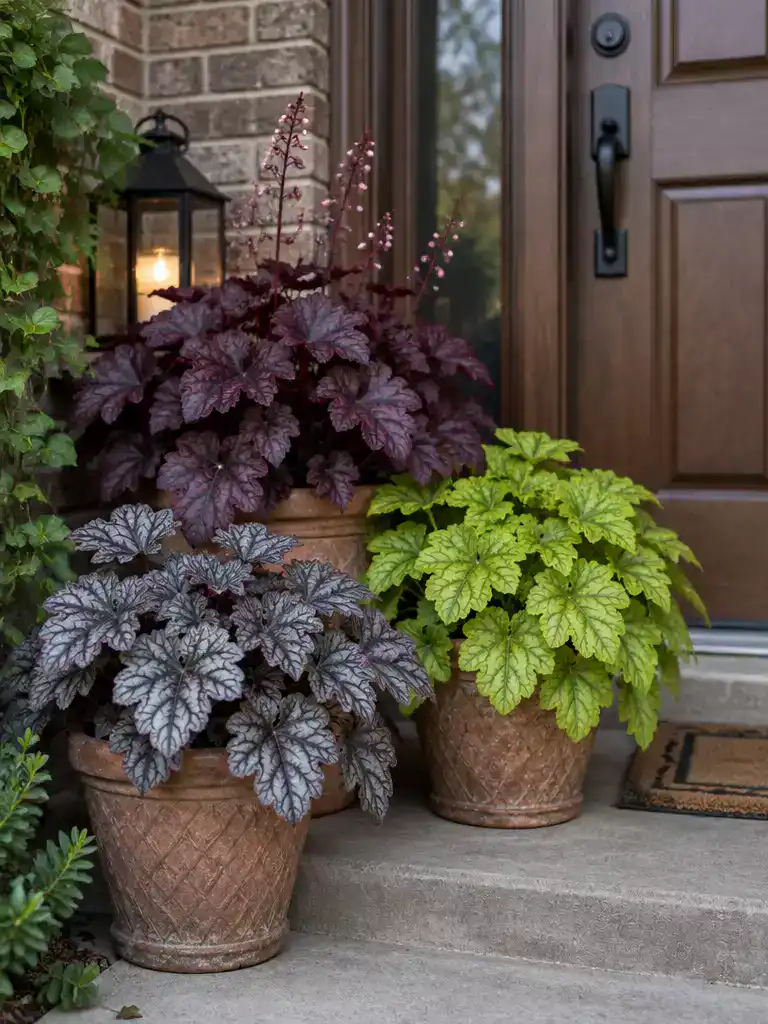
Inject bold, punchy color into your darkest corners with these foliage-forward, compact perennials.
Heuchera, also known as coral bells, is your best bet for breaking up the deep, monotonous greens of a shaded entryway. These plants offer a startling range of foliage colors, from moody, deep purples and earthy coppers to bright, eye-catching lime greens.
Because they grow in a neat, compact mound, they are perfect for filling the gaps in mixed containers. Try tucking them around the base of a taller, structural plant like a Japanese Aucuba to create a layered, professional look.
Performance Note: While they are resilient, keep in mind that they need at least a sliver of indirect light to maintain their intense color.
In extremely deep, lightless corners, the leaves may shift toward a duller, greener shade. Choose a spot that gets at least a bit of ambient brightness to keep the colors sharp.
Heuchera is an excellent choice for the gardener who wants high-impact color without the hassle of sun-dependent flowers. If you have a small container near your door that feels a bit “flat,” this is exactly the plant to add some visual pop.
However, keep your expectations realistic regarding the light levels in your specific entryway. If your porch is a literal lightless void, opt for a more shade-hardy choice like the Cast Iron Plant instead.
⭐ Heuchera Coral Bells Garden Picks
Gradient Blue Texture Outdoor Plant Pots
✨ Editor’s Pick
Large Copper Plaid Outdoor Plant Pots
Stainless Steel No Hole Siding Hooks
💡 Why This Works
Heuchera succeeds in shaded entryways by acting as a “visual anchor.” Because they grow in dense, low-profile clumps with vibrant, non-fading leaf colors, they prevent the entryway from feeling like a dark tunnel. Their presence adds a sense of intention and professional design, effectively bridging the gap between structural shrubs and delicate groundcovers.
Design takeaway: Use contrasting leaf colors to make your entryway feel curated rather than accidentally overgrown.
Hosta
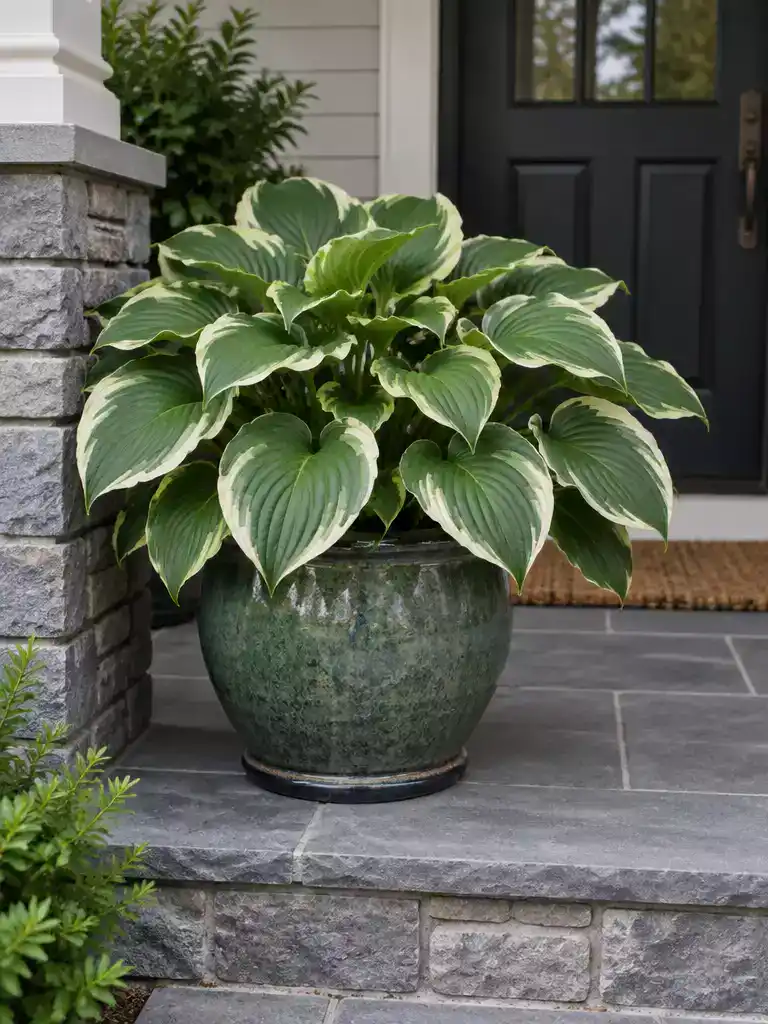
Elevate your Hosta foliage to keep leaves pristine and away from ground-level garden pests.
Hostas are the go-to choice for adding bold leaf patterns and soft, rounded shapes to a shaded entryway. They offer an incredible range of foliage, from deep, moody blue-greys to vibrant, variegated white-and-green varieties.
The Ragged Leaf Risk
These plants are unfortunately a magnet for slugs and snails. If your entrance is consistently damp, these pests can turn your lush greenery into tattered, hole-filled messes by mid-summer.
Because of this vulnerability, you should prioritize larger, elevated containers rather than placing them directly in ground-level foundation beds. Raising the foliage just a few inches off the porch floor significantly reduces the chance of slug damage.
Since many cultivars naturally expand into large, wide-spreading clumps, make sure to pick a container size that matches the mature width of your specific variety. If you have a particularly tight stoop, stick to smaller, compact hosta types to avoid the plant encroaching on your walkway.
⭐ Hosta Garden Planters We Love
✨ Editor’s Pick
Tall White Decorative Outdoor Plant Pots
Tall Kitchen Pantry Storage Cabinet
Dwarf Mondo Grass
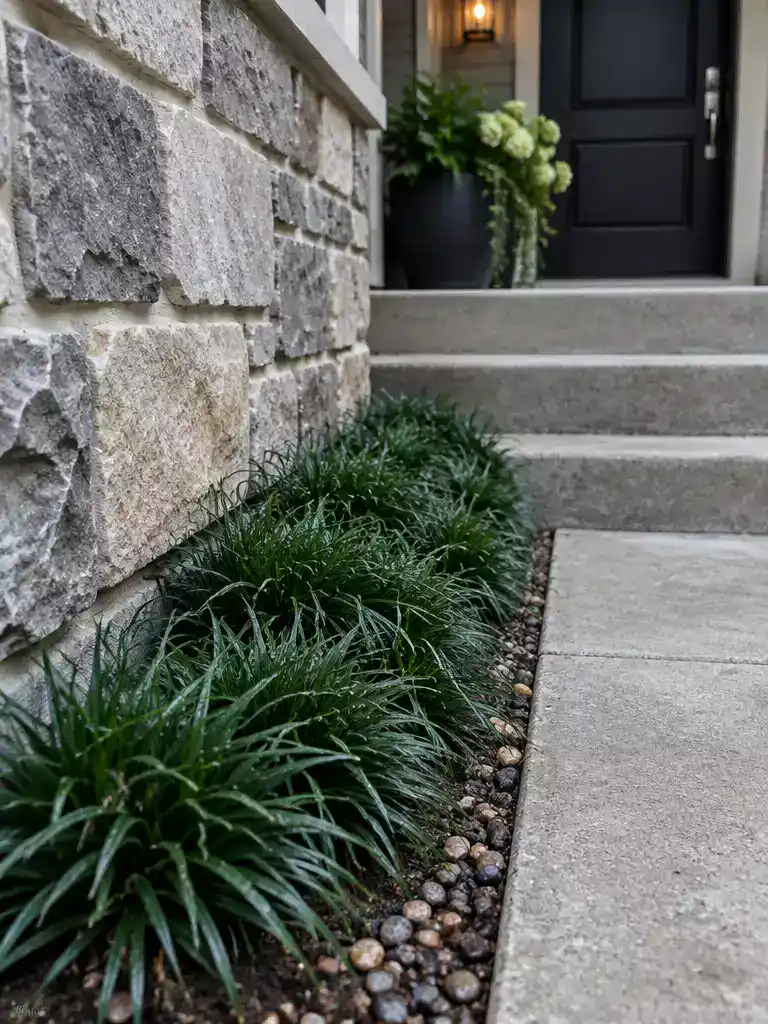
Create a lush, carpet-like border that stays neat and low-profile in deep shade.
When you have a tiny stoop or a narrow strip of soil between your walkway and foundation, you don’t want plants that will swallow the space. Dwarf Mondo Grass is the ultimate low-profile solution for entryways where you need to keep sightlines clear and paths unobstructed.
Because it is incredibly slow-growing, you won’t find yourself constantly reaching for the shears to keep it from encroaching on your steps. It maintains a clean, intentional look year-round without requiring much effort from you.
Best Ways to Use It:
- As a soft, evergreen groundcover in pots to hide the soil surface.
- Edging a concrete walkway to soften the hard, straight lines.
- Filling narrow gaps near the foundation where larger shrubs would get crowded.
This is the right choice if you want a minimalist, orderly aesthetic that doesn’t compete with your door color or hardware. If you are looking for a plant that offers height or dramatic flowering, look elsewhere; this is strictly for low-profile, permanent greenery.
⭐ Dwarf Mondo Grass Garden Picks
✨ Editor’s Pick
Small Artificial Plant in Black Pot
Artificial Tall Grass for Indoor Decor
Tall Faux Shrubs for Garden Decor
🏡 How This Works in a Real Home:
- Container depth: Use shallow, wide bowls rather than deep pots to keep the grass mound proportional.
- Daily maintenance: Simply clear away fallen leaves or debris with your hands to keep the turf clean.
- Visual softening: Place pots along the edge of your porch steps to hide harsh concrete corners seamlessly.
With ten plant options now in front of you, the strategy for your shaded entrance becomes easier to manage. Focus on the one or two selections that best match your space’s scale and light levels rather than trying to incorporate every idea at once.
A successful entry relies on a few intentional choices that thrive in low-light conditions, turning a dark corner into a design asset. Start this weekend by finding an anchor plant for your front door planters, and you will see how quickly a deliberate, low-maintenance approach refines the look of your home. The entrance you are picturing is well within reach once you commit to the varieties that suit your specific foundation.
Related posts:
 18 Front Door Ideas for Elegant Entrances
 What to Plant Beside a Front Door When There’s Barely Any Space
 Fiberglass vs Wood Front Doors for Full Sun
 Top 10 Best Door Mats Under $150 for Busy Front Entrances
 14 Door Mat for Front Door That Won’t Fade in Full Sun
 15 Best Front Door & Curb Appeal Ideas That Buyers Notice First
 21 Front Door Ideas With Stylish Mats
 14 Art Deco Front Door Ideas