
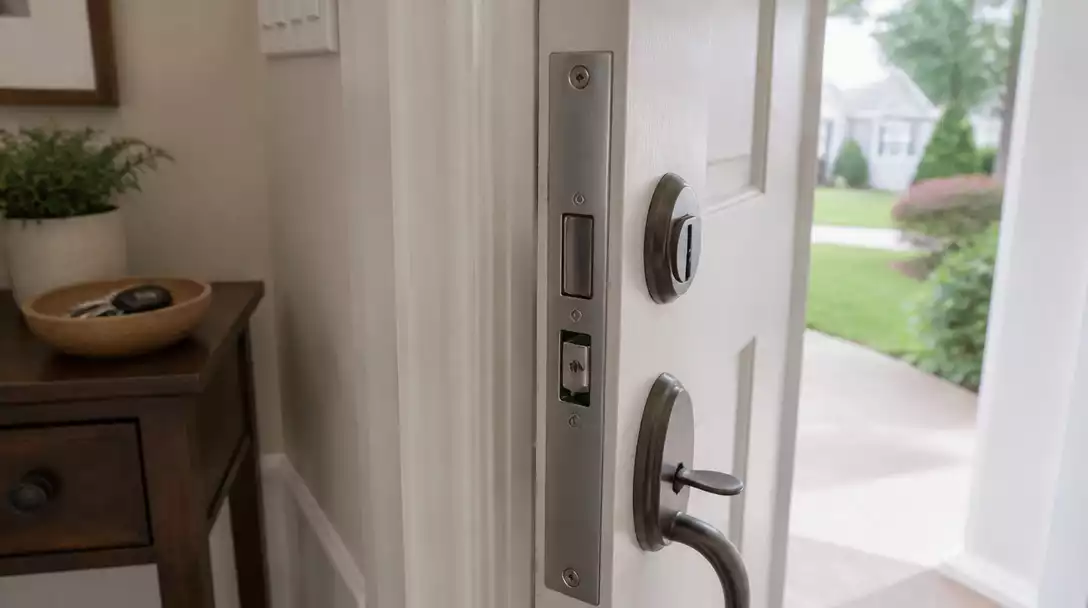
Most residential entry failures happen because soft wooden frames cannot withstand physical force. This guide rounds up 12 door security upgrades worth saving to help you anchor your hardware into structural framing. Identify the right fix for your home and start with the most critical adjustment below.
Structural strike screws
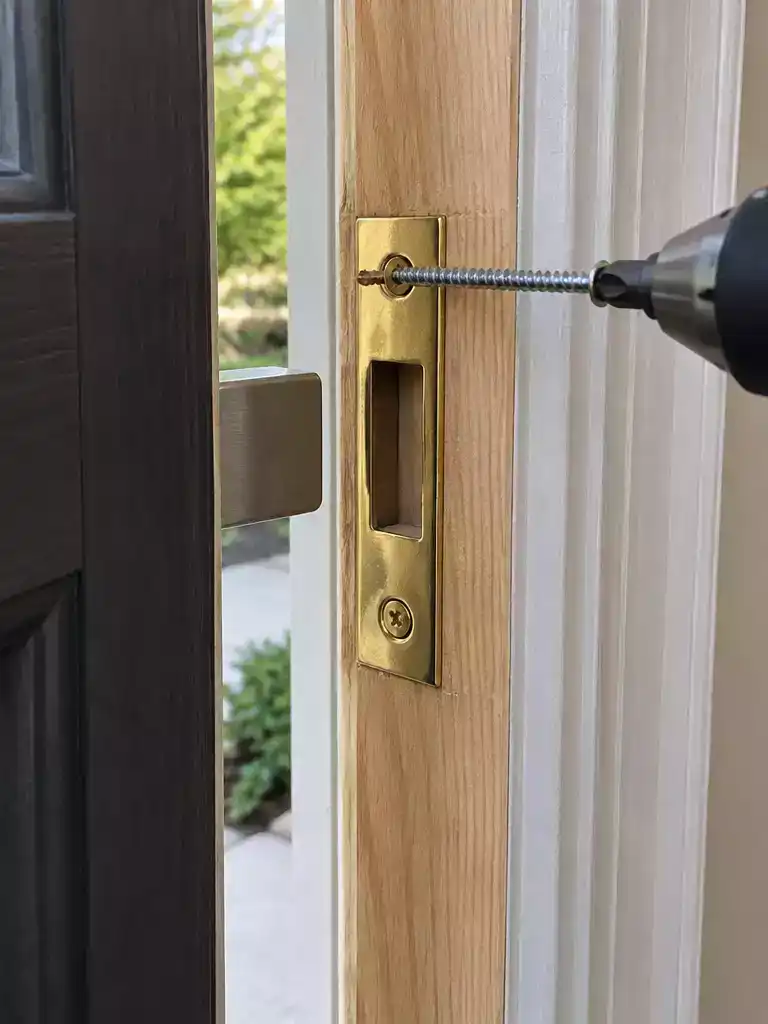
Anchor your strike plate directly into the structural stud to stop forced entry attempts.
As an Amazon Associate I earn from qualifying purchases. Affiliate links may earn me a commission at no extra cost to you.
Most residential doors fail during a kick-in because the factory-installed screws are only 0.5 to 1 inch long. These short fasteners only bite into the soft decorative trim, leaving the door completely unsupported against physical force.
Structural strike screws create a direct load path between the strike plate and your home’s heavy-duty wall stud. By replacing those flimsy factory screws with 3-inch or 3.5-inch hardened steel screws, you anchor the hardware into the structural framing of the house.
Pro Tip: Always pre-drill pilot holes.
Driving a thick, 3-inch screw directly into a wooden jamb without a pilot hole will almost certainly cause the wood to split. Use a 1/8-inch drill bit to clear a path, ensuring the jamb stays solid while the screw bites deep into the stud.
This is the highest-ROI security upgrade you can make for under $10. It is the essential first step for anyone concerned about door strength, as it fixes the most common structural vulnerability in modern construction.
⭐ Structural Screws for Door Security
✨ Editor’s Pick
Extra Long Steel Door Hinge Screws
Silver Kitchen Cabinet Drawer Pull Screws
Non Mortise Bifold Cabinet Door Hinges
💡 Practical Tips That Work:
- Check stud location: Use a magnetic stud finder to verify that your pilot holes align perfectly with the center of the structural framing behind the drywall.
- Match screw type: Always select hardened steel specifically rated for exterior or structural use to ensure the metal won’t snap under high pressure or stress.
- Avoid over-tightening: Stop turning the moment the screw head is flush with the plate; cranking too hard can crack the jamb, weakening the very connection you’re trying to secure.
Reinforced Strike Plate
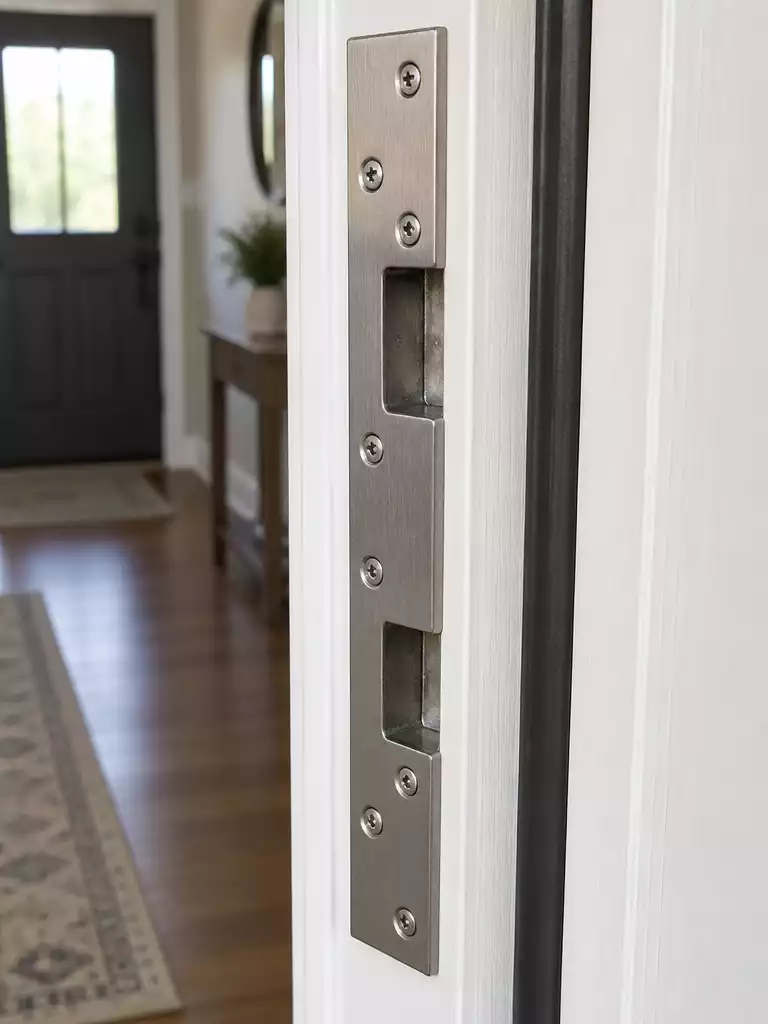
Distribute impact force across your door frame to prevent dangerous jamb blowout during break-in attempts.
Most standard strike plates are held in place by two short screws that bite only into the soft, decorative trim. When a door is kicked, that force is concentrated on a single, tiny point, causing the wood to snap instantly.
A reinforced strike plate solves this by using a longer metal plate, typically spanning 8 to 12 inches of the door jamb. This increased surface area acts as a bridge, spreading the energy of an impact across a much larger section of the frame rather than a single spot.
Installation is straightforward, but the effectiveness depends on your commitment to the hardware. You should use all 4 to 6 screw holes provided, driving 3-inch hardened steel screws directly into the home’s structural wall stud.
Pro Tip: Before you screw the plate into place, check the alignment of your deadbolt. If the hole in the strike plate isn’t perfectly centered with your bolt, the door will bind and become difficult to lock.
This upgrade is an excellent choice if your door frame is starting to show small cracks near the lock. If you are dealing with a completely rotted or severely splintered frame, skip this and move straight to a full jamb replacement, as a plate cannot save wood that has already lost its integrity.
⭐ Reinforced Strike Plates for Security
Universal Stainless Steel Door Strike Plate
✨ Editor’s Pick
Stainless Steel Door Latch Guard Plate
Round Door Knob Reinforcement Backplate
Box strike
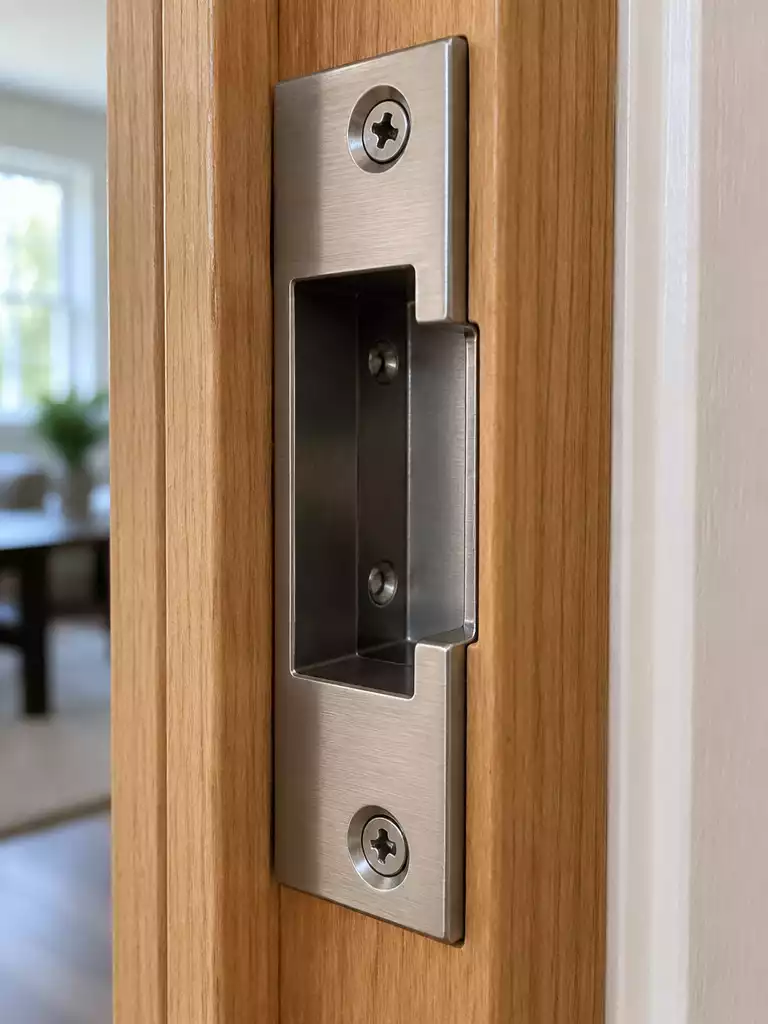
Secure your deadbolt latch inside a heavy-duty steel pocket to prevent prying and slipping.
A standard strike plate often leaves your door latch sitting in a shallow notch, which is the first thing to splinter when a door is kicked. A box strike replaces that thin metal plate with a deep, heavy-gauge steel pocket that physically captures the bolt.
By surrounding the latch with reinforced metal, you make it significantly harder for an intruder to use a crowbar to pry the bolt out of the hole. Because the box itself requires a deeper mortise in the stud, it effectively locks the latch inside the structural framing rather than just the surface trim.
Installation Note: This upgrade requires removing more wood from the door jamb than a standard flat plate. You will need a chisel or a router to create a clean, 2.5-inch deep pocket in the stud to accommodate the box.
This is an excellent option for homeowners concerned about prying attacks, but it does require a bit of carpentry skill to achieve a flush fit. If your door frame is already brittle or shows existing cracks, ensure you are comfortable creating the deeper mortise before starting.
⭐ Secure Box Strikes for Door Frames
Waterproof Outdoor Storage Box Delivery Bin
Smart Home Package Locker Delivery Box
✨ Editor’s Pick
Privacy Bedroom Door Handle Lock Set
💡 Why This Works
By shifting the impact point from the thin, decorative edge of the wood to the deep interior of the stud, a box strike removes the leverage an intruder needs to snap the jamb. It turns a weak, splinter-prone notch into a reinforced metal pocket that keeps the latch securely anchored under pressure.
Mechanical advantage: The deep steel box traps the latch, neutralizing prying force that would otherwise shatter standard wood.
Navigating the balance between a door’s visual appeal and its structural integrity can feel like a high-stakes guessing game. Finding the right front door security doesn’t mean you have to master every technical detail simultaneously to achieve a reliable result.
Securing the frame with a few strategic reinforcements provides more genuine protection than chasing every single available upgrade on the market.
Full-Length Strike Plate
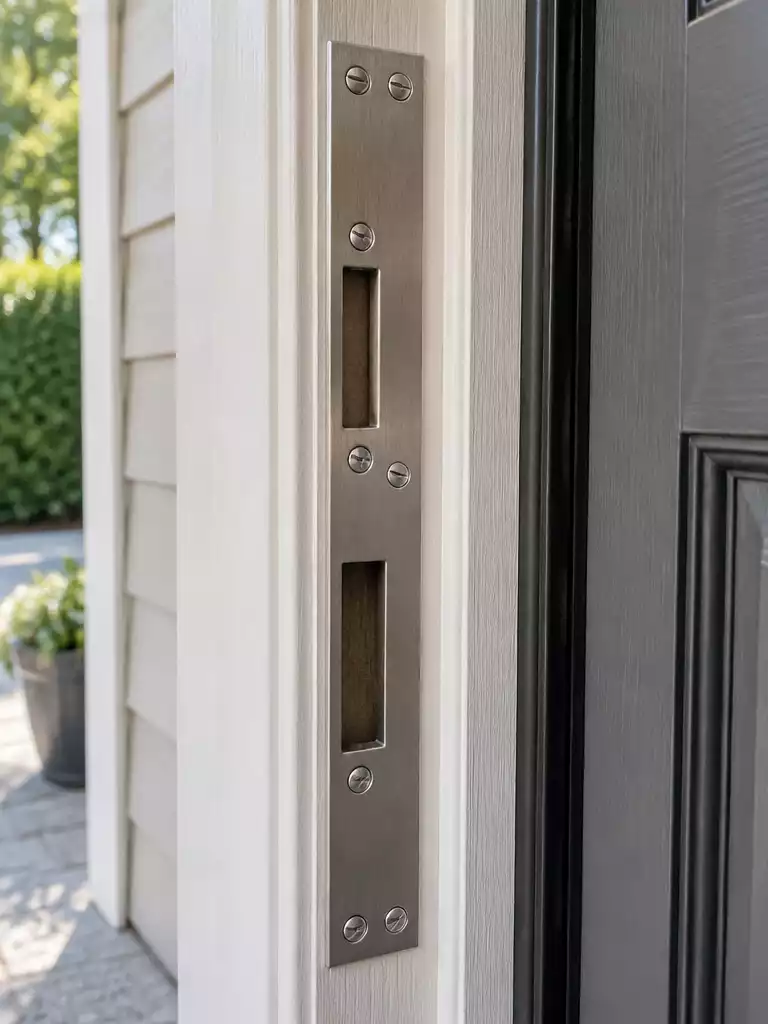
Transform a splintered frame into a solid, reinforced anchor point for your door.
If your door jamb is already showing hairline cracks or visible splintering near the lock, a full-length strike plate is your best path to recovery. Unlike a standard plate that only covers two or three inches, these plates span 8 to 12 inches of the door frame.
This added length acts as an external spine for your door frame. By tying the strike-side jamb to the wall stud along a wider vertical span, it prevents the wood from “blowing out” when subjected to sudden pressure.
Installation Tip: Because these plates are longer, you will need to ensure your existing deadbolt and latch holes align perfectly before you start drilling. Always use a level to verify the plate is perfectly vertical, or you risk the door hardware binding every time you turn the key.
This upgrade is ideal for older homes where the wood has dried out or been compromised by previous break-in attempts or poor maintenance. It is less effective if the door frame is completely rotted, as the screws will have no solid material to bite into regardless of the plate size.
When you install one of these, you are essentially creating a continuous reinforcement zone. Most models include 4 to 6 screw holes, which allows you to distribute the force of an impact across several points along the structural stud rather than relying on a single, vulnerable spot.
⭐ Full Length Strike Plates for Strength
✨ Editor’s Pick
Vintage Antique Brass Dummy Door Handles
Professional Strength Paint Remover Stripper
Citrus Based Paint and Varnish Stripper
Designer Note: Maintaining Visual Harmony
While this plate is a structural power player, its size can look overwhelming on a traditional entry. To keep the look intentional rather than industrial, opt for a finish that matches your existing handle set. This creates a cohesive, custom-fitted appearance that hides the heavy-duty reinforcement in plain sight.
Jamb reinforcement plate
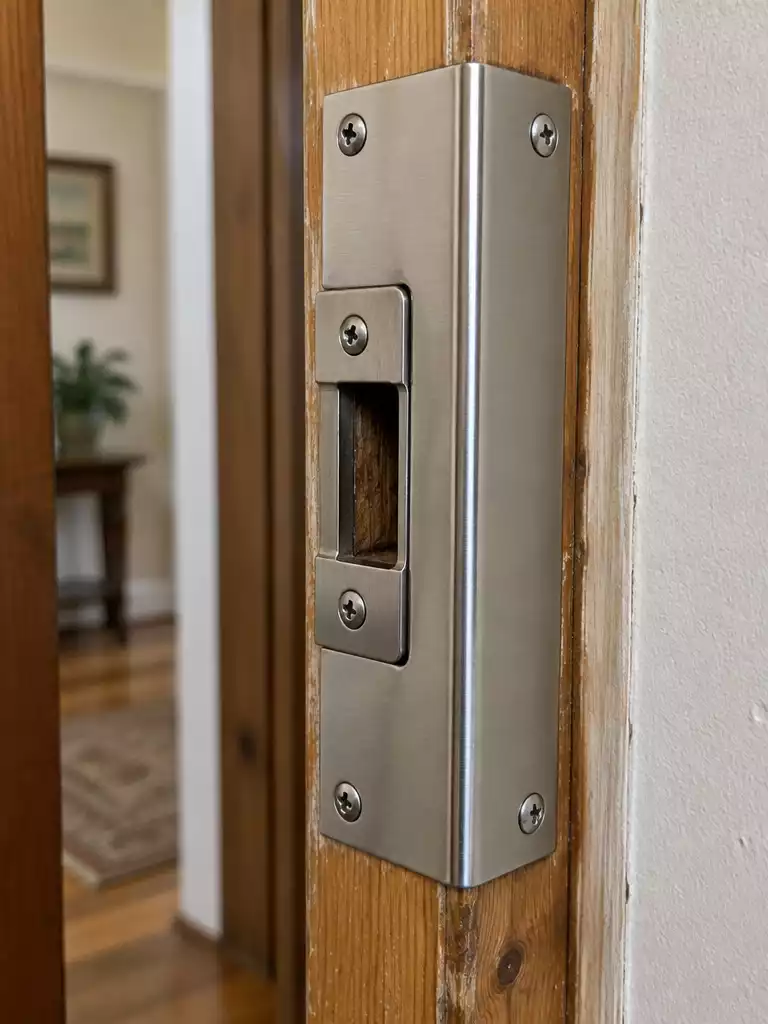
Armor your door frame against splitting with a heavy-gauge metal latch wrap solution.
A jamb reinforcement plate, often called a latch wrap, provides a critical layer of defense by physically wrapping around the edge of your door frame. If your home has older, dry wood that has become brittle, this is your most reliable way to prevent the entire section from splitting outward under pressure.
Best for: Older homes with soft wood jambs or doors that have already developed hairline fractures. Skip if: Your door has very tight tolerances, as the added thickness of the metal wrap might cause the door to bind against the frame.
Installation is straightforward but requires precision to ensure the door still closes flush. You must secure the plate using long, hardened steel screws that penetrate deep into the structural stud behind the jamb.
Watch out: Never use the short, thin screws that often come in the retail packaging of these plates. Always swap them for 3-inch structural screws to ensure true security.
⭐ Jamb Reinforcement Plates for Protection
Heavy Duty Door Scratch Shield Protector
✨ Editor’s Pick
Bronze Door Jamb Reinforcement Plate
Clear Door Scratch Guard Shield Protector
🏡 Real-Home Application:
- Check door clearance: Before buying, ensure there is at least 1/8 inch of gap between the door and the frame so the metal plate won’t cause binding.
- Test for squareness: If your door is already sticking or hard to latch, fix the frame’s alignment first, otherwise the plate will lock in those mechanical issues.
- Paint matching: Once installed, dab a bit of trim paint over the exposed screw heads or plate edges to help the hardware blend seamlessly into your existing door frame.
Frame-to-Stud Anchors
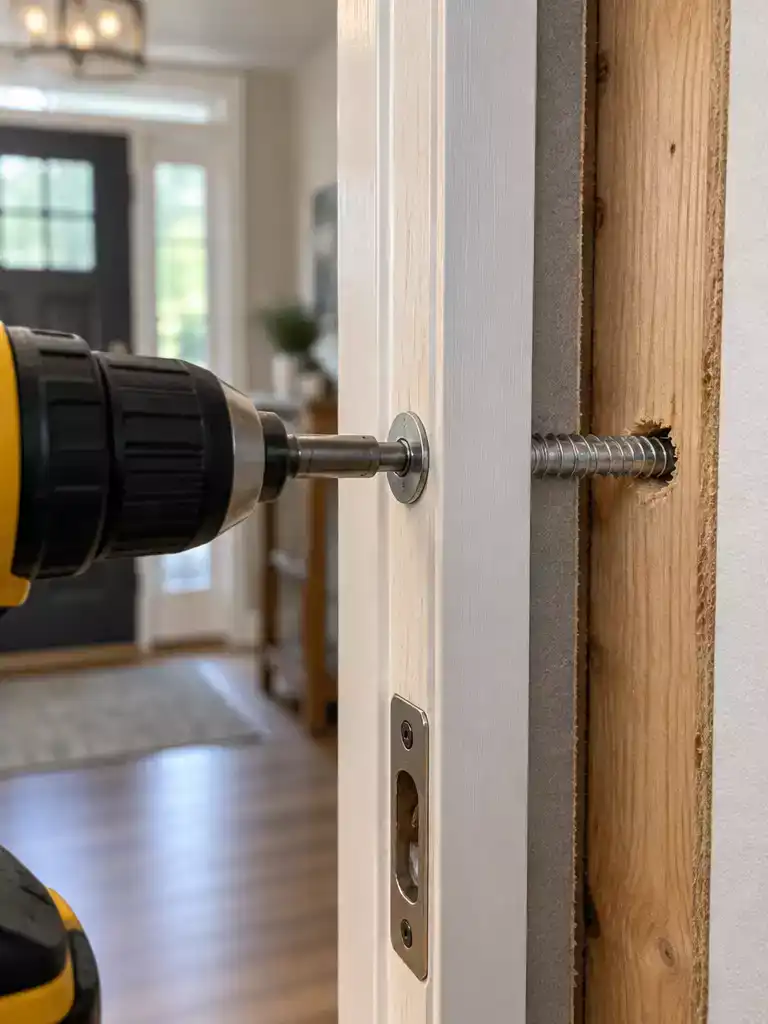
Create a direct mechanical connection between your door frame and the home’s structural framing.
Most door failures occur because the jamb is only attached to the flimsy decorative trim rather than the house structure itself. Frame-to-stud anchors bridge that gap, physically tying your door frame to the wall studs to prevent the entire assembly from bowing or splintering under pressure.
The Shim Requirement: Before tightening these anchors, you must install wood shims between the jamb and the stud.
Without properly placed shims, the force of the screw will pull the jamb inward toward the stud, causing the door to bind or become impossible to lock.
This upgrade is ideal for homeowners who want a permanent, “invisible” security boost that doesn’t change the exterior look of their door. It is a slightly more advanced DIY task because it requires precision drilling to ensure you are centered on the stud behind the jamb.
Warning: Always pre-drill your pilot holes to avoid splitting the wood of the jamb.
If you suspect your door frame is already loose or significantly damaged, focus on replacing the jamb material entirely before attempting to anchor it to the studs.
⭐ Frame to Stud Anchors for Stability
Glass Mirror Hanging Retainer Clips
Rustic Cast Iron Door Knob Hooks
✨ Editor’s Pick
Heavy Duty Barn Door Wall Spacers
📋 Quick Reality Check: Before You Drill
- Stud Alignment: Use a magnetic stud finder to verify you are actually hitting the structural framing, not just the hollow space between the jamb and the wall.
- Gap Assessment: Measure the distance between your jamb and the stud; choosing the right shim thickness ensures a flush, stable connection without bowing the frame.
- Hardware Clearance: Confirm your chosen anchor head won’t interfere with the door’s weatherstripping or the latch mechanism once the screw is fully countersunk.
Hinge reinforcement screws
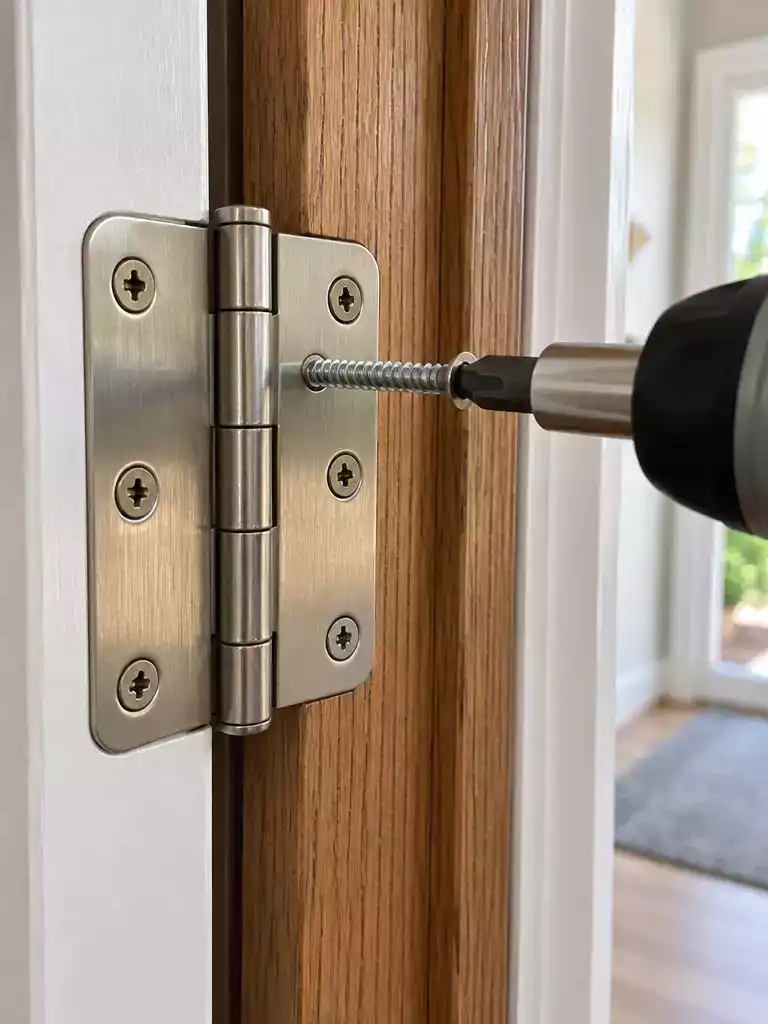
Anchor your hinges directly into the house framing to stop forced entry at the source.
Most break-in attempts focus on the strike side, but savvy intruders know the hinge side is often the path of least resistance. If your hinges are held in place by standard 1-inch factory screws, they are only biting into the soft door trim rather than the structural stud.
Hinge reinforcement screws act as a critical structural tie, bridging that gap between the door frame and the wall. By replacing at least one factory screw per hinge with a 3-inch hardened steel screw, you anchor the door leaf directly into the home’s framing.
The “Peel-Away” Reality: Under forceful pressure, a door with short screws will simply strip the wood trim away from the stud. Long, hardened screws prevent this peel-away effect by creating a deep, mechanical connection that standard hardware physically cannot match.
This is a high-payoff, low-cost upgrade that takes about ten minutes with a power drill. Before you start, follow these installation guidelines to ensure success:
- Use 3-inch (75 mm) hardened steel screws to ensure they reach past the jamb and deep into the structural stud.
- Always pre-drill a pilot hole to avoid splitting the wood, which is especially important if you are working with older, brittle door frames.
- Replace one or two screws per hinge, specifically the holes closest to the center of the jamb, for maximum force distribution.
A Quick Warning: Do not over-tighten the screws once they reach the plate. You want them secure enough to hold firm, but excessive torque can crush the wood fibers and crack the jamb before an intruder even arrives.
⭐ Hinge Reinforcement Screws for Security
✨ Editor’s Pick
Heavy Duty Farm Barn Door Hinges
Ball Bearing Stainless Steel Door Hinges
Permanent Stripped Door Hinge Repair Kit
💡 Why This Works:
Hinge security is about creating a mechanical lock that prevents the door from being levered or pulled away from the frame. By extending the load into the structural stud, you effectively turn the entire hinge side into a rigid spine, ensuring that any external force is absorbed by the house framing rather than the brittle door trim.
Structural Redundancy: This simple upgrade eliminates the hinge side as a viable entry point for intruders.
Security hinge studs
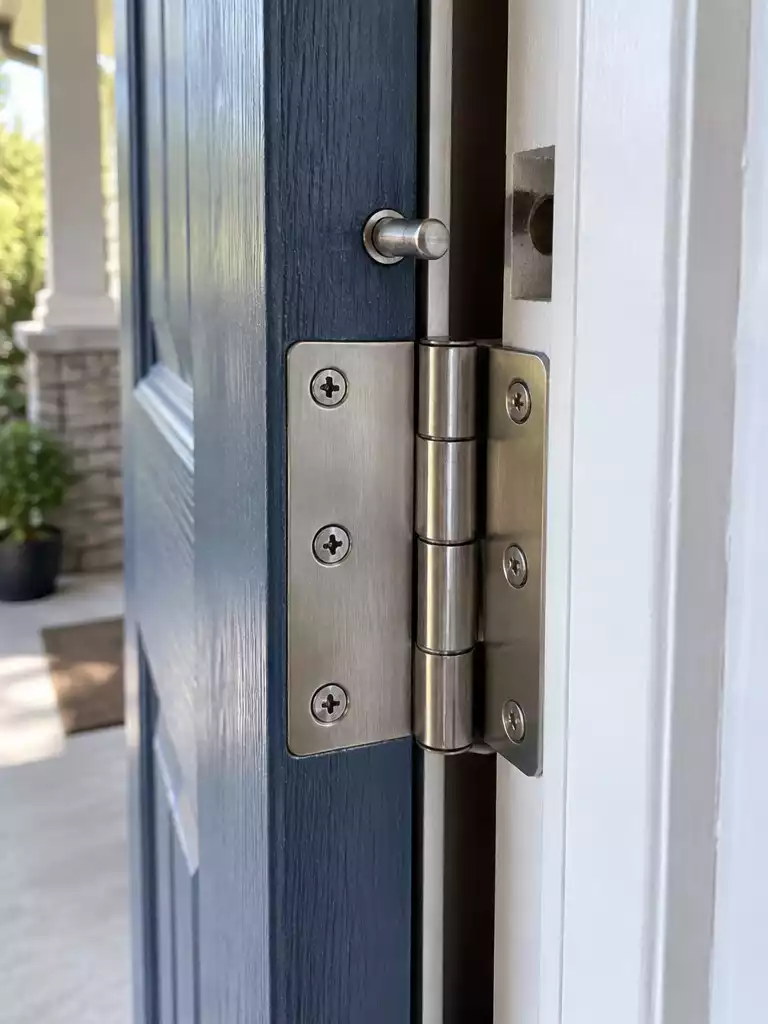
Lock your door leaf into the frame so even missing pins won’t grant entry.
If your door swings outward, the hinge pins are exposed to the outside, which is a major security vulnerability. Security hinge studs, often called dog-bolts, act as a permanent anchor that keeps the door leaf attached to the frame even if an intruder manages to knock the hinge pins out.
These studs are small metal pins that you install into the door leaf near the hinges. When the door is closed, these pins slide into corresponding holes drilled into the door jamb.
Who this is for: This upgrade is non-negotiable for anyone with an out-swinging entry door. If your hinges are visible from the street, this is one of your most critical defensive layers.
Installation is relatively straightforward if you have a drill and a steady hand. You must ensure the studs align perfectly with the holes in the jamb, or the door will bind and refuse to close properly.
Avoid the mistake of drilling too shallow, which prevents the door from fully latching. Always double-check your alignment before committing to the final depth.
⭐ Security Hinge Studs for Door Safety
Storm Door Hinge Pin Repair Kit
✨ Editor’s Pick
Marine Grade Stainless Steel Door Hinges
Handmade Wrought Iron Metal Monogram Sign
⚖️ Quick Decision Guide: Choosing Your Hinge Security
- Choose this if: You have an out-swinging door where the hinges are fully exposed to potential intruders outside.
- Skip this if: Your door swings inward, as the hinge pins are already protected within the interior space.
- Pair it with: High-quality, 3-inch hardened steel screws to reinforce the hinge plates directly into the wall studs.
Jamb Shield
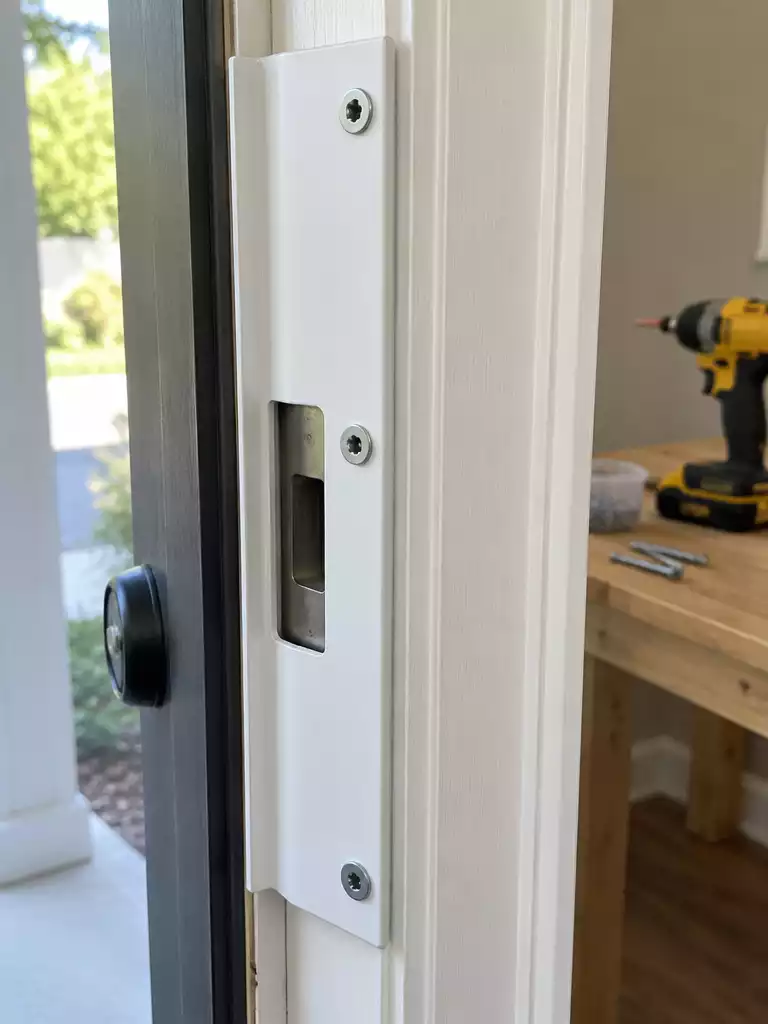
Armor your vulnerable lock side against brute-force impact with a seamless metal shield.
A jamb shield acts as a literal layer of metal armor that wraps around the lock side of your door frame. While a standard strike plate only protects the immediate area where the bolt enters, this shield covers a much larger section of the jamb to prevent the wood from crushing or splitting under pressure.
Pro Tip: This upgrade is most effective when paired with long, structural-grade screws. By anchoring the shield directly through the jamb and into your home’s structural stud, you create a unified defense system that standard factory hardware simply cannot match.
This solution is ideal if you live in an area where door kick-ins are a concern or if your existing door frame is made of softer, older wood that has become brittle over time. It is a straightforward addition for any DIYer who is comfortable using a drill and a level.
- Surface Protection: Prevents the wood trim from blowing out during a forced entry attempt.
- Force Distribution: Spreads the energy of a kick across a wider vertical area of the frame.
- Installation Note: Ensure your door latch and deadbolt are perfectly aligned before installation to avoid binding.
Common Mistake
Do not overtighten the mounting screws during installation. Cranking them too hard can crack the jamb wood before an intruder even touches the door, effectively ruining the integrity you are trying to build.
⭐ Jamb Shields for Frame Protection
Clear Silicone Edge Protector Furniture Guard
Clear Plastic Wall Corner Guard Protector
✨ Editor’s Pick
Heavy Duty Steel Door Security Kit
💡 Why This Works
Adding a physical shield transforms the door jamb from a series of individual wooden points into a unified barrier. By covering the entire strike area, you neutralize the leverage a crowbar needs to split the wood, effectively turning a localized weak spot into a reinforced, impact-resistant surface.
Force dispersion: This shield prevents energy from concentrating on a single latch point, forcing impact across the entire length of the metal guard instead.
Hinge-side guard
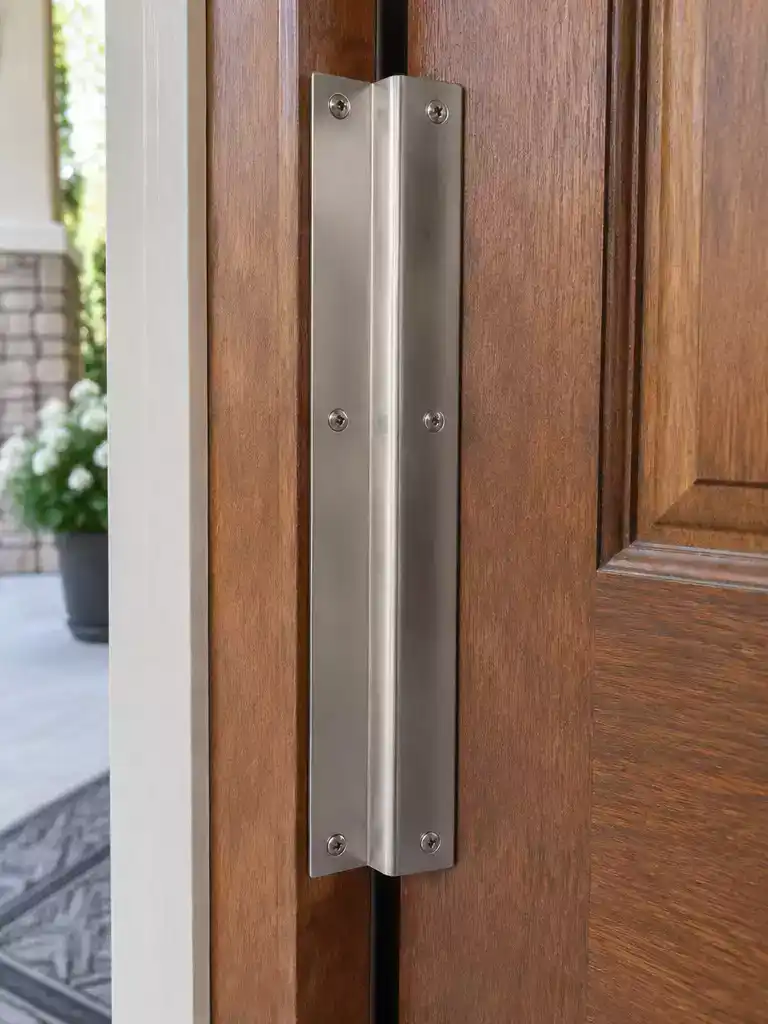
Protect your door’s most vulnerable pivot point from being pried open by intruders.
Most homeowners focus entirely on the strike side, but the hinge side is a massive liability if it’s left exposed. A hinge-side guard creates a physical lip that blocks a crowbar or screwdriver from being inserted into the gap between your door and the frame.
Without this, a burglar can easily apply leverage to the hinge side, potentially popping the door out of the frame even if your deadbolt holds firm. This upgrade is essentially a metal barrier that keeps the door locked in place, even if someone attempts to pry the door leaf away from the jamb.
Is this right for you?
If you have an outward-swinging door where the hinges are exposed to the exterior, this is a non-negotiable upgrade. If your door swings inward, this is still a powerful defense against prying, but you might prioritize strike-side reinforcements first.
While the investment is higher than swapping out a few screws, you are paying for a permanent layer of protection. This guard turns the “forgotten” side of your door into a rigid, pry-resistant wall.
⭐ Hinge Side Guards for Security
✨ Editor’s Pick
Antique Brass Heavy Duty Door Hinges
Oil Rubbed Bronze Interior Door Hinges
Mess Free Door Hinge Lubricant Cartridges
🔢 The Right Sequence
Aligning your security upgrades ensures that hardening one side doesn’t create new structural stress or binding issues elsewhere.
- Secure the strike: Complete all lock-side reinforcement before addressing the hinges to ensure the door is properly centered.
- Test the swing: Check for smooth door operation after each hardware addition to catch binding early.
- Install hinge guards: Mount the hinge-side guard last, as it provides a final, external layer of protection.
Hardwood jamb replacement
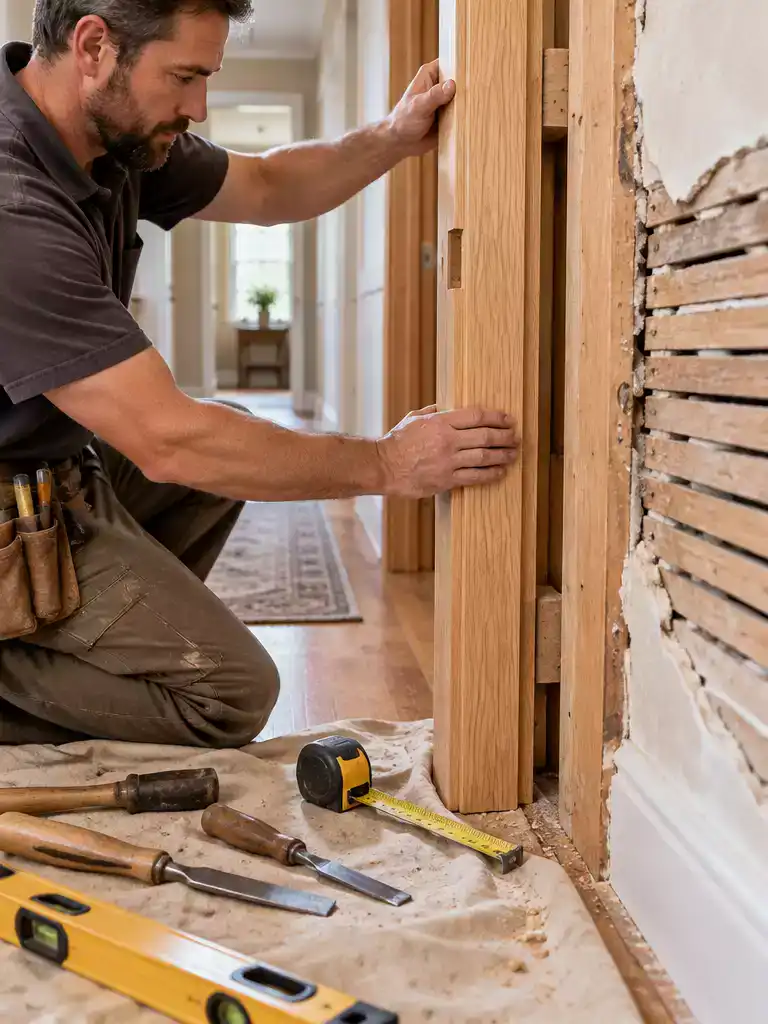
Swap splintering pine for solid oak to create a permanent, high-density foundation for your door.
Replacing a factory-installed pine jamb with solid hardwood is the ultimate structural upgrade for a weak doorway. While surface plates and long screws add resistance, they are ultimately limited by the density of the wood underneath.
Softwood frames often compress or split under heavy force, regardless of the hardware attached to them. Hardwood species like oak or maple provide a significantly higher level of resistance to impact, effectively hardening the entire perimeter of your doorway.
Who this is for:
This path is best for homeowners dealing with severely damaged frames, rot, or those in the middle of a comprehensive home security overhaul. If you are already planning to replace trim or re-hang a door, adding this to your project is the most logical time to ensure maximum security.
This is a professional-level task that requires more than just a drill and a driver. You will need to carefully remove the existing trim, extract the old jamb, and ensure the new hardwood is perfectly level and plumb before securing it to the studs.
Failure to align the new jamb correctly can cause the door to bind or the latch to misalign. Because this involves rehanging the door, consider hiring a carpenter if you lack experience with structural door framing and shimming techniques.
Warning: Improperly shimmed jambs can lead to loose doors that swing open on their own. Always use cedar shims to bridge gaps between the new hardwood and the wall studs to avoid bowing the frame when you tighten the mounting screws.
⭐ Hardwood Jamb Replacements for Frames
Extended Stainless Steel Door Strike Plate
✨ Editor’s Pick
Interior Door Jamb Frame Repair Kit
Extended Interior Door Jamb Repair Plate
🧰 Questions for Your Installer:
- Material sourcing: Can you provide kiln-dried hardwood that won’t warp or shrink after the seasonal humidity changes?
- Gap management: What specific method will you use to shim the new jamb to ensure the door remains perfectly plumb?
- Hardware compatibility: Will the new, denser frame accommodate my existing decorative strike plates and hinges without requiring additional mortising?
Full frame reinforcer
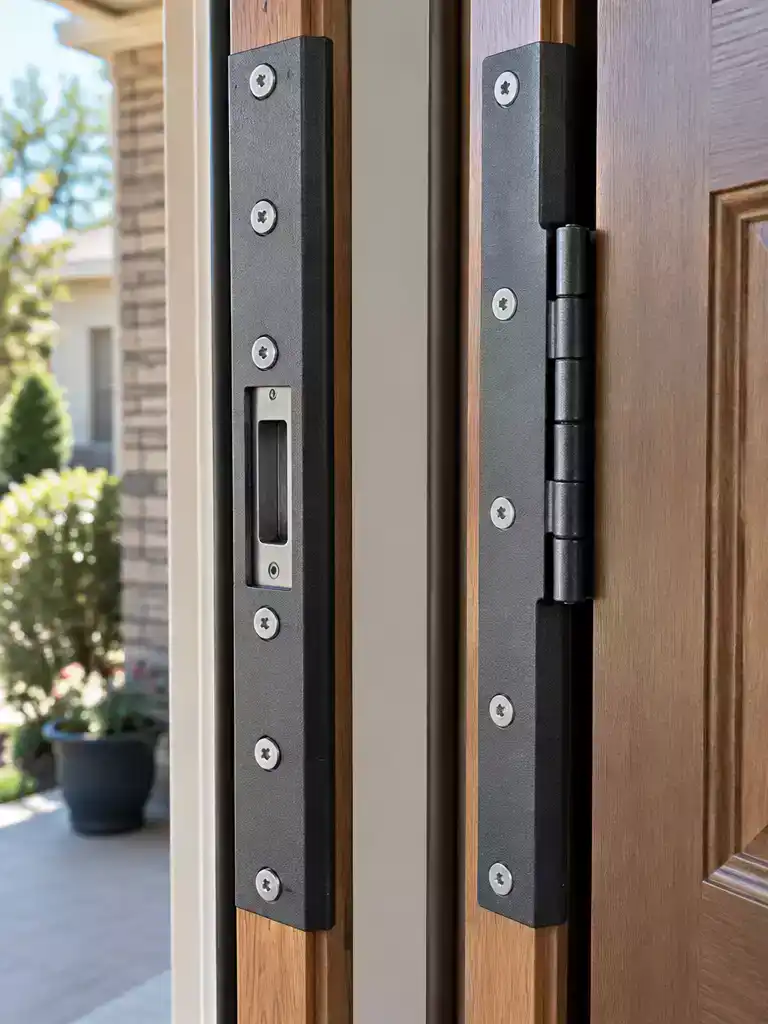
Achieve total structural balance by securing your entire door perimeter against forced entry attempts.
A full frame reinforcer is the most comprehensive security upgrade for homeowners who want to address every potential failure point at once. Instead of tackling the strike plate and hinges individually, this kit provides a coordinated system of heavy-gauge steel plates that armor both the lock side and the hinge side of your door.
This approach is essential for anyone dealing with older, soft-wood frames that are prone to splintering under pressure. By tying the strike side and the hinge side together, you eliminate the risk of a “weakest link” scenario where one side holds firm while the other peels away during an impact.
Warning: The weakest link theory. Hardening only the strike side is a common and dangerous mistake that leaves your home vulnerable to hinge-side levering.
Choosing a full kit typically involves an investment ranging from $75 to $150 for parts alone. If you prefer to have a professional handle the installation to ensure the door remains perfectly aligned, expect to pay between $200 and $350 for labor and materials.
This is the ultimate solution for those who want a holistic security upgrade rather than a piecemeal fix. It is recommended for main entry doors where structural integrity is the absolute priority for peace of mind.
⭐ Full Frame Reinforcers for Security
Pocket Door Frame Kit Soft Close
Sliding Pocket Door Frame Hardware Kit
✨ Editor’s Pick
Brushed Nickel Deadbolt Hole Filler Plate
⚖️ Quick Decision Guide: Choosing Your Security Kit
- Choose a full kit if: You are retrofitting an older home where the door frame integrity is aging or questionable.
- Skip this if: Your current door is already reinforced with high-end, dedicated security plates on both hinge and strike sides.
- Pair it with: Exterior-grade hardened steel screws to ensure the hardware is anchored deep into the structural wall studs.
You now have twelve distinct ways to approach your entry security, but that does not mean every item is necessary for your specific frame. Selecting the one or two upgrades that address your door’s unique vulnerabilities is the smartest path forward, as targeted reinforcement provides the most effective protection.
If you are unsure where to begin, prioritize replacing your factory strike plate screws with 3-inch hardened steel to immediately anchor the jamb to the structural stud. When you choose a front door based on these specific structural needs, you create a lasting barrier without overcomplicating your renovation. Focus on the integrity of the frame first, and the rest of your security project will fall into place.
Related posts:
 12 Patio French Door Upgrades to Boost Curb Appeal Fast
 12 Door Handle Upgrades That Make Cabinets Feel Custom
 Upgrade Your Home Security With Ring Compatible Door Locks
 Revolutionizing Security: The Rise of Smart Locks for Gates
 Unlocking the Secrets: the Truth About Load-Bearing Door Frames
 Pull Up Bars: The Hidden Threat to Door Frames
 Discover the Surprising Truth About Door Frames: Are They Really Load-bearing
 Security Screen Doors